
Home Blog Page 59

Giant Kangaroo Had Crushing Bites

Giant extinct kangaroo

An in-depth analysis of the skull biomechanics of a giant extinct kangaroo indicates that the animal had a capacity for high-performance crushing of foods, suggesting feeding behaviors more similar to a giant panda than modern-day kangaroo.

The new findings, published in PLOS ONE, support the hypothesis that some short-faced kangaroos were capable of persisting on tough, poor-quality vegetation, when more desirable foods were scarce because of droughts or glacial periods.

“The skull of the extinct kangaroo studied here differs from those of today’s kangaroos in many of the ways a giant panda’s skull differs from other bears,” said Rex Mitchell, post-doctoral fellow in the Department of Anthropology at the University of Arkansas. “So, it seems that the strange skull of this kangaroo was, in a functional sense, less like a modern-day kangaroo’s and more like a giant panda’s.”

Mitchell used computed tomography scans to create three-dimensional models of the skull of Simosthenurus occidentalis, a well-represented species of short-faced kangaroo that persisted until about 42,000 years ago. Working with the models, Mitchell performed bite simulations to examine biomechanical performance. The resulting forces at the jaw joints and biting teeth were measured, as well as stress experienced across the skull during biting.

Mitchell compared the findings from the short-faced kangaroo to those obtained from models of the koala, a species alive today with the most similar skull shape. These comparisons demonstrated the importance of the extinct kangaroo’s bony, heavily reinforced skull features in producing and withstanding strong forces during biting, which likely helped the animal crush thick, resistant vegetation such as the older leaves, woody twigs and branches of trees and shrubs. This would be quite different than the feeding habits of modern Australian kangaroos, which tend to feed mostly on grasses, and would instead be more similar to how giant pandas crush bamboo.

“Compared to the kangaroos of today, the extinct, short-faced kangaroos of ice age Australia would be a strange sight to behold,” Mitchell said.

They included the largest kangaroo species ever discovered, with some species estimated to weigh more than 400 pounds. The bodies of these kangaroos were much more robust than those of today — which top out at about 150 pounds — with long muscular arms and large heads shaped like a koala’s. Their short face offered increased mechanical efficiency during biting, a feature usually found in species that can bite harder into more resistant foods. Some species of these extinct kangaroos had massive skulls, with enormous cheek bones and wide foreheads.

“All this bone would have taken a lot of energy to produce and maintain, so it makes sense that such robust skulls wouldn’t have evolved unless they really needed to bite hard into at least some more resistant foods that were important in their diets,” Mitchell said.

The short face, large teeth, and broad attachment sites for biting muscles found in the skulls of the short-faced kangaroo and the giant panda are an example of convergent evolution, Mitchell said, meaning these features probably evolved in both animals for the purpose of performing similar feeding tasks.

Mitchell is also affiliated with the University of New England in Armidale, Australia, where he performed the analyses during his doctoral studies.

Reference:
D. Rex Mitchell. The anatomy of a crushing bite: The specialised cranial mechanics of a giant extinct kangaroo. PLOS ONE, 2019; 14 (9): e0221287 DOI: 10.1371/journal.pone.0221287

Note: The above post is reprinted from materials provided by University of Arkansas.

3-D reconstructions show how ancient sharks found an alternative way to feed

Prof. Michael Coates holds a 3-D printed model of the Tristychius skull and jaws. Photo courtesy of Matt Wood
Prof. Michael Coates holds a 3-D printed model of the Tristychius skull and jaws.
Photo courtesy of Matt Wood

Researchers from the University of Chicago have used tools developed to explore 3D movements and mechanics of modern-day fish jaws to analyze a fossil fish for the first time. Combined with CT imaging technology able to capture images of the fossil while it is still encased in rock, the results reveal that the 335-million-year-old shark had sophisticated jaws capable of the kind of suction feeding common to bony fishes like bass, perch, carp and also modern-day nurse sharks.

Remarkably, these ancient shark jaws are some 50 million years older than the earliest evidence of similar jaws adapted for suction feeding in bony fishes. This shows both the evolutionary versatility of sharks, and how sharks responded quickly to new ecological opportunities in the aftermath of one of the five big extinctions in Earth’s history.

“Among today’s aquatic vertebrates, suction feeding is widespread, and is often cited as a key factor contributing to the spectacular evolutionary success of ray-finned fishes,” said Michael Coates, PhD, professor of organismal biology and anatomy at the University of Chicago and senior author of the new study. “But here we show that high-performance aquatic suction feeding first appeared in one of the earliest known sharks.”

A complete construction kit to rebuild a shark

The study, published this week in Science Advances, describes the fossil of Tristychius arcuatus, a 2-foot long shark similar to a dogfish. It was first discovered by Swiss biologist Louis Agassiz in 1837, and later described in detail by John Dick, a former classmate of Coates’, in 1978. Tristychius, and other Devonian period sharks like it, are found in ironstone rock nodules along the shores of the Firth of Forth near Edinburgh, Scotland.

Shark fossils are rare because their cartilage skeleton usually rots away before there’s any chance of fossilization. For decades, researchers studying ancient sharks have been limited to isolated teeth and fin spines. Even if they do find a more complete skeleton, it’s usually flattened, or, if it’s encased in one of these stones, it crumbles when they try to remove it.

Coates and his lab have been leading the field in applying modern imaging technology and software to study these challenging fossils. CT scanning allows them to create 3D images of any fossilized cartilage and the impressions it left while still encased in the stone. Then, using sophisticated modeling software originally developed to study structure and function in modern-day fish, they can recreate what the complete skeleton looked like, how the pieces fit together and moved, and what that meant for how these sharks lived.

“These new CT methods are releasing a motherlode of previously inaccessible data,” Coates said.

His team started reexamining some of the same fossils Dick studied, as well as specimens left untouched in earlier research. “Some of this is superbly preserved,” Coates said. “We realized that when we got all the parts out [virtually], we had the complete construction kit to rebuild our shark in 3D.”

Beating underwater physics

That virtual construction kit also allowed them to create 3D plastic printouts of the cartilages that build a shark’s skull. These, in turn, allowed Coates and his team to model movements and connections, both physically and virtually, to see how the skull worked.

Fish that use suction feeding essentially suck water in through their mouths to catch elusive prey, such as worms, crustaceans and other invertebrates from the ocean floor. To do so, they have to draw water in when they open their mouth, but not force it back out when they close it.

Suction feeders overcome these challenging physics by funneling the water back out through their gills. The amount of suction they create can be enhanced by flexible arches and joints that expand the cheeks and the volume inside the mouth to draw the water through (imagine the feeling when you hold your hands together underwater and slowly pull your palms apart).

Today’s fish have perfected this process, but Tristychius had a similar feeding apparatus that could expand as it opened and closed its mouth to control the flow of water (and food). Crucially, this included a set of cartilages around the mouth that limited the size of the opening to control the amount of suction. The circular mouth was pushed forward at the end of its muzzle like a modern-day carpet shark or nurse shark, not a gaping, toothy maw like a great white.

While other sharks at the time did have the more typical snapping jaws, the combination of expanding cheeks and a carefully controlled mouth aperture provided Tristychiuswith access to previously untapped food resources, such as prey taking refuge in shallow burrows or otherwise difficult-to-capture schools of shrimp or juvenile fish, around 50 million years before bony fish caught on to the same technique.

“The combination of both physical and computational models has allowed us to explore the biomechanics in a Paleozoic shark in a way that’s never been done before,” Coates said. “These particular sharks were doing something sophisticated and new. Here we have the earliest evidence of this key innovation that’s been so important for multiple groups of fishes and has evolved repeatedly.”

Additional authors for the study include Kristen Tietjenfrom the University of Chicago, Aaron M. Olsenfrom Brown University, and John A. Finarelli from University College Dublin, Ireland.

Reference:
Michael I. Coates, Kristen Tietjen, Aaron M. Olsen and John A. Finarelli. High-performance suction feeding in an early elasmobranch. Science Advances, 2019 DOI: 10.1126/sciadv.aax2742

Note: The above post is reprinted from materials provided by University of Chicago.

Half-a-billion-year-old tiny predator unveils the rise of scorpions and spiders

Reconstruction of Mollisonia plenovenatrix, by Joanna Liang ©Royal Ontario Museum

Two palaeontologists working on the world-renowned Burgess Shale have revealed a new species, called Mollisonia plenovenatrix, which is presented as the oldest chelicerate. This discovery places the origin of this vast group of animals — of over 115,000 species, including horseshoe crabs, scorpions and spiders — to a time more than 500 million years ago. The findings are published in the journal Nature on September 11, 2019.

Mollisonia plenovenatrix would have been a fierce predator — for its size. As big as a thumb, the creature boasted a pair of large egg-shaped eyes and a “multi-tool head” with long walking legs, as well as numerous pairs of limbs that could all-together sense, grasp, crush and chew. But, most importantly, the new species also had a pair of tiny “pincers” in front of its mouth, called chelicerae. These typical appendages give the name to the group of scorpions and spiders, the chelicerates, which use them to kill, hold, and sometimes cut, their prey.

“Before this discovery, we couldn’t pinpoint the chelicerae in other Cambrian fossils, although some of them clearly have chelicerate-like characteristics,” says lead author Cédric Aria, a member of the Royal Ontario Museum’s Burgess Shale expeditions since 2012, and is presently a post-doctoral fellow at the Nanjing Institute of Geology and Palaeontology (China). “This key feature, this coat of arms of the chelicerates, was still missing.”

Other features of this fossil, including back limbs likened to gills, further suggest that Mollisonia was not some “primitive” version of a chelicerate, but that it was in fact already close morphologically to modern species.

“Chelicerates have what we call either book gills or book lungs,” explains Aria. “They are respiratory organs are made of many collated thin sheets, like a book. This greatly increases surface area and therefore gas exchange efficiency. Mollisonia had appendages made up with the equivalent of only three of these sheets, which probably evolved from simpler limbs.”

The authors believe that Mollisonia preferentially hunted close to the sea floor, thanks to its well-developed walking legs, a type of ecology called benthic predation. Because Mollisonia is so modern-looking, chelicerates seem therefore to have prospered quickly, filling in an ecological niche that was otherwise left poorly attended to by other arthropods at that time. The authors conclude that the origin of the chelicerates must lie even deeper within the Cambrian, when the heart of the “explosion” really took place.

“Evidence is converging towards picturing the Cambrian explosion as even swifter than what we thought,” says Aria. “Finding a fossil site like the Burgess Shale at the very beginning of the Cambrian would be like looking into the eye of the cyclone.”

The importance of the Burgess Shale and similar deposits, such as the Chengjiang biota in China, lies in their exceptional preservation of the earliest marine animal communities at a time of uniquely rapid diversification of body forms called the “Cambrian explosion.” Fossil animals from these sites are notable for preserving an extensive array of morphological features, such as limbs and eyes, but also guts and, much more rarely, nervous system tissues.

Mollisonia was first described more than a century ago by the discoverer of the Burgess Shale, Charles Doolittle Walcott. However, so far, only rare exoskeletons of this animal were known. “It is the first time that evidence of the limbs and other soft-tissues of this type of animal are described, which were key to revealing its affinity,” says co-author Jean-Bernard Caron, Richard M. Ivey Curator of Invertebrate Palaeontology at the Royal Ontario Museum (Canada). The exceptionally well-preserved fossils come from a new Burgess Shale sites near Marble Canyon, in Kootenay National Park, British Columbia.

“Marble Canyon is the biggest spotlight of my career so far. This area keeps giving us wonderful treasures year after year,” says Caron, who has been leading the Royal Ontario Museum’s Burgess Shale expeditions for the past 10 years. “I would not have imagined that we could, in a way, rediscover the Burgess Shale like this, a hundred years later, with all the new species we are finding.”

The specimens of Mollisonia plenovenatrix described in this new research are better preserved than the ones found at the original Walcott quarry that is located about 40 kilometers northwest of the Marble Canyon quarry. Many other fossils found at Marble Canyon and surrounding areas have already played a critical role in our understanding of the early evolution of many animal groups. These notably include the vertebrates, our own lineage, thanks to numerous and exceptionally well-preserved specimens of the primitive fish Metaspriggina walcotti. Many new species await to be described; the latest one, a “flying saucer-like” new predatory arthropod with huge rake-like claws called Cambroraster falcatus, was just recently published on July 31, 2019.

The Burgess Shale fossil sites are located within Yoho and Kootenay national parks and are managed by Parks Canada. Parks Canada is proud to work with leading scientific researchers to expand knowledge and understanding of this key period of earth history and to share these sites with the world through award-winning guided hikes. The Burgess Shale was designated a UNESCO World Heritage Site in 1980 due to its outstanding universal value and is now part of the larger Canadian Rocky Mountain Parks World Heritage Site.

Mollisonia will be among the many exceptional fossils from the Burgess Shale planned to be on display in the ROM’s future new gallery, The Willner Madge Gallery, Dawn of Life, scheduled to open in 2021.

Reference:
Cédric Aria, Jean-Bernard Caron. A middle Cambrian arthropod with chelicerae and proto-book gills. Nature, 2019; DOI: 10.1038/s41586-019-1525-4

Note: The above post is reprinted from materials provided by Royal Ontario Museum.

Why is Earth so biologically diverse? Mountains hold the answer

The volcano Chimborazo, Ecuador, that Alexander von Humboldt surveyed in 1802. Photo: Spyros Theodoridis/CMEC

What determines global patterns of biodiversity has been a puzzle for scientists since the days of von Humboldt, Darwin, and Wallace. Yet, despite two centuries of research, this question remains unanswered. The global pattern of mountain biodiversity, and the extraordinarily high richness in tropical mountains in particular, is documented in two companion Science review papers this week. The papers focus on the fact that the high level of biodiversity found on mountains is far beyond what would be expected from prevailing hypotheses.

“The challenge is that, although it is evident that much of the global variation in biodiversity is so clearly driven by the extraordinary richness of tropical mountain regions, it is this very richness that current biodiversity models, based on contemporary climate, cannot explain: mountains are simply too rich in species, and we are falling short of explaining global hotspots of biodiversity,” says Professor Carsten Rahbek, lead author of both review papers published in Science.

To confront the question of why mountains are so biologically diverse, scientists at the Center for Macroecology, Evolution and Climate (CMEC) at the GLOBE Institute of the University of Copenhagen work to synthesize understanding and data from the disparate fields of macroecology, evolutionary biology, earth sciences, and geology. The CMEC scientists are joined by individual collaborators from Oxford University, Kew Gardens, and University of Connecticut.

Part of the answer, these studies find, lies in understanding that the climate of rugged tropical mountain regions is fundamentally different in complexity and diversity compared to adjacent lowland regions. Uniquely heterogeneous mountain climates likely play a key role in generating and maintaining high diversity.

“People often think of mountain climates as bleak and harsh,” says study co-leader Michael K. Borregaard. “But the most species-rich mountain region in the world, the Northern Andes, captures, for example, roughly half of the world’s climate types in a relatively small region — much more than is captured in nearby Amazon, a region that is more than 12 times larger.”

Stressing another unique feature of mountain climate, Michael explains, “Tropical mountains, based in fertile and wet equatorial lowlands and extending into climatic conditions superficially similar to those found in the Arctic, span a gradient of annual mean temperatures over just a few km as large as that found over 10,000 km from the tropical lowlands at Equator to the arctic regions at the poles. It’s pretty amazing if you think about it.”

Another part of the explanation of the high biodiversity of certain mountains is linked to the geological dynamics of mountain building. These geological processes, interacting with complex climate changes through time, provide ample opportunities for evolutionary processes to act.

“The global pattern of biodiversity shows that mountain biodiversity exhibits a visible signature of past evolutionary processes. Mountains, with their uniquely complex environments and geology, have allowed the continued persistence of ancient species deeply rooted in the tree of life, as well as being cradles where new species have arisen at a much higher rate than in lowland areas, even in areas as amazingly biodiverse as the Amazonian rainforest,” says Professor Carsten Rahbek.

From ocean crust, volcanism and bedrock to mountain biodiversity

Another explanation of mountain richness, says the study, may lie in the interaction between geology and biology. The scientists report a novel and surprising finding: the high diversity is in most tropical mountains tightly linked to bedrock geology — especially mountain regions with obducted, ancient oceanic crust. To explain this relationship between geology and biodiversity, the scientists propose, as a working hypothesis, that mountains in the tropics with soil originating from oceanic bedrock provide exceptional environmental conditions that drive localized adaptive change in plants. Special adaptations that allow plants to tolerate these unusual soils, in turn, may drive speciation cascades (the speciation of one group leading to speciation in other groups), all the way to animals, and ultimately contribute to the shape of global patterns of biodiversity.

The legacy of von Humboldt — his 250th anniversary

The two papers are part of Science’s celebration of Alexander von Humboldt’s 250th birth anniversary. In 1799, Alexander von Humboldt set sail on a 5-year, 8000-km voyage of scientific discovery through Latin America. His journey through the Andes Mountains, captured by his famous vegetation zonation figure featuring Mount Chimborazo, canonized the place of mountains in understanding Earth’s biodiversity.

Acknowledging von Humboldt’s contribution to our understanding of the living world, Professor Carsten Rahbek, one of the founding scientists of the newly established interdisciplinary GLOBE Institute at the University of Copenhagen says:

“Our papers in Science are a testimony to the work of von Humboldt, which truly revolutionized our thinking about the processes that determine the distribution of life. Our work today stands on the shoulders of his work, done centuries ago, and follows his approach of integrating data and knowledge of different scientific disciplines into a more holistic understanding of the natural world. It is our small contribution of respect to the legacy of von Humboldt.”

References:

  1. Carsten Rahbek, Michael K. Borregaard, Robert K. Colwell, Bo Dalsgaard, Ben G. Holt, Naia Morueta-Holme, David Nogues-Bravo, Robert J. Whittaker, Jon Fjelds�. Humboldt’s enigma: What causes global patterns of mountain biodiversity? Science, 2019 DOI: 10.1126/science.aax0149
  2. Carsten Rahbek, Michael K. Borregaard, Alexandre Antonelli, Robert K. Colwell, Ben G. Holt, David Nogues-Bravo, Christian M. Ø. Rasmussen, Katherine Richardson, Minik T. Rosing, Robert J. Whittaker, Jon Fjeldså. Building mountain biodiversity: Geological and evolutionary processes. Science, 2019 DOI: 10.1126/science.aax0151

Note: The above post is reprinted from materials provided by University of Copenhagen.

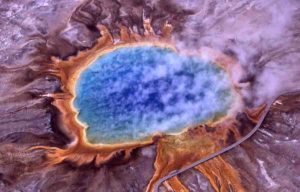
Pink Lake : What is Pink Lake? What causes Pink Lake in Australia?

Pink Lake, Australia

What is pink lake?

Pink Lake is a salt lake in Western Australia’s Goldfields-Esperance region. Even if the lake’s waters were visibly pink historically, they were no rose since 2017 for over ten years. The concentration of salt in Pink Lake is essential to the pink color and, as conditions alter, Pink Lake could turn pink. It is located approximately 3 km (2 mi) south of Esperance, and the South Coast Highway binds eastwards.

It’s very complicated the dynamics of why a river turns rose. The pond color may be affected by external modifications and climate circumstances. The Pink Lake of Esperance has lost its blue color owing to modifications in the salinity resulting from human activities.

John Septimus Roe, a resident magister in Albany who contributed to the early formation of the colony of West Australia, named Spencer Waterway in 1848 after Sir Richard Spencer. Lake Warden, next door, is reported to be named after Lady Ann Warden Spencer, Sir Richard Spencer’s spouse.

The Lake in the past had a distinct pink hue and was colloquially referred to as Pink Lake until 1966 when the Shire president, Cr W S Paterson, submitted a successful request to the Committee on Geographic Names, which resulted in Lake Spencer becoming officially a Pink Lake. The Pink Lake has been a tourist attraction for many years in the Esperance region, with its surroundings, its arteries and the local companies.

Historically, Pink Lake was the terminal lake in the Lake Warden wetland scheme, where water from the main lake suite (Wheatfield, Woody and Windabout) and Lake Warden would pour periodically into Pink Lake, adding salts to the atmosphere.

Increasing salt concentrations coupled with reducing evaporation water levels during the summer cause the appearance of purple hue that can be seen throughout the nation in ponds. With the building of the railway line and South Coast Highway, Pink Lake lost its link to Lake Warden and the southern lakes.

Commercial salt mining, which started in 1896 and stopped lowering salt concentrations in the lake in 2007. Due to drying in the catchment area connected with neighboring estates, further decreases in the salt concentration of the lake are created by freshwater reaching the scheme through a mixture of surface water inflow and enhanced groundwater inflow.

Where Pink Lake?

Location: Goldfields-Esperance, Western Australia
Basin countries‎: ‎Australia
Area: 99 ha
Max. width‎: ‎2 km (1 mi)
Max. length‎: ‎4 km (2 mi)

What causes Pink Lake in Australia?

Due to the green alga Dunaliella salina, halobacterium Halobacteria cutirubrum and/or elevated quantity of brine prawn, the unique color of the water modifications. Once the lake water hits a amount of salinity higher than sea water, the temperature is sufficiently elevated and sufficient light requirements are supplied, the alga starts to produce the red pigment beta carotene. The purple halobacterium grows at the bottom of the lake in the salt crust.

Scientists discovered that pink water bodies such as Lake Hillier contain both halobacteria and a sort of algae called Dunaliella salina that thrives in cold settings such as pink rivers. The red carotenoid pigments that Halobacteria and d have secreted. Salina is accountable for the otherworldly colours of the purple waters. In the Dead Sea, too, these same algae thrive.

Building a highway and a railway line is thought to have changed the flow of water into the lake, decreasing its salinity, which is why it no longer looks purple (as of 2017).

When Pink Lake is Pink?

A pink lake is a red or rose-colored lake. This is often triggered by the existence of algae, such as Dunaliella salina, which generates carotenoids. Due to modifications in natural water stream, decreased evaporation, and salt production, the distinctive color has disappeared — a practice that finished in 2007. But now, in a venture thought to be an Australian first, a group of researchers will explore how to restore the lake to its blue glory.

Is the Pink Lake toxic?

The pink water isn’t toxic

Can you swim in Pink Lake Australia?

In fact, swimming in the water of the lake is safe and fun, but for normal tourists it is impossible to do it as the lake can not be visited.

Is there any other Pink Lakes?

Yes. Australia is fortunate enough to have a lot of these natural wonders.

In the distant south of Victoria, a collection of salt lakes in the hot weather transform a beautiful deep pink.

Lakes Crosbie, Becking, Kenyon and Hardy are famous tourist sights in Murray Sunset National Park.

Pink Lake close Dimboola is of special significance to the individuals of Wotjobaluk and the salt is collected by side and marketed there.

Lake Tyrrell, close to Sea Lake, is the biggest salt lake in Victoria and draws tourists from all over the globe as a star-watching place.

There are several purple lakes in Western Australia. The most well-known are Lake Hillier close Esperance and Hutt Lagoon in the midwest of the state.

Every year, Hutt Lagoon draws hundreds of visitors and has become famous with Chinese travelers in particular as touring the lake has become a status symbol in China.

How many Pink Lake in Australia?

There are over 10 pink lakes in Australia, There are four rose beaches in Victoria’s Murray-Sunset National Park, Lake Crosbie, Lake Becking, Lake Kenyon and Lake Hardy, as well as a purple inlet in Western Australia, called Hutt Lagoon, between Geraldton and Kalbarri.

Where to find Emerald Crystals in the United States?

Emerald
Emerald

What is Emerald?

Emerald is a gemstone and a range of green-colored mineral beryl (Be3Al2(SiO3)6) by trace quantities of chromium and sometimes vanadium. On Mohs scale, Beryl has a durability of 7.5–8. Included are the most emeralds, so their toughness (crash resistance) is usually considered poor. The emerald is cyclosilicates. Emerald is an emerald.

The term “emerald” is obtained from Vulgar Latin (via Old French: esmeraude and Middle English: emeraude): esmaralda / esmaraldus, a version of Latin smaragdus which emerged in Ancient Greek (smaragdos).

Emeralds, like all colored gemstones, are graded using four fundamental parameters–the four Cs of knowledge: colour, clarity, cut and weight of the carat. Normally, color is the most significant factor in the grading of colored gemstones. However, transparency is regarded to be a near second in the grading of emeralds. A good emerald must have as outlined below not only a sheer green hue, but also a large degree of transparency to be regarded a top gem.

Emerald’s Color

Color is split into three parts in gemology: hue, saturation, and tone. Emeralds are present in hues varying from yellow-green to blue-green, the main hue being green. The standard secondary hues observed in emeralds are yellow and blue. Emeralds are regarded only gems that are medium to light in color; light-tone gems are regarded as green beryl instead.

On a scale where 0 percent color is colorless and 100 percent opaque white, the best emeralds are about 75 percent color. Moreover, it will saturate a good emerald and have a bright (vivid) colour. Gray is the ordinary modifier of saturation or mask discovered in emeralds; a dull-green hue is a grayish-green hue.

Emerald in the United States

North Carolina and South Carolina

In the United States very few emeralds were mined. Since the late 1800s, North Carolina was a sporadic producer of small amounts of emeralds from a few mines.

Tiffany and Company and a number of landowners operated the Crabtree Emerald mine from 1894 to the 1990s. Many fine, transparent emeralds have been developed and tonnes, slabbed and cabochon cutting, of smart pegmatitis have been marketed as a “emerald matrix.”

In a white matrix of glass and feldspath the cabochons had jade and tourmaline prisms. This page displays a sample of the Crabtree Pegmatite.

North American

A tiny mine close Hiddenite, North America Emerald Mines works in North Carolina. Between 1995 and 2010, the Houston Museum of Natural Science manufactured over 20,000 carats of emeraldean, including six inch length 1.869-carat crystal valuable at $3.5 million.

On the same premises a crushed stone quarry is run by employees watching for hydrothermal vein signs and bags that contain emeralds at times. It is one of the world’s only precious mines that sells rural rock.

A new duck-billed dinosaur, Kamuysaurus japonicus, identified

A reconstruction of Kamuysaurus japonicus. Credit: Kobayashi Y., et al, Scientific Reports, September 5, 2019

The dinosaur, whose nearly complete skeleton was unearthed from 72 million year old marine deposits in Mukawa Town in northern Japan, belongs to a new genus and species of a herbivorous hadrosaurid dinosaur, according to the study published in Scientific Reports. The scientists named the dinosaur Kamuysaurus japonicus.

A partial tail of the dinosaur was first discovered in the outer shelf deposits of the Upper Cretaceous Hakobuchi Formation in the Hobetsu district of Mukawa Town, Hokkaido, in 2013. Ensuing excavations found a nearly complete skeleton that is the largest dinosaur skeleton ever found in Japan. It’s been known as “Mukawaryu,” nicknamed after the excavation site.

In the current study, a group of researchers led by Professor Yoshitsugu Kobayashi of the Hokkaido University Museum conducted comparative and phylogenetic analyses on 350 bones and 70 taxa of hadrosaurids, which led to the discovery that the dinosaur belongs to the Edmontosaurini clade, and is closely related to Kerberosaurus unearthed in Russia and Laiyangosaurus found in China.

The research team also found that Kamuysaurus japonicus, or the deity of Japanese dinosaurs, has three unique characteristics that are not shared by other dinosaurs in the Edmontosaurini clade: the low position of the cranial bone notch, the short ascending process of the jaw bone, and the anterior inclination of the neural spines of the sixth to twelfth dorsal vertebrae.

According to the team’s histological study, the dinosaur was an adult aged 9 or older, measured 8 meters long and weighed 4 tons or 5.3 tons (depending on whether it was walking on two or four legs respectively) when it was alive. The frontal bone, a part of its skull, has a big articular facet connecting to the nasal bone, suggesting the dinosaur may have had a crest. The crest, if it existed, is believed to resemble the thin, flat crest of Brachylophosaurus subadults, whose fossils have been unearthed in North America.

The study also shed light on the origin of the Edmontosaurini clade and how it might have migrated. Its latest common ancestors spread widely across Asia and North America, which were connected by what is now Alaska, allowing them to travel between the two continents. Among them, the clade of Kamuysaurus, Kerberosaurus and Laiyangosaurus inhabited the Far East during the Campanian, the fifth of six ages of the Late Cretaceous epoch, before evolving independently.

The research team’s analyses pointed to the possibility that ancestors of hadrosaurids and its subfamilies, Hadrosaurinae and Lambeosaurinae, preferred to inhabit areas near the ocean, suggesting the coastline environment was an important factor in the diversification of the hadrosaurids in its early evolution, especially in North America.

Reference:
Yoshitsugu Kobayashi, Tomohiro Nishimura, Ryuji Takasaki, Kentaro Chiba, Anthony R. Fiorillo, Kohei Tanaka, Tsogtbaatar Chinzorig, Tamaki Sato & Kazuhiko Sakurai. A new Hadrosaurine (Dinosauria: Hadrosauridae) from the Marine Deposits of the Late cretaceous Hakobuchi formation Yezo Group, Japan. Scientific Reportsvolume, 2019 DOI: 10.1038/s41598-019-48607-1

Note: The above post is reprinted from materials provided by Hokkaido University.

Role of earthquake motions in triggering a ‘surprise’ tsunami

Visualization of the modelled coupled earthquake and tsunami across Palu Bay, from Ulrich et al., 2019: Left: Seismic waves being generated while the earthquake propagates southward in a ‘superfast’ manner. Warm colours denote higher movements across the geological faults and higher ground shaking (snapshot after 15 seconds of earthquake simulation time). Right: The movements of the earthquake beneath the bathtub shaped Palu Bay generate a ‘surprise’ tsunami (snapshot of the water waves aftee 20s of simulation time of the tsunami scenario). Image credit: LMU.

In newly published research, an international team of geologists, geophysicists, and mathematicians show how coupled computer models can accurately recreate the conditions leading to the world’s deadliest natural disasters of 2018, the Palu earthquake and tsunami, which struck western Sulawesi, Indonesia in September last year. The team’s work was published in Pure and Applied Geophysics.

The tsunami was as surprising to scientists as it was devastating to communities in Sulawesi. It occurred near an active plate boundary, where earthquakes are common. Surprisingly, the earthquake caused a major tsunami, although it primarily offset the ground horizontally — normally, large-scale tsunamis are typically caused by vertical motions.

Researchers were at a loss — what happened? How was the water displaced to create this tsunami: by landslides, faulting, or both? Satellite data of the surface rupture suggests relatively straight, smooth faults, but do not cover areas offshore, such as the critical Palu Bay. Researchers wondered — what is the shape of the faults beneath Palu Bay and is this important for generating the tsunami? This earthquake was extremely fast. Could rupture speed have amplified the tsunami?

Using a supercomputer operated by the Leibniz Supercomputing Centre, a member of the Gauss Centre for Supercomputing, the team showed that the earthquake-induced movement of the seafloor beneath Palu Bay itself could have generated the tsunami, meaning the contribution of landslides is not required to explain the tsunami’s main features. The team suggests an extremely fast rupture on a straight, tilted fault within the bay. In their model, slip is mostly lateral, but also downward along the fault, resulting in anywhere from 0.8 metres to 2.8 metres vertical seafloor change that averaged 1.5 metres across the area studied. Critical to generating this tsunami source are the tilted fault geometry and the combination of lateral and extensional strains exerted on the region by complex tectonics.

The scientists come to this conclusion using a cutting-edge, physics-based earthquake-tsunami model. The earthquake model, based on earthquake physics, differs from conventional data-driven earthquake models, which fit observations with high accuracy at the cost of potential incompatibility with real-world physics. It instead incorporates models of the complex physical processes occurring at and off of the fault, allowing researchers to produce a realistic scenario compatible both with earthquake physics and regional tectonics.

The researchers evaluated the earthquake-tsunami scenario against multiple available datasets. Sustained supershear rupture velocity, or when the earthquake front moves faster than the seismic waves near the slipping faults, is required to match simulation to observations. The modeled tsunami wave amplitudes match the available wave measurements and the modeled inundation elevation (defined as the sum of the ground elevation and the maximum water height) qualitatively match field observations. This approach offers a rapid, physics-based evaluation of the earthquake-tsunami interactions during this puzzling sequence of events.

“Finding that earthquake displacements probably played a critical role generating the Palu tsunami is as surprising as the very fast movements during the earthquake itself,” said Thomas Ulrich, PhD student at Ludwig Maximilian University of Munich and lead author of the paper. “We hope that our study will launch a much closer look on the tectonic settings and earthquake physics potentially favouring localized tsunamis in similar fault systems worldwide.”

Reference:
T. Ulrich, S. Vater, E. H. Madden, J. Behrens, Y. van Dinther, I. van Zelst, E. J. Fielding, C. Liang, A.-A. Gabriel. Coupled, Physics-Based Modeling Reveals Earthquake Displacements are Critical to the 2018 Palu, Sulawesi Tsunami. Pure and Applied Geophysics, 2019; DOI: 10.1007/s00024-019-02290-5

Note: The above post is reprinted from materials provided by Gauss Centre for Supercomputing.

Deep-sea sediments reveal solar system chaos: An advance in dating geologic archives

Research vessel JOIDES Resolution off the coast of Hawaii. Credit: International Ocean Discovery Program.

A day is the time for Earth to make one complete rotation on its axis, a year is the time for Earth to make one revolution around the Sun — reminders that basic units of time and periods on Earth are intimately linked to our planet’s motion in space relative to the Sun. In fact, we mostly live our lives to the rhythm of these astronomical cycles.

The same goes for climate cycles. The cycles in daily and annual sunlight cause the familiar diel swings in temperature and the seasons. On geologic time scales (thousands to millions of years), variations in Earth’s orbit are the pacemaker of the ice ages (so-called Milankovitch cycles). Changes in orbital parameters include eccentricity (the deviation from a perfect circular orbit), which can be identified in geological archives, just like a fingerprint.

The dating of geologic archives has been revolutionized by the development of a so-called astronomical time scale, a “calendar” of the past providing ages of geologic periods based on astronomy. For example, cycles in mineralogy or chemistry of geologic archives can be matched to cycles of an astronomical solution (calculated astronomical parameters in the past from computing the planetary orbits backward in time). The astronomical solution has a built-in clock and so provides an accurate chronology for the geologic record.

However, geologists and astronomers have struggled to extend the astronomical time scale further back than about fifty million years due to a major roadblock: solar system chaos, which makes the system unpredictable beyond a certain point.

In a new study published in the journal Science, Richard Zeebe from the University of Hawai’i at Manoa and Lucas Lourens from Utrecht University now offer a way to overcome the roadblock. The team used geologic records from deep-sea drill cores to constrain the astronomical solution and, in turn, used the astronomical solution to extend the astronomical time scale by about 8 million years. Further application of their new method promises to reach further back in time still, one step and geologic record at a time.

On the one hand, Zeebe and Lourens analyzed sediment data from drill cores in the South Atlantic Ocean across the late Paleocene and early Eocene, ca. 58-53 million years ago (Ma). The sediment cycles displayed a remarkable expression of one particular Milankovitch parameter, Earth’s orbital eccentricity. On the other hand, Zeebe and Lourens computed a new astronomical solution (dubbed ZB18a), which showed exceptional agreement with the data from the South Atlantic drill core.

“This was truly stunning,” Zeebe said. “We had this one curve based on data from over 50-million-year-old sediment drilled from the ocean floor and then the other curve entirely based on physics and numerical integration of the solar system. So the two curves were derived entirely independently, yet they looked almost like identical twins.”

Zeebe and Lourens are not the first to discover such agreement — the breakthrough is that their time window is older than 50 Ma, where astronomical solutions disagree. They tested 18 different published solutions but ZB18a gives the best match with the data.

The implications of their work reach much further. Using their new chronology, they provide a new age for the Paleocene-Eocene boundary (56.01 Ma) with a small margin of error (0.1%). They also show that the onset of a large ancient climate event, the Paleocene-Eocene Thermal Maximum (PETM), occurred near an eccentricity maximum, which suggests an orbital trigger for the event. The PETM is considered the best paleo-analog for the present and future anthropogenic carbon release, yet the PETM’s trigger has been widely debated. The orbital configurations then and now are very different though, suggesting that impacts from orbital parameters in the future will likely be smaller than 56 million years ago.

Zeebe cautioned, however, “None of this will directly mitigate future warming, so there is no reason to downplay anthropogenic carbon emissions and climate change.”

Regarding implications for astronomy, the new study shows unmistakable fingerprints of solar system chaos around 50 Ma. The team found a change in frequencies related to Earth’s and Mars’ orbits, affecting their amplitude modulation (often called a “beat” in music).

“You can hear amplitude modulation when tuning a guitar. When two notes are nearly the same, you essentially hear one frequency, but the amplitude varies slowly — that’s a beat,” Zeebe explained. In non-chaotic systems, the frequencies and beats are constant over time, but they can change and switch in chaotic systems (called resonance transition). Zeebe added, “The change in beats is a clear expression of chaos, which makes the system fascinating but also more complex. Ironically, the change in beats is also precisely what helps us to identify the solution and extend the astronomical time scale.”

Reference:
Richard E. Zeebe, Lucas J. Lourens. Solar System chaos and the Paleocene–Eocene boundary age constrained by geology and astronomy. Science, 2019; 365 (6456): 926 DOI: 10.1126/science.aax0612

Note: The above post is reprinted from materials provided by University of Hawaii at Manoa. Original written by Marcie Grabowski.

Earth’s fingerprint hints at finding habitable planets beyond the solar system

Earth's mantle (dark red) lies below the crust (brown layer near the surface) and above the outer core (bright red).
Earth’s mantle (dark red) lies below the crust (brown layer near the surface) and above the outer core (bright red). Credit: CC image by Argonne National Laboratory via Flickr

Two McGill University astronomers have assembled a “fingerprint” for Earth, which could be used to identify a planet beyond our Solar System capable of supporting life.

McGill Physics student Evelyn Macdonald and her supervisor Prof. Nicolas Cowan used over a decade of observations of Earth’s atmosphere taken by the SCISAT satellite to construct a transit spectrum of Earth, a sort of fingerprint for Earth’s atmosphere in infrared light, which shows the presence of key molecules in the search for habitable worlds. This includes the simultaneous presence of ozone and methane, which scientists expect to see only when there is an organic source of these compounds on the planet. Such a detection is called a “biosignature.”

“A handful of researchers have tried to simulate Earth’s transit spectrum, but this is the first empirical infrared transit spectrum of Earth,” says Prof. Cowan. “This is what alien astronomers would see if they observed a transit of Earth.”

The findings, published Aug. 28 in the journal Monthly Notices of the Royal Astronomical Society, could help scientists determine what kind of signal to look for in their quest to find Earth-like exoplanets (planets orbiting a star other than our Sun). Developed by the Canadian Space Agency, SCISAT was created to help scientists understand the depletion of Earth’s ozone layer by studying particles in the atmosphere as sunlight passes through it. In general, astronomers can tell what molecules are found in a planet’s atmosphere by looking at how starlight changes as it shines through the atmosphere. Instruments must wait for a planet to pass — or transit — over the star to make this observation. With sensitive enough telescopes, astronomers could potentially identify molecules such as carbon dioxide, oxygen or water vapour that might indicate if a planet is habitable or even inhabited.

Cowan was explaining transit spectroscopy of exoplanets at a group lunch meeting at the McGill Space Institute (MSI) when Prof. Yi Huang, an atmospheric scientist and fellow member of the MSI, noted that the technique was similar to solar occultation studies of Earth’s atmosphere, as done by SCISAT.

Since the first discovery of an exoplanet in the 1990s, astronomers have confirmed the existence of 4,000 exoplanets. The holy grail in this relatively new field of astronomy is to find planets that could potentially host life — an Earth 2.0.

A very promising system that might hold such planets, called TRAPPIST-1, will be a target for the upcoming James Webb Space Telescope, set to launch in 2021. Macdonald and Cowan built a simulated signal of what an Earth-like planet’s atmosphere would look like through the eyes of this future telescope which is a collaboration between NASA, the Canadian Space Agency and the European Space Agency.

The TRAPPIST-1 system located 40 light years away contains seven planets, three or four of which are in the so-called “habitable zone” where liquid water could exist. The McGill astronomers say this system might be a promising place to search for a signal similar to their Earth fingerprint since the planets are orbiting an M-dwarf star, a type of star which is smaller and colder than our Sun.

“TRAPPIST-1 is a nearby red dwarf star, which makes its planets excellent targets for transit spectroscopy. This is because the star is much smaller than the Sun, so its planets are relatively easy to observe,” explains Macdonald. “Also, these planets orbit close to the star, so they transit every few days. Of course, even if one of the planets harbours life, we don’t expect its atmosphere to be identical to Earth’s since the star is so different from the Sun.”

According to their analysis, Macdonald and Cowan affirm that the Webb Telescope will be sensitive enough to detect carbon dioxide and water vapour using its instruments. It may even be able to detect the biosignature of methane and ozone if enough time is spent observing the target planet.

Prof. Cowan and his colleagues at the Montreal-based Institute for Research on Exoplanets are hoping to be some of the first to detect signs of life beyond our home planet. The fingerprint of Earth assembled by Macdonald for her senior undergraduate thesis could tell other astronomers what to look for in this search. She will be starting her Ph.D. in the field of exoplanets at the University of Toronto in the Fall.

Reference:
Evelyn J R Macdonald, Nicolas B Cowan. An empirical infrared transit spectrum of Earth: opacity windows and biosignatures. Monthly Notices of the Royal Astronomical Society, 2019; 489 (1): 196 DOI: 10.1093/mnras/stz2047

Note: The above post is reprinted from materials provided by McGill University.

Crack in Pacific seafloor caused volcanic chain to go dormant

Volcano: UH geologists have discovered 10 million years of silence in a chain of volcanoes between Northeast Asia and Russia.
UH geologists have discovered 10 million years of silence in a chain of volcanoes between Northeast Asia and Russia.

From his geology lab at the University of Houston, Jonny Wu has discovered that a chain of volcanoes stretching between Northeast Asia and Russia began a period of silence 50 million years ago, which lasted for 10 million years. In the journal Geology, Wu, assistant professor of structural geology, tectonics and mantle structure, is reporting that one of the most significant plate tectonic shifts in the Pacific Ocean forced the volcanoes into dormancy.

At the end of the Cretaceous Period, shortly after dinosaurs disappeared, the Pacific Plate, the largest tectonic plate on Earth, mysteriously changed direction. One possible result was the formation of a prominent bend in the Hawaiian Islands chain, and another, just discovered by Wu, was the volcanic dormancy along a 900-mile stretch between Japan and the remote Sikhote-Alin mountain range in Russia in what is known as the Pacific Ring of Fire, where many volcanoes form.

“Around the time of the volcano dormancy, a crack in the Pacific Ocean Plate subducted, or went below, the volcanic margin. The thin, jagged crack in the seafloor was formed by plates moving in opposing directions and when they subduct, they tend to affect volcanic chains,” reports Wu.

When the volcanoes revived 10 million years later, the radiogenic isotopes within the magma were noticeably different.

“The productivity of magma within the once-violent chain of volcanoes was only one-third its previous level,” said Wu, who has linked this phenomenon to the subduction of the Pacific-Izanagi mid-ocean ridge, an underwater mountain.

Scientists have long understood that volcanic activity above subduction zones, where one tectonic plate converges towards and dives beneath another, is driven by water brought deep within the Earth by the diving subducting plate. When the water reaches depths of around 65 miles, it causes the solid mantle to partially melt and produces magma that may rise and feed volcanoes.

“However, in the case of the East Asian volcanoes, subduction of the immense seafloor crack interrupted its water-laden conveyor belt into the deep Earth. As a result, the volcanoes turned off,” said Wu.

Wu and UH doctoral student Jeremy Tsung-Jui Wu, who is not related to Jonny Wu, discovered the dormancy — and the reason for it — after examining a magmatic catalog of 900 igneous rock radio-isotopic values from the Cretaceous to Miocene eras. They also found evidence that the crack in the Pacific Plate was about 50% shorter than originally believed.

Reference:
Jeremy Tsung-Jui Wu, Jonny Wu. Izanagi-Pacific ridge subduction revealed by a 56 to 46 Ma magmatic gap along the northeast Asian margin. Geology, 2019; DOI: 10.1130/G46778.1

Note: The above post is reprinted from materials provided by University of Houston. Original written by Laurie Fickman.

Kīlauea lava fuels phytoplankton bloom off Hawai’i Island

Kīlauea lava entry on the southeast coastline of Hawai'i Island as seen from UH research vessel Kaimikai o Kanaloa. Credit: Ryan Tabata, UH.
Kīlauea lava entry on the southeast coastline of Hawai’i Island as seen from UH research vessel Kaimikai o Kanaloa. Credit: Ryan Tabata, UH.

When Kīlauea Volcano erupted in 2018, it injected millions of cubic feet of molten lava into the nutrient-poor waters off the Big Island of Hawai’i. The lava-impacted seawater contained high concentrations of nutrients that stimulated phytoplankton growth, resulting in an extensive plume of microbes that was detectable by satellite.

A study led by researchers at the University of Hawai’i (UH) at Mānoa and University of Southern California (USC) and published today in the journal Science revealed that this biological response hinged on unexpectedly high concentrations of nitrate, despite the negligible amount of nitrogen in basaltic lava. The research team determined that nitrate was brought to the surface ocean when heat from the substantial input of lava into the ocean warmed nutrient-rich deep waters and caused them to rise up, supplying the sunlit layer with nutrients.

After observing the phytoplankton bloom in satellite images, the UH Mānoa Center for Microbial Oceanography: Research and Education (C-MORE) organized a rapid response oceanographic expedition on UH research vessel Ka’imikai-O-Kanaloa from July 13 to 17, 2018—in the thick of Kilauea’s activity. The team conducted round-the-clock operations in the vicinity of the lava entry region to test water chemistry and the biological response to the dramatic event.

Co-lead authors Sam Wilson at C-MORE and Nick Hawco, a USC researcher who will be joining the UH Mānoa Oceanography Department in January 2020, tested the hypothesis that lava and volcanic dust would stimulate microorganisms that are limited by phosphate or iron, which are chemicals found in lava.

As it turned out, since there was so much lava in the water, the dissolved iron and phosphate combined into particles, making those nutrients unavailable for microbes. Further, deep, heated seawater became buoyant and brought up nitrate which caused other classes of phytoplankton to bloom.

It is possible that this mechanism has led to similar ocean fertilization events in the past associated with the formation of the Hawaiian Islands and other significant volcanic eruptions, the authors suggest. Depending on their location, sustained eruption on this scale could also facilitate a large flux of nitrate from the deep ocean and perturb larger scale ocean circulation, biology and chemistry.

“The expedition in July 2018 provided a unique opportunity to see first-hand how a massive input of external nutrients alters marine ecosystems that are finely attuned to low-nutrient conditions,” said Wilson. “Ecosystem responses to such a substantial addition of nutrients are rarely observed or sampled in real time. UH has a strong tradition of not only volcanic research, but also looking at its impacts on the surrounding environment such as the ocean, groundwater, atmosphere. This latest piece of research improves our understanding of lava-seawater interactions within the much broader context of land-ocean connections.”

“Science is a team sport,” said Dave Karl, senior author and co-director of the UH Mānoa Simons Collaboration on Ocean Processes and Ecology (SCOPE). “SCOPE emphasizes collaboration, where scientists with complementary skills came together to complete this unique, interdisciplinary project.”

In the future, the team hopes to sample the newly-formed ponds at the bottom of the Halema’uma’u crater and further investigate lava-seawater interactions in the laboratory.

Reference:
S.T. Wilson el al., “Kīlauea lava fuels phytoplankton bloom in the North Pacific Ocean,” Science (2019). science.sciencemag.org/lookup/ … 1126/science.aax4767

H. Ducklow el al., “Volcano-stimulated marine photosynthesis,” Science (2019). science.sciencemag.org/cgi/doi … 1126/science.aay8088

Note: The above post is reprinted from materials provided by University of Hawaii at Manoa.

Scientists Confirm The Discovery of a Mineral Never Before Seen in Nature

The Wedderburn meteorite. (Museums Victoria/CC BY 4.0)

Wedderburn meteorite

Scientists have discovered a new mineral, one never before seen in nature, lodged inside a meteorite found near Wedderburn in central Victoria.

They believe that the mineral was probably forged in an ancient planet’s molten core, long since destroyed.

The meteorite from its million-year-plus journey is red and black and deeply scarred, and certainly looks like the part. Edscottite has been christened the mineral it includes.

After close examination of the Wedderburn Meteorite, a lemon-sized chunk of metal found just outside Wedderburn in 1951, the mineral was found and is now part of the collection of Museums Victoria.

It was discovered in a distant Australian gold rush city on the side of a highway. Wedderburn was a hotspot for prospectors in the ancient days–it’s still ##lies–but no one ever saw a nugget like this.

The Wedderburn meteorite, discovered in 1951 just north-east of the city, was a tiny 210-gram piece of strange-looking space rock falling from the heavens. Scientists have tried to decipher their secrets for centuries, and researchers have just decoded another.

Scientists analyzed the Wedderburn meteorite and checked the first natural appearance of what they call’ edscottite’ in a fresh research conducted by Caltech mineralogist Chi Ma: a unusual type of iron-carbide mineral that has never been discovered in existence.

Since the spatial origins of the Wedderburn meteorite were first identified, numerous research teams have examined the distinctive black-and-red rock–to the extent that only about one-third of the original specimen remains intact, held in Australia’s Museums Victoria Geological Collection.

In a sequence of pieces, the remainder were removed to analyze what the meteorite is made of. These analyzes disclosed gold and iron traces along with rarer minerals such as kamacite, schreibersite, taenite, and troilite. Now edscottite can be added to that list.

The finding of edscottite–named in honor of the University of Hawaii’s meteorite specialist and cosmochemist Edward Scott–is important because we have never before verified that this separate nuclear formulation of iron carbide mineral happens naturally.

Such a confirmation is important as it is a prerequisite for the International Mineralogical Association (IMA) to formally recognize minerals as such.

For centuries, a synthesized form of the mineral iron carbide has been considered –a stage generated during metal smelting.

But thanks to Chi Ma and UCLA’s new analysis of geophysicist Alan Rubin, edscottite is now an official member of the mineral club of the IMA, which is more exclusive than you might believe.

“We found 500,000 to 600,000 minerals in the laboratory, but less than 6,000 that nature itself did,” Museums Victoria senior geoscience curator Stuart Mills, who was not involved in the new study, told The Age.

As for how this sliver of natural edscottite ended up just outside rural Wedderburn can’t be known for sure, but according to planetary scientist Geoffrey Bonning from Australian National University, who wasn’t engaged in the research, the mineral could have developed in an ancestral planet’s warm, pressurized heart.

Bonning informed The Age that this ill-fated, edscottite-producing planet might have endured some sort of huge cosmic crash–involving another planet, or a moon, or an object–and was torn apart, with the fractured pieces of this demolished globe flowing through moment and space.

Millions of years ago, thought continues, one such piece lands just outside Wedderburn by opportunity–and for it, our knowledge of the Universe is the richest.

Reference:
Edscottite, Fe5C2, a new iron carbide mineral from the Ni-rich Wedderburn IAB iron meteorite. DOI: 10.2138/am-2019-7102

T. rex had an air conditioner in its head

A graphic thermal image of a T. rex with its dorsotemporal fenestra glowing on the skull. Illustration courtesy of Brian Engh.

Tyrannosaurus rex, one of the largest meat-eating dinosaurs on the planet, had an air conditioner in its head, suggest scientists from the University of Missouri, Ohio University and University of Florida, while challenging over a century of previous beliefs.

In the past, scientists believed two large holes in the roof of a T. rex’s skull — called the dorsotemporal fenestra — were filled with muscles that assist with jaw movements.

But that assertion puzzled Casey Holliday, a professor of anatomy in the MU School of Medicine and lead researcher on the study.

“It’s really weird for a muscle to come up from the jaw, make a 90-degree turn, and go along the roof of the skull,” Holliday said. “Yet, we now have a lot of compelling evidence for blood vessels in this area, based on our work with alligators and other reptiles.”

Using thermal imaging — devices that translate heat into visible light — researchers examined alligators at the St. Augustine Alligator Farm Zoological Park in Florida. They believe their evidence offers a new theory and insight into the anatomy of a T. rex’s head.

“An alligator’s body heat depends on its environment,” said Kent Vliet, coordinator of laboratories at the University of Florida’s Department of Biology. “Therefore, we noticed when it was cooler and the alligators are trying to warm up, our thermal imaging showed big hot spots in these holes in the roof of their skull, indicating a rise in temperature. Yet, later in the day when it’s warmer, the holes appear dark, like they were turned off to keep cool. This is consistent with prior evidence that alligators have a cross-current circulatory system — or an internal thermostat, so to speak.”

Holliday and his team took their thermal imaging data and examined fossilized remains of dinosaurs and crocodiles to see how this hole in the skull changed over time.

“We know that, similarly to the T. rex, alligators have holes on the roof of their skulls, and they are filled with blood vessels,” said Larry Witmer, professor of anatomy at Ohio University’s Heritage College of Osteopathic Medicine. “Yet, for over 100 years we’ve been putting muscles into a similar space with dinosaurs. By using some anatomy and physiology of current animals, we can show that we can overturn those early hypotheses about the anatomy of this part of the T. rex’s skull.”

Reference:
Casey M. Holliday, William Ruger Porter, Kent A. Vliet, Lawrence M. Witmer. The Frontoparietal Fossa and Dorsotemporal Fenestra of Archosaurs and Their Significance for Interpretations of Vascular and Muscular Anatomy in Dinosaurs. The Anatomical Record, 2019; DOI: 10.1002/ar.24218

Note: The above post is reprinted from materials provided by University of Missouri-Columbia.

What drives plate tectonics?

Global paleomagnetic plate reconstructions a. 270 Ma, b. 180 Ma, and inset the Present Tethyan Realm. Credit: ©Science China Press

Plate tectonics was founded in the late 1960s, and it concerns the distribution and movements of plates, the uppermost layer of the Earth. Plate movements not only control the distributions of earthquakes, volcanoes, and mineral resources in the crust, but also affect the ocean and atmospheric circulations above the crust. Therefore, plate tectonics has been regarded as the fundamental unifying paradigm for understanding the history of Earth.

Despite the widely accepted kinematics of plate tectonics, the driving force of plate tectonics is still one of the most challenging problems since the birth of this theory. The subduction of oceanic slabs is considered the dominant driving force based on observations of Cenozoic subduction systems along the circum-Pacific region. However, the difficulty in observing the oceanic subduction slabs beneath collisional orogens hampers the ability to quantitatively evaluate the role of subducting oceanic slabs. Alternative driving forces such as ridge push, continental slab-pull, plume upwelling and large-scale mantle convection have been proposed at different subduction-collision belts along the Tethyan Realm (Fig 1), the largest continental collisional zone. The Tethyan evolution can be summarized as the process by which many continental fragments were ruptured sequentially from Gondwana and then drift towards Laurasia/Eurasia.

Scientists from the State Key Laboratory of Lithospheric Evolution, Institute of Geology and Geophysics, Chinese Academy of Sciences in Beijing found “switches” between continental rupture, continental collision, and oceanic subduction initiation in the Tethyan evolution after a reappraisal of geological records from the surface and new global-scale geophysical images at depth. They proposed that the “switches” were all controlled by oceanic subductions. All oceanic Tethyan slabs acted in a way that transferred the Gondwana-detached continents in the south into the terminal in the north, so they depicted the scenario as a “Tethyan one-way train” (Figure. 2a and b). The engine of the “train” was the negative buoyancy of the subducting oceanic slabs. The results also shed light on supercontinent assembly and breakup cycles. Subductions not only assemble the supercontinent but also effectively break-up the supercontinent.

The new results will not close the discussions on driving force of plate tectonics, but future Tethyan research may test the new proposal and improve the understanding of how plate tectonics works.

Reference:
Bo Wan et al, Cyclical one-way continental rupture-drift in the Tethyan evolution: Subduction-driven plate tectonics, Science China Earth Sciences (2019). DOI: 10.1007/s11430-019-9393-4

Note: The above post is reprinted from materials provided by Science China Press.

Understanding the link between fracking and earthquakes

Hydraulic fracturing (Creative Commons photo)

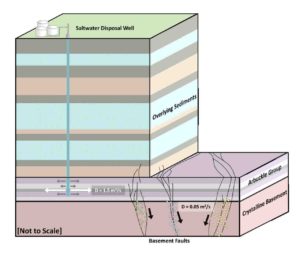
Researchers studying hydraulic fracturing have answered a longstanding question over how the practice can sometimes cause moderate earthquakes and may be able to use their model to forecast when quakes linked to fracking might occur.

The team of seismologists and geophysicists from Dalhousie University and the University of Calgary conducted a new study aimed at understanding the physical mechanisms of earthquakes “induced” by hydraulic fracturing, a widely used method to stimulate extraction of hydrocarbons from the ground.

They wanted to understand why these events were occurring, in spite of laboratory measurements suggesting they shouldn’t happen in the type of shale rock undergoing stimulation.

What they found is that the injection of fracturing fluids can lead to a slow slip on a fault. That can gradually put enough strain on another, distant section of the fault to cause it to slip suddenly and produce an earthquake.

Possibilities for new monitoring and mitigation strategies

Dmitry Garagash, a professor in the Civil and Resource Engineering Department at Dalhousie, co-authored the study that was published in Science Advances, a top-tier online journal of the American Association for the Advancement of Science.

“Work like this allows us to understand the phenomenon better and may ultimately lead to improved regulations and practices of hydraulic fracturing,” said Dr. Garagash.

“The developed physics-based model of fault slip in response to changes caused by fracking can lead to better prediction of this type of events, but also suggest new field monitoring and mitigation strategies.”

The team was led by Dr. Thomas Eyre, a postdoctoral researcher in the Department of Geoscience at the University of Calgary, and looked at so-called “felt events” or earthquakes that are large enough to be felt in nearby communities.

That included a magnitude 4.2 earthquake earlier this year near Red Deer, Alta., and a 4.5 quake last year near Fort St. John, B.C.

The researchers analyzed a set of seismic and geological data, some of which were collected during a magnitude 4.1 hydraulic fracturing-induced earthquake on Jan. 12, 2016, near Fox Creek in northwest Alberta.

An important milestone

Hydraulic fracturing involves pumping a mixture of water, sand and chemicals into a well bore under high pressure to create fractures in reservoir rocks to exploit them for oil and gas.

“This is an important new milestone for understanding earthquakes caused by hydraulic fracturing,” says study co-author Dr. David Eaton, a professor in the University of Calgary’s Department of Geoscience.

Dr. Eyre said that based on the research team’s model, corroborated by field observations and by physics-based mathematical modeling, the earthquake initiates on a distant part of the fault where friction conditions are unstable.

“In the case we studied, the earthquake occurred hundreds of meters above the hydraulic fracturing zone,” Dr. Eyre said.

Previous studies have suggested that fault slip in shale formations targeted by fracking occurs too slowly to produce an earthquake. But the new research found that this slow slip can alter the conditions on the fault a distance away from the site of fracking and cause a distant quake.

Reference:
Thomas S. Eyre et al. The role of aseismic slip in hydraulic fracturing–induced seismicity, Science Advances (2019). DOI: 10.1126/sciadv.aav7172

Note: The above post is reprinted from materials provided by Dalhousie University.

Ancient animal species: Fossils dating back 550 million years among first animal trails

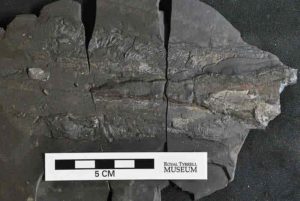
A fossilized trail of the animal Yilingia spiciformis, dating back 550 million years. The trail was found in China by a team of scientists including Shuhai Xiao of the Virginia Tech College of Science. Credit: Virginia Tech College of Science

In a remarkable evolutionary discovery, a team of scientists co-led by a Virginia Tech geoscientist has discovered what could be among the first trails made by animals on the surface of the Earth roughly a half-billion years ago.

Shuhai Xiao, a professor of geosciences with the Virginia Tech College of Science, calls the unearthed fossils, including the bodies and trails left by an ancient animal species, the most convincing sign of ancient animal mobility, dating back about 550 million years. Named Yilingia spiciformis—that translates to spiky Yiling bug, Yiling being the Chinese city near the discovery site—the animal was found in multiple layers of rock by Xiao and Zhe Chen, Chuanming Zhou, and Xunlai Yuan from the Chinese Academy of Sciences’ Nanjing Institute of Geology and Palaeontology.

The findings are published in the latest issue of Nature. The trials are from the same rock unit and are roughly the same age as bug-like footprints found by Xiao and his team in a series of digs from 2013 to 2018 in the Yangtze Gorges area of southern China, and date back to the Ediacaran Period, well before the age of dinosaurs or even the Pangea supercontinent. What sets this find apart: The preserved fossil of the animal that made the trail versus the unknowable guesswork where the body has not been preserved.

“This discovery shows that segmented and mobile animals evolved by 550 million years ago,” Xiao said. “Mobility made it possible for animals to make an unmistakable footprint on Earth, both literally and metaphorically. Those are the kind of features you find in a group of animals called bilaterans. This group includes us humans and most animals. Animals and particularly humans are movers and shakers on Earth. Their ability to shape the face of the planet is ultimately tied to the origin of animal motility.”

The animal was a millipede-like creature a quarter-inch to an inch wide and up to 4 inches long that alternately dragged its body across the muddy ocean floor and rested along the way, leaving trails as loing as 23 inches. The animal was an elongated narrow creature, with 50 or so body segments, a left and right side, a back and belly, and a head and a tail.

The origin of bilaterally symmetric animals—known as bilaterians—with segmented bodies and directional mobility is a monumental event in early animal evolution, and is estimated to have occurred the Ediacaran Period, between 635 and 539 million years ago. But until this finding by Xiao and his team, there was no convincing fossil evidence to substantiate those estimates. One of the recovered specimens is particularly vital because the animal and the trail it produced just before its death are preserved together.

Remarkably, the find also marks what may be the first sign of decision making among animals—the trails suggest an effort to move toward or away from something, perhaps under the direction of a sophisticated central nerve system, Xiao said. The mobility of animals led to environmental and ecological impacts on the Earth surface system and ultimately led to the Cambrian substrate and agronomic revolutions, he said.

“We are the most impactful animal on Earth,” added Xiao, also an affiliated member of the Global Change Center at Virginia Tech. “We make a huge footprint, not only from locomotion, but in many other and more impactful activities related to our ability to move. When and how animal locomotion evolved defines an important geological and evolutionary context of anthropogenic impact on the surface of the Earth.”

Rachel Wood, a professor in the School of GeoSciences at University of Edinburgh in Scotland, who was not involved with the study, said, “This is a remarkable finding of highly significant fossils. We now have evidence that segmented animals were present and had gained an ability to move across the sea floor before the Cambrian, and more notably we can tie the actual trace-maker to the trace. Such preservation is unusual and provides considerable insight into a major step in the evolution of animals.”

Reference:
Death march of a segmented and trilobate bilaterian elucidates early animal evolution, Nature (2019). DOI: 10.1038/s41586-019-1522-7

Note: The above post is reprinted from materials provided by Virginia Tech.

A new reptile species from Wales named by Bristol student

The type specimen of Aenigmaspina pantyfynnonensis, photograph and 3D scan model, produced by Erin Patrick as part of her Masters thesis work in Bristol. This little block, the size of the palm of your hand, shows the backbone, curved round from top right to bottom left, and in the middle the ribs and shoulder blades. Scale bar is 1 cm. Credit: University of Bristol

After resting for decades in the storerooms of the Natural History Museum in London, a fragmentary fossil from the Late Triassic (200 million years ago) has been named as a new species by a Masters’ student at the University of Bristol.

Erin Patrick studied this creature for her MSc Palaeobiology dissertation research under the supervision of Professor Mike Benton and Dr. David Whiteside from Bristol’s School of Earth Sciences.

The fossil is one of several novel species named from Pant-y-ffynnon Quarry in Wales. It was found in the 1950s but has been ignored since then because it was so tiny and hard to study.

Most of the specimen is in two blocks of rock that fit together to form a lump that would sit on a child’s hand. On the surface are small bones, but it revealed its treasures when it was scanned. While no skull is present, these blocks contain a number of vertebrae, ribs, one scapula, and tiny armor plates from its back.

Using CT scanning, these tiny bones (some mere millimeters wide and long) could be studied in three-dimensional detail, allowing Erin to examine fossils otherwise hidden in the rock.

When she first saw the scans, Erin commented: “I was amazed. The rock and small fossils looked like nothing in particular, but the scans showed up fantastic detail. I worked on the images at ten times magnification to see all the minute features.”

When the fossil was found, its discoverers dubbed it “Edgar,” but as a new species it has now been given the formal name Aenigmaspina pantyffynnonensis.

The first part of the name refers to its enigmatic spine table, a feature of the vertebrae that supported the armor plates on the back. The second part of the name refers to Pant-y-ffynnon quarry in South Wales where it was found.

Erin added: “While creating the 3-D models, I was looking for anatomical features that would say what this new beast was.

“We could see it wasn’t a dinosaur, and the spine tables and armor plates put it on the crocodile side of the evolutionary tree.

“During the Triassic, there was a flurry of different reptile groups emerging related to modern crocodiles, but most of these were pretty huge and had special features not present in Aenigmaspina.”

Professor Benton said: “We were able to code Aenigmaspina for 100 or so characters and calculate its most likely position in the tree of life, but the answers were not 100 percent certain. It seems to be a relative of another little armored beast called Erpetosuchus known from the Late Triassic of north-east Scotland and the eastern United States.”

Dr. Whiteside said: “Erin’s work has added important knowledge to our understanding of Late Triassic faunas worldwide and particularly to the animals present in South Wales during that time.

“We know that Aenigmaspina lived on a small limestone island, part of a sub-tropical archipelago and this brings the number of major new species described from Pant-y-ffynnon quarry to four, two of which have been named by Bristol Masters students.”

Reference:
Erin L. Patrick et al. A new crurotarsan archosaur from the Late Triassic of South Wales, Journal of Vertebrate Paleontology (2019). DOI: 10.1080/02724634.2019.1645147

Note: The above post is reprinted from materials provided by University of Bristol.

Earthquake study casts doubt on early warnings but hints at improved forecasting

Map of seismic sensors (green triangles) around the epicenter (red star) of one of the earthquakes near the city of Tsukuba, Ibaraki Prefecture. Credit: 2019 Satoshi Ide

A recent study has investigated around 100,000 localized seismic events to search for patterns in the data. University of Tokyo Professor Satoshi Ide discovered that earthquakes of differing magnitudes have more in common than was previously thought. This suggests development of early warning systems may be more difficult than hoped. But conversely, similarities between some events indicate that predictable characteristics may aid researchers attempting to forecast seismic events.

Since the 1980s, seismologists have wondered how feasible it might be to predict how an earthquake will behave given some information about its initial conditions—in particular, whether the eventual magnitude could be determined based on seismic measurements near the epicenter. Most researchers consider this idea improbable, given the randomness of earthquake behavior, but Ide thinks there’s more to it than that.

“Taking inspiration from a study comparing different-sized earthquakes, I decided to analyze a seismic dataset from a region known as the Tohoku-Hokkaido subduction zone in eastern Japan,” said Ide. “A systematic comparison of around 100,000 seismic events over 15 years leads me to believe earthquakes are not different in random ways but share many similarities.”

To draw comparisons between earthquakes, Ide first selected the larger examples from the dataset with magnitudes greater than 4.5. He also selected smaller earthquakes in the same regions as these larger ones. Ide then ascertained mathematically how similar seismic signals were between pairs of large and small earthquakes. He used a statistical function for the comparison of signals called a cross-correlation on data from 10 seismic stations close to the pairs of earthquakes in each case.

“Some pairs of large and small earthquakes start with exactly the same shaking characteristics, so we cannot tell the magnitude of an earthquake from initial seismic observations,” explained Ide. “This is bad news for earthquake early warning. However, for future forecasting attempts, given this symmetry between earthquakes of different magnitudes, it is good to know they are not completely random.”

The study is published in Nature.

Reference:
Frequent observations of identical onsets of large and small earthquakes, Nature (2019). DOI: 10.1038/s41586-019-1508-5

Note: The above post is reprinted from materials provided by University of Tokyo.

Analyzing the world’s oldest woody plant fossil

A, photograph of Armoricaphyton chateaupannense preserved in 2D as carbonaceous thin films. B, SEM image of a transverse section of an axis of a specimen of A. chateaupannense preserved in 3D showing the radially aligned tracheids. Credit: Canadian Light Source

Mapping the evolution of life on Earth requires a detailed understanding of the fossil record, and scientists are using synchrotron-based technologies to look back—way, way back—at the cell structure and chemistry of the earliest known woody plant.

Dr. Christine Strullu-Derrien and colleagues used the Canadian Light Source’s SM beamline at the University of Saskatchewan to study Armoricaphyton chateaupannense, an extinct woody plant that is about 400 million years old. Their research focused on lignin, an organic compound in the plant tracheids, elongated cells that help transport water and mineral salts. Lignin makes the cells walls rigid and less water permeable, thereby improving the conductivity of their vascular system.

Strullu-Derrien, a scientific associate at the Natural History Museum in London, England and the Natural History Museum in Paris, France, had described A. chateaupannense some years ago and returned to it for this project.

“Studies have been done previously on Devonian plants but they were not woody,” she said. “A. chateaupannense is the earliest known woody plant and it’s preserved in both 2-D form as flat carbonaceous films and 3-D organo-mineral structures. This allows for comparison to be done between the two types of preservation,” she said.

Although the fossils used in the study were collected in the Armorican Massif, a geologically significant region of hills and flatlands in western France, Strullu-Derrien said early Devonian woody plants have also been found in New Brunswick and the Gaspé area in Quebec “although these are 10 million years younger than the French one.”

One of the challenges in this kind of study is that the fossilization process modifies soft plant tissue, which alters or obscures its original biochemical structure and makes it difficult to precisely reconstruct the original chemistry. This study, however, aided by advanced visualization technologies, identified lignified cells in the fossils, suggesting the plant contained decay-resistant lignin compounds.

“Analyses show that both the 2-D and 3-D fossils have the same chemical composition, which is different than modern lignin, but the chemical signal of lignin is not completely lost in the fossilization process,” she said. Although the type of preservation of the plant fossils is not unique, “the combination of synchrotron methods used to study the structure and the chemistry of the wood at this level of detail is novel.”

The results of the research are in a paper entitled “On the Structure and Chemistry of Fossils of the Earliest Woody Plant,” published by Palaeontology.

Given how ubiquitous and important wood is as a structural component of modern plants, Strullu-Derrien’s investigation advances the knowledge around when and how wood first evolved. Yet, questions remain: “Wood first appears in small plants but did it have a different function than it does today in trees, for example?” posed Strullu-Derrien.

To find an answer, she will apply the same techniques used in this study on plants of other geological ages “to follow the evolution of their structure and to be able to find when, or in what condition of preservation, the remaining organic matter has kept a chemical signal of lignin.”

“Our study illustrates the capabilities of synchrotrons to investigate the early evolution of tissue systems in plants. It’s crucial to have access to these techniques to reach the level of resolution needed for getting chemical signals such as lignin. This represents a developing and promising area for the study of fossils that will complement the morpho-anatomical data and help to interpret the structures,” she said.

Reference:
Christine Strullu‐Derrien et al. On the structure and chemistry of fossils of the earliest woody plant, Palaeontology (2019). DOI: 10.1111/pala.12440

Note: The above post is reprinted from materials provided by Canadian Light Source.

Related Articles