
Home Blog Page 50

New NASA radar looks to monitor volcanoes and earthquakes from space

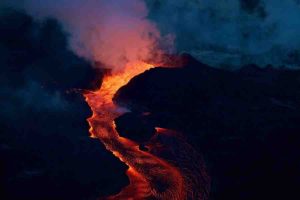
The ash plume from the Kilauea volcano on the big island of Hawaii was pictured May 12, 2018, from the International Space Station. Credit: NASA

Instead of looking up to the sky for bright bursts of fiery color, a research team spent Fourth of July 2018 peering down at fiery globs of molten lava from a sky-diving airplane. Bolted to their plane was a new NASA instrument designed to detect each time the volcano took a breath, as its caldera swelled and deflated.

The team flew multiple flights above the Kīlauea Volcano in Hawaii Volcanoes National Park from July 3 to 5, 2018, to demonstrate how a new instrument could pave the way for a future constellation of small satellites dedicated to monitoring impacts from volcanic activity, earthquakes and changes in land surfaces, said Lauren Wye, the principal investigator who led and recently concluded the instrument’s development at SRI International in Menlo Park, California.

A global map detailing land elevation changes over time can help scientists pinpoint ground motion before, during and following earthquakes and volcanic eruptions, and help identify impacts from floods and groundwater pumping. “The CubeSat Imaging Radar for Earth Sciences, or CIRES, can help decision-makers and emergency managers obtain observations sooner after a hazardous event so that they are better prepared to deal with disaster relief,” Wye said.

Although Kīlauea’s eruption impacted over 50 square miles of land, ground deformation, or a change in land elevation, is not always perceptible to the human eye. Highly specialized technology like Wye’s new instrument can pinpoint and record these changes.

CIRES is equipped with an S-band Interferometric Synthetic Aperture Radar (InSAR). The S-band radar is able to penetrate through vegetation and reach the ground. CIRES takes two radar images of a specific area from approximately the same position in space at two different times and then processes the two images to determine the difference between them.

The National Academies of Sciences, Engineering and Medicine’s 2017 Decadal Survey, “Thriving on Our Changing Planet: A Decadal Strategy for Earth Observations from Space,” recommends that NASA use InSAR measurements to help address the dynamics of earthquakes, volcanoes, landslides, glaciers, groundwater and Earth’s interior.

A constellation of small InSAR satellites could work in tandem with the NASA-ISRO SAR Mission (NISAR), which is NASA’s first dedicated InSAR satellite currently in development. Multiple small satellites could collect frequent data over rapidly evolving processes, like volcanic eruptions, earthquakes and landslides, adding to NISAR’s systematic global data.

Once upon a radar

Traditionally, researchers monitor ground deformation with on-the-ground sensors and the Global Positioning System (GPS). InSAR measurements are complementary to ground measurements and can often guide how ground sensors are installed. “InSAR data have revolutionized how we look at earthquakes and volcanoes,” Kyle Anderson, a geophysicist at the U.S. Geological Survey, said.

In orbit, a series of small InSAR satellites could peer down and record changes in ground deformation. “Volcanoes will often inflate with magma before they erupt,” Anderson said. Anderson worked with the CIRES team at Kīlauea. “Although it’s difficult to predict how big or how long the eruption will be, we can say, this volcano started inflating and there’s a higher probability of it erupting.”

The CIRES project began in January 2015 at SRI International with funding from NASA’s Earth Science Technology Office to develop the instrument’s radar electronics hardware over two years. It then received an additional three years of funding to prepare the radar for space, demonstrate the imaging capabilities via aircraft, including both on-board and remotely piloted aircraft, and advance a space-deployable antenna to complete the instrument.

“InSAR has been particularly useful for better understanding volcanoes in remote areas,” Anderson said. For example, the technology helped scientists notice deformation near the Three Sisters cluster of volcanoes in central Oregon from 1997 to 2001. InSAR pinpointed deformation in an area that last saw an eruption 1,500 years ago. Because of the observed changes, the USGS installed seismometers, GPS stations and gas-monitoring equipment to check for other signs of activity. In 2004, those instruments detected a swarm of 300 small earthquakes.

“InSAR allows you to get wide areas of coverage and see how one part of the volcano’s caldera is changing relative to another part,” Patrick Rennich, the CIRES signal processing and experiment design lead, said. Typically, researchers place a limited number of GPS sensors on specific parts of the volcano to monitor any movement. “CIRES should be able to cover the entire caldera,” Rennich said.

Steps to space

During development, “the team ran into a lot of hiccups,” Wye said. However, with each hiccup, like a delayed test flight, the team got innovative. “It led to a lot of fun exercises,” Wye said.

One of those exercises saw the team strapping the instrument to a moving car. They drove the car, which they dubbed “CarSAR,” along elevated roads in the Bay Area of Northern California in early 2018 to see how CIRES would pick up information in a valley below. “But we really needed to get higher to test our data,” Wye said.

When the Kīlauea Volcano started erupting in May 2018, they saw their opportunity. On July 4, 2018, lava was flowing and the volcano’s caldera was collapsing. CIRES successfully obtained SAR, or snapshot imagery, but wasn’t able to obtain InSAR, or comparison images, over Kīlauea, in part because, “It was difficult to fly on the exact same path every day,” Rennich said.

The flights over Kīlauea, among other field tests, helped the team learn what worked and didn’t work as they developed the instrument. They were able to optimize CIRES to improve its power management, size, sensor capabilities and ability to withstand heat.

In December 2019, the team again strapped CIRES, with updated hardware and software, to an airplane usually reserved for commercial skydiving and flew 10,000 feet above an army training facility in Indiana. “It turns out that skydiving operators are very comfortable flying with an open door,” Rennich said.

The team flew CIRES above a simulated flooded village at the Muscatatuck Urban Training Center to better understand radar signatures in a flooded urban environment. The flight also produced data that could improve algorithms that quantify the extent of flooding and related damage. NASA’s Earth Science Technology Office and Disasters Program helped fund the flights and analysis of the CIRES data.

“By mounting CIRES on an airplane, we could fly at different angles and see how different building orientations affect how they appear in radar images due to flooding,” Sang-Ho Yun, a geophysicist and coinvestigator of this project at NASA’s Jet Propulsion Laboratory in Pasadena, California, said. “Flooding is like a ghost,” Yun said; its ephemeral nature makes it difficult to assess the accuracy of flood mapping techniques.

The team also performed an experiment where they controlled motion on the ground to test CIRES. During the Indiana flight, “One of our colleagues on the ground would raise silvery metal reflectors by half a centimeter to a centimeter to show that we can detect that level of change,” Rennich said. This helped prove that CIRES collected accurate InSAR data.

The flights were successful in part because the team was able to fly CIRES along the same path multiple times in a row, which they weren’t able to do in Hawaii. “We implemented a better pilot navigation system,” Rennich said, which allowed the team to fly within a few feet of where they had flown the previous day. In Hawaii, the they flew approximately 500 feet from the previous day’s course.

“When you’re in space, trajectory is much more repeatable,” Rennich said, because each satellite is on a predictable, traceable course.

For the team to make CIRES, or a CIRES-like instrument work in space, they would need to significantly extend its antenna, from two feet across to 10 feet across, Rennich said. “Everything else pretty much stays the same,” he said.

“Small satellites, similar in scope to CIRES, can be a dream system from a rapid disaster response point of view,” Yun said. Although small satellites, like CIRES, won’t be able to obtain the same accuracy as larger systems, they could obtain data more frequently when a disaster hits. “With small satellites, we can cost effectively achieve that goal,” Yun said.

Note: The above post is reprinted from materials provided by NASA’s Goddard Space Flight Center.

The first dinosaurs probably didn’t have feathers

We know that birds, such as this Archaeopteryx, evolved from dinosaurs but there have been persistent questions about how common the feathers were amongst their extinct relatives © The Trustees of the Natural History Museum, London

Over the last two decades there has been a revolution in the study of dinosaurs after it was discovered that some of these extinct animals were feathered.

Exactly how many species had feathers has been contentious, but a new study has shown that feathers were likely restricted to just a small proportion of the non-bird dinosaurs.

When the first perfectly preserved specimens of feathered dinosaurs were found in China in the 1990s, it was proved beyond doubt that these ancient animals were the ancestors of modern-day birds.

Since then, more and more species of dinosaur have been revealed to have been covered in feather-like structures. But how common these structures were, and how many different groups were feathered, is still being debated today.

Prof Paul Barrett, a dinosaur researcher at the Museum, has conducted an analysis of all the known specimens of dinosaur skin and mapped them onto evolutionary trees to see how they relate. The study was carried out with Nicolás Campione and David Evans and published as a contribution to a new book The Evolution of Feathers.

‘To date, most examples of dinosaur feathers have been found in the meat-eating dinosaurs, known as theropods, which is the group that also includes birds,’ explains Paul. ‘So that is not too much of a surprise.

‘But there’s been speculation as to how far back feathers appear in meat-eating dinosaur evolution, and whether feathers might also have been seen in all other dinosaurs.’

This is because there are a couple of examples of other dinosaurs from completely unrelated groups with feather-like coverings, most notably the herbivorous dinosaurs Kulindadromeus, Psittacosaurus and Tianyulong. In addition, it is also thought that some pterosaurs, which are the next closest relatives to dinosaurs, may also have been covered in feather-like structures.

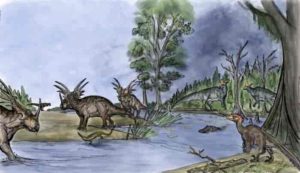
This has led to speculation that feathers were not just concentrated in the meat-eaters, but that many other groups, like the horned ceratopsians such as Triceratops, may also have had a smattering of feathers.

But the analysis by Paul and his colleagues shows that this was unlikely, and it supports the idea that true feathers were concentrated only in the group closest to living birds. The few other specimens with feather-like features may instead be examples of convergent evolution.

What is a feather?

One of the biggest challenges when it comes to determining whether or not a dinosaur had feathers is the definition of a feather itself.

Skin can do lots of strange things. Crocodiles have ossified parts of their skin into armour plates, mammals developed fur from theirs, while tortoises evolved beak sheaths. Feathers are just another example of what animals have done with the structure of skin.

To be a true feather, there are characteristics that need to be fulfilled. The structures must be made from a protein called beta-keratin, they must be branched, and finally they must originate from a follicle.

While these are obviously easy characteristics to ascertain in living species, when it comes to the fossil record things start to get a little trickier. Aspects like their physical structure might be discernible from well preserved specimens but figuring out what protein they were made from and whether or not they originated from a follicle is far less straightforward.

‘Most of the occurrences of feathers that we know about in the fossil record are all very heavily concentrated in the meat-eating dinosaurs that are closely related to birds,’ explains Paul. ‘The dinosaurs that are furthest away from birds that all scientists agree had feathers are actually animals like tyrannosaurs and comsognathids, which although they look very different from birds are not actually that distantly related.’

We can’t be certain that the feather-like structures seen on theropods like the tyrannosaurs originated from a follicle in the skin because these microscopic structures are not preserved. But the fact that these animals are so closely related to birds, on the basis of numerous features seen throughout their skeletons, means these structures are considered to be true feathers.

In fact, most dinosaurs with strong evidence of feathers come from within a very select group of theropods known as the Coelurosauria. This includes not only tyrannosaurs and birds, but also the ornithomimosaurs, therizinosaurs and compsognathids.

Going further back in time, things get rapidly murkier. ‘We have very little evidence of feathers in earlier meat-eating dinosaurs,’ says Paul. ‘The further down the theropod dinosaur family tree we go, the evidence for feathers gets thinner and thinner.’

Mostly scaly

This could be for one of two reasons: either the animals simply did not have feathers, or these earlier dinosaurs have been fossilised in rocks that are not conducive for the preservation of soft tissues.

For those 77 dinosaur species where skin has been preserved, Paul and his colleagues were able to map them onto evolutionary trees to see how feathers were distributed across dinosaurs and their close relatives.

‘We have really strong evidence that animals like the duck-billed dinosaurs, horned dinosaurs and armoured dinosaurs did not have feathers because we have lots of skin impressions of these animals that clearly show they had scaly coverings,’ says Paul. ‘We also have zero evidence of any feather like structures in the long-necked dinosaurs, the sauropodomorphs.

‘If we look at the evidence that we do have, and we combine that with evolutionary trees, what we find is that there is no evidence for the first dinosaurs being feathered.’

Instead, it seems to indicate that feathers were an important part of the theropod story but not necessarily so for dinosaurs as a whole. Similarly, it might suggest that some feather-like structures could have appeared in some other dinosaur groups once or twice independently.

The major implication of this research is that the earliest dinosaurs were probably primitively scaly like other reptiles. Even when feathered pterosaurs are added to the evolutionary trees, it doesn’t alter these conclusions.

This could have an impact on why we think feathers evolved, as this means that although they were were almost certainly giving some benefits to meat-eating dinosaurs, maybe in helping them to stay warm or in display, these were seemingly less important in the other dinosaur groups.

It also suggests that perhaps dinosaurs had the underlying genetic ability to produce feathers from the start, but that they didn’t always develop them, or maybe some groups even lost them.

‘Some people might be disappointed that we don’t think we should be putting feathers on dinosaurs other than the meat-eaters,’ says Paul. ‘But this work raises a lot of other interesting questions. If all dinosaurs did possess the possibility of making feathers, then why didn’t they?

‘That’s a whole other set of questions.’

Note: The above post is reprinted from materials provided by The Natural History Museum, London. The original article was written by Josh Davis.

Aquatic ancestors of terrestrial millipedes characterized for the first time

One of the biggest gaps in the arthropod fossil record was what the ancestors to millipedes and centipedes looked like, but now that gap has been filled. Credit: Katja Schulz/Wikimedia Commons

Insects, spiders and millipedes make up the majority of all animals on land. While today not many of them live in the water, their ancestors were once aquatic.

A 411-million-year-old fossil shows us what one of these groups looked like when they still spent their days in the water.

The ancestors to modern-day arthropods, the vastly successful group that includes insects, spiders, millipedes and crabs, originated during the Cambrian Period about 541 million years ago.

These creatures were small and fully aquatic, living in the oceans and freshwater at the same time as most other major lineages of animals were also starting to appear. But at what point these early arthropods then began to split into the major land-living groups we see today has not been well established.

One of the biggest holes in the fossil record of arthropods has been the origin of the centipedes and millipedes, known collectively as the Myriapoda. No aquatic form of this lineage has ever been identified, until now.

Looking at fossils found within a rock formation known as the Rhynie Chert that date to about 410 million years old, researchers have been able to look in exquisite detail at some of the tiny arthropods preserved within. They found that some of these creatures were aquatic myriapods.

Dr. Greg Edgecombe, a palaeontologist at the Museum who studies arthropods, has been working with colleagues to describe these tiny early relatives to centipedes and millipedes.

“It’s something I have been wrestling with for a couple of decades now, and is one of the great holes in the arthropod fossil records,” says Greg. “This it is the first opportunity to see what the animals looked like in that gap.”

The description has now been published in the Proceedings of the National Academy of Sciences of the U.S..

The first animals on land

Arthropods are the most successful groups of animals on the planet, accounting for roughly 80% of all animals currently alive.

They are one of a few groups of animals that successfully made the transition from the oceans to land, one of the others being amniotes, and were the first to do so by at least some 420 million years ago.

Generally, the terrestrial arthropods can be broken up in three main groups: the hexapods (which includes insects), the arachnids (spiders and their kin) and the myriapods (centipedes and millipedes).

But rather that this occurring as a single event, each separate group of arthropods made the transition on their own.

“There were three major independent terrestrialisation events in Arthropoda,” explains Greg. “All of them had to deal with the same basic challenges because land was a hostile environment.” Each group had to figure out how to prevent drying out, how to support their own bodies and walk, how to excrete and not least how to breathe.

We know that the first arthropods appeared during the Early Cambrian some 541 million years ago, as their fossils have been found in deposits such as the Burgess Shale, and we know that by the Early Devonian they were well established on land.

It is what happened in between these events that has been less certain.

The first terrestrial ecosystems

The Rhynie Chert is a deposit found in Aberdeen, Scotland. It preserves one of the earliest terrestrial ecosystems, containing some of the first plants and animals that colonised the land.

When the rocks were being formed, the region would have been a system of pools and springs not unlike what is seen in Yellowstone National Park today, although not quite as extreme. Within these pools freshwater plants and animals were thriving, and around the margins they were beginning to explore the surrounding land.

It is within these rocks that Greg’s colleague Dr. Christine Strullu-Derrien was able to identify the tiny fossil arthropods. By using innovative microscopy methods, Christine managed to image these animals in astonishing detail, showing the fine anatomy of their mouth parts.

“These little details allow us to see that there are a set of organs in the head of the fossils that correspond to what we see in the mouth regions of living myriapods,” says Greg. This has confirmed that they were likely the early, aquatic-living ancestors to all living centipedes and millipedes.

What is interesting about this is that this is not the first time that these early myriapods have been found in the fossil record.

Known as euthycarcinoids, the bodies of these creatures are known in rocks dating from the Cambrian to the Triassic, while their trackways have been found on ancient tidal flats and coastal sand dunes. It’s just that these fossils were not detailed enough and had previously been misidentified as being early crustacean or arachnid relatives.

Now, Greg and his colleagues have been able to show that this interpretation was wrong, and that they actually belong to an entirely different groups of arthropods and help to plug this long-standing gap in the fossil record.

The work is also helping to show how the use of modern technology can give new insights into old specimens.

“To be honest, they’re just seriously beautiful fossils,” says Greg. “We can tell more about the shape of these animals than I could even have imagined would have been possible.

“That one image of the specimen is one of the most sublime fossils that I will ever have the opportunity to work on.”

Reference:
Gregory D. Edgecombe et al. Aquatic stem group myriapods close a gap between molecular divergence dates and the terrestrial fossil record, Proceedings of the National Academy of Sciences (2020). DOI: 10.1073/pnas.1920733117

Note: The above post is reprinted from materials provided by Natural History Museum.

UNE creates world’s first online human skeleton

 Image: Rowan Webb
Image: Rowan Webb

In a ground-breaking first University of New England (UNE) researchers have produced the only fully online human skeleton, propelling a traditionally lab-based science into the digital cloud.

The physical skeleton was gifted by Rowan Webb, a UNE archaeology technician who passed away from cancer in 2010 and who wanted his remains to be used for scientific research.

Inspired by his story, a team of UNE researchers and technical specialists dedicated two years to realise Rowan’s aspiration using digitisation and rendering technology only widely available since his death.

UNE Anatomy will begin teaching with the online 3-D models this week.

“Rowan had no idea about the technology that we would have at our disposal, and that it could make his gift available to the whole world so that anybody could learn from him,” says UNE zooarchaeologist Dr. Melanie Fillios, who initiated and led the digital project.

“His family and those who knew him say he would be absolutely ecstatic. In a way, he lives on,” she said.

The digitisation project using 3-D photogrammetry was only made possible by a team of specialists willing to jump through administrative, legal and funding hoops, and with the support of the Shellshear Museum at the University of Sydney, which kindly provided access to Rowan’s physical skeleton.

UNE palaeontology Ph.D. candidate Michael Curry photographed each bone for the project, which has required nothing short of technical perfection.

“In the end I think I took around 30,000 photos of Rowan’s skeleton to get the most detailed images we could. It’s taken almost a year to take those images, reconstruct them and tweak them so they’re showing exactly what we want to see,” Mr Curry said.

And Mr Curry’s photography work was just the start of the digitisation process. Weeks of photography were followed by over a year spent creating and refining 3-D models from the images.

“We also needed to find a stable, publicly accessible digital platform, consider storage of the models and photos and prepare the metadata,” he said.

The new digital resource will be used for the first time in UNE’s zooarchaeology unit this year, but will also be available as a resource for anyone with an internet connection anywhere in the world.

“Rowan’s skeleton will be used to teach the critical skill of human bone identification across a range of applications, from introductory human anatomy to forensic work,” Dr. Fillios said.

“We’re looking into cross-disciplinary collaborations with UNE’s rural criminology units, and potentially offering short courses to benefit the Australian Federal Police (AFP), using Rowan’s skeleton to teach the basics of bone identification. But the sky is the limit for its possible uses,” she said.

UNE archaeologist Associate Professor Peter Grave describes the work as “absolutely cutting-edge”.

“I think we got the jump on the technology by about six months, thanks to Melanie’s initiative. Others are starting to catch up, so our current focus is to now develop applications for Rowan’s virtual skeleton in a learning and research environment,” he said.

As the appetite for online learning grows, 3-D models made available online are becoming an essential teaching resource. The UNE Archaeology team hopes their growing collection of online 3-D digital models will one day become part of a worldwide, freely accessible resource for teaching and research to benefit a range of disciplines.

“We think it’s important these resources are publicly available,” Dr. Grave said.

“We’d like to have a database that crosses disciplinary boundaries, where all universities and museums can pitch in to contribute models into the public sphere where it can be used for research worldwide.”

View the cranium here: https://une.pedestal3d.com/r/PQZbmruz05

Note: The above post is reprinted from materials provided by University of New England.

Shell puzzle: An additional piece added to the evolution of turtles

Although turtles belong to the reptiles, their skulls differs markedly from those of other members of this group. Credit: I. Werneburg

The origin of turtles is among the most debated topics in evolutionary biology. In a recently published study in the journal Nature Scientific Reports, Senckenberg scientist Ingmar Werneburg, in cooperation with an international research team, refutes existing hypotheses and sheds a new light on the evolution of the skull architecture. The results indicate a close link between skull evolution and the highly flexible neck of these armored reptiles.

In addition to their shell, turtles are characterized by their flexible necks and small heads. “Although turtles belong to the reptiles, their skulls differs markedly from those of other members of this group, which—together with their unique armored skeleton—makes it difficult to assess their phylogenetic origin,” explains PD Dr. Ingmar Werneburg of the “Senckenberg Centre for Human Evolution and Palaeoenvironment (SHEP) an der Universität Tübingen.”

Fossils suggest that several modifications during turtle evolution drove the initially mobile skull to transform to a rigid structure. In this process, the temporal openings behind the eyes closed as well, forming a so-called anapsid skull, which is not found in any other living reptile.

At the same time, the animals developed a unique arrangement of their jaw muscles, comparable to a pulley system. “Until now, it was assumed that these modifications led to an increased bite force in turtles, and that this development constituted a functional adaptation to a modified feeding behavior,” adds Werneburg.

This hypothesis was now tested for the first time under biomechanical aspects by an international research team led by Werneburg. The scientist from Tübingen comments as follows: “To our surprise, the results do not show any support for an increased bite force—neither due to the skull’s rigidity nor caused by the rearranged jaw musculature.” However, the analyses reveal that the evolutionary innovations led to an optimized skull structure, which can withstand higher stress loads while requiring less bone material.

“We combined our new findings with the previous paleontological and anatomical knowledge, allowing us to develop a new scenario,” explains Werneburg. The key feature in this scenario is the close link between the evolution of the skull and the highly flexible neck. “We assume that the skull of modern turtles is the result of a complex process that has been taking place since the emergence of the shell.” On the one hand, the neck movement facilitates a general increase in the animal’s mobility, which counteracts its otherwise rigid body. On the other hand, the option of retracting the neck serves as an additional protective mechanism in dangerous situations.

Moreover, the modifications in the turtles’ skull may not only have led to an improved stress distribution but may also have paved the way for the evolution of new species. “The evolutionary potential for a novel skull architecture and longer, more flexible necks enabled the development of a larger diversity among turtles during and after the Jurassic period,” adds Werneburg in closing.

Reference:
Gabriel S. Ferreira et al. Feeding biomechanics suggests progressive correlation of skull architecture and neck evolution in turtles, Scientific Reports (2020). DOI: 10.1038/s41598-020-62179-5

Note: The above post is reprinted from materials provided by Senckenberg Research Institute and Natural History Museum.

Annularia paisii : New species of ancient horsetail with gall with about 300 million years old

Holotype of calamitalean sphenopsid Annularia paisii sp. nov. showing an insect-induced gall

Evolutionary history of ecological interactions between terrestrial arthropods and vascular plants

The interactions between the terrestrial arthropods and vascular plants comprise one of more complex and intriguing terrestrial ecosystems that have persisted from Early Devonian times until today. These interactions are diverse, with multiple species of arthropods, mainly insects, and host-plants interacting over a range of trophic levels through predation (i.e. herbivory), parasitism, and pollination. The features, intensity and diversity of these interactions are mainly influenced by climatic and environmental conditions. Galling represents the most biologically complex of all major arthropod–plant interactions, consisting of parasitic relationships, which are characterized by the endophytic insect-induced plant tissue damage that can occur on all major plant organs. The insect-induced galling damage consists of atypically enlarged plant structures, three-dimensional, conspicuous, generally of bilateral or radial symmetry and externally hardened, that offers to the encapsulated insect larvae a microclimate, nutrition, and protection from natural enemies. The insect galls affect usually the plants only locally, but in some instances can cause systemic effects.

The insect galls have a long evolutionary history and earliest fossil records are known from the Pennsylvanian strata. These earliest insect galls occurred on stems of arborescent ferns and calamitalean sphenopsids. Although insect galls have been well-documented in a wide range of host-plant species, about 80% of extant galls occur on leaves. The Pennsylvanian-age galls are very poorly known because they are rarely found and only occasionally reported in the fossil record.

Host ancient “horsetail” shows insect gall preserved in situ

The horsetails are plants with a very old historical lineage, with fossil record from the Late Devonian to the present day, existing in abundance in Portugal today. The new species hosted Annularia paisii shows an insect gall induced by parasitoid insects (popularly known as galling insects), which is an ichnospecies until now unknown for science that received a name of Paleogallus carpannularites. This shows the existence of complex insect-plant relationships 303 million years ago and reiterates the importance of the fossil record of the Portuguese Carboniferous. The patterns of herbivory of insects and other arthropods on horsetails are little known. In our paper, recently published in the International Journal of Plant Sciences, we addresses this subject, in which they document 315 million years of sphenophyte herbivory relationships by arthropod.

Ecological adaptation of Annularia paisii

The arrangement of the leaves of Annularia paisii appears anomalous for a species of Annularia. Its leaves are arranged in cup-shaped whorls, a typical characteristic of other calamitalean sphenopsid like fossil genus Asterophyllites. Several explanations can account for this condition. The leaves of Annularia paisii perhaps were retracted into a cup shape during their burial. Alternatively, the cup shape could have been an induced feature resulting from their sensitivity to sunlight or an external tactile stimulus similar to the modern sensitive plant, Mimosa pudica. Another possibility is a physiological reaction from an herbivorous insect, such as a gall antagonism. Annularia paisii is named in honor of the Portuguese paleobotanist João Pais (1949–2016) from Nova University in Lisbon (Portugal).

Reference:
Pedro Correia, Arden R. Bashforth, Zbynĕk Šimůnek, Christopher J. Cleal, Artur A. Sá, and Conrad C. Labandeira, “The History of Herbivory on Sphenophytes: A New Calamitalean with an Insect Gall from the Upper Pennsylvanian of Portugal and a Review of Arthropod Herbivory on an Ancient Lineage,” International Journal of Plant Sciences. DOI: 10.1086/707105

Note: The above post is reprinted from materials provided by Institute of Earth Sciences of University of the Porto, Portugal.

Fossil trove sheds light on ancient antipodean ecology

Flake of clear yellow amber from Anglesea, Victoria containing a new, beautifully preserved biting midge ca. 41 million years old. Credit: Enrique Peñalver.

The oldest known animals and plants preserved in amber from Southern Gondwana are reported in Scientific Reports this week. Gondwana, the supercontinent made up of South America, Africa, Madagascar, India, Antarctica and Australia, broke away from the Pangea supercontinent around 200 million years ago. The findings further our understanding of ecology in Australia and New Zealand during the Late Triassic to mid-Paleogene periods (230-40 million years ago).

Jeffrey Stilwell and colleagues studied more than 5,800 amber pieces from the Macquarie Harbour Formation in Western Tasmania, dating back to the early Eocene Epoch (~54-52 million years ago) and Anglesea Coal Measures in Victoria, Australia, from the late middle Eocene (42-40 million years ago). The authors report a rare “frozen behaviour” of two mating long-legged flies (Dolichopodidae). The specimens also include the oldest known fossil ants from Southern Gondwana and the first Australian fossils of ‘slender springtails’, a tiny, wingless hexapod. Other organisms preserved in the amber include a cluster of juvenile spiders, biting midges (Ceratopogonidae), two liverwort and two moss species.

The authors also studied deposits found at locations in southeastern Australia, Tasmania and New Zealand. These include the oldest reported amber from Southern Pangea dating back to 230 million years ago, 96-92 million year old deposits from forests near the South Pole and an intact fossil of an insect called a felt scale (Eriococcidae) from 54-52 million years ago.

The findings provide new insights into the ecology and evolution of Southern Gondwana and indicate that there may be a vast potential for future, similar finds in Australia and New Zealand.

Reference:
Amber from the Triassic to Paleogene of Australia and New Zealand as exceptional preservation of poorly known terrestrial ecosystems, Scientific Reports (2020). DOI: 10.1038/s41598-020-62252-z

Note: The above post is reprinted from materials provided by Nature Publishing Group.

Tree rings could pin down Thera volcano eruption date

Minoan eruption of Thera. Satellite image of Thera, November 21, 2000. Credit: NASA, public domain

Charlotte Pearson’s eyes scanned a palm-sized chunk of ancient tree. They settled on a ring that looked “unusually light,” and she made a note without giving it a second thought. Three years later, and armed with new methodology and technology, she discovered that the light ring might mark the year that the Thera volcano on the Greek island of Santorini erupted over the ancient Minoan civilization. The date of the eruption, which is one of the largest humanity has ever witnessed, has been debated for decades.

Pearson, a University of Arizona assistant professor of dendrochronology and anthropology, is lead author of a paper, published in the Proceedings of the National Academy of Sciences, in which she and her colleagues have used a new hybrid approach to assign calendar dates to a sequence of tree rings, which spans the period during which Thera erupted, to within one year of a calendar date. This allows them to present new evidence that could support an eruption date around 1560 B.C.

Filling the Gaps

“In every tree ring, you have this time capsule that you can unpack,” Pearson said.

Trees grow in accordance with the conditions of their local environment. Each year, trees produce a new layer of concentric growth, called a tree ring, which can record information about rainfall, temperature, wildfires, soil conditions and more. Trees can even record solar activity as it waxes and wanes.

When a sequence of rings from trees of various ages are overlapped and added together, they can span hundreds or thousands of years, providing insight about past climate conditions and context for concurrent civilizations.

“The longest chronology in the world stretches back 12,000 years. But in the Mediterranean, the problem is that we don’t have a full, continuous record going back to the time of Thera,” Pearson said. “We have recorded the last 2,000 years very well, but then there’s a gap. We have tree rings from earlier periods, but we don’t know exactly which dates the rings correspond to. This is what’s called a ‘floating chronology.'”

Filling this gap could help pin down the Thera eruption date and paint a climatic backdrop for the various civilizations that rose and fell during the Bronze and Iron ages, which together spanned between 5,000 and 2,500 years ago.

“Until you can put an exact year on events on a scale that makes sense to people—one year—it’s not quite as powerful,” Pearson said. “This study is really about taking (my co-author and tree ring lab research professor) Peter Kuniholm’s chronology that he’s put together over 45 years of work and dating it in a way not possible before. Most importantly, it is fixed in time, just as if we had filled our tree ring gap.”

A Hybrid Approach

Since the inception of the UArizona Laboratory of Tree-Ring Research in 1937, an assortment of tree ring samples from all over the world accumulated in less-than-ideal conditions beneath Arizona Stadium. But since the completion of the university’s upgraded Bryant Bannister Tree Ring Building in 2013, the curation team, led by Peter Brewer, has been relocating, organizing and preserving samples for future research.

“This is the collection that founded the field of tree ring research, and it’s by far the world’s largest,” Brewer said. “Researchers come from all over to use our collection.”

“It’s just crammed full of the remains of ancient forests and archaeological sites, which no longer exist, and it contains wood samples that were fundamental in the growth of the discipline of dendrochronology,” Pearson said.

The collection includes timbers from the Midas Mound Tumulus at Gordion in Turkey—a giant tomb of a man that was likely Midas’ father or grandfather. From timbers like these, Kuniholm has been building a tree ring chronology from the Mediterranean for nearly a half century. Together, Kuniholm’s record from the B.C. period spans over 2,000 years, including trees growing downwind of the Thera eruption, making it key to the team’s research.

Despite the length of this chronology, it remained undated. To pin it down, the team decided to try something new.

When cosmic rays from space enter the Earth’s atmosphere, neutrons collide with nitrogen atoms to create a radioactive version of carbon, called carbon-14, which spreads around the planet. All other life on Earth, including tree rings, pick up the carbon-14, and because tree-rings lock away a measurement of carbon-14 for each year that they grow, they hold patterns showing how it changed over time. These patterns of carbon-14 in tree rings around the world should match.

Pearson and her team used the patterns of carbon-14 captured in the Gordion tree rings to anchor the floating chronology to similar patterns from other calendar dated tree ring sequences.

“It’s a new way to anchor floating tree ring chronologies that makes use of the annual precision of tree rings,” Pearson said.

To validate their findings, the team turned to the calendar-dated rings of high-elevation bristlecone pines from western North America that lived at the same time as the Gordion.

“When there are large volcanic eruptions, it often scars bristlecone by freezing during the growing season, creating a frost ring,” said second author Matthew Salzer, research scientist at the tree ring laboratory. “Then we compared the dates of the frost rings with what was going on in the Mediterranean trees, which respond to volcanoes by growing wider rings. And it worked. It showed that the wide rings in the Mediterranean chronology occurred in the same years as the frost rings in the bristlecone. We took that to be confirmation that the dating was probably correct.”

The team then thought to use a new piece of technology in the lab called the X-ray fluorescence machine to scan the wood for chemical changes.

“We scanned the entire period across when Thera is known to have happened,” Pearson said, “and we detected a very slight depletion in calcium, right where I saw this lighter ring years ago.”

While it’s a slight fluctuation, it is significant and only occurs at one point in the years around 1560 B.C.

“We put that in the paper and tentatively suggest it’s a possible date for Thera,” Pearson said.

Something changed the chemistry of the environment in which the tree grew; acid deposition from a volcano is one possibility, wildfire is another, but because the date happens to coincide with other tree ring markers for a major eruption, Pearson she says it’s worthy of further exploration.

“I think to do good science you have to investigate everything and keep an open mind until sufficient data comes together,” Pearson said. “This is another little piece of the puzzle.”

Reference:
Charlotte Pearson el al., “Securing timelines in the ancient Mediterranean using multiproxy annual tree-ring data,” PNAS (2020). www.pnas.org/cgi/doi/10.1073/pnas.1917445117

Note: The above post is reprinted from materials provided by University of Arizona.

Sediments may control location, magnitude of megaquakes

A seismogram of 2011 Tōhoku earthquake and tsunami recorded at Weston Observatory in Massachusetts, USA. Credit: Image from Wikimedia Commons.

The world’s most powerful earthquakes strike at subduction zones, areas where enormous amounts of stress build up as one tectonic plate dives beneath another. When suddenly released, this stress can cause devastating “megaquakes” like the 2011 Mw 9.0 Tohoku event, which killed nearly 16,000 people and crippled Japan’s Fukushima Dai-ichi Nuclear Power Plant. Now a study published in Geology suggests that sediments atop the downgoing slab can play a key role in determining the magnitude and location of these catastrophic events.

In this newly published study, a team led by Gou Fujie, a senior scientist at the Japan Agency for Marine-Earth Science and Technology, used a trio of geophysical methods to image the subducting sediments in the northeastern Japan arc, where the Tohoku event occurred. The findings suggest that variations caused by volcanic rocks intruded into these sediments can substantially influence the nature of subduction zone earthquakes.

“Our imaging shows that the enormous amount of slip that occurred during the 2011 Tohoku earthquake stopped in an area of thin sediments that are just starting to subduct,” says Fujie. “These results indicate that by disturbing local sediment layers, volcanic activity that occurred prior to subduction can affect the size and the distribution of interplate earthquakes after the layers have been subducted.”

Researchers first began to suspect that variations in subducting sediments could influence megaquakes after the 2011 Tohoku event, when international drilling in the northeastern Japan arc showed that giant amounts of slip during the earthquake occurred in a slippery, clay-rich layer located within the subducting sediments. To better understand the nature of the downgoing slab in this region, Fujie’s team combined several imaging techniques to paint a clearer picture of the subseafloor structure.

The researchers discovered there are what Fujie calls “remarkable regional variations” in the sediments atop the downgoing plate, even where the seafloor topography seems to be flat. There are places, he says, where the sediment layer appears to be extremely thin due to the presence of an ancient lava flow or other volcanic rocks. These volcanic intrusions have heavily disturbed, and in places thermally metamorphosed, the clay layer in which much of the seismic slip occurred.

Because the type of volcanism that caused sediment thinning in the northeastern Japan arc has also been found in many areas, says Fujie, the research suggests such thinning is ubiquitous—and that this type of volcanic activity has also affected other seismic events. “Regional variations in sediments atop descending oceanic plates appear to strongly influence devastating subduction zone earthquakes,” he concludes.

Reference:
Gou Fujie et al. Spatial variations of incoming sediments at the northeastern Japan arc and their implications for megathrust earthquakes, Geology (2020). DOI: 10.1130/G46757.1

Note: The above post is reprinted from materials provided by Geological Society of America.

Most of Earth’s carbon was hidden in the core during its formative years

The team's experiments compared carbon's compatibility with the silicates that comprise the Earth's mantle (outer circle) to its compatibility with the iron that comprises the planet's core (inner circle) while under conditions mimicking the Earth's interior during its formative period. They found that more carbon would have stayed in the mantle than previously thought. Credit: Rebecca Fischer, Elizabeth Cottrell and Marion Le Voyer, Kanani Lee, and the late Erik Hauri.
The team’s experiments compared carbon’s compatibility with the silicates that comprise the Earth’s mantle (outer circle) to its compatibility with the iron that comprises the planet’s core (inner circle) while under conditions mimicking the Earth’s interior during its formative period. They found that more carbon would have stayed in the mantle than previously thought. Credit: Rebecca Fischer, Elizabeth Cottrell and Marion Le Voyer, Kanani Lee, and the late Erik Hauri.

Carbon is essential for life as we know it and plays a vital role in many of our planet’s geologic processes — not to mention the impact that carbon released by human activity has on the planet’s atmosphere and oceans. Despite this, the total amount of carbon on Earth remains a mystery, because much of it remains inaccessible in the planet’s depths.

New work published this week in Proceedings of the National Academy of Sciences reveals how carbon behaved during Earth’s violent formative period. The findings can help scientists understand how much carbon likely exists in the planet’s core and the contributions it could make to the chemical and dynamic activity occurring there — including to the convective motion powering the magnetic field that protects Earth from cosmic radiation.

Earth’s core is comprised mostly of iron and nickel, but its density indicates the presence of other lighter elements, such as carbon, silicon, oxygen, sulfur, or hydrogen. It’s been long suspected that there’s a tremendous reservoir of carbon hiding down there. But to attempt to quantify it, the research team used laboratory mimicry to understand how it got into the core in the first place.

The group was comprised of Harvard University’s Rebecca Fischer, the Smithsonian Institution’s Elizabeth Cottrell and Marion Le Voyer, both former Carnegie postdoctoral fellows, Yale University’s Kanani Lee, and Carnegie’s late Erik Hauri, the memory of whom the authors acknowledge.

“To understand present day Earth’s carbon content, we went back to our planet’s babyhood, when it accreted from material surrounding the young Sun and eventually separated into chemically distinct layers — core, mantle, and crust,” said Fischer. “We set out to determine how much carbon entered the core during these processes.”

This was accomplished by lab experiments that compared carbon’s compatibility with the silicates that comprise the mantle to its compatibility with the iron that comprises the core while under the extreme pressures and temperatures found deep inside the Earth during its formative period.

“We found that more carbon would have stayed in the mantle than we previously suspected,” explained Cottrell. “This means the core must contain significant amounts of other lighter elements, such as silicon or oxygen, both of which become more attracted to iron at high temperatures.”

Despite this surprising discovery, the majority of Earth’s total carbon inventory does likely exist down in the core. But it still makes up only a negligible component of the core’s overall composition.

“Overall, this important work improves our understanding of how Earth’s carbon was accumulated during the planetary formation process and sequestered into the mantle and core as they chemically differentiated,” concluded Richard Carlson, Director of Carnegie’s Earth and Planets Laboratory, where Hauri worked. “I only wish Erik was still with us to see the results published this week.”

This work was supported by a National Science Foundation postdoctoral fellowship.

Reference:
Rebecca A. Fischer, Elizabeth Cottrell, Erik Hauri, Kanani K. M. Lee, Marion Le Voyer. The carbon content of Earth and its core. Proceedings of the National Academy of Sciences, 2020; 201919930 DOI: 10.1073/pnas.1919930117

Note: The above post is reprinted from materials provided by Carnegie Institution for Science.

Quantitative reconstruction of formation paleo-pressure and case studies

sedimentary bedding
Sedimentary bedding

Formation pressure governs the generation, expulsion, migration, accumulation and preservation of petroleum. Fluid-rock interactions during diagenesis and mineralization are also affected by the formation pressure. Thus, investigating the formation paleo-pressure in sedimentary basins is an important aspect of research into the mechanisms and processes related to hydrocarbon accumulation, and it plays an increasingly important role in hydrocarbon exploration and prospective prediction.

Formation pressure occurs during the long-term evolution of basins, and is regulated by tectonism, deposition, diagenesis, fluid flow, geothermal field, and magmatic activity. Oil and gas exploration is increasingly directed at deep, ultra-deep and ancient strata which, however, have generally experienced multiple stages of tectonic movements. Reconstruction of formation paleo-pressure in these strata is not easy.

Various methods have been established for paleo-pressure reconstruction in sedimentary basins, including approaches based on basin modelling, fluid inclusion analysis, differential stress of rocks, transformation of clay minerals, acoustic transit time of mudstones, and seismic wave velocity. Each of these methods has advantages and limitations, but most can only determine the formation pressure in a certain geological period, rather than the whole pressure evolution process. Furthermore, some of these methods were established based on simple porosity evolution models, which are not applicable to reservoirs with complex fluid flows, intense tectonic activities, and abnormal porosity evolution paths.

Origins of abnormal pressures typically change during geological history. In this study, a new method is proposed for reconstructing the paleo-pressures in strata by integrating various paleo-pressure calculation methods according to the identification of the formation mechanism and the main factors responsible for controlling abnormal pressures. According to the geological background, quantitative analyses of the factors that might control overpressure were first conducted to clarify the contributions of each mechanism during different geological periods. Pressure evolution was reconstructed by fluid-compaction modelling with constraints imposed by paleo-pressures obtained from fluid inclusions or differential stress methods. Determining the mechanisms responsible for overpressures during geological history is the basic prerequisite for paleo-pressure research. Thus, quantitative studies were conducted of the contributions of disequilibrium compaction, gas charging, oil cracking, temperature reduction, and tectonic uplift and subsidence to overpressures.

Three case studies of paleo-pressure reconstruction were performed for the Sinian strata in the Sichuan Basin, Ordovician strata in the north uplift in the Tarim Basin and the Permian strata in the Sulige Gas Field in the Ordos Basin, where these three study sites are normally pressured, weakly over-pressured and abnormally low pressured at present, respectively.

The Sinian formation in the central Sichuan Basin is mainly normally pressured at present. Under the constraint of the trapping pressures due to fluid inclusions in three periods, which were calculated using PVTsim software, the evolution of pressure in the Dengying Formation was obtained by basin modelling with a fluid-compaction coupling model. Pressure in the Sinian Dengying Formation is due to a combination of hydrocarbon accumulation, oil cracking to form gas, and temperature reductions caused by tectonic uplift, where these different factors played dominant roles during diverse periods.

The Sulige Gas Field in the Ordos Basin is a typical gas field with an abnormally low pressure. A great temperature reduction from 165°C to 105°C occurred in the last 100 Ma. Regardless of gas dissipation, pressure would be decreased by 17.7-22% when temperature declined by 50-60°C. On the other hand, gases were dissipated 17-24 vol%, resulting in 23-32% decreases in the formation pressure. Based on fluid inclusion analysis and numerical modelling, weak overpressures occurred twice throughout the geological history, where the first overpressure was generated at 195 Ma, which was suspended by the uplift at 160 Ma before, overpressure was generated again after 140 Ma, where it was maximized in 98 Ma at a greatest depth of 4425.6 m and with a pressure coefficient value of 1.1. Subsequently, both the formation pressure and pressure coefficient decreased gradually due to uplift and denudation, and changed to an abnormally low pressure with a coefficient of 0.85 at present.

The fluid pressure during the critical period of tectonic compression can be quantitatively calculated using the differential stress method with calcite twins as a paleo-barometer. The paleo- pressure in the Ordovician Yinshan carbonate strata in the Shunnan Area of the Tarim Basin was reconstructed as a case study. The Shunnan Area was in a tectonic compression environment from the middle and late Caledonian to the Hercynian period, and the orientation of the principal stress changed from SW-NE to SE-NW. The paleo-stress ranged from 66.15 to 89.17 MPa, with an average of 82.06 MPa in the Caledonian, and ranged from 56.97 to 79.29 MPa, with an average value of 66.80 MPa in the Hercynian. The excess fluid pressure in the carbonate strata during tectonic compression deformation was calculated by the difference between realistic effective vertical stress and theoretical vertical stress. Combined with modelling results, a weak overpressure was developed in the Ordovician strata during the middle to late Caledonian period by the strong compression related to the Paleo-Kunlun Ocean subduction. The formation pressure gradually deceased to normal pressure because of strata uplift and stress field conversion. Another two phases of overpressure were formed at the end of the Permian and Neogene periods, originated from southeast-trending compression and gas filling, respectively.

Pressure analysis is the basis of fluid dynamic system analysis, which is significant for hydrocarbon migration and reservoir diagenesis. The development of effective paleo-pressure recovery methods for carbonate strata may be essential for addressing various problems in deep and ultra-deep layer pressure research.

Reference:
Nansheng Qiu et al, Quantitative reconstruction of formation paleo-pressure in sedimentary basins and case studies, Science China Earth Sciences (2020). DOI: 10.1007/s11430-019-9556-8

Note: The above post is reprinted from materials provided by Science China Press.

Researchers unravel the mystery of non-cotectic magmatic rocks

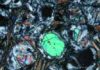
Photomicrographs showing anorthosites with 'correct' and 'wrong' proportions of chromite from the Bushveld Complex, South Africa. Credit: Wits University
Photomicrographs showing anorthosites with ‘correct’ and ‘wrong’ proportions of chromite from the Bushveld Complex, South Africa. Credit: Wits University

Researchers at Wits University in Johannesburg, South Africa, have found the answer to an enigma that has had geologists scratching their heads for years.

The question is that of how certain magmatic rocks that are formed through crystallisation in magmatic chambers in the Earth’s crust, defy the norm, and contain minerals in random proportions.

Normally, magmatic rocks consist of some fixed proportions of various minerals. Geologists know, for instance, that a certain rock will have 90% of one mineral and 10% of another mineral.

However, there are some magmatic rocks that defy this norm and do not adhere to this general rule of thumb. These rocks, called non-cotectic rocks, contain minerals in completely random proportions.

One example is chromite-bearing anorthosite from the famous Bushveld Complex in South Africa. These rocks contain up to 15% to 20% of chromite, instead of only 1%, as would normally be expected.

“Traditionally, these rocks with a ‘wrong’ composition were attributed to either mechanical sorting of minerals that crystallised from a single magma or mechanical mixing of minerals formed from two or more different magmas,” says Professor Rais Latypov from the Wits School of Geosciences.

Seeing serious problems with both these approaches, Latypov and his colleague Dr. Sofya Chistyakova, also from the Wits School of Geosciences, found that there is actually a simple explanation to this question—and it has nothing to do with the mechanical sorting or mixing of minerals to produce these rocks.

Their research, published in the journal Geology, shows that an excess amount of some minerals contained in these rocks may originate in the feeder conduits along which the magmas are travelling from the deep-seated staging chambers towards Earth’s surface.

“While travelling up through the feeder channels, the magma gets into contact with cold sidewalls and starts crystallising, thereby producing more of the mineral(s) than what should be expected,” says Chistyakova.

The general principle of this approach can be extended to any magmatic rocks with ‘wrong’ proportions of minerals in both plutonic and volcanic environments of the Earth.

“It is possible that a clue to some other petrological problems of magmatic complexes should be searched for in the feeder conduits rather than in magma chambers themselves. This appealing approach holds great promise for igneous petrologists working with basaltic magma complexes,” says Latypov.

Reference:
R.M. Latypov et al, Origin of non-cotectic cumulates: A novel approach, Geology (2020). DOI: 10.1130/G47082.1

Note: The above post is reprinted from materials provided by Wits University.

Sandgrouse : Six million-year-old bird skeleton points to arid past of Tibetan plateau

Photograph of the fossil sandgrouse Linxiavis inaquosus (left) with a fabricated-color image (right) of the bird's skeleton based on CT scanning data Credit: IVPP
Photograph of the fossil sandgrouse Linxiavis inaquosus (left) with a fabricated-color image (right) of the bird’s skeleton based on CT scanning data Credit: IVPP

Researchers from the Institute of Vertebrate Paleontology and Paleoanthropology (IVPP) of the Chinese Academy of Sciences have found a new species of sandgrouse in six to nine million-year-old rocks in Gansu Province in western China. The newly discovered species points to dry, arid habitats near the edge of the Tibetan Plateau as it rose to its current extreme altitude.

According to their study published in Frontiers in Ecology and Evolution on Mar. 31, the new species, named Linxiavis inaquosus, fills a nearly 20 million-year gap in the sandgrouse fossil record.

The fossil of the partial skeleton includes much of the body, such as the shoulder girdles, wishbone, bones from both wings, vertebrae, and part of a leg. Unfortunately, the head is missing.

“As the oldest fossil of a sandgrouse in Asia and the most complete fossil known from the group, the new skeleton provides a key link in expanding our understanding of the evolution of the sandgrouse living in China today, as well as the ecosystem associated with the Tibetan Plateau and the species that live only there,” said Dr. Li Zhiheng, first author of the study.

Sandgrouse are a group of 16 species of birds related to doves and pigeons that live in some of the most arid areas across Europe, Asia, and Africa. The association between sandgrouse and dry environments has helped scientists determine that the area next to the Tibetan Plateau was equally arid when Linxiavis inaquosus lived during the period known as the late Miocene.

“Most people would probably think of the Tibetan Plateau, with its high elevation, low oxygen levels, and harsh sun as one of the last places to be invaded by a group of animals. But in this case, our fossil suggests that sandgrouse might have quickly adapted to the dry, mountainous plateau millions of years ago,” said the coauthor Dr. Thomas A. Stidham.

Importantly, this fossil is from the time period known as the late Miocene when the Tibetan Plateau was continuing to rise rapidly in altitude and changing the climate of central Asia with an increase in aridity, along with a strong monsoon season.

This fossil was found at over 2,000 meters above sea level and within sight of Tibetan Plateau peaks that exceed 4,000 meters. That elevation is far greater than where all species of sandgrouse, except for the specialized Tibetan Sandgrouse, live today.

Despite the elevation and arid conditions, other fossils from the area show that the ecosystem was quite diverse. Dr. Stidham explains, “If you were on the edge of the Tibetan Plateau where our fossil is from six or seven million years ago, it would have looked quite like a nature documentary about the savannas in Africa, with the horizon filled with extinct relatives of hyenas, elephants, rhinos, pigs, antelopes, horses, ostriches, vultures, falcons, and of course now, sandgrouse.”

“We are discovering many fossil birds in this area by the Tibetan Plateau that help us to understand the relationships between the plateau, climate change, and biodiversity. We’re likely to keep uncovering more unusual and amazing bird fossils like this sandgrouse and the pheasant with a windpipe longer than its body that we reported a couple of years ago,” said Dr. Li.

Reference:
Zhiheng Li et al, Evidence of Late Miocene Peri-Tibetan Aridification From the Oldest Asian Species of Sandgrouse (Aves: Pteroclidae), Frontiers in Ecology and Evolution (2020). DOI: 10.3389/fevo.2020.00059

Note: The above post is reprinted from materials provided by Chinese Academy of Sciences.

Palaeobiologists have identified another new species of pterosaur

Image shows artwork of the Afrotapejara zouhrii. Credit: Megan Jacobs, Baylor University, Texas

You wait ages for a pterosaur and then four come along at once.

Hot on the heels of a recent paper discovering three new species of pterosaur, University of Portsmouth palaeobiologists have identified another new species—the first of its kind to be found on African soil.

Pterosaurs are the less well-known cousins of dinosaurs. They had adept flying ability—some as large as a fighter jet and others as small as a model aeroplane.

The new species belongs to a group of pterosaurs called tapejarids from the Cretaceous period. Tapejarids were small to medium-sized pterosaurs with wingspans perhaps as wide as four metres, most of which had large, broad crests sweeping up from the front of the skull.

They are well known in Brazil and China, and specimens have also been discovered in Europe, but this is the first time the flying reptile has been found in Africa.

It differs from the three recent species discovered as this one had no teeth—it was ‘edentulous’.

Professor David Martill, from the University’s School of the Environment, Geography and Geosciences, led the study. He said: “The study of Moroccan material shows that we are still far from having found all the paleontological treasures of North Africa. Even fragmentary fossils, like the jaw piece of the new pterosaur, can give us important information about the biodiversity of the past.”

Ph.D. student Roy Smith, one of the co-authors, said: “I feel very privileged to be part of such an exciting discovery. Working in the Sahara was a life-changing experience, and discovering a new species of pterosaur is the icing on the cake.”

The new pterosaur has been named Afrotapejara zouhrii to honour the Moroccan palaeontologist Professor Samir Zouhri. Originally a mammal specialist, Zouhri also contributed to several discoveries of prehistoric reptiles in Morocco, including dinosaurs and pterosaurs.

Professor Martill said: “The opportunity to illuminate the diversity of pterosaurs in Africa while honouring a colleague does not happen every day.”

The research team included Dr. David Unwin from the University of Leicester and Dr. Nizar Ibrahim from the University of Detroit Mercy.

Palaeontologist Dr. Ibrahim, said: “Samir Zouhri has played an important role in the development of Moroccan palaeontology, not only through his publications, but also because he organised scientific conferences in Morocco and edited an entire volume for the Geological Society of France on the subject of vertebrate palaeontology in Morocco.”

The fossil material is part of the collections of the Faculty of Sciences Aïn Chock, Casablanca Hassan II University and the paper was published in Cretaceous Research.

Reference:
David M. Martill et al, A new tapejarid (Pterosauria, Azhdarchoidea) from the mid-Cretaceous Kem Kem beds of Takmout, southern Morocco, Cretaceous Research (2020). DOI: 10.1016/j.cretres.2020.104424

Note: The above post is reprinted from materials provided by University of Portsmouth.

Dineobellator notohesperus : New feathered dinosaur was one of the last surviving raptors

A new feathered dinosaur that lived in New Mexico 67 million years ago is one of the last known surviving raptor species, according to a new publication in the journal Scientific Reports. Dineobellator notohesperus adds to scientists' understanding of the paleo-biodiversity of the American Southwest, offering a clearer picture of what life was like in this region near the end of the reign of the dinosaurs. Credit: Sergey Krasovskiy
A new feathered dinosaur that lived in New Mexico 67 million years ago is one of the last known surviving raptor species, according to a new publication in the journal Scientific Reports. Dineobellator notohesperus adds to scientists’ understanding of the paleo-biodiversity of the American Southwest, offering a clearer picture of what life was like in this region near the end of the reign of the dinosaurs. Credit: Sergey Krasovskiy

A new feathered dinosaur that lived in New Mexico 67 million years ago is one of the last known surviving raptor species, according to a new publication in the journal Scientific Reports.

Dineobellator notohesperus adds to scientists’ understanding of the paleo-biodiversity of the American Southwest, offering a clearer picture of what life was like in this region near the end of the reign of the dinosaurs.

Steven Jasinski, who recently completed his Ph.D. in Penn’s Department of Earth and Environmental Sciences in the School of Arts and Sciences, led the work to describe the new species, collaborating with doctoral advisor Peter Dodson of the School of Veterinary Medicine and Penn Arts and Sciences and as well as Robert Sullivan of the New Mexico Museum of Natural History and Science in Albuquerque.

In 2008, Sullivan found fossils of the new species in Cretaceous rocks of the San Juan Basin, New Mexico. He, along with his field team of Jasinski and James Nikas, collected the specimen on U.S. federal land under a permit issued by the Bureau of Land Management. The entire specimen was recovered over four field seasons. Jasinski and his coauthors gave the species its official name, Dineobellator notohesperus, which means “Navajo warrior from the Southwest,” in honor of the people who today live in the same region where this dinosaur once dwelled.

Dineobellator, as well as its Asian cousin Velociraptor, belong to a group of dinosaurs known as the dromaeosaurids. Members of this group are commonly referred to as “raptor” dinosaurs, thanks to movies such as “Jurassic Park” and “Jurassic World.” But unlike the terrifying beasts depicted in film, Dineobellator stood only about 3.5 feet (about 1 meter) at the hip and was 6 to 7 feet (about 2 meters) long — much smaller than its Hollywood counterparts.

Raptor dinosaurs are generally small, lightly built predators. Consequently, their remains are rare, particularly from the southwestern United States and Mexico. “While dromaeosaurids are better known from places like the northern United States, Canada, and Asia, little is known of the group farther south in North America,” says Jasinski.

While not all of the bones of this dinosaur were recovered, bones from the forearm have quill nobs — small bumps on the surface where feathers would be anchored by ligaments — an indication that Dineobellator bore feathers in life, similar to those inferred for Velociraptor.

Features of the animal’s forelimbs, including enlarged areas of the claws, suggest this dinosaur could strongly flex its arms and hands. This ability may have been useful for holding on to prey — using its hands for smaller animals such as birds and lizards, or perhaps its arms and feet for larger species such as other dinosaurs.

Its tail also possessed unique characteristics. While most raptors’ tails were straight and stiffened with rod-like structures, Dineobellator’s tail was rather flexible at its base, allowing the rest of the tail to remain stiff and act like a rudder.

“Think of what happens with a cat’s tail as it is running,” says Jasinski. “While the tail itself remains straight, it is also whipping around constantly as the animal is changing direction. A stiff tail that is highly mobile at its base allows for increased agility and changes in direction, and potentially aided Dineobellator in pursuing prey, especially in more open habitats.”

This new dinosaur provides a clearer picture of the biology of North American dromaeosaurid dinosaurs, especially concerning the distribution of feathers among its members.

“As we find evidence of more members possessing feathers, we believe it is likely that all the dromaeosaurids had feathers,” says Jasinski. The discovery also hints at some of the predatory habits of a group of iconic meat-eating dinosaurs that lived just before the extinction event that killed off all the dinosaurs that weren’t birds.

Jasinski plans to continue his field research in New Mexico with the hope of finding more fossils.

“It was with a lot of searching and a bit of luck that this dinosaur was found weathering out of a small hillside,” he says. “We do so much hiking and it is easy to overlook something or simply walk on the wrong side of a hill and miss something. We hope that the more we search, the better chance we have of finding more of Dineobellator or the other dinosaurs it lived alongside.”

Reference:
Steven E. Jasinski, Robert M. Sullivan, Peter Dodson. New Dromaeosaurid Dinosaur (Theropoda, Dromaeosauridae) from New Mexico and Biodiversity of Dromaeosaurids at the end of the Cretaceous. Scientific Reports, 2020; 10 (1) DOI: 10.1038/s41598-020-61480-7

Note: The above post is reprinted from materials provided by University of Pennsylvania.

Mines in Texas & New Mexico : Mines Where You Can Dig For Gemstones

Minerals on Hand
Representative Image : Minerals

Texas and New Mexico each have a good range of mineral specimens to be found from fluorite, quartz, opals, barite, agates, chalcedony and more. In particular, Texas has a great range of fossil specimens that you can find, too. Some states offer many pay-to-dig incentives.

What minerals can be found in Texas?

In the Central Texas region of Llano is where topaz, quartz crystals, agate, onyx, pyrite, feldspar crystals, mica, garnet, Llanonite (only present in Llano, TX), gold, fluorite, hematite, blue quartz, smoky quartz, platinum, tourmaline, opal species and many more can be present in the Llano basin.

What minerals can be found in New Mexico?

New Mexico is a popular state for searching for a range of rocks, minerals, and gems. There is an array of numerous styles that can be mined here, some of which are pretty good.

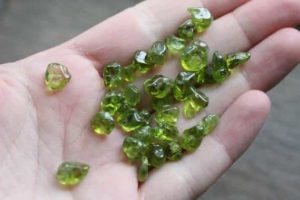
Few of the most highly desired minerals that you can find in the state of New Mexico. Turquoise, Opal, Amethyst, Jasper, Red Beryl, Peridot & Azurite

Public Gem Mines in Texas

Mineral Wells Fossil Park

Mineral Wells Fossil Park provides the fossil enthusiast, paleontologist, and student an excellent opportunity to see and collect well preserved “Pennsylvanian Period” fossils with ease and abundance. These fossils have been dated to be just over 300 million years old. Yes, you read correctly, you may collect and take fossils out of the park – for personal use only. See the park rules for more information.

The park as it exists today is a result of 20 years of erosion of the old City of Mineral Wells landfill’s borrow pit, which was closed in the early 1990s. The erosion of the borrow pit has revealed fossils documenting ancient sea species of crinoids (sea lilies), echinoids (urchins), brachiopods, pelecypods (clams and oysters), bryozoans, corals, trilobites (arthropods), plants and even primitive sharks.

In recent years, the borrow pit has become a mecca for the avid fossil hunter, the amateur and professional paleontologist, and various fossil, paleontological, gem and mineral groups and societies in Texas and the surrounding states.

What Can I Find in Mineral Wells Fossil Park?

The most common fossil found at Mineral Wells Fossil Park are the stalks of crinoids (sea lilies). While crinoids may look like weird plants, they are actually animals. There are likely dozens of species found here, each with their own design and ornamentation. Some even have spikes.

Seaquist Family Ranch

In 1887, Rev. Thomas A. Broad began constructing a handsome, two-story sandstone house north of Mason’s courthouse square on Comanche Creek. The house was later purchased in 1891 by Edward M. Reynolds, a banker from New York, who hired the German architect Richard Grosse to remodel and enlarge the house. In 1919, the property was sold to Swedish immigrant Oscar Seaquist, after which the family made several improvements to the house. Oscar Seaquist died in 1933, leaving his widow, Ada, to care for the mansion until her death in 1972.

The Seaquists’ son and daughter-in-law, Garner and Clara Seaquist, began the first major refurbishment of the house in 1972. Work was completed in the summer of 1973 and for the first time the mansion was opened to the public for tours. It received a Texas state historical marker in 1974 and is listed on the National Register of Historic Places. The Seaquist House Foundation purchased the house in January of 2015 and continues to restore the property.

In Texas the Seaquist Family Ranch is topaz Hunting’s most famous spot. Like the other privately owned places that do not permit public collecting, Seaquist Family Ranch is available to anyone, so you can dig up so gather as many jewels as you may like. Topaz is the most precious gem found here but exquisite quartz as well as chalcedony, jasper and agate can also be found here. The spring rain will rush the work, wiping the top dirt away and unveiling fresh gems.

Bar M Ranch Services

At Bar M Ranch, guests are invited to search Honey Creek and its tributaries for topaz. Blue Topaz is the state gem of Texas—naturally occurring topaz of this variety is quite rare. Mason County, located in the heart of Texas, is the best place in the state for hunters to find the colorless and light blue varieties. As there is no commercial mining of topaz in our area, Bar M Ranch offers everyone the opportunity to search for (and keep, of course!) the gem.

Teri Smith Rock Hunts

To beginner rockhounds who are interested in hiring a guide to help them discover the isolated mineral and fossil hunting areas of Texas, this is a rare opportunity. Some of his favorite locations include trips for agate and other collectible rocks to some of the Texas ‘ famous rockhounds.

Such supervised excursions encourage novices and seasoned rockhounds alike to find a wide range of minerals. One of the best aspects about the Teri Smith Rock Hunts is the access provided to certain unique Texas ranches which some have not yet looked for. The chances of discovering mineral quality specimens are very good.

Public Gem Mines in New Mexico

Desert Rose Mine

This mine is located on Highway 380 approximately three miles west of Bingham, next to the Blanchard Rock Shop in Bingham, New Mexico. When you want to find minerals of high quality than this is one of the finest pay-to-dig mines you can visit.

Good tabular barite crystals and cubic fluorite specimens can be found, as well as galena crystals and other wonderful minerals. When you wish your loved ones to collect ready gemstones as presents then you can buy them in the adjacent Blanchard Rock Store.

Rockhound State Park

Rockhound State Park is a state park of New Mexico, United States, located 7 miles (11 km) southeast of Deming. It is named for the abundance of minerals in the area, and visitors can search for quartz crystals, geodes, jasper, perlite, and many other minerals. The park is located in the Little Florida Mountains, a range of low mountains that have become sky islands due to the arid desert between the peaks.

It is a free collection place, where you can visit in the Little Florida Mountains. What makes this place so unique is that it’s one of the few state parks in the nation that has been expressly built for rock collectors. Several kinds of collectable gemstones can be found from quartz, agates, chalcedony, and opals. Rockhounds can carry up to 15 pounds of rocks a day, and it’s not costing you money.

Kelly Mine

Kelly Mine is a disused metalliferous mine located on Dartmoor’s eastern slope near Lustleigh village in Devon, England. This was active intermittently from the 1790s until 1951. It is one of some ten mines and two or three trials within the triangle created by the towns of Bovey Tracey and Moretonhampstead and the village of Hennock, which worked micaceous haematite deposits, known as “shiny rock.’ The mine is the focus of a volunteer restoration effort since 1984.

A mining lease dating back to the 1790s marks the first mining record on this site, and some activity may have lasted until the early 1870s. The mine reopened in 1879 and produced 324 tons of haematite from then until 1891—a comparatively small amount. From 1892 until 1900 the mine was closed when it restarted under the Scottish Silvoid Company which operated it until 1917 when it was taken over by Ferrubron, who also operated the nearby Great Rock Mine. Ferrubron worked the mine until 1946, when work on the property ceased. The Pepperdon Mining company opened a level for the extraction of ore near Kelly Mining for a year or two from 1950, and the washing plant at Kelly was used for the initial treatment of this ore.

The mine never employed a large number of people; in the fifty years to 1938 it had an average of six workers, and rarely more than ten.

Ancestor of all animals identified in Australian fossils

A 3D laser scan of an Ikaria wariootia impression. (Droser Lab/UCR)

A team led by UC Riverside geologists has discovered the first ancestor on the family tree that contains most familiar animals today, including humans.

The tiny, wormlike creature, named Ikaria wariootia, is the earliest bilaterian, or organism with a front and back, two symmetrical sides, and openings at either end connected by a gut. The paper is published today in Proceedings of the National Academy of Sciences.

The earliest multicellular organisms, such as sponges and algal mats, had variable shapes. Collectively known as the Ediacaran Biota, this group contains the oldest fossils of complex, multicellular organisms. However, most of these are not directly related to animals around today, including lily pad-shaped creatures known as Dickinsonia that lack basic features of most animals, such as a mouth or gut.

The development of bilateral symmetry was a critical step in the evolution of animal life, giving organisms the ability to move purposefully and a common, yet successful way to organize their bodies. A multitude of animals, from worms to insects to dinosaurs to humans, are organized around this same basic bilaterian body plan.

Evolutionary biologists studying the genetics of modern animals predicted the oldest ancestor of all bilaterians would have been simple and small, with rudimentary sensory organs. Preserving and identifying the fossilized remains of such an animal was thought to be difficult, if not impossible.

For 15 years, scientists agreed that fossilized burrows found in 555 million-year-old Ediacaran Period deposits in Nilpena, South Australia, were made by bilaterians. But there was no sign of the creature that made the burrows, leaving scientists with nothing but speculation.

Scott Evans, a recent doctoral graduate from UC Riverside; and Mary Droser, a professor of geology, noticed miniscule, oval impressions near some of these burrows. With funding from a NASA exobiology grant, they used a three-dimensional laser scanner that revealed the regular, consistent shape of a cylindrical body with a distinct head and tail and faintly grooved musculature. The animal ranged between 2-7 millimeters long and about 1-2.5 millimeters wide, with the largest the size and shape of a grain of rice — just the right size to have made the burrows.

“We thought these animals should have existed during this interval, but always understood they would be difficult to recognize,” Evans said. “Once we had the 3D scans, we knew that we had made an important discovery.”

The researchers, who include Ian Hughes of UC San Diego and James Gehling of the South Australia Museum, describe Ikaria wariootia, named to acknowledge the original custodians of the land. The genus name comes from Ikara, which means “meeting place” in the Adnyamathanha language. It’s the Adnyamathanha name for a grouping of mountains known in English as Wilpena Pound. The species name comes from Warioota Creek, which runs from the Flinders Ranges to Nilpena Station.

“Burrows of Ikaria occur lower than anything else. It’s the oldest fossil we get with this type of complexity,” Droser said. “Dickinsonia and other big things were probably evolutionary dead ends. We knew that we also had lots of little things and thought these might have been the early bilaterians that we were looking for.”

In spite of its relatively simple shape, Ikaria was complex compared to other fossils from this period. It burrowed in thin layers of well-oxygenated sand on the ocean floor in search of organic matter, indicating rudimentary sensory abilities. The depth and curvature of Ikaria represent clearly distinct front and rear ends, supporting the directed movement found in the burrows.

The burrows also preserve crosswise, “V”-shaped ridges, suggesting Ikaria moved by contracting muscles across its body like a worm, known as peristaltic locomotion. Evidence of sediment displacement in the burrows and signs the organism fed on buried organic matter reveal Ikaria probably had a mouth, anus, and gut.

“This is what evolutionary biologists predicted,” Droser said. “It’s really exciting that what we have found lines up so neatly with their prediction.”

Reference:
Scott D. Evans, Ian V. Hughes, James G. Gehling, and Mary L. Droser. Discovery of the oldest bilaterian from the Ediacaran of South Australia. PNAS, March 23, 2020 DOI: 10.1073/pnas.2001045117

Note: The above post is reprinted from materials provided by University of California – Riverside. Original written by Holly Ober.

Unprecedented preservation of fossil feces from the La Brea Tar Pits

Example coprolites from Rancho La Brea (A) prior to asphalt removal with surrounding sediments, (B) showing intact pellets with plant material, (C) isolated, cleaned pellets. Figure 2, from: Mychajliw et al. 2020. Exceptionally preserved asphaltic coprolites expand the spatiotemporal range of a North American paleoecological proxy. Credit: Carrie Howard

While Rancho La Brea, commonly known as the La Brea Tar Pits, is famous for its thousands of bones of large extinct mammals, big insights are coming from small fossils, thanks to new excavation and chemical techniques.

Today, a team of researchers from La Brea Tar Pits, the University of Oklahoma and the University of California Irvine report the first coprolites — or fossil feces — ever discovered in an asphaltic — or tar pit — context. These hundreds of fossilized rodent pellets were found during the excavation of a parking garage for the Los Angeles County Museum of Art in Hancock Park in 2016, which had also yielded the more traditional La Brea fossils, such as extinct mammoths, dire wolves and saber-toothed cats.

Alexis Mychajliw, a postdoctoral research associate at OU, is the lead author of the study. The details of the research team’s findings were published today in Scientific Reports.

“It’s incredible that after more than a century of excavation and study, we are still unearthing new types of fossils from La Brea’s treasure trove of deposits,” said Emily Lindsey, assistant curator at La Brea Tar Pits. “These tiny finds may lead to big discoveries about the climate and ecosystems of Ice Age Los Angeles.”

Researchers were skeptical at first, given the abundance of urban rats in the area.

“We noted the occasional rodent fecal pellet in the processed matrix before, but it was easy to explain it away as modern contamination,” said Laura Tewksbury, senior preparator at La Brea Tar Pits.

But, with more and more pellets appearing encased in asphalt, Tewksbury recalled, “We stared at the sheer number of pellets in silence for a minute, before looking at each other and stating, ‘There’s just no way that much is contamination.'”

Indeed, radiocarbon dates generated at UC Irvine would confirm the pellets were ~50,000 years old.

Rancho La Brea has been associated with the image of big animals getting stuck in “tar pits,” or shallow, sticky asphalt pools, with carnivores attracted en masse by struggling herbivore prey. But these coprolites tell a new story of how fossils can be preserved at Rancho La Brea.

“The intact nature and density of the fossils require a taphonomic explanation other than entrapment. The preservation is more likely the result of an asphalt seep overtaking an existing rodent nest,” noted Karin Rice, preparator at La Brea Tar Pits.

Using a suite of cutting-edge tools, including stable isotope analysis and scanning electron microscopy, the researchers demonstrated that the fecal pellets were associated with beautifully preserved twigs, leaves, and seeds, apparently as part of an intact nest made by a woodrat. Woodrats — also known as packrats — are well-known in the paleontological community for their hoarding behavior that produces massive nests that can be preserved for thousands of years. Slices of plant material from these nests, in turn, represent snapshots of vegetation and climate conditions of the past.

“This nest provides an unparalleled view of what was beneath the feet of Rancho La Brea’s famous megafauna,” Mychajliw said. “And to me, it emphasizes the importance of studying small mammals, too. Woodrats survived the Ice Age and still build nests in local urban green spaces like Griffith Park! By studying these nests, we have a direct line from the past to the present through which to trace human impacts on Los Angeles’ nature over time.”

Reference:
Alexis M. Mychajliw, Karin A. Rice, Laura R. Tewksbury, John R. Southon, Emily L. Lindsey. Exceptionally preserved asphaltic coprolites expand the spatiotemporal range of a North American paleoecological proxy. Scientific Reports, 2020; 10 (1) DOI: 10.1038/s41598-020-61996-y

Note: The above post is reprinted from materials provided by University of Oklahoma.

Wonderchicken : fossil from the age of dinosaurs reveals origin of modern birds

 Dr Daniel Field holding a replica version of the 'Wonderchicken' skull
Dr Daniel Field holding a replica version of the ‘Wonderchicken’ skull

The oldest fossil of a modern bird yet found, dating from the age of dinosaurs, has been identified by an international team of palaeontologists.

The spectacular fossil, affectionately nicknamed the ‘Wonderchicken’, includes a nearly complete skull, hidden inside nondescript pieces of rock, and dates from less than one million years before the asteroid impact which eliminated all large dinosaurs.

Writing in the journal Nature, the team, led by the University of Cambridge, believe the new fossil helps clarify why birds survived the mass extinction event at the end of the Cretaceous period, while the giant dinosaurs did not.

Detailed analysis of the skull shows that it combines many features common to modern chicken- and duck-like birds, suggesting that the ‘Wonderchicken’ is close to the last common ancestor of modern chickens and ducks. The fossil was found in a limestone quarry near the Belgian-Dutch border, making it the first modern bird from the age of dinosaurs found in the northern hemisphere.

The fossil doesn’t look like much on first glance, with only a few small leg bone fragments poking out from a piece of rock the size of a deck of cards. Even those small bones attracted the researchers’ interest, since bird fossils from this point in Earth’s history are so rare.

Using high-resolution X-ray CT scans, the researchers peered through the rock to see what was lying beneath the surface. What they saw, just one millimetre beneath the rock, was the find of a lifetime: a nearly complete 66.7-million-year-old bird skull.

“The moment I first saw what was beneath the rock was the most exciting moment of my scientific career,” said Dr Daniel Field from Cambridge’s Department of Earth Sciences, who led the research. “This is one of the best-preserved fossil bird skulls of any age, from anywhere in the world. We almost had to pinch ourselves when we saw it, knowing that it was from such an important time in Earth’s history.

“The ability to CT scan fossils, like we can at the Cambridge Biotomography Centre, has completely transformed how we study palaeontology in the 21st century.”

“Finding the skull blew my mind,” said co-author Juan Benito, also from Cambridge, who was CT scanning the fossils with Field when the skull was discovered. “Without these cutting-edge scans, we never would have known that we were holding the oldest modern bird skull in the world.”

The skull, despite its age, is clearly recognisable as a modern bird. It combines many features common to the group that includes living chickens and ducks — a group called Galloanserae. Field describes the skull as a kind of ‘mash-up’ of a chicken and a duck.

“The origins of living bird diversity are shrouded in mystery — other than knowing that modern birds arose at some point towards the end of the age of dinosaurs, we have very little fossil evidence of them until after the asteroid hit,” said co-author Albert Chen, a PhD student based at Cambridge. “This fossil provides our earliest direct glimpse of what modern birds were like during the initial stages of their evolutionary history.”

While the fossil is colloquially known as the Wonderchicken, the researchers have given it the slightly more elegant name of Asteriornis, in reference to Asteria, the Greek Titan goddess of falling stars.

“We thought it was an appropriate name for a creature that lived just before the end-Cretaceous asteroid impact,” said co-author Dr Daniel Ksepka from the Bruce Museum in Greenwich, Connecticut. “In Greek mythology, Asteria transforms herself into a quail, and we believe Asteriornis was close to the common ancestor that today includes quails, as well as chickens and ducks.”

The fact that Asteriornis was found in Europe is another thing which makes it so extraordinary. “The late Cretaceous fossil record of birds from Europe is extremely sparse,” said co-author Dr John Jagt from the Natuurhistorische Museum Maastricht in the Netherlands. “The discovery of Asteriornis provides some of the first evidence that Europe was a key area in the early evolutionary history of modern birds.”

“This fossil tells us that early on, at least some modern birds were fairly small-bodied, ground-dwelling birds that lived near the seashore,” said Field. “Asteriornis now gives us a search image for future fossil discoveries — hopefully it ushers in a new era of fossil finds that help clarify how, when and where modern birds first evolved.”

The announcement of the Wonderchicken find coincides with a new exhibit at Cambridge’s Sedgwick Museum of Earth Sciences, where visitors can learn more about Asteriornis and see the fossil up close. “Dawn of the Wonderchicken” runs from 19 March to 15 June. Admission is free.

Dr Daniel Field is funded by a UKRI Future Leaders Fellowship. He is a University Lecturer in the Department of Earth Sciences at the University of Cambridge, and a Fellow of Christ’s College Cambridge.

Reference:
Daniel J. Field, Juan Benito, Albert Chen, John W. M. Jagt, Daniel T. Ksepka. Late Cretaceous neornithine from Europe illuminates the origins of crown birds. Nature, 2020; 579 (7799): 397 DOI: 10.1038/s41586-020-2096-0

Note: The above post is reprinted from materials provided by University of Cambridge. Original written by Sarah Collins. The original story is licensed under a Creative Commons License.

In Earth’s largest extinction, land die-offs began long before ocean turnover

Researchers dated ash deposits from this hill, called a koppie in South Africa. The lower part of koppie Loskop exposes strata from before the end-Permian extinction (Palingkloof Member of the Balfour Formation), while the upper part contains layers deposited after the extinction (Katberg Formation). Credit: John Geissman

The mass extinction at the end of the Permian Period 252 million years ago—one of the great turnovers of life on Earth—appears to have played out differently and at different times on land and in the sea, according to newly redated fossils beds from South Africa and Australia.

New ages for fossilized vertebrates that lived just after the demise of the fauna that dominated the late Permian show that the ecosystem changes began hundreds of thousands of years earlier on land than in the sea, eventually resulting in the demise of up to 70% of terrestrial vertebrate species. The later marine extinction, in which nearly 95% of ocean species disappeared, may have occurred over the time span of tens of thousands of years.

Though most scientists believe that a series of volcanic eruptions, occurring in large pulses over a period of a million years in what is now Siberia, were the primary cause of the end-Permian extinction, the lag between the land extinction in the Southern Hemisphere and the marine extinction in the Northern Hemisphere suggests different immediate causes.

“Most people thought that the terrestrial collapse started at the same time as the marine collapse, and that it happened at the same time in the Southern Hemisphere and in the Northern Hemisphere,” said paleobotanist Cindy Looy, University of California, Berkeley, associate professor of integrative biology. “The fact that the big changes were not synchronous in the Northern and Southern hemispheres has a big effect on hypotheses for what caused the extinction. An extinction in the ocean does not, per se, have to have the same cause or mechanism as an extinction that happened on land.”

Did loss of ozone layer contribute to extinction?

Members of Looy’s lab have conducted experiments on living plants to determine whether a collapse of Earth’s protective ozone layer may have irradiated and wiped out plant species. Other global changes—a warming climate, a rise in carbon dioxide in the atmosphere and an increase in ocean acidification—also occurred around the end of the Permian period and the beginning of the Triassic and likely contributed.

On land, the end-Permian extinction of vertebrates is best documented in Gondwana, the southern half of the supercontinent known as Pangea that eventually separated into the continents we know today as Antarctica, Africa, South America and Australia. There, in the South African Karoo Basin, populations of large herbivores, or plant eaters, shifted from the Daptocephalus assemblage to the Lystrosaurus assemblage. These groups are now extinct.

In the ocean, the extinction is best documented in the Northern Hemisphere, in particular by Chinese fossils. The end-Permian extinction is perhaps best associated with the demise of trilobites.

To improve on previous dates for the land extinction, an international team of scientists, including Looy, conducted uranium-lead dating of zircon crystals in a well-preserved volcanic ash deposit from the Karoo Basin. Looy, who is also a curator of paleobotany at the campus’s Museum of Paleontology and curator of gymnosperms at the University and Jepson Herbaria, confirmed that sediments from several meters above the dated layer were devoid of Glossopteris pollen, evidence that these seed ferns, which used to dominate late Permian Gondwanan floras, became extinct around that time.

At 252.24 million years old, the zircons—microscopic silicate crystals that form in rising magma inside volcanoes and are spewed into the atmosphere during eruptions—are 300,000 years older than dates obtained for the confirmed Permian-Triassic (P-T) boundary in China. This means that the sediment layer assumed to contain the P-T boundary in South Africa was actually at least 300,000 years too old.

Dates for an ash deposit in Australia, just above the layers that document the initial plant extinction, similarly came in almost 400,000 years older than thought. That work was published in January by Christopher Fielding and colleagues at the University of Nebraska in Lincoln.

“The Karoo Basin is the poster child for the end-Permian vertebrate turnover, but until recently, it was not well-dated,” Looy said. “Our new zircon date shows that the base of the Lystrosaurus zone predates the marine extinction with several hundred thousand years, similar to the pattern in Australia. This means that both the floral and faunal turnover in Gondwana is out of sync with the Northern Hemisphere marine biotic crisis.

“For some years now, we have known that—in contrast to the marine mass extinction—the pulses of disturbance of life on land continued deep into the Triassic Period. But that the start of the terrestrial turnover happened so long before the marine extinction was a surprise.”

In their paper, Looy and an international team of colleagues concluded “that greater consideration should be given to a more gradual, complex, and nuanced transition of terrestrial ecosystems during the Changhsingian (the last part of the Permian) and, possibly, the early Triassic.”

Looy and colleagues published their findings March 19 in the open access journal Nature Communications.

Reference:
Robert A. Gastaldo et al. The base of the Lystrosaurus Assemblage Zone, Karoo Basin, predates the end-Permian marine extinction, Nature Communications (2020). DOI: 10.1038/s41467-020-15243-7

Note: The above post is reprinted from materials provided by University of California – Berkeley.

Related Articles