
Home Blog Page 63

11% chance of another huge earthquake in Southern California, scientists say

earthquake in Southern California
Earthquake in Southern California. Credit: Public Domain

The odds that Southern California will experience another earthquake of magnitude 7 or greater in the next week are now nearly 11%, according to preliminary estimates from seismologists.

And the chances that a quake will surpass the 7.1 temblor that struck near Ridgecrest on Friday night are roughly 8% to 9%, said Caltech seismologist Lucy Jones.

“There’s about a 1 in 10 chance that we could have another 7 in this sequence,” she said.

More likely is that the Owens Valley will experience another temblor of magnitude 6 or greater. The odds of that are slightly greater than 50-50, Jones said. And more quakes of magnitude 5 or greater are a near certainty.

“It would be extremely unusual if we didn’t have another 5” over the coming week, Jones said.

The 7.1 quake on Friday night was about 8 times larger than the 6.4 quake on Thursday morning, said Robert Graves, a seismologist with the U.S. Geological Survey in Pasadena.

Though such quakes would be more likely to occur in the next few days, the shaking could continue for quite some time.

“A magnitude 7 usually has aftershocks that last for years,” Jones said.

Jones said she could not recall a pattern of earthquakes in California where a 6.4 foreshock was followed by a 7.1 event, only to be followed by an even bigger quake.

But that doesn’t mean it can’t happen, she cautioned.

“It is clearly a very energetic sequence, so there’s no reason to think we can’t have more large earthquakes,” she said.

The last time California experienced a quake of this size was in 1999, when the 1999 Hector Mine quake struck the Mojave Desert. There were minor injuries and no deaths.

The years since have been marked by an unusual earthquake drought.

“In California, we expect to have a magnitude 7 once every 10 to 20 years, and the last one was 20 years ago,” Jones said. “Think of this as a return to what California is supposed to be doing.”

But she also said the activity near Ridgecrest is not likely to trigger any activity on the San Andreas fault.

The 7.1 quake occurred on the same fault system as the 6.4 temblor that is now being considered a foreshock. It was further away from Los Angeles, though still in the Owens Valley.

“This happened at the end of the zone that moved previously,” Jones said.

As of 11 p.m., it has already been followed by three quakes above a magnitude 5, 17 above a magnitude 4 and more than 70 that exceeded magnitude 3, Jones said.

She said the fault is now likely to be 25 to 30 miles long.

“The fault is growing,” Jones said.

Thursday’s 6.4 foreshock triggered shaking in Ridgecrest of intensity 8. With Friday’s 7.1 main shock, the shaking intensity reached a 9, Jones said.

“My expectation is that Ridgecrest is having a pretty difficult time tonight,” Jones said.

“We don’t get the 7s very often,” she added.

Note: The above post is reprinted from materials provided by Los Angeles Times . The original article was written by Karen Kaplan .

Turquoise : What is Turquoise? How Turquoise Is Formed?

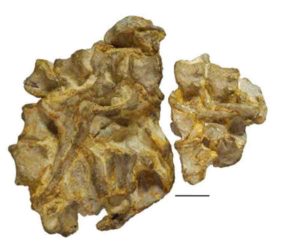
Turquoise Rock
Turquoise

What is Turquoise?

Turquoise is an opaque, blue-to-green mineral with the chemical formula CuAl6(PO4)4(OH)8·4H2O, a hydrated copper and aluminum phosphate. It is common and useful in higher grades and has been appreciated for thousands of years as a gemstone and ornamental stone due to its distinctive shade. Recently, the implementation of medicines, imitations and synthetics on the market has devalued turquoise, like most other opaque gems.

Turquoise Properties

The finest of turquoise, or slightly more than window glass, reaches a peak Mohs hardness of just under 6. A cryptocrystalline mineral characteristic, turquoise almost never creates single crystals, and all its characteristics are extremely variable. X-ray diffraction analysis proves to be triclinic in its crystal system. With reduced strength produces reduced particular pressure (2.60–2.90) and higher porosity; the grain size depends on these characteristics.

Turquoise luster is typically waxy to subvitreous, and its transparency is generally opaque, but in thin parts it may be semitranslucent. Color is as variable as the other characteristics of the mineral, varying from white to a blue powder to a purple sky, and from a green blue to a green yellow. The blue is ascribed to idiochromatic copper whereas the green may result from either iron impurities (aluminum replacement) or dehydration.

How Turquoise Is Formed?

Turquoise shapes as a secondary mineral by the activity of percolating acidic aqueous solutions during weathering and oxidation of pre-existing minerals. For instance, copper may come from main copper sulfides such as chalcopyrite or secondary carbonates malachite or azurite; aluminum may come from feldspar; and apatite phosphorus.

As turquoise is typically found in arid areas, filling or encrusting cavities and fractures in typically extremely modified volcanic rocks, often associated with limonite and other iron oxides, climatic variables appear to play an significant part. Turquoise is almost invariably combined with copper sulfide deposits weathering products in or around potassium-feldspar-bearing porphyritic intrusives in the southwestern United States.

Potassium aluminum sulfate is a prominent secondary mineral in some cases of alunite. Typically turquoise mineralization is limited to a comparatively shallow depth of less than 20 meters (66 feet), although it occurs in deeper fracture areas where secondary solutions have higher penetration or water table depth is higher.

Turquoise is almost always cryptocrystalline and huge and requires no clear internal form. Crystals are exceedingly uncommon even on a microscopic scale. Typically the shape is in habit of filling vein or fracture, nodular or botryoidal. Forms of stalactitis were recorded. Feldspar, apatite, other minerals, or even fossils can also be pseudomorphically replaced by turquoise. Odontolite is a fossil bone or ivory traditionally believed to have been changed by turquoise or similar minerals of phosphate such as iron phosphate vivianite. Also prevalent is intergrowth with other secondary minerals of copper such as chrysocolla.

Where Turquoise is found?

These are all small-scale activities, often seasonal due to the restricted deposit size and remoteness. Most of them are handmade with little or no mechanization. However, turquoise is often retrieved, particularly in the United States, as a by-product of large-scale copper mining activities.

United States

Arizona, California (San Bernardino, Imperial, Inyo counties), Colorado (Conejos, El Paso, Lake, Saguache counties), New Mexico (Eddy, Grant, Otero, Santa Fe counties) and Nevada (Clark, Elko, Esmeralda counties, Eureka, Lander, Mineral County and Nye counties) are (or were) particularly wealthy. Pre-Columbian Native Americans mined California and New Mexico’s reserves using stone tools, some local and some as far remote as southern Mexico. Cerrillos, New Mexico is believed to be the site of the earliest mines; the state was the biggest producer of the country before the 1920s; it is now more or less depleted. Today, only one mine at Apache Canyon in California works at a business capability.

The turquoise happens in the form of vein or seam fillings and as compact nuggets, most of which are tiny in number. While sometimes quite good fabric is discovered, rivaling Iranian fabric in both color and durability, most American turquoise is of small grade (called “chalk turquoise”); elevated iron levels imply predominance of greens and yellows, and a typically friendly consistency in the untreated state of the turquoise precludes jewelry use.

Currently Arizona is the most important value producer of turquoise. There are several mines in the state, two of which are renowned for their distinctive color and performance and regarded the finest in the sector: in August 2012, the Sleeping Beauty Mine in Globe stopped turquoise mining. Due to the increasing world market price of copper, the mine chose to ship all the ore to the crusher and focus on copper manufacturing. The cost of untreated natural sleeping beauty turquoise has increased dramatically since the closure of the mine. As of 2015, the Kingman Mine is still operating outside the town alongside a copper mine. Other mines include the Blue Bird mine, Castle Dome, and Ithaca Peak, but are largely inactive owing to elevated operating costs and federal laws. Bisbee’s Phelps Dodge Lavender Pit mine came to a halt in 1974 and never had a turquoise contractor. All the turquoise Bisbee was mined with “dinner pail.” It arrived in the dinner pails of miners from the copper ore mine. Morenci and Turkey Peak are either idle or exhausted.

Nevada is the other major producer of the country, with more than 120 mines producing large amounts of turquoise. Unlike elsewhere in the US, most of the Nevada mines were mainly used for their turquoise gem and very little was retrieved as a by-product of other mining activities. Nevada turquoise is discovered as nuggets, fracture fillings and interstices between pieces are discovered in breccias as the cement coating. A majority of the material produced is hard and dense because of the geology of the deposits of Nevada, being of sufficient quality that no treatment or improvement is required. Although almost every state county has yielded some turquoise, the main manufacturers are in the counties of Lander and Esmeralda. Most of Nevada’s turquoise deposits happen along a broad range of tectonic activity coinciding with the thrust fault area of the state. It strikes at a bearing of about 15 ° and stretches from the southern portion of Elko County to the south-west boundary of Tonopah in California. Nevada has created a broad variety of colors and combinations of multiple matrix motifs, with Nevada turquoise coming in distinct colors of blue, blue-green, and green. Some of this unusually colored turquoise may involve important zinc and iron, causing the lovely tones of light green to yellow-green. Some of the colors of blue to green-yellow may effectively be variscite or faustite, which is comparable in shape to turquoise secondary phosphate minerals.

Egypt

Since at least the First Dynasty (3000 BCE) in ancient Egypt, and probably before that, the Egyptians used turquoise and the Sinai Peninsula was mined by them. This area was regarded by the indigenous Monitu as the Turkey Country. The peninsula has six mines, all on its southwest shore, spanning an area of approximately 650 km2 (250 sq mi). From a historical view, the two most significant of these mines are Serabit el-Khadim and Wadi Maghareh, one of the earliest recognized mines. The former mine is about 4 kilometers from an old temple devoted to the Hathor deity.

The turquoise is discovered in basalt-covered sandstone, or was initially overlain. There are works of copper and iron in the region. Large-scale turquoise mining is not lucrative today, but Bedouin populations use homemade weapons to quarry the deposits sporadically. Miners face a danger of flash flooding in the rainy summer months; mortality from the fall of the haphazardly utilized sandstone mine walls is not unheard of even in the dry season. The color of material from Sinai is typically greener than material from Iran, but is believed to be stable and relatively durable. Sinai fabric is typically the most translucent, often referred to as “Egyptian jade,” and its surface structure is found to be peppered with light green disks not seen in fabric from other locations.

Iran

For at least 2,000 years, Iran has been a major source of turquoise. It was originally called “pērōzah” by Iranians meaning “win,” and subsequently it was called “fayrūzah” by the Arabs, which is described as “fīrūzeh” in modern Persian. The black turquoise was used in Iranian architecture to cover the palace towers as its intense red color was also a sign of heaven on earth.

This sample is obviously black and becomes green owing to dehydration when heated. It is limited to a mine-riddled region in Nishapur, Ali-mersai’s 2,012 m (6,601 ft) summit close Mashhad, the capital of Khorasan Province, Iran. A battered and crushed trachyte is the host of the turquoise, discovered both in situ between limonite and sandstone strata and between the scree at the top of the mountain. Together with the Sinai Peninsula, these works are the longest known. Iran also has turquoise mines in the provinces of Semnan and Kerman.

Bulgaria

Turquoise prehistoric artifacts (beads) have been known from sites in the Eastern Rhodope Mountains in Bulgaria since the fifth millennium BCE – the source of the raw material may be related to the nearby Spahievo field of lead – zinc ore.

China

For 3,000 years or more, China has been a small source of turquoise. Gem-quality material in the shape of compact nodules is discovered in Yunxian and Zhushan, Hubei county, broken, silicized calcareous. Marco Polo also revealed turquoise discovered in Sichuan today. Most of the Chinese product is imported, but there are a few jade-like sculptures that have operated. In Tibet, there are allegedly gem-quality deposits in the Derge and Nagari-Khorsum hills in the region’s north and south respectively.

Other sources

Other notable locations include: Afghanistan ; Australia (Victoria and Queensland) ; northern India ; northern Chile (Chuquicamata) ; Cornwall ; Saxony ; Silesia ; and Turkestan.

Water drives explosive eruptions: Magma is wetter than we thought

Anak Krakatau in Lampung, Indonesia, in 2018
Volatile elements in magma, primarily water, drive explosive volcanic eruptions, like this eruption of Anak Krakatau in Lampung, Indonesia, in 2018. Experimental geochemists from Washington University in St. Louis have discovered compelling evidence that magmas may be wetter than once thought. Credit: Shutterstock

Volatile elements in magma, primarily water, drive explosive volcanic eruptions. The tricky part is determining just how much volatile content was present before the eruption took place. This is especially difficult when the only evidence scientists have to go on is the end product after all the volatiles have been lost.

New research from Washington University in St. Louis provides compelling evidence that magmas may be wetter than once thought. The work, led by experimental geochemists including Michael J. Krawczynski, assistant professor of earth and planetary sciences in Arts & Sciences, is published in the July 2 issue of the journal American Mineralogist.

The most common method for determining volatile content requires studying melt inclusions, small pieces of magma trapped in crystals erupted in lava. Scientists study these glassy inclusions to determine the amount of hydrogen present—which, through back calculation, can indicate how much water was dissolved in the magma in Earth’s crust before a volcano erupted. This method is generally accepted as an accurate lower limit on volatile content, accounting for some water that might have been lost during the explosion itself.

Krawczynski and Maxim Gavrilenko, a former postdoctoral fellow in Krawczynski’s lab who is now at the University of Nevada, Reno, instead wanted to look at the upper limit—something that had not been investigated experimentally.

“What people have never looked at before and what we’re trying to measure now is, how big is this bucket?” Krawczynski said. “You can imagine if it rained a lot, and your rain gauge was full, then you don’t really know how much it rained. It could have rained more! We just can’t say.”

The same is true of melt inclusions. If a melt inclusion can’t hold all the water, then scientists don’t have the right reading of the upper limit of water content in magma. The bucket is too small.

Creating magma in the lab

Gavrilenko and Krawczynski created synthetic melt inclusions in the lab to figure out how much water a melt possibly could hold. To do this, the researchers reproduced the temperature and pressure conditions that exist 40 kilometers below the Earth’s surface. Next, they melted and quenched (rapidly cooled) the sample, then determined whether their experiment had created a glass. They continued the process, adding more and more water to the sample until the sample could no longer be quenched to form a glass.

“We found out that if you have a lot of water, then eventually you don’t have a glass,” Gavrilenko said. These devitrified (non-glassy) melt inclusions exist in nature, but are preferentially not studied for volatiles—which has led to sample bias in this field of research.

This bias is especially problematic for scientists who are trying to understand how much water gets recycled back to the surface at subduction zones, which are richest in water compared to other tectonic settings. “If the deep magmas in these zones have more than 9 weight-percent of water, then they won’t be correctly measured by the current gold-standard method,” Gavrilenko said. “There is a need to find a new method for how to measure. We need a new, bigger bucket.”

Global water cycle implications

These results align with recent work by Douglas A. Wiens, the Robert S. Brookings Distinguished Professor in earth and planetary sciences. In a paper published in the journal Nature last fall, Wiens concluded that as much as four times more water might subduct into Earth’s mantle than scientists thought. Gavrilenko and Krawczynski’s work points to how the cycle of water in and out of the crust might be rebalanced in the wake of such discoveries.

“If more is going down (into the mantle), more needs to be coming out back into Earth’s crust,” Krawczynski said. “That’s what we’re looking at here. We’ve understood that it’s a cycle that needs to be balanced, but we haven’t had a good grasp of the sizes of the different reservoirs.”

Reference:
Maxim Gavrilenko et al. The quench control of water estimates in convergent margin magmas, American Mineralogist (2019). DOI: 10.2138/am-2019-6735

Note: The above post is reprinted from materials provided by Washington University in St. Louis.

Discovery of rare lava lake on remote sub-Antarctic island

False colour Landsat 8 satellite image of Saunders Island and the lava lake within the crater of Mount Michael (image acquired 31/01/2018). Inset map shows the location of Saunders Island.
False colour Landsat 8 satellite image of Saunders Island and the lava lake within the crater of Mount Michael (image acquired 31/01/2018). Inset map shows the location of Saunders Island. Credit: British Antarctic Survey

A team of scientists has discovered a rare lava lake on a remote and inaccessible sub-Antarctic island. There are around 1500 land-based volcanoes on Earth, but despite the popular perception of steaming bubbling lava pools in their craters this volcano in the South Sandwich Islands is only the 8th to be identified worldwide to have a persistent lava lake.

The discovery on Mount Michael on Saunders Island, reported this month (July 2019) in the journal Volcanology and Geothermal Research, was made using satellite images and is the first to be identified within the British overseas territory, South Georgia and the South Sandwich Islands. In 2001, analysis of low-resolution satellite data revealed a geothermal anomaly but could not prove the existence of a lava lake. Now higher-resolution satellite images from 2003-2018 and advanced processing techniques have revealed a lake 90-215 metres in diameter with molten lava of 989-1279 °C present throughout this period.

Author and geologist, Dr. Alex Burton-Johnson from British Antarctic Survey, says:

“We are delighted to have discovered such a remarkable geological feature in the British Overseas Territory. Identifying the lava lake has improved our understanding of the volcanic activity and hazard on this remote island, and tells us more about these rare features, and finally, it has helped us develop techniques to monitor volcanoes from space.”

Lead author Danielle Gray from University College London says:

“Mount Michael is a volcano on a remote island in the Southern Ocean. It is extremely difficult to access, and without high-resolution satellite imagery it would have been very challenging to learn more about this amazing geological feature.”

The other seven lava lakes around the world are: Nyiragongo Volcano DR Congo; Erta Ale Volcano, Ethiopia; Mt Erebus, Antarctica; Mt Yasur Vanuatu; Kilauea, Hawaii and Ambrym, Vanuatu; Masaya, Nicaragua.

Reference:
D.M. Gray et al. Evidence for a lava lake on Mt. Michael volcano, Saunders Island (South Sandwich Islands) from Landsat, Sentinel-2 and ASTER satellite imagery, Journal of Volcanology and Geothermal Research (2019). DOI: 10.1016/j.jvolgeores.2019.05.002

Note: The above post is reprinted from materials provided by British Antarctic Survey.

Scientists develop new method for studying early life in ancient rocks

This 2.1-billion-year-old sediment from a clay formation in Gabon has high concentrations of potassium, which could only have been caused by ancient microbes, according to new research.
This 2.1-billion-year-old sediment from a clay formation in Gabon has high concentrations of potassium, which could only have been caused by ancient microbes, according to new research. Credit: Abder El Albani

Scientists have developed a new method for detecting traces of primordial life in ancient rock formations using potassium.

The method relies on searching for high concentrations of potassium in ancient sedimentary rocks, rather than traditional methods that look for carbon, sulfur or nitrogen—which can appear in ancient rocks through processes unrelated to ancient life.

“Our findings show that microbial biofilms trapped potassium from ancient seawater and facilitated its accumulation into clay minerals that were buried on the seafloor,” explained University of Alberta microbiologist and geochemist Kurt Konhauser, who was a co-author on the study.

“This is critical because there is no abiotic mechanism that can be used to explain the potassium enrichment aside from life itself.”

The study examined clay particles from the Francevillian formation located in Gabon, on the west coast of central Africa. The 2.1-billion-year-old formation hosts well-preserved microfossils in clay.

“In our quest to find evidence of early life on Earth, we have been limited to looking for a number of signatures that have all proven ambiguous because, unfortunately, the signatures can be explained by both bacterial and abiotic processes,” explained Konhauser.

“Our results indicate that a different signature—potassium—is potentially a more unique tracer, as it could only have been created through the metabolism of living bacteria.”

The research was led by Jérémie Aubineau and Abder El Albani from the University of Poitiers in France.

The study, “Microbially Induced Potassium Enrichment in Paleoproterozoic Shales and Implications for Reverse Weathering on Early Earth,” was published in Nature Communications.

Reference:
Jérémie Aubineau et al. Microbially induced potassium enrichment in Paleoproterozoic shales and implications for reverse weathering on early Earth, Nature Communications (2019). DOI: 10.1038/s41467-019-10620-3

Note: The above post is reprinted from materials provided by University of Alberta.

More ‘reactive’ land surfaces cooled the Earth down

Zermatt in the Western Alps.
Zermatt in the Western Alps. Credit: F. von Blanckenburg

There have been long periods of cooling in Earth’s history. Temperatures had already fallen for more than 10 million years before the last ice age began about 2.5 million years ago. At that time, the northern hemisphere was covered with massive ice masses and glaciers. A geoscientific paradigm, widespread for over 20 years, explains this cooling with the formation of the large mountain ranges such as the Andes, the Himalayas and the Alps. As a result, more rock weathering has taken place, the paradigm suggests. This in turn removed more carbon dioxide (CO2) from the atmosphere, so that the greenhouse effect decreased and the atmosphere cooled. This and other processes eventually led to the ice Age.

In a new study, Jeremy Caves-Rugenstein from ETH Zurich, Dan Ibarra from Stanford University and Friedhelm von Blanckenburg from the GFZ German Research Centre for Geosciences in Potsdam were able to show that this paradigm cannot be upheld. According to the paper, weathering was constant over the period under consideration. Instead, increased reactivity of the land surface has led to a decrease in CO2 in the atmosphere, thus cooling the Earth. The researchers published the results in the journal Nature.

A second look after isotope analysis

The process of rock weathering, and especially the chemical weathering of rocks with carbonic acid, has controlled the Earth’s climate for billions of years. Carbonic acid is produced from CO2 when it dissolves in rainwater. Weathering thus removes CO2 from the Earth’s atmosphere, precisely to the extent that volcanic gases supplied the atmosphere with it. The paradigm that has been widespread so far states that with the formation of the large mountains ranges in the last 15 million years, erosion processes have increased—and with them also the CO2-binding rock weathering. Indeed, geochemical measurements in ocean sediments show that the proportion of CO2 in the atmosphere has strongly decreased during this phase.

“The hypothesis, however, has a big catch,” explains Friedhelm von Blanckenburg of GFZ. “If the atmosphere had actually lost as much CO2 as the weathering created by erosion would have caused, it would hardly have had any CO2 left after less than a million years. All water would have had frozen to ice and life would have had a hard time to survive. But that was not the case.”

That these doubts are justified, was already shown by von Blanckenburg and his colleague Jane Willenbring in a 2010 study, which appeared in Nature likewise. “We used measurements of the rare isotope beryllium-10 produced by cosmic radiation in the Earth’s atmosphere and its ratio to the stable isotope beryllium-9 in ocean sediment to show that the weathering of the land surface had not increased at all,” says Friedhelm von Blanckenburg.

The land’s surface has become more reactive

In the study published now, Caves-Rugenstein, Ibarra and von Blanckenburg additionally used the data of stable isotopes of the element lithium in ocean sediments as an indicator for the weathering processes. They wanted to find out how, despite constant rock weathering, the amount of CO2 in the atmosphere could have decreased. They entered their data into a computer model of the global carbon cycle.

Indeed, the results of the model showed that the potential of the land surface to weather has increased, but not the speed at which it weathered. The researchers call this potential of weathering the reactivity of the land surface. “Reactivity describes how easily chemical compounds or elements take part in a reaction,” explains Friedhelm von Blanckenburg. If there are more non-weathered and therefore more reactive rocks at the surface, these can in total react as extensively chemically with little CO2 in the atmosphere as already heavily weathered rocks would do with a lot of CO2. The decrease in CO2 in the atmosphere, which is responsible for the cooling, can thus be explained without an increased speed of weathering.

“However, a geological process is needed to rejuvenate the land surface and make it more reactive,” says Friedhelm von Blanckenburg.”This does not necessarily have to be the formation of large mountains. Similarly, tectonic fractures, a small increase in erosion or the exposure of other types of rock may have caused more material with weathering potential to show at the surface. In any case, our new hypothesis must trigger geological rethinking regarding the cooling before the last ice age.”

Reference:
Neogene cooling driven by land surface reactivity rather than increased weathering fluxes, Nature (2019). DOI: 10.1038/s41586-019-1332-y

Note: The above post is reprinted from materials provided by Helmholtz Association of German Research Centres.

Rock Forming Minerals : 10 Most Common Rock Forming Minerals

Rock Forming Minerals

Rock Forming Minerals

Rocks consist of minerals. A mineral is a material that occurs naturally and is generally strong, crystalline, stable and inorganic at room temperature.

There are many known mineral species, but the vast majority of rocks are formed by combinations of a few common minerals, called “rock-forming minerals.” The minerals that form rock are: feldspar, quartz, amphiboles, micas, olivine, grenade, calcite, pyroxenes.

Minerals that occur in tiny amounts within a rock are called “accessory minerals.” Although accessory minerals are only present in tiny quantities, they can provide useful insight into a rock’s geological history and are often used to determine a rock’s age. Common minerals for accessories are zircon, monazite, apatite, titanite, tourmaline, pyrite and other opaque minerals.

Rock-forming mineral, any mineral that shapes igneous, sedimentary or metamorphic rocks and that acts as an intimate part of rock-making procedures, typically or exclusively. Those minerals, on the other hand, have a restricted mode of incidence or are created by more uncommon procedures such as metal ores, vein minerals, and cavity fillings. In addition, some precipitates and secondary minerals are not correctly categorized as rock-forming minerals; they develop later than the initial rock and tend to ruin their initial personality. Some mineralogists limit rock forming minerals to those that are abundant in a rock and are usually referred to as essential minerals, a definition that implies that they are the most important in the study of rock making processes.

The minerals ‘ quantity and variety depends on the quantity of the components they are comprised of in the Earth’s crust. Eight constitute 98% of the Earth’s surface: oxygen, nitrogen, aluminum, iron, nitrogen, calcium, sodium, and potassium. The parent body’s chemistry directly controls the structure of minerals created by igneous procedures. For instance, minerals such as olivine and pyroxene (as discovered in basalt) will create a magma wealthy in iron and magnesium. More silicon-rich magma will create minerals like feldspar and quartz (as discovered in granite). Unlike its own, a mineral is unlikely to be discovered in a rock with dissimilar total chemistry; therefore, andalusite (Al2SiO5) is probable to be discovered in an aluminum-poor rock like quartzite.

What Are Rock-Forming Minerals?

Feldspars

Feldspars (KAlSi3O8–NaAlSi3O8–CaAl2Si2O8) are a collection of rock-forming tectosilicate minerals that make up by weight about 41% of the mainland surface of the Earth. In both intrusive and extrusive igneous rocks, feldspars crystallize from magma as veins and are also present in many kinds of metamorphic rock. It is regarded as anorthosite rock made almost completely of calcium plagioclase feldspar. In many kinds of sedimentary rocks, feldspars are also discovered.

Quartz

Quartz is a mineral consisting of carbon and water particles in a constant frame of SiO4 silicon-oxygen tetrahedra, sharing each carbon between two tetrahedra, providing SiO2 an general chemical formula. Quartz is Earth’s second most common mineral, behind feldspar, in the continental crust.

There are two forms of quartz, the normal α-quartz and the β-quartz high-temperature, both chiral. There is an abrupt transformation from α-quartz to β-quartz at 573 ° C (846 K). Since the transition is followed by a substantial quantity shift, ceramics or rocks that pass through this temperature limit can readily be induced to fracture.

Amphibole

Amphibole is an significant cluster of inosilicate minerals that form prisms or needle-like crystals, consisting of SiO 4 tetrahedra double chain, connected at the vertices and usually carrying ions of iron and/or magnesium in their constructions. Amphiboles may be green, black, white, yellow, blue, or brown. Amphiboles are presently classified by the International Mineralogical Association as a mineral supergroup, within which there are two categories and several subgroups.

Mica

The mica group of sheet silicate (phyllosilicate) minerals involves several near-perfect basal cleavage associated products. They are all monoclinic, with a tendency towards pseudohexagonal crystals, and in chemical composition are comparable. The almost ideal cleavage is clarified by the hexagonal sheet-like structure of its atoms, which is the most prominent feature of mica.

The term mica comes from the Latin term mica, which means a crumb to glitter, and is likely affected by micare.

Olivine

Mineral olivine is a formula (Mg2 +, Fe2+)2SiO4 zinc iron silicate. It is therefore a kind of nesosilicate or orthosilicate. The earth’s upper mantle’s main element, it is a prevalent mineral in the subsurface of Earth, but it weathers rapidly on the ground.

Olivine contains only small quantities of non-oxygen, silicon, magnesium and iron components. The extra components frequently found in the greatest levels are manganese and nickel.

Olivine in polarizing light Olivine provides its name to the set of associated minerals (the olivine group)—including tephroite (Mn2SiO4), monticellite (CaMgSiO4) and kirschsteinite (CaFeSiO4).

Garnet

Garnets are a set of minerals of silicate that have been used as gemstones and abrasives since the Bronze Age.

All garnet species have comparable physical characteristics and crystal shapes, but vary in chemical composition. The various species are pyrope, almandine, spessartine, gross (hessonite or cinnamon-stone and tsavorite variants), uvarovite and and andradite.

Two solid solution series are made up of garnets: pyrope-almandine-spessartine and uvarovite-grossular-andradite.

Calcite

Calcite is a mineral carbonate and the most stable calcium oil polymorph (CaCO3). The mineral hardness scale of Mohs, based on the contrast of scratch hardness, describes value 3 as “calcite”.

Other calcium carbonate polymorphs are aragonite and vaterite minerals. Over time scales of days or less, aragonite will change to calcite at temperatures above 300 ° C, and vaterite is even less stable.

Pyroxenes

Pyroxenes (frequently shortened to Px) are a set of significant minerals discovered in many igneous and metamorphic rocks that form rock inosilicates. Pyroxenes have the overall formula XY(Si, Al)2O6 where X depicts calcium, sodium, iron (II) or potassium and more commonly zinc, manganese or lithium, and Y includes ions of lower magnitude such as chromium, aluminum, iron (III), magnesium, cobalt, manganese, scandium, titanium, vanadium or even metal (II).

Although in silicates such as feldspars and amphiboles, aluminum widely replaces silicon, the replacement happens in most pyroxenes only to a restricted extent. They share a prevalent framework made up of silica tetrahedra single chains. Pyroxenes crystallizing in the monoclinic system are known as clinopyroxenes and orthopyroxenes are regarded as those cystallizing in the orthorhombic system.

Evolution of life in the ocean changed 170 million years ago

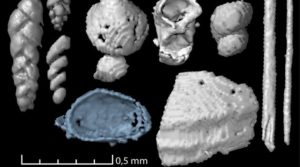
 Calcified plankton dating from 95 million years ago (images captured in the Plymouth Electron Microscopy Centre)

Calcified plankton dating from 95 million years ago (images captured in the Plymouth Electron Microscopy Centre)

The ocean as we understand it today was shaped by a global evolutionary regime shift around 170 million years ago, according to new research.

Until that point, the success of organisms living within the marine environment had been strongly controlled by non-biological factors, including ocean chemistry and climate.

However, from the middle of the Jurassic period onwards (some 170 million years ago), biological factors such as predator-prey relationships became increasingly important.

Writing in Nature Geoscience, scientists say this change coincided with the proliferation of calcium carbonate-secreting plankton and their subsequent deposition on the ocean floor.

They believe the rise of this plankton stabilised the chemical composition of the ocean and provided the conditions for one of the most prominent diversifications of marine life in Earth’s history.

The research was led by academics from the University of Plymouth’s School of Geography, Earth and Environmental Sciences and School of Computing, Electronics and Mathematics, in cooperation with scientists from the University of Bergen in Norway, and the University of Erlangen-Nuremberg in Germany.

PhD candidate Kilian Eichenseer, the study’s lead author, explained the impact of calcifying plankton: “Today, huge areas of the ocean floor are covered with the equivalent of chalk, made up of microscopic organisms that rose to dominance in the middle of the Jurassic period. The chalky mass helps to balance out the acidity of the ocean and, with that balance in place, organisms are less at the mercy of short-term perturbations of ocean chemistry than they might have been previously. It is easier to secrete a shell, regardless of its mineralogy, if the ocean chemistry is stable.”

The aim of the research was to test the hypothesis that the evolutionary importance of the non-biological environment had declined through geological time.

Since its emergence more than 540 million years ago, multicellular life evolved under the influence of both the non-biological and the biological environment, but how the balance between these factors changed remained largely unknown.

Calcified seashells provide an ideal test to answer this question, as aragonite and calcite — the minerals making up seashells — also form non-biologically in the ocean.

In their study, the authors used the vast global fossil record of marine organisms that secreted calcium carbonate, which encompasses more than 400,000 samples dating from 10,000 years BC up to around 500 million years ago.

Using reconstructions of the temperature and the ocean water composition of the past, the authors estimated the proportion of aragonite and calcite that formed inorganically in the ocean in 85 geological stages across 500 million years.

Through a series of specially developed statistical analyses, this inorganic pattern of aragonite-calcite seas was then compared with seashell mineral composition over the same time.

The results show that up until the middle of the Jurassic period, around 170 million years ago, the ecological success of shell-secreting marine organisms was tightly coupled to their shell composition: organisms that secreted the mineral that was environmentally favoured had an evolutionary advantage.

However, the Earth-Life system was revolutionised forever by the rise of calcifying plankton, which expanded the production of calcium carbonate from continental shelves to the open ocean.

This ensured that the evolutionary impact of episodes of severe climate changes, and resulting ocean acidification, was less severe than comparable events earlier in Earth history.

Dr Uwe Balthasar, Lecturer in Palaeontology, first published research exploring the dominance of aragonite and calcite in the marine environment in 2015. He said: “During the Earth’s history there have been several major events that shaped the evolution of life on our planet, such as the five big mass extinctions or the radiation of complex animals during the ‘Cambrian Explosion’. Our research identifies a previously overlooked event of this magnitude around 170 million years ago when the emergence of calcium carbonate-secreting plankton lifted constraints on the evolution of other marine organisms that we did not know existed. As a result, life in the ocean has diversified to levels far beyond what existed before.”

Reference:
Kilian Eichenseer, Uwe Balthasar, Christopher W. Smart, Julian Stander, Kristian A. Haaga, Wolfgang Kiessling. Jurassic shift from abiotic to biotic control on marine ecological success. Nature Geoscience, 2019; DOI: 10.1038/s41561-019-0392-9

Note: The above post is reprinted from materials provided by University of Plymouth.

New model suggests lost continents for early Earth

Representative Image: The tectonic plates underlying the continents and oceans. Credit: USGS

A new radioactivity model of Earth’s ancient rocks calls into question current models for the formation of Earth’s continental crust, suggesting continents may have risen out of the sea much earlier than previously thought but were destroyed, leaving little trace.

Scientists at the University of Adelaide have published two studies on a model of rock radioactivity over billions of years which found that the Earth’s continental crust may have been thicker, much earlier than current models suggest, with continents possibly present as far back as four billion years.

“We use this model to understand the evolving processes from early Earth to the present, and suggest that the survival of the early crust was dependent on the amount of radioactivity in the rocks — not random chance,” says Dr Derrick Hasterok, from the University of Adelaide’s Department of Earth Sciences and Mawson Centre for Geoscience.

“If our model proves to be correct, it may require revision to many aspects of our understanding of the Earth’s chemical and physical evolution, including the rate of growth of the continents and possibly even the onset of plate tectonics.”

Dr Hasterok and his PhD student Matthew Gard compiled 75,800 geochemical samples of igneous rocks (such as granite) with estimated ages of formation from around the continents. They estimated radioactivity in these rocks today and constructed a model of average radioactivity from four billion years ago to the present.

“All rocks contain natural radioactivity that produces heat and raises temperatures in the crust when it decays — the more radioactive a rock the more heat it produces,” says Dr Hasterok. “Rocks typically associated with the continental crust have higher radioactivity than oceanic rocks. A rock four billion years old would have about four times as much radioactivity when it was created compared with today.”

But the researchers found an unexpected deficit in the level of radioactivity in rocks older than about two billion years. When they corrected for higher heat production, because of the higher radioactivity that would have been present, the deficit disappeared.

“We think there would have been more granite-like — or continental-type — rocks around but because of the higher radioactivity, and therefore higher heat, they either melted or were easily destroyed by tectonic movement. That’s why these continental crusts don’t show in the geological record.

“Our prevailing models suggest that continents eventually grew out of the oceans as the crust thickened. But we think there may have been significant amount of, albeit very unstable, continental crust much earlier.”

Co-author Professor Martin Hand, also from the University of Adelaide, says the new model could have important implications for monitoring the effects of global warming.

“What this new model allows us to do is help predict rock radioactivity in places where we have few or no samples, like Antarctica, where we cannot access samples, which could be very important in assessing the stability of ice sheets and the threshold of temperature changes needed for global warming to impact glacial melting,” says Martin Hand, Professor of Earth Sciences.

The researchers say the new radioactivity model also may help in the search for hot rocks with geothermal potential and can be used to produce more accurate models of oil maturation in sedimentary basins.

Reference:
D. Hasterok, M. Gard, G. Cox, M. Hand. A 4 Ga record of granitic heat production: Implications for geodynamic evolution and crustal composition of the early Earth. Precambrian Research, 2019; 105375 DOI: 10.1016/j.precamres.2019.105375

Note: The above post is reprinted from materials provided by University of Adelaide.

When the dinosaurs died, lichens thrived

Crittendeceratops
Crittendeceratops restoration. Credit: Sergey Krasovskiy

When an asteroid smacked into the Earth 66 million years ago, it triggered mass extinctions all over the planet. The most famous victims were the dinosaurs, but early birds, insects, and other life forms took a hit too. The collision caused clouds of ash to block the sun and cool the planet’s temperature, devastating plant life. But a new study in Scientific Reports shows that while land plants struggled, some kinds of lichens — organisms made of fungi and algae living together — seized the moment and evolved into new forms to take up plants’ role in the ecosystem.

“We thought that lichens would be affected negatively, but in the three groups we looked at, they seized the chance and diversified rapidly,” says Jen-Pang Huang, the paper’s first author, a former postdoctoral researcher at the Field Museum now at Academia Sinica in Taipei. “Some lichens grow sophisticated 3D structures like plant leaves, and these ones filled the niches of plants that died out.”

The researchers got interested in studying the effects of the mass extinction on lichens after reading a paper about how the asteroid strike also caused many species of early birds to go extinct. “I read it on the train, and I thought, ‘My god, the poor lichens, they must have suffered too, how can we trace what happened to them?'” says Thorsten Lumbsch, senior author on the study and the Field Museum’s curator of lichenized fungi.

You’ve seen lichens a million times, even if you didn’t realize it. “Lichens are everywhere,” says Huang. “If you go on a walk in the city, the rough spots or gray spots you see on rocks or walls or trees, those are common crust lichens. On the ground, they sometimes look like chewing gum. And if you go into a more pristine forest, you can find orange, yellow, and vivid violet colors — lichens are really pretty.” They’re what scientists call “symbiotic organisms” — they’re made up of two different life forms sharing one body and working together. They’re a partnership between a fungus and an organism that can perform photosynthesis, making energy from sunlight — either a tiny algae plant, or a special kind of blue-green bacterium. Fungi, which include mushrooms and molds, are on their own branch on the tree of life, separate from plants and animals (and actually more closely related to us than to plants). The main role of fungi is to break down decomposing material.

During the mass extinction 66 million years ago, plants suffered since ash from the asteroid blocked out sunlight and lowered temperatures. But the mass extinction seemed to be a good thing for fungi — they don’t rely on sunlight for food and just need lots of dead stuff, and the fossil record shows an increase in fungal spores at this time. Since lichens contain a plant and a fungus, scientists wondered whether they were affected negatively like a plant or positively like a fungus.

“We originally expected lichens to be affected in a negative way, since they contain green things that need light,” says Huang.

To see how lichens were affected by the mass extinction, the scientists had to get creative — there aren’t many fossil lichens from that time frame. But while the researchers didn’t have lichen fossils, they did have lots of modern lichen DNA.

From observing fungi growing in lab settings, scientists know generally how often genetic mutations show up in fungal DNA — how frequently a letter in the DNA sequence accidentally gets switched during the DNA copying process. That’s called the mutation rate. And if you know the mutation rate, if you compare the DNA sequences of two different species, you can generally extrapolate how long ago they must have had a common ancestor with the same DNA.

The researchers fed DNA sequences of three families of lichens into a software program that compared their DNA and figured out what their family tree must look like, including estimates of how long ago it branched into the groups we see today. They bolstered this information with the few lichen fossils they did have, from 100 and 400 million years ago. And the results pointed to a lichen boom after 66 million years ago, at least for some of the leafier lichen families.

“Some groups don’t show a change, so they didn’t suffer or benefit from the changes to the environment,” says Lumbsch, who in addition to his work on lichens is the Vice President of Science and Education at the Field. “Some lichens went extinct, and the leafy macrolichens filled those niches. I was really happy when I saw that not all the lichens suffered.”

The results underline how profoundly the natural world we know today was shaped by this mass extinction. “If you could go back 40 million years, the most prominent groups in vegetation, birds, fungi — they’d be more similar to what you see now than what you’d see 70 million years ago,” says Lumbsch. “Most of what we see around us nowadays in nature originated after the dinosaurs.”

And since this study shows how lichens responded to mass extinction 66 million years ago, it could shed light on how species will respond to the mass extinction the planet is currently undergoing. “Before we lose the world’s biodiversity, we should document it, because we don’t know when we’ll need it,” says Huang. “Lichens are environmental indicators — by simply doing a biodiversity study, we can infer air quality and pollution levels.”

Beyond the potential implications in understanding environmental impacts and mass extinctions, the researchers point to the ways the study deepens our understanding of the world around us.

“For me, it’s fascinating because you would not be able to do this without large molecular datasets. This would have been impossible ten years ago,” says Lumbsch. “It’s another piece to the puzzle to understanding what’s around us in nature.”

“We expect a lot of patterns from studying other organisms, but fungi don’t follow the pattern. Fungi are weird,” says Huang. “They’re really unpredictable, really diverse, really fun.”

This study was contributed to by researchers from the Field Museum, Kasetsart University, Brigham Young University, and Academia Sinica.

Reference:
Jen-Pan Huang, Ekaphan Kraichak, Steven D. Leavitt, Matthew P. Nelsen, H. Thorsten Lumbsch. Accelerated diversifications in three diverse families of morphologically complex lichen-forming fungi link to major historical events. Scientific Reports, 2019; 9 (1) DOI: 10.1038/s41598-019-44881-1

Note: The above post is reprinted from materials provided by Field Museum.

A new normal: Study explains universal pattern in fossil record

Illustration of marine fossils that have existed since the Cambrian. Represented taxa include brachiopods, trilobites, ammonites, bivalves, and decapods.
Illustration of marine fossils that have existed since the Cambrian. Represented taxa include brachiopods, trilobites, ammonites, bivalves, and decapods. Credit: Mesa Shumacher/Santa Fe Institute

Throughout life’s history on earth, biological diversity has gone through ebbs and flows — periods of rapid evolution and of dramatic extinctions. We know this, at least in part, through the fossil record of marine invertebrates left behind since the Cambrian period. Remarkably, extreme events of diversification and extinction happen more frequently than a typical, Gaussian, distribution would predict. Instead of the typical bell-shaped curve, the fossil record shows a fat-tailed distribution, with extreme, outlier, events occurring with higher-than-expected probability.

While scientists have long known about this unusual pattern in the fossil record, they have struggled to explain it. Many random processes that occur over a long time with large sample sizes, from processes that produce school grades to height among a population, converge on the common Gaussian distribution. “It’s a very reasonable default expectation,” says Santa Fe Institute Omidyar Fellow Andy Rominger. So why doesn’t the fossil record display this common pattern?

In a new paper published in Science Advances, Rominger and colleagues Miguel Fuentes (San Sebastián University, Chile) and Pablo Marquet (Pontifical Catholic University of Chile) have taken a new approach to tackling this question. Instead of trying to only describe fluctuations in biodiversity across all types of organisms, they also look at fluctuations within clades, or groups of organisms that share a common ancestral lineage.

“Within a lineage of closely related organisms, there should be a conserved evolutionary dynamic. Between different lineages, that dynamic can change,” says Rominger. That is, within clades, related organisms tend to find an effective adaptive strategy and never stray too far. But between these clade-specific fitness peaks are valleys of metaphorically uninhabited space. “It turns out, just invoking that simple idea, with some very simple mathematics, described the patterns in the fossil record very well.”

These simple mathematics are tools that Fuentes, in 2009, used to describe another system with an unusual fat-tailed distribution: the stock market. By using superstatistics — an approach from thermodynamics to describe turbulent flow — Fuentes could accurately describe the hard-to-predict dramatic crashes and explosions in value.

“In biology, we see these crashes and explosions too, in terms of biodiversity,” says Rominger. “We wondered if Fuentes’ elegant approach could also describe the evolutionary dynamics we see in the fossil record.”

The team writes that their success opens up new research directions to better understand the evolutionary processes that lead to both stable rates of extinction and speciation at the order- and family-levels of life, and to interruptions that allow for new life forms to emerge.

Reference:
Andrew J. Rominger, Miguel A. Fuentes and Pablo A. Marquet. Nonequilibrium evolution of volatility in origination and extinction explains fat-tailed fluctuations in Phanerozoic biodiversity. Science Advances, 2019 DOI: 10.1126/sciadv.aat0122

Note: The above post is reprinted from materials provided by Santa Fe Institute.

Tooth enamel analyses offer insights into the diet and habitat of T.rex relative tarbosaurus

Fragment of Tarbosaurus lower jaw with teeth sampled (white stripes on tooth enamel)
Fragment of Tarbosaurus lower jaw with teeth sampled (white stripes on tooth enamel). Credit: Senckenberg

Together with an international team, Senckenberg scientist Hervé Bocherens studied the fossilized teeth of the carnivorous dinosaur Tarbosaurus bataar. Based on stable isotopes, the researchers were able to draw inferences regarding the habitat and feeding habits of this relative of T. rex, who lived around 70 million years ago. According to the results, the carnivores were not very picky in their prey selection. The study is published recently in the scientific journal Palaeogeography, Palaeoclimatology, Palaeoecology.

The Gobi Desert in southern Mongolia is a well-known discovery site of fossil dinosaurs. “These fossils from the Cretaceous also include Tarbosaurus bataar, a representative of the Tyrannosaurids and relative of the famous Tyrannosaurus rex,” explains Prof. Dr. Hervé Bocherens of the Senckenberg Centre for Human Evolution and Palaeoenvironment at the University of Tübingen.

Bocherens and his team of scientists examined the fossilized teeth of this up to twelve-meter-long dinosaur, using oxygen and carbon isotopes in the tooth enamel to draw inferences regarding the dinosaurs’ feeding habits and the environmental conditions at the time.

“It is amazing how much information is revealed by this approximately 70-million-year-old tooth enamel,” explains a delighted Bocherens, and he continues, “Our analyses show that the environment of these carnivorous reptiles was about 10 degrees Centigrade warmer than today and the amount of precipitation was subject to strong seasonal fluctuations. We assume that the dinosaurs inhabited closed forests—in a climate characterized by monsoons with cold, dry winters and hot, rainy summers.”

In addition, the researchers were able to reconstruct the Tarbosaurs’ diet based on the teeth from five differently aged individuals. According to the results, the carnivores were not very picky in their prey selection: their menu included both the Hadrosauridae, commonly known as “duck-billed dinosaurs,” as well as different species of vegetarian sauropods. “Our isotope studies therefore confirm the fossil discoveries and show that Tarbosaurus took up a position at the top of the food pyramid,” adds Bocherens in summary.

Reference:
Krzysztof Owocki et al. Diet preferences and climate inferred from oxygen and carbon isotopes of tooth enamel of Tarbosaurus bataar (Nemegt Formation, Upper Cretaceous, Mongolia), Palaeogeography, Palaeoclimatology, Palaeoecology (2019). DOI: 10.1016/j.palaeo.2019.05.012

Note: The above post is reprinted from materials provided by Senckenberg Research Institute and Natural History Museum.

Blue color tones in fossilized prehistoric feathers

Eocoracias brachyptera fossil sample used for this study.
Eocoracias brachyptera fossil sample used for this study. The rich black texture on the surface is fossilized plumage of the bird. Fossil is stored at Senckenberg Research Institute. Credit: Sven Traenkner, photographer at the Senckenberg Research Institute and Nature Museum in Frankfurt.

Examining fossilised pigments, scientists from the University of Bristol have uncovered new insights into blue colour tones in prehistoric birds.

For some time, paleontologists have known that melanin pigment can preserve in fossils and have been able to reconstruct fossil colour patterns.

Melanin pigment gives black, reddish brown and grey colours to birds and is involved in creating bright iridescent sheens in bird feathers.

This can be observed by studying the melanin packages called melanosomes, which are shaped like little cylindrical objects less than one-thousandth of a millimetre and vary in shape from sausage shapes to little meatballs.

However, besides iridescent colours, which is structural, birds also make non-iridescent structural colours.

Those are, for example, blue colour tones in parrots and kingfishers. Until now, it was not known if such colours could be discovered in fossils.

This blue structural colour is created by the dense arrangement of cavities inside feathers, which scatters the blue light. Underneath is a layer of melanin that absorbs unscattered light.

Paleontologists have shown that the feather itself, which is made of keratin, does not fossilise while the melanin does. Therefore, if a blue feather fossilised, the dark pigment may be the only surviving feature and the feather may be interpreted as black or brown.

Now researchers from the University of Bristol, led by Frane Barbarovic who is currently at the University of Sheffield, have shown that blue feather melanosomes are highly distinct from melanosomes that are from feathers expressing black, reddish-brown, brown and iridescent, but overlap significantly with some grey feather melanosomes.

By looking at plumage colourations of modern representatives of fossil specimen and reconstructing which colour was the most likely present in the fossil specimen, they were able to discriminate between melanosomes significant for grey and blue colour, leading to the reconstruction of prehistoric Eocoracias brachyptera as a predominantly blue bird.

Frane Barbarovic said: “We have discovered that melanosomes in blue feathers have a distinct range in size from most of colour categories and we can, therefore, constrain which fossils may have been blue originally.

“The overlap with grey colour may suggest some common mechanism in how melanosomes are involved in making grey colouration and how these structural blue colours are formed.

“Based on these results in our publication we have also hypothesized potential evolutionary transition between blue and grey colour.”

The research team now need to understand which birds are more likely to be blue based on their ecologies and modes of life. The blue colour is common in nature, but the ecology of this colour and its function in the life of birds is still elusive.

Frane Barbarovic added: “We also need to understand how grey colour is made. This is made in a very different way in birds than it is in mammals. We believe it is related to how the melanosome shape can result in a kind of self-assembling process in the feather and the surface tension of the melanosomes pull them into certain configurations inside a feather as it forms.”

Reference:
‘Characterization of melanosomes involved in the production of non-iridescent structural feather colours and their detection in the fossil record’ F. Babarovic, M. Puttick, M. Zaher, E. Learmonth, E.J Gallimore, F. Smithwick, G. Mayr and J. Vinther, Interface, rsif.royalsocietypublishing.or … .1098/rsif.2018.0921

Note: The above post is reprinted from materials provided by University of Bristol.

Study reveals key factor in Himalayan earthquake rupture

The velocity model showing a map view of the MHT and a cross-section passing through the Gorkha earthquake
The velocity model showing a map view of the MHT and a cross-section passing through the Gorkha earthquake Credit: BAI Ling

The Himalayan orogenic belt produces frequent large earthquakes that impact population centers for a distance of over 2500 km. In the central region, the 2015 Gorkha earthquake in Nepal, with moment magnitude (MW) 7.8, partially ruptured a ~120-km by 80-km patch of the Main Himalayan Thrust (MHT), the detachment that separates the underthrusting Indian plate from the overriding Himalayan orogeny.

The rupture highlights important scientific questions about Himalayan formation and seismic hazards. These questions include how to distinguish between different possible geometries of the MHT, and how to better define the structural causes and locations of rupture segmentation both across-strike and along-strike in the orogenic belt.

A study led by Prof. BAI Ling from the Institute of Tibetan Plateau Research (ITP) of the Chinese Academy of Sciences revealed that the rupture length of the 2015 MW 7.8 Gorkha earthquake was likely controlled by spatial (both along- and across-strike) variations in the Main Himalayan Thrust.

The researchers combined seismic waveforms from several different deployments, including 22 seismic stations ITP had deployed along the China-Nepal border with an average elevation of 4.5 km prior to the earthquake. Using arrival times and waveform modeling, they determined source parameters of earthquakes, velocity structures and discontinuity topography in and around the source area.

The study showed that the MHT exhibited clear lateral variation along the geologic strike, with the Lesser Himalayan ramp having moderate dip on the MHT beneath the mainshock area, and a flatter and deeper MHT beneath the eastern end of the aftershock zone.

Following these observations, the impetus now is to image the entire 2,500-km Himalayan front to determine the morphology of the MHT and the likely controls on the maximum magnitude of rupture that can be accommodated in different parts of this convergence zone.

The study, entitled “Lateral variation of the Main Himalayan Thrust controls the rupture length of the 2015 Gorkha earthquake in Nepal,” was published in Science Advances.

Reference:
“Lateral variation of the Main Himalayan Thrust controls the rupture length of the 2015 Gorkha earthquake in Nepal” Science Advances (2019). DOI: 10.1126/sciadv.aav0723

Note: The above post is reprinted from materials provided by Chinese Academy of Sciences.

Desert-dwelling carnivorous dinosaur found in Brazil

A hitherto unknown type of carnivorous dinosaur measuring just over a meter and a half long that lived 90 million years ago has been identified in the Cruzeiro do Oeste municipality of southern Brazil

A desert-based carnivorous dinosaur that used claws to capture small prey 90 million years ago has been unearthed in southern Brazil, scientists said Wednesday.

Just over a meter and a half in length (five feet), the fossil remains of the Vespersaurus paranaensis were found in Cruzeiro do Oeste municipality of Parana state, a team of paleontologists from Brazil and Argentina said in a statement.

The Vespersaurus was a theropod, a group of two-footed, meat-eating dinosaurs that included the better known tyrannosaurus and velociraptor.

Footprints now believed to belong to this new species of dinosaur were discovered in Cruzeiro do Oeste in the 1970s.

“It’s incredible that, nearly 50 years later, it seems that we have discovered what type of dinosaur would have produced those enigmatic footprints,” said Paulo Manzig of the Paleontology Museum of Cruzeiro do Oeste.

The northeastern region of Parana was once a desert and the dinosaur’s remains suggest that the Vespersaurus was well adapted to that type of climate.

Other dinosaur species have been found there and, according to the scientists, the latest discovery must “catapult” paleontological investigations in the region.

“It is a rich but little explored area that would surely bring great news to the world of paleontology,” said Neurides Martins of the Paleontology Museum of Cruzeiro do Oeste.

Note: The above post is reprinted from materials provided by AFP.

Contradictory effect of earthquakes on submarine slopes

Scientists and shipboard crew await the arrival of a new sediment core onboard research vessel RV Sonne in 2016.
Scientists and shipboard crew await the arrival of a new sediment core onboard research vessel RV Sonne in 2016. Credit: T. Schwestermann

Active margins, where an oceanic plate slides under a continental plate, may cause earthquakes and tsunamis. Further, they are known for shifting sediments from margin slopes into deep ocean trenches. Geologists now found evidence of earthquake-triggered surface sediment erosion on a submarine slope close to the area of the 2011 Tohoku-Oki earthquake.

Whereas most previous research assumed that sediment transport by earthquakes only happened by sliding of sediment packages (i.e. submarine landslides), that are several meters thick, the recently-discovered process of surficial remobilization involves the stripping of only a thin veneer of sediment over an extensive area. At first view a few missing centimeters of sediment do not look very spectacular. However, the fact that it affects a vast area has tremendous implications for all studies based on the remobilization of marine sediment by earthquakes, such as research on pre-historical earthquakes, deposition of organic carbon into the deep ocean and even the potential tsunami hazard by submarine landslides. “Surficial remobilization was hypothesized based on studies of basin deposits. However, to really understand this important process it is crucial to investigate the place where it takes place: the submarine slopes,” explains Jasper Moernaut, Assistant Professor at the Institute of Geology.

Mind the gap

The researchers combined chemical and physical analyses to detect small centimeter scale gaps in the sediment taken from a slope offshore Japan. Subsequent dating then revealed the potential of the gaps being caused by seismic shaking. “We were quite amazed when we found that not only one, but three gaps were present in this small 15 cm section of sediment core,” says Ariana Molenaar, PhD student at the Institute of Geology. “When we dated these three gaps we found that they link to the three strongest regional earthquakes with a magnitude larger than eight, indicating that this is a systematically repeating process.”

No one before has examined deep sea slopes with this method. A slope site where erosion takes place is surely the last place one would take a sediment core. “Our pilot study is the first to target a submarine slope to investigate this process, showing the potential of this method,” says Michael Strasser, Professor at the Institute of Geology. The research team is now applying their strategy in different settings – even in lakes − to further advance their understanding of this newly-discovered process.

Contrasting effect on submarine slopes

Besides the shedding of the uppermost few centimeters, earthquake shaking has another very contrasting effect on the submarine slope: the sediments that remain actually get stronger. This process, called “seismic strengthening”, occurs due to the compaction of sediments by violent shaking. “In the ocean, this leads to very stable slope sequences and thus a remarkable absence of submarine landslides,” says Jasper Moernaut. So the good news is that − despite the frequent occurrence of strong earthquakes at active ocean margins − tsunamis triggered by submarine landslides are relatively uncommon in these regions.

Reference:
Ariana Molenaar et al. Earthquake Impact on Active Margins: Tracing Surficial Remobilization and Seismic Strengthening in a Slope Sedimentary Sequence, Geophysical Research Letters (2019). DOI: 10.1029/2019GL082350

Note: The above post is reprinted from materials provided by University of Innsbruck.

New study of the 2014 Oso landslide

The March 22, 2014 SR530 landslide near Oso, Washington
The March 22, 2014 SR530 landslide near Oso, Washington, caused 43 fatalities, destroyed a neighborhood, blocked a state highway, and temporarily dammed the North Fork Stillaguamish River. This photo was taken the day after the catastrophic slide, before the river cut through the landslide deposit. Here, several geomorphological components of the landslide are visible, with a hummock field in the foreground transitioning upslope to larger slices of deposit separated by multiple scarps, which then transition to a fallen-tree covered, back-rotated block downdropped from the headscarp in the far field. Nearly the entire landslide deposit exhibits indications of extension. Collins and Reid attribute extensional hummock formation to widespread basal liquefaction of underlying alluvial sediments in the river valley. Photo by Stephen Slaughter (Washington Geological Survey, Washington Department of Natural Resources). Credit: Stephen Slaughter (Washington Geological Survey, Washington Department of Natural Resources)

As a compelling example of a large-mobility landslide, the 22 March 2014 landslide near Oso, Washington, USA, was particularly devastating, traveling across a 1-km-plus-wide river valley, killing 43 people, destroying dozens of homes, and temporarily closing a well-traveled highway.

To resolve causes for the landslide’s behavior and mobility, Brian Collins and Mark Reid of the U.S. Geological Survey conducted detailed post-event field investigations and material testing of soils involved in the failure.

How far a landslide moves from the site where it began can, of course, vastly amplify the consequences of slope failure. Some landslides stop moving close to where they began, and others are very mobile and can travel long distances, affecting not only what is located at the base of the slope, but also farther away.

Collins and Reid mapped the geology and structure of the Oso landslide deposit by making multiple visits to the site over the course of three years. Some of the data they collected were highly ephemeral, being obscured by erosion and vegetation within one year of the landslide and highlighting the need to record many observations within a few months of the disaster.

Using “boots-on-the-ground” geologic mapping techniques, combined with high-resolution orthoimagery and airborne LiDAR data, they reconstructed the likely sequence of events that led to the landslide’s large mobility. Their mapping and analyses show that the approximately nine-million-cubic-meter landslide underwent rapid extension or stretching in a closely timed sequence of events that led to the landslide overrunning the, at-the-time, saturated flood plain forming the valley floor.

The large and rapid failure of the landslide caused the flood plain, composed of alluvial sands and gravels, to liquefy through a process of pore-pressure generation and consequent liquefaction. Liquefaction greatly reduced the strength along the base of the landslide and enabled it to travel over 1 km across the valley flats.

Collins and Reid found extensive evidence of high soil-water pore pressure during their field work by identifying and mapping of hundreds of “sand boils”—typically decimeter-sized cones of sand that indicated locations where liquefied alluvium tried to escape from a weakened base beneath the landslide. In their new GSA Bulletin article, Collins and Reid present their mapping and interpreted landslide sequence, as well as analyses that show how the basal liquefaction mechanism likely occurred at the site of the Oso landslide. They hypothesize that this mechanism might enhance mobility of other landslides in similar settings.

Reference:
Brian D. Collins et al, Enhanced landslide mobility by basal liquefaction: The 2014 State Route 530 (Oso), Washington, landslide, GSA Bulletin (2019). DOI: 10.1130/B35146.1

Note: The above post is reprinted from materials provided by Geological Society of America.

Ice-squeezed aquifers might create marsquakes

A view from the “Kimberley” formation on Mars taken by NASA’s Curiosity rover.
A view from the “Kimberley” formation on Mars taken by NASA’s Curiosity rover. The strata in the foreground dip towards the base of Mount Sharp, indicating flow of water toward a basin that existed before the larger bulk of the mountain formed. Credit: NASA/JPL-Caltech/MSSS

As the Mars InSight lander begins listening to the interior of Mars, some scientists are already proposing that some marsquakes could be signals of groundwater beneath the frozen surface of the Red Planet.

The idea, proposed by Michael Manga, a planetary scientist at the University of California at Berkeley, and his colleagues, is that Mars could be experiencing quakes a lot like those being felt in Oklahoma and Texas due to wastewater injections from fracking.

On Earth, water from fracking is injected deep into the ground where it increases the pressure in the pores—tiny spaces between the grains that make up the ground. That pressure can loosen up faults and cause them to slip and send vibrations—the shaking of an earthquake—far and wide.

On Mars, it might also be about the pore pressure, said Manga who is the lead author of a paper describing their hypothesis in the AGU journal Geophysical Research Letters. But instead of fracking, Manga proposes that the wintry temperatures of Mars’s surface might penetrate downward into liquid groundwater, freezing the top layers of groundwater and compressing the still-liquid groundwater below. That pressurized groundwater could be loosening faults on Mars and causing just the sorts of shallow marsquakes that have already been detected by the Insight lander, he said.

That’s not the entire story, however, because marsquakes need triggers. By modeling their hypothetical ice-squeezed aquifers, Manga and his colleagues found that the two likely triggers of marsquakes are the tidal tugs of Mars’s moon Phobos and the Sun, as well as barometric pressure changes. The last is caused by the warming and cooling of its thin atmosphere by the Sun.

If Manga and his colleagues are correct, Insight should start to detect a pattern to marsquakes which match changes in the tidals forces and the barometric pressure. If that happens it could be taken by some as evidence of deep, pressurized groundwater. If that water really exists, future Mars explorers might be able to drill down to it and the water would come shooting out of the ground under its own pressure, like an artesian spring, Manga said.

The hypothesis might also explain some of the features—like icy ridges and ice volcanoes—seen on icy moons in the solar system, he said.

And if the patterns of marquakes do not fit the pattern of pressurized groundwater? “Either way, the answer is fascinating,” said Manga.

Reference:
Michael Manga et al. Squeezing Marsquakes out of groundwater, Geophysical Research Letters (2019). DOI: 10.1029/2019GL082892

Note: The above post is reprinted from materials provided by American Geophysical Union.

The ancient croc that preyed on dinosaurs

Artist’s reconstruction of Isisfordia molnari.
Artist’s reconstruction of Isisfordia molnari. Credit: Josè Vitor Silva.

A new species of crocodile has been described from opalised fossils found at Lightning Ridge in NSW, Australia, from a fossil unearthed more than a century ago, and a second one found more than 70 years later.

Dating back 100 million years, the new species, Isisfordia molnari, is one of the oldest known direct ancestors of today’s living crocodiles. The species was named after Ralph Molnar, a palaeontologist whose many valuable contributions to Australian science include research on fossil crocodiles. This is the second species of Isisfordia discovered, with Isisfordia duncani named in 2006 from fossils found near the Queensland outback town of Isisford.

Isisfordia molnari grew to between 1.5 and 2 metres in length, and is thought to have been a semi-aquatic ambush predator, like modern crocodiles. Its prey probably included small dinosaurs such as Weewarrasaurus.

Lead researcher Lachlan Hart, a Master of Science student at the University of New England in Armidale, explained how the new species was discovered.

“The first crocodile fossil from Lightning Ridge, a partial jaw bone with teeth, was discovered in 1917, at a time when little was known about fossil crocodiles from the Australia’s age of dinosaurs. It found its way to the Australian Museum and was given a name that turned out to be incorrect. Then, in the early 2000s, opal buyers Peter and Lisa Carroll found a piece of fossil crocodile braincase (the rear section of the skull) from Lightning Ridge, and sold it to the Australian Museum; but still, there were so few Australian crocodile fossils known of this age that scientists also found this new piece difficult to interpret.

“After Isisfordia duncani was discovered in Queensland in 2006, it allowed us to make more sense of the earlier Lightning Ridge discoveries. Although they were similar, we found several differences that set the Lightning Ridge species apart.”

Like other fossils from Lightning Ridge, the Isisfordia molnari fossils are opalised, meaning that the original bone and tooth material has been replaced by opal. Other famous opalised fossils from Lightning Ridge include those of the recently announced herbivorous dinosaurs Fostoria dhimbangunmal and Weewarrasaurus pobeni, fossils of which are at the Australian Opal Centre, a public museum that earlier in 2019 secured $20 million to construct a new building at Lightning Ridge for its world-leading collections and programs.

“Lightning Ridge is one of the most important fossil sites in Australia,” said Australian Opal Centre palaeontologist and Special Projects Officer Jenni Brammall. “This new research is adding to a complex and intriguing picture not only of the dinosaurs of the time, but the animals and plants they lived with and the ecosystems they were part of.”

The new crocodile species was published this week in the journal PeerJ, by scientists from the University of New England, Australian Opal Centre and University of Queensland.

Reference:
Lachlan J. Hart et al. Isisfordia molnari sp. nov., a new basal eusuchian from the mid-Cretaceous of Lightning Ridge, Australia, PeerJ (2019). DOI: 10.7717/peerj.7166

Note: The above post is reprinted from materials provided by University of New England.

Peacock rock : What is Peacock rock? Where is peacock rock found?

Peacock rock
Peacock rock

Peacock rock

Chemical Formula: Cu5FeS4
Composition: Copper iron sulfide
Color: Copper-red to yellowish brown on fresh surfaces. Quickly tarnishes to a multicolored purple, blue, and red.
Streak: Dark gray to black
Hardness: 3 – 3.5
Crystal System: Orthorhombic
Rock Type: Igneous, Metamorphic

What is Peacock rock?

Bornite is a sulfide mineral with a chemical composition Cu5FeS4 that crystallizes in the orthorhombic (pseudo-cubic) scheme, also recognized as peacock ore.

On fresh surfaces, bornite has a brown to copper-red color that tarnishes in places in different iridescent shades of blue to purple. Its striking iridescence gives it the peacock copper or peacock ore nickname.

Bornite is an significant mineral copper ore and happens commonly together with the more prevalent chalcopyrite in porphyry copper deposits. In the supergene enrichment area of copper deposits, chalcopyrite and bornite are both typically substituted by chalcocite and covellite. In mafic igneous rocks, in contact metamorphic skarn beds, in pegmatites and sedimentary cupriferous shales, bornite is also discovered as spread. For its carbon content of about 63 percent by volume, it is essential as an element.

What is Peacock rock Structure?

The structure is isometric at temperatures above 228 ° C (442 ° F) with a unit cell around 5.50 Å on the bottom. This design is focused on cubic closed sulfur atoms, with randomly dispersed copper and iron atoms in six of the eight tetrahedral locations situated in the cube’s octants. The Fe and Cu are ordered with cooling, so that 5.5 Å subcells where all eight tetrahedral locations are formed alternate with subcells where only four of the tetrahedral locations are fulfilled; symmetry is decreased to orthorhombic.

What is Peacock rock Composition?

Significant change is feasible in the comparative quantities of copper and iron and solid solution spreads to chalcopyrite (CuFeS2) and digenite (Cu9S5). Blebs and lamellae are commonly removed from chalcopyrite, digenite, and chalcocite.

Where is peacock rock found?

It occurs globally in copper ores with significant crystal locations in Butte, Montana, and U.S. Bristol, Connecticut. It is also gathered in Cornwall, England from the Carn Brea mine, Illogan, and elsewhere. Large crystals can be discovered in the Frossnitz Alps, East Tyrol, Austria; Mangula mine, Lomagundi district, Zimbabwe; N’ouva mine, Talate, Morocco, Tasmania’s West Coast and Dzhezkazgan, Kazakhstan. Traces of it are also discovered among the hematite in Western Australia’s Pilbara area.

Related Articles