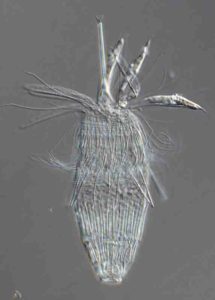
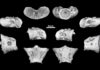
New loriciferan from Japan: Wataloricus japonicus Credit: Shinta Fujimoto
The Loricifera is a microscopic, sediment-dwelling marine invertebrate, with a head covered in over 200 spines and an abdomen with a protective shell – known as a lorica. Since it was first discovered in 1983, just under 40 species have been written about. Now, that number is one more thanks to a group of scientists who reported on a new genus and species of Loricifera.
Their findings were published in the Journal Marine Biodiversity.
Loricifera typically inhabit the space between sand and mud particles in the ocean. Fossils exist from the Cambrian period, suggesting a long existence on Earth. They have complicated life cycles and a few species are reported to live in anoxic environments. Their exact position on the animal tree of life is unknown.
Researchers from Tohoku University, Kyushu University, Mie University, Hiroshima University and the University of Copenhagen reported on a new species of Loricifera inhabiting Japan’s area from the continental slope to the deeper sea – roughly 177 m to 1059 m below the sea. This marks the second time a new Loricifera species has been found near Japan; the last one was discovered in 1988 in the Izu-Ogasawara Trench.
Fujimoto and his team hope to uncover as much as they can about this rare species. “Each new species provides us with answers, but also more questions. We will keep on looking for these extraordinary animals to understand the species’ diversity, ecology, life history and evolution.”
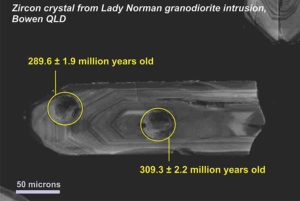
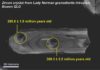
Cathodoluminescence image from a scanning electron microscope of a typical igneous zircon crystal from samples studied by the QUT research team, revealing growth rings of the zircon. Yellow circles enclose ablation sites by a laser from which isotopic data is measured to determine the age of zircon growth. The analytical spots here show this zircon had two main growth periods approximately 20 million years apart in different magmas. Credit: QUT
Geoscientists have long known that some parts of the continents formed in the Earth’s deep past, but the speed in which land rose above global seas — and the exact shapes that land masses formed — have so far eluded experts.
But now, through analyzing roughly 600,000 mineral analyses from a database of about 7,700 different rock samples, a team led by Jesse Reimink, assistant professor of geosciences at Penn State, thinks they’re getting closer to the answers.
The researchers say that Earth’s land masses began to slowly rise above sea level about 3 billion years ago. When their interpretation is combined with previous work, including work from other Penn State researchers, it suggests that continents took roughly 500 million years to rise to their modern heights, according to findings recently published in Earth and Planetary Science Letters.
To reach this conclusion, scientists applied a unique statistical analysis to crystallization ages from the mineral zircon, which is reliably dateable and is frequently found in sedimentary rocks. While these researchers did not date these samples, the samples were all dated using the the uranium-lead decay system. This method measures the amount of lead in a sample and calculates from the well established rate of uranium decay, the age of the crystal. When zirconium forms, no lead is incorporated into its structure, so any lead is from uranium decay.
The minerals found in the sedimentary rock samples originally formed in older magmas but, through erosion and transport, traveled in rivers and were eventually deposited in the ocean where they were turned into sedimentary rock beneath the surface of the sea floor. The ages of zircons retrieved from individual rock samples can be used to tell the type of continent they were eroded from.
The ages of zircons from Eastern North American rocks are, for instance, different from those of land masses such as Japan, which was formed by much more recent volcanic activity.
“If you look at the Mississippi River, it’s eroding rocks and zircons from all over North America. It’s gathering mineral grains that have a massive age range from as young as a million years to as old as a few billions of years,” Reimink said. “Our analysis suggests that as soon as sediment started to be formed on Earth they were formed from sedimentary basins with a similarly large age range.”
Sediments are formed from weathering of older rocks, and carry the signature of past landmass in time capsules such as zircons. The research doesn’t uncover the overall size of primordial continents, but it does speculate that modern-scale watersheds were formed as early as 2.7 billion years ago.
“Our research matches nicely with the preserved rock record,” Reimink said.
This finding is critical for a few reasons. First, knowing when and how the continents formed advances research on the carbon cycle in the land, water and atmosphere. Secondly, it gives us clues as to the early origins of Earth. That could prove useful as we discover more about life and the formation of other planets. Earth is a life-sustaining planet, in part, because of how continental crust influences our atmospheric and oceanic composition. Knowing how and when these processes occurred could hold clues to the creation of life.
“Whenever we’re able to determine processes that led to our existence, it relates to the really profound questions such as: Are we unique? Is Earth unique in the universe? And are there other Earths out there,” Reimink said. “These findings help lead us down the path to the answers we need about Earth that allow us to compare our planet to others.”
The Natural Sciences and Engineering Research Council of Canada partially supported this work.
Reference:
Jesse Ray Reimink, Joshua H.F.L. Davies, Alessandro Ielpi. Global zircon analysis records a gradual rise of continental crust throughout the Neoarchean. Earth and Planetary Science Letters, 2020; 116654 DOI: 10.1016/j.epsl.2020.116654
Note: The above post is reprinted from materials provided by Penn State. Original written by David Kubarek.
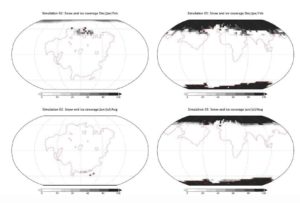
Distribution of snow and ice in winter and summer on Aurica (left) and Amasia. Credit: Way et al. 2020
Long ago, all the continents were crammed together into one large land mass called Pangea. Pangea broke apart about 200 million years ago, its pieces drifting away on the tectonic plates — but not permanently. The continents will reunite again in the deep future. And a new study, presented today during an online poster session at the meeting of the American Geophysical Union, suggests that the future arrangement of this supercontinent could dramatically impact the habitability and climate stability of Earth. The findings also have implications for searching for life on other planets.
The study, which has been submitted for publication, is the first to model the climate on a supercontinent in the deep future.
Scientists aren’t exactly sure what the next supercontinent will look like or where it will be located. One possibility is that, 200 million years from now, all the continents except Antarctica could join together around the north pole, forming the supercontinent “Amasia.” Another possibility is that “Aurica” could form from all the continents coming together around the equator in about 250 million years.
In the new study, researchers used a 3D global climate model to simulate how these two land mass arrangements would affect the global climate system. The research was led by Michael Way, a physicist at the NASA Goddard Institute for Space Studies, an affiliate of Columbia University’s Earth Institute.
The team found that, by changing atmospheric and ocean circulation, Amasia and Aurica would have profoundly different effects on the climate. The planet could end up being 3 degrees Celsius warmer if the continents all converge around the equator in the Aurica scenario.
In the Amasia scenario, with the land amassed around both poles, the lack of land in between disrupts the ocean conveyor belt that currently carries heat from the equator to the poles. As a result, the poles would be colder and covered in ice all year long. And all of that ice would reflect heat out into space.
With Amasia, “you get a lot more snowfall,” explained Way. “You get ice sheets, and you get this very effective ice-albedo feedback, which tends to lower the temperature of the planet.”
In addition to cooler temperatures, Way suggested that sea level would probably be lower in the Amasia scenario, with more water tied up in the ice caps, and that the snowy conditions could mean that there wouldn’t be much land available for growing crops.
Aurica, by contrast, would probably be a bit beachier, he said. The land concentrated closer to the equator would absorb the stronger sunlight there, and there would be no polar ice caps to reflect heat out of Earth’s atmosphere — hence the higher global temperature.
Although Way likens Aurica’s shores to the paradisiacal beaches of Brazil, “the inland would probably be quite dry,” he warned. Whether or not much of the land would be farmable would depend on the distribution of lakes and what types of precipitation patterns it experiences — details that the current paper doesn’t delve into, but could be investigated in the future.
The simulations showed that temperatures were right for liquid water to exist on about 60% of Amasia’s land, as opposed to 99.8% of Aurica’s — a finding that could inform the search for life on other planets. One of the main factors that astronomers look for when scoping out potentially habitable worlds is whether or not liquid water could survive on the planet’s surface. When modeling these other worlds, they tend to simulate planets that are either completely covered in oceans, or else whose terrain looks like that of modern-day Earth. The new study, however, shows that it’s important to consider land mass arrangements while estimating whether temperatures fall in the ‘habitable’ zone between freezing and boiling.
Although it may be 10 or more years before scientists can ascertain the actual land and sea distribution on planets in other star systems, the researchers hope that having a larger library of land and sea arrangements for climate modeling could prove useful in estimating the potential habitability of neighboring worlds.
Hannah Davies and Joao Duarte from the University of Lisbon, and Mattias Green from Bangor University in Wales were co-authors on this research.
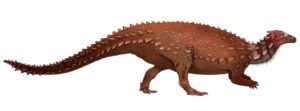
Illustration of the Jurassic thyreophoran Scelidosaurus harrisonii, Jack Mayer Wood, CC BY-SA 4.0, via Wikimedia Commons
The only dinosaur bones ever found on the island of Ireland have been formally confirmed for the first time by a team of experts from the University of Portsmouth and Queen’s University Belfast, led by Dr Mike Simms, a curator and palaeontologist at National Museums NI.
The two fossil bones were found by the late Roger Byrne, a schoolteacher and fossil collector, who donated them along with many other fossils to Ulster Museum. Analysis has confirmed they are from early Jurassic rocks found in Islandmagee, on the east coast of County Antrim.
Ulster Museum has announced plans to put them on display when it reopens after the latest rounds of restrictions are lifted.
Dr Simms, National Museums NI, said: “This is a hugely significant discovery. The great rarity of such fossils here is because most of Ireland’s rocks are the wrong age for dinosaurs, either too old or too young, making it nearly impossible to confirm dinosaurs existed on these shores. The two dinosaur fossils that Roger Byrne found were perhaps swept out to sea, alive or dead, sinking to the Jurassic seabed where they were buried and fossilised.”
The article, published in the Proceedings of the Geologists’ Association, is part of a larger project to document Jurassic rocks in Northern Ireland and draws on many fossils in Ulster Museum’s collections.
Originally it was assumed the fossils were from the same animal, but the team were surprised to discover that they were from two completely different dinosaurs. The study, employing the latest available technology, identified the type of dinosaur from which each came. One is part of a femur (upper leg bone) of a four-legged plant-eater called Scelidosaurus. The other is part of the tibia (lower leg bone) of a two-legged meat-eater similar to Sarcosaurus.
The University of Portsmouth team, researcher Robert Smyth, originally from Ballymoney, and Professor David Martill, used high-resolution 3D digital models of the fossils, produced by Dr Patrick Collins of Queen’s University Belfast, in their analysis of the bone fragments.
Robert Smyth said: “Analysing the shape and internal structure of the bones, we realised that they belonged to two very different animals. One is very dense and robust, typical of an armoured plant-eater. The other is slender, with thin bone walls and characteristics found only in fast-moving two-legged predatory dinosaurs called theropods.”
“Despite being fragmentary, these fossils provide valuable insight on a very important period in dinosaur evolution, about 200 million years ago. It’s at this time that dinosaurs really start to dominate the world’s terrestrial ecosystems.”
Professor Martill said: “Scelidosaurus keeps on turning up in marine strata, and I am beginning to think that it may have been a coastal animal, perhaps even eating seaweed like marine iguanas do today.”
To find out when the fossils will go on display at the Ulster Museum follow @ulstermuseum on Twitter, @ulstermuseumbelfast on Facebook and @ulstermuseum on Instagram.
Reference:
Michael J. Simms, Robert S.H. Smyth, David M. Martill, Patrick C. Collins, Roger Byrne. First dinosaur remains from Ireland. Proceedings of the Geologists’ Association, 2020; DOI: 10.1016/j.pgeola.2020.06.005
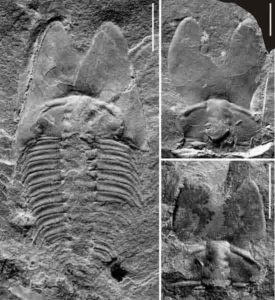
Nearly complete exoskeleton (left) and cranidium (right) of Phantaspisauritus gen. et sp. nov. Credit: NIGPAS
Trilobites achieved their maximum genetic diversity in the Cambrian. However, unlike this diversity measure, the morphological disparity of trilobites based on cranidial outline reached the peak in the Middle to Late Ordovician.
Early to middle Cambrian trilobites with a specialized cephalon are rare, especially among the ptychoparioids. Even with a few exceptions, ptychoparioids exhibit a monotonous pattern of head specialization, characterized by additional cephalic border spines.
Recently, led by Prof. Zhao Fangchen, postgraduate Sun Zhixin and Dr. Zeng Han from the Nanjing Institute of Geology and Paleontology of the Chinese Academy of Sciences (NIGPAS) described a ptychopariid trilobite with an unusual cephalic morphology named Phantaspis auritus gen. et sp. nov. from the middle Cambrian Mantou Formation in Shandong Province, North China.
This unique trilobite provides new insights into the morphological range and structural foundation of the cephalic specialization in Cambrian trilobites. The study was published in Acta Palaeontologica Polonica.
Phantaspis is characterized by a cephalon with an extended anterior area of double-lobate shape resembling a pair of rabbit ears in later ontogenetic stages, which represents a form of specialization in a Cambrian trilobite that was not repeated in any younger trilobites. This illustrates the diversity of Cambrian trilobites in morphotypes and provides an example of ptychoparioid cranidial outline variation during the middle Cambrian caused by specialization.
The extended cephalon of Phantaspis is reminiscent of certain sediment feeders with a specialized cephalon, for example species of Harpina and Trinucleidae. However, in Phantaspis the anterior border was not thickened as those of the above groups. Other than adaptation to a particular life habit, further possibilities should be considered.
The cephalicshape seen in Phantaspis may have reduced the risk of predation by increasing their effective size, thus making it harder for predators to eat them, similar to other trilobites.
In addition, the development and stabilization of cranidial morphology associated with sexual maturity suggest a possibility of sexual selection, similar to ‘beetle’-like horns known from other trilobites, which are assumed to reflect this type of selective strategy.
Reference:
Sun et al., A new middle Cambrian trilobite with a specialized cephalon from Shandong Province, North China. Acta Palaeontologica Polonica(2020). DOI: 10.4202/app.00753.2020
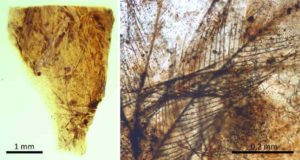
Amber piece from the site of San Just with dinosaur feather remains. Credits: S. Álvarez Parra et al. Scientific Reports
A team of paleontologists described two amber pieces found in sites in Teruel (Spain) with remains from vertebrates corresponding to the Early Cretaceous. Both pieces have their origins in the same conservation process of resins, described for the first time by the researchers. One of these remains corresponds to the finding of the oldest mammalian hair in amber worldwide, and the remains found in the other piece correspond to dinosaur feathers.
The team, whose results have been published in the journal Scientific Reports, is formed by SergioÁlvarez Parra and Xavier Delclòs, both from the University of Barcelona; Mónica M. Solórzano Kraemer, from the Senckenberg Natural History Museum (Frankfurt, Germany); Luis Alcalá, from Dinópolis (Teruel), and Enrique Peñalver, from the Geological and Minning Institute of Spain (Valencia).
The origin of both pieces is in the resin formed about 105 and 110 million years ago, corresponding to the Early Cretaceous. The cretaceous sites of amber are abundant in the Iberian Peninsula, and its study has provided many findings of global relevance. In particular, Teruel province has many of these sites.
Dinosaur feathers and mammalian hair
One of the pieces was found years ago in the amber site in Sant Just, in Utrillas, and another in Ariñi, in the Santa María mine, both in Teruel. The piece from Sant Just includes remains of dinosaur feathers distributed in the convex surface of amber with a stalactite shape.
The amber from Ariño presents three mammalian hairs with its characteristic microscopic scale pattern, exceptionally preserved. The parallel disposition of the three hairs and their similar proportions allow researchers to identify it as a small lock from a mammal and it corresponds to the oldest finding of hair in amber. “The determination of both findings is very complex, but it is likely for the feather remains to correspond to the extinct birds Enantiornithes, like other feathers in amber. Regarding the lock of hair, we should consider that the surface scale pattern is similar to the current mammalian hair,” notes Sergio Álvarez, researcher at the UB and first author of the study. “Ariño was already known for its vertebrate fossils, such as the dinosaurs Proa valdearinnoensis and Europelta carbonensis, but no-one thought we could find remains from vertebrates included in amber,” adds Álvarez.
A new conservation process for resin
In the study, the researchers described for the first time a process they call “pull off vestiture,” through which small portions of the feather and fur of a living being are trapped after being in contact with a sticky mass of resin, the necessary amount of time for it to harden.
The dinosaur and the mammal to which the feathers and the lock of hair correspond, respectively, from the studied amber pieces taht were in contact with resin while they were resting or sleeping in or near a tree. Later, with movement, these epidermal structures were torn off. When the resin hardens, the entire structures are removed, but the closer portions are not covered by the resin and are not preserved.
A similar but not identical process has been observed in sticky traps that three of the researchers installed on resin trees in Madagascar. These traps also retained hairs from mammals that touched them although, due to their high stickiness, they quickly ripped them off at minimal contact. “The feature of the process described in this research is that a somewhat long time must pass between the animal’s contact with the resin and the pulling off of the vestiture,” points out Xavier Delclòs, professor at the Faculty of Earth Sciences and member of the Biodiversity Research Institute (IRBio) of the UB. “Thus, the findings of this study and the new process shed light on the complexity of ecosystems during the Cretaceous,” concludes the researcher.
Both amber pieces in the study are in the Palaeontological Museum of Aragon (Fundación Conjunto Paleontológico de Teruel—Dinópolis) and both add more value to the large palaeontological heritage of the province of Teruel.
Reference:
Sergio Álvarez-Parra et al. Cretaceous amniote integuments recorded through a taphonomic process unique to resins, Scientific Reports (2020). DOI: 10.1038/s41598-020-76830-8
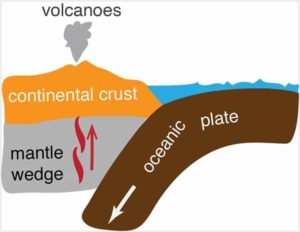
Schematic diagram showing the geometry of a typical subduction zone and the production of arc volcanoes. Credit: Xiaotao Yang
Among seismologists, the geology of Alaska’s earthquake– and volcano-rich coast from the Aleutian Islands to the southeast is fascinating, but not well understood. Now, with more sophisticated tools than before, a University of Massachusetts Amherst team reports unexpected new details about the area’s tectonic plates and their relationships to volcanoes.
Plate tectonics — the constant underground movement of continental and ocean shelves, is often characterized by “subduction zones” where plates clash, one usually sliding under another. Many are prime earthquake- and volcano-prone regions.
Lead author Xiaotao Yang says, “For a long time, the whole central Alaska region was thought to have one simple subduction plate. What we discovered is that there are actually two major subduction slabs. It’s a surprise that we see differences between these two slabs and the associate mantle materials.” Overall, Yang says the new research shows, “there are many more subtleties and variations that we had not seen before.”
Yang, who did this work at UMass Amherst with co-author Haiying Gao, is now on the faculty at Purdue University. Writing in the Journal of Geophysical Research: Solid Earth, they point out that central Alaska is “an ideal place to investigate subduction segmentation and its correlation with volcano distribution” because “it is not clearly understood what controls the distribution of arc volcanoes.”
Yang says their study highlights how complex a subduction zone can be and how this complexity may control volcano distribution. It also helps to clarify a long-standing question in seismology: what determines whether volcanoes are present and whether they are in a linear arc, or in clusters. Yang says it depends in part on whether rocks deep in the mantle above the subducting slab melt into magma, and how magma is stored in the crust.
For their investigations, Yang and Gao used a powerful seismic imaging technique that Yang says is similar to a medical CAT scan of the Earth. With it, they constructed a detailed seismic velocity model of the Aleutian-Alaska margin from crust to the uppermost mantle. Seismic velocity refers to the rate at which a seismic wave travels through a material such as magma or crust. Waves travel more slowly through low-density, low-velocity material compared to surrounding rocks, for example, he says.
The researchers’ new model reveals multiple downgoing slabs, with various seismic velocities, thicknesses and dip angles, they write. Yang adds, “Once we got to look at the two central Alaska volcanoes for the first time in a really precise way, what we see is a much more complicated subduction system than we knew before. This new information about the complexity helps us to understand the distribution of volcanoes in Alaska. It’s all more complicated than the tools could show us before,” he adds.
Their findings help to explain why there is a break in the arc of volcanoes called the Denali Volcanic Gap, Yang says. Below it is a wedge-shaped region of high seismic velocity material above the subduction plate but below the mantle. It is relatively cold and dry with no melting, which explains why there is no volcano in the region.
By contrast, the cluster of volcanoes in the Wrangell Volcanic Field do not have the same signature, he adds. The Wrangell volcanoes have distinctly low seismic velocity material in the crust. It’s a rather large magma reservoir that may explain why they’re in a cluster instead of an arc, Yang says, though “the fact that it’s there helps to explain where the magma came from for past eruptions.”
This study was made possible by the National Science Foundation’s (NSF) array of seismic sensors in Alaska, part of its EarthScope Transportable Array program, Yang notes. His co-author Gao had startup funding from UMass Amherst and an NSF CAREER grant. They also used computational resources at the Massachusetts Green High Performance Computing Center in Holyoke.
Yang says that their work adds to seismologists’ understanding of volcano distribution in the Cascades in the Pacific Northwest, South America and the south Pacific. He hopes to follow up with more detailed analyses of magma reservoirs in the crust, how volcanoes are fed and particularly, whether Aleutian volcanoes have magma in the crust.
Reference:
Xiaotao Yang, Haiying Gao. Segmentation of the Aleutian‐Alaska Subduction Zone Revealed by Full‐Wave Ambient Noise Tomography: Implications for the Along‐Strike Variation of Volcanism. Journal of Geophysical Research: Solid Earth, 2020; 125 (11) DOI: 10.1029/2020JB019677
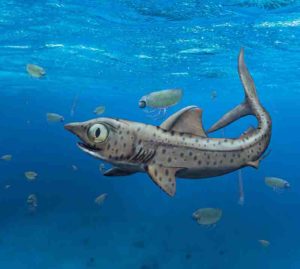
With mouths closed, the older, smaller teeth of the ancestors of today’s sharks stood upright on the jaw, while the younger and larger teeth pointed towards the tongue and were thus invisible when the mouth was closed. Credit: Christian Klug, UZH
Some, if not all, early sharks that lived 300 to 400 million years ago not only dropped their lower jaws downward but rotated them outwards when opening their mouths. This enabled them to make the best of their largest, sharpest and inward-facing teeth when catching prey, paleontologists at the Universities of Zurich and Chicago have now shown using CT scanning and 3D printing.
Many modern sharks have row upon row of formidable sharp teeth that constantly regrow and can easily be seen if their mouths are just slightly opened. But this was not always the case. The teeth in the ancestors of today’s cartilaginous fish (chondrichthyan), which include sharks, rays and chimaeras, were replaced more slowly. With mouths closed, the older, smaller and worn out teeth of sharks stood upright on the jaw, while the younger and larger teeth pointed towards the tongue and were thus invisible when the mouth was closed.
Jaw reconstruction thanks to computed tomography
Paleontologists at the University of Zurich, the University of Chicago and the Naturalis Biodiversity Center in Leiden (Netherlands) have now examined the structure and function of this peculiar jaw construction based on a 370-million-year-old chondrichthyan from Morocco. Using computed tomography scans, the researchers were able not only to reconstruct the jaw, but also print it out as a 3D model. This enabled them to simulate and test the jaw’s mechanics.
What they discovered in the process was that unlike in humans, the two sides of the lower jaw were not fused in the middle. This enabled the animals to not only drop the jaw halves downward but at the same automatically rotate both outwards. “Through this rotation, the younger, larger and sharper teeth, which usually pointed toward the inside of the mouth, were brought into an upright position. This made it easier for animals to impale their prey,” explains first author Linda Frey. “Through an inward rotation, the teeth then pushed the prey deeper into the buccal space when the jaws closed.”
Jaw joint widespread in the Paleozoic era
This mechanism not only made sure the larger, inward-facing teeth were used, but also enabled the animals to engage in what is known as suction-feeding. “In combination with the outward movement, the opening of the jaws causes sea water to rush into the oral cavity, while closing them results in a mechanical pull that entraps and immobilizes the prey.”
Since cartilaginous skeletons are barely mineralized and generally not that well preserved as fossils, this jaw construction has evaded researchers for a long time. “The excellently preserved fossil we’ve examined is a unique specimen,” says UZH paleontologist and last author Christian Klug. He and his team believe that the described type of jaw joint played an important role in the Paleozoic era. With increasingly frequent tooth replacement, however, it became obsolete over time and was replaced by the often peculiar and more complex jaws of modern-day sharks and rays.
Reference:
Linda Frey, Michael I. Coates, Kristen Tietjen, Martin Rücklin, Christian Klug. A symmoriiform from the Late Devonian of Morocco demonstrates a derived jaw function in ancient chondrichthyans. Communications Biology, 2020; 3 (1) DOI: 10.1038/s42003-020-01394-2
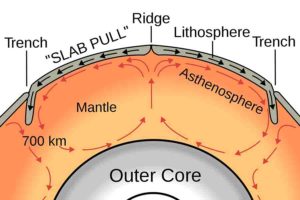
A graphic showing the convective heat cycle (red arrows) that drives plate tectonic motion (black arrows) on Earth. Heat flows toward subduction zones through the uppermost mantle layer, the asthenosphere. A computer model from Rice University finds that the asthenosphere can locally drag plates along with it rather than acting exclusively as a brake on plate movements as had been widely believed. (Image courtesy of Surachit/Wikimedia Commons)
In a study that gives new meaning to the term “rock bottom,” seismic researchers have discovered the underside of a rocky slab of Earth’s surface layer, or lithosphere, that has been pulled more than 400 miles beneath northeastern China by the process of tectonic subduction.
The study, published by a team of Chinese and U.S. researchers in Nature Geoscience, offers news evidence about what happens to water-rich oceanic tectonic plates as they are drawn through Earth’s mantle beneath continents.
Rice University seismologist Fenglin Niu, a co-corresponding author, said the study provides the first high-resolution seismic images of the top and bottom boundaries of a rocky, or lithospheric, tectonic plate within a key region known as the mantle transition zone, which starts about 254 miles (410 kilometers) below Earth’s surface and extends to about 410 miles (660 kilometers).
“A lot of studies suggest that the slab actually deforms a lot in the mantle transition zone, that it becomes soft, so it’s easily deformed,” Niu said. How much the slab deforms or retains its shape is important for explaining whether and how it mixes with the mantle and what kind of cooling effect it has.
Earth’s mantle convects like heat in an oven. Heat from Earth’s core rises through the mantle at the center of oceans, where tectonic plates form. From there, heat flows through the mantle, cooling as it moves toward continents, where it drops back toward the core to collect more heat, rise and complete the convective circle.
Previous studies have probed the boundaries of subducting slabs in the mantle, but few have looked deeper than 125 miles (200 kilometers) and none with the resolution of the current study, which used more than 67,000 measurements collected from 313 regional seismic stations in northeastern China. That work, which was done in collaboration with the China Earthquake Administration, was led by co-corresponding author Qi-Fu Chen from the Chinese Academy of Sciences.
The research probes fundamental questions about the processes that shaped Earth’s surface over billions of years. Mantle convection drives the movements of Earth’s tectonic plates, rigid interlocked pieces of Earth’s surface that are in constant motion as they float atop the asthenosphere, the topmost mantle layer and the most fluid part of the inner planet.
Where tectonic plates meet, they jostle and grind together, releasing seismic energy. In extreme cases, this can cause destructive earthquakes and tsunamis, but most seismic motion is too faint for humans to feel without instruments. Using seismometers, scientists can measure the magnitude and location of seismic disturbances. And because seismic waves speed up in some kinds of rock and slow in others, scientists can use them to create images of Earth’s interior, in much the same way a doctor might use ultrasound to image what’s inside a patient.
Niu, a professor of Earth, environmental and planetary sciences at Rice, has been at the forefront of seismic imaging for more than two decades. When he did his Ph.D. training in Japan more than 20 years ago, researchers were using dense networks of seismic stations to gather some of the first detailed images of the submerged slab boundaries of the Pacific plate, the same plate that was imaged in study published this week.
“Japan is located about where the Pacific plate reaches around 100-kilometer depths,” Niu said. “There is a lot of water in this slab, and it produces a lot of partial melt. That produces arc volcanoes that helped create Japan. But, we are still debating whether this water is totally released in that depth. There is increasing evidence that a portion of the water stays inside the plate to go much, much deeper.”
Northeastern China offers one of the best vantage points to investigate whether this is true. The region is about 1,000 kilometers from the Japan trench where the Pacific plate begins its plunge back into the planet’s interior. In 2009, with funding from the National Science Foundation and others, Niu and scientists from the University of Texas at Austin, the China Earthquake Administration, the Earthquake Research Institute of Tokyo University and the Research Center for Prediction of Earthquakes and Volcanic Eruptions at Japan’s Tohoku University began installing broadband seismometers in the region.
“We put 140 stations there, and of course the more stations the better for resolution,” Niu said. “The Chinese Academy of Sciences put additional stations so they can get a finer, more detailed image.”
In the new study, data from the stations revealed both the upper and lower boundaries of the Pacific plate, dipping down at a 25-degree angle within the mantle transition zone. The placement within this zone is important for the study of mantle convection because the transition zone lies below the asthenosphere, at depths where increased pressure causes specific mantle minerals to undergo dramatic phase changes. These phases of the minerals behave very differently in seismic profiles, just as liquid water and solid ice behave very different even though they are made of identical molecules. Because phase changes in the mantle transition zone happen at specific pressures and temperatures, geoscientists can use them like a thermometer to measure the temperature in the mantle.
Niu said the fact that both the top and bottom of the slab are visible is evidence that the slab hasn’t completely mixed with the surrounding mantle. He said heat signatures of partially melted portions of the mantle beneath the slab also provide indirect evidence that the slab transported some of its water into the transition zone.
“The problem is explaining how these hot materials can be dropped into the deeper part of the mantle,” Niu said. “It’s still a question. Because they are hot, they are buoyant.”
That buoyancy should act like a life preserver, pushing upward on the underside of the sinking slab. Niu said the answer to this question could be that holes have appeared in the deforming slab, allowing the hot melt to rise while the slab sinks.
“If you have a hole, the melt will come out,” he said. “That’s why we think the slab can go deeper.”
Holes could also explain the appearance of volcanos like the Changbaishan on the border between China and North Korea.
“It’s 1,000 kilometers away from the plate boundary,” Niu said. “We don’t really understand the mechanism of this kind of volcano. But melt rising from holes in the slab could be a possible explanation.”
Reference:
Xin Wang, Qi-Fu Chen, Fenglin Niu, Shengji Wei, Jieyuan Ning, Juan Li, Weijun Wang, Johannes Buchen, Lijun Liu. Distinct slab interfaces imaged within the mantle transition zone. Nature Geoscience, 2020; DOI: 10.1038/s41561-020-00653-5
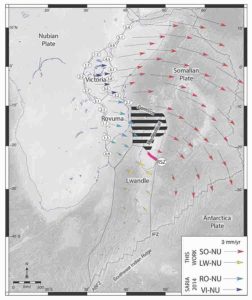
Final model for the East African Rift System. Hashed lines indicate newly discovered broad deforming zone. Arrows represent predicted tectonic plate motions. ABFZ—Andrew Bain Fracture Zone; IFZ—Indomed Fracture Zone; RSZ—Ranotsara shear zone. Figure created by D.S. Stamps.
The African continent is slowly separating into several large and small tectonic blocks along the diverging East African Rift System, continuing to Madagascar — the long island just off the coast of Southeast Africa — that itself will also break apart into smaller islands.
These developments will redefine Africa and the Indian Ocean. The finding comes in a new study by D. Sarah Stamps of the Department of Geosciences for the journal Geology. The breakup is a continuation of the shattering of the supercontinent Pangea some 200 million years ago.
Rest assured, though, this isn’t happening anytime soon.
“The rate of present-day break-up is millimeters per year, so it will be millions of years before new oceans start to form,” said Stamps, an assistant professor in the Virginia Tech College of Science. “The rate of extension is fastest in the north, so we’ll see new oceans forming there first.”
“Most previous studies suggested that the extension is localized in narrow zones around microplates that move independent of surrounding larger tectonic plates,” Stamps said. The new GPS dataset of very precise surface motions in Eastern Africa, Madagascar, and several islands in the Indian Ocean reveal that the break-up process is more complex and more distributed than previously thought, according to the study, completed by Stamps with researchers from the University of Nevada-Reno, University of Beira Interior in Portugal, and the Institute and Observatory of Geophysics of Antananarivo at the University of Antananarivo in Madagascar itself.
In one region, the researchers found that extension is distributed across a wide area. The region of distributed extension is about 600 kilometers (372 miles) wide, spanning from Eastern Africa to whole parts of Madagascar. More precisely, Madagascar is actively breaking up with southern Madagascar moving with the Lwandle microplate — a small tectonic block — and a piece of central Madagascar is moving with the Somalian plate. The rest of the island is found to be deforming nonrigidly, Stamps added.
Also working on the paper was geosciences Ph.D. student Tahiry Rajaonarison, who previously was a master’s student at Madagascar’s University of Antananarivo. He assisted Stamps in 2012 in collecting GPS data that was used in this study. He joined Virginia Tech in 2015 and returned to Madagascar later to collect more data as the lead on a National Geographic Society grant. “Leading a team to collect GPS data in Madagascar in summer 2017 was an amazing field experience,” Rajaonarison said.
The team used new surface motion data and additional geologic data to test various configurations of tectonic blocks in the region using computer models. Through a comprehensive suite of statistical tests, the researchers defined new boundaries for the Lwandle microplate and Somalian plate. This approach allowed for testing if surface motion data are consistent with rigid plate motion.
Final model for the East African Rift System.
“Accurately defining plate boundaries and assessing if continents diverge along narrowly deforming zones or through wide zones of diffuse deformation is crucial to unraveling the nature of continental break-up,” Stamps said. “In this work, we have redefined how the world’s largest continental rift is extending using a new GPS velocity solution.”
The discovery of the broad deforming zone helps geoscientists understand recent and ongoing seismic and volcanic activity happening in the Comoros Islands, located in the Indian Ocean between East Africa and Madagascar. The study also provides a framework for future studies of global plate motions and investigations of the forces driving plate tectonics for Stamps and her team.
Reference:
D.S. Stamps, C. Kreemer, R. Fernandes, T.A. Rajaonarison, G. Rambolamanana. Redefining East African Rift System kinematics. Geology, 2020; DOI: 10.1130/G47985.1
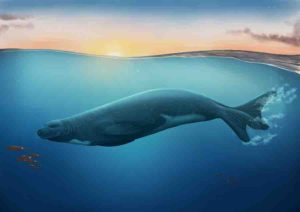
An artist impression of the newly discovered extinct monk seal species Credit: Jaime Bran. Copyrigh: Museum of New Zealand Te Papa.
The discovery, published today in the Proceedings of the Royal Society, radically changes scientists’ understanding of how seal species evolved around the world.
It came after researchers examined seven preserved fossil specimens, including a complete skull, found by local fossil hunters on south Taranaki beaches in New Zealand between 2009 and 2016.
The new species is named Eomonachus belegaerensis, (meaning ‘dawn monk seal from Belegaer’) after the sea of Belegaer, which lies west of Middle Earth in J.R.R. Tolkien’s Lord of the Rings.
Around 2.5 metres in length and weighing around 200 — 250kg, Eomonachus belegaerensis lived in the waters around New Zealand some 3 million years ago.
It was previously thought that all true seals originated in the North Atlantic, with some later crossing the equator to live as far south as Antarctica.
Eomonachus now shows that many ancient seals, including the ancestors of today’s monk, elephant and Antarctic seals, actually evolved in the Southern Hemisphere.
Monash palaeontologist James Rule, a PhD candidate at the Biomedicine Discovery Institute, led the research as part of a trans-Tasman collaboration involving Monash University and Museums Victoria in Australia, and Te Papa and Canterbury Museum in New Zealand. The study was supervised and co-authored by Dr Justin Adams (Monash Biomedicine Discovery Institute), Dr Erich Fitzgerald (Museums Victoria), and Associate Professor Alistair Evans (School of Biological Sciences).
“This new species of extinct monk seal is the first of its kind from the Southern Hemisphere. Its discovery really turns seal evolution on its head,” Mr Rule said.
“Until now, we thought that all true seals originated in the Northern Hemisphere, and then crossed the equator just once or twice during their entire evolutionary history. Instead, many of them appear to have evolved in the southern Pacific, and then criss-crossed the equator up to eight times.”
Te Papa Museum of New Zealand curator of marine mammals and study collaborator Dr Felix Marx said the discovery was a triumph for citizen science.
“This new species has been discovered thanks to numerous, exceptionally well-preserved fossils — all of which were found by members of the public.”
Dr Marx is hopeful about future discoveries of new species in New Zealand’s ancient past.
“New Zealand is incredibly rich in fossils, and so far we have barely scratched the surface. Who knows what else is out there?” Dr Marx said.
About monk seals. Unlike their cold-loving relatives in the Arctic and Antarctic, Monk seals prefer the warmer waters of the Mediterranean, Hawai’i and — until their extinction there in the 1950s — the Caribbean. Monk seals are the most endangered groups of marine mammals, with fewer than 2000 individuals thought to be left in the wild. Hunting has driven populations down.
Reference:
James P. Rule, Justin W. Adams, Felix G. Marx, Alistair R. Evans, Alan J. D. Tennyson, R. Paul Scofield, Erich M. G. Fitzgerald. First monk seal from the Southern Hemisphere rewrites the evolutionary history of true seals. Proceedings of the Royal Society B: Biological Sciences, 2020; 287 (1938): 20202318 DOI: 10.1098/rspb.2020.2318
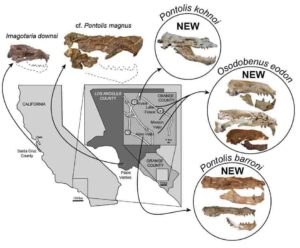
Map & Skulls. Credit: Journal of Vertebrate Paleontology
Millions of years ago, in the warm Pacific Ocean off the coast of Southern California, walrus species without tusks lived abundantly.
But in a new study, Cal State Fullerton paleontologists have identified three new walrus species discovered in Orange County and one of the new species has “semi-tusks” — or longer teeth.
The other two new species don’t have tusks and all predate the evolution of the long iconic ivory tusks of the modern-day walrus, which lives in the frigid Arctic.
The researchers describe a total of 12 specimens of fossil walruses from Orange, Los Angeles and Santa Cruz counties, all estimated to be 5 to 10 million years old. The fossils represent five species, with two of the three new species represented by specimens of males, females and juveniles.
Their research, which gives insights on the dental and tusk evolution of the marine mammal, was published today in the Journal of Vertebrate Paleontology.
Geology graduate Jacob Biewer, and his research adviser James F. Parham, associate professor of geological sciences, are authors of the study, based on fossil skull specimens.
Parham and Biewer worked with Jorge Velez-Juarbe, an expert in marine mammals at the Natural History Museum of Los Angeles County, who is a co-author of the paper. Velez-Juarbe is a former postdoctoral scholar in Parham’s lab and has collaborated on other CSUF fossil research projects. Parham is a research associate at the museum, which provides research opportunities for him and his students.
The researchers teamed to study and describe the anatomy of the specimens, most of which are part of the museum’s collection.
“Orange County is the most important area for fossil walruses in the world,” said Biewer, first author of the paper who conducted the research for his master’s thesis. “This research shows how the walruses evolved with tusks.”
Extinct Walrus Species Get Names
Today, there is only one walrus species and its scientific name is Odobenus.
For the new species found in Orange County, the researchers named the semi-tusked walrus, Osodobenus eodon, by combining the words Oso and Odobenus. Another is named Pontolis kohnoi in honor of Naoki Kohno, a fossil walrus researcher from Japan. Both of these fossils were discovered in the Irvine, Lake Forest and Mission Viejo areas.
Osodobenus eodon and Pontolis kohnoi are both from the same geological rock layer as the 2018 study by Parham and his students of another new genus and species of a tuskless walrus, Titanotaria orangensis, named after CSUF Titans. These fossils were found in the Oso Member of the Capistrano Formation, a geological formation near Lake Forest and Mission Viejo.
The third new walrus species, Pontolis barroni, was found in Aliso Viejo, near the 73 Toll Road. It is named after John Barron, a retired researcher from the U.S.Geological Survey and world expert on the rock layer where the specimens were found, Parham said.
Analysis of these specimens show that fossil walrus teeth are more variable and complex than previously considered. Most of the new specimens predate the evolution of tusks, Parham said.
“Osodobenus eodon is the most primitive walrus with tusk-like teeth,” Parham said. “This new species demonstrates the important role of feeding ecology on the origin and early evolution of tusks.”
Biewer explained that his work focused on getting a better understanding of the evolutionary history of the walrus in regards to its teeth.
“The importance of dental evolution is that it shows the variability within and across walrus species. Scientists assumed you could identify certain species just based on the teeth, but we show how even individuals of the same species could have variability in their dental setup,” said Biewer, who earned a master’s degree in geology in 2019.
“Additionally, everyone assumes that the tusks are the most important teeth in a walrus, but this research further emphasizes how tusks were a later addition to the history of walruses. The majority of walrus species were fish eaters and adapted to catching fish, rather than using suction feeding on mollusks like modern walruses.”
Biewer, now a paleontologist in the Modesto area, also examined whether climate changes in the Pacific Ocean had an impact on ancient walruses. His work suggests that a rise in water temperature helped to boost nutrients and planktonic life, and played a role in the proliferation of walruses about 10 million years ago, which may have contributed to their diversity.
Background
For the fossil walrus research project, geology graduate Jacob Biewer spent hours in the lab measuring and describing the walrus bones.
“I sat many hours with a handy caliper taking notes on the lengths of teeth and width of skulls, among many other measurements,” he said. “Describing bones is much more in depth and meticulous than it sounds. There are traits that the bones of each walrus species have — the size, shape and number of teeth. I recorded how the bones are different from, or similar to, other extinct walrus species.”
Biewer, a paleontologist who lives in Modesto, noted that despite the pandemic, he and Parham worked on the scientific paper with 300 miles of social distancing.
Completing his first journal publication, based on his master’s work, and conducting the research project helped him to understand scientific methods and techniques that he now uses in his career, where he monitors construction sites for paleontological resources. He also teaches undergraduate geology courses at Cal State Stanislaus, where he earned a bachelor’s degree in geology, and is considering pursuing a doctorate.
“The experiences I had in conducting this research, especially the presentations at national paleontological conferences, led to a big increase in my confidence in my scientific abilities,” Biewer said. “I credit my time working with Dr. Parham directly to the achievements in my current employment — from the skills he imparted to the doors he helped open.”
Reference:
Jacob N. Biewer, Jorge Velez-Juarbe, James F. Parham. Insights on the dental evolution of walruses based on new fossil specimens from California. Journal of Vertebrate Paleontology, 2020; e1833896 DOI: 10.1080/02724634.2020.1833896
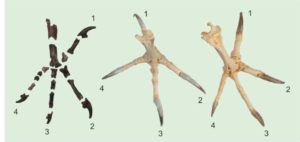
Similar to present-day diurnal birds of prey (right), the talons on the hind toe and the second toe of Primoptynx poliotauros (left) are noticeably larger than the talons on the third and fourth toe. In modern owls (center) all four talons are roughly the same size.
Together with colleagues from Belgium and the USA, Senckenberg scientist Gerald Mayr described a new fossil owl species. The skeleton of Primoptynx poliotauros is the oldest fossil of an owl preserved in such a state of completeness. The discovery provides unique insights into the lifestyle of the earliest owls. Unlike modern owls, the large extinct owl presumably did not kill its prey with its beak but with its talons, similar to goshawks and eagles. The study will be published today in the “Journal of Vertebrate Paleontology.”
Discoveries from the early stages of owl evolution are exceedingly rare. An approximately 60-million-year-old leg bone is the oldest fossil that can be assigned to an owl. “Other owls from this time period are also only known on the basis of individual bones and fragments. Therefore, I was especially pleased when I received a largely complete owl skeleton from the North American Willwood Formation for study, which my colleague and the study’s co-author, Philip Gingerich, had discovered 30 years ago,” explains Dr. Gerald Mayr of the Senckenberg Research Institute and Natural History Museum in Frankfurt, Germany.
The newly described animal belongs to a previously unknown, very large species of fossil owl. Except for the skull, all major bones of the 55-million-year-old bird are preserved. “The fossil owl was about the size of a modern Snowy Owl. However, it is clearly distinguished from all extant species by the different size of its talons. While in present-day owls the talons on all toes are approximately the same size, the newly described species Primoptynx poliotauros has noticeably enlarged talons on its hind toe and second toe,” explains Mayr.
These toe proportions are known from modern diurnal raptors, e.g., eagles and goshawks. These birds, which are not closely related to owls, pierce their prey with their sharp talons. Mayr and his colleagues therefore assume that the extinct owl also used its feet to kill its prey. “By contrast, present-day owls use their beak to kill prey items – thus, it appears that the lifestyle of this extinct owl clearly differed from that of its modern relatives,” adds the ornithologist from Frankfurt.
Moreover, the new discovery reveals a high level of diversity among the owls of the early Eocene in North America – from the small species Eostrix gulottai, measuring a mere 12 centimeters, to the newly discovered, roughly 60-centimeter-tall bird.
“It is not clear why owls changed their hunting technique in the course of their evolution. However, we assume that it may be related to the spread of diurnal birds of prey in the late Eocene and early Oligocene, approximately 34 million years ago. Competition for prey with diurnal birds of prey may have triggered feeding specializations in owls, possibly also leading to these charismatic birds’ nocturnal habits,” adds Mayr in closing.
Reference:
Mayr, G., Gingerich, P.D. and Smith, Th. (2020): Skeleton of a new owl from the early Eocene of North America (Aves, Strigiformes) with an accipitrid-like foot morphology. Journal of Vertebrate Paleontology, DOI: 10.1080/02724634.2020.1769116
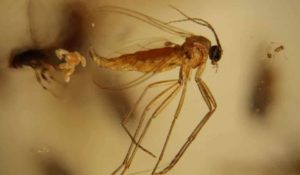
Fungus gnat trapped in a piece of defaunation resin from Madagascar. Credit: Enrique Peñalver
In a study published today in the Nature journal Scientific Reports, Senckenberg scientist Mónica Solórzano-Kraemer defines specific time periods for the terms amber, copal, and resin. Together with researchers from the Universitat de Barcelona, the Instituto Geológico y Minero de España, and the University of Kansas, she also advocates the introduction of the term “defaunation resin.” These fossilizations, formed after 1760, fall into a time period significantly impacted by humans. They often provide the only direct opportunity to trace environmental changes and species loss.
Around the world, species go extinct every day—and the losses are particularly high in tropical areas such as the lowland forests. “These very landscapes were, and are, home to a large number of resin-producing trees,” explains Mónica Solórzano-Kraemer of the Senckenberg Research Institute and Natural History Museum in Frankfurt, and she continues, “In these resins, we can find animals that have been preserved over several hundreds, or even thousands, of years, thus giving us insights into a bygone, often no longer existing fauna.”
‘Defaunation resin’ is the name given to these fossilizations by Solórzano-Kraemer and her Spanish and American colleagues Xavier Delclòs, Enrique Peñalver, and Michael Engel in their recently published study. Defaunation refers to the loss of species and populations of wild animals, analog to the term deforestation for the loss of forests. From now on, this name is intended to be used for all resins that were formed after the year 1760. “With this, we want to establish a clear differentiation from the terms ‘copal’ and ‘amber,’ while at the same time emphasizing the importance of the young resins, which were deposited during an age massively influenced by humans,” adds the researcher from Frankfurt.
The chosen time period is oriented on the—as yet informal—Anthropocene epoch, which started with the onset of the industrial revolution and is characterized by deforestation, loss of species diversity, and additional environmental changes caused by humans. “Apart from historical collections, these comparatively young resins often provide the only opportunity to examine bygone ecosystems and to quantify the loss of species,” adds Solórzano-Kraemer.
For the term ‘copal,’ the team suggests an age classification between 2.58 million years ago and the year 1760; from now on, the term ‘amber’ is only to be used for fossilizations that are older than 2.58 million years. “This clear demarcation is very important for us to ensure comparability. Over 120 new species have been described from East African and Malagasy ‘copals’ alone, and many others will follow—we therefore need a uniform and succinct terminology that can be allocated to a specific time period,” adds Solórzano-Kraemer in conclusion.
Reference:
Mónica M. Solórzano-Kraemer et al. A revised definition for copal and its significance for palaeontological and Anthropocene biodiversity-loss studies, Scientific Reports (2020). DOI: 10.1038/s41598-020-76808-6
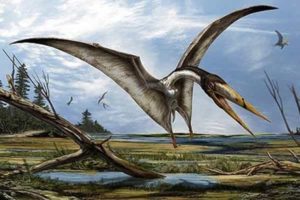
Pterosaurs with these types of beaks are better known at the time period from North Africa, so it would be reasonable to assume a likeness to the North African Alanqa. Credit: Attributed to Davide Bonadonna
Palaeontologists have made a surprising discovery while searching through 100-year-old fossil collections from the UK — a new mystery species of pterosaur, unlike anything seen before.
Lead author of the project, University of Portsmouth PhD student Roy Smith, discovered the mystery creature amongst fossil collections housed in the Sedgwick Museum of Cambridge and the Booth Museum at Brighton that were assembled when phosphate mining was at its peak in the English Fens between 1851 and 1900. These fossils found while workmen were digging phosphate nodules were frequently sold to earn a little bit of extra money.
It was while Smith was examining the fossils of shark spines that he made the amazing discovery. The fossils were actually fragments of jaws of toothless pterosaurs, which do indeed resemble shark fin spines, but there are many subtle differences that allow them to be distinguished.
Smith says: “One such feature are tiny little holes where nerves come to the surface and are used for sensitive feeding by the pterosaurs. Shark fin spines do not have these, but the early palaeontologists clearly missed these features. Two of the specimens discovered can be identified as a pterosaur called Ornithostoma, but one additional specimen is clearly distinct and represents a new species. It is a palaeontological mystery.
“Unfortunately, this specimen is too fragmentary to be the basis for naming the new species. Sadly, it is doubtful if any more remains of this pterosaur will be discovered, as there are no longer any exposures of the rock from which the fossils came. But I’m hopeful that other museum collections may contain more examples, and as soon as the Covid restrictions are lifted I will continue my search.”
Smith’s supervisor, Professor Dave Martill, University of Portsmouth, says: “The little bit of beak is tantalising in that it is small, and simply differs from Ornithostoma in subtle ways, perhaps in the way that a great white egret might differ from a heron. Likely the differences in life would have been more to do with colour, call and behaviour than in the skeleton.”
“Pterosaurs with these types of beaks are better known at the time period from North Africa, so it would be reasonable to assume a likeness to the North African Alanqa (pictured below). This is extremely exciting to have discovered this mystery pterosaur right here in the UK.
“This find is significant because it adds to our knowledge of these ancient and fascinating flying prehistoric reptiles, but also demonstrates that such discoveries can be made, simply by re-examining material in old collections.”
Reference:
Roy E. Smith, David M. Martill, David M. Unwin, Lorna Steel. Edentulous pterosaurs from the Cambridge Greensand (Cretaceous) of eastern England with a review of Ornithostoma Seeley, 1871. Proceedings of the Geologists’ Association, 2020; DOI: 10.1016/j.pgeola.2020.10.004
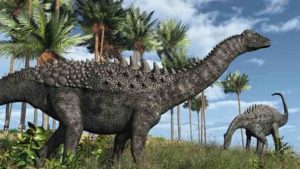
Titanosaurs were common at the time of the asteroid hit at the end of the Cretaceous 66 million years ago. (Credit: AlienCat)
A new study from researchers at the University of Bath and Natural History Museum looking at the diversity of dinosaurs shows that they were not in decline at the time of their extinction by an asteroid hit 66 million years ago.
The researchers say that had the impact not happened, dinosaurs might have continued to dominate the Earth.
Dinosaurs were widespread globally at the time of the asteroid impact at the end of the Late Cretaceous period, occupying every continent on the planet and were the dominant form of animal of most terrestrial ecosystems.
However, it is still contentious amongst paleobiologists as to whether dinosaurs were declining in diversity at the time of their extinction.
Statistical modelling
In order to address this question, the research team collected a set of different dinosaur family trees and used statistical modelling to assess if each of the main dinosaur groups was still able to produce new species at this time.
Their study, published in the journal Royal Society Open Science, found that dinosaurs were not in decline before the asteroid hit, contradicting some previous studies. The authors also suggest that had the impact not occurred, dinosaurs might have continued to be the dominant group of land animals on the planet.
First author of the study, Joe Bonsor, is undertaking his PhD jointly at the Milner Centre for Evolution at the University of Bath and the Natural History Museum.
He said: “Previous studies done by others have used various methods to draw the conclusion that dinosaurs would have died out anyway, as they were in decline towards the end of the Cretaceous period.
“However, we show that if you expand the dataset to include more recent dinosaur family trees and a broader set of dinosaur types, the results don’t actually all point to this conclusion — in fact only about half of them do.”
Sampling bias
It is difficult to assess the diversity of dinosaurs due to gaps in the fossil record. This can be due to factors such as which bones are preserved as fossils, how accessible the fossils are in the rock to allow them to be found, and the locations where palaeontologists search for them.
The researchers used statistical methods to overcome these sampling biases, looking at the rates of speciation of dinosaur families rather than simply counting the number of species belonging to the family.
Joe Bonsor said: “The main point of our paper is that it isn’t as simple as looking at a few trees and making a decision — The large unavoidable biases in the fossil record and lack of data can often show a decline in species, but this may not be a reflection of the reality at the time.
“Our data don’t currently show they were in decline, in fact some groups such as hadrosaurs and ceratopsians were thriving and there’s no evidence to suggest they would have died out 66 million years ago had the extinction event not happened.”
Whilst mammal existed at the time of the asteroid hit, it was only due to the extinction of the dinosaurs that led to the niches being vacated, allowing mammals to fill them and later dominate the planet.
The research was funded by the Leverhulme Trust and Natural History Museum.
Reference:
Joseph A. Bonsor, Paul M. Barrett, Thomas J. Raven, Natalie Cooper. Dinosaur diversification rates were not in decline prior to the K-Pg boundary. Royal Society Open Science, 2020; 7 (11): 201195 DOI: 10.1098/rsos.201195
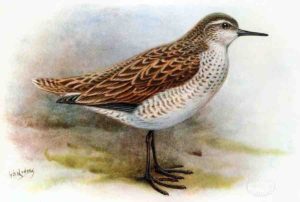
The extinct Kiritimati Sandpiper, Prosobonia cancellata – a close cousin of the newly discovered Prosobonia sauli. Credit: George Edward Lodge, 1907
Fossil bones collected in the early 1990s on Henderson Island, part of the Pitcairn Group, have revealed a new species of Polynesian sandpiper.
The Henderson Sandpiper, a small wading bird that has been extinct for centuries, is described in an article in the Zoological Journal of the Linnean Society published last week.
The newly-described bird is formally named Prosobonia sauli after Cook Islands-based ornithologist and conservationist Edward K Saul.
A team of researchers from New Zealand, Australia, Denmark, Switzerland, the Netherlands and China, led by Canterbury Museum Research Curator Natural History Dr Vanesa De Pietri, described the Henderson Sandpiper from 61 fossilised bones cared for by the Natural History Museum at Tring in England.
Canterbury Museum Visiting Researcher Dr Graham Wragg collected the bones from caves and overhangs on Henderson Island in 1991 and 1992 during the Sir Peter Scott Commemorative Expedition to the Pitcairn Islands.
Prosobonia sauli is the fifth known species of Polynesian sandpiper. All but one of the species, the endangered Tuamotu Sandpiper (Prosobonia parvirostris), are extinct.
“We think Prosobonia sauli probably went extinct soon after humans arrived on Henderson Island, which archaeologists estimate happened no earlier than the eleventh century,” says Dr De Pietri.
“It’s possible these humans brought with them the Polynesian rat, which Polynesian sandpiper populations are very vulnerable to.”
DNA of the living Tuamotu Sandpiper and the extinct Tahiti Sandpiper (Prosobonia leucoptera), which is known only from a skin in the Naturalis Biodiversity Center in the Netherlands, was used to determine how Polynesian sandpipers are related to other wading birds.
“We found that Polynesian sandpipers are early-diverging members of a group that includes calidrine sandpipers and turnstones. They are unlike other sandpipers in that they are restricted to islands of the Pacific and do not migrate,” says Dr De Pietri.
Comparisons with the other two extinct Polynesian sandpiper species, the Kiritimati Sandpiper (Prosobonia cancellata) and the Mo’orea Sandpiper (Prosobonia ellisi), are complicated. These birds are known only from illustrations primarily by William Wade Ellis, an artist and Surgeon’s Mate on Captain James Cook’s third expedition, who probably saw the birds alive in the 1770s.
Compared to the Tuamotu Sandpiper, its geographically closest cousin, the Henderson Sandpiper had longer legs and a wider, straighter bill, indicating how it foraged for food. It probably adapted to the habitats available on Henderson Island, which are different to those on other islands where Polynesian sandpipers were found.
Henderson Island is the largest island in the Pitcairn Group, in the middle of the South Pacific Ocean. It has been uninhabited since around the fifteenth century and was designated a World Heritage Site by the United Nations in 1988.
Dr Paul Scofield, Canterbury Museum Senior Curator Natural History and one of the study’s co-authors, says Henderson Island is home to a number of unique species, a handful of which are landbirds like the Henderson Sandpiper.
“The island is really quite remarkable because every landbird species that lives there, or that we know used to live there, is not found anywhere else,” he says.
Dr De Pietri says the study shows the need to protect the one remaining Polynesian sandpiper species, the Tuamotu Sandpiper.
“We know that just a few centuries ago there were at least five Polynesian sandpiper species scattered around the Pacific. Now there’s only one, and its numbers are declining, so we need to ensure we look after the remaining populations.”
This research was supported by a grant from the Marsden Fund Council, managed by the Royal Society Te Ap?rangi, as well as the R S Allan Fund managed by Canterbury Museum.
Reference:
Vanesa L De Pietri, Trevor H Worthy, R Paul Scofield, Theresa L Cole, Jamie R Wood, Kieren J Mitchell, Alice Cibois, Justin J F J Jansen, Alan J Cooper, Shaohong Feng, Wanjun Chen, Alan Jd Tennyson, Graham M Wragg. A new extinct species of Polynesian sandpiper (Charadriiformes: Scolopacidae: Prosobonia) from Henderson Island, Pitcairn Group, and the phylogenetic relationships of Prosobonia. Zoological Journal of the Linnean Society, 2020; DOI: 10.1093/zoolinnean/zlaa115
USF geosciences professor Bogdan Onac is pictured with ice deposit in New Mexico. Credit: University of South Florida
For more than 10,000 years, the people who lived on the arid landscape of modern-day western New Mexico were renowned for their complex societies, unique architecture and early economic and political systems. But surviving in what Spanish explorers would later name El Malpais, or the “bad lands,” required ingenuity now being explained for the first time by an international geosciences team led by the University of South Florida.
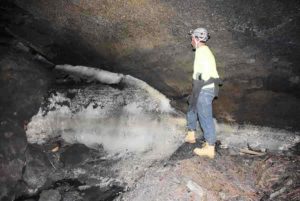
Exploring an ice-laden lava tube of the El Malpais National Monument and using precisely radiocarbon- dated charcoal found preserved deep in an ice deposit in a lava tube, USF geosciences Professor Bogdan Onac and his team discovered that Ancestral Puebloans survived devastating droughts by traveling deep into the caves to melt ancient ice as a water resource.
Dating back as far as AD 150 to 950, the water gatherers left behind charred material in the cave indicating they started small fires to melt the ice to collect as drinking water or perhaps for religious rituals. Working in collaboration with colleagues from the National Park Service, the University of Minnesota and a research institute from Romania, the team published its discovery in Scientific Reports.
The droughts are believed to have influenced settlement and subsistence strategies, agricultural intensification, demographic trends and migration of the complex Ancestral Puebloan societies that once inhabited the American Southwest. Researchers claim the discovery from ice deposits presents “unambiguous evidence” of five drought events that impacted Ancestral Puebloan society during those centuries.
“This discovery sheds light on one of the many human-environment interactions in the Southwest at a time when climate change forced people to find water resources in unexpected places,” Onac said, noting that the geological conditions that supported the discovery are now threatened by modern climate change.
“The melting cave ice under current climate conditions is both uncovering and threatening a fragile source of paleoenvironmental and archaeological evidence,” he added.
Onac specializes in exploring the depths of caves around the world where ice and other geological formations and features provide a window to past sea level and climate conditions and help add important context to today’s climate challenges.
Their study focused on a single lava tube amid a 40-mile swatch of treacherous ancient lava flows that host numerous lava tubes, many with significant ice deposits. While archaeologists have suspected that some of the surface trails crisscrossing the lava flows were left by ancient inhabitants searching for water, the research team said their work is the earliest, directly dated proof of water harvesting within the lava tubes of the Southwest.
The study characterizes five drought periods over an 800-year period during which Ancestral Puebloans accessed the cave, whose entrance sits more than 2,200 meters above sea level and has been surveyed at a length of 171 meters long and about 14 meters in depth. The cave contains an ice block that appears to be a remnant of a much larger ice deposit that once filled most of the cave’s deepest section. For safety and conservation reasons, the National Park Service is identifying the site only as Cave 29.
In years with normal temperatures, the melting of seasonal ice near cave entrances would leave temporary shallow pools of water that would have been accessible to the Ancestral Puebloans. But when the ice was absent or retreated in warmer and dryer periods, the researchers documented evidence showing that the Ancestral Puebloans repeatedly worked their way to the back of the cave to light small fires to melt the ice block and capture the water.
They left behind charcoal and ash deposits, as well as a Cibola Gray Ware pottery shard that researchers found as they harvested a core of ancient ice from the block. The team believes the Ancestral Puebloans were able to manage smoke within the cave with its natural air circulation system by keeping the fires small.
The discovery was an unexpected one, Onac said. The team’s original goal in its journey into the lava tube was to gather samples to reconstruct the paleoclimate using ice deposits, which are slowly but steadily melting.
“I have entered many lava tubes, but this one was special because of the amount of charcoal present on the floor in the deeper part of the cave,” he said. “I thought it was an interesting topic, but only once we found charcoal and soot in the ice core that the idea to connect the use of ice as a water resource came to my mind.”
Unfortunately, researchers are now racing against the clock as modern climate conditions are causing the cave ice to melt, resulting in the loss of ancient climate data. Onac said he recently received support from the National Science Foundation to continue the research in the lava tubes before the geological evidence disappears.
Joining in the exploration and research were Dylan S. Parmenter, whose master’s degree at USF was on the topic and is now a doctoral student at the University of Minnesota, Steven M. Baumann and Eric Weaver of the National Park Service, and Tiberiu B. Sava of the Horia Hulubei National Institute for Physics and Nuclear Engineering in Romania. The research was funded by the National Park Service and the National Science Foundation.
Reference:
Bogdan P. Onac, Steven M. Baumann, Dylan S. Parmenter, Eric Weaver, Tiberiu B. Sava. Late Holocene droughts and cave ice harvesting by Ancestral Puebloans. Scientific Reports, 2020; 10 (1) DOI: 10.1038/s41598-020-76988-1
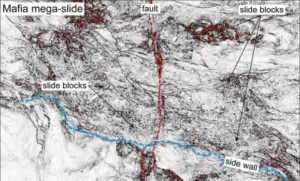
The figure shows a portion of the Mafia mega-slide imaged by a time-slice extracted from 3-D seismic reflection data (coherence attribute). Credit: Data courtesy of Royal Dutch Shell
A recent study, published in Nature Communications, discovered that earthquakes and continental movements triggered massive underwater landslides tens of millions of years ago off the coast of East Africa—findings that could help assess the future risk of tsunamis to the increasingly populated coastline in the region.
Led by Vittorio Maselli, Canada Research Chair in Coastal Zone Processes and an assistant professor in the Faculty of Science’s Department of Earth and Environmental Sciences, the study is the first to link large-scale submarine mass movements of sediment and rock in the margin slope of the western Indian Ocean with continental rifting and, thus, the formation of a new plate boundary.
With help from industry, Dr. Maselli and his team used seismic data to explore the continental margin of Tanzania in the western Indian Ocean and quantify the distribution of submarine landslide deposits at the sea floor and in the sediments beneath. The authors were able to identify catastrophic mass wastings as old as 40 million years.
“We discovered that hundreds of kilometre wide underwater landslides occurred during a specific time window along the Tanzania margin,” says Dr. Maselli. “One of these landslides, which we named the Mafia mega-slide, is one of the biggest landslides ever discovered on Earth. We dated the Mafia mega-slide to about 20 million years ago by using data from two exploration wells.”
“Still tectonically very active”
The name Mafia mega-slide derives from the island located just landward of it. Mafia Island is one of three major Islands in Tanzania, together with Pemba and Zanzibar. The mega-slide covers 11,600 km2, the size of more than 2 million hockey rinks.
Dr. Maselli and his team then interpreted the Mafia mega-slide and the other landslides occurring at the same time as a consequence of the East African Rift System (EARS), hypothesizing that plateau uplift and rifting in East Africa can trigger potentially tsunamigenic landslides likely through earthquake activity and enhanced sediment supply.
“The study area is still tectonically very active, as demonstrated by the earthquakes recorded in the western Indian Ocean and in the continent over the last few decades. We also found many, but much smaller, submarine landslide deposits and fault escarpments of the modern sea floor.”
Just the beginning
This information indicates that underwater sediment failures, likely of a smaller extent if compared with the Mafia mega-slide, can still occur today. But many questions remain unanswered: How often they can occur? What is their size? What is the trigger mechanism?
By replying to these questions, Dr. Maselli says, we will help evaluating the risks associated with underwater landslides along the margin of Tanzania and their potential in generating tsunamis. Indeed, the sudden movement of sediment underwater can generate catastrophic tsunami waves, and understanding if, or how often, they may occur, is a critical information in this region due to the rapid population growth along the coastline.
“Our study is just the beginning, and we plan to further investigate the data available to understand the impact of submarine landslides on the evolution of the margin,” he says. “We will also use numerical models to simulate the generation and propagation of landslide-induced tsunami waves and identify which areas along the coast can be more at risk.”
Reference:
Vittorio Maselli et al. Large-scale mass wasting in the western Indian Ocean constrains onset of East African rifting, Nature Communications (2020). DOI: 10.1038/s41467-020-17267-5
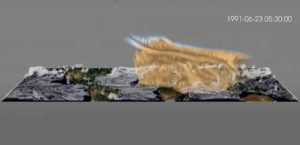
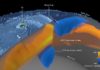
The team has developed a simulation of the Mount Pinatubo eruption in 1991. The blue shading represents sulfur dioxide, the white shading represents sulfate aerosols and the orange area represents volcanic ash. Credit: KAUST
Detailed modeling of the effect of volcanic eruptions on the El Niño Southern Oscillation (ENSO) has shown that the climate response to these events depends on the timing of the eruption and the preceding conditions. The research, led by KAUST researchers Evgeniya Predybaylo and Georgiy Stenchikov, settles a long-standing debate about the role of volcanic eruptions in global climate perturbations.
“The ENSO is a feature of the tropical Pacific Ocean climate, with patterns of temperature, precipitation and wind that oscillate between warmer El Niño and cooler La Niña phases every two to seven years,” explains Predybaylo. “Due to the vast size of the tropical Pacific, the ENSO controls the climate in many other parts of the globe and is responsible for droughts, floods, hurricanes, heat waves and other severe weather events. To evaluate these risks, it is essential to have proper projections and predictions of future ENSO behavior.”
Climate modeling indicates that the ENSO is very sensitive to external perturbations, such as increased carbon dioxide in the atmosphere or volcanic eruptions. Even though major volcanic eruptions, like the Mount Pinatubo eruption in 1991, are known to have caused widespread cooling due to the reflection of solar radiation, such effects have been difficult to prove by modeling.
“There was previously no modeling consensus on how the Pacific Ocean responds to such climatologically large volcanic eruptions, with climate models predicting diverse and often contradictory responses,” says Sergey Osipov from the research team.
Because the tropical Pacific climate is itself highly variable, the modeling needs to be performed carefully to separate the eruption-driven ocean response from random variations. This requires a large number of climate simulations using a model that can simulate both the radiative impact of volcanic eruptions and a realistic ENSO cycle. To achieve this, the team collaborated with Andrew Wittenberg from Princeton University, US, to run the CM2.1 climate model using KAUST’s supercomputer.
“After running more than 6,000 climate simulations covering nearly 20,000 model years and analyzing the data,” says Predybaylo, “we found that the ENSO response to stratospheric volcanic eruptions strongly depends on the seasonal timing of the eruption and the state of the atmosphere and ocean in the Pacific at the time.”
In particular, the research showed that even very large eruptions seem to have little discernible effect on the ENSO in winter or spring, while summer eruptions almost always produce a strong climate response.
“The principles and techniques developed in our study could also be applied to various types of observational data and multimodel studies of future climate change, including the effects of global warming,” says Predybaylo.
Reference:
Evgeniya Predybaylo et al, El Niño/Southern Oscillation response to low-latitude volcanic eruptions depends on ocean pre-conditions and eruption timing, Communications Earth & Environment (2020). DOI: 10.1038/s43247-020-0013-y