
Home Blog Page 107

Hundreds of fossil tree specimens belong to a single species

Seed ferns
Seed ferns reproduce via seeds instead of spores. This extinct group of trees carried large fernlike leaves as depicted on the image. A leaf print fossil of Macralethopteris, a seed fern present in the Jambi flora collection. Credit: Leiden University

Paleobotanist Menno Booi discovered that 250 previously described fossil tree species are objectively not distinguishable and belong to only one single species.

Towering clubmosses, primitive conifers and the first appearance of seed fern groups characterize the so-called Jambi flora. A collection of plant fossils that once grew in the Indonesian province of Jambi. Booi investigated this 290 million year old collection and made several discoveries.

The first expedition to the Jambi region took place in 1925. The team, consisting of a geologist and a biologist, collected many fossils. Once in the Netherlands, the fossils were described by paleobotanist W. Jongmans. “Back in the days the heart of the province of Jambi on Sumatra was still an inhospitable jungle and carrying out fieldwork was a real challenge. For example, the researchers needed to be cautious for the many tigers that still ruled the area,” Booi explains.

After a dormant existence of almost a century, the collection was rediscovered by Naturalis paleobotanist Isabel van Waveren. The revision of the specimens showed that the material was very unique, but also that many questions were still unanswered. The ecological preferences of the species found in the Jambi flora did not match: some species appeared to be from wet environments, while others where know to prefer a dry habitat. This renewed the interest of the researchers that it led to four expeditions to the original localities, in which new fossils were collected. Naturalis researcher Menno Booi was one of the team members.

He examined all the material collected during the expeditions, and it turned out that there were many old elements that were already known from the Carboniferous (300 till 350 million years ago). An example of these are clubmosses growing to 40 meters in height. Nowadays these do not exceed 20 centimetres. Clubmosses grew mainly in wet swampy conditions.

The recent material also contained many new elements. Such as seed ferns and primitive conifers with trunks of 2.5 meters in diameter. These plants felt at home in a dry environment. “Fossils of these plant groups appear in the Jambi flora for the first time,” says Booi.

There is a remarkable number of pieces of fossilized wood of conifers present in the Jambi collection. “At least 250 species have been described for this type of wood in the past,” says the paleobotanist. The wood itself has few characteristics. Descriptions are based almost entirely on measurements of the anatomy of the wood. For example, the diameter of tracheids, elongated cells that serve in the transport of water and mineral through the wood.

Booi compiled measurements into a large dataset and analysed them. He concluded that, contrary to expectations, there are no distinct species to discerned in this large collection of fossil wood and that the specimens instead belong to one species, which bears a wide variation in appearance.

Booi calls his results remarkable: “Apparently, the process of species description in paleobotany is quite arbitrary and new species are being described based on only a few specimens.” As part-time PhD student and full-time software developer, Menno Booi believes that this process should be altered and that present (computational) techniques offer numerous possibilities to do so. For example, he proposes machine learning as a new option. “You can actually teach software to recognize certain patterns in plant fossils. In this way, you standardize and classify in an objective way whether a specimen differs from other fossil material and to what extent it differs. Doing so makes the field of paleobotany more interesting, more concrete and even sexier,” says the researcher.

Note: The above post is reprinted from materials provided by Leiden University.

Fossil that fills missing evolutionary link named after University of Chicago professors

Jablonskipora kidwellae
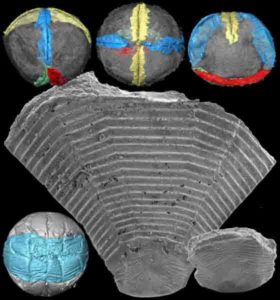
Jablonskipora kidwellae, the first known member of the modern bryozoans to grow up into a structure. Credit: Paul Taylor/London’s Natural History Museum

Lurking in oceans, rivers and lakes around the world are tiny, ancient animals known to few people. Bryozoans, tiny marine creatures that live in colonies, are “living fossils”—their lineage goes back to the time when multi-celled life was a newfangled concept. But until now, scientists were missing evidence of one important breakthrough that helped the bryozoans survive 500 million years as the world changed around them.

Today, the diverse group of bryozoans that dominate modern seas build a great range of structures, from fans to sheets to weird, brain-like blobs. But for the first 50 or 60 million years of their existence, they could only grow like blankets over whatever surface they happened upon.

Scientists recently announced the discovery of that missing evolutionary link—the first known member of the modern bryozoans to grow up into a structure. Called Jablonskipora kidwellae, it is named after UChicago geophysical scientists David Jablonski and Susan Kidwell.

Both are prominent scholars in their fields: Jablonski in origins, extinctions and other forces shaping biodiversity across time and space in marine invertebrates; Kidwell in the study of how fossils are preserved and the reliability of paleobiologic data, especially for detecting recent, human-driven changes to ecosystems. They also happen to be married.

“We were absolutely thrilled. What a treat and an honor, to have this little guy named after us,” said Jablonski, the William R. Kenan Jr. Distinguished Service Professor of Geophysical Sciences.

“I never expected to have a fossil named after me,” said Kidwell, the William Rainey Harper Professor in Geophysical Sciences, “and here it’s one that is an evolutionary breakthrough. We’re still smiling about it.”

Jablonskipora kidwellae lived about 105 million years ago, latching on to rocks and other hard surfaces in shallow seas—a bit like corals, though they’re not related. The fossils came from southwest England, along cliffs near Devon, originally collected in 1903 and analyzed by co-discoverers Paul Taylor and Silviu Martha from London’s Natural History Museum.

Bryozoans never figured out a symbiotic partnership with photosynthetic bacteria, as coral did, so their evolution took a different turn. Each one in a colony is genetically identical, but they have specialized roles, like ants or bees. Their shelly apartment complexes house thousands of the creatures, which have soft bodies with tiny tentacles to catch nutrients.

Growing upright was an evolutionary hack for Jablonskipora kidwellae, the two professors said: building bigger colonies extending upward from just a tiny attachment site was a good evolutionary move, allowing it to tap the water flowing above the sea floor—both for food and to scatter its offspring further. “This is a huge competitive advantage for them,” Jablonski said, “but it required some evolutionary organization to create a vertical structure.” Kidwell added: “This is the next level of cooperation among these individuals within the colony.”

They expressed a fondness for the creature, which they said was, like other bryozoans, “small and slow, but fierce.” Bryozoan fossils are sometimes found having bulldozed right over neighboring colonies in an intense battle for growing space. In a manner of speaking: this all would have taken place in extremely slow motion.

“They’re pretty fabulous little animals,” Kidwell said.

Jablonski and Kidwell have been friends with Taylor, one of the discoverers, since they spent summers on various research at the London Natural History Museum in the 1980s, but they said his news took them both completely by surprise. Jablonski had previously co-authored one paper with Taylor; Kidwell is currently collaborating with him on a study of bryozoan skeletal debris in modern sediments from the Channel Islands off Los Angeles.

It is the second honor of the year for both Kidwell and Jablonski: In April she received the Moore Medal from the Society for Sedimentary Geology, and in October he received the Paleontological Society Medal, that society’s highest honor.

Jablonski had one previous species named after him—a tiny clam—but Jablonskiporawill now be a genus in addition to a species.

Reference:
Silviu O. Martha et al, The oldest erect cheilostome bryozoan: Jablonskipora gen. nov. from the upper Albian of south-west England, Papers in Palaeontology (2017). DOI: 10.1002/spp2.1097

Note: The above post is reprinted from materials provided by University of Chicago.

After Iran-Iraq earthquake, seismologists work to fill in fault map of the region

Recorded earthquakes in the region are marked with gray circles
Recorded earthquakes in the region are marked with gray circles. Major fault lines are in blue, with the Nov. 12 epicenter marked by a star. Credit: Amir Salaree, CC BY-ND

With a magnitude of 7.3, the Nov. 12, 2017 earthquake that shook the border region between Iran and Iraq is among the largest ever recorded in this area. Seismologists know it resulted from the pressure built up between the colliding Arabian and Eurasian plates of the Earth’s crust. But there’s still a lot for researchers to uncover about seismic activity in the region.

Originally from Iran, I’m a seismologist who studies earthquakes, tsunamis and landslides. I’ve been thinking a lot about potential seismic activity and the consequent hazard in this area. My earth sciences colleagues have been examining these faults for years in order to better understand the fault systems in the region. However, the Earth sometimes surprises us, and this time the rupture did not happen on a previously known major fault.

Our lack of knowledge about the specific fault causing this earthquake is mainly because seismologists know only about faults that have already caused earthquakes. Only after new earthquakes can we update our fault maps to be more complete. It’s learning from past earthquakes that lets us better understand and prepare for future seismic hazards.

Tectonic plates in motion

The outer rigid surface of the Earth is divided into chunks known as tectonic plates. These plates move around at the rate of a few centimeters per year – by coincidence, the same rate at which your fingernails grow. The Arabian Peninsula and Iran are on separate adjacent plates in this region.

The mostly northward continental collision between the Arabian plate and Eurasia (which includes Iran) has created the Zagros mountains as the plates crash together in slow motion. Collision energy is also released in the form of earthquakes at fault lines along or close to these boundaries. Many researchers are studying what portions of this region’s collision energy are spent building mountains versus causing earthquakes.

Seismologists do know the Zagros mountains host many active fault lines, and the tectonic wiggles on these faults cause a significant number of earthquakes in Iran and Iraq. In fact, about 25,000 earthquakes have been recorded in the Zagros mountains over just the past 11 years. Although these earthquakes are usually small in size, the data show that every now and then moderate to large events also occur; these can result in significant destruction.

The main fault responsible for the Nov. 12 earthquake has yet to be identified. As located by the Iranian Seismological Center, the quake took place in a zone between two major known faults: the High Zagros Fault and the Mountain Front Fault.

One good thing that comes from a big earthquake is more data about the structure of tectonic plates and therefore the seismic potential in the area. Researchers and planners can in turn use this information to prepare for future events. As the saying goes, we cannot predict earthquakes, but we can anticipate them.

What was different about this quake

Large earthquakes in Iran have typically caused a high number of fatalities. The 1990 Rudbar (magnitude 7.4) and 2003 Bam (magnitude 6.6) earthquakes resulted in a total of around 55,000 deaths and as much as US$9 billion of economic loss.

According to the Iranian state-run news agency, the Nov. 12 earthquake killed over 500 people, as of this publication, with thousands injured, mostly on the Iranian side of the border. Registering a magnitude of 7.3, the quake was comparable in size to its 1990 and 2003 counterparts, but produced a relatively low number of casualties. This was due to several important factors.

First, this latest earthquake was preceded by a much smaller magnitude 4.4 foreshock – a relatively smaller earthquake that precedes the largest earthquake in a series. The foreshock caused many people to leave their homes and, in effect, escape the subsequent destruction. As a seismologist would tell you, earthquakes don’t kill people; buildings do.

Secondly, it occurred on much more rigid ground cover – mostly rocks instead of thick layers of unconsolidated soil compared to the other two events. These geological conditions mean the seismic waves from the earthquake were less amplified, and so less shaking was observed on the surface.

Also, following the previous recent destructive earthquakes in Iran, the Iranian government passed new construction regulations for more earthquake-safe buildings, calling for such things as concrete and steel frames and detailed study of the base soil prior to the construction. Considering the alarming foreshock, the smaller population in the affected towns (compared to the former two destructive earthquakes) and the unknown extent of enforcement of the building codes, it is difficult to estimate how the number of casualties would have increased in the absence of these laws.

For a more complete picture of this earthquake, we still need more data that are yet to be collected and documented both from field surveys and the study of seismic waves recorded by seismometers throughout the world. Seismologists are looking for further evidence about the propagation of the earthquake rupture to learn more about the internal characteristics of the fault as well as the properties of the convergence between the Arabian and Eurasian plates. They’ll also use seismic waves recorded from this earthquake to image the structure of Earth’s crust in the region – just like an ultrasound that provides a picture of your internal organs.

The aftermath of a seismic event like this one is an excellent opportunity to evaluate our understanding of earthquakes and their hazards in Iran and Iraq as well as elsewhere around the world.

Note: The above post is reprinted from materials provided by The Conversation. The original article was written by Amir Salaree, Ph.D. Candidate in Earth and Planetary Sciences, Northwestern University

This article was originally published on The Conversation. Read the original article.

A popular tool to trace Earth’s oxygen history can give false positives

Sedimentary rock layers
These are sedimentary rock layers chronicling Earth’s geological history. Credit: Georgia Tech / Yale / Reinhard / Planavsky

For researchers pursuing the primordial history of oxygen in Earth’s atmosphere, a new study might sour some “Eureka!” moments. A contemporary tool used to trace oxygen by examining ancient rock strata can produce false positives, according to the study, and the wayward results can mask as exhilarating discoveries.

Common molecules called ligands can bias the results of a popular chemical tracer called the chromium (Cr) isotope system, which is used to test sedimentary rock layers for clues about atmospheric oxygen levels during the epoch when the rock formed. Researchers at the Georgia Institute of Technology have demonstrated in the lab that many ligands could have created a signal very similar to that of molecular oxygen.

“There are some geographical locations and ancient situations where measurable signals could have been generated that had nothing to do with how much oxygen was around,” said Chris Reinhard, one of the study’s lead authors. Though the new research may impact how some recent findings are assessed, that doesn’t mean the tool isn’t useful overall.

Rock record tool

“We’re not trying to revolutionize the way the tool is viewed,” said Yuanzhi Tang, who co-led the study. “This is about understanding its possible limitations to make discerning use of it in particular cases.”

Tang and Reinhard, both assistant professors of biogeochemistry in Georgia Tech’s School of Earth and Atmospheric Sciences, published their team’s results in a study on November 17, 2017, in the journal Nature Communications. Their work was funded by the NASA Astrobiology Institute, the NASA Exobiology program, and the Agouron Institute.

“On a global level, the chromium isotope system is still a great indicator of atmospheric oxygen levels through the ages,” Tang said. “The issue we exposed in the lab is more local with isolated samples, especially during eras when there wasn’t much atmospheric oxygen.”

Leaping ligands

Without a dominant oxygen presence, ligands likely made a great reactive substitute, as the researchers demonstrated in reactions with chromium. Like oxygen, ligands strongly attract electron pairs, which is what characterizes them as a chemical group.

And like reactions with oxygen, reactions with ligands enable metals like chromium to move around more easily in the world. In this case, the researchers were interested in organic ligands, ligands that contain carbon.

They were more apt to match oxygen’s mobility effect on chromium that made it end up as the signals in sedimentary rock that scientists, today, look for as a sign of ancient atmospheric oxygen.

Here’s roughly how the chromium isotope system works, followed by how organic ligands could make for false positives.

Chromium rollercoaster

The Earth is an enormous chemical laboratory performing reactions in conditions varying from arctic cold to volcanic heat, and from crushing ocean depths to no-pressure upper atmospheres. Winds and waves sweep around materials like turbulent conveyor belts, depositing some in sediments that later turn to stone.

Chromium’s ticket for the rollercoaster ride into sedimentary rock was usually an oxidizing agent that made it more soluble and better able to float, and atmospheric oxygen was an ideal oxidizer. The chemical reaction, which can be found in the study and involved manganese oxide handing off oxygens to chromium, would be a little like adding pontoons to chromium compounds.

For billions of years, Earth’s atmosphere was nearly devoid of O2, but after oxygen began increasing, especially in the last 800 million years, it became the domineering oxidizer. And characteristics of chromium deposits in ancient layers of rock became a great indicator of how much O2 was in the atmosphere.

Today, researchers test deep rock layer samples for the relation between two chromium isotopes, 52Cr, by far the most common Cr isotope, and 53Cr, to get a read on oxygen presence across geological eras.

“You powder the rock up; you dissolve it with acid, and then you measure the ratio of 53Cr to 52Cr in the material by using mass spectrometry,” Reinhard said. “It’s the ratio that matters, and it will be controlled by a range of complex processes, but generally speaking, elevated 53Cr in ocean sediment rock tends to indicate oxygen in the atmosphere.”

By the way, these Cr isotopes are stable and don’t undergo radioactive decay, thus the system does not work the way radiocarbon dating does, which relies on the decay of carbon 14.

Chemical imposter

In the lab, with a small assortment of organic ligands, Tang’s group showed that reactions of chromium with ligands led to 53Cr/52Cr signals that closely mimicked those stemming from oxygen-chromium reactions.

“Ligands have the capability to mobilize chromium as well,” Tang said. “In fact, ligands might be a significant factor in controlling chromium isotope signals in certain rock records.”

Organic ligands were probably around long before Earth’s atmosphere filled up with O2. And today, hundreds of millions of years after the reactions occurred, it’s basically impossible to find out if oxygen or ligands were at work.

Little discrepancies

If not accounted for, ligand reactions can distort small details in rock records about atmospheric oxygen, and they may have already.

Like paleontologists, who catalog ancient animal bones and other fossils, geologists keep massive, digitized archives of rock that they study to learn more about Earth’s ancient geological history. Scientists began testing physical samples of them with the Cr isotope system around 2009 and adding the results to the records.

“Since then, some discrepancies have turned up,” Reinhard said. “Ancient soil layers were showing evidence of oxygen when it probably shouldn’t have been there. Other samples from the same period weren’t showing that signal.”

But some researchers confronted with odd Cr signals have thought they had perhaps stumbled upon a radical find, and they developed explanations for how O2 may have been surprisingly bountiful on the lonesome spot where a particular rock layer formed, while molecular oxygen was scant on the rest of the globe. Others puzzled that atmospheric O2 levels may have risen much earlier than overwhelmingly broad evidence has indicated.

“A lot of that could be chalked up to other chemical processes and not to interactions with oxygen,” Reinhard said.

The study may serve as a cautionary tale about how to view Cr isotope data, especially when they leap off the page.

Reference:
Emily M. Saad, Xiangli Wang, Noah J. Planavsky, Christopher T. Reinhard, Yuanzhi Tang. Redox-independent chromium isotope fractionation induced by ligand-promoted dissolution. Nature Communications, 2017; 8 (1) DOI: 10.1038/s41467-017-01694-y

Note: The above post is reprinted from materials provided by Georgia Institute of Technology.

A sub-desert savanna spread across Madrid 14 million years ago

Madrid, Spain
Representative Image: Madrid, Spain

The Central Iberian Peninsula was characterised by a very arid savanna during the middle Miocene, according to a study led by the Complutense University of Madrid (UCM) that compares the mammal assemblages from different localities in Africa and South Asia with those that inhabited the Iberian central area 14 million years ago.

The results of this study, recently published in PLOS ONE, are the product of more than fifteen years of fieldwork and previous paleontological studies of the fossil vertebrate remains found at the Somosaguas paleontological site (Madrid), which allowed paleontologists to infer the type of environment that existed in the middle Miocene in the central part of the Iberian Peninsula. This fossil site is located at the Somosaguas Campus of the UCM, a particular feature as only two paleontological sites have been discovered up to now at university campuses worldwide (the other one being located in the USA).

The body size of every species is largely influenced by the environmental conditions of the habitat where each species lives. For example, elephants that inhabit humid places (such as those in Asian jungles) are smaller than elephants that live in dry places (such as those that inhabit in African savannahs).

“Based on this premise, the distribution of sizes within a mammal community can offer us valuable information about its climatic context,” explains Iris Menéndez, a researcher at the Department of Paleontology of the UCM and the Institute of Geosciences (UCM and CSIC).

In this study paleontologists have been able to infer that the centre of the Iberian Peninsula witnessed a very arid tropical climate with a high precipitation seasonality. After a brief wet period, the annual dry season could last up to 10 months. “These results confirm the previous inferences on the Savannahs environment of Somosaguas in the Miocene, but placing this habitat at their driest estimated, within the limits between the savanna and the desert,” says Menéndez.

This study compiled the information of climatic parameters for more than 60 current localities from Africa and Asia, including information of the body size of the mammalian species that inhabit these localities.

“For this purpose, we made a compilation of information on mammalian fauna lists, their body sizes, and climatic parameters for these localities, such as temperatures and precipitation. Based on this data, we developed statistical models suitable for the inference of different climatic parameters in the past,” says the UCM researcher.

“We included the information on the 26 mammal species found in the Somosaguas site, which allowed us to infer the environment by comparison with the extant assemblages,” she adds.

Somosaguas is a particularly interesting fossil site in the context of paleoecological and paleoclimatic studies because it was located at a turning point during the Miocene. At this time, there was a marked change from warm and relatively humid global conditions to colder and arid environments. This inflection point eventually led to the beginning of the Pleistocene glaciations.

Moreover, the Somosaguas fossil site, due to its location within a university campus, gives to the general public the opportunity to visit it and learn all the details of the investigations that have been carried out from the data collected in the successive excavation campaigns.

Reference:
Iris Menéndez, Ana R. Gómez Cano, Blanca A. García Yelo, Laura Domingo, M. Soledad Domingo, Juan L. Cantalapiedra, Fernando Blanco, Manuel Hernández Fernández. Body-size structure of Central Iberian mammal fauna reveals semidesertic conditions during the middle Miocene Global Cooling Event. PLOS ONE, 2017; 12 (10): e0186762 DOI: 10.1371/journal.pone.0186762

Note: The above post is reprinted from materials provided by Universidad Complutense de Madrid.

What Is Sea Glass?

Sea Glass Beach
Representative Image: Sea Glass Beach

What Is Sea Glass?

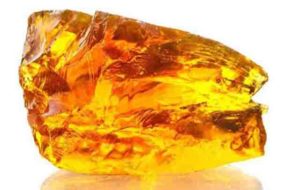
Sea glass and beach glass are similar but come from two different types of water. “Sea glass” is physically and chemically weathered glass found on beaches along bodies of salt water. These weathering processes produce natural frosted glass. “Genuine sea glass” can be collected as a hobby and can be used to make jewelry or make for decoration.”Beach glass” comes from fresh water and in most cases has a different pH balance, and has a less frosted appearance than sea glass. Sea glass takes 30 to 40 years, and sometimes as much as 100 years, to acquire its characteristic texture and shape. Sometimes also colloquially referred to as “Drift glass” from the longshore drift process that forms the smooth edges. In practice, the two terms are used interchangeably.

How is Sea Glass Formed?

Sea glass begins as normal shards of broken glass that are then persistently tumbled and ground until the sharp edges are smoothed and rounded. In this process, the glass loses its slick surface but gains a frosted appearance over many years.

Naturally produced sea glass (“genuine sea glass”) originates as pieces of glass from broken bottles, broken tableware, or even shipwrecks, which are rolled and tumbled in the ocean for years until all of their edges are rounded off, and the slickness of the glass has been worn to a frosted appearance.

Artificially produced sea glass (sometimes called “beach glass”), although superficially similar to sea glass, nevertheless has clear differences in appearance. Having not actually originated from the sea, most connoisseurs will not consider artificial “sea” glass to actually be genuine sea glass, but rather simply tumbled glass, where pieces of modern-day glass are tossed into a rock tumbler or dipped in acid to produce the desired finish. Artificially-produced, the glass is much less expensive and is used for making jewelry, but is often passed off as real sea glass.

What are Sea Glasses Colors?

The color of sea glass is determined by its original source. Most sea glass comes from bottles, but it can also come from jars, plates, windows, windshields, ceramics or sea pottery.

The most common colors of sea glass are kelly green, brown, and white (clear). These colors come from bottles used by companies that sell beer, juices, and soft drinks. The clear or white glass comes from clear plates and glasses, windshields, windows, and assorted other sources.

Where do you find sea glass?

Sea glass can be found all over the world, but the beaches of the northeast United States, Bermuda, Fort Bragg, California, Benicia, California, North Carolina beaches, Scotland, northwest England, Mexico, Hawaii, Dominican Republic, Puerto Rico, Nova Scotia, Australia, Italy and southern Spain are famous for their bounty of sea glass, bottles, bottle lips and stoppers, art glass, marbles, and pottery shards. The best times to look are during spring tides especially perigean and proxigean tides, and during the first low tide after a storm.

Where are the best beaches to find sea glass in United States?

Best Beaches to Find Sea Glass

  • Fort Bragg Sea Glass Beach, CA.
  • Kauai Sea Glass Beach, Hawaii.
  • Del Monte Beach, CA.
  • Sea Glass Beach, Bermuda.
  • Old San Juan, Puerto Rico.
  • Abaco Islands, Bahamas.

First detailed simulation of 2004 megathrust earthquake

Under Sumatra, the oceanic tectonic plate is descending below the continental plate
Under Sumatra, the oceanic tectonic plate is descending below the continental plate. The complex geological structure of the layers of rock, combined with the splay faults, results in highly complicated rupture processes during an earthquake. Credit: Gabriel/Bader

Scientists in Munich have completed the first detailed simulation of the Sumatra earthquake that triggered a devastating tsunami on the day after Christmas in 2004. The results offer new insights into the underlying geophysical processes.

The Christmas 2004 Sumatra-Andaman earthquake was one of the most powerful and destructive seismic events in history. It triggered a series of tsunamis, killing at least 230,000 people. The exact sequence of events involved in the earthquake remains unclear.

A deeper understanding of the geophysical processes involved is now at hand, thanks to a simulation performed by a team of geophysicists, computer scientists and mathematicians from the Technical University of Munich (TUM) and LMU Munich on the SuperMUC supercomputer at the Leibniz Supercomputing Center (LRZ) of the Bavarian Academy of Sciences. This largest-ever rupture dynamics simulation of an earthquake could facilitate the development of more reliable early warning systems. The results of the simulation will be presented at the International Conference on High-Performance Computing, Networking, Storage and Analysis (SC 17) in Denver, Colorado, which began on November 12th.

Precise forecasting is practically impossible

In subduction zones – locations where tectonics plates meet at seams in the Earth’s crust, with one plate moving below the other – earthquakes occur at regular intervals. However, it is not yet precisely known under what conditions such “subduction earthquakes” can cause tsunamis or how big such tsunamis will be.

Earthquakes are highly complex physical processes. In contrast to the mechanical processes occurring at the rupture front, which take place on a scale of a few meters at most, the entire Earth’s surface rises and falls over an area of hundreds of square kilometers. During the Sumatra Earthquake, the tear in Earth’s crust extended for more than 1,500 km (approximately equivalent to the distance from Munich to Helsinki or Los Angeles to Seattle) – the longest rupturing fault ever seen. Within 10 minutes, the seafloor was vertically displaced by the earthquake by as much as 10 meters.

Simulation with over 100 billion degrees of freedom

To simulate the entire earthquake, the scientists covered the area extending from India to Thailand with a three-dimensional mesh consisting of over 200 million elements and incorporating more than 100 billion degrees of freedom.

The size of the elements varied according to the required resolution: A much finer mesh was used along the fault in order to resolve the complex frictional processes, and on the surface so as to take into account the topographical features and the relatively low-velocity seismic waves found there. In areas with little complexity and fast waves, a coarser mesh was employed.

To calculate the pattern of seismic wave propagation, more than three million time steps had to be computed over the smallest elements. As input data, the team used all available information on the geological structure of the subduction zone and the initial conditions on the seafloor, as well as laboratory experiments on rock fracturing behavior.

In addition to the large so-called megathrust plate boundary, the scientists considered three smaller splay faults, or branching faults, suspected of having strongly impacted the tsunami-triggering deformation of the ocean floor.

Almost 50 trillion operations

“To make it possible to finish the simulation on SuperMUC within a reasonable period of time, it ultimately took five years of preparations to optimize our SeisSol earthquake simulation software. Just two years ago, the computing time for the simulation would have been 15 times longer,” explains Michael Bader, a professor of informatics at TUM.

All of the algorithmic components, from data input and output and the numerical algorithms used to solve the physical equations through to the parallel implementation on thousands of multicore processors, had to be optimized for the SuperMUC.

The Sumatra simulation still took almost 14 hours of processing time on all 86,016 cores of the SuperMUC, which performed nearly 50 trillion operations (almost 1015 operations per second, or around 1 petaflop/s – one-third of the theoretical maximum computing performance).

The largest and longest earthquake simulation ever performed

“We successfully completed the largest earthquake simulation of itskind ever seen,” says LMU geophysicist Dr. Alice-Agnes Gabriel. “With a duration of around eight minutes, it is also the longest. On top of that, it was the first-ever physics-based scenario for a real subduction rupture process. With the simultaneous calculation of the complicated fracture of several fault segments and the subsurface propagation of seismic waves, we gained exciting insights into the geophysical processes of the earthquake.”

In particular, says Dr.Gabriel, “The splay faults, which can be imagined as pop-up fractures alongside the known subduction trench, led to abrupt, long-period, vertical displacements of the seafloor, and thus to an increased tsunami risk. At present, this capability of incorporating such realistic geometries into physical earthquake models is unique worldwide.”

Note: The above post is reprinted from materials provided by Ludwig Maximilian University of Munich.

Study reveals structure and origins of glacial polish on Yosemite’s rocks

Glacial polish reflects sunlight at Pothole Dome in Yosemite National Park, California.
Glacial polish reflects sunlight at Pothole Dome in Yosemite National Park, California. The granitic bedrock here was polished by glacier sliding during the Last Glacial Maximum. UCSC researchers found that glacial polish forms by the accretion of a thin coating layer on top of glacially abraded surfaces. Credit: Shalev Siman-Tov

The glaciers that carved Yosemite Valley left highly polished surfaces on many of the region’s rock formations. These smooth, shiny surfaces, known as glacial polish, are common in the Sierra Nevada and other glaciated landscapes.

Geologists at UC Santa Cruz have now taken a close look at the structure and chemistry of glacial polish and found that it consists of a thin coating smeared onto the rock as the glacier moved over it. The new findings, published in the November issue of Geology, show that the polish is not simply the result of abrasion and smoothing by the glacier, as was previously thought. Instead, it is a distinct layer deposited onto the surface of the rock at the base of the glacier.

This smooth layer coating the rock at the base of glaciers may influence how fast the glaciers slide. It also helps explain why glacial polish is so resistant to weathering long after the glaciers that created it are gone.

According to coauthor Emily Brodsky, professor of Earth and planetary sciences at UC Santa Cruz, this ultrathin coating can help glaciologists better understand the mechanics of how glaciers move, and it provides a potential archive for dating when the material was pasted onto the rock.

“This is incredibly important now, as we think about the stability of ice sheets,” Brodsky said. “It is pretty hard to get to the base of a glacier to see what’s going on there, but the glacial polish can tell us about the composition of the gunk on the bottoms of glaciers and when the polish was formed.”

Lead author Shalev Siman-Tov, a postdoctoral researcher at UC Santa Cruz, had previously studied the highly polished surfaces found on some earthquake faults. To investigate glacial polish, he teamed up with Greg Stock, who earned his Ph.D. at UC Santa Cruz and is now the park geologist at Yosemite National Park.

“I wanted to apply what we know from fault zones and earthquakes to glaciology,” Siman-Tov said. “I was not familiar with glaciated landscapes, and I was very interested to conduct a significant field study outside of my home country of Israel.”

He and Stock hiked into Yosemite National Park to collect small samples of glacial polish from dozens of sites. They chose samples from three sites for detailed analyses. One site (Daff Dome near Tuolomne Meadows) emerged from beneath the glaciers at the end of the last ice age around 15,000 years ago. The other two sites are in Lyell Canyon near small modern glaciers that formed during the Little Ice Age around 300 years ago. Lyell Glacier is no longer active, but McClure Glacier is still moving and has an ice cave at its toe that enabled the researchers to collect fresh polish from an area of active sliding and abrasion.

The researchers used an ion beam to slice off thin sections from the samples, and they used electron microscopy techniques to image the samples and perform elemental analyses. The results showed that the tiny fragments in the coating were a mixture of all the minerals found in granodiorite bedrock. This suggests a process in which the glacier scrapes material from the rocks and grinds it into a fine paste, then spreads it across the rock surface to form a very thin layer only a few microns thick.

“Abrasive wear removes material and makes the surface smoother, while simultaneously producing the wear products that become the construction material for the coating layer,” the researchers wrote in the paper.

Siman-Tov now wants to date the layer and confirm the time when the glacier eroded the rock surface. He is also conducting laboratory experiments to try to recreate the same structures observed in the coating layer. The researchers will continue to work with Stock in Yosemite to study the chemical weathering of glacial polish surfaces compared to regular, exposed granodiorite.

Reference:
Shalev Siman-Tov et al, The coating layer of glacial polish, Geology (2017). DOI: 10.1130/G39281.1

Note: The above post is reprinted from materials provided by University of California – Santa Cruz.

Colorado River’s connection with the ocean was a punctuated affair

Bioclastic limestone and cross-bedded conglomerate are visible in exposed rocks at Marl Wash in the Bouse Formation, south of Blythe, California
Bioclastic limestone and cross-bedded conglomerate are visible in exposed rocks at Marl Wash in the Bouse Formation, south of Blythe, California. The wash was named by geologists studying the deposits. The sedimentary structures preserve a record of deposition by strong tidal currents at the north end of the Gulf of California about 6 million years ago, prior to arrival of the Colorado River and its sediment load. A team led by University of Oregon geologist Rebecca Dorsey interpreted a wide range of depositional processes and environments, and their changes through time, using detailed stratigraphic analysis and micropaleontology. Credit: Photo by Rebecca Dorsey

The Colorado River‘s initial trip to the ocean didn’t come easy, but its story has emerged from layers of sediment preserved within tectonically active stretches of the waterway’s lower reaches.

A scientific team, led by geologist Rebecca Dorsey of the University of Oregon, theorizes that the river’s route off the Colorado Plateau was influenced by a combination of tectonic deformation and changing sea levels that produced a series of stops and starts between roughly 6.3 and 4.8 million years ago.

Dorsey’s team lays out its case in an invited-research paper in the journal Sedimentary Geology. The team’s interpretation challenges long-held conventional thinking that once a river connects to the ocean it’s a done deal.

“The birth of the Colorado River was more punctuated and filled with more uneven behavior than we expected,” Dorsey said. “We’ve been trying to figure this out for years. This study is a major synthesis of regional stratigraphy, sedimentology and micropaleontology. By integrating these different datasets we are able to identify the different processes that controlled the birth and early evolution of this iconic river system.”

The region covered in the research stretches from the southern Bouse Formation, near present-day Blythe, California, to the western Salton Trough north of where the river now trickles into the Gulf of California. The Bouse Formation and deposits in the Salton Trough have similar ages and span both sides of the San Andreas Fault, providing important clues to the river’s origins.

Last year, in the journal Geology, a project led by graduate student Brennan O’Connell, a co-author on the new study, concluded that laminated sediments found in exposed rock along the river near Blythe were deposited by tidal currents 5.5 million years ago. The Gulf of California, it was argued, extended into the region, but the age of the deposits and tectonic and sea level changes at work during that time were not well understood.

Analyses by Kristin McDougall, a micropaleontologist with the U.S. Geological Survey and co-author on the new paper, helped the team better pinpoint the timing of the limestone deposits to about 6 million years ago, when tiny marine organisms lived in the water and were deposited at the same time.

About 5.4 million years ago, conditions changed. Global sea level was falling but instead of bay water levels declining, as would be expected, the water depth increased due to tectonic subsidence of the crust, the researchers discovered.

The basal carbonate material left by marine organisms was then inundated by fresh water as the river swept down into lower elevations, bringing with it clay and sand from mountain terrain, they found.

“The bay filled up with river sediment as the sediment migrated toward the ocean,” Dorsey said. “As more sediment came in, transport processes caused the delta front to move down the valley, transforming the marine bay into a delta and then the earliest through-flowing Colorado River.”

The river had arrived in the gulf, but only temporarily. A tug-of-war lasting for 200,000 to 300,000 years began some 5.1 million years ago, when the river stopped delivering sediments from upstream. The delta retreated and seawater returned to the lower Colorado River valley for a short time. The evidence is in the stratigraphy and fossils. Researchers found that clay and sand from the river became mixed with and then covered by marine sediment.

Something, Dorsey said, apparently was happening upstream, trapping river sediment. A good bet, the researchers think, is tectonic activity, perhaps earthquakes along a fault zone in the river’s northern basin that created subsidence in the riverbed or deep lakes along the river’s path.

At roughly 4.8 million years ago, the river resumed depositing massive amounts of sediment back into the Salton Trough and began rebuilding the delta. Today’s view of the delta, however, reflects human-made modern disturbances to the river’s sediment discharge and flow of water reaching the gulf.

To meet agricultural demands for irrigation and drinking water for human consumption, Hoover Dam was constructed on the river to form Lake Mead during the 1930s. In 1956-1966, Glen Canyon Dam was built, forming Lake Powell.

“If we could go back to 1900 before the dams that trap the sediment and water, we would see that the delta area was full of channels, islands, sand bars and moving sediment. It was a very diverse, dynamic and rich delta system. But humanmade dams are trapping sediment today, eerily similar to what happened roughly 5 million years ago,” Dorsey said.

The bottom line of the research, she said, is that no single process controlled the Colorado River’s initial route to the sea. “Different processes interacted in a surprisingly complicated sequence of events that led to the final integration of that river out to the ocean,” she said.

The research, Dorsey said, provides insights that help scientists understand how such systems change through time. The Colorado River is an excellent natural laboratory, she said, because sedimentary deposits that formed prior to and during river initiation are well exposed throughout the lower river valley.

“This research,” Dorsey said, “is very relevant to today because we have global sea level rising, climate is warming, coastlines are being inundated and submerged, and the supply of river sediment exerts a critical control on the fate of deltas where they meet the ocean. Documenting the complex interaction of these processes in the past helps us understand what is happening today.”

Reference:
Rebecca J. Dorsey, Brennan O’Connell, Kristin McDougall, Mindy B. Homan. Punctuated Sediment Discharge during Early Pliocene Birth of the Colorado River: Evidence from Regional Stratigraphy, Sedimentology, and Paleontology. Sedimentary Geology, 2018; 363: 1 DOI: 10.1016/j.sedgeo.2017.09.018

Note: The above post is reprinted from materials provided by University of Oregon.

GoPro Gets Melted by Lava

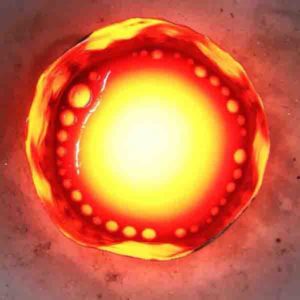
Here’s the amazing story of a tough little GoPro camera that refused to die. It was hit by molten lava, burst into flames, and somehow survived to shoot another day.

Erik Storm is the owner and lead guide of Kilauea EcoGuides in Hawaii. About 16 months ago, he was on a tour when he placed his GoPro into a crack to film lava flows.

“I was telling a story when the molten lava completely engulfed my GoPro (with housing on) and it caught on fire,” Storm tells PetaPixel. “I used a geology rock hammer to pull it out of the lava and thought it was a total loss.

After getting back home, Storm hammered the cooled rock off the GoPro housing. He suddenly noticed that the Wi-Fi light on the camera within was still blinking.

When he pulled the SD card out of the camera, he found that the footage was still intact. The last video on it shows the camera getting engulfed by lava and flames bursting into view.

“The camera even still worked although not a well as it did before,” Storm says. “Truly amazing it survived!”

Note: The above post is reprinted from materials provided by PetaPixel.

World’s Largest Dinosaur Tracks Were Discovered in the Jura Mountains

The sauropod trackway
The sauropod trackway. Credit: P. Dumas

In 2009, the world’s largest dinosaur tracks were discovered in the French village of Plagne, in the Jura Mountains. Since then, a series of excavations at the site has uncovered other tracks, sprawling over more than 150 meters. They form the longest sauropod trackway ever to be found. Having compiled and analyzed the collected data, which is published in Geobios, scientists from the Laboratoire de Géologie de Lyon (CNRS / ENS de Lyon / Claude Bernard Lyon 1 University), the Laboratoire Magmas et Volcans (CNRS / Université Clermont Auvergne / Université Jean Monnet / IRD), and the Pterosaur Beach Museum conclude these tracks were left 150 million years ago by a dinosaur at least 35 m long and weighing no less than 35 t.

In 2009, when sauropod tracks were discovered in the French village of Plagne — near Lyon — the news went round the world. After two members of the Oyonnax Naturalists’ Society spotted them, scientists from the Paléoenvironnements et Paléobiosphère research unit (CNRS / Claude Bernard Lyon 1 University) confirmed these tracks were the longest in the world. Between 2010 and 2012, researchers from the Laboratoire de Géologie de Lyon supervised digs at the site, a meadow covering three hectares. Their work unearthed many more dinosaur footprints and trackways. It turns out the prints found in 2009 are part of a 110-step trackway that extends over 155 m — a world record for sauropods, which were the largest of the dinosaurs.

Dating of the limestone layers reveals that the trackway was formed 150 million years ago, during the Early Tithonian Age of the Jurassic Period. At that time, the Plagne site lay on a vast carbonate platform bathed in a warm, shallow sea. The presence of large dinosaurs indicates the region must have been studded with many islands that offered enough vegetation to sustain the animals. Land bridges emerged when the sea level lowered, connecting the islands and allowing the giant vertebrates to migrate from dry land in the Rhenish Massif.

Additional excavations conducted as late as 2015 enabled closer study of the tracks. Those left by the sauropod’s feet span 94 to 103 cm and the total length can reach up to 3 meters when including the mud ring displaced by each step. The footprints reveal five elliptical toe marks, while the handprints are characterized by five circular finger marks arranged in an arc. Biometric analyses suggest the dinosaur was at least 35 m long, weighted between 35 and 40 t, had an average stride of 2.80 m, and traveled at a speed of 4 km/h. It has been assigned to a new ichnospecies1: Brontopodus plagnensis. Other dinosaur trackways can be found at the Plagne site, including a series of 18 tracks extending over 38 m, left by a carnivore of the ichnogenus Megalosauripus. The researchers have since covered these tracks to protect them from the elements. But many more remain to be found and studied in Plagne.

1 The prefix ichno- indicates that a taxon (e.g., a genus or species) has been defined on the basis of tracks or other marks left behind, rather than anatomical remains like bones.

Reference:
Jean-Michel Mazin, Pierre Hantzpergue, Nicolas Olivier. The dinosaur tracksite of Plagne (early Tithonian, Late Jurassic; Jura Mountains, France): The longest known sauropod trackway. Geobios, 2017; 50 (4): 279 DOI: 10.1016/j.geobios.2017.06.004

Note: The above post is reprinted from materials provided by CNRS.

When water met iron deep inside the Earth, did it create conditions for life?

An illustration from the paper showing oxygen and hydrogen cycling in the deep Earth
An illustration from the paper showing oxygen and hydrogen cycling in the deep Earth. Credit: Carnegie Institution for Science

Reservoirs of oxygen-rich iron between the Earth’s core and mantle could have played a major role in Earth’s history, including the breakup of supercontinents, drastic changes in Earth’s atmospheric makeup, and the creation of life, according to recent work from an international research team published in National Science Review.

The team—which includes scientists from Carnegie, Stanford University, the Center for High Pressure Science and Technology Advanced Research in China, and the University of Chicago—probed the chemistry of iron and water under the extreme temperatures and pressures of the Earth’s core-mantle boundary.

When the action of plate tectonics draws water-containing minerals down deep enough to meet the Earth’s iron core, the extreme conditions cause the iron to grab oxygen atoms from the water molecules and set the hydrogen atoms free. The hydrogen escapes to the surface, but the oxygen gets trapped into crystalline iron dioxide, which can only exist under such intense pressures and temperatures.

Using theoretical calculations as well as laboratory experiments to recreate the environment of the core-mantle boundary, the team determined that iron dioxide can be created using a laser-heated diamond anvil cell to put materials under between about 950 and 1 million times normal atmospheric pressure and more than 3,500 degrees Fahrenheit.

“Based on our knowledge of the chemical makeup of the slabs that are drawn into the Earth’s deep interior by plate tectonics, we think 300 million tons of water could be carried down to meet iron in the core and generate massive iron dioxide rocks each year,” said lead author Ho-kwang “Dave” Mao.

These extremely oxygen-rich solid rocks may accumulate steadily year-by-year above the core, growing into gigantic, continent-like sizes. A geological event that heated up these iron dioxide rocks could cause a massive eruption, suddenly releasing a great deal of oxygen to the surface.

The authors hypothesize that such an oxygen explosion could put a tremendous amount of the gas into the Earth’s atmosphere—enough to cause the so-called Great Oxygenation Event, which occurred about 2.5 billion years ago and created our oxygen-rich atmosphere, conditions that kickstarted the rise oxygen-dependent life as we know it.

“This newly discovered high-temperature and intense-pressure water-splitting reaction affects geochemistry from the deep interior to the atmosphere” said Mao. “Many previous theories need to be re-examined now.

Note: The above post is reprinted from materials provided by Carnegie Institution for Science.

When continents break it gets warm on Earth

The East African Rift System
The East African Rift System is currently the largest in the world. Yet, the global rift network 130 and 50 million years ago was more than 5 times longer. Credit: Brune, Nasa WorldWind

The concentration of carbon dioxide (CO2) in the atmosphere determines whether the Earth is in greenhouse or ice age state. Before humans began to have an impact on the amount of CO2 in the air, it depended solely on the interplay of geological and biological processes, the global carbon cycle. A recent study, headed by the GFZ German Research Centre for Geosciences in Potsdam, shows that the break-up of continents — also known as rifting — contributed significantly to higher CO2 concentrations in the atmosphere.

The carbon distribution on Earth is highly unbalanced: In fact only one-hundred-thousandth of the carbon dioxide on our planet is found in the atmosphere, biosphere and the oceans with the remaining 99.999% bound in the deep Earth. However, this enormous carbon store at depth is not isolated from the atmosphere. There is a constant exchange between the underground and the surface over millions of years: Tectonic plates that sink into the deep mantle take large amounts of carbon with them. At the same time it was believed that deep carbon is released due to volcanism at mid-oceanic ridges in the form of CO2.

In the current study, published in Nature Geoscience, the research team comes to a different conclusion. Although volcanic activity at the bottom of the ocean floor causes CO2 to be released, the main CO2 input from depth to the atmosphere, however, occurs in continental rift systems such as the East African Rift or the Eger Rift in Czech Republic. “Rift systems develop by tectonic stretching of the continental crust, which may lead to break-up of entire plates,” explains Sascha Brune from GFZ. “The East African Rift with a total length of 6,000 km is the largest in the world, but it appears small in comparison to the rift systems which were formed 130 million years ago when the supercontinent Pangea broke apart, comprising a network with a total length of more than 40,000 km.”

With the help of plate tectonic models of the past 200 million years and other geological evidence scientists have reconstructed how the global rift network has evolved. They have been able to prove the existence of two major periods of enhanced rifting approx. 130 and 50 million years ago. Using numerical carbon cycle models the authors simulated the effect of increased CO2 degassing from the rifts and showed that both rifting periods correlate with higher CO2 concentrations in the atmosphere at that time.

“The global CO2 degassing rates at rift systems, however, are just a fraction of the anthropogenic carbon release today,” adds Brune. “Yet, they represent a missing key component of the deep carbon cycle that controls long-term climate change over millions of years.”

Reference:
Sascha Brune, Simon E. Williams, R. Dietmar Müller. Potential links between continental rifting, CO2 degassing and climate change through time. Nature Geoscience, 2017; DOI: 10.1038/s41561-017-0003-6

Note: The above post is reprinted from materials provided by GFZ GeoForschungsZentrum Potsdam, Helmholtz Centre.

Largest, longest multiphysics earthquake simulation created to date

largest multiphysics simulation of an earthquake and tsunami
Using LRZ’s SuperMUC supercomputer, a joint research team from the Technical University of Munich and Ludwigs-Maximilians-Uni Munich were able to create the largest multiphysics simulation of an earthquake and tsunami. This image shows rupture propagation and the resulting seismic wave field during 2004 Sumatra-Andaman earthquake. Credit: C. Uphoff, S.Rettenberger, M. Bader, Technical University of Munich. E. Madden, T. Ulrich, S. Wollherr, A. Gabriel, Ludwigs-Maximilians-Universität.

Just before 8:00 a.m. local time on December 26, 2004, people in southeast Asia were starting their days when the third strongest recorded earthquake in history ripped a 1,500-kilometer tear in the ocean floor off the coast of the Indonesian island of Sumatra.

The earthquake lasted between 8 and 10 minutes (one of the longest ever recorded), and lifted the ocean floor several meters, creating a tsunami with 30-meter waves that devastated whole communities. The event caused nearly 200,000 deaths across 15 countries, and released as much energy above and below ground as multiple centuries of US energy usage.

The Sumatra-Andaman Earthquake, as it is called, was as surprising as it was violent. Despite major advancements in earthquake monitoring and warning systems over the last 50 years, earth scientists were unable to predict it because relatively little data exists about such large-scale seismological events. Researchers have a wealth of information related to semi-regular, lower-to-medium-strength earthquakes, but disasters such as the Sumatra-Andaman — events that only happen every couple hundred years — are too rare to create reliable data sets.

In order to more fully understand these events, and hopefully provide better prediction and mitigation methods, a team of researchers from the Ludwig-Maximilians-Universität Munich (LMU) and Technical University of Munich (TUM) is using supercomputing resources at the Leibniz Supercomputing Centre (LRZ) to better understand these rare, extremely dangerous seismic phenomena.

“Our general motivation is to better understand the entire process of why some earthquakes and resulting tsunamis are so much bigger than others,” said TUM Professor Dr. Michael Bader. “Sometimes we see relatively small tsunamis when earthquakes are large, or surprisingly large tsunamis connected with relatively small earthquakes. Simulation is one of the tools to get insight into these events.”

The team strives for “coupled” simulations of both earthquakes and subsequent tsunamis. It recently completed its largest earthquake simulation yet. Using the SuperMUC supercomputer at LRZ, the team was able to simulate 1,500 kilometers of non-linear fracture mechanics — the earthquake source — coupled to seismic waves traveling up to India and Thailand over a little more than 8 minutes of the Sumatra-Andaman earthquake. Through several in-house computational innovations, the team achieved a 13-fold improvement in time to solution. In recognition of this achievement, the project was nominated for the best paper award at SC17, one of the world’s premier supercomputing conferences, held this year on November 12-17 in Denver, Colorado.

Megathrust earthquakes, massive scale simulations

Earthquakes happen as rock below Earth’s surface breaks suddenly, often as a result of the slow movement of tectonic plates.

One rough predictor of an ocean-based earthquake’s ability to unleash a large tsunami is whether plates are grinding against one another or colliding head-on. If two or more plates collide, one plate will often force the other below it. Regions where this process occurs are called subduction zones and can host very large, shallowly dipping faults — so called “megathrusts.” Energy release across such huge zones of weakness tends to create violent tsunamis, as the ocean floor rises a significant amount, temporarily displacing large amounts of water.

Until recently, though, researchers doing computational geophysics had great difficulties simulating subduction earthquakes at the necessary level of detail and accuracy. Large-scale earthquake simulations are difficult generally, but subduction events are even more complex.

“Modeling earthquakes is a multiscale problem in both space and time,” said Dr. Alice Gabriel, the lead researcher from the LMU side of the team. “Reality is complex, meaning that incorporating the observed complexity of earthquake sources invariably involves the use of numerical methods, highly efficient simulation software, and, of course, high-performance computing (HPC). Only by exploiting HPC can we create models that can both resolve the dynamic stress release and ruptures happening with an earthquake while also simulating seafloor displacement over thousands of kilometers.”

When researchers simulate an earthquake, they use a computational grid to divide the simulation into many small pieces. They then compute specific equations for various aspects of the simulation, such as generated seismic shaking or ocean floor displacement, among others, over “time steps,” or simulation snapshots over time that help put it in motion, much like a flip book.

The finer the grid, the more accurate the simulation, but the more computationally demanding it becomes. In addition, the more complex the geometry of the earthquake, the more complex the grid becomes, further complicating the computation. To simulate subduction earthquakes, computational scientists have to create a large grid that can also accurately represent the very shallow angles at which the two continental plates meet. This requires the grid cells around the subduction area to be extra small, and often slim in shape.

Unlike continental earthquakes, which have been better documented through computation and observation, subduction events often happen deep in the ocean, meaning that it is much more difficult to constrain a simulation by ground shaking observations and detailed, reliable data from direct observation and laboratory experiments.

Furthermore, computing a coupled, large-scale earthquake-tsunami simulation requires using data from a wide variety of sources. Researchers must take into account the seafloor shape, the shape and strength of the plate boundary ruptured by the earthquake and the material behaviour of Earth’s crust at each level, among other aspects. The team has spent the last several years developing methods to more efficiently integrate these disparate data sources into a consistent model.

To reduce the enormous computing time, the team exploited a method called “local time stepping.” In areas where the simulations require much more spatial detail, researchers also must “slow down” the simulation by performing more time steps in these areas. Other sections that require less detail may execute much bigger — and thus — far fewer time steps.

If the team had to run its entire simulation at a uniform small time step, it would have required roughly 3 million individual iterations. However, only few cells of the computational grid required this time step size. Major parts could be computed with much larger time steps, some requiring only 3000 time steps. This reduced the computational demand significantly and led to much of the team’s 13-fold speedup. This advancement also led to the team’s simulation being the largest, longest first-principles simulation of an earthquake of this type.

Forward motion

Due to its close collaboration with LRZ staff, the team had opportunities to use the entire SuperMUC machine for its simulations. Bader indicated that these extremely large-scale runs are invaluable for the team to gain deeper insights in its research. “There is a big difference if you run on a quarter of a machine or a full machine, as that last factor of 4 often reveals the critical bottlenecks,” he said.

The team’s ability to take full advantage of current-generation supercomputing resources has it excited about the future. It’s not necessarily important that next-generation machines offer the opportunity for the LMU-TUM researchers to run “larger” simulations — current simulations can effectively simulate a large enough geographic area. Rather, the team is excited about the opportunity to modify the input data and run many more iterations during a set amount of computing time.

“We have been doing one individual simulation, trying to accurately guess the starting configuration, such as the initial stresses and forces, but all of these are still uncertain,” Bader said. “So we would like to run our simulation with many different settings to see how slight changes in the fault system or other factors would impact the study. These would be larger parameter studies, which is another layer of performance that a computer would need to provide.”

Gabriel also mentioned that next-generation machines will hopefully be able to simulate urgent, real-time scenarios that can help predict hazards as they relate to likely aftershock regions. The team is excited to see the next-generation architectures at LRZ and the other Gauss Centre for Supercomputing centres, the High-Performance Computing Center Stuttgart and the Jülich Supercomputing Centre.

In Bader’s view, the team’s recent work not only represents its largest-scale simulation to date, but also the increasingly strong collaboration between the domain scientists and computational scientists in the group. “This paper has a strong seismology component and a strong HPC component,” he said. “This is really a 50-50 paper for us. Our collaboration has been going nicely, and it is because it isn’t about getting ours or theirs. Both groups profit, and this is really nice joint work.”

This work was carried out using Gauss Centre for Supercomputing resources based at the Leibniz Supercomputing Centre.

Note: The above post is reprinted from materials provided by Gauss Centre for Supercomputing.
Geologists uncover Antarctica’s fossil forests

examines some of the fossilized polar trees
Erik Gulbranson, paleoecologist and visiting assistant professor at UWM, studies some of the fossilized trees he brought back from Antarctica. Gulbranson is returning there for further research this year. Credit: UWM Photo/Troye Fox

During Antarctica’s summer, from late November through January, UW-Milwaukee geologists Erik Gulbranson and John Isbell climbed the McIntyre Promontory’s frozen slopes in the Transantarctic Mountains. High above the ice fields, they combed the mountain’s gray rocks for fossils from the continent’s green, forested past.

By the trip’s end, the geologists had found fossil fragments of 13 trees. The discovered fossils reveal that the trees are over 260 million years old, meaning that this forest grew at the end of the Permian Period, before the first dinosaurs.

“People have known about the fossils in Antarctica since the 1910-12 Robert Falcon Scott expedition,” said Gulbranson, a paleoecologist and visiting assistant professor in UWM’s Department of Geosciences. “However, most of Antarctica is still unexplored. Sometimes, you might be the first person to ever climb a particular mountain.”

The time frame is exactly what they are looking for. The Permian Period ended 251 million years ago in history’s greatest mass extinction, as the Earth rapidly shifted from icehouse to greenhouse conditions. More than 90 percent of species on Earth disappeared, including the polar forests. Because the Antarctic forests grew at polar latitudes where plants can’t grow today, Gulbranson believes that the trees were an extremely hearty species and is trying to determine why they went extinct.

Many scientists now believe that a massive increase in atmospheric greenhouse gases, such as carbon dioxide and methane, caused the Permian-Triassic extinction. It’s likely that over the course of 200,000 years — a short time, geologically speaking — volcanic eruptions in Siberia released many tons of greenhouse gases into the atmosphere.

Isbell, a distinguished professor of geosciences at UWM, has previously studied Antarctica’s Permian glacial deposits to determine how the climate changed. On this expedition, he used the rocks around the fossilized trees to determine how the fossils fit into Antarctica’s geologic history.

“This forest is a glimpse of life before the extinction, which can help us understand what caused the event,” Gulbranson said. It can also give clues to how plants were different than today.

At the Permian Period’s end, Antarctica was warmer and more humid than it is today. The world’s continents, as we know them, were packed together in two giant landmasses — one in the north and one in the south. Antarctica was part of Gondwana, the supercontinent spanning the Southern Hemisphere that also included present-day South America, Africa, India, Australia and the Arabian Peninsula.

There would have been a mixture of mosses, ferns and an extinct plant called Glossopteris, and it’s likely that this forest stretched across the entirety of Gondwana.

Gulbranson said that the fossil forests looked different than forests today. During the Permian Period, forests were a potentially low diversity assemblage of different plant types with specific functions that affected how the entire forest responded to environmental change. This is contrast to modern high-latitude forests that display greater plant diversity.

“This plant group must have been capable of surviving and thriving in a variety of environments,” Gulbranson said. “It’s extremely rare, even today, for a group to appear across nearly an entire hemisphere of the globe.”

But not even these robust forests survived the high carbon dioxide concentrations of the mass extinction.

The resilient plants also must have survived through the polar extremes of perpetual light and total darkness. Even in a warmer past, the polar regions would have experienced months of darkness in winter and would have gone without sunset during the summer months.

By studying the preserved tree rings, Gulbranson and colleagues have found that these trees transitioned from summer activity to winter dormancy rapidly, perhaps within a month. Modern plants make the same transition over the course of several months and also conserve water by making food during the day and resting at night. Scientists don’t yet know how months of perpetual light would have affected the plants’ day-and-night cycles.

“There isn’t anything like that today,” Gulbranson said. “These trees could turn their growing cycles on and off like a light switch. We know the winter shutoff happened right away, but we don’t know how active they were during the summertime and if they could force themselves into dormancy while it was still light out.”

He’ll return to the site later this month and stay through January 2018. He hopes to learn more about the extinction event. He previously wasn’t able to study the extinction period because of weather constraints and aircraft troubles.

Gulbranson is going to look for deposits from the mass extinction to see if he can determine exactly how the forests responded as carbon dioxide rose.

“The geologic record shows us the beginning, middle and end of climate change events,” Gulbranson said. “With further study, we can better understand how greenhouse gases and climate change affect life on Earth.”

Note: The above post is reprinted from materials provided by University of Wisconsin-Milwaukee. Original written by Matthew Wamser.

M 7.3 earthquake hits Iran-Iraq 2017

M 7.3 earthquake hits Iran-Iraq

At least 210 people were killed in Iran and Iraq on Sunday when a powerful magnitude 7.3 earthquake hit the region, state media in the two countries said, as rescuers searched for dozens trapped under rubble.

Officials expected the casualty toll to rise when search and rescue teams reached remote areas of Iran.

A quake registering a magnitude between 7 and 7.9 can inflict widespread and heavy damage. Moreover, many houses in rural areas of Iran are made of mud bricks that can crumble easily in a quake.

The earthquake was felt in several provinces of Iran but the hardest hit province was Kermanshah, which announced three days of mourning.

Tectonic Summary

The November 12, 2017 M 7.3 earthquake near the Iran-Iraq border in northwest Iran (220 km northeast of Baghdad, Iraq) occurred as the result of oblique-thrust faulting at mid-crustal depth (~25 km). Preliminary focal mechanism solutions for the event indicate rupture occurred on a fault dipping shallowly to the east-northeast, or on a fault dipping steeply to the southwest. At the location of this earthquake, the Arabia plate is moving towards the north with respect to Eurasia at a rate of about 26 mm/yr. The two plates converge along a northwest-striking plate boundary in the general vicinity of this earthquake, driving the uplift of the Zagros mountains in Iran. The location of the event and the shallow, northeast-dipping plane of the focal mechanism solution are consistent with rupture of a plate boundary related structure in this region.

While commonly plotted as points on maps, earthquakes of this size are more appropriately described as slip over a larger fault area. Oblique-thrust-faulting events of the size of the November 12th, 2017 earthquake are typically about 65×25 km (length x width).

Over the preceding century, the region within 250 km of the hypocenter of the November 12, 2017 earthquake has experienced 4 other M6+ earthquakes. The most recent of these was a M 6.1 earthquake about 100 km to the south of the November 2017 event in January 1967. In the late 1950s and early 1960s, a cluster of M 6.0-6.7 earthquakes occurred along the plate boundary about 200 km to the southeast of today’s earthquake. In November 2013, a pair of M 5.6 and M 5.8 earthquakes occurred about 60 km south of the November 2017 event. They are not known to have caused significant damage or fatalities. A M 7.4 earthquake in June 1990, 400 km to the northeast of the November 12, 2017 event, caused between 40,000-50,000 fatalities, more than 60,000 injuries, and left more than 600,000 homeless in the in the Rasht-Qazvin-Zanjan area of Iran.

Note: The above post is reprinted from materials provided by USGS.

How the Pacific seafloor got its 60-degree bend

Seafloor topography
Seafloor topography (bathymetry) of the Pacific showing the volcanos and submerged seamounts of the Hawaiian and Emperor Chains together with the 50 million-year-old bend between them. Credit: Google Earth

Hawaii sits at the end of a chain of volcanoes running across the Pacific Ocean floor, but in the middle of this chain lies a bend of 60 degrees. For many decades geoscientists have struggled to explain exactly how and why this feature occurred around 50 Million years ago. A new study in Science Advances led by postdoctoral researcher Mathew Domeier along with colleagues from the Centre for Earth Evolution and Dynamics (CEED), University of Oslo, sheds light on this long-standing geological controversy – A massive collision at the edge of the Pacific Ocean was the culprit.

Mantle plumes and volcanic chains

There is more than meets the eye with the Hawaiian Islands of the Pacific Ocean. The islands presently sit above a so-called mantle plume, or a conduit of anomalously hot rock upwelling from thousands of kilometers deep in the Earth’s interior. This hot feature explains why the islands are dotted with active volcanoes. But the Hawaiian Islands also reside on the Pacific tectonic plate, which is moving across the top of the mantle plume—at the blistering pace of a few cm/year—which means that in a few million years the islands will have moved off the hot conduit and volcanism in the Hawaiian Islands will cease.

As Hawaii’s active volcanoes die in the future, new volcanic islands will appear elsewhere on the Pacific Plate, specifically at spots that replace the Hawaiian Islands above the hot conduit. This process is much like what would happen if you moved a sheet of paper over a stationary candle: the movement of the paper will be recorded as a trail of burn marks from the heat of the candle beneath. Hawaii is presently over the “candle,” but in the future it will have moved away from it and the candle will begin singing a new spot on the paper.

This process has happened over and over again in Earth’s long history, and Hawaii is just the latest volcanic chapter in a story that extends backward at least 80 million years. The Hawaiian Islands lie at the end of a chain of now-extinct volcanoes and seamounts (submerged volcanoes) that stretch ~6,000 km northwest across the floor of the Pacific Plate, to the junction between the western Aleutian Islands and the Peninsula of Kamchatka. Returning to our paper and candle analogy—this chain is the same as the path of singed marks leading backwards from the present location of the candle beneath the paper. In the Pacific, the volcanoes and seamounts that constitute this chain grow progressively older to the northwest, as would be expected if the chain marked the slow and progressive drift of the Pacific Plate above a mantle plume.

But something curious catches the eye about this submerged volcanic chain in the Pacific: it isn’t straight. A very conspicuous kink divides the chain into two segments: a mostly west-trending segment (the “Hawaiian Chain’) and a mostly north-trending segment (the “Emperor Chain’); the kink between is thus commonly referred to as the “Hawaiian-Emperor Bend.” Volcanic rocks sampled from seamounts on either side of the bend have been dated, and indicate that the bend developed approximately 47 million years ago.

So what caused it? This very question has been the source of debate and controversy among researchers for half a century. The classical explanation is that the bend marked a swift and substantial change in the direction of motion of the Pacific Plate about 50 million years ago, but supporters of this interpretation have struggled to explain why that sudden change occurred.

  1. The research team from University of Oslo carefully collected together a variety of evidence that suggests that the Pacific Plate changed its course about 50 million years ago because an archipelago that previously formed the northern end of the Pacific Plate crashed into eastern Asia at that time.
  2. The archipelago comprised what is known as an island arc: an elongate chain of volcanoes and volcanic rocks formed above a subduction zone (a zone where the seafloor of an oceanic tectonic plate is pushed under another tectonic plate and sinks into the mantle below). The team was able to work out the fiery history of the island arc and its relation to the Hawaiian-Emperor Bend from three key sources of data:
  3. Exotic rocks: The pieces of that island arc, which are now found on the peninsula of Kamchatka and in the Japanese Islands, are geologically exotic, meaning that they do not have the same characteristics of other rocks from the same region and were clearly transported from somewhere else—and they specifically reveal that they formed far away from any large continents (like Asia).
  4. Magnetic rocks: Magnetic information preserved in the island arc rocks (acquired from the Earth’s magnetic field when the rocks originally formed) can be used to determine the latitude at which they originated—and the magnetic information from the island arc rocks reveals that they came from further south than where they are located today (this also corroborates their exotic nature).
  5. Deep rocks: Island arcs only develop along a subduction zone, so the formation of the island arc should have been accompanied by subduction, and subduction, in turn, is associated with the sinking of oceanic tectonic plates into Earth’s interior. The relics of subducted oceanic plates can be “imaged” by seismic waves generated by earthquakes, in much the same way that your bones can be imaged with X-rays during a CT scan. By such seismic imaging techniques we have identified the relics of a subduction system that was formerly located at the northern end of the Pacific Plate, at the same place that the island arc rocks were located according to their magnetic data.

A crash caused the bend

Together, the geologic, magnetic and seismic clues from the North Pacific indicate that subduction and island arc construction began 80 million years ago at the northern end of the Pacific Plate. Immediately after subduction started, the subduction zone began moving north, pulling the island arc and the Pacific Plate north with it. This northward migration continued from 80 to 50 million years, at which time the Emperor Chain was formed by the northern drift of the Pacific over the mantle plume.

By about 50 million years ago, the northern migration of subduction led to a colossal collision between the island arc at the northern end of the Pacific Plate and the northeast edge of Asia. This massive crash left large segments of the former island arc stranded in northeast Japan and on the peninsula of Kamchatka, and terminated subduction there.

The crash and the cessation of subduction effectively halted the northward course of the Pacific Plate at that time, and it was this event that was responsible for suddenly re-routing the direction of the Pacific Plate 50 million years ago. So in the end, it was a continental-scale fender-bender that gave the Pacific its spectacular bend, according to the new study published in Science Advances.

Reference:
Mathew Domeier et al. Intraoceanic subduction spanned the Pacific in the Late Cretaceous–Paleocene, Science Advances (2017). DOI: 10.1126/sciadv.aao2303

Note: The above post is reprinted from materials provided by CEED.

Site of asteroid impact changed the history of life

Asteroid impact earth
Representative Image: Asteroid impact earth

An asteroid, also known as the Chicxulub Impactor, hit Earth some 66 million years ago, causing a crater 180 km wide. The impact of the asteroid heated organic matter in rocks and ejected it into the atmosphere, forming soot in the stratosphere.

Soot is a strong, light-absorbing aerosol that caused global climate changes that triggered the mass extinction of dinosaurs, ammonites, and other animals, and led to the macroevolution of mammals and the appearance of humans.

Based on results of a new study, the researchers say that the probability of the mass-extinction occurring was only 13 percent. This is because the catastrophic chain of events could only have occurred if the asteroid had hit the hydrocarbon-rich areas occupying approximately 13 percent of Earth’s surface.

Led by Tohoku University Professor Kunio Kaiho, the researchers came by their hypothesis by calculating the amount of soot in the stratosphere and estimating climate changes caused by soot using a global climate model developed at the Meteorological Research Institute. The results are significant because they explain the pattern of extinction and survival.

During the study, Kaiho thought that the amount of soot and temperature anomaly might have been affected by the amount of sedimentary organic-matter. So, he analyzed the amount of sedimentary organic-matter in Earth to obtain readings of temperature anomaly caused by soot in the stratosphere.

Naga Oshima of the Meteorological Research Institute conducted the global climate model calculations to obtain temperature anomalies caused by various amounts of soot injected into the stratosphere.

Kaiho clarified the relationship between the findings and concluded that the significant cooling and mass-extinction event could have only have occurred if the asteroid had hit hydrocarbon-rich areas occupying approximately 13 percent of Earth’s surface.

If the asteroid had hit a low-medium hydrocarbon area on Earth (occupying approximately 87 percent of Earth’s surface), mass extinction could not have occurred and the Mesozoic biota could have persisted beyond the Cretaceous/Paleogene boundary.

The site of the asteroid impact, therefore, changed the history of life on Earth.

According to the study, soot from hydrocarbon-rich areas caused global cooling of 8-11°C and cooling on land of 13-17°C. It also caused a decrease in precipitation by approximately 70-85 percent on land and a decrease of approximately 5-7°C in seawater temperature at a 50-m water depth, leading to mass extinction of life forms including dinosaurs and ammonites.

At the time, these hydrocarbon-rich areas were marine coastal margins, where the productivity of marine algae was generally high and sedimentary rocks were thickly deposited. Therefore, these areas contained a high amount of organic matter, part of which became soot from the heat of the asteroid’s impact.

Thus, the researchers concluded that the Chicxulub impact occurred in a hydrocarbon-rich area and is a rare case of mass extinction being caused at such an impact site.

Kaiho and Oshima are doing further studies to clarify the frequency of all the cooling events by impacts. Kaiho’s team is analyzing climate change caused by large volcanic eruptions that may have contributed to other mass extinctions. It is hoped that the results will lead to further understanding of the processes behind those mass extinctions.

Reference:
Kunio Kaiho, Naga Oshima. Site of asteroid impact changed the history of life on Earth: the low probability of mass extinction. Scientific Reports, November 2017 DOI: 10.1038/s41598-017-141990-x

Note: The above post is reprinted from materials provided by Tohoku University.

Why did the Earth’s ancient oceans disappear?

The maps are showing different viewing options for the region under Southeast Asia.
The maps are showing different viewing options for the region under Southeast Asia. Credit: Illustration Grace E. Shephard

We think of oceans as being stable and permanent. However, they move at about the same speed as your fingernails grow. Geoscientists at CEED, University of Oslo have found a novel way of mapping the Earth’s ancient oceans.

The surface of the Earth is in constant motion. New crust is formed at mid-oceanic ridges, such as the Mid-Atlantic Ridge, and older crust is destroyed.

If we go millions of years back in time, the oceans and the continents of planet Earth were very different. Oceans that once existed are now buried deep inside the interior of the Earth, in the mantle.

Seismic tomography uses earthquakes to image Earth’s interior down to approximately 2,800 km. Models based on this technique are used to show how the surface of our planet may have looked like up to 200 million years ago.

Simple and powerful

Grace Shephard at the Centre for Earth Evolution and Dynamics (CEED), University of Oslo has found a simple, yet powerful way to combine images from alternative seismic tomography models. In a new study published in Nature, Shephard and colleagues Mathew Domeier (CEED), Kara Matthews, and Kasra Hosseini (both University of Oxford) reveal a new way of displaying models of the evolution of the Earth’s interior.

“There are many different ways of creating such models, and lots of different data input can be used,” explains Grace Shephard, who has been a postdoctoral researcher at CEED since she took her Ph.D. at the University of Sydney four years ago.

“We wanted a quick and simple way to see which features are common across all of the models. By comparing up to 14 different models, for instance, we can visualize where they agree and thus identify what we call the most robust anomalies. This gives more accurate and more easily available information about the movements of ocean basins and contents back in time — and the interaction between the Earth’s crust and the mantle.”

Reconstructing continents and oceans

The tomography models are used to reconstruct movements of continents and oceans. The novel and open way of displaying the models takes away some of the decision making for scientists studying the dynamics of the Earth.

“With this tool, geoscientists can choose which models to use, how deep into the mantle to go, and a few other parameters,” explains Shephard. — Thus, they can zoom into their area of interest. However, we must remember that the maps are only as good as the tomography models they are built upon.

Grace Shephard and colleagues have also studied if there are more agreement between the various tomography models at certain depths of the mantle. They have made discoveries that suggest more paleoseafloor can be found at around 1,000 — 1,400 km beneath the surface than at other depths.

An inner “traffic jam”?

“If these depths are translated to time — and we presuppose that the seafloor sinks into the mantle at a rate of 1 centimeter per year — it could mean that there was a period around 100-140 million years ago that experienced more ocean destruction. However, it could also identify a controversial region in the Earth that is more viscous, or ‘sticky,’ and causes sinking features to pile up, a bit like a traffic jam. These findings, and the reasons behind, bear critical information about the surface and interior evolution of our planet,” explains Shephard.

To understand the evolution of the Earth, it is essential to study the subduction zones. The tectonic plates of the oceans are being subducted under the continental plates, or under other oceanic plates. Examples include the Pacific Ocean moving under Japan, and subductions within the Mediterranean region. Plate reconstruction models generally agree that about 130 million years ago, there was a peak in the amount of subduction happening. So the maps by Shephard and colleagues could provide independent evidence for this event.

Reversing the evolution Grace Shephard shows us computer animations reversing these evolutionary processes. She brings back to the surface oceans that have been buried deep inside the mantle for millions of years. It may look like a game, but it illustrates an important point:

“Studying these processes in new ways opens up new questions. That is something we welcome, because we need to find out what questions to ask and what to focus on in order to understand the development of the Earth. We always have to keep in mind what is an observations and what is a model. The models need to be tested against observations, to make way for new and improved models. It is an iterative procedure.”

Why are the models of the Earth’s interior important?

“It is a fundamental way of understanding more about our planet, the configuration of continents and oceans, climate change, mountain building, the location of precious resources, biology, etc. Lines of evidence in the past can be crucial for insight into what will happen in the future, and is critical for the interaction of society and the natural environment.”

Earth 1 million years from now

“If you look at Earth from space, the distribution of continents and oceans will then look much the same, even though life, the climate and sea level may have dramatically changed. If we move even further ahead, say 10 or 100 million years, it is very hard to say how oceans may be opening and closing, but we have some clues. Some people think that the Atlantic will close, and others think the Arctic or Indian oceans will close. We can follow the rules of the past when we look to the future, but this task keeps geoscientists very busy.

Note: The above post is reprinted from materials provided by University of Oslo, Faculty of Mathematics and Natural Sciences.

Finger and toe fossils belonged to tiny primates 45 million years ago

early anthropoids
The fossils provide further evidence that early anthropoids were minuscule creatures. Credit: Northern Illinois University

At Northern Illinois University, Dan Gebo opens a cabinet and pulls out a drawer full of thin plastic cases filled with clear gelatin capsules. Inside each numbered capsule is a tiny fossil — some are so small they rival the diminutive size of a mustard seed.

It’s hard to imagine that anyone would be able to recognize these flecks as fossils, much less link them to an ancient world that was very different from our own, yet has quite a bit to do with us — or the evolution of us.

The nearly 500 finger and toe bones belonged to tiny early primates — some half the size of a mouse. During the mid-Eocene period, about 45 million years ago, they lived in tree canopies and fed on fruit and insects in a tropical rainforest in what is now China.

The fossilized phalanges are described in detail in a new study by Gebo and colleagues, published online this fall ahead of print in the Journal of Human Evolution.

Representing nine different taxonomic families of primates and as many as 25 species, the specimens include numerous fossils attributed to Eosimias, the very first anthropoid known to date, and three fossils attributed to a new and much more advanced anthropoid. The anthropoid lineage would later include monkeys, apes and humans.

“The fossils are extraordinarily small, but in terms of quantity this is the largest single assemblage of fossil primate finger and toe specimens ever recorded,” said Gebo, an NIU professor of anthropology and biology who specializes in the study of primate anatomy.

All of the finger and toe fossils imply tree-dwelling primates with grasping digits in both hands and feet. Many of the smaller fossils are between 1 and 2 millimeters in length, and the animals would have ranged in full body size from 10 to 1,000 grams (0.35 to 35.3 ounces).

“The new study provides further evidence that early anthropoids were minuscule creatures, the size of a mouse or smaller,” Gebo said. “It also adds to the evidence pointing toward Asia as the initial continent for primate evolution. While apes and fossil humans do come from Africa, their ancestors came from Asia.”

The newly described fossils were originally recovered from a commercial quarry near the village of Shanghuang in the southern Jiangsu Province of China, about 100 miles west of Shanghai. In recent decades, Shanghuang has become well-known among paleontologists.

“Shanghuang is truly an amazingly diverse fossil primate locality, unequaled across the Eocene,” Gebo said. “Because no existing primate communities show this type of body-size distribution, the Shanghuang primate fauna emphasizes that past ecosystems were often radically different from those we are familiar with today.”

Co-author Christopher Beard, a paleontologist at the University of Kansas in Lawrence who has been working on Shanghuang fossils for 25 years, said the limestone in the quarry is of Triassic age — from the very beginning of the Age of Dinosaurs some 220 million years ago. Owing to a subsequent phase of erosion, the limestone developed large fissures containing fossil-rich sediments dating to the middle Eocene, after dinosaurs went extinct.

In the early 1990s, more than 10 tons of fossil-bearing matrix were collected from the fissures and shipped to the Institute of Vertebrate Paleontology and Paleoanthropology in Beijing and the Carnegie Museum of Natural History in Pittsburgh. There, the matrix was washed and screened, yielding fossil bones and teeth from ancient mammals, many of which remain to be identified.

“Because of commercial exploitation of the quarry site, the fossil-bearing fissure-fillings at Shanghuang are now exhausted,” Beard said. “So, the fossils that we currently have are all that will ever be found from this site.”

Gebo was initially recruited during the late 1990s to spearhead research on primate limb and ankle bones from Shanghuang. That led to two publications in 2000, when he and colleagues first announced the discovery of 45 million-year-old, thumb-length primates, the smallest ever recovered, from this same site. The work identifying body parts also helped cement the status of Eosimias, first identified by Beard on the basis of jaw fragments discovered at the site, as an extremely primitive anthropoid lying at the very beginning of our lineage’s evolutionary past.

In more recent years, Gebo found additional specimens, sifting through miscellaneous elements from Shanghuang both at the Carnegie Museum and the University of Kansas. He brought the delicate and minuscule finger and toe fossils to NIU for study using traditional and electron-scanning microscopes.

The fossils that endured the millennia may be small but still have a story to tell. “We can actually identify different types of primates from the shapes of their fingers and toes,” Gebo said.

Primates are mammals, characterized by having bigger brains, grasping hands and feet, nails instead of claws and eyes located in the front of the skull. Living prosimians, or living lower primates, include lemurs and tarsiers, and have broader fingertips. In contrast, most living anthropoids, also known as higher primates, have narrow fingertips.

Fossils from the unnamed advanced anthropoid are narrow, Gebo said.

“These are the earliest known examples of those narrow fingers and toes that are key to anthropoid evolution,” he added. “We can see evolution occurring at this site, from the broader finger or toe tips to more narrow.”

Unlike other prehistoric forests across the globe that have a mixture of large and small primates, Shanghuang’s fossil record is unique in being nearly absent of larger creatures.

The unusual size distribution is likely the result of a sampling bias, Gebo said. Researchers might be missing the larger primate fauna because of processes affecting fossil preservation, and for similar reasons scientists at other Eocene localities could be missing the small-sized fauna.

“Many of the fossil specimens from Shanghuang show evidence of partial digestion by predatory birds, which may have specialized on preying upon the small primates and other mammals that are so common at Shanghuang, thus explaining the apparent bias toward small fossil species there,” Beard added.

Some of the primate fossils found in Shanghuang are found in other countries. Eosimias fossils have been recovered in Myanmar, for example. But Shanghuang stands out because of the presence of more advanced anthropoids and the sheer diversity of primates.

“You don’t find all of these fossil primates in one place except at Shanghuang,” Gebo said.

Reference:
Daniel L. Gebo, Marian Dagosto, Xijun Ni, K. Christopher Beard. Phalangeal morphology of Shanghuang fossil primates. Journal of Human Evolution, 2017; 113: 38 DOI: 10.1016/j.jhevol.2017.08.001

Note: The above post is reprinted from materials provided by Northern Illinois University.

Related Articles