
What Is RQD of Rock? Understanding Rock Quality Designation in Engineering Geology
RQD of rock, short for Rock Quality Designation, is a quantitative index used in engineering geology and rock mechanics to assess the degree of jointing and fracturing in a rock mass based on drill core recovery. Introduced by D. U. Deere (1963), RQD rapidly became a standard descriptor for evaluating rock mass quality in tunnels, foundations, slopes, dams, and underground excavations.
At its core, RQD answers a simple, practical question: How intact is the rock mass at the scale relevant to engineering works? By converting observations from drill cores into a percentage, RQD provides a repeatable, field-based metric that links geology to design decisions.
Definition of RQD (Rock Quality Designation)
Rock Quality Designation (RQD) is defined as the percentage of intact drill core pieces longer than 100 mm (10 cm) recovered from a core run, relative to the total length of that run.
RQD (%)= (∑length of core pieces ≥100 mm/total core run length)×100
This definition deliberately filters out short, broken fragments, which are interpreted as evidence of fractures, joints, shears, or weathering within the rock mass.
Why RQD Matters in Engineering and Geology
RQD is not merely a descriptive number. It has direct engineering consequences because rock mass behavior—strength, deformability, permeability, and stability—is controlled far more by discontinuities than by intact rock strength alone.
RQD is widely used to:
- Estimate rock mass quality at depth
- Support tunnel and cavern design
- Evaluate foundation conditions for dams and buildings
- Assess slope stability and excavation safety
- Feed into rock mass classification systems (RMR, Q-system)
In practice, RQD often represents the first quantitative bridge between geological logging and engineering design.
Historical Development of the RQD Concept
The RQD concept was proposed by Don U. Deere during the development of rock mechanics for large civil projects in the mid-20th century. Prior to RQD, core recovery alone was used, but recovery could be misleading—high recovery might still represent heavily fractured rock.
Deere recognized that fragment length distribution is a better proxy for rock mass integrity than total recovery. His 1963 work formalized RQD as a simple, field-applicable index that could be standardized across projects.
How RQD Is Measured — Step-by-Step Scientific Procedure
1. Core Drilling
RQD is measured using diamond drill cores, typically NX, HQ, or NQ sizes. Consistency in core diameter improves comparability.
2. Core Handling and Layout
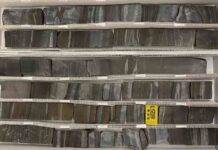
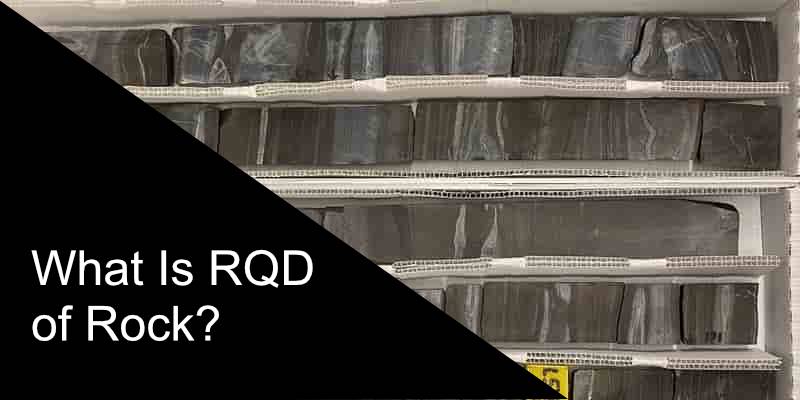
Recovered core is carefully placed in core boxes in drilling order, preserving depth orientation.
3. Measuring Intact Core Pieces
Only core pieces ≥ 100 mm in length are counted. Measurements are made along the core axis, not end-to-end across fractures.
4. Calculating RQD
The summed length of qualifying pieces is divided by the core run length (often 1.0–3.0 m).
5. Reporting
RQD is reported as a percentage per run and sometimes averaged over intervals.
RQD Classification and Interpretation
RQD values are commonly interpreted using Deere’s original classification:
| RQD (%) | Rock Mass Quality |
|---|---|
| 0–25 | Very Poor |
| 25–50 | Poor |
| 50–75 | Fair |
| 75–90 | Good |
| 90–100 |
Excellent |
These categories are engineering descriptors, not absolute measures of strength. A rock mass with excellent RQD may still be weak if discontinuities are unfavorably oriented or infilled.
Geological Meaning of RQD Values
RQD is fundamentally a measure of fracture spacing and structural integrity:
- High RQD (≥ 90%)
Indicates widely spaced joints, massive or blocky rock, low deformation potential. - Moderate RQD (50–75%)
Suggests moderately jointed rock with potential block instability. - Low RQD (< 50%)
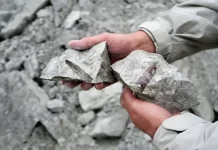
Reflects closely spaced fractures, shears, or weathered zones; typically problematic for excavation.
From a geological perspective, RQD indirectly reflects:
- Tectonic history
- Stress regimes
- Degree of weathering
- Lithological controls on fracture development
RQD vs Core Recovery — A Critical Distinction
A frequent misconception is equating core recovery with RQD.
- Core Recovery measures how much core was recovered.
- RQD measures how intact that recovered core is.
A core run may show 100% recovery but an RQD of 30%, indicating crushed or highly fractured rock. Conversely, moderate recovery with long intact pieces may yield high RQD.
This distinction is crucial in fault zones, shear zones, and weathered profiles.
RQD in Rock Mass Classification Systems
RQD is rarely used alone in modern engineering. Instead, it feeds into multi-parameter systems.
Rock Mass Rating (RMR)
In Bieniawski’s RMR system, RQD contributes up to 20 points, combined with:
- UCS
- Joint spacing
- Joint condition
- Groundwater
- Orientation
Q-System (Barton et al.)
RQD appears directly in the numerator:
Q = RQD/Jn × Jr/Ja × Jw/SRF
Here, RQD represents the block size component of rock mass quality.
Engineering Applications of RQD
Tunnels and Underground Excavations
RQD guides:
- Support type selection (rock bolts, shotcrete, lining)
- Excavation method (TBM vs drill-and-blast)
Foundations
Low RQD zones may require:
- Excavation replacement
- Grouting
- Design modification
Slopes and Open Excavations
RQD helps identify zones prone to:
- Block failure
- Toppling
- Wedge instability
Limitations and Criticisms of RQD
Despite its usefulness, RQD has well-documented limitations:
- Orientation Bias
RQD depends on drill direction relative to joint orientation. A borehole parallel to joints may overestimate quality. - Ignores Joint Properties
RQD does not account for:
– Joint roughness
– Aperture
– Infilling
– Persistence - Insensitive to Lithology
Strong and weak rocks may yield similar RQD values. - Scale Dependency
RQD reflects conditions at the borehole scale, not necessarily the excavation scale.
For these reasons, RQD should always be used in conjunction with detailed structural logging and geotechnical testing.
Advances Beyond Classical RQD
Modern practice supplements RQD with:
- Fracture frequency (P10) from scanlines
- Digital core scanning
- Image-based discontinuity analysis
- Rock mass block volume estimation
Nevertheless, RQD remains a globally accepted baseline index, especially in early-stage site investigations.
References
- Deere, D. U. (1963). Technical description of rock cores for engineering purposes. Rock Mechanics and Engineering Geology, 1, 16–22.
- Deere, D. U., & Deere, D. W. (1988). The Rock Quality Designation (RQD) Index in Practice. Rock Classification Systems for Engineering Purposes, ASTM STP 984.
- Bieniawski, Z. T. (1989). Engineering Rock Mass Classifications. Wiley.
- Barton, N., Lien, R., & Lunde, J. (1974). Engineering classification of rock masses for the design of tunnel support. Rock Mechanics, 6, 189–236.
- Palmström, A. (2005). Measurements of and correlations between block size and rock quality designation (RQD). Tunnelling and Underground Space Technology, 20, 362–377.
- Hoek, E., & Brown, E. T. (1997). Practical estimates of rock mass strength. International Journal of Rock Mechanics and Mining Sciences, 34(8), 1165–1186.