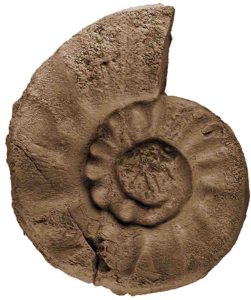
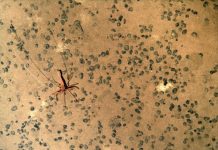
FAU scientists discovered that there were signs that the Permian-Tirassic mass extinction event was approaching a long time before it actually happened. Several species of ammonoids such as Paratirolites were lost and others became steadily smaller over a period of 700,000 years (shown here: Paratirolites). Credit: Dieter Korn
Mass extinctions throughout the history of the Earth have been well documented. Scientists believe that they occurred during a short period of time in geological terms. In a new study, palaeobiologists at Friedrich-Alexander-Universität Erlangen-Nürnberg (FAU) and their research partners have now shown that signs that the largest mass extinction event in the Earth’s history was approaching became apparent much earlier than previously believed, and point out that the same indicators can be observed today.
Mass extinctions are rare events that have catastrophic consequences. These events often completely change the course of evolution. For example, the rise of mammals — and therefore of humans — would probably not have been possible had dinosaurs not become extinct 65 million years ago. A meteorite hit the Earth plunging it into darkness and causing a huge drop in temperature. The subsequent hunger crisis wiped out more than 70 percent of all animal species. Man’s ancestors were among the lucky survivors.
The consequences of the extinction of species that occurred around 250 million years ago at the Permian-Triassic boundary were even more catastrophic. Gigantic volcanic eruptions and the greenhouse gas emissions they caused wiped out around 90 percent of all animal species according to estimates. For over twenty years, the dominant opinion in research was that this ‘mother of all disasters’ happened abruptly and without warning, when seen on a geological time-scale — estimates suggest a period of just 60,000 years.
In a new study published in the March edition of the Geology, a team of researchers from Germany and Iran have proved that this crisis happened over a longer period of time. Under the leadership of Prof. Dr. Wolfgang Kießling, Chair for Palaeoenviromental Research at FAU, who has also recently been appointed as lead author for the sixth World Climate Report, and Dr. Dieter Korn from the Museum für Naturkunde in Berlin, the scientists examined fossils in largely unresearched geological profiles in Iran . Their results show that the first indicators of a mass extinction were evident as early as 700,000 years prior to the actual event. Several species of ammonoids were killed off at that time and the surviving species became increasingly smaller in size and less complex the closer the main event became.
The warning signs of mass extinction are also visible today.
The factors that led to a mass extinction at the end of the Permian Period remind us very much of today, says Prof. Wolfgang Kießling. ‘There is much evidence of severe global warming, ocean acidification and a lack of oxygen. What separates us from the events of the past is the extent of these phenomena. For example, today’s increase in temperature is significantly lower than 250 million years ago’.
However, the warning signs that Wolfgang Kießling’s team found towards the end of the Permian Period can already be seen today. ‘The increased rate of extinction in all habitats we are currently observing is attributable to the direct influence of humans, such as destruction of habitat, over-fishing and pollution. However, the dwarfing of animal species in the oceans in particular can be quite clearly attributed to climate change. We should take these signs very seriously.’
The work was carried out by the TERSANE research unit, which is based at FAU (FOR 2332). In this interdisciplinary project, eight working groups investigated under which conditions natural greenhouse gas emissions can reach catastrophic levels and how they are connected to crises in biodiversity.
Reference:
Wolfgang Kiessling, Martin Schobben, Abbas Ghaderi, Vachik Hairapetian, Lucyna Leda, Dieter Korn. Pre–mass extinction decline of latest Permian ammonoids. Geology, 2018; 46 (3): 283 DOI: 10.1130/G39866.1
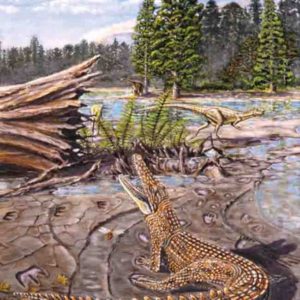
An artist’s rendering of Isisfordia duncani. Credit: Matt Herne.
The death, decay and burial of an ancient extinct crocodilian from outback Queensland has revealed more about Cretaceous Period landscapes in Australia.
Scientists from The University of Queensland have completed a forensic-style investigation into fossils of the Isisfordia duncani, and found the diminutive crocodilians lived and died in brackish-water deltas.
School of Biological Sciences Dr. Caitlin Syme said it was already known that the crocodile carcasses eventually ended up in the deltas, but it was uncertain if they had lived in the delta or drifted in after death.
“A decaying animal carcass can swell or bloat, and if it is washed into a lake or river, it can float and drift along in river currents,” Dr. Syme said.
“If this is what happened to individuals of Isisfordia duncani, then it is possible they were already dead by the time their carcasses drifted in to the delta.”
Dr. Syme compared the crocodilian fossils to modern animal carcasses and used the science of taphonomy—the study of death, decay, burial, and preservation of animal and plant remains—to predict the movement of the carcasses before they were fossilised.
“We counted which fossil bones and how many were present, whether they were still joined together as they would be in life, and whether they were scratched or broken,” she said.
“When a carcass floats in water, it will continue to decay, and parts of the skeleton will detach and sink.
“With carcasses of modern animals, for instance, the head is often the first part of the body that falls off.
“Where a fossil specimen comprises isolated and broken leg and hip bones, it indicates that the carcass probably drifted for quite a while before parts of it sunk and were eventually buried.”
Although some Isisfordia duncani fossils were incomplete, researchers found two with a large proportion of their bones still connected and intact, indicating the crocodile died near to where they lived.
“Both juvenile and adult crocodilian fossils are found at this site, which also suggests that these crocodilians were breeding in or near to these ancient deltas,” Dr. Syme said.
Dr. Steven Salisbury said the findings were significant because they suggested that the central-western Queensland Cretaceous Period climate was warm and wet enough for the cold-blooded reptiles to live and breed.
“The results of this study greatly improve our understanding of this part of outback Queensland during the age of dinosaurs, and provides valuable information on the life and times of the one of the world’s first modern crocodilians,” Dr. Salisbury said.
Fossils of Isisfordia duncani were first found by a local grazier, Ian Duncan, near the outback Queensland town of Isisford in the mid-1990s.
The species was named in 2006 and the Cretaceous crocodilian is considered to be close to the ancestry of all modern crocodilians: true crocodiles, alligators and caimans, and the Indian gharial.
Seven individual Isisfordia duncani have been found, making it the best-represented Cretaceous crocodilian in Australia.
The study is published in the Royal Society Open Science journal.
Reference:
Taphonomy of Isisfordia duncani specimens from the Lower Cretaceous (upper Albian) portion of the Winton Formation, Isisford, central-west Queensland, Royal Society Open Science, DOI: 10.1098/rsos.171651
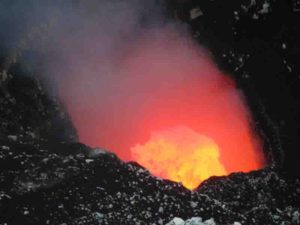
The lava lake in Santiago crater, Masaya volcano, Nicaragua on November 20, 2017. Credit: Peter Lafemina / Penn State
Using satellite imaging, Penn State researchers for the first time identified a major magma supply into a reservoir extending almost two miles from the crater of a volcano in Nicaragua.
This shows that volcanoes can be fed magma through nearby underground channels and could help explain how volcanoes can erupt seemingly without warning because the active center of the volcano exhibits little deformation activity. The findings are published today (March 28) in Geophysical Research Letters.
A team led by Christelle Wauthier, assistant professor of geosciences and the Institute for CyberScience, used satellite data to chart movement of the ground surrounding Masaya Volcano, an active volcano and popular tourist destination near millions of residents near Managua.
Using Interferometric Synthetic-Aperture Radar (InSAR), a technique that uses radar satellite remote-sensing images, the team found ground swelling of more than three inches in a large area north of the crater. They used comparative data taken at different points in time to determine increases in magma supply. That work was corroborated by independent gas measurements taken at the crater by another team. Charting ground inflation near volcanoes is one way to determine the likelihood of a future volcanic eruption. InSAR can measure changes of one-third of an inch in the topography of Earth.
Kirsten Stephens, a doctoral student in geosciences at Penn State, said InSAR data helped the team spot an increase in magma supply whose extent and amplitude can be missed or underestimated by ground-based sensors like GPS.
“When you’re using the satellite data you’re actually looking at a wide area as opposed to a GPS station, which is one point of measurement on the Earth,” Stephens said. “With satellite data, we’re looking at hundreds by hundreds of kilometers of Earth. With this better spatial coverage, we were able to image this inflating ground movement related to this 2015 lava lake appearance, which no one had captured before.”
Wauthier said this research changes how we should monitor volcanoes.
“This shows that you should monitor close to the active vent area but also farther away to get a broader picture of the magma processes,” Wauthier said. “This is clear evidence showing magma can be supplied in large quantities further away from the point of eruption.”
Wauthier suspects the magma pathways are related to a pre-existing caldera structure that was formed during the collapse of the volcano 2,500 years ago. Masaya — like Wyoming’s Yellowstone Caldera — is not conical shaped. Past magmatic activity caused the roof of a reservoir to fall out, creating a depression at the point of eruption. Weak zones could have been formed during this event and could currently serve as magma pathways, Wauthier said, but it will take more research to determine that.
“The offset magma supply has a lot of consequences interpreting volcanic unrest, because if you would have been looking at the active event only, you might have missed most of the inflation,” Wauthier said. “You might not have realized that there was a lot of magma accumulating below the ground.”
The last time Masaya had a massive eruption was in 1772, and a lava lake has often been visible at the summit since then. However, the volcano has been showing signs of activity, with its most recent explosive eruption — which lasted for about a week — occurring in 2012. The 1772 eruption spewed ash and molten lava more than 30 miles. Today, about 2 million people live within 12 miles of the volcano.
“The volcano has the potential to be very explosive and create very big eruptions,” Wauthier said. “That’s why we focused on this area. Because there are so many people living around there, we want to understand what’s going on at that volcano and where the magma reservoirs and pathways are. If magma supply is increasing significantly, it’s a sign the volcano could become more active.”
Stephens said the team is now working on a follow-up study using their massive amounts of remote sensing data sets provided by seven satellites, together with ground-based measurements acquired by Associate Professor of Geosciences Pete LaFemina, to model the temporal evolution of the magma supply in more detail.
“Through inversion modeling you can then get an estimate of the change in volume,” Stephens said. “You can get a rough estimate of how much magma was supplied into the system within that time.” NASA and the National Science Foundation funded this research.
Reference:
K. J. Stephens, C. Wauthier. Satellite Geodesy Captures Offset Magma Supply Associated With Lava Lake Appearance at Masaya Volcano, Nicaragua. Geophysical Research Letters, 2018; DOI: 10.1002/2017GL076769
Note: The above post is reprinted from materials provided by Penn State. Original written by David Kubarek.
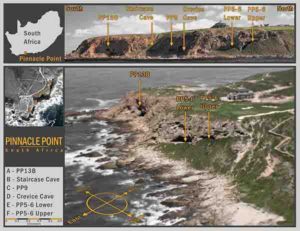
The team has been excavating caves at Pinnacle Point, South Africa, for nearly 20 years. Glass shards were discovered at the PP5-6 location. Credit: Erich Fisher
Imagine a year in Africa that summer never arrives. The sky takes on a gray hue during the day and glows red at night. Flowers do not bloom. Trees die in the winter. Large mammals like antelope become thin, starve and provide little fat to the predators (carnivores and human hunters) that depend on them. Then, this same disheartening cycle repeats itself, year after year. This is a picture of life on earth after the eruption of the super-volcano, Mount Toba in Indonesia, about 74,000 years ago. In a paper published this week in Nature, scientists show that early modern humans on the coast of South Africa thrived through this event.
An eruption a hundred times smaller than Mount Toba — that of Mount Tambora, also in Indonesia, in 1815 — is thought to have been responsible for a year without summer in 1816. The impact on the human population was dire — crop failures in Eurasia and North America, famine and mass migrations. The effect of Mount Toba, a super-volcano that dwarfs even the massive Yellowstone eruptions of the deeper past, would have had a much larger, and longer-felt, impact on people around the globe.
The scale of the ash-fall alone attests to the magnitude of the environmental disaster. Huge quantities of aerosols injected high into the atmosphere would have severely diminished sunlight — with estimates ranging from a 25 to 90 percent reduction in light. Under these conditions, plant die-off is predictable, and there is evidence of significant drying, wildfires and plant community change in East Africa just after the Toba eruption.
If Mount Tambora created such devastation over a full year — and Tambora was a hiccup compared to Toba — we can imagine a worldwide catastrophe with the Toba eruption, an event lasting several years and pushing life to the brink of extinctions.
In Indonesia, the source of the destruction would have been evident to terrified witnesses — just before they died. However, as a family of hunter-gatherers in Africa 74,000 years ago, you would have had no clue as to the reason for the sudden and devastating change in the weather. Famine sets in and the very young and old die. Your social groups are devastated, and your society is on the brink of collapse.
The effect of the Toba eruption would have certainly impacted some ecosystems more than others, possibly creating areas — called refugia — in which some human groups did better than others throughout the event. Whether or not your group lived in such a refuge would have largely depended on the type of resources available. Coastal resources, like shellfish, are highly nutritious and less susceptible to the eruption than the plants and animals of inland areas.
When the column of fire, smoke and debris blasted out the top of Mount Toba, it spewed rock, gas and tiny microscopic pieces (cryptotephra) of glass that, under a microscope, have a characteristic hook shape produced when the glass fractures across a bubble. Pumped into the atmosphere, these invisible fragments spread across the world.
Panagiotis (Takis) Karkanas, director of the Malcolm H. Wiener Laboratory for Archaeological Science, American School of Classical Studies, Greece, saw a single shard of this explosion under a microscope in a slice of archaeological sediment encased in resin.
“It was one shard particle out of millions of other mineral particles that I was investigating. But it was there, and it couldn’t be anything else,” says Karkanas.
The shard came from an archaeological site in a rockshelter called Pinnacle Point 5-6, on the south coast of South Africa near the town of Mossel Bay. The sediments dated to about 74,000 years ago.
“Takis and I had discussed the potential of finding the Toba shards in the sediments of our archaeological site, and with his eagle eye, he found one,” explains Curtis W. Marean, project director of the Pinnacle Point excavations. Marean is the associate director of the Institute of Human Origins at Arizona State University and honorary professor at the Centre for Coastal Palaeoscience at Nelson Mandela University, South Africa.
Marean showed the shard image to Eugene Smith, a volcanologist with the University of Nevada at Las Vegas, and Smith confirmed it was a volcanic shard.
“The Pinnacle Point study brought me back to the study of glass shards from my master’s thesis 40 years earlier,” says Smith.
Early in the study, the team brought in expert cryptotephra scientist Christine Lane who trained graduate student Amber Ciravolo in the needed techniques. Racheal Johnsen later joined Ciravalo as lab manager and developed new techniques.
From scratch, with National Science Foundation support, they developed the Cryptotephra Laboratory for Archaeological and Geological Research, which is now involved in projects not only in Africa, but in Italy, Nevada and Utah.
Encased in that shard of volcanic glass is a distinct chemical signature, a fingerprint that scientists can use to trace to the killer eruption. In their paper in Nature, the team describes finding these shards in two archaeological sites in coastal South Africa, tracing those shards to Toba through chemical fingerprinting and documenting a continuous human occupation across the volcanic event.
“Many previous studies have tried to test the hypothesis that Toba devastated human populations,” Marean notes. “But they have failed because they have been unable to present definitive evidence linking a human occupation to the exact moment of the event.”
Most studies have looked at whether or not Toba caused environmental change. It did, but such studies lack the archaeological data needed to show how Toba affected humans.
The Pinnacle Point team has been at the forefront of development and application of highly advanced archaeological techniques. They measure everything on site to millimetric accuracy with a “total station,” a laser-measurement device integrated to handheld computers for precise and error-free recording.
Naomi Cleghorn with the University of Texas at Arlington, recorded the Pinnacle Point samples as they were removed.
Cleghorn explains, “We collected a long column of samples — digging out a small amount of sediment from the wall of our previous excavation. Each time we collected a sample, we shot its position with the total station. We could then precisely compare the position of the sample to our excavated cultural remains — the trash ancient humans left at the site. We could also compare our cryptotephra sample position with that of samples taken for dating and environmental analyses.”
In addition to understanding how Toba affected humans in this region, the study has other important implications for archaeological dating techniques. Archaeological dates at these age ranges are imprecise — 10 percent (or 1000s of years) error is typical. Toba ash-fall, however, was a very quick event that has been precisely dated. The time of shard deposition was likely about two weeks in duration — instantaneous in geological terms.
“We found the shards at two sites,” explains Marean. “The Pinnacle Point rockshelter (where people lived, ate, worked and slept) and an open air site about 10 kilometers away called Vleesbaai. This latter site is where a group of people, possibly members of the same group as those at Pinnacle Point, sat in a small circle and made stone tools. Finding the shards at both sites allows us to link these two records at almost the same moment in time.”
Not only that, but the shard location allows the scientists to provide an independent test of the age of the site estimated by other techniques. People lived at the Pinnacle Point 5-6 site from 90,000 to 50,000 years ago. Zenobia Jacobs with the University of Wollongong, Australia, used optically stimulated luminescence (OSL) to date 90 samples and develop a model of the age of all the layers. OSL dates the last time individual sand grains were exposed to light.
“There has been some debate over the accuracy of OSL dating, but Jacobs’ age model dated the layers where we found the Toba shards to about 74,000 years ago — right on the money,” says Marean. This lends very strong support to Jacobs’ cutting-edge approach to OSL dating, which she has applied to sites across southern Africa and the world.
“OSL dating is the workhorse method for construction of timelines for a large part of our own history. Testing whether the clock ticks at the correct rate is important. So getting this degree of confirmation is pleasing,” says Jacobs.
In the 1990s, scientists began arguing that this eruption of Mount Toba, the most powerful in the last two million years, caused a long-lived volcanic winter that may have devastated the ecosystems of the world and caused widespread population crashes, perhaps even a near-extinction event in our own lineage, a so-called bottleneck.
This study shows that along the food-rich coastline of southern Africa, people thrived through this mega-eruption, perhaps because of the uniquely rich food regime on this coastline. Now other research teams can take the new and advanced methods developed in this study and apply them to their sites elsewhere in Africa so researchers can see if this was the only population that made it through these devastating times.
Reference:
Eugene I. Smith, Zenobia Jacobs, Racheal Johnsen, Minghua Ren, Erich C. Fisher, Simen Oestmo, Jayne Wilkins, Jacob A. Harris, Panagiotis Karkanas, Shelby Fitch, Amber Ciravolo, Deborah Keenan, Naomi Cleghorn, Christine S. Lane, Thalassa Matthews, Curtis W. Marean. Humans thrived in South Africa through the Toba eruption about 74,000 years ago. Nature, 2018; DOI: 10.1038/nature25967
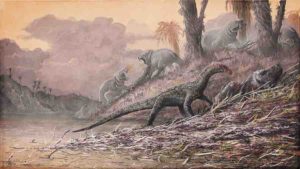
In this artist rendering, Teleocrater, an early dinosaur relative, is shown feeding on Cynognathus, while hippo-like dicynodonts look on. All of these animals lived in the mid-Triassic of Tanzania, about 240 million years ago. Credit: Mark Witton/Natural History Museum, London.
After a great mass extinction shook the world about 252 million years ago, animal life outside of the ocean began to take hold. The earliest mammals entered the scene, and reptiles — including early dinosaurs — lived on Pangea, the name given to the giant landmass in which all of the world’s continents were joined as one.
A project spanning countries, years and institutions has attempted to reconstruct what the southern end of this world looked like during this period, known as the Triassic (252 to 199 million years ago). Led by paleontologists and geologists at the University of Washington, the team has uncovered new fossils in Zambia and Tanzania, examined previously collected fossils and analyzed specimens in museums around the world in an attempt to understand life in the Triassic across different geographic areas.
Findings from the past decade of fieldwork and analysis are reported in a publication of the Society of Vertebrate Paleontology, appearing online March 28. In total, 13 research papers detailing new fossils, geologic discoveries and ecological findings in the Triassic make up the society’s 2018 special-edition volume, published once a year in a competitive submission process.
“Most of what we know about the major mass extinction is from the South African Karoo Basin. I was always interested in understanding, do we see the exact same pattern around the world, or do we not?” said co-editor Christian Sidor, a UW biology professor and curator of vertebrate paleontology at the Burke Museum of Natural History and Culture.
“The fossil record can be great to understand timing and sequence, but not always great at looking at things in a geographic context.”
Since 2007, Sidor and his team of students, postdoctoral researchers, paleontologists and geologists have visited the Ruhuhu Basin of Tanzania five times and the Luangwa and mid-Zambezi basins of Zambia four times. They lived there for about a month at a time, often hiking for miles to find fossil sites and camping in villages and national parks. Once, they were even awakened by the stomping and calls of elephants only feet from their camp.
Each site in Tanzania and Zambia contains its own collection of fossils from the Triassic and other periods, but the goal of this decade-long project was to look across locations hundreds and thousands of miles apart to find similarities in the fossil records. Two papers describe the regional patterns and similarities across much of what used to be Pangea.
“These papers highlight what a regional perspective we now have — we have the same fossils from Tanzania, Antarctica, Namibia and more,” Sidor said. “We’re getting a much better Southern Hemisphere perspective of what’s going on in the Triassic.”
Most of the papers in the special edition discuss new fossil findings from the paleontological digs. One explains the discovery of a new species of lizard-like reptile called a procolophonid. Another details Teleocrater, an early dinosaur relative that walked on four crocodile-like legs. This finding was reported in Nature last year, but the new paper describes the animal’s anatomy in fuller detail.
Most of the remaining papers describe other animals that were present in the Triassic besides the early dinosaurs.
“This was a time when dinosaurs were just stepping onto the stage, and they were not very big and not very remarkable animals then,” Sidor said. “These papers really round out what dinosaurs were competing with before they became the dominant reptiles on land.”
In addition to the 13 papers that make up the special edition, the team has published 24 peer-reviewed papers as part of this project in the past decade.
More than 2,200 fossils were collected across Tanzania and Zambia over the last decade of fieldwork. Of the special edition’s 27 authors, many participated in fieldwork with Sidor since 2007, including co-editor Sterling Nesbitt, a former postdoctoral researcher at the UW and now an assistant professor at Virginia Tech.
Fossil hunting is an experience every member of Sidor’s lab can have, from undergraduates through postdoctoral researchers. Sidor and a team are going again this August.
“This has been what my lab has done, and all of my students have been involved in some way,” he said. Four of Sidor’s students and two postdoctoral researchers are co-authors of papers in the new special edition.
Reference:
Christian A. Sidor, Sterling J. Nesbitt. Introduction to vertebrate and climatic evolution in the Triassic rift basins of Tanzania and Zambia. Journal of Vertebrate Paleontology, 2018; 37 (sup1): 1 DOI: 10.1080/02724634.2017.1420661
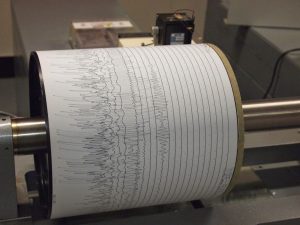
Seismogram being recorded by a seismograph at the Weston Observatory in Massachusetts, USA. Credit: Wikipedia
Signs of a 1755 earthquake that was strong enough to topple steeples and chimneys in Boston can be seen in a sediment core drawn from eastern Massachusetts’ Sluice Pond, according to a new report published in Seismological Research Letters.
Katrin Monecke of Wellesley College and her colleagues were able to identify a layer of light brown organic-rich mud within the core, deposited between 1740 and 1810, as a part of an underwater landslide, possibly unleashed by the 1755 Cape Ann earthquake.
The Cape Ann earthquake is the most damaging historic earthquake in New England. While its epicenter was probably located offshore in the Atlantic, the shaking was felt along the North American eastern seaboard from Nova Scotia to South Carolina. Based on contemporary descriptions of damage from Boston and nearby villages, the shaking has been classified at modified Mercalli intensities of “strong” to “very strong,” ((VI-VII) meaning that it would have caused slight to moderate damage of ordinary structures.
New England is located within a tectonic plate, so “it is not as seismically active as places like California, at an active tectonic plate margin,” said Monecke. “There are zones of weakness mid-plate in New England and you do build up tectonic stress here, you just don’t build it up at the same rate that would occur at a plate boundary.”
With few faults to study, however, researchers like Monecke and her colleagues are looking for signs of seismically-induced landslides or the deformation of soft soils to trace the historic and prehistoric record of earthquakes in the region.
Monecke hopes that the new Sluice Pond core will give seismologists a way “to calibrate the sedimentary record of earthquakes in regional lakes,” she said.
“It is important to see what an earthquake signature looks like in these sediments, so that we can start looking at deeper, older records in the region and then figure out whether 1755-type earthquakes take place for example, every 1000 years, or every 2000 years,” Monecke added.
The researchers chose Sluice Pond to look for signs of the Cape Ann earthquake for a variety of reasons. First, the lake is located within the area of greatest shaking from the 1755 event, “and we know from other studies of lakes that have been carried out elsewhere that you need intensities of approximately VII to cause any deformation within the lake sediments,” Monecke said.
Sluice Pond also has steep sides to its center basin, which would make it susceptible to landsliding or underwater sliding during an earthquake with significant shaking. The deep basin with a depth of close to 65 feet also harbored a relatively undisturbed accumulation of sediments for coring.
Through a painstaking analysis of sediment size and composition, pollen and plant material and even industrial contaminants, the research team was able to identify changes in sediment layers over time in the core. The light brown layer deposited at the time of the Cape Ann quake caught their eye, as it contained a coarser mix of sediments and a slightly different mix of plant microfossils.
“These were our main indicators that something had happened in the lake. We saw these near shore sediments and fragments of near-shore vegetation that appear to have been washed into the deep basin,” by strong shaking, said Monecke.
In an interesting twist, land clearing by early settlers from as far back as 1630 may have made the underwater slopes more susceptible to shaking, Monecke said. Sediment washed into the lake from cleared land loads up the underwater slopes and makes them more prone to failure during an earthquake, she noted.
For that reason, the sediment signature linked to prehistoric earthquakes may look a little different from that seen with the Cape Ann event, and Monecke and her colleagues are hoping to sample even older layers of New England lakes to continuing building their record of past earthquakes.
The research team is taking a closer look at a more famous New England body of water: Walden Pond. “It got slightly less ground shaking [than Sluice Pond] in 1755, but it might have been affected by a 1638 earthquake in southern New Hampshire,” Monecke explained. “We already have sediment cores from that lake, and now we are unraveling its sedimentary history and trying to get an age model there as well.”
Reference:
K. Monecke et al. The 1755 Cape Ann earthquake recorded in lake sediments of eastern New England: An interdisciplinary paleoseismic approach. Seismological Research Letters, 2018 DOI: 10.1785/0220170220
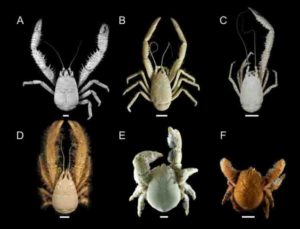
Fig. 1 from the paper: photos from all known species of yeti crab. Credit: C. Roterman
We have only known about the existence of the unusual yeti crabs (Kiwaidae) — a family of crab-like animals whose hairy claws and bodies are reminiscent of the abominable snowman — since 2005, but already their future survival could be at risk.
New Oxford University research suggests that past environmental changes may have profoundly impacted the geographic range and species diversity of this family. The findings indicate that such animals may be more vulnerable to the effects of human resource exploitation and climate change than initially thought.
Published in PLoS ONE, the researchers report a comprehensive genetic analysis of the yeti crabs, featuring all known species for the first time and revealing insights about their evolution. All but one of the yeti crab species are found on one of the most extreme habitats on earth, deep-sea hydrothermal vents, which release boiling-hot water into the freezing waters above above them.
The research was conducted by ecologists from Oxford’s Department of Zoology, Ewha Woman’s University in Seoul, South Korea and additional Chinese collaborators.
The results reveal that today’s yeti crabs are likely descended from a common ancestor that inhabited deep sea hydrothermal vents on mid-ocean ridges in the SE Pacific, some time around 30-40 million years ago.
By comparing the location of current yeti crab species with their history of diversification, the authors suggest that the crustaceans likely existed in large regions of mid-ocean ridge in the Eastern Pacific, but have since gone extinct in those areas.
While the reasons for this are unclear, the findings point to a specific event, when a shift in deep sea oxygen levels was triggered by climate change and changes to hydrothermal activity at mid-ocean ridges. At the same time yeti crabs appear to have changed the way they disperse their larvae between hydrothermal vents.
Christopher Roterman, co-lead author and postdoctoral researcher in of Oxford’s Department of Zoology, said: ‘Using these genetic techniques, our study provides the first circumstantial case for showing that hydrothermal vent species have gone extinct in large areas. The present-day locations of these animals are not necessarily indicative of their historical distribution.
‘The findings have implications for our understanding of how resilient deep-sea hydrothermal vent communities might be to environmental change and the consequences of deep sea mining.’
Hydrothermal vents are just a small fraction of the deep sea environment. However, researchers are finding new species continuously and building a better picture of deep ocean life and its potential resources. Overtime these insights should help us to understand whether we can or should responsibly utilise them.
Roterman, who was also co-author of a study published last year, highlighting shocking gaps in our knowledge of deep sea environments, added: ‘Our understanding of deep sea ecosystems is still very basic and we need to adopt a cautionary approach to exploitation. Before we go bulldozing in, we need to more aware of not only what lives down there, but how resilient their populations are likely to be to human activity.
‘Animals like the yeti crabs are potentially vulnerable to resource exploitation in the deep sea and I believe that humans, as a species, have a responsibility to preserve and steward our planet’s biodiversity as prudently and ethically as possible.’
Reference:
Christopher Nicolai Roterman, Won-Kyung Lee, Xinming Liu, Rongcheng Lin, Xinzheng Li, Yong-Jin Won. A new yeti crab phylogeny: Vent origins with indications of regional extinction in the East Pacific. PLOS ONE, 2018; 13 (3): e0194696 DOI: 10.1371/journal.pone.0194696
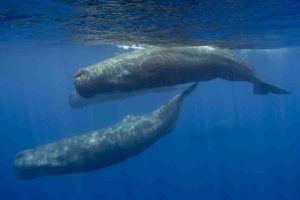
Sperm whales (above), which have teeth, don’t grow as large as baleen whales, which expend much less energy on feeding because they filter all their food. Efficiency in feeding allows baleen whales to grow larger than toothed whales. Credit: Getty Images
Anyone who has witnessed majestic whales or lumbering elephant seals in person would be forgiven for associating ocean life with unlimited size in mammals, but new research reveals that mammal growth is actually more constrained in water than on land.
This finding by Stanford researchers is in contrast to previous theories suggesting that pressure on body size should be more relaxed in water, perhaps because of the large environment and ability for animals to float rather than have to support their body weight on legs.
Instead, the group found that aquatic mammal size is bounded at the small end by the need to retain heat and at the large end by difficulties getting enough food to survive. The group published their findings March 26 in Proceedings of the National Academy of Sciences.
“Many people have viewed going into the water as more freeing for mammals, but what we’re seeing is that it’s actually more constraining,” said co-author Jonathan Payne, a professor of geological sciences at Stanford’s School of Earth, Energy & Environmental Sciences (Stanford Earth). “It’s not that water allows you to be a big mammal, it’s that you have to be a big mammal in water — you don’t have any other options.”
Getting big, but not too big
Although mammals that live in water share a similarly oblong body shape, they are not closely related. Rather, seals and sea lions are closely related to dogs, manatees share ancestry with elephants, and whales and dolphins are related to hippos and other hoofed mammals.
To learn more about how these groups of land mammals took on their characteristic girth when they turned aquatic, the researchers compiled body masses for 3,859 living and 2,999 fossil mammal species from existing data sets. The analysis includes about 70 percent of living species and 25 percent of extinct species. They analyzed the data with a set of models developed in collaboration with Craig McClain of the Louisiana Universities Marine Consortium.
From this analysis, the group found that once land animals take to the water, they evolve very quickly toward their new size, converging at around 1,000 pounds. Smaller ancestors like dog relatives increased in size more than larger ancestors like hippos to reach that optimal weight, suggesting that bigger is better for aquatic life, but only up to a point. The group points out that otters, which took to the water more recently, don’t follow that trend, perhaps because many otter species still live much of their lives on land.
“The key is having a phylogenetic tree to understand how these species are related to one another and the amount of time that has taken place between different evolutionary branching events,” said lead author Will Gearty, a graduate student at Stanford Earth. “The tree of ancestral relationships allows us to build models based on data from modern species to predict what the ancestors’ body sizes would have been and see what evolutionary trajectories best fit with what we see in the modern day.”
Heat and food
The group argues that the larger size helps aquatic mammals retain heat in water that’s lower than body temperature. “When you’re very small, you lose heat back into the water so fast, there’s no way to eat enough food to keep up,” Payne said.
They also suggest that metabolism increases with size more than an animal’s ability to gather food, putting a boundary on how big aquatic mammals can grow. “Basically, animals are machines that require energy to operate. This need for energy places hard limits on what animals can do and how big they can be,” said McClain, who was a co-author on the study.
“The range of viable sizes for mammals in the ocean is actually smaller than the range of viable sizes on land,” Payne said. “To demonstrate that statistically and provide a theory behind it is something new.”
If otters are the exception at the small end, baleen whales prove the exception at the larger size. These whales expend much less energy on feeding than their toothed counterparts because they filter all their food, which makes them more efficient and allows them to grow larger than toothed whales.
“The sperm whale seems to be the largest you can get without a new adaptation,” Gearty said. “The only way to get as big as a baleen whale is to completely change how you’re eating.”
The researchers began working on the study in 2014 and they are currently assessing how well similar approaches can be used to explain body size distributions in other animal groups, especially those that have both terrestrial and aquatic species.
“The hope is there’s simpler explanations that can apply to other species, including terrestrial animals,” Payne said. “It opens up some possibility that body size can be explained by basic principles of physics and chemistry.”
Payne is also a member of Stanford Bio-X and an affiliate of the Stanford Woods Institute for the Environment.
Reference:
William Gearty, Craig R. McClain and Jonathan L. Payne. Energetic tradeoffs control the size distribution of aquatic mammals. PNAS, 2018 DOI: 10.1073/pnas.1712629115
The Stanton Landslide (center middle distance) is over 800 meters across and has left an obvious scar in the hillside above the deposit. The narrow gorge the landslide formed in limited the distance the landslide could travel but caused it to block the river that used to run here, forming the new landslide dammed lake on the left foreground. Credit: Tom Robinson
Hours after the 2016 Kaikoura earthquake hit New Zealand, researchers were able to share information with first responders about where significant landsliding might have occurred to block roads and rivers, according to a new report in the Bulletin of the Seismological Society of America.
The modeling approach used to predict earthquake-related landslides was in the middle of being tested in New Zealand when the Kaikoura quake offered a serendipitous opportunity to test its capabilities, said Tom Robinson of Durham University in the United Kingdom.
Robinson and his colleagues were able to model landslide locations and runouts (the maximum distance landslide debris travels) within 24 hours of the event and produced a second, refined model 72 hours after the event. The modeling predicted that landsliding would be widespread and could impact major roads and numerous rivers. While the approach performed well at predicting road blockages, it overpredicted the occurrence of landslides in general, which limits the model’s use in determining the exact location of all landslides.
However, this near-real time analysis allowed members of the New Zealand Civil Defence and other responders to plan reconnaissance flights over the affected regions to determine where the landslides might cause further damage.
“For me, that’s the really exciting thing about this research, that we’re actually able to translate hazard knowledge into ‘here is where the impacts could be’ and ‘here are where losses could be as a result of that,'” said Robinson.
“Landslides used to get forgotten a lot in earthquakes, but that is changing now,” he said, after recent studies have confirmed that significant damage to infrastructure such as roads often results from subsequent landsliding, and not the ground shaking that occurs during an earthquake.
In mountainous regions such as in Nepal or China, up to 25% or more of earthquake fatalities can come from landsliding, Robinson noted.
A landslide inventory completed after the magnitude 7.8 Kaikoura event counted more than 10,000 landslides, blocking roads, rivers and railways, and damaging agricultural areas, according to another BSSA study led by Chris Massey of GNS Science in New Zealand.
Robinson said the Kaikoura earthquake did comparatively little damage to buildings in New Zealand, a country with strong earthquake building codes, “yet the landslides on the roads, particularly State Highway 1, which was the main road that was affected, have been catastrophic.”
When he visited the region in November 2017, a year after the earthquake, only one lane of State Highway 1 had been opened and the road remained closed overnight and during strong rain, including a cyclone that washed new debris into the roadway. The estimate for restoring the highway to full capacity is close to NZ$1 billion, Robinson said.
Landslides are “extremely complicated to predict” and are most often studied after the fact, he noted. To remedy this, he and his colleagues have developed modeling approaches that draw from recent global data collected on landslide hazards, “to see if we can learn something from multiple events and use that to predict where landslides might happen in future events elsewhere.”
The researchers combined these data in their model with information on landslide reach angles, a measurement that helps determine the maximum runout. Their model is one of the first to attempt to predict where landslides might block roads and dam up rivers after an earthquake in near real-time.
Information on both of these impacts, but especially landslide dams, is important for first responders, “Landslide dams often happen in remote, difficult terrain, and are often spotted only by chance,” said Robinson. “These dams can overtop and cause outburst flooding very quickly, and can be very dangerous to downstream communities.”
The New Zealand model was designed to predict the likelihood of landslides occurring in 25 x 25 meter cells across the affected area. To verify the model, an inventory of landslide points collected after the earthquake was used. The model’s overprediction tendency might be an artifact of how these landslides are represented by points, Robinson said, since a large landslide might in reality encompass hundreds or thousands of cells.
Fixing the overprediction problem might also require knowing more about the factors that drive landsliding, he said. “There are also so many different factors that contribute to landsliding, and even if we know relatively well what those factors are, it still seems to be somewhat random whether a slope will fail or not.
“For instance, we know shaking and slope angle drive the majority of landsliding, but in that part of New Zealand, you have high slope angles everywhere, and everywhere got shaken strongly, but not every slope fell down, so there are other intricacies at work there,” he added.
Modeling after the Kaikoura earthquake had to be done manually, but automating the program could significantly reduce the time needed to make landslide predictions after an earthquake, Robinson said.
He and his colleagues say more high resolution global data on landslides, including 3D satellite imaging, could help refine the landsliding model and allow it to be used around the world. But storing and manipulating these data would require more computer capacity, Robinson noted. “At the moment this is just done on a simple desktop like somebody might have at home.”
“In the immediate hours after an earthquake, it’s not possible for us to get satellite imagery to map every single landslide,” he said. “This is where we think modeling could potentially fill a gap, in the days after an earthquake when responders need information.”
Reference:
“Near real-time modelling of landslide impacts to inform rapid response: an example from the 2016 Kaikoura, New Zealand,earthquake,” Bulletin of the Seismological Society of America (2018). DOI: 10.1785/0120170234
Using Argonne’s Advanced Photon Source, researchers identified a form of water known as Ice-VII, which was trapped within diamonds that crystallized deep in the Earth’s mantle. Credit: University of Chicago.
A study published in Science last week relies on extremely bright X-ray beams from the U.S. Department of Energy’s (DOE) Advanced Photon Source (APS) at Argonne National Laboratory to confirm the presence of naturally occurring water at least 410 kilometers below the Earth’s surface. This exciting discovery could change our understanding of how water circulates deep in the Earth’s mantle and how heat escapes from the lower regions of our planet.
Through use of the APS, a DOE Office of Science User Facility, the researchers identified a form of water known as Ice-VII, which was trapped within diamonds that crystallized deep in the Earth’s mantle. This is the first time Ice-VII has been discovered in a natural sample, making the compound a new mineral accepted by the International Mineralogical Association.
“[T]hanks to the amazing technical capabilities of the APS, this team of researchers was able to pinpoint and study the exact area on the diamonds that trapped the water.” — Stephen Streiffer, Argonne Associate Laboratory Director for Photon Sciences and Director of the APS
This study is just the latest in a long line of research projects at the APS that have shed light on the composition and makeup of the deep Earth, regions that humans cannot explore directly. Instead, scientists used high-powered X-ray beams to analyze inclusions in diamonds, which were formed in the deep Earth, so as to come to conclusions about what happened in those regions.
In other geological studies at the APS, researchers have used high-pressure chambers and lasers to put materials under extreme pressure and temperatures for study, literally recreating the conditions deep below the Earth’s surface to understand what happens there.
“In this study, thanks to the amazing technical capabilities of the APS, this team of researchers was able to pinpoint and study the exact area on the diamonds that trapped the water,” said Stephen Streiffer, Argonne Associate Laboratory Director for Photon Sciences and Director of the APS. “That area was just a few microns wide. To put that in context, a human hair is about 75 microns wide.
“This research, enabled by partners from the University of Chicago and the University of Nevada, Las Vegas, among other institutions, is just the latest example of how the APS is a vital tool for researchers across scientific disciplines,” he said.
In this case, researchers analyzed rough, uncut diamonds mined from regions in China and Africa. Using an optical microscope, mineralogists first identified inclusions, or impurities, which must have formed when the diamond crystallized. Most diamonds have inclusions caused by a sample of other elements or compounds that were trapped as the carbon fused into a diamond.
“We are interested in those inclusions because they tell us about the chemical composition and conditions in the deep Earth when the diamond was formed,” said Antonio Lanzirotti, a University of Chicago Research Associate Professor and a co-author on the study.
After many millions of years, diamonds are pushed up from the Earth’s mantle to the surface, where many are mined for jewelry and industrial purposes.
To positively identify the composition of the inclusions, mineralogists needed a stronger instrument. That’s where University of Chicago’s GeoSoilEnviroCARS’s (GSECARS) beamlines at the APS came in. GSECARS operates a suite of instruments at the APS dedicated to frontier research in the Earth sciences.
Oliver Tschauner, the lead author on the study and a mineralogist at University of Nevada in Las Vegas, worked with the GSECARS group to probe more than a dozen diamonds that he had identified with this inclusion.
Because of the pressure required for diamonds to form, the scientists know that these specimens formed between 410 and 660 kilometers below the Earth’s surface.
Thanks to the very high brightness of the APS X-rays, which are a billion times more intense than conventional X-ray sources, scientists can determine the molecular or atomic makeup the specimens that are only micrometers across.
When the focused beam of X-rays hits the molecules of the specimen, they scatter. Pictures or images taken of this scattering pattern are then analyzed, as each compound or molecule shows a unique pattern.
What the team identified in this study was surprising: water, in the form of ice.
The composition of the water is the same as the water that we drink and use every day, but in a cubic crystalline form, the result of the extremely high pressure of the diamond.
This form of water, Ice-VII, was created in the lab decades ago, but this study was the first to confirm that it also forms naturally.
“This wasn’t easy to find,” said Vitali Prakapenka, a University of Chicago Research Professor and a co-author of the study, who said that the team used high-resolution diffraction techniques to get the right scans, or images, of the Ice-VII. “People have been searching for this kind of inclusion for a long time.”
The researchers said the significance of the study is profound because it shows that flowing water is present much deeper below the Earth’s surface than originally thought. Going forward, the results raise a number of important questions about how water is recycled in the Earth and how heat is circulated. Tschauner has said the discovery can help scientists create new, more accurate models of what’s going on inside the Earth, specifically how and where heat is generated under the Earth’s crust. This may help scientists better understand one of the driving mechanisms for plate tectonics.
For now, the GSECARS team is wondering whether the mineral Ice-VII will be renamed, now that it is officially a mineral. This is not the first mineral to be identified thanks to research done at the APS beamlines managed by GSECARS: Bridgmanite, the Earth’s most abundant mineral and a high-density form of magnesium iron silicate, was researched extensively at the APS before it was named. Tschauner was a lead author on that study, too.
Reference:
Ice-VII inclusions in diamonds: Evidence for aqueous fluid in Earth’s deep mantle. DOI: 10.1126/science.aao3030
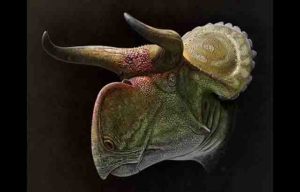
Restoration of the head of Nasutoceratops. Credit: Andrey Atuchin
The elaborate frills and horns of a group of dinosaurs including Triceratops and Styracosaurus did not evolve to help species recognise each other, according to researchers at Queen Mary University of London.
It has been suggested that different species that live in the same location may evolve features in order to distinguish one another to help avoid problems such as hybridisation, where two individuals of different species produce infertile or unfit offspring.
To test this hypothesis the researchers examined patterns of diversity in the ornamentation of 46 species of ceratopsians, the horned dinosaurs, but found no difference between species that lived together and those that lived separately.
A previous research paper from Queen Mary found that the frill in one ceratopsian species, Protoceratops, may have evolved under sexual selection. These new findings appear to add evidence to this across the entire group.
The researchers also found evidence that ornamental traits seemed to evolve at a much faster rate than other traits. As these structures are costly to grow and maintain, this finding similarly points to a strong selective pressure on these traits.
The study was published in Proceedings of the Royal Society B.
Andrew Knapp, PhD candidate from the School of Biological and Chemical Sciences and lead author of the study, said: “This resolves a long-standing and hitherto untested hypothesis concerning the origin and function of ornamental traits in ceratopsian dinosaurs. Many general discussions of ceratopsian ornaments in museum signage and popular literature often include examples of what they might have been for, but these tend to be rather speculative.
“We have shown that species recognition, one of the commonest explanations, is unlikely to be responsible for the diversity or origin of ornamentation in this group.”
The researchers believe the implications extend beyond the scope of ceratopsians and have consequences for the study of evolutionary theory over vast stretches of time.
The fossil record offers an opportunity to see evolution in action over much longer time periods than can be achieved with living organisms, but it is difficult to assign explanations to unusual features such as ceratopsian ornaments with the limited information that fossils provide.
The researchers have now largely ruled out one explanation, species recognition, and provided some evidence for another, sexual selection.
Mr Knapp said: “If sexual selection is indeed the driver of ornament evolution in ceratopsians, as we are increasingly confident it is, demonstrating it through different lines of evidence can provide a crucial window into tracing its effects over potentially huge timescales.”
He added: “Modern computer models have suggested that sexual selection can promote rapid speciation, adaptation, and extinction. In our world of increasing pressure on the natural world, these predictions may have important consequences for conservation and the fate of living things everywhere.”
To test these predictions the researchers hope to look at changes in the fossil record and gather further evidence to first identify sexual selection in a fossil group.
The study was conducted in collaboration with the Raymond M. Alf Museum of Paleontology in California and Natural History Museum of Utah. It was funded by a Natural Environment Research Council (NERC) doctoral training partnerships (DTP) grant through the London DTP programme.
Reference:
Andrew Knapp, Robert J. Knell, Andrew A. Farke, Mark A. Loewen, David W. E. Hone. Patterns of divergence in the morphology of ceratopsian dinosaurs: sympatry is not a driver of ornament evolution. Proceedings of the Royal Society B: Biological Sciences, 2018; 285 (1875): 20180312 DOI: 10.1098/rspb.2018.0312
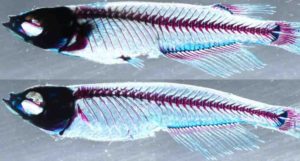
Top: A medaka fish with normal dorsal and paired pectoral/pelvic fins. Bottom: When the ZRS and sZRS enhancers are knocked out, the fins do not develop normally. Credit: Neil Shubin, José Luis Gómez-Skarmeta
As you picture the first fish to crawl out of primordial waters onto land, it’s easy to imagine how its paired fins eventually evolved into the arms and legs of modern-day vertebrates, including humans. But a new study by researchers from the University of Chicago and the Andalusian Center for Development Biology in Spain shows how these creatures used an even more primitive genetic blueprint to develop their proto-limbs: the single dorsal, or back, fin common to all jawed fish.
The study, published this week in Nature Genetics, demonstrates that fish, mice and likely all modern-day vertebrates share genetic elements first used to develop the unpaired dorsal fin in ancient fish. They later copied these elements to produce paired appendages, like pelvic and pectoral fins, arms and legs.
“The unpaired dorsal fin is the first one you see in the fossil record,” said Neil Shubin, PhD, the Robert R. Bensley Distinguished Service Professor of Anatomy at UChicago and co-author of the new study. “Here we show that the genetic mechanisms that pattern all the fins and other paired appendages originally arose there and were redeployed to others.”
Shubin and his colleagues from Spain, led by José Luis Gómez-Skarmeta, conducted genetic analysis in mice and several kinds of fish to track the expression of Sonic hedgehog (Shh), a gene widely used in a variety of basic biological functions, but especially important in the formation of limbs.
In mice, a genetic enhancer or on/off switch called ZRS controls the expression of Shh limbs. If you knock out ZRS in a mouse, its limbs won’t develop properly. The researchers used CRISPR/Cas9 gene editing tools to knock out ZRS in the medaka, a small, popular aquarium fish also known as a Japanese rice fish. They expected that deleting ZRS in the medaka would affect its paired fins, but instead the fish didn’t grow its unpaired dorsal fin. The paired pelvic and pectoral fins developed normally.
That led the team to look for other genetic enhancers that might be involved, and they found a related “shadow enhancer” nearby called sZRS that seems to work in conjunction with the main ZRS switch. When they knocked out both ZRS and sZRS in the medaka, both its dorsal fin and paired fins were lost. That means it’s likely that ZRS was first used help develop dorsal fins, then later copied and reused as sZRS when paired fins first appeared about 475 million years ago.
“It’s very ancient, and the sequence and function are conserved across all vertebrates,” Shubin said. “It turns out the primitive role for the ZRS was involved with the dorsal fin. It’s only later that its activity in the paired fins required this other shadow enhancer.”
Shubin said understanding the activity of these enhancers helps identify the traces of evolutionary ancestors present in all vertebrates, from Tiktaalik roseae, the 375-million-year-old transitional “fishapod” species he discovered in 2004, to modern-day humans.
“A number of human maladies are based on mistakes in the ZRS that can lead extra or missing fingers, or changes in the shape of hands,” he said. “Humans probably have this shadow enhancer too, so if we want to study the dynamics of how this affects limb patterning, what we see in these fish models is a great place to start.”
Reference:
José Luis Gómez-Skarmeta et al. A conserved Shh cis-regulatory module highlights a common developmental origin of unpaired and paired fins. Nature Genetics, 2018 DOI: 10.1038/s41588-018-0080-5
An artist’s rendering of Colobops noviportensis, a new species of reptile from prehistoric Connecticut. Credit: Michael Hanson
Scientists have identified a new species of reptile from prehistoric Connecticut and, boy, does it have a mouth on it.
Named Colobops noviportensis, the creature lived 200 million years ago and had exceptionally large jaw muscles — setting it apart from other reptiles at the time. Even compared to the wide diversity of reptile species today, Colobops noviportensis had quite the bite.
“Colobops would have been a diminutive but plucky little beast, part of a little-known menagerie of small animals that lived among the first dinosaurs,” said Bhart-Anjan Bhullar, assistant professor and assistant curator in geology and geophysics at Yale, and senior author of a new paper about the discovery in the journal Nature Communications.
“Its tiny frame hid some big secrets,” Bhullar said. “Despite its lizard-like aspect, it is in fact an early branch-off of the lineage leading to dinosaurs and birds. Also, its little jaws could bite harder than anything else its size. Perhaps that big bite allowed it to feed on tough, armored prey impervious to weaker mouths.”
The lead author of the paper is Adam Pritchard, a former member of Bhullar’s lab who is now at the Smithsonian Institution.
Additional Yale authors of the paper are Jacques Gauthier, professor of geology and geophysics and curator of vertebrate paleontology and vertebrate zoology at the Peabody Museum; and Michael Hanson, a graduate student in geology and geophysics.
“This project was a great example of the process of science,” Pritchard said. “The skull was initially discovered in the mid-1960s. In the 1990s, the skull was subject to initial study in which it was identified as a cousin of a modern lizard-like reptile called a tuatara. Our study ups the ante again, using advanced CT scanning and 3D modeling to reveal all kinds of new features of the skull. The features are very distinctive, allowing us to establish a new species.”
The specimen is a quarter-sized skull discovered in Meriden, Conn., during roadwork in 1965. It has been part of the collections of the Yale Peabody Museum of Natural History for decades. The specimen’s new species name derives from Novus Portus, a Latinized version of New Haven — a reference to the New Haven Arkose geological formation.
The Yale team took a new look at the specimen. The researchers did a 3D reconstruction of the skull and discovered that it showed specialization in the jaw that was unprecedented in any other known small tetrapod, juvenile or adult.
“Comparisons with modern reptile dissections showed that it had incredibly well-developed jaw muscles for its size, suggesting an exceptional bite, even compared to the diversity of modern reptiles,” Pritchard said. “It’s a great illustration of the critical importance of fossils big and small for understanding the diversity of organisms.”
The researchers said the discovery means modern vertebrates originated in a world that was already populated by small and large-bodied physical extremes, in terms of how animals physically adapted to their environment.
The National Science Foundation and the Yale Peabody Museum of Natural History supported the research.
Reference:
Adam C. Pritchard, Jacques A. Gauthier, Michael Hanson, Gabriel S. Bever & Bhart-Anjan S. Bhullar. A tiny Triassic saurian from Connecticut and the early evolution of the diapsid feeding apparatus. Nature Communications, 2018 DOI: 10.1038/s41467-018-03508-1
Note: The above post is reprinted from materials provided by Yale University. Original written by Jim Shelton.
Zombie fossil? Artist’s impression of an undead T. rex. The missing parts are the result of degradation of the body after death. Credit: Herschel Hoffmeyer
New research has revealed how the history of life can be distorted by the ways animals decompose and lose body parts as they decay — and the ways in which decayed bodies ultimately become fossilised.
In a new study published in the journal Palaeontology, a group of palaeontologists from the UK and Ireland, led by the University of Leicester, has followed a macabre, and nasally-challenging road to knowledge — watching carefully as animal carcasses decompose in order to better understand the process.
Like on-screen zombies in popular TV programmes such as The Walking Dead that gradually deteriorate through time, fossils preserve only incomplete remains of the living body.
A key part of palaeontological research involves reconstructing long-extinct creatures to understand what they were like when they were alive. This knowledge allows us to answer fundamental questions — how did they move and interact with their environment? How did they feed and reproduce? Which of today’s organisms are they most like and most closely related to?
Understanding how much of a fossil is missing, and what has been changed by decay and fossilisation, helps to create a more accurate picture of ancient animals and ecosystems. This is particularly important for things lacking hard skeletons and shells — including crucial fossil evidence of early animal life on Earth.
“As soon as an organism dies, it starts to decay, and this process of decomposition inevitably involves changes in how features or body parts look: they may collapse, alter their shape or position; all too soon they liquefy and are eaten by bacteria until nothing remains,” says Professor Sarah Gabbott from the University of Leicester’s School of Geography, Geology and the Environment.
Professor Mark Purnell, lead author of the study adds: “The more a body deteriorates over time, the more body-parts are missing — rather like modern representations of zombies in Game of Thrones and The Walking Dead.
“One consequence of this decay is that palaeontologists have to work with incomplete fossils. Some of the features that are present don’t look anything like they did when the animal was alive, and many features are missing completely. The trick is to be able to recognise partially-decomposed features, and where body parts have rotted away completely.”
The approach used in the UK-Irish collaboration involves ‘laboratory decay experiments’: keeping careful records of every body part as it decays away.
The results of rotting a whole range of dead animals, from hagfish and lampreys (primitive eel-like creatures) to insects and various worms, show that carefully designed experiments provide unique insights into the processes of decomposition and fossilisation.
In the new paper they highlight the importance of understanding how a fossil is formed before trying to reconstruct it — how the processes of decay that lead to loss of body parts interact with the processes that cause them to become preserved and fossilised.
Dr Maria McNamara, collaborator in the study, adds: “If we understand this we are better able to avoid producing incomplete restorations of animals with crucial parts missing or decayed, and to recognize and be aware of the gaps in our knowledge,.”
The research is supported by the Natural Environment Research Council.
Reference:
Mark A. Purnell, Philip J. C. Donoghue, Sarah E. Gabbott, Maria E. McNamara, Duncan J. E. Murdock, Robert S. Sansom. Experimental analysis of soft-tissue fossilization: opening the black box. Palaeontology, 2018; DOI: 10.1111/pala.12360
A sample of 2-billion-year-old salt (pink-white recrystallized halite) with embedded fragments of calcium sulfate from a geological drill core in Russian Karelia. Credit: Photo by Aivo Lepland, Geological Survey of Norway; courtesy of Science/AAAS
A 2-billion-year-old chunk of sea salt provides new evidence for the transformation of Earth’s atmosphere into an oxygenated environment capable of supporting life as we know it.
The study by an international team of institutions including Princeton University found that the rise in oxygen that occurred about 2.3 billion years ago, known as the Great Oxidation Event, was much more substantial than previously indicated.
“Instead of a trickle, it was more like a firehose,” said Clara Blättler, a postdoctoral research fellow in the Department of Geosciences at Princeton and first author on the study, which was published online by the journal Science on Thursday, March 22. “It was a major change in the production of oxygen.”
The evidence for the profound upswing in oxygen comes from crystalized salt rocks extracted from a 1.2-mile-deep hole in the region of Karelia in northwest Russia. These salt crystals were left behind when ancient seawater evaporated, and they give geologists unprecedented clues to the composition of the oceans and atmosphere on Earth more than 2 billion years ago.
The key indication of the increase in oxygen production came from finding that the mineral deposits contained a surprisingly large amount of a component of seawater known as sulfate, which was created when sulfur reacted with oxygen.
“This is the strongest ever evidence that the ancient seawater from which those minerals precipitated had high sulfate concentrations reaching at least 30 percent of present-day oceanic sulfate as our estimations indicate,” said Aivo Lepland, a researcher at the Geological Survey of Norway, a geology specialist at Tallinn University of Technology, and senior author on the study. “This is much higher than previously thought and will require considerable rethinking of the magnitude of oxygenation of Earth’s 2-billion year old atmosphere-ocean system.”
Oxygen makes up about 20 percent of air and is essential for life as we know it. According to geological evidence, oxygen began to show up in the Earth’s atmosphere between 2.4 and 2.3 billion years ago.
Until the new study, however, geologists were uncertain whether this buildup in oxygen — caused by the growth of cyanobacteria capable of photosynthesis, which involves taking in carbon dioxide and giving off oxygen — was a slow event that took millions of years or a more rapid event.
“It has been hard to test these ideas because we didn’t have evidence from that era to tell us about the composition of the atmosphere,” Blättler said.
The recently discovered crystals provide that evidence. The salt crystals collected in Russia are over a billion years older than any previously discovered salt deposits. The deposits contain halite, which is called rock salt and is chemically identical to table salt or sodium chloride, as well as other salts of calcium, magnesium and potassium.
Normally these minerals dissolve easily and would be washed away over time, but in this case they were exceptionally well preserved deep within the Earth. Geologists from the Geological Survey of Norway in collaboration with the Karelian Research Center in Petrozavodsk, Russia, recovered the salts from a drilling site called the Onega Parametric Hole (OPH) on the western shores of Lake Onega.
The unique qualities of the sample make them very valuable in piecing together the history of what happened after the Great Oxidation Event, said John Higgins, assistant professor of geosciences at Princeton, who provided interpretation of the geochemical analysis along with other co-authors.
“This is a pretty special class of geologic deposits,” Higgins said. “There has been a lot of debate as to whether the Great Oxidation Event, which is tied to increase and decrease in various chemical signals, represents a big change in oxygen production, or just a threshold that was crossed. The bottom line is that this paper provides evidence that the oxygenation of the Earth across this time period involved a lot of oxygen production.”
The research will spur the development of new models to explain what happened after the Great Oxidation Event to cause the accumulation of oxygen in the atmosphere, Blättler said. “There may have been important changes in feedback cycles on land or in the oceans, or a large increase in oxygen production by microbes, but either way it was much more dramatic than we had an understanding of before.”
Reference:
C. L. Blättler, M. W. Claire, A. R. Prave, K. Kirsimäe, J.A. Higgins, P. V. Medvedev, A. E. Romashkin, D. V. Rychanchik, A. L. Zerkle, K. Paiste, T. Kreitsmann, I. L. Millar, J. A. Hayles, H. Bao, A. V. Turchyn, M. R. Warke, A. Lepland. Two-billion-year-old evaporites capture Earth’s great oxidation. Science, 2018; eaar2687 DOI: 10.1126/science.aar2687
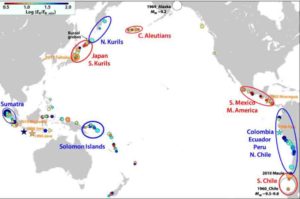
A map summarizing the new REEF measure of seismic energy for events around the Pacific Ring of Fire shows the regional patterns indicating earthquake rupture character is affected by persistent features that differ from region to region. Credit: Ye et al., Science Advances, 2018
A team of seismologists has developed a new measurement of seismic energy release that can be applied to large earthquakes. Called the Radiated Energy Enhancement Factor (REEF), it provides a measure of earthquake rupture complexity that better captures variations in the amount and duration of slip along the fault for events that may have similar magnitudes.
Magnitude is a measure of the relative size of an earthquake. There are several different magnitude scales (including the original Richter scale), with the “moment magnitude” now the most widely used measure because it is uniformly applicable to all sizes of earthquakes. The seismic energy released in an earthquake can also be measured directly from recorded ground shaking, providing a distinct measure of the earthquake process. Earthquakes of a given magnitude can have very different radiated seismic energy.
Researchers at UC Santa Cruz and California Institute of Technology (Caltech) devised REEF in an effort to understand variations in the rupture characteristics of the largest and most destructive earthquakes, such as the 2004 Sumatra earthquake (magnitude 9.2) and 2011 Tohoku earthquake in Japan (magnitude 9.1). They introduced the new measurement in a paper published March 21 in Science Advances. First author Lingling Ye, a former UC Santa Cruz graduate student and Caltech postdoctoral researcher, is now at the Sun Yat-sen University in China. Her coauthors are Hiroo Kanamori at Caltech and Thorne Lay at UC Santa Cruz.
REEF is measured by the ratio of the earthquake’s actual measured radiated energy (in seismic waves recorded around the world) to the minimum possible energy that an event of equal seismic moment and rupture duration would produce. If the rupture is jerky and irregular, it radiates more seismic energy, especially at high frequencies, and this indicates frictional conditions and dynamic processes on the fault plane during rupture, Lay explained.
The researchers made systematic measurements of REEF for 119 recent major earthquakes of magnitudes 7.0 to 9.2. They found clear regional patterns, with some subduction zones having higher REEF ruptures on average than other zones.
“This indicates, for the first time, that energy release is influenced by regional properties of each fault zone,” said Lay, a professor of Earth and planetary sciences at UCSC.
The precise cause of some regions radiating higher energy in an event of given size is still under investigation, but may be linked to regional differences in the roughness of the faults, in the fluid distributions on the faults, or in the sediments trapped in the fault zone, he said.
Further research using REEF could help seismologists achieve better understanding of earthquake mechanics and earthquake hazards around the world.
This research was supported by the National Science Foundation of China, Chinese Academy of Sciences, and U.S. National Science Foundation.
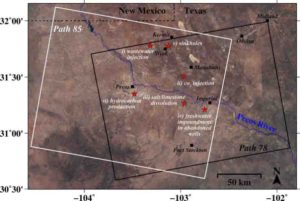
A new study by an SMU geophysical team found alarming rates of ground movement at various locations across a 4000-square-mile area of four Texas counties. Credit: Zhong Lu and Jin-Woo Kim, SMU
Two giant sinkholes near Wink, Texas, may just be the tip of the iceberg, according to a new study that found alarming rates of new ground movement extending far beyond the infamous sinkholes.
That’s the finding of a geophysical team from Southern Methodist University, Dallas that previously reported the rapid rate at which the sinkholes are expanding and new ones forming.
Now the team has discovered that various locations in large portions of four Texas counties are also sinking and uplifting.
Radar satellite images show significant movement of the ground across a 4000-square-mile area — in one place as much as 40 inches over the past two-and-a-half years, say the geophysicists.
“The ground movement we’re seeing is not normal. The ground doesn’t typically do this without some cause,” said geophysicist Zhong Lu, a professor in the Roy M. Huffington Department of Earth Sciences at SMU and a global expert in satellite radar imagery analysis.
“These hazards represent a danger to residents, roads, railroads, levees, dams, and oil and gas pipelines, as well as potential pollution of ground water,” Lu said. “Proactive, continuous detailed monitoring from space is critical to secure the safety of people and property.”
The scientists made the discovery with analysis of medium-resolution (15 feet to 65 feet) radar imagery taken between November 2014 and April 2017. The images cover portions of four oil-patch counties where there’s heavy production of hydrocarbons from the oil-rich West Texas Permian Basin.
The imagery, coupled with oil-well production data from the Texas Railroad Commission, suggests the area’s unstable ground is associated with decades of oil activity and its effect on rocks below the surface of the earth.
The SMU researchers caution that ground movement may extend beyond what radar observed in the four-county area. The entire region is highly vulnerable to human activity due to its geology — water-soluble salt and limestone formations, and shale formations.
“Our analysis looked at just this 4000-square-mile area,” said study co-author and research scientist Jin-Woo Kim, a research scientist in the SMU Department of Earth Sciences.
“We’re fairly certain that when we look further, and we are, that we’ll find there’s ground movement even beyond that,” Kim said. “This region of Texas has been punctured like a pin cushion with oil wells and injection wells since the 1940s and our findings associate that activity with ground movement.”
Lu, Shuler-Foscue Chair at SMU, and Kim reported their findings in the Nature publication Scientific Reports, in the article “Association between localized geohazards in West Texas and human activities, recognized by Sentinel-1A/B satellite radar imagery.”
The researchers analyzed satellite radar images that were made public by the European Space Agency, and supplemented that with oil activity data from the Texas Railroad Commission.
The study is among the first of its kind to identify small-scale deformation signals over a vast region by drawing from big data sets spanning a number of years and then adding supplementary information.
The research is supported by the NASA Earth Surface and Interior Program, and the Shuler-Foscue Endowment at SMU.
Imagery captures changes that might otherwise go undetected
The SMU geophysicists focused their analysis on small, localized, rapidly developing hazardous ground movements in portions of Winkler, Ward, Reeves and Pecos counties, an area nearly the size of Connecticut. The study area includes the towns of Pecos, Monahans, Fort Stockton, Imperial, Wink and Kermit.
The images from the European Space Agency are the result of satellite radar interferometry from recently launched open-source orbiting satellites that make radar images freely available to the public.
With interferometric synthetic aperture radar, or InSAR for short, the satellites allow scientists to detect changes that aren’t visible to the naked eye and that might otherwise go undetected.
The satellite technology can capture ground deformation with an accuracy of sub-inches or better, at a spatial resolution of a few yards or better over thousands of miles, say the researchers.
Ground movement associated with oil activity
The SMU researchers found a significant relationship between ground movement and oil activities that include pressurized fluid injection into the region’s geologically unstable rock formations.
Fluid injection includes waste saltwater injection into nearby wells, and carbon dioxide flooding of depleting reservoirs to stimulate oil recovery.
Injected fluids increase the pore pressure in the rocks, and the release of the stress is followed by ground uplift. The researchers found that ground movement coincided with nearby sequences of wastewater injection rates and volume and CO2 injection in nearby wells.
Also related to the ground’s sinking and upheaval are dissolving salt formations due to freshwater leaking into abandoned underground oil facilities, as well as the extraction of oil.
Sinking and uplift detected from Wink to Fort Stockton
As might be expected, the most significant subsidence is about a half-mile east of the huge Wink No. 2 sinkhole, where there are two subsidence bowls, one of which has sunk more than 15.5 inches a year. The rapid sinking is most likely caused by water leaking through abandoned wells into the Salado formation and dissolving salt layers, threatening possible ground collapse.
At two wastewater injection wells 9.3 miles west of Wink and Kermit, the radar detected upheaval of about 2.1 inches that coincided with increases in injection volume. The injection wells extend about 4,921 feet to 5,577 feet deep into a sandstone formation.
In the vicinity of 11 CO2 injection wells nearly seven miles southwest of Monahans, the radar analysis detected surface uplift of more than 1 inch. The wells are about 2,460 feet to 2,657 feet deep. As with wastewater injection, CO2 injection increased pore pressure in the rocks, so when stress was relieved it was followed by uplift of about 1 inch at the surface.
The researchers also looked at an area 4.3 miles southwest of Imperial, where significant subsidence from fresh water flowing through cracked well casings, corroded steel pipes and unplugged abandoned wells has been widely reported.
Water there has leaked into the easily dissolved Salado formation, created voids, and caused the ground to sink and water to rise from the subsurface, including creating Boehmer Lake, which didn’t exist before 2003.
Radar analysis by the SMU team detected rapid subsidence ranging from three-fourths of an inch to nearly 4 inches around active wells, abandoned wells and orphaned wells.
“Movements around the roads and oil facilities to the southwest of Imperial, Texas, should be thoroughly monitored to mitigate potential catastrophes,” the researchers write in the study.
About 5.5 miles south of Pecos, their radar analysis detected more than 1 inch of subsidence near new wells drilled via hydraulic fracturing and in production since early 2015. There have also been six small earthquakes recorded there in recent years, suggesting the deformation of the ground generated accumulated stress and caused existing faults to slip.
“We have seen a surge of seismic activity around Pecos in the last five to six years. Before 2012, earthquakes had not been recorded there. At the same time, our results clearly indicate that ground deformation near Pecos is occurring,” Kim said. “Although earthquakes and surface subsidence could be coincidence, we cannot exclude the possibility that these earthquakes were induced by hydrocarbon production activities.”
Scientists: Boost the network of seismic stations to better detect activity
Kim stated the need for improved earthquake location and detection threshold through an expanded network of seismic stations, along with continuous surface monitoring with the demonstrated radar remote sensing methods.
“This is necessary to learn the cause of recent increased seismic activity,” Kim said. “Our efforts to continuously monitor West Texas with this advanced satellite technique can help sustain safe, ongoing oil production.”
Near real-time monitoring of ground deformation possible in a few years
The satellite radar datasets allowed the SMU geophysicists to detect both two-dimension east-west deformation of the ground, as well as vertical deformation.
Lu, a leading scientist in InSAR applications, is a member of the Science Team for the dedicated U.S. and Indian NASA-ISRO (called NISAR) InSAR mission, set for launch in 2021 to study hazards and global environmental change.
InSAR accesses a series of images captured by a read-out radar instrument mounted on the orbiting satellite Sentinel-1A/B. The satellites orbit 435 miles above the Earth’s surface. Sentinel-1A was launched in 2014 and Sentinel-1B in 2016 as part of the European Union’s Copernicus program.
The Sentinel-1A/B constellation bounces a radar signal off the earth, then records the signal as it bounces back, delivering measurements. The measurements allow geophysicists to determine the distance from the satellite to the ground, revealing how features on the Earth’s surface change over time.
“Near real-time monitoring of ground deformation at high spatial and temporal resolutions is possible in a few years, using multiple satellites such as Sentinel-1A/B, NISAR and others,” said Lu. “This will revolutionize our capability to characterize human-induced and natural hazards, and reduce their damage to humanity, infrastructure and the energy industry.”
Reference:
Jin-Woo Kim, Zhong Lu. Association between localized geohazards in West Texas and human activities, recognized by Sentinel-1A/B satellite radar imagery. Scientific Reports, 2018; 8 (1) DOI: 10.1038/s41598-018-23143-6
The molecular structure of ice-VII (upper right) is shown with an artistic rendering of the Earth and a cutaway view of the inner Earth (right). Crystallized water, in the form of ice-VII, was found in diamond samples studied at Berkeley Lab. Its presence suggests liquid water may exist at extreme depths. Credit: Wikimedia Commons
Water on Earth runs deep – very deep. The oceans have been measured to a maximum depth of 7 miles, though water is known to exist well below the oceans. Just how deep this hidden water reaches, and how much of it exists, are the subjects of ongoing research.
Now a new study suggests that water may be more common than expected at extreme depths approaching 400 miles and possibly beyond – within Earth’s lower mantle. The study, which appeared March 8 in the journal Science, explored microscopic pockets of a trapped form of crystallized water molecules in a sampling of diamonds from around the world.
Diamond samples from locations in Africa and China were studied through a variety of techniques, including a method using infrared light at the U.S. Department of Energy’s Lawrence Berkeley National Laboratory (Berkeley Lab). Researchers used Berkeley Lab’s Advanced Light Source (ALS), and Argonne National Laboratory’s Advanced Photon Source, which are research centers known as synchrotron facilities.
The tiny traces of crystallized water, trapped in spaces called inclusions that measure just a few microns (millionths of a meter) in length, contain the molecular signature of ice VII. This crytallized water likely formed from liquid water existing at very high pressures, according to the study.
The structure and chemical studies helped the scientists to determine the pressures and temperatures at which the diamonds formed. This allowed the scientists to estimate the depths of their formation.
Oliver Tschauner, the study’s lead author and a professor of research in the Department of Geoscience at the University of Nevada, Las Vegas, said it was surprising that so many of the studied diamonds from a random sampling seemed to originate from deep inside the Earth, within and even beyond the so-called transition zone sandwiched between Earth’s upper and lower mantles.
While only about 60 diamonds had previously been confirmed to originate at depths greater than about 190 miles, the latest study added several more to this tally.
“It seems many diamonds come from greater depths,” Tschauner said. “In the past, people had focused more on larger inclusions,” tens of times the size of the ones that were the focus of the latest study. “Some of these small inclusions may have been overlooked before,” he added.
Researchers concluded that some of the inclusions likely were formed from fluid existing at depths of 250 miles to 340 miles beneath Earth’s surface. Others may have formed at depths ranging from 380 miles to 500 miles – possibly within Earth’s “shallow” lower mantle.
“It’s not just a curiosity to have a diamond residing deep in Earth’s mantle – this is direct evidence for aqueous fluid in the deep Earth,” Tschauner said.
The pressures that formed these deeper diamonds are estimated at approximately 24 to 25 gigapascals, which is about 224 times more pressure than exists at the bottom the ocean’s deepest point in its Mariana Trench.
The composition of the fluid that was trapped in the inclusions appears to be complex, with traces of carbonates, oxides, and salt, Tschauner said.
The research team enlisted infrared spectroscopy at the ALS’s Beamline 1.4, which helped them to observe the chemistry of the tiny inclusions.
Hans Bechtel, a research scientist in the Scientific Support Group at the ALS, explained that the infrared technique measures vibrational signatures that detail chemistry at the microscopic level. “With synchrotron light, we can focus down to 2 to 10 microns in the infrared,” he said, “and scan across each sample to create a ‘hyperspectral image’ that reveals the detailed chemical composition.”
It’s not yet possible to estimate how much watery fluid exists in Earth’s transition zone and how it’s distributed, Tschauner said, but more diamond studies should help with the estimates.
Such studies can also help scientists learn about how much water “recycling” goes on in the mantle, and the process by which ocean water reaches into the mantle, for example.
Tschauner said he’s already exploring ways to better prepare diamond samples for future studies – perhaps even using methods enlisted by jewelers – to better understand their microscopic chemistry.
This new thrust of research provides a unique opportunity to “see” inside the inner Earth, Tschauner noted. “It probably will open new avenues in studies.”
The ALS and Advanced Photon Source are DOE Office of Science User Facilities.
Researchers from the University of Chicago, California Institute of Technology, China University of Geosciences, University of Hawaii at Manoa, and Royal Ontario Museum also participated in the study. The work was supported by the U.S. Department of Energy Office of Basic Energy Sciences and the National Science Foundation.
Reference:
Ice-VII inclusions in diamonds: Evidence for aqueous fluid in Earth’s deep mantle. DOI: 10.1126/science.aao3030
Among geologists who study powerful earthquakes and volcanoes, there is a mystery: as one of Earth’s tectonic plates slides beneath another in a subduction zone, water is squeezed from certain minerals, lubricating earthquakes and fueling volcanoes in hot spots like the Pacific Ocean “Ring of Fire.” But equations that predict where the forces of subduction wring water from stone consistently point to locations far from the site of actual cataclysms.
By applying a new spectroscopy technique to garnet containing fragments of quartz, metamorphic petrologist Frank Spear of Rensselaer Polytechnic Institute thinks he’s solved the puzzle. His early research shows that the equations are incomplete, lacking the significant variable of “overstepping,” the additional energy needed to initiate a process, in this case, the decomposition of water-bearing minerals.
“The real culprit in powerful volcanoes and earthquakes is water, but scientists have been unable to determine where that water comes from,” said Spear, a professor and head of the Rensselaer Department of Earth and Environmental Sciences. “Conventional thermodynamic equations predict that water is released at too shallow a depth to occur at the known locations of volcanoes and earthquakes. But when you factor in the overstepping we’ve discovered, the locations coincide. The idea of overstepping is an enormous paradigm shift.”
His research is supported by a three-year $419,247 grant from the National Science Foundation.
As one tectonic plate is pushed beneath another in a subduction zone, sediments and minerals are carried deep into the Earth, with pressure and temperature mounting with increasing depth. Early in the process liquid water is squeezed from the pore spaces between rocks, but many minerals – such as micas, serpentines, and chlorites – contain water as part of their mineral structure. Chlorite, for example, contains about 10 percent water by weight. When water-bearing minerals finally succumb to increased temperature and pressure, they release water.
The water acts as a lubricant in the fault zone created between two plates, reducing the strain on the fault and allowing the plates to slide past one another, producing an earthquake. Subduction zones produce some of the world’s biggest and most destructive earthquakes; the largest magnitude earthquake yet recorded – a magnitude 9.5 earthquake in 1960 near Valdivia, Chile – occurred in a subduction zone. The water also acts as a flux on surrounding rock, depressing the melting temperature of rock, which melts into magma that rises to the surface and erupts as a volcano.
At the point at which the water is released, it creates clues Spear tracked back to its origin. New minerals form in the metamorphosing crust, including garnet, which is produced by the breakdown of water-bearing chlorite. The garnet forms under pressure, and sometimes, as it does so, it traps fragments of surrounding minerals in its grip, fragments that retain a record of the pressure under which the garnet formed. Spear found such garnets, which formed around tiny fragments of quartz, on an island in the Greek Cyclades.
In his lab, Spear and his graduate students used Raman spectroscopy – commonly used in chemistry to identify molecular composition of a sample – to examine the quartz embedded in the garnet. In Raman spectroscopy, laser light is shined onto a sample, and the energy of the photons is shifted up or down based on the interactions between the light and the sample. The difference between the frequency of the outgoing and returning light provides a definitive structure signature.
Quartz at ambient pressure produces a well-known signature. But the peak of the signature from the quartz in the Cyclades samples was shifted to a higher value, indicating the pressure on the grain. Because the Raman signal shift of quartz has been carefully calibrated, Spear was able to use it to determine the pressure, and therefore the depth and temperature, at which the garnet crystallized around the quartz.
“What we discovered when we did this is that the garnet forms not at the shallow depth where the thermodynamic calculations predicted, but much deeper down, near the origin of volcanoes and earthquakes,” said Spear.
The finding also indicates that the garnet doesn’t crystalize at equilibrium, as is the basis of thermodynamic calculations predicting that process. That, said Spear, “was a total surprise.” While initiation of most processes requires activation energy – or overstepping – to some extent, researchers always assumed that the activation energy to initiate nucleation of garnet would be trivial. But the results suggest significant overstepping of 50 to 70 degrees Celsius.
The initial research, published in a series of papers beginning in 2014, was based on three samples from a single site on Sifnos. The new funding will support a broader investigation using 10 to 20 samples taken from five separate locations, to determine whether the findings were “a quirk, or a universal truth.” Spear is also working on developing calculations – and a new “maximum driving force method” – that will incorporate observed overstepping to yield more accurate predictions.
Spear’s research fulfills The New Polytechnic, an emerging paradigm for higher education which recognizes that global challenges and opportunities are so great they cannot be adequately addressed by even the most talented person working alone. Rensselaer serves as a crossroads for collaboration—working with partners across disciplines, sectors, and geographic regions—to address complex global challenges, using the most advanced tools and technologies, many of which are developed at Rensselaer. Research at Rensselaer addresses some of the world’s most pressing technological challenges—from energy security and sustainable development to biotechnology and human health. The New Polytechnic is transformative in the global impact of research, in its innovative pedagogy, and in the lives of students at Rensselaer.
Reference:
Adrian E. Castro et al. Reaction overstepping and re-evaluation of peak P‒T conditions of the blueschist unit Sifnos, Greece: implications for the Cyclades subduction zone, International Geology Review (2016). DOI: 10.1080/00206814.2016.1200499
This satellite image shows Bogoslof volcano erupting on May 28, 2017. The eruption began about 18 minutes prior to this image and the cloud rose to an altitude greater than 12 kilometers (40,000 feet) above sea level. Credit: Dave Schneider / Alaska Volcano Observatory & U.S. Geological Survey.
Researchers report in a new study that they’ve documented rumblings of volcanic thunder for the first time, a feat considered nearly impossible by many volcanologists.
Microphones set out to detect volcanic eruptions in Alaska’s Aleutian Islands recorded sounds of Bogoslof volcano erupting over eight months from December 2016 to August 2017. Researchers analyzing the recordings identified several cracking sounds from eruptions on March 8 and June 10 as volcanic thunder, a phenomenon the study authors said has never before been captured in audio recordings.
Observers have described hearing volcanic thunder in the past, but scientists have been unable to disentangle the booms of thunder caused by volcanic lightning from the cacophony of bellows and blasts that accompany an explosive eruption. In the new study, researchers used microphones on a nearby island and maps of volcanic lightning strokes to identify the sounds of thunder.
“It’s something that people who’ve been at eruptions have certainly seen and heard before, but this is the first time we’ve definitively caught it and identified it in scientific data,” said Matt Haney, a seismologist at the Alaska Volcano Observatory in Anchorage and lead author of the new study accepted for publication in Geophysical Research Letters, a journal of the American Geophysical Union.
Analyzing volcanic thunder offers scientists a new way of detecting volcanic lightning and potentially a way to estimate the size of an ash plume, according to Jeff Johnson, a geophysicist at Boise State University who was not connected to the new study.
Haney and his team found the intensity of the thunder matched the intensity of the lightning, meaning researchers might be able to use thunder as a proxy for volcanic lightning, Johnson said. The intensity of lightning in a volcanic plume can tell scientists how big the plume is and how hazardous it might be.
“Understanding where lightning is occurring in the plume tells us about how much ash has been erupted, and that’s something that’s notoriously difficult to measure,” Johnson said. “So if you’re locating thunder over a long area, you could potentially say something about how extensive the plume is.”
Monitoring impending eruptions
Volcanic eruptions are inherently noisy – explosions of smoke, ash and magma shake the ground and create loud bangs and rumbles that reverberate for miles. Lightning is common in volcanic plumes because particles of ash and ice scrape and collide with each other and become electrified. Researchers assumed volcanic lightning is followed by thunder, as it is during thunderstorms, but they had not yet been able to tease out thunderclaps from the noises of the eruption itself, and many scientists considered it impossible, according to Haney.
In the new study, scientists detected thunder at Bogoslof volcano in Alaska’s Aleutian Islands, a chain of more than 50 volcanic islands in the northern Pacific Ocean.
Researchers constantly monitor the islands from afar for signs of impending eruptions. They use seismic sensors to pick up ground movement before or during an eruption, arrays of microphones to detect sounds of ash exploding skyward and a global network of lightning sensors to detect lightning strokes within an ash plume. Thunderstorms are rare in the Aleutian Islands, so when sensors detect lightning, it most likely means there’s an ongoing eruption, Haney said.
Bogoslof started erupting in December 2016 and erupted more than 60 times through August 2017. Many of the eruptions produced towering clouds of ash more than six kilometers (20,000 feet) high that disrupted air travel throughout the region.
Isolating thunderclaps
Bogoslof’s eruptions on March 8 and June 10 created ideal conditions for observing volcanic thunder, Haney said. Both eruptions generated immense ash plumes that persisted for several hours after the eruptions ceased. Without the din of an eruption in the background, researchers had a better chance of hearing cracks of thunder caused by lightning in the plume.
Worldwide lightning sensors detected lightning strokes in the ash plumes for several minutes after each eruption ended. In the new study, Haney and his colleagues compared the timing and location of the lightning strokes to sounds recorded by a microphone array on a nearby island.
They found the timing and volume of the sounds the microphones picked up matched the lightning data in a way only thunder could.
On March 8, the microphones recorded at least six distinct bursts of sound that occurred three minutes after lightning activity in the plume peaked. The timing of the bursts means they were almost certainly thunderclaps caused by the lightning: The microphones were 60 kilometers (40 miles) away from the volcano, so it would have taken sound three minutes to reach the microphones. That the thunder was picked up so far away also means it was quite loud, Haney said.
On June 10, the microphones picked up bursts of sound coming from a slightly different direction than sounds from the eruption. The location of the bursts corresponded to areas of peak lightning activity, according to the study.
“If people had been observing the eruption in person, they would have heard this thunder,” Haney said. “I expect that going forward, other researchers are going to be excited and motivated to look in their datasets to see if they can pick up the thunder signal.”
Reference:
Volcanic thunder from explosive eruptions at Bogoslof volcano, Alaska. Geophysical Research Letters. DOI: 10.1002/2017GL076911