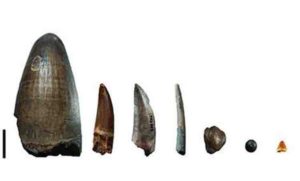
Teeth from the Gadoufaoua deposit (Niger). The scale bar represents 2 cm. From left to right: teeth of a giant crocodile, Sarcosuchus imperator, a spinosaurid, a non-spinosaurid theropod (abelisaurid or carcharodontosaurid), a pterosaur, a hadrosaurid (a herbivorous dinosaur), a pycnodont (fish), and a small crocodylomorph. Credit: Auguste Hassler / LGL-TPE / CNRS-ENS de Lyon-Université Lyon 1
By studying calcium in fossil remains in deposits in Morocco and Niger, researchers have been able to reconstruct the food chains of the past, thus explaining how so many predators could coexist in the dinosaurs’ time. This study, conducted by the Laboratoire de géologie de Lyon: Terre, planètes et environnement (CNRS/ENS de Lyon/Claude Bernard Lyon 1 University), in partnership with the Centre for Research on Palaeobiodiversity and Palaeoenvironments (CNRS/French National Museum of Natural History/Sorbonne University), is published on April 11, 2018 in the Proceedings of the Royal Society of London B.
A hundred million years ago, in North Africa, terrestrial ecosystems were dominated by large predators—giant theropod dinosaurs, large crocodiles—with comparatively few herbivores. How were so many carnivores able to coexist?
To understand this, French researchers have studied fossils in the Gadoufaoua deposits in Niger (dating from 120 million years ago) and the Kem Kem Beds in Morocco (dating from 100 million years ago). These two sites are characterized by an overabundance of predators compared to the herbivorous dinosaurs found in the locality. More specifically, the researchers measured the proportions of different calcium isotopes in the fossilized remains (tooth enamel and fish scales).
Among vertebrates, calcium is almost exclusively derived from food. By comparing the isotopic composition of potential prey (fish, herbivores) with that of the carnivores’ teeth, it is thus possible to retrace the diet of those carnivores.
The data obtained show similar food preferences at the two deposits: some large carnivorous dinosaurs (abelisaurids and carcharodontosaurids) preferred to hunt terrestrial prey such as herbivorous dinosaurs, while others (the spinosaurids) were piscivorous (fish-eating). The giant crocodile-like Sarcosuchus had a diet somewhere in between, made up of both terrestrial and aquatic prey. Thus, the different predators avoided competition by subtly sharing food resources.
Some exceptional fossils, presenting traces of feeding marks and stomach content, had already provided clues about the diet of dinosaurs. Yet such evidence remains rare. The advantage of the calcium isotope method is that it produces a global panorama of feeding habits at the ecosystem scale. It thus opens avenues for further study of the food chains of the past.
This study received support from the Labex Institut des origines de Lyon, the Institut national des sciences de l’Univers, part of the CNRS (through the Diunis project), and the Jurassic Foundation.
Reference:
A. Hassler et al. Calcium isotopes offer clues on resource partitioning among Cretaceous predatory dinosaurs, Proceedings of the Royal Society B: Biological Sciences (2018). DOI: 10.1098/rspb.2018.0197
Note: The above post is reprinted from materials provided by CNRS.
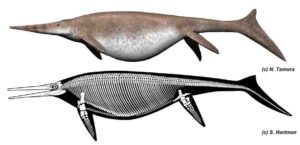
Shonisaurus life and skeletal reconstruction. Credit: Nobumichi Tamura & Scott Hartman
The 205 million-year-old jaw bone of a prehistoric reptile belongs to ‘one of the largest animals ever’ say a group of international palaeontologists.
The new discovery has also solved a 150 year old mystery of supposed ‘dinosaur bones’ from the UK.
The bone belongs to a giant ichthyosaur, a type of prehistoric aquatic reptile, and experts estimate the length of this specimen’s body would have been up to 26 metres. Approaching the size of a blue whale.
Fossil collector and co-author of the study, Paul de la Salle, found the bone on the beach at Lilstock, Somerset in May 2016. He later returned to the site and found even more pieces that together measured about one metre in length.
Paul said “Initially, the bone just looked like a piece of rock but, after recognising a groove and bone structure, I thought it might be part of a jaw from an ichthyosaur and immediately contacted ichthyosaur experts Dean Lomax (University of Manchester) and Prof. Judy Massare (SUNY College at Brockport, NY, USA) who expressed interest in studying the specimen. I also contacted Dr Ramues Gallois, a geologist who visited the site and determined the age of the specimen stratigraphically.
Lomax and Massare identified the specimen as an incomplete bone (called a surangular) from the lower jaw of a giant ichthyosaur. The bone would have made up only a portion of the entire skull. They compared it with several ichthyosaurs and visited the Royal Tyrrell Museum of Palaeontology in Alberta, Canada, and examined the largest ichthyosaur known, the shastasaurid Shonisaurus sikanniensis, which is 21 m long. They found similarities between the new specimen and S. sikanniensis which suggest the Lilstock specimen belongs to a giant shastasaurid-like ichthyosaur.
“As the specimen is represented only by a large piece of jaw, it is difficult to provide a size estimate, but by using a simple scaling factor and comparing the same bone in S. sikanniensis, the Lilstock specimen is about 25% larger. Other comparisons suggest the Lilstock ichthyosaur was at least 20-25 m. Of course, such estimates are not entirely realistic because of differences between species. Nonetheless, simple scaling is commonly used to estimate size, especially when comparative material is scarce.” Added Lomax.
In 1850, a large bone was described from the Late Triassic (208 million-years-old) of Aust Cliff, Gloucestershire, UK. Four other similarly incomplete bones were also found and described. Two of them are now missing and presumed destroyed. They have been identified as the limb bones of several dinosaurs (stegosaurs and sauropods), indeterminate dinosaurs and other reptiles.
However, with the discovery of the Lilstock specimen, this new study refutes previous identifications and also the most recent assertion that the Aust bones represent an early experiment of dinosaur-like gigantism in terrestrial reptiles. They are, in fact, jaw fragments of giant, previously unrecognised ichthyosaurs.
Dean added: “One of the Aust bones might also be an ichthyosaur surangular. If it is, by comparison with the Lilstock specimen, it might represent a much larger animal. To verify these findings, we need a complete giant Triassic ichthyosaur from the UK — a lot easier said than done!”
Reference:
Dean R. Lomax, Paul De la Salle, Judy A. Massare, Ramues Gallois. A giant Late Triassic ichthyosaur from the UK and a reinterpretation of the Aust Cliff ‘dinosaurian’ bones. PLOS ONE, 2018; 13 (4): e0194742 DOI: 10.1371/journal.pone.0194742
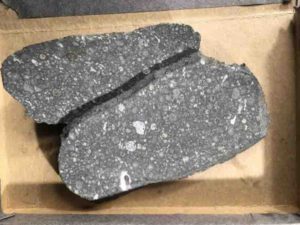
Meteorites such as these carbonaceous chondrites are thought to have delivered water to the Earth–but an outstanding question is when. A new study points to the early incorporation of water in the growing Earth. Credit: Image courtesy Nicolas Dauphas
Up until about ten years ago, scientists thought they had a pretty good picture of how the moon and Earth came to co-exist. Then more precise measurements blew it all wide open, and scientists are still struggling to reconcile them.
As part of that effort, a team including UChicago cosmochemist Nicolas Dauphas performed the largest study to date of oxygen isotopes in lunar rocks, and found a small but measurable difference in the makeup of the moon and Earth.
Published March 28 in Science Advances, the research proposes that Earth acquired the majority of its water during the main stage of its growth — which counters a popular theory.
The most widely accepted theory of the origin of the Moon speculates that a giant object smashed into the proto-Earth at just enough velocity that part of both bodies broke off and formed the moon. The Earth has a little of the moon and the moon has more of the Earth, but they’d be mostly different objects. Early measurements — many taken by the late UChicago geochemist Robert Clayton — did not have sufficient precision to tell the Moon and Earth apart.
But in the last decade, Dauphas said, it became clear this picture wasn’t quite right. Elements can come in different forms, called isotopes, and these give scientists clues to the rock’s origin. As ways to measure isotopes improved, scientists discovered striking similarities between the moon and the Earth. Referred to as the “lunar isotopic crisis,” this was a problem for the main theory of lunar formation, because it’s highly unlikely the isotopes would be exactly the same for two random objects in the solar system.
“This, to my mind, is one of the most compelling questions in modern planetary science,” said Dauphas, head of the Origins Laboratory and professor in the Department of Geophysical Sciences and the Enrico Fermi Institute. “Right now it’s completely open. It’s amazing to still be asking this.”
One theory to explain the matching isotopes was a scenario in which the proto-Earth was totally vaporized by one or more giant impacts, and both it and the moon formed out of the cloud. But one of the major uncertainties is that scientists have reached different conclusions about how different the oxygen isotopes are between lunar and terrestrial rocks.
Seeking to clarify the issue, the researchers measured the oxygen isotopes of both lunar and terrestrial rocks with extremely high precision. They found a very small, but detectable difference between the isotopes between the two bodies.
To explain the near match, the authors turn to water. A popular theory is that the Earth got the majority of its water after the great impact, as more objects containing ice hit the Earth as meteorites. (The term to describe it is late veneer, meaning that water is delivered to the Earth as a veneer after the Earth has completed its growth.)
But if most of Earth’s water was delivered via later meteorites, this would have shown up as a greater isotopic difference than what the researchers measured — as water-bearing meteorites have unusual mixtures of oxygen isotopes.
Their model suggests that only 5 percent to 30 percent of all the water on Earth would have arrived on meteorites after the great impact.
Dauphas noted the picture is still evolving because depending on which element you measure, differences between the moon and Earth could be found. “Oxygen, titanium, tungsten — these are the ones that are still keeping us up at night,” he said.
The question of how planets acquire water is interesting for a number of reasons, Dauphas said, including the search for distant exoplanets that might have water — and thus a similar kind of life.
Richard Greenwood with the UK’s Open University led the study. Other coauthors hailed from the British Antarctic Survey, London’s Natural History, the Museum University of Western Brittany and the Center for Research in Economics and Statistics in France.
Reference:
Richard C. Greenwood, Jean-Alix Barrat, Martin F. Miller, Mahesh Anand, Nicolas Dauphas, Ian A. Franchi, Patrick Sillard, Natalie A. Starkey. Oxygen isotopic evidence for accretion of Earth’s water before a high-energy Moon-forming giant impact. Science Advances, 2018; 4 (3): eaao5928 DOI: 10.1126/sciadv.aao5928
Researchers have found that a class of molecules called sulfidic anions may have been abundant in Earth’s lakes and rivers.
Around 4 billion years ago, Earth was an inhospitable place, devoid of oxygen, bursting with volcanic eruptions, and bombarded by asteroids, with no signs of life in even the simplest forms. But somewhere amid this chaotic period, the chemistry of the Earth turned in life’s favor, giving rise, however improbably, to the planet’s very first organisms.
What prompted this critical turning point? How did living organisms rally in such a volatile world? And what were the chemical reactions that brewed up the first amino acids, proteins, and other building blocks of life? These are some of the questions researchers have puzzled over for decades in trying to piece together the origins of life on Earth.
Now planetary scientists from MIT and the Harvard-Smithsonian Center for Astrophysics have identified key ingredients that were present in large concentrations right around the time when the first organisms appeared on Earth.
The researchers found that a class of molecules called sulfidic anions may have been abundant in Earth’s lakes and rivers. They calculate that, around 3.9 billion years ago, erupting volcanoes emitted huge quantities of sulfur dioxide into the atmosphere, which eventually settled and dissolved in water as sulfidic anions — specifically, sulfites and bisulfites. These molecules likely had a chance to accumulate in shallow waters such as lakes and rivers.
“In shallow lakes, we found these molecules would have been an inevitable part of the environment,” says Sukrit Ranjan, a postdoc in MIT’s Department of Earth, Atmospheric and Planetary Sciences. “Whether they were integral to the origin of life is something we’re trying to work out.”
Preliminary work by Ranjan and his collaborators suggest that sulfidic anions would have sped up the chemical reactions required to convert very simple prebiotic molecules into RNA, a genetic building block of life.
“Prior to this work, people had no idea what levels of sulfidic anions were present in natural waters on early Earth; now we know what they were,” Ranjan says. “This fundamentally changes our knowledge of early Earth and has had direct impact on laboratory studies of the origin of life.”
Ranjan and his colleagues published their results today in the journal Astrobiology.
Setting early Earth’s stage
In 2015, chemists from Cambridge University, led by John Sutherland, who is a co-author on the current study, discovered a way to synthesize the precursors to RNA using just hydrogen cyanide, hydrogen sulfide, and ultraviolet light — all ingredients that are thought to have been available on early Earth, before the appearance of the first life forms.
From a chemistry point of view, the researchers’ case was convincing: The chemical reactions they carried out in the laboratory overcame longstanding chemical challenges, to successfully yield the genetic building blocks to life. But from a planetary science standpoint, it was unclear whether such ingredients would have been sufficiently abundant to jumpstart the first living organisms.
For instance, comets may have had to rain down continuously to bring enough hydrogen cyanide to Earth’s surface. Meanwhile, hydrogen sulfide, which would have been released in huge amounts by volcanic eruptions, would have mostly stayed in the atmosphere, as the molecule is relatively insoluble in water, and therefore would not have had regular opportunities to interact with hydrogen cyanide.
Instead of approaching the origins-of-life puzzle from a chemistry perspective, Ranjan looked at it from a planetary perspective, attempting to identify the actual conditions that might have existed on early Earth, around the time the first organisms appeared.
“The origins-of-life field has traditionally been led by chemists, who try to figure out chemical pathways and see how nature might have operated to give us the origins of life,” Ranjan says. “They do a really great job of that. What they don’t do in as much detail is, they don’t ask what were conditions on early Earth like before life? Could the scenarios they invoke have actually happened? They don’t know as much what the stage setting was.”
Cranking up the ingredients for life
In August 2016, Ranjan gave a talk at Cambridge University about volcanism on Mars and the types of gases that would have been emitted by such eruptions in the red planet’s oxygenless atmosphere. Chemists at the talk realized that the same general conditions would have occurred on Earth prior to the start of life.
“They took away from that [talk] that, on early Earth, you don’t have much oxygen, but you do have sulfur dioxide from volcanism,” Ranjan recalls. “As a consequence, you should have sulfites. And they said, ‘Can you tell us how much of this molecule there would have been?’ And that’s what we set out to constrain.”
To do so, he started with a volcanism model developed previously by Sara Seager, MIT’s Class of 1941 Professor of Planetary Sciences, and her former graduate student Renyu Hu.
“They did a study where they asked, ‘Suppose you take the Earth and just crank up the amount of volcanism on it. What concentrations of gases do you get in the atmosphere?'” Ranjan says.
He consulted the geological record to determine the amount of volcanism that likely took place around 3.9 billion years ago, around the time the first life forms are thought to have appeared, then looked up the types and concentrations of gases that this amount of volcanism would have produced according to Seager and Hu’s calculations.
Next, he wrote a simple aqueous geochemistry model to calculate how much of these gases would have been dissolved in shallow lakes and reservoirs — environments that would have been more conducive to concentrating life-forming reactions, versus vast oceans, where molecules could easily dissipate.
Interestingly, he consulted the literature in a rather unexpected subject while conducting these calculations: winemaking — a science that involves, in part, dissolving sulfur dioxide in water to produce sulfites and bisulfites under oxygenless conditions similar to those on early Earth.
“When we were working on this paper, a lot of the constants and data we pulled out were from the wine chemistry journals, because it’s where we have anoxic environments here on modern Earth,” Ranjan says. “So we took aspects of wine chemistry and asked: ‘Suppose we have x amount of sulfur dioxide. How much of that dissolves in water, and then what does it become?'”
Community cross-talk
Ultimately, he found that, while volcanic eruptions would have spewed huge quantities of both sulfur dioxide and hydrogen sulfide into the atmosphere, it was the former that dissolved more easily in shallow waters, producing large concentrations of sulfidic anions, in the form of sulfites and bisulfites.
“During major volcanic eruptions, you might have had up to millimolar levels of these compounds, which is about laboratory-level concentrations of these molecules, in the lakes,” Ranjan says. “That is a titanic amount.”
The new results point to sulfites and bisulfites as a new class of molecules — ones that were actually available on early Earth — that chemists can now test in the lab, to see whether they can synthesize from these molecules the precursors for life.
Early experiments led by Ranjan’s colleagues suggest that sulfites and bisulfites may have indeed encouraged biomolecules to form. The team carried out chemical reactions to synthesize ribonucleotides with sulfites and bisulfites, versus with hydrosulfide, and found the former were able to produce ribonucleotides and related molecules 10 times faster than the latter, and at higher yields. More work is needed to confirm whether sulfidic anions were indeed early ingredients in brewing up the first life forms, but there is now little doubt that these molecules were part of the prebiotic milieu.
For now, Ranjan says the results open up new opportunities for collaboration.
“This demonstrates a need for people in the planetary science community and origins-of-life community to talk to each other,” Ranjan says. “It’s an example of how cross-pollination between disciplines can really yield simple but robust and important insights.”
This work was funded, in part, by the Simons Foundation, via the Simons Collaboration on the Origin of Life.
Reference:
Sukrit Ranjan, Zoe R. Todd, John D. Sutherland, Dimitar D. Sasselov. Sulfidic Anion Concentrations on Early Earth for Surficial Origins-of-Life Chemistry. Astrobiology, 2018; DOI: 10.1089/ast.2017.1770
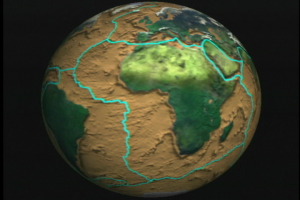
Representative Image: HoloGlobe: Tectonic Plate Boundaries on a Globe Credit: NASA Scientific Visualization Studio
An Ohio University geologist who first proposed the now-accepted supercontinent cycle theory in the 1980s has rallied to the cause of one of those supercontinents, Pannotia, that is in danger of being overlooked.
Dr. Damian Nance, Distinguished Professor of Geological Sciences, said the supercontinent cycle is known to have had a profound influence on the course of Earth history and the evolution of its oceans, atmosphere and biosphere, and is now thought to be, in addition, the dominant influence on the circulation of the Earth’s mantle, even fundamentally affecting the behavior of Earth’s magnetic field.
“We now know a whole lot more about what’s going on between the surface and the Earth’s core,” Nance said. “It seems quite clear now that the supercontinent cycle plays an enormous role in the circulation of the material in the Earth’s mantle, and that has an impact on the Earth’s magnetic field. It’s taken the implications of the cycle to a whole new level. That’s really pretty fundamental stuff.”
Nance and Ohio University colleague Tom Worsley proposed the supercontinent cycle in the early 1980s. Based on data available at the time, they proposed the existence of five supercontinents that pre-dated the well-known Pangaea supercontinent. Some of them have been accepted, such as the supercontinent Rodinia, which came together about 1,100 million years ago, and Columbia, which broke up some 400 million years before that. However, the most recent pre-Pangaean supercontinent, Pannotia, is still subject to disagreement. Nance and Worsley argued that it came into existence about 600 million years ago.
“When we first put forward this supercontinent cycle idea, this was one of the supercontinents we had identified from the data we had at that time, and we weren’t the only ones who have done so,” Nance said. “In the intervening 20 or 30 years, an awfully lot has been made of some of the earlier supercontinents we had proposed, but this one has been shortchanged, largely because the database which has allowed these things to be identified has not been able to nail this one down very successfully.”
The understanding of much of that data has changed since the 1980s, he added. Another group had published a paper in the 1980s that documented the breakup of a supercontinent, later called Pannotia. But later dating suggested this breakup occurred at around the same time it would have formed, leading some to question whether it ever actually existed. However, subsequent changes to the geologic time scale indicates a broader gap for Pannotia to have existed, he said.
The new paper, published by Nance and colleague Brendan Murphy of St. Francis Xavier University in Nova Scotia, Canada, is titled “Supercontinents and the case for Pannotia.” It was published by the Geological Society of London. Nance and Murphy argue that the recognition of past supercontinents need not rely solely on continental reconstructions, but can also exploit a variety of phenomena that accompany their assembly and breakup.
For example, supercontinent assembly is accompanied by worldwide mountain building as the continents collide, just as evidence of continental rifting will accompany supercontinent breakup. Similarly, supercontinent assembly fosters extinctions as surface conditions change and habitats are destroyed, whereas breakup fosters radiations as new habitats are created.
Supercontinents also affect the world’s sea level, ocean chemistry and climate in predictable ways and produce an array of isotopic signals that can be identified in rocks. When the geologic record is examined for evidence of these accompanying phenomena, the case for Pannotia is unmistakable, they argue. The time interval encompassed by the assembly and breakup of Pannotia was accompanied by some of the most profound changes in Earth history, changes that were heralded by widespread mountain building, followed by global evidence of continental breakup, and affected the Earth’s oceans, atmosphere, biosphere and climate just as predicted.
These signals, Nance and Murphy caution, argue strongly for the existence of Pannotia, and to ignore them and dismiss this supercontinent is to potentially overlook the profound changes in mantle circulation that likewise accompany the assembly and breakup stages of the supercontinent cycle.
Reference:
R. Damian Nance, J. Brendan Murphy. Supercontinents and the case for Pannotia. Geological Society, London, Special Publications, 2018; DOI: 10.1144/SP470.5
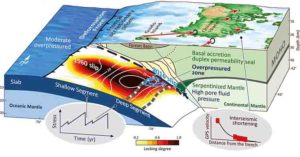
The Nazca Plate is creeping under the South American Plate. Both crustal plates are locked. Depending on the water pressure in various depths, slipping occurs with potentially devastating effects. Credit: M. Moreno et al./GFZ
The 2016 Mw 7.6 earthquake of Southern Chile was the first large earthquake to occur within the rupture bounds of the great 1960 Mw 9.5 Valdivia earthquake, the largest ever observed in historical times. Using GPS, InSAR, gravity, seismic reflection, and geological data, Marcos Moreno and colleagues from GFZ as well as Chile show that the 2016 earthquake occurred at the deep boundary of a persistent asperity on the interface between the subducting Nazca and overriding South American plates, where both plates are coupled and not sliding past each other in spite of the high convergence velocity of 68 mm/year. This asperity broke during the 1960 Chile earthquake b has since healed and recovered.
Their study, published in Nature Geoscience, presents a mechanical model in which the highest stresses gradually accumulate at the deeper edge of such an asperity. The 2016 event released these high stresses. Depending on the frictional parameters of the asperity and the deeper segment of the plate interface, the model predicts the failure times of the deeper and shallower portions of the interface.
According to this model, the shallower failure is representative of a great event (1960-class) and the deeper event represents a large earthquake (2016-class). Given the lag time of 56 years since the 1960 event, the model suggests that the pressure of fluid (i.e. largely water) at the plate interface zone is close to lithostatic at the deeper interface and is slightly lower at the shallower interface. If the water pressure at the plate interface zone becomes as high as the pressure of the overlying rock column, the strength of the rocks at the plate interface becomes practically zero – an effect akin to aquaplaning will initiate eventually triggering an earthquake. It is proposed that the development of this modelling strategy could enable the estimation of critical failure thresholds for other mapped subduction asperities where subducting and overriding plates are currently locked.
Reference:
M. Moreno, S. Li, D. Melnick, J. R. Bedford, J. C. Baez, M. Motagh, S. Metzger, S. Vajedian, C. Sippl, B.D. Gutknecht, E. Contreras-Reyes, Z. Deng, A. Tassara & O. Oncken. Chilean megathrust earthquake recurrence linked to frictional contrast at depth. Nature Geoscience, 2018 DOI: 10.1038/s41561-018-0089-5
Lava layers of the Karoo magma province are found at the Victoria Falls, Africa. Credit: Arto Luttinen
Research at Finnish Museum of Natural History may explain controversies related to great magma eruptions.
The modern continents were formed when Pangea broke into pieces in the Mesozoic time. The splitting of Africa from Antarctica started with great magma eruptions that flooded over an area millions of square kilometres wide.
Remnants of the ancient ocean of lava, the so-called Karoo magma province, are still widespread in southern Africa and have been also discovered in Antarctica. Dr Arto Luttinen from the Finnish Museum of Natural History, University of Helsinki, has studied the lava formations on both continents with his group.
“This kind of eruptions are culmination events of planetary evolution and have caused mass extinctions of life. Yet their origin remains an outstanding question of Earth history” Luttinen explains.
The scientists disagree, for example, whether an enormous ascending plume of hot material caused the generation of magmas from the core-mantle boundary.
“Previous geophysical research has indicated features suggestive of mantle plumes, whereas geochemical studies have concluded based on lava compositions that there was no plume and that the magmas formed when the temperature of the upper mantle gradually got higher under Pangea. The supercontinent acted like a kettle lid” Luttinen summarises.
The previous studies of magma sources have mainly focused on a certain part of the widespread lava formation, however. The study published on March 27 in the international journal Scientific Reports scrutinised compositions of lava samples across the whole region of ancient magma eruptions. Their chemical signatures indicate that lavas in different areas had a different origin.
“The magmas had in fact two contrasting sources. One of them was the upper mantle, as suggested in previous research, whereas the other was most probably a deep mantle plume. Involvement of two different magma sources explains previous contradictory results and presents an interesting new framework for future studies,” concludes Luttinen.
The research was funded by the Academy of Finland and is a part of the VALVE project (Volatiles and large volcanic eruptions).
Reference:
Arto V. Luttinen. Bilateral geochemical asymmetry in the Karoo large igneous province. Scientific Reports, 2018; 8 (1) DOI: 10.1038/s41598-018-23661-3
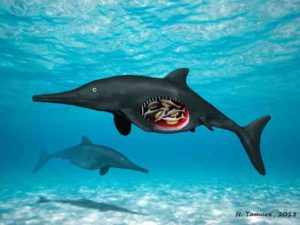
Image of pregnant ichthyosaur with octuplets. Credit: Copyright Nobumichi Tamura
Palaeontologists have discovered part of the skeleton of a 180 million-year-old pregnant ichthyosaur with the remains of between six and eight tiny embryos between its ribs.
The new specimen was studied by palaeontologists Mike Boyd and Dean Lomax from The University of Manchester. It was collected around 2010 from near Whitby, North Yorkshire and is from the Early Jurassic. The fossil was in the collection of fossil collector, Martin Rigby, who thought the specimen might be a block of embryos. Dean confirmed the suspicion and the specimen was acquired by the Yorkshire Museum, York.
Ichthyosaurs were aquatic reptiles that dominated the Jurassic seas. They gave birth to live young, rather than laying eggs, and did not need to return to land, even to breed. They were carnivores, feeding upon other reptiles, fish, and marine invertebrates such as the squid-like belemnites.
Ichthyosaur fossils are quite common in the UK and often found in British Jurassic rocks. However, only five ichthyosaur specimens from Britain have ever been found with embryos and none with this many. All five were collected from Jurassic exposures in the south-west of England and are between 200-190 million years old. This is the first to be found in Yorkshire. The new specimen is a star attraction in the new major exhibition, Yorkshire’s Jurassic World, which recently opened on March 24.
The Jurassic rocks of Yorkshire have produced hundreds of ichthyosaur and other marine reptile skeletons, but have not, until now, yielded any reptilian embryos. The new specimen, as well as being the first embryo-bearing ichthyosaur recorded from Yorkshire, is also geologically the youngest of the British embryo-bearing specimens, being from the Toarcian Stage of the Jurassic, around 180 million-year-old.
The specimen is a small boulder that has been cut in half and polished, which exposes several large ribs (of the adult) and several strings of vertebrae and various indeterminate tiny bones. Boyd and Lomax say there are at least six embryos present, but probably eight.
Mike said: “We also considered the possibility that the tiny remains could be stomach contents, although it seemed highly unlikely that an ichthyosaur would swallow six to eight aborted embryos or newborn ichthyosaurs at one time. And this does not seem to have been the case, because the embryos display no erosion from stomach acids. Moreover, the embryos are not associated with any stomach contents commonly seem in Early Jurassic ichthyosaurs, such as the remains of squid-like belemnites.”
Eight different species of ichthyosaur have been documented with embryos. By far, the most commonly found ichthyosaur with embryos is Stenopterygius. Over a hundred specimens of Stenopterygius from Holzmaden and surrounding areas in Germany have been found with embryos, ranging from one to eleven in number.
“The German sites are approximately the same age as the new specimen from Whitby and it is possible that the new specimen is also Stenopterygius, but no identifiable features are preserved in the adult or embryos. Nonetheless, this is an important find.” added Dean.
Sarah King, curator of natural science at the Yorkshire Museum, said: “This is an incredible find and the research by Dean and Mike has helped us confirm it is the first example of fossilised ichthyosaur embryos to be found in Yorkshire. Its display in Yorkshire’s Jurassic World incorporates the latest digital technology to reveal the embryos and to explain the significance of the discovery. It also allows us to show a softer and more nurturing side to the Sea Dragons which were the top marine predator of their time.”
Reference:
Boyd, M. J. and Lomax, D. R. The youngest occurrence of ichthyosaur embryos in the UK: A new specimen from the Early Jurassic (Toarcian) of Yorkshire. Proceedings of the Yorkshire Geological Society, 2018 DOI: 10.1144/pygs2017-008
For centuries, the prevailing science has indicated that all of the nitrogen on Earth available to plants comes from the atmosphere. But a study from the University of California, Davis, indicates that more than a quarter comes from Earth’s bedrock.
The study, to be published April 6 in the journal Science, found that up to 26 percent of the nitrogen in natural ecosystems is sourced from rocks, with the remaining fraction from the atmosphere.
Before this study, the input of this nitrogen to the global land system was unknown. The discovery could greatly improve climate change projections, which rely on understanding the carbon cycle. This newly identified source of nitrogen could also feed the carbon cycle on land, allowing ecosystems to pull more emissions out of the atmosphere, the authors said.
“Our study shows that nitrogen weathering is a globally significant source of nutrition to soils and ecosystems worldwide,” said co-lead author Ben Houlton, a professor in the UC Davis Department of Land, Air and Water Resources and director of the UC Davis Muir Institute. “This runs counter the centuries-long paradigm that has laid the foundation for the environmental sciences. We think that this nitrogen may allow forests and grasslands to sequester more fossil fuel CO2 emissions than previously thought.”
Weathering Is Key
Ecosystems need nitrogen and other nutrients to absorb carbon dioxide pollution, and there is a limited amount of it available from plants and soils. If a large amount of nitrogen comes from rocks, it helps explain how natural ecosystems like boreal forests are capable of taking up high levels of carbon dioxide.
But not just any rock can leach nitrogen. Rock nitrogen availability is determined by weathering, which can be physical, such as through tectonic movement, or chemical, such as when minerals react with rainwater.
That’s primarily why rock nitrogen weathering varies across regions and landscapes. The study said that large areas of Africa are devoid of nitrogen-rich bedrock while northern latitudes have some of the highest levels of rock nitrogen weathering. Mountainous regions like the Himalayas and Andes are estimated to be significant sources of rock nitrogen weathering, similar to those regions’ importance to global weathering rates and climate. Grasslands, tundra, deserts and woodlands also experience sizable rates of rock nitrogen weathering.
Geology and Carbon Sequestration
Mapping nutrient profiles in rocks to their potential for carbon uptake could help drive conservation considerations. Areas with higher levels of rock nitrogen weathering may be able to sequester more carbon.
“Geology might have a huge control over which systems can take up carbon dioxide and which ones don’t,” Houlton said. “When thinking about carbon sequestration, the geology of the planet can help guide our decisions about what we’re conserving.”
Mysterious Gap
The work also elucidates the “case of the missing nitrogen.” For decades, scientists have recognized that more nitrogen accumulates in soils and plants than can be explained by the atmosphere alone, but they could not pinpoint what was missing.
“We show that the paradox of nitrogen is written in stone,” said co-leading author Scott Morford, a UC Davis graduate student at the time of the study. “There’s enough nitrogen in the rocks, and it breaks down fast enough to explain the cases where there has been this mysterious gap.”
In previous work, the research team analyzed samples of ancient rock collected from the Klamath Mountains of Northern California to find that the rocks and surrounding trees there held large amounts of nitrogen. With the current study, the authors built on that work, analyzing the planet’s nitrogen balance, geochemical proxies and building a spatial nitrogen weathering model to assess rock nitrogen availability on a global scale.
The researchers say the work does not hold immediate implications for farmers and gardeners, who greatly rely on nitrogen in natural and synthetic forms to grow food. Past work has indicated that some background nitrate in groundwater can be traced back to rock sources, but further research is needed to better understand how much.
Rewriting Textbooks
“These results are going to require rewriting the textbooks,” said Kendra McLauchlan, program director in the National Science Foundation’s Division of Environmental Biology, which co-funded the research. “While there were hints that plants could use rock-derived nitrogen, this discovery shatters the paradigm that the ultimate source of available nitrogen is the atmosphere. Nitrogen is both the most important limiting nutrient on Earth and a dangerous pollutant, so it is important to understand the natural controls on its supply and demand. Humanity currently depends on atmospheric nitrogen to produce enough fertilizer to maintain world food supply. A discovery of this magnitude will open up a new era of research on this essential nutrient.”
UC Davis Professor Randy Dahlgren in the Department of Land, Air and Water Resources co-authored the study.
The study was funded by the National Science Foundation’s Division of Earth Sciences and its Division of Environmental Biology, as well as the Andrew W. Mellon Foundation.
Reference:
B. Z. Houlton, S. L. Morford, R. A. Dahlgren. Convergent evidence for widespread rock nitrogen sources in Earth’s surface environment. Science, 2018; 360 (6384): 58 DOI: 10.1126/science.aan4399
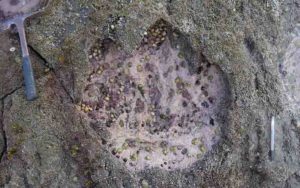
The 170 million-year-old tracks were made in a muddy lagoon off the north-east coast of what is now the Isle of Skye Credit: University of Edinburgh/PA Wire
Scientists have discovered the biggest dinosaur site in Scotland on the Isle of Skye after stumbling across giant footprints fossilized into coastal rock.
The 70cm-wide footprints of massive sauropods are said to be roughly 170 million years old and were found by the University of Edinburgh’s School of GeoSciences in April.
The tracks shed light on dinosaur life in the Middle Jurassic, a period from which few fossils have survived.
The team of Scottish boffins were about to go home after a day in the field when they spotted the impressions in coastal rock quite by chance.
Dr Steve Brusatte told the Independent: “We noticed this depression in the rock that kind of looked like a pothole, and then we noticed another one and another one.
“They started to form this zig-zag pattern, and it dawned on us pretty quickly that these were the footprints – and the handprints – of these huge, long-necked sauropod dinosaurs.
“It was a chance discovery, we were more lucky than talented,” he added.
At the time the prints were made the area would have been the muddy bottom of a shallow lagoon, now long since turned to rock and often hidden by the tide.
The culprit is thought to have been a long-necked relative of the brontosaurus-type dinosaur.
Dr Tom Challands, also from the University of Edinburgh, told the Independent: “It is exhilarating to make such a discovery and being able to study it in detail, but the best thing is this is only the tip of the iceberg.
“I’m certain Skye will keep yielding great sites and specimens for years to come,” he said.
In August, a fossil foot suspected to be that of a small early ancestor of the ferocious Tyrannosaurus Rex was found on a Welsh beach.
Student paleontologist Sam Davies, who is in his third year at the University of Portsmouth, made the discovery while searching for fossils on the beach.
“It was pure luck that I found it. It was just sitting on top of a slab of rock,” Davis told the Guardian.
Experts believe the fossilized foot is from the same animal whose skeleton was found after a section of cliff broke away onto the beach last year. The local Jurassic cliffs are known to be a rich source of fossils.
The species lived around 200 million years ago, was only 19 inches tall and is a miniature version of the T-Rex.
Note: The above post is reprinted from materials provided by RT.
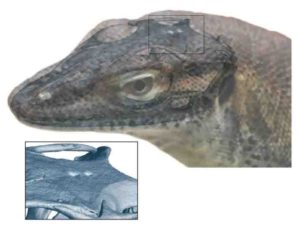
This image depicts a reconstruction of what the extinct monitor lizard might have looked like. The parietal and pineal foramina are visible on the overlaid skull. Credit: Senckenberg Gesellschaft für Naturforschung / Andreas Lachmann / Digimorph.org
Researchers reporting in Current Biology on April 2 have evidence that an extinct species of monitor lizard had four eyes, a first among known jawed vertebrates. Today, only the jawless lampreys have four eyes.
The third and fourth eyes refer to pineal and parapineal organs, eye-like photosensory structures on the top of the head that play key roles in orientation and in circadian and annual cycles. The new findings help to elucidate the evolutionary history of these structures among vertebrates.
The photosensitive pineal organ is found in a number of lower vertebrates such as fishes and frogs, the researchers explain. It’s often referred to as the “third eye” and was widespread in primitive vertebrates.
“On the one hand, there was this idea that the third eye was simply reduced independently in many different vertebrate groups such as mammals and birds and is retained only in lizards among fully land-dwelling vertebrates,” says Krister Smith at the Senckenberg Research Institute in Germany. “On the other hand, there was this idea that the lizard third eye developed from a different organ, called the parapineal, which is well developed in lampreys. These two ideas didn’t really cohere.
“By discovering a four-eyed lizard — in which both pineal and parapineal organs formed an eye on the top of the head — we could confirm that the lizard third eye really is different from the third eye of other jawed vertebrates,” Smith continues.
Smith and his colleagues got the idea that the fossilized lizards might have a fourth eye after other experts came to contradictory conclusions about where the lizard’s third eye was located.
Smith said that the first question to explore the “wacky” idea of a lizard with four eyes was, does this unusual feature occur in more than one individual of the same age? They turned to museum specimens collected nearly 150 years ago at Grizzly Buttes as part of the Yale College Expedition to the Bridger Basin, Wyoming. And, it turned out that the answer to their question was yes. CT scans showed that two different individuals had spaces where a fourth eye would have been, which, Smith says, “I certainly did not expect!”
Their evidence confirms that the pineal and parapineal glands weren’t a pair of organs in the way that vertebrate eyes are. They also suggest that the third eye of lizards evolved independently of the third eye in other vertebrate groups.
Smith says that while there’s “nothing mystical” about the pineal and parapineal organs, they do enable extraordinary abilities. For instance, they allow some lower vertebrates to sense the polarization of light and use that information to orient themselves geographically.
Scientists still have a lot to learn about the evolution of these organs and their functions in living animals, the researchers say. The new findings are a reminder of the hidden value within fossils left lying around in museums for more than a century.
“The fossils that we studied were collected in 1871, and they are quite scrappy — really banged up,” Smith says. “One would be forgiven for looking at them and thinking that they must be useless. Our work shows that even small, fragmentary fossils can be enormously useful.”
Reference:
Krister T. Smith, Bhart-Anjan S. Bhullar, Gunther Köhler, Jörg Habersetzer. The Only Known Jawed Vertebrate with Four Eyes and the Bauplan of the Pineal Complex. Current Biology, 2018; 28 (7): 1101 DOI: 10.1016/j.cub.2018.02.021
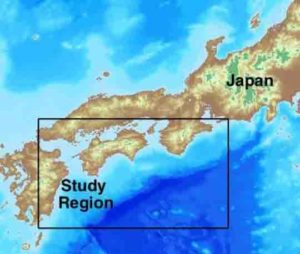
A recent study led by UMass Amherst looked at risk in southeast Japan after the devastating 2011 quake and tsunami. The Japanese government called for hazard-assessment research to define the nation’s worst-case scenarios. Study centered on the Nankai Trough, a fault predicted to generate a magnitude 8 to 9 earthquake in coming decades. Credit: UMass Amherst
Geoscience researchers at the University of Massachusetts Amherst, Smith College and the Japanese Agency for Marine-Earth Science and Technology this week unveiled new, GPS-based methods for modeling earthquake-induced tsunamis for southeast Japan along the Nankai Trough. A Nankai-induced tsunami is likely to hit there in the next few decades, says lead author Hannah Baranes at UMass Amherst, and has the potential to displace four times the number of people affected by the massive Tohoku tsunami of 2011.
She and her doctoral advisor Jonathan Woodruff, with Smith College professor Jack Loveless and Mamoru Hyodo at the Japanese agency report details in the current Geophysical Research Letters. Baranes says, “We hope our work will open the door for applying similar techniques elsewhere in the world.”
As she explains, after the unexpectedly devastating 2011 quake and tsunami, Japan’s government called for hazard-assessment research to define the nation’s worst-case scenarios for earthquakes and tsunamis. Baranes notes, “The government guideline has focused attention on the Nankai Trough. It’s a fault offshore of southern Japan that is predicted to generate a magnitude 8 to 9 earthquake within the next few decades.”
The team’s research, supported by the National Science Foundation and a NASA graduate fellowship, began with a study of coastal lake sediments in Japan to establish long-term records of tsunami flooding. Between 2012 and 2014, Baranes and Woodruff collected sediment cores from lakes, looking for marine sand layers washed onshore by past extreme coastal floods. “These sand deposits get trapped and preserved at the bottoms of coastal lakes,” she says. “We can visit these sites hundreds or even thousands of years later and find geologic evidence for past major flood events.”
Results from Lake Ryuuoo, a small lake on an island in the Bungo Channel, show a surprising sand layer washed into Lake Ryuuoo by seawater rushing over a 13-foot-high barrier beach. “We were able to date the layer to the early 1700s, which is consistent with the known Nankai Trough tsunami event of record from 1707,” Baranes says.
She adds, “We were a bit puzzled. The Bungo Channel is tucked between two of Japan’s main islands and is relatively sheltered from Nankai Trough-generated tsunamis. Given recent tsunamis in the region, a minimum 13-foot tsunami in the channel seemed very unlikely.” Further, she points out, the Bungo Channel area today has much sensitive and critical infrastructure, including the only nuclear power plant on the island of Shikoku. This gave the researchers “particular concern” for tsunami hazard there, so they decided to investigate their original finding further using numerical modeling techniques.
As Baranes explains, an earthquake is caused by plates slipping past each other along faults in the earth’s crust. That slip causes the earth’s surface to deform, to uplift in some places and sink, or subside, in others. “When earthquake-induced uplift occurs on the sea floor, it displaces the entire column of water above it and generates the wave that we call a tsunami,” she adds. “We can simulate that process with numerical models.”
She and Woodruff tried using one of the most widely-cited models for the 1707 Nankai Trough earthquake to flood Lake Ryuuoo, but this only generated a six-foot tsunami that came nowhere near overtopping the 13-foot barrier beach.
“At that point, we were still stumped,” says Baranes. “But it wasn’t long before we had a stroke of good luck in learning that a leading expert on tectonic modeling in Japan, Jack Loveless, is a professor just down the road at Smith College.” Loveless uses very precise GPS measurements of earth surface motion to model the extent and spatial distribution of frictional locking that causes fault stress to build up between earthquakes.
With Loveless, the team created earthquake scenarios based on GPS estimates of present-day frictional locking along the Nankai Trough and for the first time rigorously tested methods for creating potential future earthquake scenarios from the GPS measurements. They tested various methods for creating a suite of GPS-based earthquake scenarios and simulated the resulting ground surface displacement and tsunami inundation.
Baranes reports that they found GPS measurements of present-day earth surface motion around the Nankai Trough yield an earthquake of a similar magnitude and extent as the 1707 event, and their simulated tsunami heights are consistent with historical accounts of the 1707 event. As for matching the Lake Ryuuoo geologic record, she adds, “Our model earthquake scenarios showed the Bungo Channel region subsiding seven feet and lowering Lake Ryuuoo’s barrier beach from 13 to six feet, such that a tsunami with a feasible height for an inland region easily flooded the lake.”
Woodruff, who conducted the study as part of a Fulbright fellowship, says, “Although our methodology was well received, our result for the Bungo Channel was met with a lot of skepticism. We needed to find an independent method for validating it.” They enlisted Hyodo, who had previously published earthquake scenarios based on models of the Nankai Trough’s physical characteristics. His physical model yielded the same focused subsidence in the Bungo Channel, Woodruff reports.
Baranes adds, “His model was also consistent with our GPS-based model in terms of earthquake magnitude, ground surface displacement and tsunami inundation. This was a really neat result because in addition to providing an independent line of evidence for significant tsunami hazard in the Bungo Channel, we demonstrated a connection between the Nankai Trough’s physical characteristics and GPS measurements of surface motion.”
Reference:
H. Baranes, J. D. Woodruff, J. P. Loveless, M. Hyodo. Interseismic Coupling-Based Earthquake and Tsunami Scenarios for the Nankai Trough. Geophysical Research Letters, 2018; DOI: 10.1002/2018GL077329
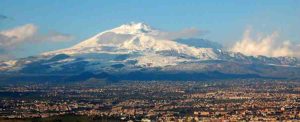
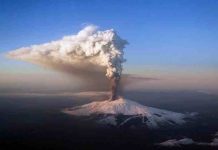
Mount Etna. Credit: BenAveling (Own work) via Wikimedia Commons
The iconic cone-like structure of Mount Etna could have been created after water levels in the Mediterranean Sea rose following an extended period of deglaciation, according to new research.
A study by Iain Stewart, Professor of Geoscience Communication at the University of Plymouth, explores changes in the volcano’s structures which began around 130,000 years ago.
Scientists have previously said the switch from a fissure-type shield volcano to an inland cluster of nested stratovolcanoes was caused by a tectonically driven rearrangement of major border faults.
However Professor Stewart, writing in Episodes, has suggested the change coincides closely with a period of particularly high sea levels that could have triggered the fundamental change in Mount Etna’s magmatic behaviour.
He also believes such a phenomenon could also explain changes at other volcanic sites across the world including the similarly iconic Stromboli, just off the north coast of Sicily, and even the volcano on Montserrat in the Caribbean.
Professor Stewart, who fronted the BBC documentary Volcano Live in 2013, said: “Mount Etna is arguably one of the most iconic volcanoes on the planet, but 100,000 years ago there would have been no cone-like structure such as you see today. I had always been interested to know what prompted that to happen but I believe the dates of sea levels rising — and how they correspond to the volcano physically changing — offer a potential explanation. The precise sensitivities of the plumbing beneath Etna has always been something of a mystery, but exploring how sea levels interact with its fault lines could shed new light on its creation and future.”
Mount Etna’s eruptive history began around 500,000 years ago with submarine volcanism. But this changed around 220,000 years ago into fissure type activity which built a north-south chain of eruptive centres along the present coastline.
This ultimately created a broad shield volcano immediately east of Etna’s coastline, which ceased around 130,000 years ago at the same time as the sea reached its highest levels following a period of deglaciation starting almost 12,000 years earlier.
However, Professor Stewart believes that over a few millennia those sea level rises could have caused the fault system beneath and around Mount Etna to completely change in behaviour, sealing up old lava flows and ultimately forcing them to emerge elsewhere on the island.
This ultimately created the iconic cone structure visible today, with Europe’s most active volcano still continuing to erupt tens of thousands of years later.
This new research has been published days after another study showed that Etna is edging towards the Mediterranean at a rate of around 14mm per year.
Professor Stewart added: “The latest measurements of Etna’s seaward slide give us a much better understanding of just how unstable Europe’s biggest volcano is. But the big question remains: what is driving that instability? For me, the fact that Etna’s dramatic switches in eruptive behaviour coincide with past abrupt changes in ocean levels implies that Etna’s antics are at least in part orchestrated by fluctuating waters of the Mediterranean Sea.”
Reference:
Iain Stewart. Did sea-level change cause the switch from fissure-type to central- type volcanism at Mount Etna, Sicily? Episodes, 2018; 41 (1): 7 DOI: 10.18814/epiiugs/2018/v41i1/018002
Credit: Andrew McAfee, Carnegie Museum of Natural History
The new predatory dinosaur Tratayenia rosalesi crosses a stream in what is now Patagonia, Argentina roughly 85 million years ago.
Although many new dinosaur species have been discovered over the past few decades, entire groups of these animals remain shrouded in mystery. One of these is the Megaraptoridae, a shadowy pack of predators that terrorized South America and Australia during the middle and late stages of the Cretaceous Period – the third and final time period of the Age of Dinosaurs. Today, paleontologists announced the discovery of a never-before-seen member of this motley crew that casts light on the skeletal structure of megaraptorids and the roles they played in their long-vanished environments. Named Tratayenia rosalesi, the new species is based on fossil bones collected in Neuquén Province, Argentina – located in the northern part of the wild, windswept region of South America known as Patagonia. A study of the new creature—named after the locality where it was found, Tratayén, and its discoverer, Argentine fossil hunter Diego Rosales—was recently published in the scientific journal Cretaceous Research.
According to study leader Juan Porfiri of the Museo de Ciencias Naturales of the Universidad Nacional del Comahue in Neuquén, “When Diego told us about his find, we quickly got permission from the Dirección Provincial de Patrimonio Cultural del Neuquén to dig up the dinosaur. After we went to the site and began to unearth the bones, we got very excited because we thought we might have a megaraptorid.”
Says study co-author Domenica dos Santos, also of the Museo de Ciencias Naturales of the Universidad Nacional del Comahue, “Not many megaraptorid specimens are known, so we thought the new fossil would provide important information on these enigmatic predators.” Adds fellow co-author Rubén Juárez Valieri of the Museo Provincial Carlos Ameghino in Cipolletti, Argentina, “Patagonian discoveries such as Tratayenia are expanding our knowledge of the spectacular but still mysterious dinosaurs of the Southern Hemisphere.”
The new predatory dinosaur Tratayenia rosalesi crosses a stream in what is now Patagonia, Argentina roughly 85 million years ago.
Although many new dinosaur species have been discovered over the past few decades, entire groups of these animals remain shrouded in mystery. One of these is the Megaraptoridae, a shadowy pack of predators that terrorized South America and Australia during the middle and late stages of the Cretaceous Period – the third and final time period of the Age of Dinosaurs. Today, paleontologists announced the discovery of a never-before-seen member of this motley crew that casts light on the skeletal structure of megaraptorids and the roles they played in their long-vanished environments. Named Tratayenia rosalesi, the new species is based on fossil bones collected in Neuquén Province, Argentina – located in the northern part of the wild, windswept region of South America known as Patagonia. A study of the new creature—named after the locality where it was found, Tratayén, and its discoverer, Argentine fossil hunter Diego Rosales—was recently published in the scientific journal Cretaceous Research.
According to study leader Juan Porfiri of the Museo de Ciencias Naturales of the Universidad Nacional del Comahue in Neuquén, “When Diego told us about his find, we quickly got permission from the Dirección Provincial de Patrimonio Cultural del Neuquén to dig up the dinosaur. After we went to the site and began to unearth the bones, we got very excited because we thought we might have a megaraptorid.”
Says study co-author Domenica dos Santos, also of the Museo de Ciencias Naturales of the Universidad Nacional del Comahue, “Not many megaraptorid specimens are known, so we thought the new fossil would provide important information on these enigmatic predators.” Adds fellow co-author Rubén Juárez Valieri of the Museo Provincial Carlos Ameghino in Cipolletti, Argentina, “Patagonian discoveries such as Tratayenia are expanding our knowledge of the spectacular but still mysterious dinosaurs of the Southern Hemisphere.”
Still, scientists have much left to learn about megaraptorids. For one thing, their evolutionary relationships to other meat-eating dinosaurs are poorly understood, with some scientists arguing that megaraptorids are related to even larger Southern Hemisphere carnivores such as Carcharodontosaurus and Giganotosaurus, whereas others contend that megaraptorids are close cousins of T. rex. Though Tratayenia does not help to solve this particular riddle, an answer may well be in sight. According to Porfiri, “Tratayenia is just one of many exciting megaraptorid fossils that have been found in recent years. After these specimens are studied, many questions surrounding these puzzling meat-eaters may finally be answered.”
Reference:
Juan D. Porfiri et al. A new megaraptoran theropod dinosaur from the Upper Cretaceous Bajo de la Carpa Formation of northwestern Patagonia, Cretaceous Research (2018). DOI: 10.1016/j.cretres.2018.03.014
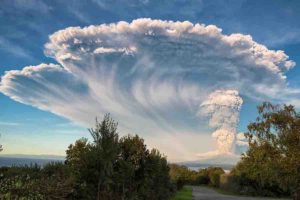
Calbuco’s April 2015 eruption was its first activity since 1972. Credit: iStock
To borrow from a philosophical thought experiment: If a volcano erupts in a remote part of the world and no one hears it, does it still make a sound?
Indeed, it does. And not only does the sound occur, but it also can tell scientists about the timing and duration of the eruption itself.
As part of the United Nations’ Comprehensive Nuclear-Test-Ban Treaty, an International Monitoring System was built to detect any nuclear explosion on Earth — underground, underwater or in the atmosphere. Within that system is a network to detect atmospheric infrasound — sound waves with frequencies below the lower limit of human audibility — which scientists can also use to track volcanic eruptions in remote locations.
A new case study by an international team of scientists, led by UC Santa Barbara geophysicist Robin Matoza, examined data from the 2015 eruption of the Calbuco volcano in the Los Lagos Region of Chile. The researchers chose this event because they could compare long-range data with local readings, enabling study of the large volcanic explosion using infrasound sensors.
The team’s analysis demonstrated that infrasound recorded at regional (15 to 250 kilometers) and long distances (greater than 250 km), such as on the International Monitoring System, delivered similar constraints on the timing and duration of the eruption, as did data from a local (less than 15 km) seismic network. Their results appear in the Journal of Geophysical Research: Solid Earth.
“We want to be able to monitor regions in the world where many volcanoes do not have local monitoring stations like Calbuco does,” said Matoza, an assistant professor in UCSB’s Department of Earth Science. “In some places — for example, the Aleutian Islands in Alaska — it’s challenging to maintain observation networks on the volcanoes themselves due to harsh weather and their remote locations. Consequently, many Aleutian volcanoes are not instrumented. We want to be able to detect, locate and characterize remote explosive volcanic activity because eruptions can release ash clouds into the atmosphere, which are hazardous to aircraft.”
In remote locales, researchers usually rely on satellite-based technology to monitor volcanoes, but according to Matoza, without ground-based information, it’s difficult to know exactly when the eruption happened and how long it lasted.
“What’s nice about infrasound is that we are able to gather information farther from the source than with traditional ground-based monitoring methods,” Matoza explained. “Typically, seismic signals from eruptions don’t propagate more than a few hundred kilometers from the source. With Calbuco, for example, you can see the eruption very clearly on the local monitoring stations and out to about 250 kilometers on regional seismic networks, but with infrasound, the signal propagates in the atmosphere for more than 5,000 kilometers. What’s more, infrasound delivers different information than seismic data alone.”
The Chilean national seismic network includes a relatively sparse number of infrasound sensors co-located with 10 seismometers (seismo-acoustic stations), which enabled this study. Placing such infrasound sensors at more seismic stations in volcanically active regions would be valuable, Matoza noted. The fact that one of the Chilean seismo-acoustic stations was only 250 kilometers from the eruption highlights the significant potential of existing regional seismic networks for augmenting the International Monitoring System with more infrasound sensors for eruption detection and monitoring.
“One of the recommendations from this study is that more seismic networks should also have infrasound sensors,” Matoza said. “It’s one extra channel of data to record that provides very useful information for improving volcano monitoring.”
Reference:
Robin S. Matoza, David Fee, David Green, Alexis Le Pichon, Julien Vergoz, Matthew M. Haney, T. Dylan Mikesell, Luis Franco, O. Alberto Valderrama, Megan R. Kelley, Kathleen McKee, Lars Ceranna. Local, regional, and remote seismo-acoustic observations of the April 2015 VEI 4 eruption of Calbuco volcano, Chile. Journal of Geophysical Research: Solid Earth, 2018; DOI: 10.1002/2017JB015182
Scientists from the University of Aberdeen have created the world’s first 3D thermal image of an active volcano.
The spectacular image of Stromboli in Italy was made using high-precision cameras mounted to an aerial drone.
The image was created by a team of geoscientists from the Universities of Aberdeen and Oslo who are using drone technology to develop a technique that can detect subtle changes in the behaviour of the volcano, providing more accurate information on the likelihood of an eruption.
The first stage of the project was to develop a system for building 3D thermal models from an active volcano using drones.
This system was tested on the island of Stromboli in the Mediterranean. They have made a short video documenting there work and the results, with some spectacular drone footage of erupting volcanos and a 3D thermal model.
New research provides insights into the composition, thermal state, and evolution of Earth’s mantle. Credit: Massachusetts Institute of Technology
In the 1960s, some 50 years after German researcher Alfred Wegener proposed his continental drift hypothesis, the theory of plate tectonics gave scientists a unifying framework for describing the large-scale motion of the surface plates that make up the Earth’s lithosphere—a framework that subsequently revolutionized the geosciences.
How those plates move around the Earth’s surface is controlled by motion within the mantle—the driving force of which is convection due to thermal anomalies, with compositional heterogeneity also expected. However, the technical challenge of visualizing structures inside an optically impenetrable, 6,371-kilometer-radius rock sphere has made understanding the compositional and thermal state of the mantle, as well as its dynamic evolution, a long-standing challenge in Earth science.
Now, in a paper published today in Nature Communications, researchers from MIT, Imperial College, Rice University, and the Institute of Earth Sciences in France report direct evidence for lateral variations in mantle composition below Hawaii. The results provide scientists with important new insights into how the Earth has evolved over its 4.5 billion year history, why it is as it is now, and what this means for rocky planets elsewhere.
Compositional variation
Scientists treat the mantle as two layers—the lower mantle and the upper mantle—separated by a boundary layer termed the mantle transition zone (MTZ). Physically, the MTZ is bounded by two seismic-velocity discontinuities near 410 km and 660 km depth (referred to as 410 and 660). These discontinuities, which are due to phase transitions in silicate minerals, play an important role in modulating mantle flow. Lateral variations in depth to these discontinuities have been widely used to infer thermal anomalies in the mantle, as mineral physics predicts a shallower 410 and a deeper 660 in cold regions and a deeper 410 and a shallower 660 in hot regions.
Previous petrological and numerical studies also predict compositional segregation of basaltic and harzburgitic material (and thus compositional heterogeneity) near the base of the MTZ in the relatively warm low-viscosity environments near mantle upwellings. But observational evidence for such a process has been scarce.
The new study, however, demonstrates clear evidence for lateral variation in composition near the base of the MTZ below Hawaii. This evidence could have important implications for our general understanding of mantle dynamics.
As lead author Chunquan Yu Ph.D. ’16, a former grad student in the Hilst Group at MIT who is now a postdoc at Caltech, explains, “At middle ocean ridges, plate separation results in ascending and partial melting of the mantle material. Such a process causes differentiation of the oceanic lithosphere with basaltic material in the crust and harzburgitic residue in the mantle. As the differentiated oceanic lithosphere cools, it descends back into the mantle along the subduction zone. Basalt and harzburgite are difficult to separate in cold environments. However, they can segregate in relative warm low-viscosity environments, such as near mantle upwellings, potentially providing a major source of compositional heterogeneity in the Earth’s mantle.”
Looking with earthquakes
To explore this idea, Yu and his colleagues used a seismic technique involving the analysis of underside shear wave reflections off mantle discontinuities—known as SS precursors—to study MTZ structures beneath the Pacific Ocean around Hawaii.
“When an earthquake occurs, it radiates both compressional (P) and shear wave (S) energy. Both P and S waves can reflect from interfaces in the Earth’s interior,” Yu explains. “If an S wave leaves a source downward and reflects at the free surface before arriving at the receiver, it is termed SS. SS precursors are underside S-wave reflections off mantle discontinuities. Because they travel along shorter ray paths, they are precursory to SS.”
Using a novel seismic array technique, the team were able to improve the signal-to-noise ratio of the SS precursors and remove interfering phases. As a result, much more data that otherwise would have been discarded became accessible for analysis.
They also employed so-called amplitude versus offset analysis, a tool widely used in exploration seismology, to constrain elastic properties near MTZ discontinuities.
The analysis finds strong lateral variations in radial contrasts in mass density and wavespeed across 660 while no such variations were observed along the 410. Complementing this, the team’s thermodynamic modeling, along a range of mantle temperatures for several representative mantle compositions, precludes a thermal origin for the inferred lateral variations in elastic contrasts across 660. Instead, the inferred 660 contrasts can be explained by lateral variation in mantle composition: from average (pyrolytic; about 60 percent olivine) mantle beneath Hawaii to a mixture with more melt-depleted harzburgite (about 80 percent olivine) southeast of the hotspot. Such compositional heterogeneity is consistent with numerical predictions that segregation of basaltic and harzburgitic material could occur near the base of the MTZ near hot deep mantle upwellings like the one that is often invoked to cause volcanic activity on Hawaii.
“It has been suggested that compositional segregation between basaltic and harzburgitic materials could form a gravitationally stable layer over the base of the MTZ. If so it can provide a filter for slab downwellings and lower-mantle upwellings, and thus strongly affect the mode of mantle convection and its chemical circulation,” says Yu.
This study presents a promising technique to get constraints on the thus far elusive distribution of compositional heterogeneity within Earth’s mantle. Compositional segregation near the base of the MTZ has been expected since the 1960s and evidence that this process does indeed occur has important implications for our understanding of the chemical evolution of the Earth.
Reference:
“Compositional heterogeneity near the base of the mantle transition zone beneath Hawaii” Nature Communications (2018). DOI: 10.1038/s41467-018-03654-6
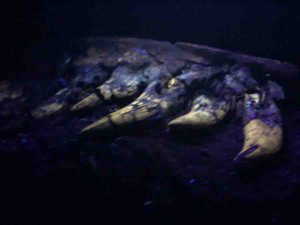
Back at the lab, the researchers found the fossil glowed under a black light. Credit: University of Kansas
For now, there are just a few things researchers and students at the University of Kansas want people to dig about the new dinosaur they recently excavated in Montana’s Hell Creek Formation.
First off, it’s a “fabulous” complete section of the upper jaw with all of its teeth intact, along with bits of the specimen’s skull, foot, hips and backbones. It’s likely to be the rare fossilized remains of a young Tyrannosaurus rex that lived 66.5 million years ago. But it also could be another species of smaller meat-eating dinosaur (it’s a bit of a scientific controversy)—they’re still analyzing their discovery.
Careful, microscopic preparation of its fragile bones is beginning to reveal important information that will help unravel the life history of Tyrannosaurus rex.
Other young tyrannosaur specimens have been recovered over the years, but since animal skeletons change shape as they grow, some confusion as to their evolutionary relationships has ensued. Some paleontologists think the young ones may represent different species, while other workers have suggested they all represent different growth stages of one species—Tyrannosaurus rex.
KU’s new specimen has the information that may provide the deciding factor of which theory is correct.
Researchers believe the specimen is a young Tyrannosaurus rex but are still conducting their analysis to be sure. They expect to publish their findings in the coming months.
“The teeth suggest it’s a Tyrannosaurus rex; however, there is still more work to be done,” said David Burnham, preparator of vertebrate paleontology at the KU Biodiversity Institute. “Because a young T. rex is so rare, there are only a few that have been found over the years, so it’s difficult to discern what are changes due to growth or if the differences in the bones reflect different species. Fortunately, KU has an older T. rex to compare with and another young T. rex on loan to help decipher this problem.”
One possibility is the specimen represents another carnivorous dinosaur dubbed a Nanotyrannus that likewise was discovered in the Hell Creek Formation and described by other scientists. The Nanotyrannus is a subject of controversy because it may represent a separate species, or it may be a juvenile Tyrannosaurus rex.
“Confusing the issue here is age,” Burnham said. “Ontogeny, that’s the process of growth—and during that process we change. Adult dinosaur bones, especially in the skull, don’t look the same as their younger selves. So, if someone finds a baby or juvenile fossil they may think it’s a new species, but we have to be careful since it may represent a younger growth stage of an existing species. It’s reasonable to assume Nanotyrannus could be valid—but we must show it’s not just a stage in the life history of T. rex.”
For now, Burnham and his team are analyzing the bones they have back in the lab and planning a return to Hell Creek to conduct fieldwork and search for more of the fossil.
“We’re going to go back out this summer—we’re going right to that spot,” said the KU researcher. “We think and hope there’s more there.”
In the meantime, Burnham and his fellow researchers (including Kyle Atkins-Weltman, graduate student and assistant fossil preparator) are working on a paper that will address the question of their fossil’s place in the family tree of theropod dinosaurs.
“With the specimens here at KU, we’ll be able to address the issue and make a declarative statement about Nanotyrannus,” Burnham said.
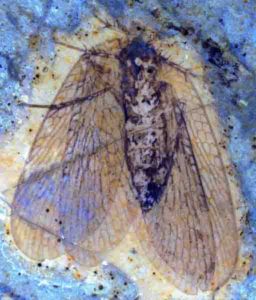
A new species of scorpionfly fossil from 53 million years ago at McAbee, British Columbia named Eomerope eonearctica. This insect is very similar to a fossil species that lived at the same time north of Vladivostok on the Asian Pacific coast, highlighting connections between Canada and Russia in ancient times. Credit: SFU
A new 53 million-year-old insect fossil called a scorpionfly discovered at B.C.’s McAbee fossil bed site bears a striking resemblance to fossils of the same age from Pacific-coastal Russia, giving further evidence of an ancient Canada-Russia connection.
“We’ve seen this connection before through fossil plants and animals, but these insects show this in a beautiful way,” says Bruce Archibald, a research associate in SFU’s Department of Biological Sciences and the Royal BC Museum. “They are so much alike that only the wing colour of the new McAbee species tells them apart.” Archibald and Alexandr Rasnitsyn, of Moscow’s Russian Academy of Sciences, described the find and its significance in this month’s The Canadian Entomologist.
“I’m not aware of any case where two such species so much alike and so close in age have been found in both Pacific Russia and Pacific Canada, and that’s pretty great,” said Archibald. He notes that the insect’s only living relative is found in the temperate forest of central Chile, which has a climate that is similar in ways to B.C.’s 53 million years ago.
The new Canadian species was named Eomerope eonearctica, and its Russian doppelganger is Eomerope asiatica, described in 1974. The McAbee fossil site has been designated a provincial heritage by the province of B.C. for its spectacular fossil record. Archibald and Rasnitsyn also described a second new scorpionfly species that was found near Princeton, B.C.
Reference:
S. Bruce Archibald, Alexandr P. Rasnitsyn. Two new species of fossil Eomerope (Mecoptera: Eomeropidae) from the Ypresian Okanagan Highlands, far-western North America, and Eocene Holarctic dispersal of the genus. The Canadian Entomologist, 2018; 1 DOI: 10.4039/tce.2018.13
Last week, a new species of dinosaur was described in the Journal of Vertebrate Paleontology. The dinosaur, Arkansaurus fridayi, is an ornithomimosaur the Early Cretaceous of Arkansas, and represents the first dinosaur to be described from that state. In fact, it’s now be honored as the State Dinosaur of Arkansas. And although the paper itself is not Open Access, the data is Open Access and can be found online at MorphoSource.
The specimen of Arkansaurus was discovered over four decades ago, and I sensed an interesting story behind this discovery. So I asked lead author ReBecca Hunt-Foster, a paleontologist for the Bureau of Land Management, a few questions regarding this dinosaur decades in the making.
The specimen was discovered quite a while ago. I’m guessing there’s a unique story behind the journey of this specimen, would you care to elaborate?
The fossils were discovered in 1972 by Mr. Joe B. Friday on his land near Locksburg, Arkansas, following an earthmoving project. Mr. Friday showed the fossils to Doy Zachary, then a student at the University of Arkansas (and now geology professor emeritus at the University of Arkansas), who then showed them to Dr. James Quinn [posthumous second author]. Mr. Friday donated the fossils to the University of Arkansas, and the fossils are named also in his honor and in honor of the state in which they were discovered – “Arkansaurus fridayi”, a name first unofficially proposed by Quinn.
In 1973, the remains were initially described by Quinn at the South-Central Section meeting of the Geological Society of America in Little Rock, Arkansas. Dr. Quinn’s tragic and untimely death in 1977 left the fossils without an official scientific description. The fossils waited in the collections at the University of Arkansas museum until I first began working on the project as an undergraduate in the geology department at the University of Arkansas in 2002. Forty-five years after Quinn began his research, I gave a presentation on the remains at the recent 2018 South-Central Geological Society of America meeting in Little Rock.
When I first began my work in the early 2000’s there was little in the way of published research for me to compare the Arkansaurus specimen too. I completed my initial research in 2003, and came back to the project in 2016, when I reexamined the fossils and was able to compare them the additional new fossils that had been described in the scientific literature. This allowed me to do a more complete description of the remains. The fossilized remains were also recognized by the State of Arkansas in 2017 as the official State Dinosaur of Arkansas.
The specimen was found on Mr. Friday’s private land, and you’ve honored him with the specific epithet fridayi. Was there an effort to find any other material in the area or in the same formation elsewhere? Were any other fossils from other organisms found alongside this specimen?
Around 2002 I visited Mr. Friday with my mentor, Dr. Leo Carson Davis, and he took us to the site where the fossils were discovered. Mr. Friday had searched since the initial discovery for additional bones. Only weathered and rounded fragments had been discovered, and were given to me in 2002 to work with, although no additional data was gained from them. No other fossils were recovered from the original discovery site itself.
Arkansaurus, along with Nedcolbertia, now represent some of the oldest remains of ornithomimosaurs in North America. How is this discovery changing our global understanding of the biogeography and evolutionary history of ornithomimosaurs?
Paleontologists have recently found other animals, such as the sauropod dinosaur Mierasaurus, that lived alongside Nedcolbertia, in the Cedar Mountain Formation of Eastern Utah. These dinosaurs have ancestors that suggest they originated in Europe, rather than from the North American Jurassic sauropod lineages, and immigrated to North America across a European land bridge during a time of lower sea levels during the Early Cretaceous, as the two continents began to move away from one another. It is reasonable to hypothesize that North American ornithomimids also immigrated during this time, and spread across North America during this time. There were no large geographical boundaries to keep them from moving back and forth, and the Skull Creek Seaway had not yet descended entirely from the north, which later bisects the continent into Laramidia to the west and Appalachia to the east. Arkansaurus helps us fill in the ornithomimid family tree, especially in North America, as most of the specimens known from North America are only known from the Late Cretaceous. I am also currently studying ornithomimosaur specimens collected from the Arundel Clay of Maryland and the Cloverly Formation of Wyoming, which are also Early Cretaceous in age, to compare to Arkansaurus and Nedcolbertia, and we presented our early findings at the Society of Vertebrate Paleontology meeting in 2017.
Ornithomimid fossils are often usually identifiable by their necks and heads, and aren’t often recognized by their feet. What is it about this specimen that gave it away as an orninthomimid?
I started with the metatarsals. I first started by comparing them to other known forms from North America, including Nedcolbertia and Ornithomimus velox. From there I continued to look into the published descriptions of other known ornithomimosaurs, and was surprised at the volume of material that has been published since 2003, as well as the variety and inconstancies seen in the metatarsals across geologic time. Some of these inconsistencies might become more clear as geologic dating methods are improved, when additional and more complete specimens are discovered, and when existing undescribed specimens are published on (there are quite a few from the Early Cretaceous globally we are still waiting on.). The metatarsals I found to be the more diagnostic elements, and are more similar to what we see in the Arundel Clay material and in Nedcolbertia, than to any other ornithomimosaurs.
Let’s talk artwork. You commissioned Brian Engh for the fantastic reconstructions of Arkansaurus, and we’ve featured Brian here at PLOS Paleo before. How did you guide him towards the look of the animal, as well as its environment?
I love working with Brian. He puts a TON of research into his pieces, and ask amazing questions, which I really appreciate. I gave Brian information on similar ornithomimosaurs, and some information on soft tissue has been published, so there was at least some information to help him get started. After that, I let Brian do what he does—a ton of additional research as well as observing modern animals—and then we work to tweak any of the fine features. You can check out more about his art process for the Arkansaurus pieces here: http://dontmesswithdinosaurs.com/?p=2087
Arkansaurusis named after the state of Arkansas, where this dinosaur was discovered. But Arkansas isn’t usually renown for their dinosaur discoveries, making this a pretty special find. Do you have plans to further explore this area for more dinosaur or other fossil material?
Yes. I am working with Celina Suarez, Joseph Fredrickson, Rich Cifelli, Jeff Pittman, Kristy Morgan, Mason Frucci and Randy Nydam to study some fossils that were discovered from a different site in the Trinity Formation within the same county by Jeff Pittman in the 1990s. These remains include theropod, sauropod and ankylosaur dinosaurs, along with crocodiles, turtles, a lizard, a mammal and a bird. Celina and I have plans to revisit this discovery site, and hopefully a few other exposures to search for additional material.
Anything else you’d like to share?
Dinosaur fossils are so rare from Arkansas, and other surrounding states like Louisiana, Oklahoma and Alabama, that it is really great when we are contacted by local members of the community who may have potentially discovered fossils. There is often the misconception that people are not allowed to have these remains or that they will be “taken away” from them. This is not true. As long as the remains were collected legally from your private land, you have the right to collect and keep these fossils. Due to the rarity of these types of fossils, it is wonderful when people reach out to us, and ask us to identify fossils for them, donate them so they can be studied, or can help us locate additional remains. The public really are our eyes on the ground, and paleontologists can not visit every outcrop. In our case with Arkansaurus, Mr. Friday was kind enough to donate the specimens to the University of Arkansas, where they have been carefully stored and are available for paleontologists to study. I was happy that we could officially name these remains in his honor, and I am forever indebted to the Friday family for their important contribution to paleontology.
Reference:
ReBecca K. Hunt et al. A new ornithomimosaur from the Lower Cretaceous Trinity Group of Arkansas, Journal of Vertebrate Paleontology (2018). DOI: 10.1080/02724634.2017.1421209