
Home Blog Page 339

Shell partners with UT Austin to pursue new solutions to unlock gas resources

Shell and the University of Texas at Austin (UT) today signed a five-year agreement to invest $7.5 million to address short- and long-term challenges facing the growing worldwide unconventional oil and gas industry.
“This agreement marks an important milestone in Shell’s commitment to continually research and develop innovative technology that will help to meet global demands by bringing more energy resources to market,” said Marvin Odum, president, Shell Oil Company. “We chose to collaborate with UT because it brings together an extraordinary amount of talent from both organizations that will push the technological envelope in the field of developing even the most challenging hydrocarbons safely and responsibly.”
Shale gas is abundant, widely used, and a growing source of energy in the United States. According to the U.S. Energy Information Administration, shale gas, tight gas, and coalbed methane accounted for 50 percent of U.S. production in 2009 and are expected to account for 75 percent of production by 2035.
The new Shell-UT Program on Unconventional Resources will be managed by the university’s Bureau of Economic Geology with participation across the campus, including geoscience, engineering, economics, business, environmental and regulatory affairs. In addition to top-ranking geology and petroleum engineering programs, the university has dedicated centers working in energy law, economics, finance and energy and environmental policy.
“The pursuit of unconventional energy resources is a complex, integrated problem that requires uniting the scientific and engineering efforts below ground with above-ground efforts in water, regulation, and public awareness,” said William Powers, president of The University of Texas at Austin. “As a major research university and leader in energy, we’ve got the integrated expertise to help solve it.”
Scott Tinker, director of the Bureau of Economic Geology and an expert on global energy, notes that unconventional resources such as shale gas could extend natural gas production in the U.S. and globally from 50 to 100 years beyond recent estimates.
“Increased production of shale gas and other unconventional hydrocarbons could significantly enhance U.S. energy security,” said Tinker, “since these are largely available, affordable, and reliable domestic energy sources that contribute directly to the U.S. and global economy.”
The agreement will also support students at The University of Texas at Austin, significantly enhancing the employability of students working on Shell-UT projects in the Jackson School of Geosciences, Department of Petroleum & Geosystems Engineering, and other departments at the university.
Note: This story has been adapted from a news release issued by the University of Texas at Austin

Where Does All Earth’s Gold Come From?

Gold. (Credit: © Martin Kreutz / Fotolia)
Ultra high precision analyses of some of the oldest rock samples on Earth by researchers at the University of Bristol provides clear evidence that the planet’s accessible reserves of precious metals are the result of a bombardment of meteorites more than 200 million years

The research is published in Nature.

During the formation of Earth, molten iron sank to its centre to make the core. This took with it the vast majority of the planet’s precious metals — such as gold and platinum. In fact, there are enough precious metals in the core to cover the entire surface of Earth with a four-metre thick layer.

The removal of gold to the core should leave the outer portion of Earth bereft of bling. However, precious metals are tens to thousands of times more abundant in Earth’s silicate mantle than anticipated. It has previously been argued that this serendipitous over-abundance results from a cataclysmic meteorite shower that hit Earth after the core formed. The full load of meteorite gold was thus added to the mantle alone and not lost to the deep interior.

To test this theory, Dr Matthias Willbold and Professor Tim Elliott of the Bristol Isotope Group in the School of Earth Sciences analysed rocks from Greenland that are nearly four billion years old, collected by Professor Stephen Moorbath of the University of Oxford. These ancient rocks provide a unique window into the composition of our planet shortly after the formation of the core but before the proposed meteorite bombardment.

The researchers determined the tungsten isotopic composition of these rocks. Tungsten (W) is a very rare element (one gram of rock contains only about one ten-millionth of a gram of tungsten) and, like gold and other precious elements, it should have entered the core when it formed. Like most elements, tungsten is composed of several isotopes, atoms with the same chemical characteristics but slightly different masses. Isotopes provide robust fingerprints of the origin of material and the addition of meteorites to Earth would leave a diagnostic mark on its W isotope composition.

Dr Willbold observed a 15 parts per million decrease in the relative abundance of the isotope 182W between the Greenland and modern day rocks. This small but significant change is in excellent agreement with that required to explain the excess of accessible gold on Earth as the fortunate by-product of meteorite bombardment.

Dr Willbold said: “Extracting tungsten from the rock samples and analysing its isotopic composition to the precision required was extremely demanding given the small amount of tungsten available in rocks. In fact, we are the first laboratory world-wide that has successfully made such high-quality measurements.”

The impacting meteorites were stirred into Earth’s mantle by gigantic convection processes. A tantalising target for future work is to study how long this process took. Subsequently, geological processes formed the continents and concentrated the precious metals (and tungsten) in ore deposits which are mined today.

Dr Willbold continued: “Our work shows that most of the precious metals on which our economies and many key industrial processes are based have been added to our planet by lucky coincidence when the Earth was hit by about 20 billion billion tonnes of asteroidal material.”

This research was funded by the Natural Environment Research Council (NERC), the Science and Technology Facilities Council (STFC) and the Deutsche Forschungsgemeinschaft (DFG).
Reference:
Matthias Willbold, Tim Elliott, Stephen Moorbath. The tungsten isotopic composition of the Earth’s mantle before the terminal bombardment. Nature, 2011; 477 (7363): 195 DOI: 10.1038/nature10399
Note : The above story is reprinted  from materials provided by University of Bristol.

Discovery of a 160-Million-Year-Old Fossil Represents a New Milestone in Early Mammal Evolution

New Jurassic eutherian mammal Juramaia sinensis: The original fossil (type specimen) is preserved on a shale slab from the Jurassic Tiaojishan Formation. The fossil belongs to the Beijing Museum of Natural History (BMNH PM1143) and is being jointly studied by Chinese and American scientists. Etymology: “Jura” represents the Jurassic Period of the geological time scale; “-maia” means “mother;” sinensis means “from China.” The full name means “Jurassic mother from China.” (Credit: Zhe-Xi Luo/Carnegie Museum of Natural History)
A remarkably well-preserved fossil discovered in northeast China provides new information about the earliest ancestors of most of today’s mammal species — the placental mammals. According to a paper published August 25 in the journal Nature, this fossil represents a new milestone in mammal evolution that was reached 35 million years earlier than previously thought, filling an important gap in the fossil record and helping to calibrate modern, DNA-based methods of dating the evolution.

The paper by a team of scientists led by Carnegie Museum of Natural History paleontologist Zhe-Xi Luo describes Juramaia sinensis, a small shrew-like mammal that lived in China 160 million years ago during the Jurassic period. Juramaia is the earliest known fossil of eutherians — the group that evolved to include all placental mammals, which provide nourishment to unborn young via a placenta. As the earliest known fossil ancestral to placental mammals, Juramaia provides fossil evidence of the date when eutherian mammals diverged from other mammals: metatherians (whose descendants include marsupials such as kangaroos) and monotremes (such as the platypus). As Luo explains, “Juramaia, from 160 million years ago, is either a great-grand-aunt, or a ‘great-grandmother’ of all placental mammals that are thriving today.”

The “Jurassic mother from China”
The fossil of Juramaia sinensis was discovered in the Liaoning Province in northeast China and examined in Beijing by Zhe-Xi Luo and his collaborators: Chong-Xi Yuan and Qiang Ji from the Chinese Academy of Geological Sciences, and Qing-Jin Meng from the Beijing Museum of Natural History, where the fossil is stored. The name Juramaia sinensis means “Jurassic mother from China.” The fossil has an incomplete skull, part of the skeleton, and, remarkably, impressions of residual soft tissues such as hair. Most importantly, Juramaia‘s complete teeth and forepaw bones enable paleontologists to pin-point that it is closer to living placentals on the mammalian family tree than to the pouched marsupials, such as kangaroos.
Resetting the evolutionary clock
“Understanding the beginning point of placentals is a crucial issue in the study of all mammalian evolution,” says Luo. The date of an evolutionary divergence — when an ancestor species splits into two descendant lineages — is among the most important pieces of information an evolutionary scientist can have. Modern molecular studies, such as DNA-based methods, can calculate the timing of evolution by a “molecular clock.” But the molecular clock needs to be cross-checked and tested by the fossil record. Prior to the discovery of Juramaia, the divergence point of eutherians from metatherians posed a quandary for evolutionary historians: DNA evidence suggested that eutherians should have shown up earlier in the fossil record — around 160 million years ago. Yet, the oldest known eutherian, was Eomaia*, dated to 125 million years ago. The discovery of Juramaia gives much earlier fossil evidence to corroborate the DNA findings, filling an important gap in the fossil record of early mammal evolution and helping to establish a new milestone of evolutionary history.
Juramaia also reveals adaptive features that may have helped the eutherian newcomers to survive in a tough Jurassic environment. Juramaia‘s forelimbs are adapted for climbing; since the majority of the Jurassic mammals lived exclusively on the ground, the ability to escape to the trees and explore the canopy might have allowed eutherian mammals to exploit an untapped niche.
Luo supports this perspective: “The divergence of eutherian mammals from marsupials eventually led to placental birth and reproduction that are so crucial for the evolutionary success of placentals. But it is their early adaptation to exploit niches on the tree that paved their way toward this success.”
*Eomaia was originally described in 2002 by a team of scientists led by Zhe-Xi Luo and Carnegie mammalogist John Wible.
Note : The above story is reprinted from materials provided by Carnegie Museum of Natural History, via EurekAlert!, a service of AAAS.

Oldest Fossils On Earth Discovered

Fossilized cells from 3.4 billion years ago. (Credit: David Wacey)

Earth’s oldest fossils have been found in Australia by a team from the University of Western Australia and Oxford University. The microscopic fossils show convincing evidence for cells and bacteria living in an oxygen-free world over 3.4 billion years ago.

The team, led by Dr David Wacey of the University of Western Australia and including Professor Martin Brasier of Oxford University, report the finding in the journal Nature Geoscience.

‘At last we have good solid evidence for life over 3.4 billion years ago. It confirms there were bacteria at this time, living without oxygen,’ says Professor Brasier of the Department of Earth Sciences at Oxford.

Earth was still a hot, violent place at this time, with volcanic activity dominating the early Earth. The sky was cloudy and grey, keeping the heat in despite the sun being weaker than today. The water temperature of the oceans was much higher at 40-50 degrees — the temperature of a hot bath — and circulating currents were very strong. Any land masses were small, or about the size of Caribbean islands, and the tidal range was huge.

Significantly, there was very little oxygen present as there were no plants or algae yet to photosynthesise and produce oxygen. The new evidence points to early life being sulfur-based, living off and metabolizing compounds containing sulfur rather than oxygen for energy and growth.

‘Such bacteria are still common today. sulfur bacteria are found in smelly ditches, soil, hot springs, hydrothermal vents — anywhere where there’s little free oxygen and they can live off organic matter,’ explains Professor Brasier.

The microfossils were found in a remote part of Western Australia called Strelley Pool. They are very well preserved between the quartz sand grains of the oldest beach or shoreline known on Earth, in some of the oldest sedimentary rocks that can be found anywhere.

‘We can be very sure about the age as the rocks were formed between two volcanic successions that narrow the possible age down to a few tens of millions of years,’ says Professor Brasier. ‘That’s very accurate indeed when the rocks are 3.4 billion years old.’

The microfossils satisfy three crucial tests that the forms seen in the rocks are biological and have not occurred through some mineralization process.

The fossils are very clearly preserved showing precise cell-like structures all of a similar size. They look like well known but much newer microfossils from 2 billion years ago, and are not odd or strained in shape.

The fossils suggest biological-like behavior. The cells are clustered in groups, are only present in appropriate habitats and are found attached to sand grains.

And crucially, they show biological metabolisms. The chemical make-up of the tiny fossilized structures is right, and crystals of pyrite (fool’s gold) associated with the microfossils are very likely to be by-products of the sulfur metabolism of these ancient cells and bacteria.

Early fossils of life on Earth has been a controversial area. In the past decade, the barriers that need to be overcome before claiming such evidence have been raised significantly, aided by new techniques for mapping the chemistry of rocks at fine scales.

In 2002, the same Oxford group suggested well-known microfossils from the Apex chert in Australia were not the preserved forms of ancient bacteria after all. They argued that the context, shape and mineralogy of the forms were all wrong for them to be of biological origin.

They believe the current fossils, found just 20 miles away, satisfy all criteria for judging such finds.

The researchers are now using the techniques and approaches they used in this study to re-examine other fossil finds that have been proposed to contain evidence for life on Earth at these extremely early times.

‘We’re now making detailed comparisons with all other early microfossils, and we’re very optimistic for future finds,’ says Professor Brasier.

The work also has implications for looking for life on other planets, giving an indication of what evidence for such life might look like.

Should there be life elsewhere in our solar system — on Mars or on the moons of Titan or Europa — it is likely to be similar sorts of bacteria and cells living in similar environments. So any fossils in rocks from these planets and moons ought to look like these Australian microfossils and pass the same evidence tests.

‘Could these sorts of things exist on Mars? It’s just about conceivable,’ says Professor Brasier. ‘But it would need these approaches — mapping the chemistry of any microfossils in fine detail and convincing three-dimensional images — to support any evidence for life on Mars.’

Note : The above story is reprinted from materials provided by University of Oxford.

New data shows El Mayor-Cucapah earthquake was simple on surface, complicated at depth

A 3-D view of the surface rupture of the April 4, 2010

El Mayor-Cucapah Earthquake (red line) reveals a new fault line connecting the Gulf of California with the Elsinore fault, which is likely to become the main fault at the boundary between the Pacific and the North America plates. – Caltech’s Tectonics Observatory

Like scars that remain on the skin long after a wound has healed, earthquake fault lines can be traced on Earth’s surface long after their initial rupture. Typically, this line of intersection between the area where the fault slips and the ground is more complicated at the surface than at depth. But a new study of the April 4, 2010, El Mayor-Cucapah earthquake in Mexico reveals a reversal of this trend. While the fault involved in the event appeared to be superficially straight, the fault zone is warped and complicated at depth.

The study-led by researchers at the California Institute of Technology (Caltech) and documenting findings from the magnitude 7.2 event, which was centered in the Baja California state of Mexico-is available online in the journal Nature Geoscience.
The El Mayor-Cucapah earthquake happened along a system of faults that run from Southern California into Mexico, cutting through the Cucapah mountain range and across the Colorado River delta. This system of faults forms a portion of the plate boundary between the Pacific Plate and the North American Plate. Two main segments of the fault tilt downward steeply from the surface at opposing angles: the northwestern half angles downward beneath the Mexicali Valley, whereas the southeastern half angles away from the valley.
In a standard model, transform plate boundary structures-where two plates slide past one another-tend to be vertically oriented, which allows for lateral side-by-side shear fault motion. In the case of this quake, however, lead author Shengji Wei, a postdoctoral scholar in geophysics, and colleagues showed that the 120-kilometer-long rupture involved angled, non-vertical faults and that the event was initiated on a connecting extension fault between the two segments.
“Although the surface trace is nearly linear, we found that the event, which started with a smaller quake, happened mainly on two faults with opposite dipping directions,” says Wei.
In fact, the seismic rupture traveled through a relatively complicated set of preexisting faults that are dipping in various directions. “It was really surprising to see a straight fault trace that cuts through the Colorado delta and the rugged topography of the Sierra Cucapah as a result of this event,” says Jean-Philippe Avouac, director of Caltech’s Tectonics Observatory and principal investigator on the study.
The team used interferometric synthetic aperture radar (InSAR) and optical images gathered from satellites, global positioning system (GPS) data, and seismological data to study the rupture process. By combining the GPS data and remote sensing techniques-which provide measurements of surface displacement-and seismological techniques to study the ground vibrations generated by the temblor, the researchers were able to produce an extremely well-resolved model of the earthquake.
The model describes the geometry of the faults that broke during the quake and the time evolution of the rupture. It shows that once the earthquake began with an extensional deep break that pulled the two segments apart, it spread bilaterally to the northwest and the southeast. As the rupture spread northwestward, it continued to break erratically through the faults below the Cucapah mountain range. Simultaneously, the rupture spread towards the southeast, breaking a fault that had been covered over by a blanket of sediments that forms the Colorado River delta.
“High-resolution satellite radar images allowed us to locate a previously unmapped fault-the Indiviso Fault-beneath the Colorado River Delta that had been buried by river sediments since its last earthquake,” says NASA’s Jet Propulsion Laboratory (JPL) geophysicist Eric Fielding, who was a coauthor of the study. “This fault moved up to 16 feet, or 5 meters, in the April 4, 2010, earthquake.”
Wei says that since the new analysis indicates the responsible fault is more segmented deep down than its straight surface trace suggests, the evolution and extent of this earthquake’s rupture could not have been accurately anticipated from the surface geology alone. Anticipating the characteristics of an earthquake that would likely happen on a young fault system (like the event in the study) is a challenge, since the geologic structures involved in the new fault system are not clear enough.
According to Avouac, the data can also be used to illustrate the process by which the plate boundary-which separates the Pacific Plate from North America- evolves and starts connecting the Gulf of California to the Elsinore fault in Southern California.
“We may have to wait for a couple of million years to clearly see the active fault zone in the topography, as we can now see further north in Central California, for example,” Avouac says. “Earthquakes with magnitude 7.5 and lower are probably typical of this kind of younger fault zone, while fault zones with a longer geological history and simpler fault geometries are more prone to produce larger ruptures.”
This is important information, since damage estimates from the earthquake, which mostly affected agribusinesses, topped $440 million in the Mexicali Valley of Baja California and $90 million in the Imperial Valley of California.
Note: This story has been adapted from a news release issued by the California Institute of Technology
Tohoku tsunami created icebergs in Antarctica

Before (left) and after (right) photos of the Sulzberger Ice Shelf illustrate the calving event associated with the Japan earthquake and resulting tsunami that occurred on March 11, 2011. The icebergs have just begun to separate in the left image. – European Space Agency/Envisat
A NASA scientist and her colleagues were able to observe for the first time the power of an earthquake and tsunami to break off large icebergs a hemisphere away.
Kelly Brunt, a cryosphere specialist at Goddard Space Flight Center, Greenbelt, Md., and colleagues were able to link the calving of icebergs from the Sulzberger Ice Shelf in Antarctica following the Tohoku Tsunami, which originated with an earthquake off the coast of Japan in March 2011. The finding, detailed in a paper published online today in the Journal of Glaciology, marks the first direct observation of such a connection between tsunamis and icebergs.
The birth of an iceberg can come about in any number of ways. Often, scientists will see the towering, frozen monoliths break into the polar seas and work backwards to figure out the cause.
So when the Tohoku Tsunami was triggered in the Pacific Ocean on March 11 this spring, Brunt and colleagues immediately looked south. All the way south. Using multiple satellite images, Brunt, Emile Okal at Northwestern University and Douglas MacAyeal at University of Chicago were able to observe new icebergs floating off to sea shortly after the sea swell of the tsunami reached Antarctica.
To put the dynamics of this event in perspective: An earthquake off the coast of Japan caused massive waves to explode out from its epicenter. Swells of water swarmed toward an ice shelf in Antarctica, 8,000 miles (13,600 km) away, and about 18 hours after the earthquake occurred, those waves broke off several chunks of ice that together equaled about two times the surface area of Manhattan. .According to historical records, this particular piece of ice hadn’t budged in at least 46 years before the tsunami came along.
And as all that was happening, scientists were able to watch the Antarctic ice shelves in as close to real-time as satellite imagery allows, and catch a glimpse of a new iceberg floating off into the Ross Sea.
“In the past we’ve had calving events where we’ve looked for the source. It’s a reverse scenario – we see a calving and we go looking for a source,” Brunt said. “We knew right away this was one of the biggest events in recent history – we knew there would be enough swell. And this time we had a source.”
Scientists first speculated in the 1970s that repeated flexing of an ice shelf – a floating extension of a glacier or ice sheet that sits on land – by waves could cause icebergs to break off. Scientific papers in more recent years have used models and tide gauge measurements in an attempt to quantify the impact of sea swell on ice shelf fronts.
The swell was likely only about a foot high (30 cm) when it reached the Sulzberger shelf. But the consistency of the waves created enough stress to cause the calving. This particular stretch of floating ice shelf is about 260 feet (80 meters) thick, from its exposed surface to its submerged base.
When the earthquake happened, Okal immediately honed in on the vulnerable faces of the Antarctic continent. Using knowledge of iceberg calving and what a NOAA model showed of the tsunami’s projected path across the unobstructed Pacific and Southern oceans, Okal, Brunt and MacAyeal began looking at what is called the Sulzberger Ice Shelf. The Sulzberger shelf faces Sulzberger Bay and New Zealand.
Through a fortuitous break in heavy cloud cover, Brunt spotted what appeared to be a new iceberg in MODerate Imaging Spectroradiometer (MODIS) data.
“I didn’t have strong expectations either way whether we’d be able to see something,” Brunt said. “The fastest imagery I could get to was from MODIS Rapid Response, but it was pretty cloudy. So I was more pessimistic that it would be too cloudy and we couldn’t see anything. Then, there was literally one image where the clouds cleared, and you could see a calving event.”
A closer look with synthetic aperture radar data from the European Space Agency satellite, Envisat, which can penetrate clouds, found images of two moderate-sized icebergs – with more, smaller bergs in their wake. The largest iceberg was about four by six miles in surface area – itself about equal to the surface area of one Manhattan. All of the ice surface together about equaled two Manhattans. After looking at historical satellite imagery, the group determined the small outcropping of ice had been there since at least 1965, when it was captured by USGS aerial photography.
The proof that seismic activity can cause Antarctic iceberg calving might shed some light on our knowledge of past events, Okal said.
“In September 1868, Chilean naval officers reported an unseasonal presence of large icebergs in the southernmost Pacific Ocean, and it was later speculated that they may have calved during the great Arica earthquake and tsunami a month earlier,” Okal said. “We know now that this is a most probable scenario.”
MacAyeal said the event is more proof of the interconnectedness of Earth systems.
“This is an example not only of the way in which events are connected across great ranges of oceanic distance, but also how events in one kind of Earth system, i.e., the plate tectonic system, can connect with another kind of seemingly unrelated event: the calving of icebergs from Antarctica’s ice sheet,” MacAyeal said.
In what could be one of the more lasting observations from this whole event, the bay in front of the Sulzberger shelf was largely lacking sea ice at the time of the tsunami. Sea ice is thought to help dampen swells that might cause this kind of calving. At the time of the Sumatra tsunami in 2004, the potentially vulnerable Antarctic fronts were buffered by a lot of sea ice, Brunt said, and scientists observed no calving events that they could tie to that tsunami.
“There are theories that sea ice can protect from calving. There was no sea ice in this case,” Brunt said. “It’s a big chunk of ice that calved because of an earthquake 13,000 kilometers away. I think it’s pretty cool.”
Note: This story has been adapted from a news release issued by the NASA/Goddard Space Flight Center

Sea level rise less from Greenland, more from Antarctica, than expected during last interglacial

Anders Carlson, a UW–Madison geologist, surveys an outlet glacier in southwest Greenland. Carlson and colleagues from UW–Madison and Oregon State University have shown that melting ice from Greenland may have raised ocean levels less than expected during the most-recent prolonged warm spell on Earth. The surprising patterns of ice melt found by new research suggest that Greenland’s ice sheet may be more stable — and Antarctica’s less stable — than previously thought. Credit: Photo courtesy Robert Hatfield, Oregon State University
Anders Carlson, a UW–Madison geologist, surveys an outlet glacier in southwest Greenland. Carlson and colleagues from UW–Madison and Oregon State University have shown that melting ice from Greenland may have raised ocean levels less than expected during the most-recent prolonged warm spell on Earth. The surprising patterns of ice melt found by new research suggest that Greenland’s ice sheet may be more stable — and Antarctica’s less stable — than previously thought.
Credit: Photo courtesy Robert Hatfield, Oregon State University

During the last prolonged warm spell on Earth, the oceans were at least four meters – and possibly as much as 6.5 meters, or about 20 feet – higher than they are now.

Where did all that extra water come from? Mainly from melting ice sheets on Greenland and Antarctica, and many scientists, including University of Wisconsin-Madison geoscience assistant professor Anders Carlson, have expected that Greenland was the main culprit.

But Carlson’s new results, published July 29 in Science, are challenging that assertion, revealing surprising patterns of melting during the last interglacial period that suggest that Greenland’s ice may be more stable – and Antarctica’s less stable – than many thought.
“The Greenland Ice Sheet is melting faster and faster,” says Carlson, who is also a member of the Center for Climatic Research in the Nelson Institute for Environmental Studies. But despite clear observations of that fact, estimates of just how much the ice will melt and contribute to sea level rise by the end of this century are highly varied, ranging from a few centimeters to meters. “There’s a clear need to understand how it has behaved in the past, and how it has responded to warmer-than-present summers in the past.”
The ice-estimation business is rife with unknown variables and has few known physical constraints, Carlson explains, making ice sheet behavior – where they melt, how much, how quickly – the largest source of uncertainty in predicting sea level rises due to climate change.
His research team sought a way to constrain where ice remained on Greenland during the last interglacial period, around 125,000 years ago, to better define past ice sheet behavior and improve future projections.
The researchers analyzed silt from an ocean-floor core taken from a region off the southern tip of Greenland that receives sediments carried by meltwater streams off the ice sheet. They used different patterns of radiogenic isotopes to identify sources of the sediment, tracing the silt back to one of three “terranes” or regions, each with a distinct geochemical signature. The patterns of sedimentation show which terranes were still glaciated at that time.

“If the land deglaciates, you lose that sediment,” Carlson explains. But to their surprise, they found that all the terranes were still supplying sediment throughout the last interglacial period and thus still had some ice cover.

“The ice definitely retreated to smaller than present extent and definitely raised sea level to higher than present” and continued to melt throughout the warm period, he adds, but the sediment analysis indicates that “the ice sheet seems to be more stable than some of the greater retreat values that people have presented.”

The team used their results to evaluate several existing models of Greenland ice sheet melting during the last interglacial period. The models consistent with the new findings indicate that melting Greenland ice was responsible for a sea level rise of 1.6 to 2.2 meters – at most, roughly half of the minimum four-meter total increase.

Even after accounting for other Arctic ice and the thermal expansion of warmer water, most of the difference must have come from a melting Antarctic ice sheet, Carlson says.
“The implication of our results is that West Antarctica likely was much smaller than it is today,” and responsible for much more of the sea level rise than many scientists have thought, he says. “If West Antarctica collapsed, that means it’s more unstable than we expected, which is quite scary.”

Ultimately, Carlson says he hopes this line of research will improve the representation of ice sheet responses to a warming planet in future Intergovernmental Panel on Climate Change (IPCC) reports. Temperatures during the last interglacial period were similar to those expected by the end of this century, and present-day temps have already reached a point that Greenland’s glaciers are melting.

Note: This story has been adapted from a news release issued by the University of Wisconsin-Madison

Diamond impurities bonanza for geologists studying Earth’s history

This is an optical photomicrograph of a sulfide-inclusion-bearing rough diamond from Botswana. – Steven Shirey
Jewelers abhor diamond impurities, but they are a bonanza for scientists.
Safely encased in super-hard diamond, impurities are unaltered, ancient minerals that tell the story of Earth’s distant past.
Researchers analyzed data from more than 4,000 of these mineral inclusions to find that continents started the cycle of breaking apart, drifting, and colliding about three billion years ago.
The research results, published in this week’s issue of the journal Science, pinpoint when this so-called Wilson cycle began.
Lead author Steven Shirey of the Carnegie Institution’s Department of Terrestrial Magnetism says that the Wilson cycle is responsible for the growth of the Earth’s continental crust, the continental structures we see today, the opening and closing of ocean basins through time, mountain building, and the distribution of ores and other materials in the crust.
“But when it all began has remained elusive until now,” Shirey says.
“We used the impurities, or inclusions, contained in diamonds, because they are perfect time capsules from great depth beneath the continents.
“They provide age and chemical information for a span of more than 3.5 billion years that includes the evolution of the atmosphere, the growth of the continental crust, and the beginning of plate tectonics.”
Co-author Stephen Richardson of the University of Cape Town says that it’s “astonishing that we can use the smallest mineral grains that can be analyzed to reveal the origin of some of Earth’s largest geological features.”
“The tiny inclusions found inside diamonds studied by this team have recorded the chemistry and evolution of the Earth over 3.5 billion years,” says Jennifer Wade, program director in the National Science Foundation (NSF)’s Division of Earth Sciences, which funded the research. “They help pinpoint when the cycle of plate tectonics first began on Earth.”
The largest diamonds come from cratons, the most ancient formations within continental interiors that have deep mantle roots or keels around which younger continental material gathered.
Cratons contain the oldest rocks on the planet, and their keels extend into the mantle more than 125 miles where pressures are sufficiently high, but temperatures sufficiently low, for diamonds to form and be stored for billions of years.
Over time, diamonds have arrived at the surface as accidental passengers during volcanic eruptions of deep magma that solidified into rocks called kimberlites.
The inclusions in diamonds come in two major varieties: peridotitic and eclogitic.
Peridotite is the most abundant rock type in the upper mantle, whereas eclogite is generally thought to be the remnant of oceanic crust recycled into the mantle by the subduction or sinking of tectonic plates.
Shirey and Richardson reviewed the data from more than 4,000 inclusions of silicate–the Earth’s most abundant material–and more than 100 inclusions of sulfide from five ancient continents.
The most crucial aspects, they say, looked at when the inclusions were encapsulated and the associated compositional trends.
Compositions vary and depend on the geochemical processing that precursor components underwent before they were encapsulated.
Two systems used to date inclusions were compared. Both rely on natural isotopes that decay at exceedingly slow but predictable rates–about one disintegration every ten years on the scale of an inclusion–making them excellent atomic clocks for determining absolute ages.
The researchers found that before 3.2 billion years ago, only diamonds with peridotitic compositions formed, whereas after three billion years ago, eclogitic diamonds dominated.
“The simplest explanation,” says Shirey, “is that this change came from the initial subduction of one tectonic plate under the deep mantle keel of another as continents began to collide on a scale similar to that of the supercontinent cycle today.
“The sequence of underthrusting and collision led to the capture of eclogite in the subcontinental mantle keel along with the fluids that are needed to make diamond.”
Concludes Richardson, “This transition marks the onset of the Wilson cycle of plate tectonics.”
Note: This story has been adapted from a news release issued by the National Science Foundation

Deep below the Deepwater Horizon oil spill

This is a graphic explanation of escaped petroleum dispersion 1,000 meters below the sea. – EPFL
For the first time, scientists gathered oil and gas directly as it escaped from a deep ocean wellhead – that of the damaged Deepwater Horizon oil rig. What they found allows a better understanding of how pollution is partitioned and transported in the depths of the Gulf of Mexico and permits superior estimation of the environmental impact of escaping oil, allowing for a more precise evaluation of previously estimated repercussions on seafloor life in the future.
The explosion of the Deepwater Horizon rig in April 2010 was both a human and an environmental catastrophe. Getting the spill under control was an enormous challenge. The main problem was the depth of the well, nearly 1,500 meters below the sea surface. It was a configuration that had never been tried before, and the pollution it unleashed after methane gas shot to the surface and ignited in a fiery explosion is also unequalled. Much research has been done since the spill on the effects on marine life at the ocean’s surface and in coastal regions. Now, École Polytechnique Fédérale de Lausanne (EPFL) professor Samuel Arey and the Woods Hole Oceanographic Institute reveal in the advance online edition of Proceedings of the National Academy of Sciences how escaped crude oil and gas behave in the deep water environment.
Into the deep
In June 2010, with the help of a remotely operated vehicle (ROV), Woods Hole scientists reached the base of the rig and gathered samples directly from the wellhead using a robotic arm. The oceanographers also made more than 200 other measurements at various water depths over a 30-kilometer area. These samples were then analyzed with the help of the US National Oceanic and Atmospheric Administration and the dissolution of hydrocarbons was modeled at EPFL. This model showed how the properties of hydrocarbons are important in understanding the wellhead structure and pollution diffusion-how pollution spreads out-in the depths.
From the ROV to the lab
Lab analysis led the scientists to describe for the first time the physical basis for the deep sea trajectories of light-weight, water-soluble hydrocarbons such as methane, benzene, and naphthalene released from the base of the rig. The researchers observed, for example, that at a little more than 1,000 meters below the surface, a large plume spread out from the original gusher, moving horizontally in a southwest direction with prevailing currents. Unlike a surface spill, from which these volatile compounds evaporate into the atmosphere, in the deep water under pressure, light hydrocarbon components predominantly dissolve or form hydrates, compounds containing water molecules. And depending on its properties, the resulting complex mixture can rise, sink, or even remain suspended in the water, and possibly go on to cause damage to seafloor life far from the original spill.
By comparing the oil and gas escaping from the well with the mixture at the surface, EPFL’s Samuel Arey, head of Environmental Chemistry Modeling Laboratory, and colleagues were able to show that the composition of the deep sea plumes could be explained by significant dissolution of light hydrocarbons at 1 kilometer depth. In other words, an important part of the oil spreads out in underwater plumes, so we need a more precise evaluation of previously estimated repercussions on seafloor life in the future. Arey’s methodology offers a better estimation of how pollution travels and the potential deep sea consequences of spills.
“Modeling the environmental fate of hydrocarbons in deep water ecosystems required a new approach, with a global view, in order to correctly understand the impact of the pollution,” explains Arey. This research will have a significant impact on assessments of the environmental impact of deep water oil spills.
Note: This story has been adapted from a news release issued by the Ecole Polytechnique Fédérale de Lausanne

Heavy metal meets hard rock: Battling through the ocean crust’s hardest rocks

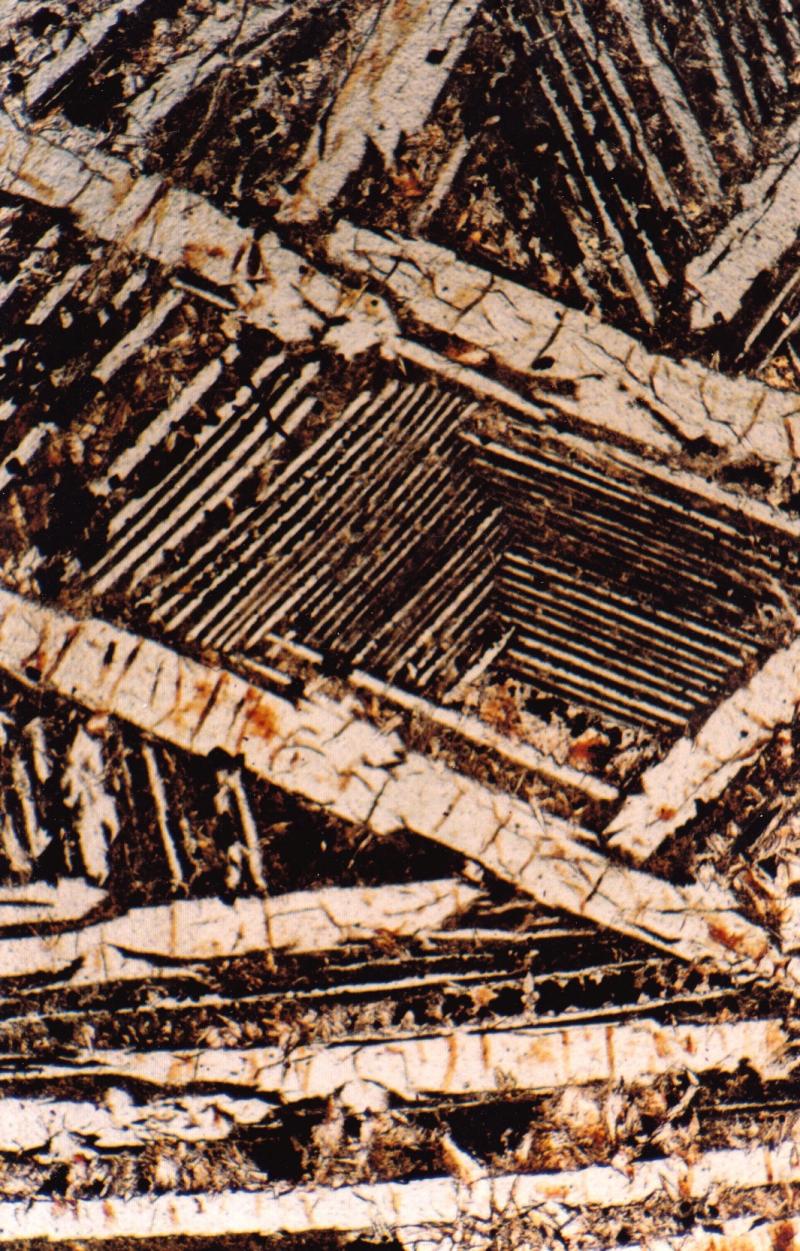
A granoblastic basalt viewed under the microscope (picture is 2.3 mm across). Magnification shows a rock formed of small rounded mineral grains annealed together (plagioclase: white, pyroxene: light green and light brown, and magnetite or ilmenite: black). They may look inoffensive, but these rocks are the hardest material ever drilled in more than four decades of scientific ocean drilling. The rocks are very abrasive and aggressive to the drilling and coring tools, and difficult to penetrate. However, the samples recovered provide a treasure trove of information, recording the rocks’ initial crystallization as a basaltic dike then their reheating at the top of the mid-ocean ridge magma chamber. These rocks represent the heat exchanger where thermal energy from the cooling and solidifying melt in the magma chamber below is exchanged with seawater infiltrating from the oceans, leading to the ‘black smoker-type’ hot (>350°C) water vents on the seafloor. – IODP/USIO
Integrated Ocean Drilling Program (IODP) Expedition 335 Superfast Spreading Rate Crust 4 recently completed operations in Ocean Drilling Program (ODP) Hole 1256D, a deep scientific borehole that extends more than 1500 meters below the seafloor into the Pacific Ocean’s igneous crust – rocks that formed through the cooling and crystallization of magma, and form the basement of the ocean floor.
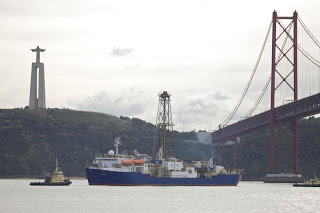
An international team of scientists led by co-chief scientists Damon Teagle (National Oceanographic Center Southampton, University of Southampton in the UK) and Benoît Ildefonse (CNRS, Université Montpellier 2 in France) returned to ODP Hole 1256D aboard the scientific research vessel, JOIDES Resolution, to sample a complete section of intact oceanic crust down into gabbros.
This expedition was the fourth in a series and builds on the efforts of three expeditions in 2002 and 2005.
Gabbros are coarse-grained intrusive rocks formed by the slow cooling of basaltic magmas. They make up the lower two-thirds of the ocean crust. The intrusion of gabbros at the mid-ocean ridges is the largest igneous process active on our planet with more than 12 cubic kilometers of new magma from the mantle intruded into the crust each year. The minerals, chemistry, and textures of gabbroic rocks preserve records of the processes that occur deep within the Earth’s mid-ocean ridges, where new ocean crust is formed.
“The formation of new crust is the first step in Earth’s plate tectonic cycle,” explained Teagle. “This is the principal mechanism by which heat and material rise from within the Earth to the surface of the planet. And it’s the motion and interactions of Earth’s tectonic plates that drive the formation of mountains and volcanoes, the initiation of earthquakes, and the exchange of elements (such as carbon) between the Earth’s interior, oceans, and atmosphere.”
“Understanding the mechanisms that construct new tectonic plates has been a major, long-standing goal of scientific ocean drilling,” added Ildefonse, “but progress has been inhibited by a dearth of appropriate samples because deep drilling (at depths greater than 1000 meters into the crust) in the rugged lavas and intrusive rocks of the ocean crust continues to
pose significant technical challenges.”
ODP Hole 1256D lies in the eastern equatorial Pacific Ocean about 900 kilometers to the west of Costa Rica and 1150 kilometers east of the present day East Pacific Rise. This hole is in 15 million year old crust that formed during an episode of “superfast” spreading at the ancient East Pacific Rise, when the newly formed plates were moving apart by more than 200 millimeters per year (mm/yr).

“Although a spreading rate of 200 mm/yr is significantly faster than the fastest spreading rates on our planet today, superfast-spread crust was an attractive target,” stated Teagle, “because seismic experiments at active mid-ocean ridges indicated that gabbroic rocks should occur at much shallower depths than in crust formed at slower spreading rates. In 2005, we recovered gabbroic rocks at their predicted depth of approximately 1400 meters below the seafloor, vindicating the overall ‘Superfast’ strategy.”Previous expeditions to Hole 1256D successfully drilled through the erupted lavas and thin (approximately one-meter-wide) intrusive “dikes” of the upper crust, reaching into the gabbroic rocks of the lower crust. The drilling efforts of Expedition 335 were focused just below the 1500-meter mark in the critical transition zone from dikes to gabbros, where magma at 1200°C exchanges heat with super-heated seawater circulating within cracks in the upper crust. This heat exchange occurs across a narrow thermal boundary that is perhaps only a few tens of meters thick.

In this zone, the intrusion of magma causes profound textural changes to the surrounding rocks, a process known as contact metamorphism. In the mid-ocean ridge environment this results in the formation of very fine-grained granular rocks, called granoblastic basalts, whose constituent minerals recrystallize at a microscopic scale and become welded together by magmatic heat. The resulting metamorphic rock is as hard as any formation encountered by ocean drilling and sometimes even tougher than the most resilient of hard formation
drilling and coring bits.
Expedition 335 reentered Hole 1256D more than five years after the last expedition to this site. The expedition encountered and overcame a series of significant engineering challenges, each of which was unique, although difficulties were not unexpected when drilling in a deep, uncased, marine borehole into igneous rocks.
The patient, persistent efforts of the drilling crew successfully cleared a major obstruction at a depth of 920 that had initially prevented reentry into the hole to its full depth of 1507 meters. Then at the bottom of the hole the very hard granular rocks that had proved challenging during the previous Superfast expedition were once more encountered. Although there may only be a few tens of meters of these particularly tenacious granoblastic basalts, their extreme toughness once more proved challenging to sample- resulting in the grinding down of one of the hardest formation coring bits into a smooth stump.
A progressive, logical course of action was then undertaken to clear the bottom of the hole of metal debris from the failed coring bit and drilling cuttings. This effort required the innovative use of hole-clearing equipment such as large magnets, and involved over 240 kilometers of drilling pipe deployments (trips) down into the hole and back onto the ship. (The total amount of pipe “tripped” was roughly equivalent to the distance from Paris to the English coast, or from New York City to Philadelphia, or Tokyo to Niigata). These efforts returned hundreds of kilograms of rocks and drill cuttings, including large blocks (up to 5 kilograms) of the culprit granoblastic basalts that hitherto had only been very poorly recovered through coring. A limited number of gabbro boulders were also recovered, indicating that scientists are tantalizingly close to breaking through into the gabbroic layer.
Expedition 335 operations also succeeded in clearing Hole 1256D of drill cuttings, much of
which appear to have been circulating in the hole since earlier expeditions
“We recovered a remarkable sample suite of granoblastic basalts along with minor gabbros, providing a detailed picture of a rarely sampled, yet critical interval of the oceanic crust,” Ildefonse observed. “Most importantly,” he added, “the hole has been stabilized and cleared to its full depth, and is ready for deepening in the near future.”
Note: This story has been adapted from a news release issued by the Integrated Ocean Drilling Program Management International


Researchers discover new force driving Earth’s tectonic plates

A view of the bends of the fracture zones on the Southwest Indian Ridge caused by the slowdown of Africa in response to the Reunion plume head. The image shows the gravity field. – Scripps Institution of Oceanography,UC San Diego
Bringing fresh insight into long-standing debates about how powerful geological forces shape the planet, from earthquake ruptures to mountain formations, scientists at Scripps Institution of Oceanography at UC San Diego have identified a new mechanism driving Earth’s massive tectonic plates.
Scientists who study tectonic motions have known for decades that the ongoing “pull” and “push” movements of the plates are responsible for sculpting continental features around the planet. Volcanoes, for example, are generally located at areas where plates are moving apart or coming together. Scripps scientists Steve Cande and Dave Stegman have now discovered a new force that drives plate tectonics: Plumes of hot magma pushing up from Earth’s deep interior. Their research is published in the July 7 issue of the journal Nature.

Using analytical methods to track plate motions through Earth’s history, Cande and Stegman’s research provides evidence that such mantle plume “hot spots,” which can last for tens of millions of years and are active today at locations such as Hawaii, Iceland and the Galapagos, may work as an additional tectonic driver, along with push-pull forces.

Their new results describe a clear connection between the arrival of a powerful mantle plume head around 70 million years ago and the rapid motion of the Indian plate that was pushed as a consequence of overlying the plume’s location. The arrival of the plume also created immense formations of volcanic rock now called the “Deccan flood basalts” in western India, which erupted just prior to the mass extinction of dinosaurs. The Indian continent has since drifted north and collided with Asia, but the original location of the plume’s arrival has remained volcanically active to this day, most recently having formed Réunion island near Madagascar.

The team also recognized that this “plume-push” force acted on other tectonic plates, and pushed on Africa as well but in the opposite direction.

“Prior to the plume’s arrival, the African plate was slowly drifting but then stops altogether, at the same time the Indian speeds up,” explains Stegman, an assistant professor of geophysics in Scripps’ Cecil H. and Ida M. Green Institute of Geophysics and Planetary Physics. “It became clear the motion of the Indian and African plates were synchronized and the Réunion hotspot was the common link.”

After the force of the plume had waned, the African plate’s motion gradually returned to its previous speed while India slowed down.

“There is a dramatic slow down in the northwards motion of the Indian plate around 50 million years ago that has long been attributed to the initial collision of India with the Eurasian plate,” said Cande, a professor of marine geophysics in the Geosciences Research Division at Scripps.
“An implication of our study is that the slow down might just reflect the waning of the mantle plume-the actual collision might have occurred a little later.”
Note: This story has been adapted from a news release issued by the University of California – San Diego

Ocean currents speed melting of Antarctic ice

Upwelling seawater along parts of Pine Island Glacier Ice Shelf has carved out caves in the ice and drawn wildlife like this whale. – Maria Stenzel, all rights reserved.
Stronger ocean currents beneath West Antarctica’s Pine Island Glacier Ice Shelf are eroding the ice from below, speeding the melting of the glacier as a whole, according to a new study in Nature Geoscience. A growing cavity beneath the ice shelf has allowed more warm water to melt the ice, the researchers say-a process that feeds back into the ongoing rise in global sea levels. The glacier is currently sliding into the sea at a clip of four kilometers (2.5 miles) a year, while its ice shelf is melting at about 80 cubic kilometers a year – 50 percent faster than it was in the early 1990s – the paper estimates.

“More warm water from the deep ocean is entering the cavity beneath the ice shelf, and it is warmest where the ice is thickest,” said study’s lead author, Stan Jacobs, an oceanographer at Columbia University’s Lamont-Doherty Earth Observatory.

In 2009, Jacobs and an international team of scientists sailed to the Amundsen Sea aboard the icebreaking ship Nathaniel B. Palmer to study the region’s thinning ice shelves-floating tongues of ice where landbound glaciers meet the sea. One goal was to study oceanic changes near the Pine Island Glacier Ice Shelf, which they had visited in an earlier expedition, in 1994. The researchers found that in 15 years, melting beneath the ice shelf had risen by about 50 percent. Although regional ocean temperatures had also warmed slightly, by 0.2 degrees C or so, that was not enough to account for the jump.

The local geology offered one explanation. On the same cruise, a group led by Adrian Jenkins, a researcher at British Antarctic Survey and study co-author, sent a robot submarine beneath the ice shelf, revealing an underwater ridge. The researchers surmised that the ridge had once slowed the glacier like a giant retaining wall. When the receding glacier detached from the ridge, sometime before the 1970s, the warm deep water gained access to deeper parts of the glacier. Over time, the inner cavity grew, more warm deep water flowed in, more melt water flowed out, and the ice thinned. With less friction between the ice shelf and seafloor, the landbound glacier behind it accelerated its slide into the sea. Other glaciers in the Amundsen region have also thinned or widened, including Thwaites Glacier and the much larger Getz Ice Shelf.

One day, near the southern edge of Pine Island Glacier Ice Shelf, the researchers directly observed the strength of the melting process as they watched frigid, seawater appear to boil on the surface like a kettle on the stove. To Jacobs, it suggested that deep water, buoyed by added fresh glacial melt, was rising to the surface in a process called upwelling. Jacobs had never witnessed upwelling first hand, but colleagues had described something similar in the fjords of Greenland, where summer runoff and melting glacier fronts can also drive buoyant plumes to the sea surface.

In recent decades, researchers have found evidence that Antarctica is getting windier, and this may also help explain the changes in ocean circulation. Stronger circumpolar winds would tend to push sea ice and surface water north, says Jacobs. That in turn, would allow more warm water from the deep ocean to upwell onto the Amundsen Sea’s continental shelf and into its ice shelf cavities.

Pine Island Glacier, among other ice streams in Antarctica, is being closely watched for its potential to redraw coastlines worldwide. Global sea levels are currently rising at about 3 millimeters (.12 inches) a year. By one estimate, the total collapse of Pine Island Glacier and its tributaries could raise sea level by 24 centimeters (9 inches).

The paper adds important and timely insights about oceanic changes in the region, says Eric Rignot, a professor at University of California at Irvine and a senior research scientist at NASA’s Jet Propulsion Laboratory. “The main reason the glaciers are thinning in this region, we think, is the presence of warm waters,” he said. “Warm waters did not get there because the ocean warmed up, but because of subtle changes in ocean circulation. Ocean circulation is key. This study reinforces this concept.”
Note: This story has been adapted from a news release issued by the The Earth Institute at Columbia University

Stiff sediments made 2004 Sumatra earthquake deadliest in history

At a typical subduction zone, the fault ruptures primarily along the boundary between the two tectonic plates and dissipates in weak sediments (a), or ruptures along ‘splay faults’ (b); in either case, stopping far short of the trench. In the area of the 2004 Sumatra earthquake, sediments are thicker and stronger, extending the rupture closer to the trench for a larger earthquake and, due to deeper water, a much larger tsunami. – UT Austin
An international team of geoscientists has discovered an unusual geological formation that helps explain how an undersea earthquake off the coast of Sumatra in December 2004 spawned the deadliest tsunami in recorded history.

Instead of the usual weak, loose sediments typically found above the type of geologic fault that caused the earthquake, the team found a thick plateau of hard, compacted sediments. Once the fault snapped, the rupture was able to spread from tens of kilometers below the seafloor to just a few kilometers below the seafloor, much farther than weak sediments would have permitted. The extra distance allowed it to move a larger column of seawater above it, unleashing much larger tsunami waves.

“The results suggest we should be concerned about locations with large thicknesses of sediments in the trench, especially those which have built marginal plateaus,” said Sean Gulick, research scientist at The University of Texas at Austin’s Institute for Geophysics. “These may promote more seaward rupture during great earthquakes and a more significant tsunami.”

The team’s results appear this week in an article lead-authored by Gulick in an advance online publication of the journal Nature Geoscience.

The team from The University of Texas at Austin, The University of Southampton in the United Kingdom, The Agency for the Assessment and Application of Technology in Indonesia and The Indonesia Institute for Sciences used seismic instruments, which emit sound waves, to visualize subsurface structures.
Early in the morning of Dec. 26, 2004 a powerful undersea earthquake started off the west coast of Sumatra, Indonesia. The resulting tsunami caused devastation along the coastlines bordering the Indian Ocean with tsunami waves up to 30 meters (100 feet) high inundating coastal communities. With very little warning of impending disaster, more than 230,000 people died and millions became homeless.

The earthquake struck along a fault where the Indo-Australian plate is being pushed beneath the Sunda plate to the east. This is known as a subduction zone and in this case the plates meet at the Sunda Trench, around 300km west of Sumatra. The Indo-Australian plate normally moves slowly under the Sunda plate, but when the rupture occurred, it violently surged forward.

The Sunda Trench is full of ancient sediment, some of which has washed out of the Ganges over millions of years forming a massive accumulation of sedimentary rock called the Nicobar Fan. As the Indo-Australian plate is subducted, these sediments are scraped off to form what’s called an accretionary prism. Usually an accretionary prism slopes consistently away from the trench, but here the seabed shallows steeply before flattening out, forming a plateau.

Subduction earthquakes are thought to start tens of kilometers beneath the Earth’s surface. Displacement or “slip” on the fault, as geologists call it, propagates upwards and generally dissipates as it reaches weaker rocks closer to the surface. If it were an ordinary seismic zone, the sediment in the Sunda Trench should have slowed the upward and westward journey of the 2004 earthquake, generating a tsunami in the shallower water on the landward (east) side of the trench.

But in fact the fault slip seems to have reached close to the trench, lifting large sections of the seabed in deeper water and producing a much larger tsunami.

This latest report extends work published last year in the journal Science that found a number of unusual features at the rupture zone of the 2004 earthquake such as the seabed topography, how the sediments are deformed and the locations of small earthquakes (aftershocks) following the main earthquake. The researchers also reported then that the fault zone was a much lower density zone than surrounding sediments, perhaps reducing friction and allowing a larger slip.
Note: This story has been adapted from a news release issued by the University of Texas at Austin

Earth from space: A gush of volcanic gas

This image shows the huge plume of sulphur dioxide that spewed from Chile’s Puyehue-Cordón Caulle Volcanic Complex, which lies in the Andes about 600 km south of Santiago. It was generated on June 6 using data from the Infrared Atmospheric Sounding Interferometer on the MetOp-A satellite and represents sulfur dioxide concentrations within the full vertical column of atmosphere. As the eruption continued, the image shows how strong winds initially swept the broad plume of sulfur dioxide northwards and then eastwards across Argentina and out over the southern Atlantic Ocean. The MetOp program was jointly established by ESA and Eumetsat and forms the space segment of Eumetsat’s Polar System. – Université Libre de Bruxelles (ULB)
This image shows the huge plume of sulphur dioxide that spewed from Chile’s Puyehue-Cordón Caulle Volcanic Complex, which lies in the Andes about 600 km south of Santiago.
After lying dormant for more than 50 years, a series of rumbling earthquakes signalled the beginnings of this major volcanic eruption. On 4 June, a fissure opened, sending a towering plume of volcanic ash and gas over 10 km high. Several thousand people were evacuated as a thick layer of ash and pumice fell and blanketed a wide area. Airports in Chile and Argentina were closed as a result.
The image was generated on 6 June using data from the Infrared Atmospheric Sounding Interferometer on Eumetsat’s MetOp-A satellite. As the eruption continued, the image shows how strong winds initially swept the broad plume of sulphur dioxide northwards and then eastwards across Argentina and out over the southern Atlantic Ocean.
Strong westerly winds are common in this region because it lies within the belt of the ‘Roaring Forties’. Since there is little land south of 40º, higher wind speeds can develop than at the same latitudes in the Northern Hemisphere.
Interestingly, over the South Atlantic, the plume take a sharp turn to the north as a pressure system causes the wind to change direction.
The Puyehue-Cordón Caulle complex is a chain of volcanoes that includes the Puyehue volcano, the Cordilera Nevada caldera and the Cordón Caulle rift zone. This event appears to have stemmed from the rift zone and is the most serious since the eruption of 1960, also from the same vent.
Chile has more than 3000 volcanoes, of which around 80 are currently active.
The image represents sulphur dioxide concentrations within the full vertical column of atmosphere. It was generated using data from the interferometer, which was developed by the French space agency CNES for MetOp-A.
Note: This story has been adapted from a news release issued by the European Space Agency

Going with the flow: Researchers find compaction bands in sandstone are permeable

Compaction bands at multiple scales ranging from the field scale to the specimen scale to the meso and grain scale. At the field scale, picture shows the presence of narrow tabular structures within the host rock in the Valley of Fire. At the grain scale, images show clear differences in porosity (dark spots) density. This research aims at quantifying the impact of grain scale features in macroscopic physical properties that control behavior all the way to the field scale. – José Andrade/Caltech

When geologists survey an area of land for the potential that gas or petroleum deposits could exist there, they must take into account the composition of rocks that lie below the surface. Take, for instance, sandstone-a sedimentary rock composed mostly of weakly cemented quartz grains. Previous research had suggested that compaction bands-highly compressed, narrow, flat layers within the sandstone-are much less permeable than the host rock and might act as barriers to the flow of oil or gas.

Now, researchers led by José Andrade, associate professor of civil and mechanical engineering at the California Institute of Technology (Caltech), have analyzed X-ray images of Aztec sandstone and revealed that compaction bands are actually more permeable than earlier models indicated. While they do appear to be less permeable than the surrounding host rock, they do not appear to block the flow of fluids. Their findings were reported in the May 17 issue of Geophysical Research Letters.
The study includes the first observations and calculations that show fluids have the ability to flow in sandstone that has compaction bands. Prior to this study, there had been inferences of how permeable these formations were, but those inferences were made from 2D images. This paper provides the first permeability calculations based on actual rock samples taken directly from the field in the Valley of Fire, Nevada. From the data they collected, the researchers concluded that these formations are not as impermeable as previously believed, and that therefore their ability to trap fluids-like oil, gas, and CO2-should be measured based on 3D images taken from the field.

“These results are very important for the development of new technologies such as CO2 sequestration-removing CO2 from the atmosphere and depositing it in an underground reservoir-and hydraulic fracturing of rocks for natural gas extraction,” says Andrade. “The quantitative connection between the microstructure of the rock and the rock’s macroscopic properties, such as hydraulic conductivity, is crucial, as physical processes are controlled by pore-scale features in porous materials. This work is at the forefront of making this quantitative connection.”

The research team connected the rocks’ 3D micromechanical features-such as grain size distribution, which was obtained using microcomputed tomography images of the rocks to build a 3D model-with quantitative macroscopic flow properties in rocks from the field, which they measured on many different scales. Those measurements were the first ever to look at the three-dimensional ability of compaction bands to transmit fluid. The researchers say the combination of these advanced imaging technologies and multiscale computational models will lead to unprecedentedly accurate measurements of crucial physical properties, such as permeability, in rocks and similar materials.

Andrade says the team wants to expand these findings and techniques. “An immediate idea involves the coupling of solid deformation and chemistry,” he says. “Accounting for the effect of pressures and their potential to exacerbate chemical reactions between fluids and the solid matrix in porous materials, such as compaction bands, remains a fundamental problem with multiple applications ranging from hydraulic fracturing for geothermal energy and natural gas extraction, to applications in biological tissue for modeling important processes such as osteoporosis. For instance, chemical reactions take place as part of the process utilized in fracturing rocks to enhance the extraction of natural gas.”
Note: This story has been adapted from a news release issued by the California Institute of Technology
Team debunks theory on end of ‘Snowball Earth’ ice age

Crystals of highly carbon-13-depleted carbonate are observed using a light microscope. – Thomas Bristow
There’s a theory about how the Marinoan ice age-also known as the “Snowball Earth” ice age because of its extreme low temperatures-came to an abrupt end some 600 million years ago. It has to do with large amounts of methane, a strong greenhouse gas, bubbling up through ocean sediments and from beneath the permafrost and heating the atmosphere.
The main physical evidence behind this theory has been samples of cap dolostone from south China, which were known to have a lot less of the carbon-13 isotope than is normally found in these types of carbonate rocks. (Dolostone is a type of sedimentary rock composed of the carbonate mineral, dolomite; it’s called cap dolostone when it overlies a glacial deposit.) The idea was that these rocks formed when Earth-warming methane bubbled up from below and was oxidized-“eaten”-by microbes, with its carbon wastes being incorporated into the dolostone, thereby leaving a signal of what had happened to end the ice age. The idea made sense, because methane also tends to be low in carbon-13; if carbon-13-depeleted methane had been made into rock, that rock would indeed also be low in carbon-13. But the idea was controversial, too, since there had been no previous isotopic evidence in carbonate rock of methane-munching microbes that early in Earth’s history.

And, as a team of scientists led by researchers from the California Institute of Technology (Caltech) report in this week’s issue of the journal Nature, it was also wrong-at least as far as the geologic evidence they looked at goes. Their testing shows that the rocks on which much of that ice-age-ending theory was based were formed millions of years after the ice age ended, and were formed at temperatures so high there could have been no living creatures associated with them.
“Our findings show that what happened in these rocks happened at very high temperatures, and abiologically,” says John Eiler, the Robert P. Sharp Professor of Geology and professor of geochemistry at Caltech, and one of the paper’s authors. “There is no evidence here that microbes ate methane as food. The story you see in this rock is not a story about ice ages.”
To tell the rocks’ story, the team used a technique Eiler developed at Caltech that looks at the way in which rare isotopes (like the carbon-13 in the dolostone) group, or “clump,” together in crystalline structures like bone or rock. This clumping, it turns out, is highly dependent upon the temperature of the immediate environment in which the crystals form. Hot temperatures mean less clumping; low temperatures mean more.
“The rocks that we analyzed for this study have been worked on before,” says Thomas Bristow, the paper’s first author and a former postdoc at Caltech who is now at NASA Ames Research Center, “but the unique advance available and developed at Caltech is the technique of using carbonate clumped-isotopic thermometry to study the temperature of crystallization of the samples. It was primarily this technique that brought new insights regarding the geological history of the rocks.”
What the team’s thermometer made very clear, says Eiler, is that “the carbon source was not oxidized and turned into carbonate at Earth’s surface. This was happening in a very hot hydrothermal environment, underground.”
In addition, he says, “We know it happened at least millions of years after the ice age ended, and probably tens of millions. Which means that whatever the source of carbon was, it wasn’t related to the end of the ice age.”
Since this rock had been the only carbon-isotopic evidence of a Precambrian methane seep, these findings bring up a number of questions-questions not just about how the Marinoan ice age ended, but about Earth’s budget of methane and the biogeochemistry of the ocean.
“The next stage of the research is to delve deeper into the question of why carbon-13-depleted carbonate rocks that formed at methane seeps seem to only be found during the later 400 million years of Earth history,” says John Grotzinger, the Fletcher Jones Professor of Geology at Caltech and the principal investigator on the work described. “It is an interesting fact of the geologic record that, despite a well-preserved record of carbonates beginning 3.5 billion years ago, the first 3 billion years of Earth history does not record evidence of methane oxidation. This is a curious absence. We think it might be linked to changes in ocean chemistry through time, but more work needs to be done to explore that.”
 
Note: This story has been adapted from a news release issued by the California Institute of Technology
Unusual earthquake gave Japan tsunami extra punch, say Stanford scientists

This diagram shows the March 11 fault motion sequence. 1. Rupture of the fault plane begins at the epicenter. 2. Rupture travels westward, down the fault plane towards Honshu. The island suffers violent shaking for 40 seconds. 3. The upward sloping east side of the fault plane begins to rupture, continuing for 30 to 35 seconds. The sediments overlying the east side expand up the fault plane in response to the force of the rupture. 4. The water above the sediments is pushed into an unstable dome that then flows out in all directions as a tsunami. – Anna Cobb, Stanford News Service
 The magnitude 9 earthquake and resulting tsunami that struck Japan on March 11 were like a one-two punch – first violently shaking, then swamping the islands – causing tens of thousands of deaths and hundreds of billions of dollars in damage. Now Stanford researchers have discovered the catastrophe was caused by a sequence of unusual geologic events never before seen so clearly.
“It was not appreciated before this earthquake that this size of earthquake was possible on this plate boundary,” said Stanford geophysicist Greg Beroza. “It was thought that typical earthquakes were much smaller.”
The earthquake occurred in a subduction zone, where one great tectonic plate is being forced down under another tectonic plate and into the Earth’s interior along an active fault.
The fault on which the Tohoku-Oki earthquake took place slopes down from the ocean floor toward the west. It first ruptured mainly westward from its epicenter – 32 kilometers (about 20 miles) below the seafloor – toward Japan, shaking the island of Honshu violently for 40 seconds.
Surprisingly, the fault then ruptured eastward from the epicenter, up toward the ocean floor along the sloping fault plane for about 30 or 35 seconds.
As the rupture neared the seafloor, the movement of the fault grew rapidly, violently deforming the seafloor sediments sitting on top of the fault plane, punching the overlying water upward and triggering the tsunami.
“When the rupture approached the seafloor, it exploded into tremendously large slip,” said Beroza.”It displaced the seafloor dramatically.
“This amplification of slip near the surface was predicted in computer simulations of earthquake rupture, but this is the first time we have clearly seen it occur in a real earthquake.
“The depth of the water column there is also greater than elsewhere,” Beroza said. “That, together with the slip being greatest where the fault meets the ocean floor, led to the tsunami being outlandishly big.”
Beroza is one of the authors of a paper detailing the research, published online last week in Science Express.
“Now that this slip amplification has been observed in the Tohoku-Oki earthquake, what we need to figure out is whether similar earthquakes – and large tsunamis – could happen in other subduction zones around the world,” he said.
Beroza said the sort of “two-faced” rupture seen in the Tohoku-Oki earthquake has not been seen in other subduction zones, but that could be a function of the limited amount of data available for analyzing other earthquakes.
There is a denser network of seismometers in Japan than any other place in the world, he said. The sensors provided researchers with much more detailed data than is normally available after an earthquake, enabling them to discern the different phases of the March 11 temblor with much greater resolution than usual.
Prior to the Tohoku-Oki earthquake, Beroza and Shuo Ma, who is now an assistant professor at San Diego State University, had been working on computer simulations of what might happen during an earthquake in just such a setting. Their simulations had generated similar “overshoot” of sediments overlying the upper part of the fault plane.
Following the Japanese earthquake, aftershocks as large as magnitude 6.5 slipped in the opposite direction to the main shock. This is a symptom of what is called “extreme dynamic overshoot” of the upper fault plane, Beroza said, with the overextended sediments on top of the fault plane slipping during the aftershocks back in the direction they came from.
“We didn’t really expect this to happen because we believe there is friction acting on the fault” that would prevent any rebound, he said. “Our interpretation is that it slipped so much that it sort of overdid it. And in adjusting during the aftershock sequence, it went back a bit.
“We don’t see these bizarre aftershocks on parts of the fault where the slip is less,” he said.
The damage from the March 11 earthquake was so extensive in part simply because the earthquake was so large. But the way it ruptured on the fault plane, in two stages, made the devastation greater than it might have been otherwise, Beroza said.
The deeper part of the fault plane, which sloped downward to the west, was bounded by dense, hard rock on each side. The rock transmitted the seismic waves very efficiently, maximizing the amount of shaking felt on the island of Honshu.
The shallower part of the fault surface, which slopes upward to the east and surfaces at the Japan Trench – where the overlying plate is warped downward by the motion of the descending plate – had massive slip. Unfortunately, this slip was ideally situated to efficiently generate the gigantic tsunami, with devastating consequences.
Note: This story has been adapted from a news release issued by the Stanford University

‘Fool’s Gold’ from the deep is fertilizer for ocean life

This is a black smoker from the Mariner vent site in the Pacific Ocean’s Eastern Lau Spreading Center. – University of Delaware
Similar to humans, the bacteria and tiny plants living in the ocean need iron for energy and growth. But their situation is quite different from ours–for one, they can’t turn to natural iron sources like leafy greens or red meat for a pick-me-up.
So, from where does their iron come?
New research results published in the current issue of the journal Nature Geoscience point to a source on the seafloor: minute particles of pyrite, or fool’s gold, from hydrothermal vents at the bottom of the ocean.
Scientists already knew the vents’ cloudy plumes, which spew forth from the earth’s interior, include pyrite particles, but thought they were solids that settled back on the ocean bottom.
Now, scientists at the University of Delaware and other institutions have shown the vents emit a significant amount of microscopic pyrite particles that have a diameter 1,000 times smaller than that of a human hair.

Because the nanoparticles are so small, they are dispersed into the ocean rather than falling to the sea floor.

Barbara Ransom, program director in the National Science Foundation’s (NSF) Division of Ocean Sciences, which funded the research, called the discovery “very exciting.”
“These particles have long residence times in the ocean and can travel long distances from their sources, forming a potentially important food source for life in the deep sea,” she said.
The project also received support from another NSF program, the Experimental Program to Stimulate Competitive Research, or EPSCOR.
The mineral pyrite, or iron pyrite, has a metallic luster and brass-yellow color that led to its nickname: fool’s gold. In fact, pyrite is sometimes found in association with small quantities of gold.
Scientist George Luther of the University of Delaware explained the importance of the lengthy amount of time pyrite exists suspended in its current form in the sea, also known as its residence time.
Pyrite, which consists of iron and sulfur as iron disulfide, does not rapidly react with oxygen in seawater to form oxidized iron, or “rust,” allowing it to stay intact and move throughout the ocean better than other forms of iron.
“As pyrite travels from the vents to the ocean interior and toward the surface ocean, it oxidizes gradually to release iron, which becomes available in areas where iron is depleted so that organisms can assimilate it, then grow,” Luther said.
“It’s an ongoing iron supplement for the ocean–much as multivitamins are for humans.”
Growth of tiny plants known as phytoplankton can affect atmospheric oxygen and carbon dioxide levels.
Much of the research was performed by scientist and lead author Mustafa Yucel of the Universite Pierre et Marie Curie in France, conducted while Yucel worked on a doctorate at the University of Delaware.
It involved scientific cruises to the South Pacific and East Pacific Rise using the manned deep-sea submersible Alvin and the remotely operated vehicle Jason, both operated by the Woods Hole Oceanographic Institution.
Note: This story has been adapted from a news release issued by the National Science Foundation

Geologist leads team effort to solve mystery of the Colorado Plateau

A convective ‘drip’ of lithosphere (blue) below the Colorado Plateau is due to delamination caused by rising, partially molten material from the asthenosphere (gold), as plotted by Rice University researchers and their colleagues and described in a new paper in the journal Nature. (Credit Levander Lab/Rice University)
A team of scientists led by Rice University has figured out why the Colorado Plateau – a 130,000-square-mile region that straddles Colorado, Utah, Arizona and New Mexico — is rising even while parts of its lower crust appear to be falling. The massive, tectonically stable region of the western United States has long puzzled geologists.

A paper published today in the journal Nature shows how magmatic material from the depths slowly rises to invade the lithosphere — Earth’s crust and strong uppermost mantle. This movement forces layers to peel away and sink, said lead author Alan Levander, professor and the Carey Croneis Chair in Geology at Rice University.

The invading asthenosphere is two-faced. Deep in the upper mantle, between about 60 and 185 miles down, it’s usually slightly less dense and much less viscous than the overlying mantle lithosphere of the tectonic plates; the plates there can move over its malleable surface.

But when the asthenosphere finds a means to, it can invade the lithosphere and erode it from the bottom up. The partially molten material expands and cools as it flows upward. It infiltrates the stronger lithosphere, where it solidifies and makes the brittle crust and uppermost mantle heavy enough to break away and sink. The buoyant asthenosphere then fills the space left above, where it expands and thus lifts the plateau.

Levander and his fellow researchers know this because they’ve seen evidence of the process from data gathered by the massive USArray seismic observatory, hundreds of observatory-quality seismographs deployed 45 miles apart in a mobile array that covers a north/south strip of the United States.

The seismographs were first deployed in the West in 2004 and are heading eastward in a 10-year process, with each seismograph station in place for a year and a half. Seismic images made by Rice that are analogous to medical ultrasounds were combined with images like CAT scans made by seismologists at the University of Oregon; the resulting images revealed a pronounced anomaly extending from the crust well into the mantle.
Levander said the combined Colorado Plateau images show the convective “drip” of the lithosphere just north of the Grand Canyon; the lithosphere is slowly sinking several hundred kilometers into the Earth. That process may have helped create the canyon itself, as lifting of the plateau over the last 6 million years defined the Colorado River’s route.

Levander said USArray has found similar downwellings in two other locations in the American West; this suggests the forces deforming the lower crust and uppermost mantle are widespread. In both other locations, the downwellings happened within the past 10 million years. “But under the Colorado Plateau, we have caught it in the act,” he said.

“We had to find a trigger to cause the lithosphere to become dense enough to fall off,” Levander said. The partially molten asthenosphere is “hot and somewhat buoyant, and if there’s a topographic gradient along the asthenosphere’s upper surface, as there is under the Colorado Plateau, the asthenosphere will flow with it and undergo a small amount ofdecompression melting as it rises.”

It melts enough, he said, to infiltrate the base of the lithosphere and solidify, “and it’s at such a depth that it freezes as a dense phase. The heat from the invading melts also reduces the viscosity of the mantle lithosphere, making it flow more readily. At some point, the base of the lithosphere exceeds the density of the asthenosphere underneath and starts to drip.”

Levander said the National Science Foundation-funded USArray is already providing a wealth of geologic data. “I have quite a few seismologist friends in Europe attempting to develop a EuroArray, one of whom said, ‘Well, it looks like you have a machine producing Nature and Science papers.’ Well, yes, we do,” he said. “We can now see things we never saw before.”
Note: This story has been adapted from a news release issued by the Rice University

Melting ice on Arctic islands a major player in sea level rise

This is summer sea ice off the coast of Devon Island in Nunavut, Canada in August 2008. – Alex Gardner
Melting glaciers and ice caps on Canadian Arctic islands play a much greater role in sea level rise than scientists previously thought, according to a new study led by a University of Michigan researcher.
The 550,000-square-mile Canadian Arctic Archipelago contains some 30,000 islands. Between 2004 and 2009, the region lost the equivalent of three-quarters of the water in Lake Erie, the study found. Warmer-than-usual temperatures in those years caused a rapid increase in the melting of glacier ice and snow, said Alex Gardner, a research fellow in the Department of Atmospheric, Oceanic and Space Sciences who led the project. The study is published online in Nature on April 20.

“This is a region that we previously didn’t think was contributing much to sea level rise,” Gardner said. “Now we realize that outside of Antarctica and Greenland, it was the largest contributor for the years 2007 through 2009. This area is highly sensitive and if temperatures continue to increase, we will see much more melting.”

Ninety-nine percent of all the world’s land ice is trapped in the massive ice sheets of Antarctica and Greenland. Despite their size, they currently only account for about half of the land-ice being lost to oceans.

This is partly because they are cold enough that ice only melts at their edges.

The other half of the ice melt adding to sea-level rise comes from smaller mountain glaciers and ice caps such as those in the Canadian Arctic, Alaska, and Patagonia. This study underscores the importance of these many smaller, often overlooked regions, Gardner said.
During the first three years of this study, from 2004 through 2006, the region lost an average of 7 cubic miles of water per year. That increased dramatically to 22 cubic miles of water—roughly 24 trillion gallons—per year during the latter part of the study. Over the entire six years, this added a total of 1 millimeter to the height of the world’s oceans. While that might not sound like much, Gardner says that small amounts can make big differences.
In this study, a one-degree increase in average air temperature resulted in 15 cubic miles of additional melting.
Because the study took place over just six years, however, the results don’t signify a trend.
“This is a big response to a small change in climate,” Gardner said. “If the warming continues and we start to see similar responses in other glaciated regions, I would say it’s worrisome, but right now we just don’t know if it will continue.”
The United Nations projects that the oceans will rise by a full meter by the end of century. This could have ramifications for tens of millions of people who live in coastal cities and low-lying areas across the globe.

Future tsunamis and storm surges, for example, would more easily overtop ocean barriers.

To conduct the study, researchers from an international array of institutions performed numerical simulations and then used two different satellite-based techniques to independently validate their model results. Through laser altimetry, they measured changes in the region’s elevation over time. And through a technique called “gravimetry,” they measured changes in the Earth’s gravitational field, which signified a redistribution of mass—a loss of mass for glaciers and ice caps.
Note: This story has been adapted from a news release issued by the University of Michigan

Related Articles