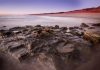
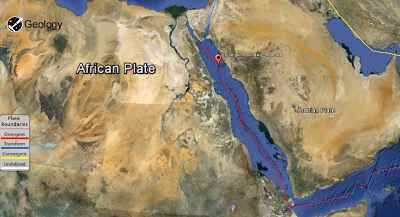
The Red Sea was formed by Arabia being split from Africa by movement of the Red Sea Rift. This split started in the Eocene and accelerated during the Oligocene. The sea is still widening, and it is considered that it will become an ocean in time (as proposed in the model of John Tuzo Wilson). In 1949, a deep water survey reported anomalously hot brines in the central portion of the Red Sea. Later work in the 1960s confirmed the presence of hot, 60 °C (140 °F), saline brines and associated metalliferous muds. The hot solutions were emanating from an active subseafloor rift. The high salinity of the waters was not hospitable to living organisms.
Sometimes during the Tertiary period the Bab el Mandeb closed and the Red Sea evaporated to an empty, hot, dry salt-floored sink. Effects causing this would have been:
A “race” between the Red Sea widening and Perim Island erupting filling the Bab el Mandeb with lava.
The lowering of world sea level during the Ice Ages because of much water being locked up in the ice caps.
A number of volcanic islands rise from the center of the sea. Most are dormant, but in 2007 Jabal al-Tair island, in the Bab el Mandeb strait, erupted violently. An eruption among the nearby Zubair islands followed in 2011.
Mineral resources
In terms of mineral resources the major constituents of the Red Sea sediments are as follows:
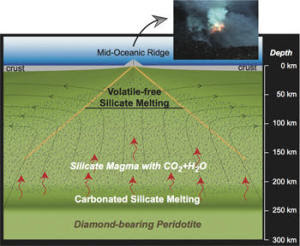
A schematic cross section of the Earth’s interior below oceanic ridges shows the conditions of magma generation. Through experimentation on mantle rocks, Rice University researchers found evidence that magma forms as deep as 250 kilometers inside the Earth’s, much deeper than previously thought. Such melting would help explain apparent geophysical and geochemical contradictions that have puzzled geologists for years. (Credit: Graphic by Dasgupta Group)
Magma forms far deeper than geologists previously thought, according to new research at Rice University.
A group led by geologist Rajdeep Dasgupta put very small samples of peridotite under very large pressures in a Rice laboratory to determine that rock can and does liquify, at least in small amounts, as deep as 250 kilometers in the mantle beneath the ocean floor. He said this explains several puzzles that have bothered scientists.
Dasgupta is lead author of the paper to be published this week in Nature.
The mantle is the planet’s middle layer, a buffer of rock between the crust — the top 5 miles or so — and the core. If one could compress millions of years of observation down to minutes, the mantle would look like a rolling mass of rising and falling material. This slow but constant convection brings materials from deep within the planet to the surface — and occasionally higher through volcanoes.
The Rice team focused on mantle beneath the ocean because that’s where the crust is created and, Dasgupta said, “the connection between the interior and surface world is established.” Silicate melts — aka magma — rise with the convective currents, cool and spread out to form the ocean crust. The starting point for melting has long been thought to be at 70 kilometers beneath the seafloor.
That has confounded geologists who suspected but could not demonstrate the existence of deeper silicate magma, said Dasgupta, an assistant professor of Earth science at Rice.
Scientists determine the mantle’s density by measuring the speed of a seismic wave after an earthquake, from its origin to other points on the planet. These waves travel faster through solids than liquids, and geologists have been surprised to detect waves slowing down through what should be the mantle’s express lane. “Seismologists have observed anomalies in their velocity data as deep as 200 kilometers beneath the ocean floor,” Dasgupta said. “Based on our work, we show that trace amounts of magma are generated at this depth, which would potentially explain that.”
The research also offers clues to the bulk electrical conductivity of the oceanic mantle, he said. “The magma at such depths has a high enough amount of dissolved carbon dioxide that its conductivity is very high,” Dasgupta said. “As a consequence, we can explain the conductivity of the mantle, which we knew was very high but always struggled to explain.”
Because humans have not yet dug deep enough to sample the mantle directly — though some are trying — researchers have to extrapolate data on rocks carried up to the surface. A previous study by Dasgupta determined that melting in Earth’s deep upper mantle is caused by the presence of carbon dioxide. The present study shows that carbon not only leads the charge to make carbonate fluid but also helps to make silicate magma at significant depths.
The researchers also found carbonated rock melts at significantly lower temperatures than non-carbonated rock. “This deep melting makes the silicate differentiation of the planet much more efficient than previously thought,” Dasgupta said. “Not only that, this deep magma is the main agent to bring all the key ingredients for life — water and carbon — to the surface of the Earth.”
In Dasgupta’s high-pressure lab at Rice, volcanic rocks are windows to the planet’s interior. The researchers crushed tiny rock samples that contain carbon dioxide to find out how deep magma forms.
“Our field of research is called experimental petrology,” he said. “We have all the necessary tools to simulate very high pressures (up to nearly 750,000 pounds per square inch for these experiments) and temperatures. We can subject small amounts of rock samples to these conditions and see what happens.”
They use powerful hydraulic presses to partially melt “rocks of interest” that contain tiny amounts of carbon to simulate what they believe is happening under equivalent pressures in the mantle. “When rocks come from deep in the mantle to shallower depths, they cross a certain boundary called the solidus, where rocks begin to undergo partial melting and produce magmas,” Dasgupta said.
“Scientists knew the effect of a trace amount of carbon dioxide or water would be to lower this boundary, but our new estimation made it 150-180 kilometers deeper from the known depth of 70 kilometers,” he said.
“What we are now saying is that with just a trace of carbon dioxide in the mantle, melting can begin as deep as around 200 kilometers. And when we incorporate the effect of trace water, the magma generation depth becomes at least 250 kilometers. This does not generate a large amount, but we show the extent of magma generation is larger than previously thought and, as a consequence, it has the capacity to affect geophysical and geochemical properties of the planet as a whole.”
Co-authors of the paper are Rice graduate student Ananya Mallik and postdoctoral researcher Kyusei Tsuno; Research Professor Anthony Withers and Marc Hirschmann, the George and Orpha Gibson Chair of Earth and Planetary Sciences, at the University of Minnesota, and Greg Hirth, a professor of geological sciences at Brown University.
The study was supported by the National Science Foundation and a Packard Fellowship to Dasgupta.
Note : The above story is reprinted from materials provided by Rice University. The original article was written by Mike Williams.
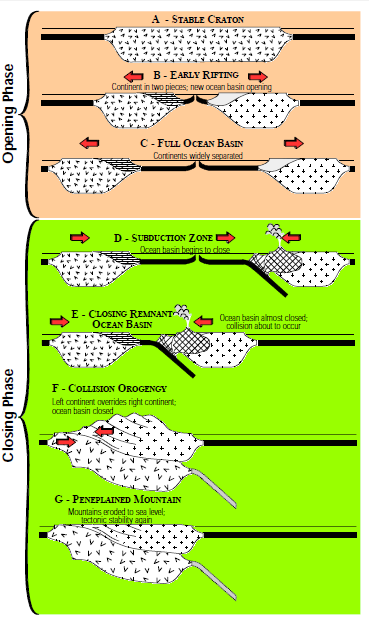
A Simple Wilson Cycle The Opening and Closing of An Ocean Basin
Wilson cycle
The cyclical opening and closing of ocean basins caused by movement of the Earth’s plates. The Wilson cycle begins with a rising plume of magma and the thinning of the overlying crust. As the crust continues to thin due to extensional tectonic forces, an ocean basin forms and sediments accumulate along its margins. Subsequently subduction is initiated on one of the ocean basin’s margins and the ocean basin closes up. When the crust begins to thin again, another cycle begins. The Wilson cycle is named after the Canadian geophysicist J. Tuzo Wilson (1908-1993).
The Wilson cycle begins in
Stage A with a stable continental craton. A hot spot (not present in the drawings) rises up under the craton, heating it, causing it to swell upward, stretch and thin like taffy, crack, and finally split into two pieces. This process not only splits a continent in two it also creates a new divergent plate boundary.
Stage B – the one continent has been separated into two continents, east and west, and a new ocean basin (the ophiolite suite) is generated between them. The ocean basin in this stage is comparable to the Red Sea today. As the ocean basin widens the stretched and thinned edges where the two continents used to be joined cool, become denser, and sink below sea level. Wedges of divergent continental margins sediments accumulate on both new continental edges.
Stage C – the ocean basin widens, sometimes to thousands of miles; this is comparable to the Atlantic ocean today. As long as the ocean basin is opening we are still in the opening phase of the Wilson cycle.
Stage D – the closing phase of the Wilson Cycle begins when a subduction zone (new convergent plate boundary) forms. The subduction zone may form anywhere in the ocean basin, and may face in any direction. In this model we take the simplest situation; a subduction zone developing under the edge of one continent. Once the subduction zone is active the ocean basin is doomed; it will all eventually subduct and disappear. These are remnant ocean basins.
Stage E – most of the remnant ocean basin has subducted and the two continents are about to collide. Subduction under the edge of a continent has a lot of results. Deep in the subduction zone igneous magma is generated and rises to the surface to form volcanoes, that build into a cordilleran mountain range (e.g. the Cascade mountains of Washington, Oregon, and northern California.) Also, a lot of metamorphism occurs and folding and faulting.
Stage F – the two continents, separated in Stages A and B now collide. The remnant ocean basin is completely subducted. Technically the closing phase of the Wilson cycle is over. Because the subduction zone acts as a ramp the continent with the subduction zone (a hinterland) slides up over the edge of the continent without out it (a foreland).
Stage G – once the collision has occurred the only thing left for the mountain to do is erode down to sea level – a peneplain. The stage G drawing is a distortion, however. With the collision the continental thickness doubles, and since continental rock is light weight, both will rise as the mountain erodes, much like a boat rises when cargo is taken off of it. Thus, in reality, most of the hinterland continent will be eroded away, and the foreland continent will eventually get back to the earth’s surface again.
Note : The above story is reprinted from materials provided by James Madison University
Though churning smokestacks, cud-chewing cows and gasoline-burning vehicles are contributing constantly to greenhouse gas emissions, there are also many processes that do the reverse, pulling molecules like carbon dioxide out of the atmosphere. One of these is chemical weathering, which occurs when rock turns into soil. Carbon dioxide molecules and rain combine to dissolve rock, and the weathering products, including sediment, eventually make their way through waterways to the ocean where some become trapped on the ocean bottom and in coral reefs and seashells.
For years, geologists believed that mountains, due to their steep slopes and high rates of erosion, were large contributors to this “carbon draw down” effect. But a new study led by the University of Pennsylvania’s Jane Willenbring suggests that mountains do not play a significant role in this activity, turning a geological paradigm on its head.
Willenbring, an assistant professor in the Department of Earth and Environmental Science, led the research, working with Alexandru Codilean of the GFZ German Research Center for Geosciences and Brandon McElroy of the University of Wyoming.
“High mountains have been the go-to field area for people interested in studying how much sediment goes into the ocean and how tectonics perturbs global climate,” Willenbring said. “But what we found was that mountains contribute only a small amount of the total sediment produced on Earth.”
This finding, published in the journal Geology, directly challenges previous studies, which suggested that small mountain rivers contributed most of the sediment to the world’s oceans.
What these other scientists neglected to account for, according to Willenbring, was that even the steepest, most erosion- and weathering-prone slopes take up only a tiny fraction of Earth’s surface. So while these steep protrusions have very high rates of carbon absorption per unit area, they are far outstripped by the much more abundant expanses of gently sloping land.
“These small mountain streams are packing a big punch for their size,” Willenbring said. “But even though they have a lot of erosion going on, the amount of the Earth covered by mountain ranges is too small to produce the amount of sediment that less steeply sloped areas produce.”
The previous studies lacked access to a new investigative technique that was developed relatively recently. The method involves an examination of cosmogenic nuclides, which are rare forms of chemical elements produced only when supernovas explode, sending high-energy radiation to Earth and breaking up other atoms. Counting these chemical isotopes allows researchers to determine how long sediment has remained in a particular watershed over long time periods.
In contrast, techniques used previously, which involve physically measuring sediment flow in rivers and streams, only capture a snapshot of sediment erosion and deposition rates over a short time frame.
The researchers analyzed published data on cosmogenic nuclide concentrations from around the world to determine the levels of sediment flux over a time frame of thousands to hundreds of thousands of years. They also gathered topographical data to determine the slopes of the surrounding areas. They then extrapolated these rates of sediment deposition to the whole Earth’s surface.
“What the cosmogenic nuclides tell us is that chemical weathering still happens in these low sloping areas,” Willenbring said.
Other scientists had believed these gently rolling or flat areas, such as floodplains, to be “trappers” of sediment, but the research team’s analysis demonstrated that, despite being areas of net deposition, they are in fact still drawing large amounts of carbon dioxide from the atmosphere.
Given these findings, geologists interested in understanding the contribution of erosion to climate fluctuations may want to spend less time on mountaintops and more time in big, lower-lying rivers like the Mississippi and the Amazon, Willenbring said.
“We’re going to need to start studying ‘boring’ rivers if we’re going to understand carbon and sediment cycling.”
Note : The above story is reprinted from materials provided by University of Pennsylvania.
Basalt. (Credit: Courtesy of the U.S. Forest Service)
Oceanic crust covers two-thirds of Earth’s solid surface, but scientists still don’t entirely understand the process by which it is made. Analysis of more than 600 samples of oceanic crust by a team including Carnegie’s Frances Jenner reveals a systemic pattern that alters long-held beliefs about how this process works, explaining a crucial step in understanding Earth’s geological deep processes.
Their work is published in Nature on November 29.
Magmas generated by melting of Earth’s mantle rise up below the oceanic crust and erupt on Earth’s surface at mid-ocean ridge systems, the longest mountain ranges in the world. When the magma cools it forms basalt, the planet’s most-common rock and the basis for oceanic crust.
It has long been assumed that the composition of magmas erupting out of mid-ocean ridges is altered when minerals that form during cooling sink out of the remaining liquid, a process called fractional crystallization. In theory, trace elements that are not included in the crystallizing minerals should be little affected by this process, and their ratios should be the same in the erupting magma as they were in the original magma before cooling. If this is true, trace element ratios in magmas erupting at mid-ocean ridges should represent those of the original parental magma that formed deep in Earth’s mantle. However, this process doesn’t account for the high abundance of trace elements found in samples of basalt from mid-ocean ridges around the world, so the reality of the situation is obviously more complicated than previous theories indicated.
Using the extensive array of samples and advanced modeling, Jenner and her research partner Hugh O’Neill of the Australian National University demonstrated that the concentration of trace elements is due to the process by which the magma is cycled through the oceanic crust prior to being erupted on the sea floor at the mid-ocean ridges.
Magma collects under Earth’s surface in a pool of liquid rock called a magma chamber. Each chamber is frequently flushed with new magma, which mixes with the old magma that was already there, and then this blended magma erupts out onto the ocean floor. Following the influx of new magma and eruption, the remaining magma undergoes fractional crystallization. This means that minerals are separated out from the magma as it cools. However, these minerals contain only minor amounts of the trace elements. As a result, trace elements build up in the magma over time, as the magma chamber is continually replenished by new magma coming in to the system. “It’s a simple idea, but it fits remarkably well,” Jenner said. “These new findings will permit us to explore the conditions of mantle melting and production of the Earth’s most-common rock.”.
Note : The above story is reprinted from materials provided by Carnegie Institution.
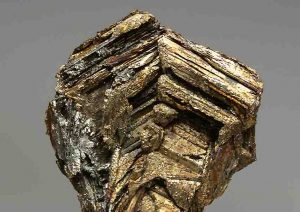
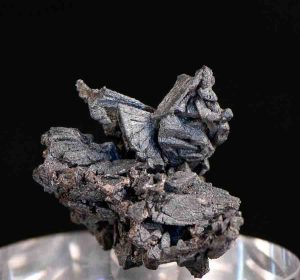
Formula: Bi System: Trigonal Lustre: Metallic Hardness: 2 – 2½ Locality: Schneeberg District, Erzgebirge, Saxony, Germany. Name Origin: Probably from the Arabic bi ismid, meaning having the properties of antimony.
Bismuth is a chemical element with the symbol Bi and atomic number 83. Bismuth, a pentavalent post-transition metal and one of the pnictogens, chemically resembles its lighter homologs arsenic and antimony. Elemental bismuth may occur naturally, although its sulfide and oxide form important commercial ores. The free element is 86% as dense as lead. It is a brittle metal with a silvery white color when freshly produced, but surface oxidation can give it a pink tinge. Bismuth is the most naturally diamagnetic element, and has one of the lowest values of thermal conductivity among metals.
Bismuth metal has been known since ancient times, although it was often confused with lead and tin, which share some physical properties. The etymology is uncertain, but possibly comes from Arabic bi ismid, meaning having the properties of antimony or the German words weiße Masse or Wismuth (“white mass”), translated in the mid-sixteenth century to New Latin bisemutum.
Bismuth was long considered the element with the highest atomic mass that is stable. However, in 2003 it was discovered to be weakly radioactive: its only primordial isotope, bismuth-209, decays via alpha decay with a half life more than a billion times the estimated age of the universe. Because of its tremendously long half-life, bismuth may still be considered stable for almost all purposes.
Physical Properties of Bismuth
Cleavage: {0001} Perfect Color: Silver white, Pinkish white, Red. Density: 9.7 – 9.8, Average = 9.75 Diaphaneity: Opaque Fracture: Uneven – Flat surfaces (not cleavage) fractured in an uneven pattern. Hardness: 2-2.5 – Gypsum-Finger Nail Luminescence: Non-fluorescent. Luster: Metallic Magnetism: Nonmagnetic Streak: silver white
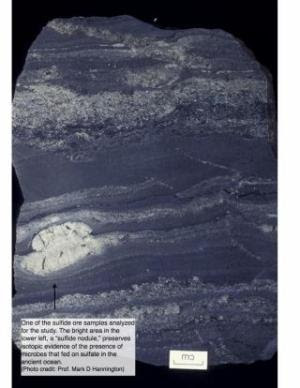
Scientists probe Canadian sulfide ore to confirm microbial activity in seawater 2.7 billion years ago. (Credit: Image courtesy of McGill University)
An analysis of sulfide ore deposits from one of the world’s richest base-metal mines confirms that oxygen levels were extremely low on Earth 2.7 billion years ago, but also shows that microbes were actively feeding on sulfate in the ocean and influencing seawater chemistry during that geological time period.
The research, reported by a team of Canadian and U.S. scientists in Nature Geoscience, provides new insight into how ancient metal-ore deposits can be used to better understand the chemistry of the ancient oceans — and the early evolution of life.
Sulfate is the second most abundant dissolved ion in the oceans today. It comes from the “rusting” of rocks by atmospheric oxygen, which creates sulfate through chemical reactions with pyrite, the iron sulfide material known as “fool’s gold.”
The researchers, led by PhD student John Jamieson of the University of Ottawa and Prof. Boswell Wing of McGill, measured the “weight” of sulfur in samples of massive sulfide ore from the Kidd Creek copper-zinc mine in Timmins, Ontario, using a highly sensitive instrument known as a mass spectrometer. The weight is determined by the different amounts of isotopes of sulfur in a sample, and the abundance of different isotopes indicates how much seawater sulfate was incorporated into the massive sulfide ore that formed at the bottom of ancient oceans. That ancient ore is now found on Earth’s surface, and is particularly common in the Canadian shield.
The scientists found that much less sulfate was incorporated into the 2.7 billion-year-old ore at Kidd Creek than is incorporated into similar ore forming at the bottom of oceans today. From these measurements, the researchers were able to model how much sulfate must have been present in the ancient seawater. Their conclusion: sulfate levels were about 350 times lower than in today’s ocean. Though they were extremely low, sulfate levels in the ancient ocean still supported an active global population of microbes that use sulfate to gain energy from organic carbon.
“The sulfide ore deposits that we looked at are widespread on Earth, with Canada and Quebec holding the majority of them,” says Wing, an associate professor in McGill’s Department of Earth and Planetary Science. “We now have a tool for probing when and where these microbes actually came into global prominence.”
“Deep within a copper-zinc mine in northern Ontario that was once a volcanically active ancient seafloor may not be the most intuitive place one would think to look for clues into the conditions in which the earliest microbes thrived over 2.7 billion years ago,” Jamieson adds. “However, our increasing understanding of these ancient environments and our abilities to analyze samples to a very high precision has opened the door to further our understanding of the conditions under which life evolved.”
The other members of the research team were Prof. James Farquhar of the University of Maryland and Prof. Mark D. Hannington of the University of Ottawa.
The Natural Sciences and Engineering Research Council of Canada made this study possible through fellowships to Jamieson and a Discovery grant to Wing.
Note : The above story is reprinted from materials provided by McGill University.
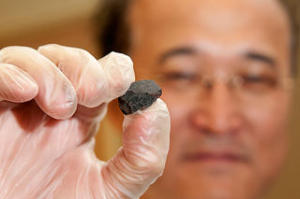
Geology professor Qing-zhu Yin holds a fragment of the meteorite that exploded over the Sierra foothills this past spring. (Credit: Gregory Urquiaga/UC Davis photo)
A meteorite that exploded as a fireball over California’s Sierra foothills this past spring was among the fastest, rarest meteorites known to have hit Earth, and it traveled a highly eccentric orbital route to get here.
An international team of scientists presents these and other findings in a study published Dec. 21, in the journal Science. The 70-member team included nine researchers from UC Davis, along with scientists from the SETI Institute, NASA and other institutions.
The researchers found that the meteorite that fell over Northern California on April 22 was the rarest type known to have hit Earth — a carbonaceous chondrite. It is composed of cosmic dust and presolar materials that helped form the planets of the solar system.
The scientists learned that the meteorite formed about 4.5 billion years ago. It was knocked off its parent body, which may have been an asteroid or a Jupiter-family comet, roughly 50,000 years ago. That began its journey to Sutter’s Mill, the gold discovery site that sparked the California Gold Rush.
As it flew toward Earth, it traveled an eccentric course through the solar system, flying from an orbit close to Jupiter toward the sun, passing by Mercury and Venus, and then flying out to hit Earth.
The high-speed, minivan-sized meteorite entered the atmosphere at about 64,000 miles per hour. The study said it was the fastest, “most energetic” reported meteorite that’s fallen since 2008, when an asteroid fell over Sudan.
–>
“If this were a much bigger object, it could have been a disaster,” said co-author and UC Davis geology professor Qing-zhu Yin. “This is a happy story in this case. ”
Before entering Earth’s atmosphere, the meteorite is estimated to have weighed roughly 100,000 pounds. Most of that mass burned away when the meteorite exploded. Scientists and private collectors have recovered about 2 pounds remaining.
UC Davis is 60 miles west of the El Dorado county towns of Coloma and Lotus, where pieces of the meteorite were found on residents’ driveways and in local forests and parks.
When the meteorite fell, Yin, whose lab contains some of the country’s most specialized equipment to measure the age and composition of meteorites, searched for and collected pieces of the fallen meteorite with students and volunteers. He also led a 35-member subgroup of international researchers to study and share information about the meteorite’s mineralogy, internal textures, chemical and isotopic compositions and magnetic properties.
Meteorites like Sutter’s Mill are thought to have delivered oceans of water to Earth early in its history. Using neutron-computed tomography, UC Davis researchers helped identify where hydrogen, and therefore water-rich fragments, resides in the meteorite without breaking it open.
For the first time, the Doppler weather radar network helped track the falling carbonaceous chondrite meteorite pieces, aiding scientists in the quick recovery of them, the study reports. Yin expects that the weather radar data in the public domain could greatly enhance and benefit future meteorite recoveries on land.
“For me, the fun of this scientific gold rush is really just beginning,” said Yin. “This first report based on the initial findings provides a platform to propel us into more detailed research. Scientists are still finding new and exciting things in Murchison, a similar type of meteorite to Sutter’s Mill, which fell in Victoria, Australia, in 1969, the same year Apollo astronauts Neil Armstrong and Buzz Aldrin returned the first lunar samples to the Earth. We will learn a lot more with Sutter’s Mill.”
Note : The above story is reprinted from materials provided by University of California – Davis.
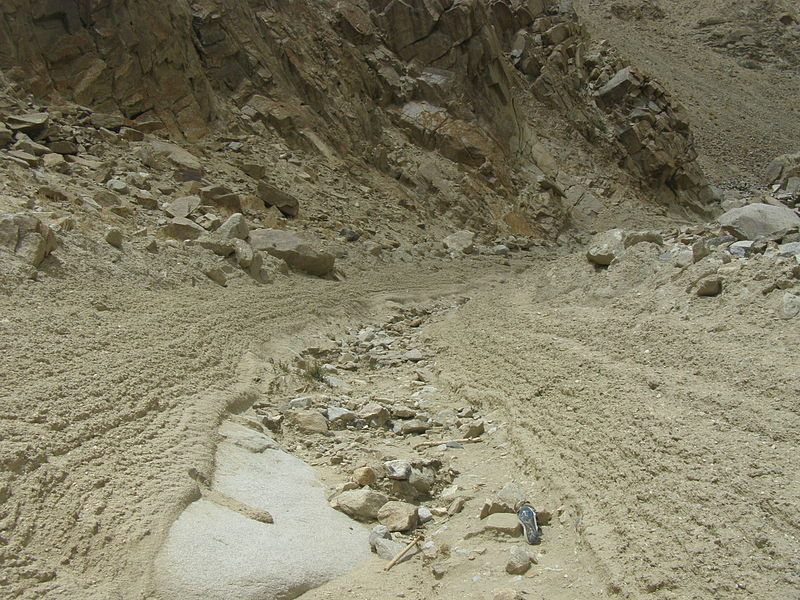
Debris flow channel with deposits left after 2010 storms in Ladakh, NW Indian Himalaya. Note coarse bouldery levees on both sides of the channel, and poorly sorted rocks on the channel floor.
Debris flows are fast moving, liquefied landslides of mixed and unconsolidated water and debris that look like flowing concrete. They are defined by their non-newtonian flow dynamics, and behave as Bingham plastics. This characteristic can lead to the formation of levees at the margins of unconstrained debris flows as the margins of the flow freeze.
They are differentiated from mudflows by their coarser and more poorly sorted sediment load. Flows can carry material ranging in size from clay to boulders, and may contain a large amount of woody debris such as logs and tree stumps. Flows can be triggered by intense rainfall, glacial melt, or a combination of the two. Speed of debris flows can vary from 5 km/h to up to 80 km/h in extreme cases.
Volumes of material delivered by single events vary from less than 100 to more than 100,000 cubic metres. Variables considered important in debris flow initiation include slope angle, available loose sediment, and degree of land disturbance by activities such as forest harvesting.
Debris flows are often more frequent following forest and brush fires, as experience in southern California clearly demonstrates. Debris flows are extremely destructive to life and property, and claim thousands of lives world-wide in any given year.
They are a particular problem in steep mountainous areas subjected to intense rainstorms, and have received particular attention from researchers in Japan, Western USA, Western Canada, New Zealand, the European Alps, and Kazakhstan.
Features and behavior
Debris flows generally form when unconsolidated material becomes saturated and unstable, either on a hillslope or in a stream channel.
Flows are accelerated downhill by gravity and tend to follow steep mountain channels. The front, or ‘head’ of debris flow often contains a great deal of coarser material such as boulders and logs. Trailing behind this frontal lobe is the less viscous, main part of the flow that contains sand, silt and clay.
Debris flows eventually become ‘thinner’, or less viscous, muddy flood waters as they deposit their coarser components in areas of reduced gradient. Debris flows tend to move in pulses, or discrete surges, as friction or other barriers are overcome during the flow. Sometimes earlier pulses or previous debris flow deposits form levees which confine the flow until they are breached by later, larger flows.
The presence of older levees (a.k.a. lateral deposits) provides some idea of the magnitudes of previous debris flows in a particular area, and through dating of trees growing on such deposits, may indicate the approximate frequency of destructive debris flows.
This is important information for land development in areas where debris flows deposit material, known as debris fans and alluvial fans. The big debris flow or landslide is called yamatsunami (山津波), literally mountain tsunami in Japan.
Types
Other geological flows can also be described as debris flows, though are typically given more specific names. These include:
Lahar
A lahar is a debris flow related in some way to volcanic activity, either directly as a result of an eruption, or indirectly by the collapse of loose material from the flanks of a volcano. A variety of factors may trigger a lahar, including melting of glacial ice due to volcanic activity or climate change, intense rainfall on loose pyroclastic material, or the out bursting of a lake that was previously dammed by pyroclastic or glacial material. The word lahar is of Indonesian origin, but is now routinely used by geologists world-wide to describe volcanogenic debris flows.
Jökulhlaup
A jökulhlaup is a debris flow that originates from a glacial outburst flood. Jökulhlaup is an Icelandic word which refers specifically to floods having a glacial trigger. In the case of Iceland, many such floods are triggered by sub-glacial volcanic eruptions, since Iceland sits atop the Mid-Atlantic Ridge. Elsewhere, a more common cause of jökulhlaups is the breaching of ice-dammed or moraine-dammed lakes. Such breaching events are often caused by the sudden calving of glacier ice into a lake, which then causes a displacement wave to breach a moraine or ice dam. Downvalley of the breach point, a jökulhlaup may increase greatly in size through entrainment of loose sediment and water from the valley through which it travels. Travel distances may exceed 100 km.
Video:
Photos :
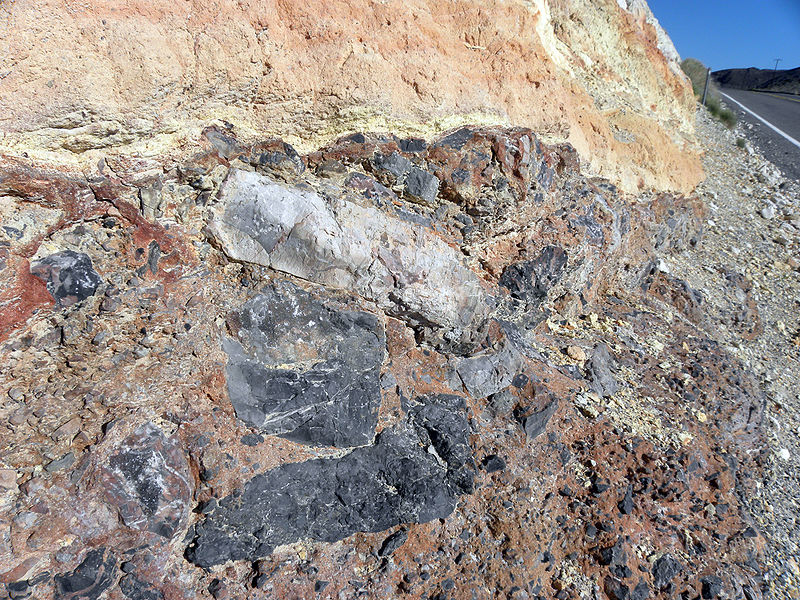
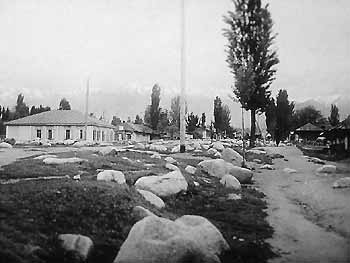
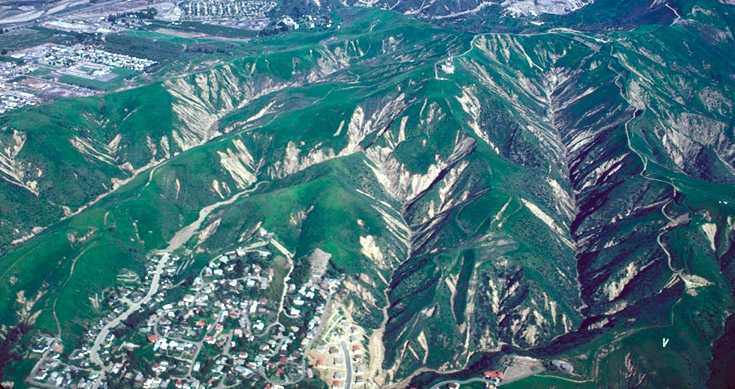
Debris flow channel in Ladakh, NW Indian Himalaya, produced in the storms of August 2010. Note coarse, bouldery levees on both sides of the channel, high abundance of mud, and poorly sorted sediments, DanHobleyTertiary debris flow deposit, Resting Springs Pass, California.Almaty, Kazakhstan, after the catastrophic debris flow of 1921. A number of facilities, including the Medeu Dam, have been built since to prevent flows of this kind from reaching the cityDebris flow scars formed in 1968-1969 in greater Los Angeles. The image taken months after the debris flows occurred. Daniel Collins
Note : The above story is reprinted from materials provided by Wikipedia.
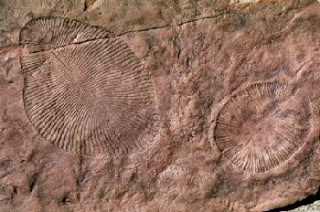
Dickinsonia fossils in South Australia, shown here, were likely formed by lichen or other microbial consortia, not from marine invertebrates or giant protists as previously theorized. (Credit: Courtesy of Greg Retallack)
fossils long thought to be ancestors of early marine life are remnants of land-dwelling lichen or other microbial colonies, says University of Oregon scientist Gregory J. Retallack, who has been studying fossil soils of South Australia.
Ediacaran (pronounced EDI-akran) fossils date to 542-635 million years ago. They’ve been considered fossil jellyfish, worms and sea pens, but are preserved in ways distinct from marine invertebrate fossils. The fossils — first discovered in 1946 in Australia’s Ediacara Hills — are found in iron-colored impressions similar to plant fossils and microbes in fossil soils.
Retallack, a native of Australia, examined ancient Ediacaran soils with an array of state-of-the-art chemical and microscopic techniques, including an electron microprobe and scanning electron microscope in the UO’s CAMCOR Microanalytical Facility headed by John Donovan and rock-analysis technology in the UO’s stable isotope laboratory of Ilya Bindeman.
The soils with fossils, Retallack writes in his study, “are distinguished by a surface called ‘old elephant skin,’ which is best preserved under covering sandstone beds.” The healed cracks and lumpy appearance of sandy “old elephant skin” are most like the surface of microbial soil crusts in modern deserts.
“This discovery has implications for the tree of life, because it removes Ediacaran fossils from the ancestry of animals,” said Retallack, professor of geological sciences and co-director of paleontological collections at the UO’s Museum of Natural and Cultural History. His evidence, mostly gathered from a site in the Flinders Ranges, is presented in a paper placed online ahead of print by the journal Nature.
These fossils have been a first-class scientific mystery,” he said. “They are the oldest large multicellular fossils. They lived immediately before the Cambrian evolutionary explosion that gave rise to familiar modern groups of animals.”
–>
Retallack studied numerous Ediacaran fossils and determined that the diversity reflects a preference by the ancient organisms for “unfrozen, low salinity soils, rich in nutrients, like most terrestrial organisms.” Thus the fossils in Australia’s iconic red-rock ranges, he concludes, were landlubbers. In his closing paragraph, Retallack outlines implications for a variety of other Edicaran fossils, that could have been lichens, other microbial consortia, fungal fruiting bodies, slime molds, flanged pedestals of biological soil crusts, and even casts of needle ice.
Ediacaran fossils, he said, represent “an independent evolutionary radiation of life on land that preceded by at least 20 million years the Cambrian evolutionary explosion of animals in the sea.” Increased chemical weathering by large organisms on land may have been needed to fuel the demand of nutrient elements by Cambrian animals. Independent discoveries of Cambrian fossils comparable with Ediacaran ones is evidence, he said, that even in the Cambrian, more than 500 million years ago, life on land may have been larger and more complex than life in the sea.
Retallack leaves open the possibility that some Ediacaran fossils found elsewhere in the world may not be land-based in origin, writing in his conclusion that the many different kinds of these fossils need to be tested and re-evaluated.
“The key evidence for this new view is that the beds immediately below the cover sandstones in which they are preserved were fossil soils,” he said. “In other words the fossils were covered by sand in life position at the top of the soils in which they grew. In addition, frost features and chemical composition of the fossil soils are evidence that they grew in cold dry soils, like lichens in tundra today, rather than in tropical marine lagoons.”
Fossil soils are usually recognized from root traces, soil horizons and soil structures, but in rocks of Ediacaran age, before the advent of rooted plants, only the second two criteria can be used to recognize fossil soils. Ediacaran fossil soils, Retallack said, represent ecosystems less effective at weathering than the modern array of ecosystems, so that soil horizons and soil structures are not as well developed as they are in modern soils.
“The research conducted by Dr. Retallack helps to unravel the mystery of very ancient life on Earth,” said Kimberly Andrews Espy, UO vice president for research and innovation, and dean of the graduate school. “It also serves as an example of how technology, some of it developed at the University of Oregon, can be used to analyze materials from anywhere in the world.”
The American Chemical Society’s Petroleum Research Fund supported the fieldwork.
Note : The above story is reprinted from materials provided by University of Oregon.
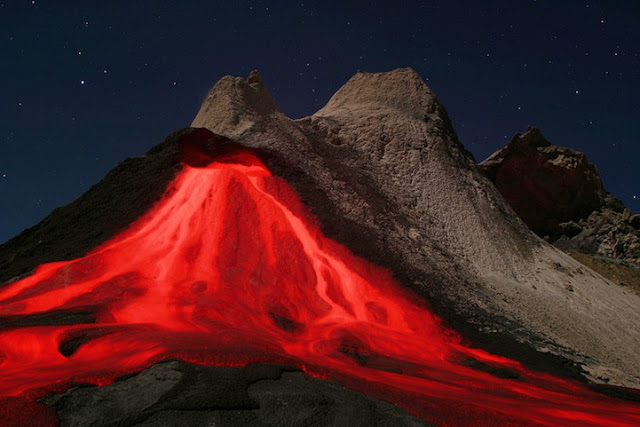
Ol Doinyo Lengai is an active volcano located in the north of Tanzania and is part of the volcanic system of the East African Rift. It is located in the eastern Rift Valley, or Gregory Rift, south of both Lake Natron and Kenya. It is unique among active volcanoes in that it produces natrocarbonatite lava, a unique occurrence of volcanic carbonatite. Further, the temperature of its lava as it emerges is only around 510 °C (950 °F). A few older extinct carbonatite volcanoes are located nearby, including Homa Mountain.
The volcano has immense ecological, geological and cultural value. The Engaresero village located on the Western shores of Lake Natron, close to Ol Doinyo Lengai, has been chosen by the government of Tanzania to exemplify the Maasai pastoral system given its singularity, integrity, high diversity of habitats and biodiversity. The community has demonstrated a strong resilience in facing threats to their systems, and has maintained associated social and cultural institutions, which ensure its sustainability under prevailing environmental conditions.
Geology
“Ol Doinyo Lengai” means “The Mountain of God” in the Maasai language of the native people. The record of eruptions on the mountain dates to 1883, and flows were also recorded between 1904 and 1910 and again between 1913 and 1915. A major eruption took place in June 1917, which resulted in volcanic ash being deposited about 48 kilometres away.
A similar eruption took place for several months in 1926 and between July and December 1940, resulting in the ash being deposited as far as Loliondo, which is 100 kilometres away. Several minor eruptions of lava were observed in 1954, 1955, 1958 the early 1960s.
When Ol Doinyo Lengai erupted on August 14, 1966, two geologists — J. B. Dawson and G. C. Clark — who visited the crater a week later, reported seeing “a thick column of black ash” that rose for approximately three thousand feet above the volcano and drifted away northwards towards Lake Natron. When the two climbed the cone-shaped vent, they reported seeing a continuous discharge of gas and whitish-grey ash and dust from the centre of the pit.
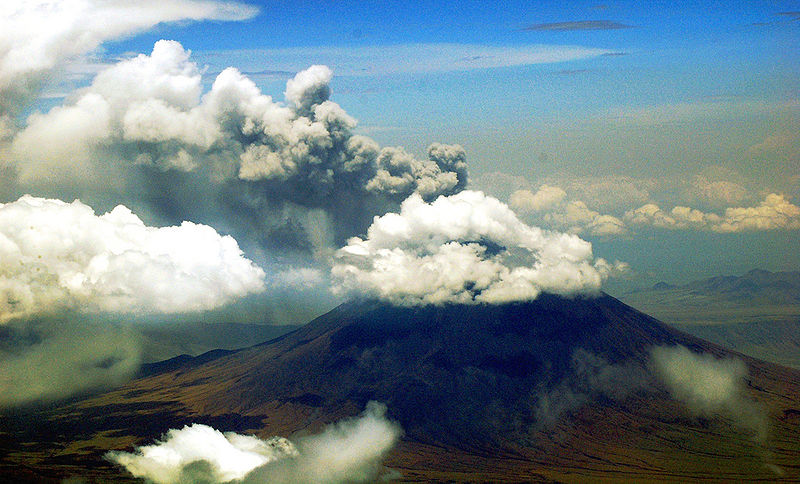
Volcanic activity in the mountain caused daily earth tremors in Kenya and Tanzania beginning on July 12, 2007. The latest to hit parts of Nairobi city was recorded on July 18, 2007 at 8.30pm (Kenyan Time). The strongest tremor measured 6.0 on the Richter scale. Geologists suspected that the sudden increase of tremors was indicative of the movement of magma through the Ol Doinyo Lengai. The volcano finally erupted on September 4, 2007, sending a plume of ash and steam at least 18 kilometers downwind and covering the north and west flanks in fresh lava flows. The eruption has continued intermittently into 2008, as of the end of February it was reported that the eruption appeared to be gathering strength, with a major outburst taking place on March 5. During April periods of inactivity have been followed by eruptions on April 8 and 17. Eruptive activity continued until late August 2008. A visit to the summit in September 2008 discovered that lava emission had resumed from two vents in the floor of the new crater. Visits to the crater in March/April 2009 showed that even this activity appears to have ceased.
Lava
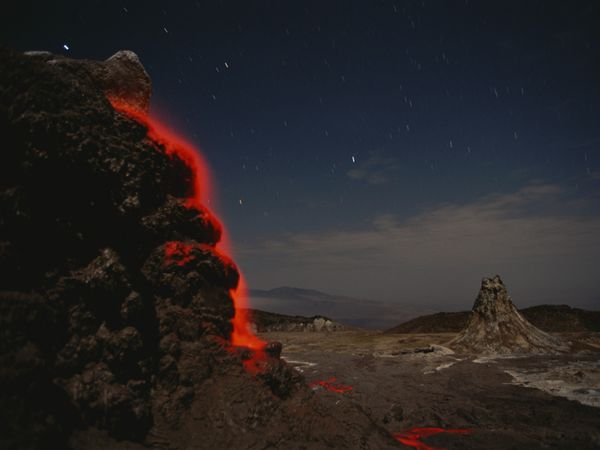
Whereas most lavas are rich in silicate minerals, the lava of Ol Doinyo Lengai is a carbonatite. It is rich in the rare sodium and potassium carbonates, nyerereite and gregoryite. Due to this unusual composition, the lava erupts at relatively low temperatures of approximately 500-600 degrees Celsius. This temperature is so low that the molten lava appears black in sunlight, rather than having the red glow common to most lavas. It is also much more fluid than silicate lavas, often less viscous than water. The sodium and potassium carbonate minerals of the lavas formed by Ol Doinyo Lengai are unstable at the Earth’s surface and susceptible to rapid weathering, quickly turning from black to grey in color. The resulting volcanic landscape is different from any other in the world.
Video
Photo Gallery
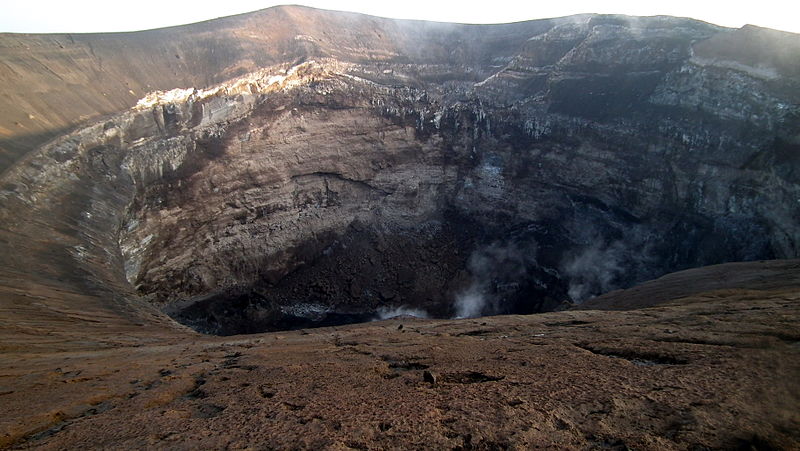
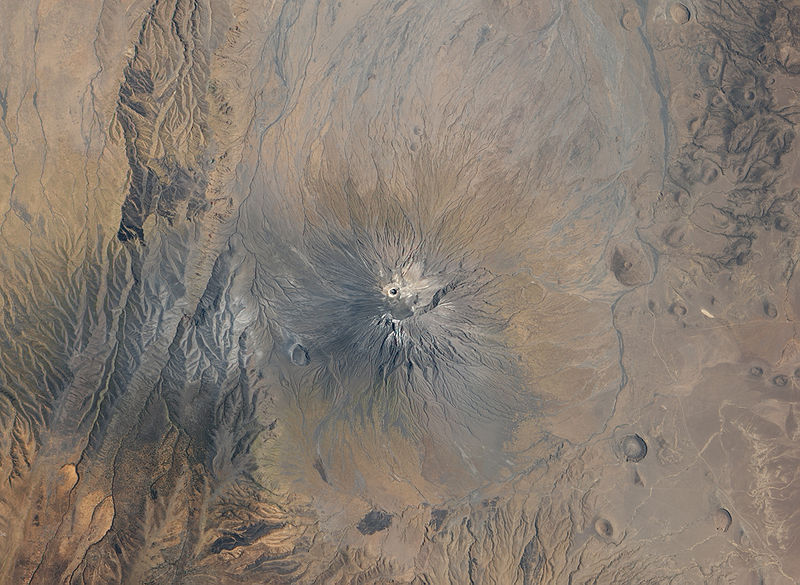
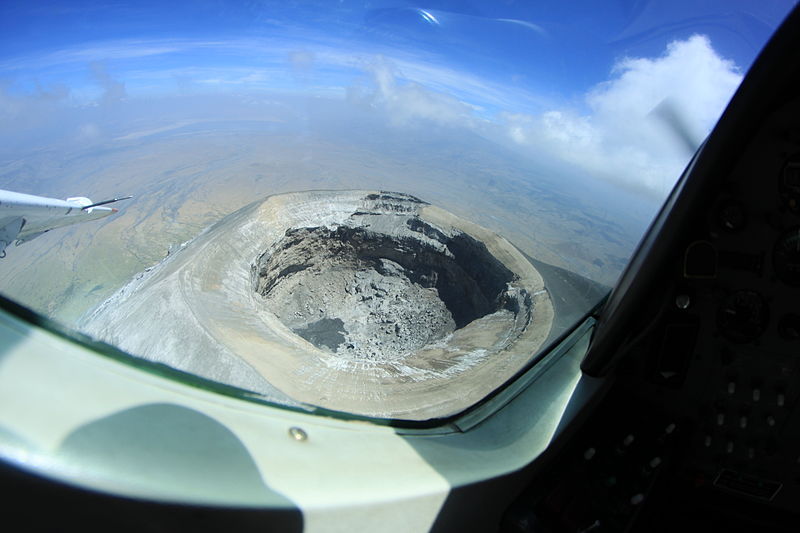
Ol Doinyo Lengai Volcano erupting mountain in Tanzania. Spectacular view from Cessna.Crater of Ol Doinyo Lengai in January 2011, Tanzania , Albert BackerAfter explosive eruptions, ash covers the surrounding landscape. The explosive eruptions built a cone over 100 meters high that enclosed a steep-walled crater. The new cone and crater are clearly visible in the centre of the image. The dark spot in the crater may be fresh lava erupted from a new volcanic vent. Gray ash covers the volcano and much of the surrounding landscape.Flying over Oldoinyo Lengai. Taken with a fisheye photo looking toward the north-east ,Aaron Cawsey
Note : The above story is reprinted from materials provided by Wikipedia, except Video
Shells and fragments found in sediments in the Po Plain, Italy, show the abundance and diversity of the area’s fossils. In a study published online Nov. 29, 2012, in Geology, researchers dated mollusks extracted from the sediment to verify key predictions of the sequence stratigraphy model, a powerful tool for interpreting Earth’s history and exploring for petroleum. (Credit: Daniele Scarponi, University of Bologna)
A new study co-authored by a University of Florida researcher provides the first direct chronological test of sequence stratigraphy, a powerful tool for exploring Earth’s natural resources.
The model allows geologists to better understand how sedimentary rocks are related to one another in time and space and predict what types of rocks are located in different areas. The information may help scientists more reliably interpret various aspects of Earth’s history such as long-term climate changes or extinction events, and also benefit companies searching for the best locations to drill for oil.
The study recently published online in Geology uses extensive numerical dating of fossil shells to verify key predictions of the sequence stratigraphy model. Although used successfully for more than 30 years as a theoretical framework for interpreting and exploring rock bodies, the model had never been proven quantitatively by direct numerical dating.
“Paleontologists and geologists are well aware of the fact that you should not take the fossil record at face value because you will then see changes through time that may not be meaningful,” said study co-author Michal Kowalewski, a curator of invertebrate paleontology at the Florida Museum of Natural History on the UF campus. “However, by using dating to quantify how the resolution changes through time, we can improve quality control on our data and develop better strategies for reconstructing the history of life more accurately.”
In the study, researchers used racemization, a technique in which amino acid ratios are obtained to estimate the age of fossils from the most recent geological record. Relative age estimates were calibrated using radiocarbon to date about 250 mollusk shells extracted from cores drilled in the Po Plain in northern Italy. The technique, developed over the last 30 years, has made dating of large numbers of shells affordable and efficient, Kowalewski said
Kowalewski is principal investigator on the National Science Foundation-funded project, a four-year study involving a team of scientists from the University of Bologna and Northern Arizona University.
“We were thrilled to learn that sedimentary rocks assemble through time exactly as predicted,” said Kowalewski, who recently relocated from Virginia Tech and is the Jon L. and Beverly A. Thompson Chair of Invertebrate Paleontology at the Florida Museum. “The results are not only a direct validation of the sequence stratigraphic model, but also provide us with direct numerical estimates of changes in the resolution of the fossil record as a function of relative changes in sea level.”
As the model predicted for the geological setting of the Po Plain, the sediments accumulated at an increasingly slower pace during initial phases of sea level rise, culminating with horizons that formed so slowly that shells from multiple millennia were mixed within the same sediment layers. Following the sea level rise, sediment was deposited at an increasingly faster pace.
“We are pretty confident that the primary driver of sea level changes in this time frame was climate, but that’s not always the case in the geological record,” Kowalewski said. ‘We can now provide a more informed constraint on timing of the most recent sea level rise in the northern Adriatic.”
Because the Po Plain contains young sediments dating to about the last 10,000 years, part of the cycle researchers tested includes changes occurring today, said Carlton Brett, a geology professor at the University of Cincinnati. As sea level rises quickly, sediment accumulates in bays and river mouths, leaving little sediment offshore, Brett said.
“I think what they’re doing is groundbreaking in the sense that they’re testing a model that is one of the most important models in sedimentary geology that has ever come down the pipe,” Brett said. “As one who uses that model a lot and makes those assumptions about why we are getting shell beds offshore, the fact that they have put numbers on the tests gives us very good confidence that we’re on the right track.”
The team plans to continue working in the Po Plain, a well-understood system that records the most recent millennia of the region’s geological history. The project can help researchers better understand human-induced changes because the Po Plain sediments document the fossil record of ecosystems that directly predate what many geologists refer to as the Anthropocene Epoch, the new geologic era of human modification of the natural world.
Study co-authors include Daniele Scarponi and Alessandro Amorosi of the University of Bologna, and Darell Kaufman of Northern Arizona University.
Note : The above story is reprinted from materials provided by University of Florida. The original article was written by Danielle Torrent.
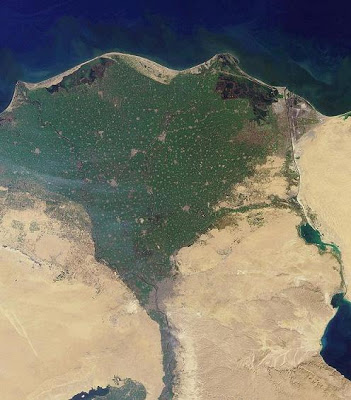
Nile River delta, as seen from Earth orbit. The Nile is an example of a wave-dominated delta that has the classic Greek delta (Δ) shape after which river deltas were named.
A river delta is a landform that is formed at the mouth of a river, where the river flows into an ocean, sea, estuary, lake, or reservoir. Deltas are formed from the deposition of the sediment carried by the river as the flow leaves the mouth of the river. Over long periods of time, this deposition builds the characteristic geographic pattern of a river delta.
Contrary to popular belief, this usage of the word delta was not coined by Herodotus
Formation of Delta
River deltas form when a river carrying sediment reaches either (1) a body of standing water, such as a lake, ocean, or reservoir, (2) another river that cannot remove the sediment quickly enough to stop delta formation, or (3) an inland region where the water spreads out and deposits sediments. When the flow enters the standing water, it is no longer confined to its channel and expands in width. This flow expansion results in a decrease in the flow velocity, which diminishes the ability of the flow to transport sediment. As a result, sediment drops out of the flow and deposits. Over time, this single channel will build a deltaic lobe (such as the bird’s-foot of the Mississippi or Ural River deltas), pushing its mouth further into the standing water. As the deltaic lobe advances, the gradient of the river channel becomes lower because the river channel is longer but has the same change in elevation (see slope). As the slope of the river channel decreases, it becomes unstable for two reasons. First, the water under the force of gravity will tend to flow in the most direct course down slope. If the river breaches its natural levees (i.e., during a flood), it will spill out onto a new course with a shorter route to the ocean, thereby obtaining a more stable steeper slope. Second, as its slope gets lower, the amount of sheer stress on the bed will decrease, which will result in deposition of sediment within the channel and a rise in the channel bed relative to the floodplain. This will make it easier for the river to breach its levees and cut a new channel that enters the body of standing water at a steeper slope. Often when the channel does this, some of its flow can remain in the abandoned channel. When these channel switching events occur a mature delta will gain a distributary network.
Another way in which these distributary networks may form is from the deposition of mouth bars (mid-channel sand and/or gravel bars at the mouth of a river). When this mid-channel bar is deposited at the mouth of a river, the flow is routed around it. This results in additional deposition on the upstream end of the mouth-bar, which splits the river into two distributary channels. A good example of the result of this process is the Wax Lake Delta in Louisiana.
In both of these cases, depositional processes force redistribution of deposition from areas of high deposition to areas of low deposition. This results in the smoothing of the planform (or map-view) shape of the delta as the channels move across its surface and deposit sediment. Because the sediment is laid down in this fashion, the shape of these deltas approximates a fan. It is closer to an ideal fan the more often the flow changes course because more rapid changes in channel position results in more uniform deposition of sediment on the delta front. The Mississippi and Ural River deltas, with their bird’s-feet, are examples of rivers that do not avulse often enough to form a symmetrical fan shape. Alluvial fan deltas, as seen in their name, avulse frequently and more closely approximate an ideal fan shape.
Types of Deltas
Deltas are typically classified according to the main control on deposition, which is usually either a river, waves, or tides. These controls have a large effect on the shape of the resulting delta.
Wave-dominated deltas
In wave dominated deltas, wave erosion controls the shape of the delta, although deposition still outweighs the amount of erosion and the delta is able to advance into the sea. Deltas of this form, such as the Nile Delta, tend to have a characteristic Greek-capital-delta shape
Tide-dominated deltas
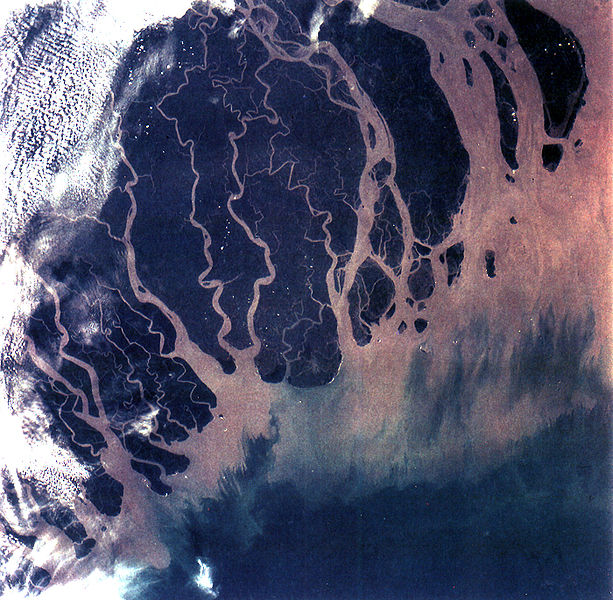
Erosion is also an important control in tide dominated deltas, such as the Ganges Delta, which may be mainly submarine, with prominent sand bars and ridges. This tends to produce a “dendritic” structure. Tidal deltas behave differently from river- and wave-dominated deltas, which tend to have a few main distributaries. Once a wave- or river- distributary silts up, it is abandoned, and a new channel forms elsewhere. In a tidal delta, new distributaries are formed during times when there’s a lot of water around – such as floods or storm surges. These distributaries slowly silt up at a pretty constant rate until they fizzle out.
Gilbert deltas
A Gilbert delta (named after Grove Karl Gilbert) is a specific type of delta that is formed by coarse sediments, as opposed to gently-sloping muddy deltas such as that of the Mississippi. For example, a mountain river depositing sediment into a freshwater lake would form this kind of delta.While some authors describe both lacustrine and marine locations of Gilbert deltas, others note that their formation is more characteristic of the freshwater lakes, where it is easier for the river water to mix with the lakewater faster (as opposed to the case of a river falling into the sea or a salt lake, where less dense fresh water brought by the river stays on top longer).
G.K. Gilbert himself first described this type of delta on Lake Bonneville in 1885.Elsewhere, similar structures can be found e.g. at the mouths of several creeks flowing into Okanagan Lake in British Columbia and forming prominent peninsulas at Naramata (49°35′30″N 119°35′30″W), Summerland (49°34′23″N 119°37′45″W), or Peachland (49°47′00″N 119°42′45″W)
Estuaries
Other rivers, particularly those located on coasts with significant tidal range, do not form a delta but enter into the sea in the form of an estuary. Notable examples include the Saint Lawrence River and the Tagus estuary.
Inland deltas
In rare cases the river delta is located inside a large valley and is called an inverted river delta. Sometimes a river will divide into multiple branches in an inland area, only to rejoin and continue to the sea; such an area is known as an inland delta, and often occur on former lake beds. The Inner Niger Delta and Peace–Athabasca Delta are notable examples. The Amazon has also an inland delta before the island of Marajó.
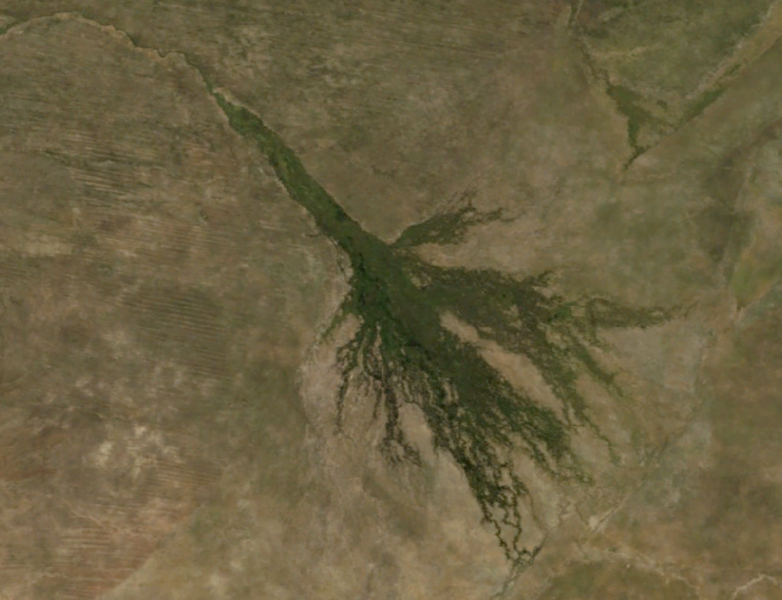
In some cases a river flowing into a flat arid area splits into channels which then evaporate as it progresses into the desert. Okavango Delta in Botswana is one well-known example.
Sedimentary structure
The formation of a delta consists of three main forms: the topset, foreset/frontset, and bottomset.
The bottomset beds are created from the suspended sediment that settles out of the water as the river flows into the body of water and loses energy. The suspended load is carried out the furthest into the body of water than all other types of sediment creating a turbidite. These beds are laid down in horizontal layers and consist of smaller grains.
The foreset beds in turn build over the bottomset beds as the main delta form advances. The foreset beds consist of the bed load that the river is moving along which consists of larger sediments that roll along the main channel. When it reaches the edge of the form, the bed load rolls over the edge, and builds up in steeply angled layers over the top of the bottomset beds. The angle of the outermost edge of the delta is created by the sediments angle of repose. As the foresets build outward (which make up the majority of the delta) they pile up and miniature landslides occur. This slope is created in this fashion as the bedload continues to be deposited and the delta moves outward. In cross section, one would see the foresets lying in angled, parallel bands, showing each stage of the creation of the delta.
The topset beds in turn overlay the foresets, and are horizontal layers of smaller sediment size that form as the main channel of the river shifts elsewhere and the larger particles of the bed load no longer are deposited. As the channels move across the top of the delta, the suspended load settles out in horizontal beds over the top. The topset bed is subdivided into two regions: the upper delta plain and the lower delta plain. The upper delta plain is unaffected by the tide, while the boundary with the lower delta plain is defined by the upper limit of tidal influence
Deltas and alluvial fans
Deltas are differentiated from alluvial fans in that deltas have a shallow slope, contain fine-grained sediment (sand and mud), and always flow into a body of water. Alluvial fans, on the other hand, are steep, have coarse-grained sediments (including boulders), and are dominated by debris flows and large floods; these floods are often flash floods. They can either flow onto a land surface, or into a body of water; in the latter case, they are called alluvial fan deltas.
Examples of notable deltas
The most famous delta is that of the Nile River, and it is this delta from which the term is derived. The Ganges/Brahmaputra combination delta spans most of Bangladesh and West Bengal, empties into the Bay of Bengal and is the world’s largest delta. Other rivers with notable deltas include, the Fly River, the Cauvery, the Niger River, the Tigris-Euphrates, the Rhine, the Po, the Rhône, the Danube, the Ebro, the Volga, the Lena, the Indus, the Ayeyarwady (Irrawaddy), the Mekong, the Huanghe, the Yangtze, the Sacramento-San Joaquin, the Mississippi, the Orinoco, and the Paraná.
Ecological threats to deltas
Human activities, including diversion of water and the creation of dams for hydroelectric power or to create reservoirs can radically alter delta ecosystems. Dams block sedimentation which can cause the delta to erode away. The use of water upstream can greatly increase salinity levels as less fresh water flows to meet the salty ocean water. While nearly all deltas have been impacted to some degree by humans, the Nile Delta and Colorado River Delta are some of the most extreme examples of the ecological devastation caused to deltas by damming and diversion of water.
Deltas in the economy
Ancient deltas are a benefit to the economy due to their well sorted sand and gravel. Sand and gravel is often quarried from these old deltas and used in concrete for highways, buildings, sidewalks, and even landscaping. More than 1 billion tons of sand and gravel are produced in the United States alone. Not all sand and gravel quarries are former deltas, but for ones that are, a lot of the sorting is already done by the power of water.
*Photos For Deltas
The Ganges Delta in India and Bangladesh is the largest delta in the world and it is also one of the most fertile regions in the world.Okavango Delta
Note : The above story is reprinted from materials provided by Wikipedia
Book Name : Deformation Microstructures and Mechanisms in Minerals and Rocks By:
Tom Blenkinsop
Department of Geology,
University of Zimbabwe, Harane Zimbabwe
KLUWER
Book Name : Plate Tectonics and Crustal Evolution ,Fourth edition By : Kent C. Condie
New Mexico Institute of Mining and Technology
Socorro, New Mexico
Rocks dating back 3.4 billion years from south-west Greenland’s Isua mountain range have yielded valuable information about the structure of Earth during its earliest stages of development. In these rocks, which witnessed the first billion years of Earth’s history, a French-Danish team led by researchers from the ‘Magmas and Volcanoes’ Laboratory (CNRS / Université Blaise Pascal / IRD) have highlighted a lack of neodymium-142, an essential chemical element for the study of Earth’s formation.
This deficit supports the hypothesis that between 100 and 200 million years after its formation, Earth was made up of an ocean of molten magma, which gradually cooled. The work, which was carried out in collaboration with the Laboratoire de Géologie de Lyon (CNRS / Université Lyon 1 / ENS de Lyon) and the University of Copenhagen, was published on 1 November 2012, in the journal Nature.
Earth is believed to have formed 4.58 billion years ago, by accretion of material in the Solar System. The heat produced by the accretion process, as well as by the decay of radioactive elements, caused this material to melt. As a result, 100 to 200 million years after its formation, Earth must have been made up of an ocean of molten magma, in the center of which a metallic core formed. The ocean gradually cooled. Earth’s crust then appeared, and the process of continental drift began. The crystallization of the molten magma is likely to have been accompanied by the chemical layering of Earth: concentric layers with distinct chemical compositions became differentiated. It is the signature of these primordial inhomogeneities that the researchers found in the Isua rocks.
The scientists were interested in a key chemical element, the isotope neodymium-142, formed by the decay of a now vanished radioactive isotope called samarium-146. The abundance of neodymium-142 is almost identical in all terrestrial rocks. Only two exceptions have been discovered to date, in Canada and Greenland, in certain rocks dating back 3.7 billion years. The composition of these rocks shows evidence of the primordial inhomogeneities that formed as the magma ocean crystallized.
In 2003, for the first time, two groups of French researchers observed an excess of neodymium-142 in certain rocks in the same region. If such excess can be found in some layers of the primordial Earth, it means that other layers must be depleted in this isotope. However, until these new findings by the French-Danish team, such neodymium-142 deficits remained hypothetical for nine years. Using a sophisticated method, thermal ionization mass spectrometry, the researchers carried out a very detailed analysis of the concentration of neodymium-142 in Isua rock samples. They discovered a neodymium-142 deficit of 10.6 parts per million, which lends weight to the ‘magma ocean’ theory.
These findings should help to improve models of the internal dynamics of Earth during its early stages of development. By discovering a neodymium-142 deficit in relatively young rocks, formed around a billion years after the crystallization of the magma ocean, the researchers have shown that the primordial inhomogeneities persisted longer than predicted before being eliminated by convective motion in Earth’s mantle. In order to obtain more comprehensive data, the scientists now intend to study the composition of other rocks of similar age outcropping for example in Canada, South Africa and China.
This study was mainly funded by an ERC Starting Grant.
References:
The elusive Hadean enriched reservoir revealed by 142Nd deficits in Isua Archean rocks. Hanika Rizo, Maud Boyet, Janne Blichert-Toft, Jonathan O’Neil, Minik Rosing, Jean-Louis Paquette, Nature, 1 November 2012.
Note : The above story is reprinted from materials provided by Centre national de la recherche scientifique (CNRS).
–Book Name : Introduction to Mineral Exploration,Second Edition
– Edited by :
Charles J. Moon, Michael K.G. Whateley & Anthony M. Evans
– With contributions from:
William L. Barrett
Timothy Bell
Anthony M. Evans
John Milsom
Charles J. Moon
Barry C. Scott
Michael K.G. Whateley Download Link >> http://www.mediafire.com/?pbybtkm7wuoa8fy


.JPG)