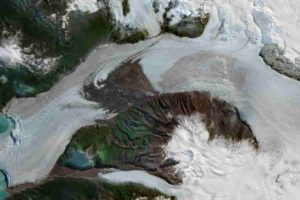
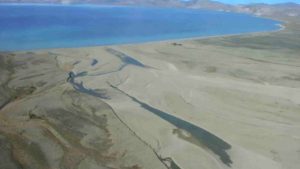
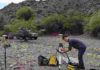
Using satellite imagery (shown above) to study the effects of a 2019 landslide on the Amalia Glacier in Patagonia, a University of Minnesota-led research team found the landslide helped stabilize the glacier and caused it to grow by about 1,000 meters over the last three years. Photo credit: Max Van Wyk de Vries
A team led by University of Minnesota Twin Cities researchers has revealed, for the first time, that landslides can have a major impact on the movement of glaciers. Using satellite imagery to study the effects of a 2019 landslide that occurred on the Amalia Glacier in the Patagonia region of Chile, the researchers found that the landslide caused the glacier to grow in size and has since slowed down its melting process.
This information could help scientists more accurately predict the size of glaciers in the future and better understand the risks of living in areas with both glaciers and landslides.
The study is published in Geology, a peer-reviewed geoscience journal published by the Geological Society of America.
Glaciologists have been monitoring the recession of glaciers due to global warming around the world for decades. The 150-square-kilometer Amalia Glacier has been receding steadily — or losing ice and becoming smaller — having shrunk by more than 10 kilometers over the past 100 years. Until now, the effect of landslides on this movement was largely unknown.
The University of Minnesota-led research team found that after the 2019 landslide in question, the Amalia Glacier immediately began to “advance” or grow at a fast rate. Although its flow has since slowed down to half its pre-landslide speed, over the last three years the glacier has grown by about 1,000 meters.
“These landslides are actually fairly common,” explained Max Van Wyk de Vries, lead author of the study and a recent Ph.D. graduate of the University of Minnesota’s N.H. Winchell School of Earth and Environmental Sciences. “If they’re able to stabilize glaciers, then it might affect projections of how large certain glaciers will be in the future. There’s the context of global warming and climate change here, which is causing glaciers all around the world to retreat at unprecedented rates. That’s affecting essentially everyone around the world because as these glaciers get smaller, they cause the sea levels to rise.”
The researchers found that the landslide pushed ice from the glacier downstream, causing it to immediately advance and increase in size. Then, sediment and rock from the landslide built up where the glacier borders the ocean, preventing icebergs from breaking off into the sea and effectively stabilizing the glacier.
This study also gave researchers an idea of how proximity to glaciers can unfortunately enhance the impact of landslides on neighboring communities.
“The combination of glaciers and landslides can be extremely dangerous,” said Van Wyk de Vries, a recipient of the University of Minnesota’s CSE and Doctoral Dissertation fellowships. “Glaciers can allow landslides to fluidize and flow much further than they would have originally. They only affect people who live in these high-mountain areas where steep slopes and glaciers co-exist. But we still have a limited understanding of these processes, so being able to investigate events like this can give us a better idea of the risk associated with living in these glacierized, high-mountain areas.”
Using satellite imagery allowed the researchers to monitor the movement of the glacier in real time without being physically on site. In the future, this method could be used more often to monitor glaciers in remote locations. The University of Minnesota research team, along with other scientists, is currently studying satellite data from the last 20-30 years to see if they can spot previously unrecorded landslides that occurred on glaciers. They aim to increase their data pool so they can better understand this phenomenon.
In addition to Van Wyk de Vries, the research team included University of Minnesota School of Earth and Environmental Sciences McKnight Land-Grant Associate Professor Andy Wickert; Macalester College Geology Professor Kelly MacGregor; University of Magallanes, Chile Assistant Professor Camilo Rada; and University of Colorado Boulder Assistant Professor Michael Willis.
This research was funded by the National Science Foundation.
Reference:
Maximillian Van Wyk de Vries, Andrew D. Wickert, Kelly R. MacGregor, Camilo Rada, Michael J. Willis. Atypical landslide induces speedup, advance, and long-term slowdown of a tidewater glacier. Geology, 2022; DOI: 10.1130/G49854.1
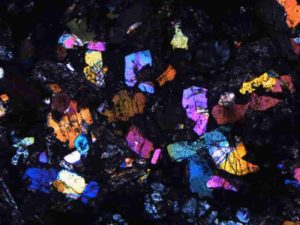
Basalt mit frischen Klinopyroxenen (credit Jonas Tusch)
In an international collaboration, Earth scientists at the University of Cologne and Freie Universität Berlin discovered that some magmas on Earth, which made their way through the deep terrestrial mantle and erupted at Earth’s surface, originate from mantle portions that contain remnants of Earth’s earliest crust. This ancient material must have been buried in a ‘graveyard’ of old and cold crust more than 4 billion years ago and survived since then, maybe since the giant impact event forming the Moon.
This finding is unexpected because the plate tectonic regime of our planet progressively recycles crustal material via large-scale mantle convection at much smaller time scales. Therefore, it has been assumed that vestiges of early geological processes on Earth can only be found as analogues, on other terrestrial planets (Mercury, Venus, and Mars), asteroids, or the Moon. However, according to their study ‘Long-term preservation of Hadean protocrust in Earth’s mantle’, which has recently appeared in the Proceedings of the National Academy of Sciences (PNAS), magmatic rocks that erupted throughout Earth’s history can still carry signatures that provide detailed information about the nature of the first crust, its long-term preservation in a graveyard in the lower-most mantle, and its resurrection via younger volcanism.
For their study, the geologists investigated up to 3.55 billion years old rocks from southern Africa. The analysis of these rocks revealed small anomalies in the isotope composition of the element tungsten (W). The origin of these isotope anomalies, namely the relative abundance of 182W, relates to geological processes that must have occurred immediately after the formation of the Earth more than 4.5 billion years ago.
Model calculations by the authors show that the observed 182W isotope patterns are best explained by the recycling of Earth’s earliest crust into mantle material that ascends via plumes from the lower mantle to generate lavas erupting at Earth’s surface. Intriguingly, the study shows that similar isotope patterns can be observed in distinct types of modern volcanic rocks (ocean island basalts), which demonstrates that Earth’s earliest crust is still buried in the lowermost mantle.
‘We assume that the lower layers of the crust — or the roots of the primordial continents — became heavier than their surroundings due to a geological maturation process and therefore sank into the Earth’s underlying mantle. Similar to a lava lamp,’ geochemist Dr Jonas Tusch from the University of Cologne’s Institute of Geology and Mineralogy remarked. ‘This fascinating insight provides a geochemical fingerprint of the young Earth, allowing us to better understand how large continents formed over the history of our planet. It also explains how our current, oxygen-rich atmosphere evolved — setting the stage for the origin of complex life,’ Dr Elis Hoffmann of Freie Universität Berlin added.
The geochemical fingerprint of the early Earth can also be compared with findings about other planets obtained during space missions. For example, data from Mars missions and studies of Martian meteorites show that Mars still has a very old surface due to the lack of plate tectonics, and that its composition may correspond to that of the young Earth.
Reference:
Jonas Tusch, J. Elis Hoffmann, Eric Hasenstab, Mario Fischer-Gödde, Chris S. Marien, Allan H. Wilson, Carsten Münker. Long-term preservation of Hadean protocrust in Earth’s mantle. Proceedings of the National Academy of Sciences, 2022; 119 (18) DOI: 10.1073/pnas.2120241119
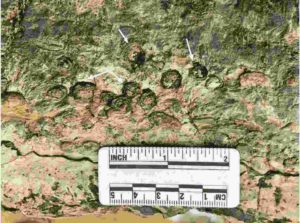
Vertebrate bones exposed during fieldwork in the Zhebao region of Guangxi ProvinceThe arrows indicate ribs, exposed in cross-section
Ichthyosaurs are a group of successful Mesozoic marine reptiles that have a worldwide distribution, but their evolutionary origin is still unclear. In recent years, many new marine reptiles related to ichthyosaurs, and called early ichthyosauromorphs, have been found in rocks of Early Triassic age and shed light on the origin of ichthyosaurs. These early ichthyosauromorphs have been discovered in many countries, but most of them are from China, including Cartorhynchus, Chaohusaurus, and several members of an ichthyosauromorph subgroup called the Hupehsuchia. They are generally small (about 1m long) and are from the eastern and central regions of China.
In a new paper published in the journal PeerJ, researchers from China and Canada report a new large early ichthyosauromorph, named Baisesaurus robustus, from the southwest of China, extending the known geographic distribution of this group.
In 2017, Guizhou Geological Survey field crews found some vertebrate bones exposed in limestone in the Zhebao region of Guangxi Province, southwest China, and they invited researchers (Haishui Jiang and Fenglu Han) from China University of Geosciences (Wuhan) to join them in studying the specimen. Jiang and Han confirmed that the fossil was that of a marine reptile, possibly a relative of ichthyosaurs. The specimen was collected by the joint research team in 2018, and was prepared in the Wuhan Centre of the China Geological Survey.
The specimen comprises only the front part of the trunk skeleton, including some vertebrae and ribs, a limb bone, and abdominal bones called gastralia. This made classification difficult, but the researchers compared the fossil comprehensively with other marine reptiles from the Early Triassic and ultimately identified it as an ichthyosauromorph. “The dorsal ribs and gastralia are more similar to those of other early ichthyosauromorphs, such as Chaohusaurus, than to sauropterygians,” said Long Cheng, a coauthor on the study.
In general, Baisesaurus robustus shares more similarities with Utatsusaurus from Japan, another early ichthyosauromorph, than with other marine reptiles. The researchers also found some unusual features that were unknown in other early ichthyosauromorphs, such as deep depressions on the sides of the vertebrae, and a robust radius with two distinct joint facets for contact with wrist bones. These new features indicate that the fossil belongs to a previously unknown species, which the researchers named Baisesaurus robustus. Moreover, Baisesaurus is estimated to have been about 3m long, making this newly discovered marine reptile significantly larger than any other Early Triassic ichthyosauromorph from China. Finally, Baisesaurus has a more robust radius than many other early ichthyosauromorphs, suggesting strong swimming abilities that might have been used for long-distance migrations along the eastern margin of an ancient ocean known as the Paleo-Tethys.
“I’m inclined to take Baisesaurus as a reminder that there’s still a lot to be discovered about the tremendous evolutionary explosion of vertebrate diversity that took place in the Triassic,” said Corwin Sullivan, a coauthor on the study. Sullivan is an associate professor at the University of Alberta in Edmonton, Canada, and curator of the Philip J. Currie Dinosaur Museum in nearby Wembley.
Reference:
Jicheng Ren, Haishui Jiang, Kunpeng Xiang, Corwin Sullivan, Yongzhong He, Long Cheng, Fenglu Han. A new basal ichthyosauromorph from the Lower Triassic (Olenekian) of Zhebao, Guangxi Autonomous Region, South China. PeerJ, 2022; 10: e13209 DOI: 10.7717/peerj.13209
Note: The above post is reprinted from materials provided by PeerJ.
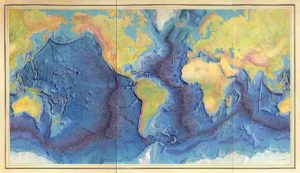
Painting of the Mid-Ocean Ridge with rift axis by Heinrich Berann based on the scientific profiles of Marie Tharp and Bruce Heezen (1977).
A new global analysis of the last 19 million years of seafloor spreading rates found they have been slowing down. Geologists want to know why the seafloor is getting sluggish.
New oceanic crust forms continuously along rifts thousands of miles long on the seafloor, driven by plate tectonics. As subduction pulls old crust down, rifts open up like fissures in an effusive volcano, drawing hot crust toward the surface. Once at the surface, the crust begins to cool and gets pushed away from the rift, replaced by hotter, younger crust.
This cycle is called seafloor spreading, and its rate shapes many global processes, including sea level and the carbon cycle. Faster rates tend to cause more volcanic activity, which releases greenhouse gases, so deciphering spreading rates helps contextualize long-term changes in the atmosphere.
Today, spreading rates top out around 140 millimeters per year, but peaked around 200 millimeters per year just 15 million years ago in some places, according to the new study. The study was published in the AGU journal Geophysical Research Letters, which publishes high-impact, short-format reports with immediate implications spanning all Earth and space sciences.
The slowdown is a global average, the result of varying spreading rates from ridge to ridge. The study examined 18 ridges, but took a particularly close look at the eastern Pacific, home to some of the globe’s fastest spreading ridges. Because these slowed greatly, some by nearly 100 millimeters per year slower compared to 19 million years ago, they dragged down the world’s average spreading rates.
It’s a complex problem to solve, made more difficult by the seafloor’s slow and steady self-destruction.
“We know more about the surfaces of some other planets than we do our own seafloor,” said Colleen Dalton, a geophysicist at Brown University who led the new study. “One of the challenges is the lack of perfect preservation. The seafloor is destroyed, so we’re left with an incomplete record.”
The seafloor is destroyed in subduction zones, where oceanic crust slides under continents and sinks back into the mantle, and is reforged at seafloor spreading ridges. This cycle of creation and destruction takes about every 180 million years, the age of the oldest seafloor. The crust’s magnetic record tracks this pattern, producing identifiable strips every time the Earth’s magnetic field reverses.
Dalton and her co-authors studied magnetic records for 18 of the world’s largest spreading ridges, using seafloor ages and their areas to calculate how much ocean crust each ridge has produced over the last 19 million years. Each ridge evolved a little differently: some lengthened, some shrank; some sped up, but almost all slowed down. The overall result of Dalton’s work is that average seafloor spreading slowed down by as much as 40% over that time.
The driver here might be located at subduction zones rather than spreading ridges: for example, as the Andes grow along the western edge of the South American continent, the mountains push down on the crust.
“Think of it as increased friction between the two colliding tectonic plates,” Dalton said. “A slowdown in convergence there could ultimately cause a slowdown in spreading at nearby ridges.” A similar process could have operated underneath the Himalaya, with the rapidly growing range slowing spreading along the ridges in the Indian Ocean.
However, Dalton points out, this added friction can’t be the only driver of the slowdown, because she found slowing rates globally and mountain growth is regional. Larger-scale processes, like changes in mantle convection, could also be playing a role. In all likelihood, she concludes, it’s a combination of both. To learn more, Dalton hopes to collect absolute plate speeds, rather than the relative speeds used in this study, which will better allow her to determine the cause of the slowdown.
Reference:
Colleen A. Dalton, Douglas S. Wilson, Timothy D. Herbert. Evidence for a Global Slowdown in Seafloor Spreading Since 15 Ma. Geophysical Research Letters, 2022; 49 (6) DOI: 10.1029/2022GL097937
New research, led by the University of Massachusetts Amherst and published recently in the journal Climate of the Past, is the first to provide a continuous look at a shift in climate, called the Mid-Pleistocene Transition, that has puzzled scientists. Kurt Lindberg, the paper’s first author and currently a graduate student at the University at Buffalo, was only an undergraduate when he completed the research as part of a team of climate scientists at UMass Amherst.
Somewhere around 1.2 million years ago, a dramatic shift in the Earth’s climate, known as the Mid-Pleistocene Transition, or MPT, happened. Previously, ice ages had occurred, with relative regularity, every 40,000 years or so. But then, in a comparatively short window of geological time, the time between ice ages more than doubled, to every 100,000 years. “It’s a real puzzle,” says Isla Castañeda, professor of geosciences at UMass Amherst and one of the paper’s co-authors. “No one really knows why this shift occurred.”
One of the big barriers to understanding the MPT is that very little data exists. The oldest Arctic ice cores only go back approximately 125,000 years. And older sedimentary cores are almost nonexistent, because as ice ages have come and gone, the advancing and retreating ice sheets have acted like enormous bulldozers, scraping much of the exposed land down to bedrock.
However, there is one place in the world, in far northeastern Russia, that is both above the Arctic Circle and which has never been covered by glaciers: Lake El’gygytgyn. This is where the polar scientist, Julie Brigham-Grette, professor of geosciences at UMass Amherst and one of the paper’s co-authors, comes in.
In 2009, Brigham-Grette led an international team of scientists to Lake El’gygytgyn, where they drilled a 685.5 meter sediment core, representing approximately the last 3.6 million years of Earth’s history. Lindberg and his co-authors used the portion of this sedimentary core that spanned the MPT and looked for specific biomarkers that could help them ascertain temperature and vegetation. With this information, they were able to reconstruct, for the first time, climactic conditions in the Arctic during the MPT.
While the team did not solve the mystery of the MPT, they did make a few surprising discoveries. For example, an interglacial period, or era when ice was in retreat, known as MIS 31 is widely recognized as having been abnormally warm — and yet the records at Lake El’gygytgyn show only moderate warmth. Instead, three other interglacial periods, MIS 21, 27 and 29 were as warm or warmer. Finally, the team’s research shows a long-term drying trend throughout the MPT.
Reference:
Kurt R. Lindberg, William C. Daniels, Isla S. Castañeda, Julie Brigham-Grette. Biomarker proxy records of Arctic climate change during the Mid-Pleistocene transition from Lake El’gygytgyn (Far East Russia). Climate of the Past, 2022; 18 (3): 559 DOI: 10.5194/cp-18-559-2022
Volcanoes can be found even off the coast of Antarctica. At the deep-sea volcano Orca, which has been inactive for a long time, a sequence of more than 85,000 earthquakes was registered in 2020, a swarm quake that reached proportions not previously observed for this region. The fact that such events can be studied and described in great detail even in such remote and therefore poorly instrumented areas is now shown by the study of an international team published in the journal “Communications Earth and Environment.” Led by Simone Cesca from the German Research Centre for Geosciences (GFZ) Potsdam, researchers from Germany, Italy, Poland and the United States were involved. With the combined application of seismological, geodetic and remote sensing techniques, they were able to determine how the rapid transfer of magma from the Earth’s mantle near the crust-mantle boundary to almost the surface led to the swarm quake.
The Orca volcano between the tip of South America and Antarctica
Swarm quakes mainly occur in volcanically active regions. The movement of fluids in the Earth’s crust is therefore suspected as the cause. Orca seamount is a large submarine shield volcano with a height of about 900 metres above the sea floor and a base diameter of about 11 kilometres. It is located in the Bransfield Strait, an ocean channel between the Antarctic Peninsula and the South Shetland Islands, southwest of the southern tip of Argentina.
“In the past, seismicity in this region was moderate. However, in August 2020, an intense seismic swarm began there, with more than 85,000 earthquakes within half a year. It represents the largest seismic unrest ever recorded there,” reports Simone Cesca, scientist in GFZ’s Section 2.1 Earthquake and Volcano Physics and lead author of the now published study. At the same time as the swarm, a lateral ground displacement of more than ten centimetres and a small uplift of about one centimetre was recorded on neighbouring King George Island.
Challenges of research in a remote area
Cesca studied these events with colleagues from the National Institute of Oceanography and Applied Geophysics — OGS and the University of Bologna (Italy), the Polish Academy of Sciences, Leibniz University Hannover, the German Aerospace Centre (DLR) and the University of Potsdam. The challenge was that there are few conventional seismological instruments in the remote area, namely only two seismic and two GNSS stations (ground stations of the Global Navigation Satellite System which measure ground displacement). In order to reconstruct the chronology and development of the unrest and to determine its cause, the team therefore additionally analysed data from farther seismic stations and data from InSAR satellites, which use radar interferometry to measure ground displacements. An important step was the modelling of the events with a number of geophysical methods in order to interpret the data correctly.
Reconstructing the seismic events
The researchers backdated the start of the unrest to 10 August 2020 and extend the original global seismic catalog, containing only 128 earthquakes, to more than 85,000 events. The swarm peaked with two large earthquakes on 2 October (Mw 5.9) and 6 November (Mw 6.0) 2020 before subsiding. By February 2021, seismic activity had decreased significantly.
The scientists identify a magma intrusion, the migration of a larger volume of magma, as the main cause of the swarm quake, because seismic processes alone cannot explain the observed strong surface deformation on King George Island. The presence of a volumetric magma intrusion can be confirmed independently on the basis of geodetic data.
Starting from its origin, seismicity first migrated upward and then laterally: deeper, clustered earthquakes are interpreted as the response to vertical magma propagation from a reservoir in the upper mantle or at the crust-mantle boundary, while shallower, crustal earthquakes extend NE-SW triggered on top of the laterally growing magma dike, which reaches a length of about 20 kilometres.
The seismicity decreased abruptly by mid November, after about three months of sustained activity, in correspondence to the occurrence of the largest earthquakes of the series, with a magnitude Mw 6.0. The end of the swarm can be explained by the loss of pressure in the magma dike, accompanying the slip of a large fault, and could mark the timing of a seafloor eruption which, however, could not yet be confirmed by other data.
By modeling GNSS and InSAR data, the scientists estimated that the volume of the Bransfield magmatic intrusion is in the range 0.26-0.56 km³. That makes this episode also the largest magmatic unrest ever geophysically monitored in Antarctica.
Simone Cesca continues: “Our study represents a new successful investigation of a seismo-volcanic unrest at a remote location on Earth, where the combined application of seismology, geodesy and remote sensing techniques are used to understand earthquake processes and magma transport in poorly instrumented areas. This is one of the few cases where we can use geophysical tools to observe intrusion of magma from the upper mantle or crust-mantle boundary into the shallow crust — a rapid transfer of magma from the mantle to almost the surface that takes only a few days.”
Reference:
Simone Cesca, Monica Sugan, Łukasz Rudzinski, Sanaz Vajedian, Peter Niemz, Simon Plank, Gesa Petersen, Zhiguo Deng, Eleonora Rivalta, Alessandro Vuan, Milton Percy Plasencia Linares, Sebastian Heimann, Torsten Dahm. Massive earthquake swarm driven by magmatic intrusion at the Bransfield Strait, Antarctica. Communications Earth & Environment, 2022; 3 (1) DOI: 10.1038/s43247-022-00418-5
A new, Yale-led study unlocks the science behind a key ingredient—namely oxygen—in some of the world’s most violent volcanoes.
The research offers a new model for understanding the oxidation state of arc magmas, the lavas that form some volcanoes, such as the one that erupted dramatically in Tonga earlier this year.
The plume from Tonga’s underwater volcanic eruption on Jan. 15 rose 36 miles into the air. Ash from the volcano reached the mesosphere, Earth’s third layer of atmosphere.
“These eruptions occur in volcanic arcs, such as the Aleutian island chain, which are well known in the circum-Pacific region and produce the world’s most explosive volcanic eruptions,” said Jay Ague, the Henry Barnard Davis Memorial Professor of Earth & Planetary Sciences at Yale.
Ague is first author of the new study, published in the journal Nature Geoscience. Ague is also curator-in-charge of mineralogy and meteoritics for the Yale Peabody Museum of Natural History.
Scientists have long known that arc magmas have a higher oxidation state than rocks in most of the Earth’s mantle (its upper, rocky layer). This is surprising, they say, because arc magmas form in the mantle. There has been no consensus on the origins of the oxidizing signature.
Ague and his colleagues say the process begins with a layer of sediment that covers tectonic plates beneath the ocean floor. Tectonic plates are large slabs of rock that jockey for position in the Earth’s crust and upper mantle.
The sediment covering these ocean plates is largely made up of weathered materials shed from continents or produced as a result of seafloor hydrothermal vent activity. Giant tube worms and other exotic sea creatures commonly thrive near these vents. But regardless of origin, the sediments covering oceanic plates are often highly oxidized.
Tectonic plates are constantly in motion, moving at about the rate that fingernails grow. Oceanic plates are generated at mid-ocean ridges and sink sharply into Earth’s interior—in a process called subduction.
That’s where things get interesting for arc volcanism, Ague said.
When an ocean plate subducts, Ague explained, it heats up, is compressed, and begins to dehydrate. This metamorphism produces hot, water-rich fluids that rise toward the surface.
As these materials move upward through the oxidized sediment layer on top of slabs, the fluids themselves become oxidized—setting the stage for an arc magma.
“As the fluids continue to rise they leave the slab behind and enter Earth’s mantle,” Ague said. “There, the fluids drive mantle melting, producing oxidized magmas that ascend and can ultimately erupt as lava from volcanoes.”
Beyond the dramatic effects of volcanic eruptions, the oxidized character of arc magmas is also geologically significant, Ague said. Oxidation is critical for making certain kinds of ore deposits, particularly copper and gold, such as those found in western South America.
Also, the injection of highly-oxidized, sulfur-bearing gases into the atmosphere after an eruption can lead to transient global cooling of the troposphere, the lowest level of Earth’s atmosphere.
“This was the case with the 1991 eruption of Mount Pinatubo in the Philippines,” Ague said. “It also occurred in a number of famous historical cases, such Mount Tambora in Indonesia in 1815. That was the most powerful volcanic eruption in human history and led to the so-called ‘Year Without a Summer’ in 1816.”
Santiago Tassara, a Bateman Postdoctoral Associate in Yale’s Department of Earth & Planetary Sciences, is a co-author of the new study. Other co-authors include researchers from Cornell University, the Chinese Academy of Sciences, the National Museum of Natural History at the Smithsonian Institution, Freie Universität Berlin, and the University of Crete.
Reference:
Jay Ague, Slab-derived devolatilization fluids oxidized by subducted metasedimentary rocks, Nature Geoscience (2022). DOI: 10.1038/s41561-022-00904-7.
An imagined scene from the end of the Cretaceous Period, more than 66 million years ago, has the newly identified softshell turtle Hutchemys walkerorum dwelling alongside iconic species from the Age of the Dinosaurs. (Image: Sergey Krasovskiy)
A newly described softshell turtle that lived in North Dakota 66.5 million years ago at the end of the Cretaceous Period, just before the end-Cretaceous mass extinction,is oneof the earliest known species of the genus, according to new research shared in the journal Cretaceous Research.
Hutchemys walkerorum lived during a period when large and well-known dinosaurs also roamed Earth, including Tyrannosaurus rex and Triceratops. The find adds important information to scientists’ understanding of softshell turtles more broadly, including the potential effects of the end-Cretaceous mass extinction, which took place in this same time period, on their evolution.
Steven Jasinski, who recently completed his Ph.D. in Penn’s Department of Earth and Environmental Sciences in the School of Arts & Sciences, led the research, collaborating with advisor Peter Dodson of the School of Veterinary Medicine and Penn Arts & Sciences. The research team included Andrew Heckert and Ciara Sailar of Appalachian State University and Asher Lichtig and Spencer Lucas of the New Mexico Museum of Natural History and Science.
Hutchemys walkerorum belongs to a particular group of softshell turtles in the Trionychidae family called plastomenines. These turtles are similar to the softshell turtles that exist today, although the plastron of plastomenine turtles — the bones covering their stomach and abdominal area — are more strongly sutured together and often larger and more robust than in other softshell turtles.
Plastomenines lived during the Cretaceous and Paleogene periods, around 80 million to 50 million years ago. Members of this group first appear in the fossil record during the Late Cretaceous, and a single species continues into the Eocene Epoch, 50 million years ago, but they are at their peak diversity before and after the Cretaceous-Paleogene boundary.
“Until recently we didn’t understand these softshell turtles very well,” says Jasinski. “However, we are starting to get more information on this extinct group of turtles and further understanding their evolution, including how they dealt with the mass extinction.”
The fossil specimen of the new species, a partial carapace — the bones that cover the back and what people think of as a turtle’s “shell” — was discovered in 1975 in southwestern North Dakota. A field crew from Appalachian State University led by Frank K. McKinney and John E. Callahan collected the specimen, along with a specimen of Triceratops, that summer. The fossil turtle specimen remained at Appalachian State until 2013, when Heckert discussed it with Jasinski, a master’s student at East Tennessee State University at the time.
Research started in earnest around that time and continued as Jasinski was at Penn for his doctoral studies. Based on the structure of the specimen, he and colleagues determined this fossil belonged to a genus of turtles from the American West known as Hutchemys. Hutchemys walkerorum represents one of the rare occurrences of these turtles prior to the mass extinction event that brought the Age of Dinosaurs to an end. It also represents the easternmost occurrence of the genus during the Cretaceous Period.
“With this study we gain further insight into winners and losers during the cataclysm that ended the Age of Dinosaurs,” says Dodson. “The mighty dinosaurs fell, and the lowly turtle survived.”
A phylogenetic analysis, comparing the new species with other known trionychids, or softshell turtles, gave the scientists a better understanding of the group’s evolutionary relationships. Their analysis placed Hutchemys walkerorum with other known species of Hutchemys and several other turtles in a distinct group of derived plastomenines, which they named Plastomenini. In addition, the researchers found a group of early trionychids, placing them in a newly established subfamily, Kuhnemydinae. Kuhnemydines are fossil species from Asia, and the team’s analysis suggests the family Trionychidae originated in Asia before migrating to North America sometime in the Late Cretaceous.
The researchers’ investigations also led them to another new classification in the Trionychidae family, a subfamily they named Chitrainae. This group encompasses modern softshell turtles, including the narrow-headed and giant softshell turtles found in southern Asia.
The species name walkerorum honors Greg and Susan Walker, whose philanthropy created The Greg and Susan Walker Endowment in 2006. Under the terms of that gift, students in the Department of Earth and Environmental Science (EES) may apply for funds to undertake research projects for which no other source of support is immediately available.
“The Greg and Susan Walker Endowment awards research support, typically for projects costing up to $5,000, in response to proposals submitted to the endowment through the Department of Earth and Environmental Science,” says Robert Giegengack, professor emeritus.
“The professors and advisors who approve the endowment do an awesome job in helping the students thrive,” says Joan Buccilli, an administrator in the EES department who assists students seeking support. “However, I really do feel I have the best job, getting to navigate through their awards with them and getting to see firsthand how excited they are and what they have accomplished.”
Jasinski was awarded Walker Research Grant funds for this project as well as others describing new species of dinosaurs, turtles, dogs, and investigations of dinosaurs and carnivorous mammals. “The Walkers’ generous support helped me get the most out of my time while at Penn,” says Jasinski, “and I know they were vital to the research of other students as well. This was one of the major reasons we wanted to name this new species in their honor.”
Hermann Pfefferkorn, professor emeritus, says, “Research funds like the one established by the Walkers allow both undergrad and graduate students to pursue research that is not funded by the grants of their professors. This means that their creativity can bear fruits very early in their career. In this way they learn to be scientists in their own right.”
Reference:
Steven E. Jasinski, Andrew B. Heckert, Ciara Sailar, Asher J. Lichtig, Spencer G. Lucas, Peter Dodson. A softshell turtle (Testudines: Trionychidae: Plastomeninae) from the uppermost Cretaceous (Maastrichtian) Hell Creek Formation, North Dakota, USA, with implications for the evolutionary relationships of plastomenines and other trionychids. Cretaceous Research, 2022; 135: 105172 DOI: 10.1016/j.cretres.2022.105172
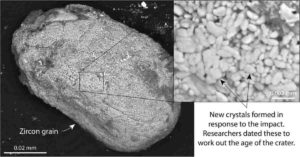
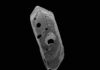
Zircon Crystals of the mineral zircon are tiny time-capsules that record the age of many events in Earth’s history. Dating zircon crystals like this was one of the two methods used to calculate the age of the Hiawatha impact crater. Illustration: Gavin Kenny, Swedish Museum of Natural History.
Danish and Swedish researchers have dated the enormous Hiawatha impact crater, a 31 km-wide meteorite crater buried under a kilometer of Greenlandic ice. The dating ends speculation that the meteorite impacted after the appearance of humans and opens up a new understanding of Earth’s evolution in the post-dinosaur era.
Ever since 2015, when researchers at the University of Copenhagen’s GLOBE Institute discovered the Hiawatha impact crater in northwestern Greenland, uncertainty about the crater’s age has been the subject of considerable speculation. Could the asteroid have slammed into Earth as recently as 13,000 years ago, when humans had long populated the planet? Could its impact have catalyzed a nearly 1,000-year period of global cooling known as the Younger Dryas?
New analyses performed on grains of sand and rocks from the Hiawatha impact crater by the Natural History Museum of Denmark and the GLOBE Institute at the University of Copenhagen, as well as the Swedish Museum of Natural History in Stockholm, demonstrate that the answer is no. The Hiawatha impact crater is far older. In fact, a new study published in the journal Science Advances today reports its age to be 58 million years old.
“Dating the crater has been a particularly tough nut to crack, so it’s very satisfying that two laboratories in Denmark and Sweden, using different dating methods arrived at the same conclusion. As such, I’m convinced that we’ve determined the crater’s actual age, which is much older than many people once thought,” says Michael Storey of the Natural History Museum of Denmark.
“Determining the new age of the crater surprised us all. In the future, it will help us investigate the impact’s possible effect on climate during an important epoch of Earth’s history” says Dr. Gavin Kenny of the Swedish Museum of Natural History.
As one of those who helped discover the Hiawatha impact crater in 2015, Professor Nicolaj Krog Larsen of the GLOBE Institute at the University of Copenhagen is pleased that the crater’s exact age is now confirmed.
“It is fantastic to now know its age. We’ve been working hard to find a way to date the crater since we discovered it seven years ago. Since then, we have been on several field trips to the area to collect samples associated with the Hiawatha impact,” says Professor Larsen
Age revealed by laser beams and grains of sand
No kilometer-thick ice sheet draped Northwest Greenland when the Hiawatha asteroid rammed into Earth surface releasing several million times more energy than an atomic bomb. At the time, the Arctic was covered with a temperate rainforest and wildlife abounded — and temperatures of 20 degrees Celsius were the norm. Eight million years earlier, an even larger asteroid struck present-day Mexico, causing the extinction of Earth’s dinosaurs.
The asteroid smashed into Earth, leaving a thirty-one-kilometer-wide, one-kilometer-deep crater. The crater is big enough to contain the entire city of Washington D.C. Today, the crater lies beneath the Hiawatha Glacier in Northwest Greenland. Rivers flowing from the glacier supplied the researchers with sand and rocks that were superheated by the impact 58 million years ago.
The sand was analyzed at the Natural History Museum of Denmark by heating the grains with a laser until they released argon gas, whereas the rock samples were analyzed at the Swedish Museum of Natural History using uranium-lead dating of the mineral zircon.
Clear evidence that the Hiawatha impact disrupted global climate is still lacking. However, the crater’s dating allows the international research team working on the crater to begin testing various hypotheses to better understand what its impact was on both the local and global climate.
Facts:
At 31 km across, the Hiawatha impact crater is larger than about 90% of the roughly 200 previously known impact craters on Earth.
Although the Hiawatha impact crater is much smaller than the approximately 200 km-wide Chicxulub impact crater in present-day Mexico, which led to the demise of the dinosaurs, it would have devastated the region and may even have had wider consequences for the climate and plant and animal life.
When the Hiawatha impact occurred 58 million years ago the Earth had recovered from the catastrophic effects of the Chicxulub impact eight million years earlier and was entering a long-term warming trend that was to last about 5 million years.
Reference:
Gavin G. Kenny, William R. Hyde, Michael Storey, Adam A. Garde, Martin J. Whitehouse, Pierre Beck, Leif Johansson, Anne Sofie Søndergaard, Anders A. Bjørk, Joseph A. MacGregor, Shfaqat A. Khan, Jérémie Mouginot, Brandon C. Johnson, Elizabeth A. Silber, Daniel K. P. Wielandt, Kurt H. Kjær, Nicolaj K. Larsen. A Late Paleocene age for Greenland’s Hiawatha impact structure. Science Advances, 2022; 8 (10) DOI: 10.1126/sciadv.abm2434
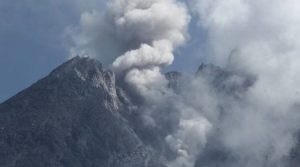
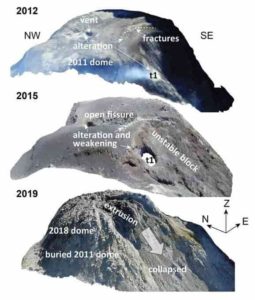
The unstable southern flank of the Merapi volcano during a partial collapse in 2019. Photograph: GFZ Potsdam
Lava domes form at the top of many volcanoes when viscous lava erupts. When they become unstable, they can collapse and cause a hazard. An international team of researchers has analysed summit dome instabilities at Merapi Volcano, Indonesia. The researchers hope that by understanding the inner processes, volcano collapses can be better forecasted.
Catastrophic volcano collapses and associated explosions, like the famous collapse of Mt St Helens in 1980, are widely considered as unpredictable. This is because the physical properties, stress conditions, and internal structure of volcanoes and the lava domes on top of many volcanoes are not well understood and can change rapidly from one day to another.
A new study jointly led by Gadja Mata University in Yogyakarta Indonesia, Uppsala University in Sweden, and the German Research Center GFZ at Potsdam is now able to explain summit dome instabilities and associated pyroclastic flows at Merapi volcano, Indonesia. The study combines novel drone-based photogrammetry surveillance over several years with mineralogical, geochemical, and mechanical rock strength measurements.
The research demonstrated that a horseshoe-shaped fracture zone in the volcanoes summit region that formed in 2012 and which guided intense gas emission in the past was subsequently buried by renewed lava outpourings in 2018. The new lava dome that has been forming since 2018 started to show signs of instability in 2019 and the researchers were able to show that the summit dome of the volcano is currently collapsing along this now-hidden fracture zone. The research team then considered the changes that must have occurred along this now buried fracture zone from long term gas flux by measuring the composition and physical properties along similar fracture zones in the volcano’s summit region, and concludes that weakened rocks of the hidden fracture zone are likely the main cause for the location of the ongoing summit instabilities at Merapi.
Reference:
Herlan Darmawan, Valentin R. Troll, Thomas R. Walter, Frances M. Deegan, Harri Geiger, Michael J. Heap, Nadhirah Seraphine, Chris Harris, Hanik Humaida, Daniel Müller. Hidden mechanical weaknesses within lava domes provided by buried high-porosity hydrothermal alteration zones. Scientific Reports, 2022; 12 (1) DOI: 10.1038/s41598-022-06765-9
Note: The above post is reprinted from materials provided by Uppsala University. Original written by Linda Koffmar.
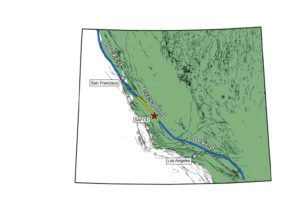
California’s San Andreas Fault. The “creeping” central section, subject of a new study, is in yellow. Rock samples from almost 2 miles down were taken at the San Andreas Fault Observatory at Depth, or SAFOD, marked by the red star. (Adapted from Coffey et al., Geology, 2022)
Most people have heard about the San Andreas Fault. It’s the 800-mile-long monster that cleaves California from south to north, as two tectonic plates slowly grind against each other, threatening to produce big earthquakes.
Lesser known is the fact that the San Andreas comprises three major sections that can move independently. In all three, the plates are trying to move past each other in opposing directions, like two hands rubbing against each other. In the southern and the northern sections, the plates are locked much of the time — stuck together in a dangerous, immobile embrace. This causes stresses to build over years, decades or centuries. Finally a breaking point comes; the two sides lurch past each other violently, and there is an earthquake. However in the central section, which separates the other two, the plates slip past each other at a pleasant, steady 26 millimeters or so each year. This prevents stresses from building, and there are no big quakes. This is called aseismic creep.
At least that is the story most scientists have been telling so far. Now, a study of rocks drilled from nearly 2 miles under the surface suggests that the central section has hosted many major earthquakes, including some that could have been fairly recent. The study, which uses new chemical-analysis methods to gauge the heating of rocks during prehistoric quakes, just appeared in the online edition of the journal Geology.
“This means we can get larger earthquakes on the central section than we thought,” said lead author Genevieve Coffey, who did the research as a graduate student at Columbia University’s Lamont-Doherty Earth Observatory. “We should be aware that there is this potential, that it is not always just continuous creep.”
The threats of the San Andreas are legion. The northern section hosted the catastrophic 1906 San Francisco magnitude 7.9 earthquake, which killed 3,000 people and leveled much of the city. Also, the 1989 M6.9 Loma Prieta quake, which killed more than 60 and collapsed a major elevated freeway. The southern section caused the 1994 M6.7 Northridge earthquake near Los Angeles, also killing about 60 people. Many scientists believe it is building energy for a 1906-scale event.
The central section, by contrast, appears harmless. Only one small area, near its southern terminus, is known to produce any real quakes. There, magnitude 6 events — not that dangerous by most standards — occur about every 20 years. Because of their regularity, scientists hoping to study clues that might signal a coming quake have set up a major observatory atop the fault near the city of Parkfield. It features a 3.2-kilometer-deep borehole from which rock cores have been retrieved, and monitoring instruments above and below ground. It was rock from near the bottom of the borehole that Coffey and her colleagues analyzed.
When earthquake faults slip, friction along the moving parts can cause temperatures to spike hundreds of degrees above those of surrounding rocks. This cooks the rocks, altering the makeup of organic compounds in any sedimentary formations along the fault path. Recently, study coauthors Pratigya Polissar and Heather Savage figured out how to take advantage of these so-called biomarkers, using the altered compositions to map prehistoric earthquakes.They say that by calculating the degree of heating in the rock, they can spot past events and estimate how far the fault moved; from this, they can roughly extrapolate the sizes of resulting earthquakes. At Lamont-Doherty, they refined the method in the U.S. Northeast, Alaska, and off Japan.
In the new study, the researchers found many such altered compositions in a band of highly disturbed sedimentary rock lying between 3192 and 3196 meters below the surface. In all, they say the blackish, crumbly stuff shows signs of more than 100 quakes. In most, the fault appears to have jumped more than 1.5 meters (5 feet). This would translate to at least a magnitude 6.9 quake, the size of the destructive Loma Prieta and Northridge events. But many could well have been larger, say the researchers, because their method of estimating earthquake magnitude is still evolving. They say quakes along the central section may have been similar to other large San Andreas events, including the one that destroyed San Francisco.
The current official California earthquake hazard model, used to set building codes and insurance rates, does include the remote possibility of a big central-section rupture. But inclusion of this possibility, arrived at through mathematical calculations, was controversial, given the lack of evidence for any such prior event. The new study appears to be the first to indicate that such quakes have in fact occurred here. The authors say they could have originated in the central section, or perhaps more likely, started to the north or south, and migrated through the central.
So, when did these quakes happen? Trenches dug by paleoseismologists across the central section have revealed no disturbed soil layers that would indicate quakes rupturing the surface in the last 2,000 years — about the limit for detection using that method in this region. But 2,000 years is an eye blink in geologic terms. And, the excavations could be missing any number of quakes that might not necessarily have ruptured the surface at specific sites.
The researchers used a second new technique to address this question. The biomarkers run along very narrow bands, from microscopic to just a couple of centimeters wide. Just a few inches or feet away, the rock heats only enough to drive out some or all of the gas argon naturally present there. Conveniently for the authors, other scientists have long used the ratio of radioactive potassium to argon, into which potassium slowly decays, to measure the ages of rocks. The more argon compared to potassium, the older the rock. Thus, if some or all of the argon is driven out by quake-induced heat, the radioactive “clock” gets reset, and the rock appears younger than identical nearby rock that was not heated.
This is exactly what the team found. The sediments they studied were formed tens of millions of years ago in an ancient Pacific basin that was subducted under California. Yet the ages of rocks surrounding the thin quake slip zones came out looking as young as 3.2 million years by the potassium-argon clock. This sets out a time frame, but only a vague one, because the scientists still do not know how to judge the amount of argon that was driven out, and thus how thoroughly the clock may have been reset. This means that 3.2 million years is just an upper age limit for the most recent quakes, said Coffey; in fact, some could have taken place as little as a few hundred or a few thousand years ago, she said. The group is now working on a new project to refine the age interpretations.
“Ultimately, our work points to the potential for higher magnitude earthquakes in central California and highlights the importance of including the central [San Andreas Fault] and other creeping faults in seismic hazard analysis,” the authors write.
William Ellsworth, a geophysicist at Stanford University who has led research at the drill site, pointed out that while a possible big quake is included in the state’s official hazard assessment, “Most earthquake scientists think that they happen rarely, as tectonic strain is not accumulating at significant rates, if at all, along it at the present time,” he said.
Morgan Page, a seismologist with the U.S. Geological Survey who coauthored the hazard assessment, said the study breaks new ground. “The creeping section is a difficult place to do paleoseismology, because evidence for earthquakes can be easily erased by the creep,” she said. “If this holds up, this is the first evidence of a big seismic rupture in this part of the fault.” She said that if a big earthquake can tear through the creeping section, it means that it is possible — though chances would be remote — that one could start at the very southern tip of the San Andreas, travel through the central section and continue all the way on up to the end of the northern section — the so-called “Big One” that people like to speculate about. “I’m excited about this new evidence, and hope we can use it to better constrain this part of our model,” she said.
How much should this worry Californians? “People should not be alarmed,” said Lamont-Doherty geologist and study coauthor Stephen Cox. “Building codes in California are now quite good. Seismic events are inevitable. Work like this helps us figure out what is the biggest possible event, and helps everyone prepare.”
The study’s other coauthors are Sidney Hemming and Gisela Winckler of Lamont-Doherty, and Kelly Bradbury of Utah State University. Genevieve Coffey is now at New Zealand’s GNS Science; Pratigya Polissar and Heather Savage are now at the University of California Santa Cruz.
Reference:
Genevieve L. Coffey, Heather M. Savage, Pratigya J. Polissar, Stephen E. Cox, Sidney R. Hemming, Gisela Winckler, Kelly K. Bradbury. History of earthquakes along the creeping section of the San Andreas fault, California, USA. Geology, 2022; DOI: 10.1130/G49451.1
Curtin researchers have developed a new technique by studying the age of ancient grains of sand from beaches, rivers and rocks from around the world to reveal previously hidden details of the Earth’s distant geological past.
Lead researcher Dr Milo Barham, from the Timescales of Mineral Systems Group within Curtin’s School of Earth and Planetary Sciences, said the team devised a metric, which determines the ‘age distribution fingerprint’ of minerals known as zircon within sand, shedding new light on the evolution of the Earth’s surface over the last few billion years.
“While much of the original geological record is lost to erosion, durable minerals like zircon form sediments that effectively gather information from these lost worlds to paint a vivid picture of the planet’s history, including changing environments, the development of a habitable biosphere, the evolution of continents, and the accumulation of mineral resources at ancient plate boundaries,” Dr Barham said.
“This new approach allows a greater understanding of the nature of ancient geology in order to reconstruct the arrangement and movement of tectonic plates on Earth through time.
“The world’s beaches faithfully record a detailed history of our planet’s geological past, with billions of years of Earth’s history imprinted in the geology of each grain of sand and our technique helps unlock this information.”
Co-author Professor Chris Kirkland, also from the Timescales of Mineral Systems Group within Curtin’s School of Earth and Planetary Sciences, said the new method can be used to trace the Earth’s history with greater detail than previously achievable.
“Zircons contain chemical elements that allow us to date and reconstruct the conditions of mineral formation. Much like human population demographics trace the evolution of countries, this technique allows us to chart the evolution of continents by identifying the particular age population demographics of zircon grains in a sediment,” Professor Kirkland said.
“The way the Earth recycles itself through erosion is tracked in the pattern of ages of zircon grains in different geological settings. For example, the sediment on the west and east coasts of South America are completely different because there are many young grains on the west side that were created from crust plunging beneath the continent, driving earthquakes and volcanoes in the Andes. Whereas, on the east coast, all is relatively calm geologically and there is a mix of old and young grains picked up from a diversity of rocks across the Amazon basin.”
Dr Barham and Professor Kirkland are affiliated with The Institute for Geoscience Research (TIGeR), Curtin’s flagship Earth Sciences research institute and the research was funded by the Minerals Research Institute of Western Australia.
Reference:
M. Barham, C.L. Kirkland, A.D. Handoko. Understanding ancient tectonic settings through detrital zircon analysis. Earth and Planetary Science Letters, 2022; 583: 117425 DOI: 10.1016/j.epsl.2022.117425
Note: The above post is reprinted from materials provided by Curtin University. Original written by Lucien Wilkinson.
Kimberlites are complex rocks that came to the Earth’s surface from great depths. The picture shows a thin section of a carbonate-rich kimberlite. (Photograph: David Swart / Messengers of the Mantle Exhibition)
The rapid development of fauna 540 million years ago has permanently changed the Earth — deep into its lower mantle. A team led by ETH researcher Andrea Giuliani found traces of this development in rocks from this zone.
It is easy to see that the processes in the Earth’s interior influence what happens on the surface. For example, volcanoes unearth magmatic rocks and emit gases into the atmosphere, and thus influence the biogeochemical cycles on our planet.
What is less obvious, however, is that the reverse is also true: what happens on the Earth’s surface effect the Earth’s interior — even down to great depths. This is the conclusion reached by an international group of researchers led by Andrea Giuliani, SNSF Ambizione Fellow in the Department of Earth Sciences at ETH Zurich, in a new study published in the journal Science Advances. According to this study, the development of life on our planet affects parts of Earth’s lower mantle.
Carbon as a messenger
In their study, the researchers examined rare diamond-bearing volcanic rocks called kimberlites from different epochs of the Earth’s history. These special rocks are messengers from the lowest regions of the Earth’s mantle. Scientists measured the isotopic composition of carbon in about 150 samples of these special rocks. They found that the composition of younger kimberlites, which are less than 250 million years old, varies considerably from that of older rocks. In many of the younger samples, the composition of the carbon isotopes is outside the range that would be expected for rocks from the mantle.
The researchers see a decisive trigger for this change in composition of younger kimberlites in the Cambrian Explosion. This relatively short phase — geologically speaking — took place over a period of few tens of million years at the beginning of the Cambrian Epoch, about 540 million years ago. During this drastic transition, almost all of today’s existing animal tribes appeared on Earth for the first time. “The enormous increase in life forms in the oceans decisively changed what was happening on the Earth’s surface,” Giuliani explains. “And this in turn affected the composition of sediments at the bottom of the ocean.”
From the oceans to the mantle and back
For the Earth’s lower mantle, this changeover is relevant because some of the sediments on the seafloor, in which material from dead living creatures is deposited, enter the mantle through plate tectonics. Along the subduction zones, these sediments — along with the underlying oceanic crust — are transported to great depths. In this way, the carbon that was stored as organic material in the sediments also reaches the Earth’s mantle. There the sediments mix with other rock material from the Earth’s mantle and after a certain time, estimated to at least 200-300 million years, rise to the Earth’s surface again in other places — for example in the form of kimberlite magmas.
It is remarkable that changes in marine sediments leave such profound traces, because overall, only small amounts of sediment are transported into the depths of the mantle along a subduction zone. “This confirms that the subducted rock material in the Earth’s mantle is not distributed homogeneously, but moves along specific trajectories,” Giuliani explains.
The Earth as a total system
In addition to carbon, the researchers also examined the isotopic composition of other chemical elements. For example, the two elements strontium and hafnium showed a similar pattern to carbon. “This means that the signature for carbon cannot be explained by other processes such as degassing, because otherwise the isotopes of strontium and hafnium would not be correlated with those of carbon,” Giuliani notes.
The new findings open the door for further studies. For example, elements such as phosphorus or zinc, which were significantly affected by the emergence of life, could also provide clues as to how processes at the Earth’s surface influence the Earth’s interior. “The Earth is really a complex overall system,” Giuliani says. “And we now want to understand this system in more detail.”
Reference:
Andrea Giuliani, Russell N. Drysdale, Jon D. Woodhead, Noah J. Planavsky, David Phillips, Janet Hergt, William L. Griffin, Senan Oesch, Hayden Dalton, Gareth R. Davies. Perturbation of the deep-Earth carbon cycle in response to the Cambrian Explosion. Science Advances, 2022; 8 (9) DOI: 10.1126/sciadv.abj1325
Note: The above post is reprinted from materials provided by ETH Zurich. Original written by Felix Würsten.
By examining earthquake models from a fresh perspective, Cornell University engineers now show that the earthquake fracture energy — once thought to relate to how faults in the Earth’s crust weaken — is related to how quakes stop.
This modeling revelation could help science inch closer to making accurate earthquake forecasts.
“We realized that observations we thought were related to how faults weaken are actually data related to how an earthquake stops,” said Greg McLaskey, assistant professor in the School of Civil and Environmental Engineering, in the College of Engineering. “We’ve observed that earthquake fracture energy is more related to the overall rupture style — such as crack-like or pulse-like rupture — instead of a specific slip-weakening relationship (the way the crust weakens when plates slide past each other).”
The work, “Earthquake Breakdown Energy Scaling Despite Constant Fracture Energy,” was published Feb. 22 in Nature Communications. In addition to McLaskey, the lead author was Chun-Yu (Huey) Ke, Ph.D. ’21, and David S. Kammer at the Institute for Building Materials, ETH Zu?rich, Switzerland. The research was supported by the National Science Foundation.
Research over the past 25 years has focused on earthquake fracture energy or breakdown energy usually estimated from ground shaking, McLaskey said.
That research had linked earthquake fracture energy to the way the Earth’s crust weakens during an earthquake. But by studying large-scale rock experiments — at the Bovay Laboratory Complex — between two two-ton granite slabs, the researchers at Cornell found that those models may have been slightly askew.
The lab’s computer models suggested that those seismic observations are not directly related to fracture energy, but instead, the new research indicated, the seismic observations depend on how the earthquake ends, as related to either a pulse-like or crack-like rupture style.
For a pulse-like rupture, the fault resembles an inchworm moving along a surface. The inchworm doesn’t jump, McLaskey said, and only a little bit moves at a time. In a crack-style rupture, the fault resembles a zipper.
Seismologists have been measuring the fracture energy (sometimes called breakdown energy) of earthquakes. “That parameter of an earthquake should not be interpreted as a weakening of the crust,” he said, “but whether the earthquake rupture is a pulse or a crack.”
When earthquakes do occur, they end. The slipped part of the fault tapers off and eventually merges with part of the crust that is not ruptured. “Think of a car approaching a stop sign,” he said. “You don’t stop abruptly. You see the sign and you apply the brakes — but the factor we’ve introduced is whether you’re coming to a stop sign going uphill, downhill or on a flat surface.”
The engineers found that when they slammed on the experimental brakes, they could not get the ruptures to stop. “The only way we could get our ruptures in the lab to stop is by making ‘a hill,’ so to speak,” McLaskey said. “We introduced that factor into our model and it began to make sense.”
Earthquakes are unpredictable, he said, discussing early warning technology used around the world in Japan and Mexico, and now being developed in California.
“If you get a 1-second warning because of sensors that there will be an earthquake — maybe a 10-second warning — you’ll be lucky,” he said.
“One of the reasons why it is difficult to predict earthquakes is because scientific modeling equations don’t always add up,” McLaskey said. “This paper is a step in the right direction. We’re getting a better understanding of these models — hopefully leading to an ability to predict earthquakes.”
McLaskey is a faculty fellow at the Cornell Atkinson Center for Sustainability.
Reference:
Chun-Yu Ke, Gregory C. McLaskey, David S. Kammer. Earthquake breakdown energy scaling despite constant fracture energy. Nature Communications, 2022; 13 (1) DOI: 10.1038/s41467-022-28647-4
Note: The above post is reprinted from materials provided by Cornell University. Original written by Blaine Friedlander.
Earth’s thin crust softens considerably when it dives down into the Earth attached to a tectonic plate. That is demonstrated by X-ray studies carried out using DESY’s X-ray source PETRA III on a mineral which occurs in large quantities in basaltic crust. This softening can even cause the crust to peel away from the underlying plate, as an international team led by Hauke Marquardt from the University of Oxford reports in the scientific journal Nature. The delaminated crust has different physical properties from the rest of the mantle, which may explain anomalies in the speed with which seismic waves propagate through the mantle.
For the first time, the scientists have managed to measure the deformation of the mineral davemaoite under the conditions that prevail inside the Earth’s mantle. “Davemaoite belongs to the widespread group of materials known as perovskites, but it is only formed from other minerals at depths of about 550 kilometres and beyond, due to the increasing pressure and temperature,” explains lead author Julia Immoor from the Bavarian Research Institute of Experimental Geochemistry and Geophysics at the University of Bayreuth. The existence of the mineral had been predicted for decades, but it was not until 2021 that a natural sample of it was found. Davemaoite differs from other perovskites in its cubic crystal structure, among other things. At great enough depths, it can account for about a quarter of the descending basaltic oceanic crust.
Using a special apparatus at DESY’s Extreme Conditions Beamline (P02.2) at PETRA III, the team has now succeeded in artificially producing davemaoite and examining it with X-rays. To do this, the scientists heated finely ground wollastonite (CaSiO3) to around 900 degrees Celsius at high pressure, until davemaoite was formed. The mineral was then deformed by applying an increasing pressure of up to 57 gigapascals — around 570,000 times atmospheric pressure at sea level — and examined using X-rays. These parameters correspond to the conditions encountered at depths of up to 1300 kilometres.
“Our measurements show that davemaoite is surprisingly soft within Earth’s lower mantle,” reports Hauke Marquardt, who led the research. “This observation completely changes our ideas about the dynamic behaviour of subducting slabs in the lower mantle.” The dynamics in these so-called subduction zones, where one tectonic plate dives underneath another, depend very much on how hard the minerals present are. Being surprisingly soft, davemaoite can cause the descending crust to detach from the underlying plate, whereby the subduction process then proceeds separately for the crust and the remaining plate.
Scientists have long speculated about such a detachment because the separated crust could cause the characteristic changes in the velocities of seismic waves that are observed at different depths. Until now, however, it has been unclear what causes could lead to such a delamination. “I am glad that the experimental setup we have come up with here is able to help solve important questions linked to processes occurring deep inside our planet,” says DESY’s Hanns-Peter Liermann, who is in charge of the Extreme Conditions Beamline at PETRA III and a co-author of the study.
Researchers from the Universities of Bayreuth, Oxford and Utah, as well as from the GFZ German Research Centre for Geosciences in Potsdam, the California Institute of Technology and DESY were involved in the study. The project was funded in part by Deutsche Forschungsgemeinschaft DFG.
Reference:
J. Immoor, L. Miyagi, H.-P. Liermann, S. Speziale, K. Schulze, J. Buchen, A. Kurnosov & H. Marquardt. Weak cubic CaSiO3 perovskite in the Earth’s mantle. Nature, 2022 DOI: 10.1038/s41586-021-04378-2
Evidence suggests an asteroid impact that killed off most dinosaurs might have happened in spring. Credit: Joschua Knüppe
The asteroid which killed nearly all of the dinosaurs struck Earth during springtime. This conclusion was drawn by an international team of researchers after having examined thin sections, high-resolution synchrotron X-ray scans, and carbon isotope records of the bones of fishes that died less than 60 minutes after the asteroid impacted. The team presents its findings in the journal Nature.
The researchers from Uppsala University in Sweden, Vrije Universiteit (VU) in Amsterdam, Vrije Universiteit in Brussels (VUB), and the European Synchrotron Radiation Facility (ESRF) in France turned to the unique Tanis locality in North Dakota (United States) to find fossilised paddlefishes and sturgeons which were direct casualties of the so-called Chicxulub meteorite impact that also marked the last day of the dinosaurs. The impact rocked the continental plate and caused massive standing waves in water bodies. These mobilised enormous volumes of sediment that engulfed fishes and buried them alive while impact spherules rained down from the sky, less than an hour after impact.
Fossil fishes in the Tanis event deposit were pristinely preserved, with their bones showing almost no signs of geochemical alteration. The synchrotron X-ray data, which are made available for anyone to explore, confirms that filtered-out impact spherules are still stuck in their gills. Even soft tissues have been preserved!
Selected fish bones were studied for the reconstruction of latest Cretaceous seasonality. “These bones registered seasonal growth very much like trees do” says Sophie Sanchez of Uppsala University and the ESRF.
“The retrieved growth rings not only captured the life histories of the fishes but also recorded the latest Cretaceous seasonality and thus the season in which the catastrophic extinction occurred,” states senior author Jeroen van der Lubbe of the VU in Amsterdam.
An additional line of evidence was provided by the distribution, shapes and sizes of the bone cells, which are known to fluctuate with the seasons as well. “In all studied fishes, bone cell density and volumes can be traced over multiple years. These were on the rise but had not yet peaked during the year of death,” says Dennis Voeten of Uppsala University.
One of the studied paddlefishes was subjected to stable carbon isotope analysis to reveal its annual feeding pattern. The availability of zooplankton, its prey of choice, oscillated seasonally and peaked between spring and summer.
“This temporary increase of ingested zooplankton enriched the skeleton of its predator with the heavier 13C carbon isotope relative to the lighter 12C carbon isotope,” explains Suzan Verdegaal-Warmerdam of the VU Amsterdam. “The carbon isotope signal across the growth record of this unfortunate paddlefish confirms that the feeding season had not yet climaxed — death came in spring,” infers Melanie During from Uppsala University and the VU Amsterdam and lead author of the publication.
The end-Cretaceous mass extinction represents one of the most selective extinctions in the history of life that saw the demise of all non-avian dinosaurs, pterosaurs, ammonites, and most marine reptiles, while mammals, birds, crocodiles, and turtles survived. Because we now know that the extinction must have abruptly started during northern-hemisphere spring, we start to understand that this event took place during particularly sensitive life stages of Latest Cretaceous organisms, including the onset of reproduction cycles. And because southern-hemisphere autumn coincides with spring in the Northern Hemisphere, the preparation for winter may have just protected organisms in the Southern Hemisphere.
“This crucial finding will help to uncover why most of the dinosaurs died out while birds and early mammals managed to evade extinction,” concludes Melanie During.
Reference:
Melanie A. D. During, Jan Smit, Dennis F. A. E. Voeten, Camille Berruyer, Paul Tafforeau, Sophie Sanchez, Koen H. W. Stein, Suzan J. A. Verdegaal-Warmerdam, Jeroen H. J. L. van der Lubbe. The Mesozoic terminated in boreal spring. Nature, 2022; DOI: 10.1038/s41586-022-04446-1
Researchers discover first evidence indicating dinosaur respiratory infection
A group of researchers from around the country, including University of New Mexico Research Assistant Professor Ewan Wolff, discovered the first evidence of a unique respiratory infection in the fossilized remains of a dinosaur that lived nearly 150 million years ago.
Researchers examined the remains of an immature diplodocid — a long-necked herbivorous sauropod dinosaur, like “Brontosaurus” — dating back to the Late Jurassic Period of the Mesozoic Era. The dinosaur nicknamed “Dolly,” discovered in southwest Montana, had evidence of an infection in the area of its neck vertebrae.
They study, led by Cary Woodruff of the Great Plains Dinosaur Museum, identified never before seen abnormal bony protrusions that had an unusual shape and texture. These protrusions were located in an area of each bone where they would have been penetrated by air sacs. Air sacs are non-oxygen exchanging parts of the respiratory system in modern birds that are also present in dinosaurs. The air sacs would have ultimately connected to “Dolly’s” lungs and formed part of the dinosaur’s complex respiratory system. CT imaging of the irregular protrusions revealed that they were made of abnormal bone that most likely formed in response to an infection.
“We’ve all experienced these same symptoms — coughing, trouble breathing, fever and here’s a 150-million-year-old dinosaur that likely felt as miserable as we all do when we’re sick.” Woodruff said.
Researchers say these findings are significant because Dolly was considered a non-avian dinosaur, and sauropods, like Dolly, did not evolve to become birds; only avian theropods evolved into birds. The authors speculate this respiratory infection could have been caused by a fungal infection similar to aspergillosis, a common respiratory illness that affects birds and reptiles today and can lead to bone infections. In addition to documenting the first occurrence of such a respiratory infection in a dinosaur, this fossilized infection also has important anatomical implications for the respiratory system of sauropod dinosaurs.
“This fossil infection in Dolly not only helps us trace the evolutionary history of respiratory-related diseases back in time, but it also gives us a better understanding of what kinds of diseases dinosaurs were susceptible to,” Woodruff said.
“This would have been a remarkably, visibly sick sauropod,” Wolff said. “We always think of dinosaurs as big and tough, but they got sick. They had respiratory illnesses like birds do today, in fact, maybe even the same devastating infections in some cases.”
The researchers suggest that if Dolly had been infected with an aspergillosis-like respiratory infection, it likely experienced flu or pneumonia-like symptoms such as weight loss, coughing, fever and breathing difficulties. As aspergillosis can be fatal in birds if untreated, a potentially similar infection in Dolly could have ultimately caused the death of the animal.
“We have to continue to expand our knowledge of ancient diseases. If we look hard enough, we may begin to understand more about the evolution of immunity and infectious disease,” Wolff said. “When we work together between multiple specialties — veterinarians, anatomists, paleontologists, paleopathologists, and radiologists we can come away with a more complete picture of ancient disease.”
The research group included: Cary Woodruff, a paleopathologist/veterinarian — Ewan Wolff (University of New Mexico, Albuquerque, N.M.), a veterinarian — Sophie Dennison (TeleVet Imaging Solutions, Oakton, V.a.), and two paleontologists who are also medical anatomists — Mathew Wedel (Western University of Health Sciences, Pomona, Calif) and Lawrence Witmer (Ohio University Heritage College of Osteopathic Medicine, Athens, Ohio).
Reference:
D. Cary Woodruff, Ewan D. S. Wolff, Mathew J. Wedel, Sophie Dennison, Lawrence M. Witmer. The first occurrence of an avian-style respiratory infection in a non-avian dinosaur. Scientific Reports, 2022; 12 (1) DOI: 10.1038/s41598-022-05761-3
Illustration by Cindy Joli, Julio Francisco Garza Lorenzo, and René Dávila Rodríguez.
Approximately 80 miles from the westernmost reach of China’s Great Wall, paleontologists found relics of an even more ancient world. Over the last two decades, teams of researchers unearthed more than 100 specimens of fossil birds that lived approximately 120 million years ago, during the time of the dinosaurs. However, many of these fossils have proved difficult to identify: they’re incomplete and sometimes badly crushed. In a new paper published in the Journal of Systematics and Evolution, researchers examined six of these fossils and identified two new species. And as a fun side note, one of those new species had a movable bony appendage at the tip of its lower jaw that may have helped the bird root for food.
“It was a long, painstaking process teasing out what these things were,” says Jingmai O’Connor, the study’s lead author and the associate curator of vertebrate paleontology at Chicago’s Field Museum. “But these new specimens include two new species that increase our knowledge of Cretaceous bird faunas, and we found combinations of dental features that we’ve never seen in any other dinosaurs.”
“These fossils come from a site in China that has produced fossils of birds that are pretty darned close to modern birds, but all the bird fossils described thus far haven’t had skulls preserved with the bodies,” says co-author Jerry Harris of Utah Tech University. “These new skull specimens help fill in that gap in our knowledge of the birds from this site and of bird evolution as a whole.”
All birds are dinosaurs, but not all dinosaurs are birds; a small group of dinosaurs evolved into birds that coexisted with other dinosaurs for 90 million years. Modern birds are the descendants of the group of birds that survived the extinction that killed the rest of the dinosaurs, but many prehistoric birds went extinct then too. O’Connor’s work focuses on studying different groups of early birds to figure out why some survived while others went extinct.
The fossil site in northwestern China, called Changma, is an important place for researchers like O’Connor studying bird evolution. It’s the second-richest Mesozoic (time of the dinosaurs) fossil bird site in the world, but more than half of the fossils found there belong to the same species, Gansus yumenensis.Determining which fossils are Gansus and which ones aren’t is tricky; the six specimens that O’Connor and her colleagues examined in this study are primarily just skulls and necks, parts not preserved in known specimens of Gansus. The fossils were also somewhat smushed by their time deep in the Earth, which made analyzing them difficult.
“The Changma site is a special place,” says study co-author Matt Lamanna of Pittsburgh’s Carnegie Museum of Natural History. “The fossil-bearing rocks there tend to split into thin sheets along ancient bedding planes. So, when you’re digging, it’s like you’re literally turning back the pages of history, layer by layer uncovering animals and plants that haven’t seen the light of day in roughly 120 million years.”
“Because the specimens were pretty flattened, CT-scanning them and fully segmenting them could take years and might not even give you that much information, because these thin bones are flattened into almost the same plane, and then it just becomes almost impossible to figure out where the boundaries of these bones are,” says O’Connor. “So we had to kind of work with what was exposed.” Through painstaking work, the researchers were able to identify key features in the birds’ jaws that showed that two of the six specimens were unknown to science.
The new species (or, more accurately, new genera — genus is a step above species in the order scientists use to name organisms) are called Meemannavis ductrix and Brevidentavis zhangi. Meemannavis is named for Meemann Chang, a Chinese paleontologist who became the first woman to lead the Institute of Vertebrate Paleontology and Paleoanthropology (IVPP) in Beijing. The name Brevidentavis means “short-toothed bird.” Like Gansus, both Meemannavis and Brevidentavis are ornithuromorph birds — the group that contains modern birds. Like today’s birds, Meemannavis was toothless. Brevidentavis, on the other hand, had small, peg-like teeth packed close together in its mouth. Along with those teeth came another strange feature.
“Brevidentavis is an ornithuromorph bird with teeth, and in ornithuromorphs with teeth, there’s a little bone at the front of the jaw called the predentary, where its chin would be if birds had chins,” explains O’Connor. In a previous study on the predentary in another fossil bird, the authors figured out, by CT-scanning the bone and staining it with chemicals, that the predentary bone underwent stress and also found a kind of cartilage that only forms when there’s movement.
“In this earlier study, we were able to tell that the predentary was capable of being moved, and that it would have been innervated — Brevidentavis wouldn’t just have been able to move its predentary, it would have been able to feel through it,” says O’Connor. “It could have helped them detect prey. We can hypothesize that these toothed birds had little beaks with some kind of movable pincer at the tip of their jaws in front of the teeth.”
Brevidentavis isn’t the first fossil bird discovered with a predentary that might have been used in this way, but its existence, along with Meemannavis, helps round out our understanding of the diversity of prehistoric birds, especially in the Changma region.
The study also helps shed light on the most common bird from the site, Gansus, since at least four of the other specimens examined probably belong to this species. “Gansus is the first known true Mesozoic bird in the world, as Archaeopteryx is more dinosaur-like, and now we know what its skull looks like after about 40 years,” notes Hai-Lu You of the IVPP.
“These amazing fossils are like a lockpick allowing us to open the door to greater knowledge of the evolutionary history of the skull in close relatives of living birds,” says Tom Stidham, a co-author from the IVPP. “At a time when giant dinosaurs still roamed the land, these birds were the products of evolution experimenting with different lifestyles in the water, in the air, and on land, and with different diets as we can see in some species having or lacking teeth. Very few fossils of this geological age provide the level of anatomical detail that we can see in these ancient bird skulls.”
“These discoveries strengthen the hypothesis that the Changma locality is unusual in that it is dominated by ornithuromorph birds, which is uncommon in the Cretaceous,” says O’Connor. “Learning about these relatives of modern birds can ultimately help us understand why today’s birds made it when the others didn’t.”
Reference:
Jingmai K. O’Connor, Thomas A. Stidham, Jerald D. Harris, Matthew C. Lamanna, Alida M. Bailleul, Han Hu, Min Wang, Hai‐Lu You. Avian skulls represent a diverse ornithuromorph fauna from the Lower Cretaceous Xiagou Formation, Gansu Province, China. Journal of Systematics and Evolution, 2022; DOI: 10.1111/jse.12823
In July 2019, a series of earthquakes including two major shocks of magnitude 6.4 and 7.1 a day apart struck near Ridgecrest, CA, between Los Angeles and Las Vegas. For local residents, it was a violent interruption to the Fourth of July holiday. For seismologists, it was a rare opportunity to study how earthquakes damage the Earth’s crust.
The earthquake zone — which belongs to a network of faults called the Eastern California Shear Zone — is sparsely populated and arid, without much in the way of vegetation or buildings to obscure the surface. But it is also well-covered by satellite and remote imagery and accessible to geologists who could be on the scene well before evidence of crust damage disappeared.
UC Davis doctoral student Alba Rodríguez Padilla was among the scientists studying the site, along with Professor Mike Oskin, Department of Earth and Planetary Sciences, Christopher Milliner, California Institute of Technology and Andreas Plesch of Harvard University. They mapped the surface rupture from LIDAR data and aerial imagery collected by prior studies, and compared the rupture maps to other datasets to explore the distribution of rock damage from the earthquakes. Their findings are published Feb. 24 in Nature Geoscience.
“We not only have aridity helping here, improvements in imaging technique and resolution, together with collecting a large spatial data footprint, are what make the Ridgecrest coverage cutting edge,” Rodríguez Padilla said.
Inelastic deformation
The rock surrounding the fault suffered from “inelastic deformation,” meaning it was deformed and broken rather than returning to its original configuration. The deformation was highest within 100 meters of the fault, with widespread, low-intensity damage up to 20 kilometers (16 miles) away.
This deformation leaves the rock around the fault less rigid than before, softening the crust. This softening dissipates energy from future earthquakes, increases permeability and focuses deformation.
The study provides a better understanding of how damage from earthquakes accumulates and might affect future events, Rodríguez Padilla said.
The study was funded by the Southern California Earthquake Center, which is supported by NSF and the U.S. Geological Survey. Rodríguez Padilla was partly supported by a NASA fellowship.
Reference:
Alba M. Rodriguez Padilla, Michael E. Oskin, Christopher W. D. Milliner, Andreas Plesch. Accrual of widespread rock damage from the 2019 Ridgecrest earthquakes. Nature Geoscience, 2022; DOI: 10.1038/s41561-021-00888-w
Nearly 10 yrs of drone surveys at Merapi volcano highlights the importance of hydrothermal weakening and structures hidden beneath younger lavas. A fracture system that formed in 2012 was subsequently buried under new lava in 2018. Only a year later, the new lava dome that formed in 2018 showed signs of instability and collapse along the previously buried fracture system, implying that hidden weaknesses may be a key factor in controlling hazardous volcano collapse. Credit: Darmawan et al., (2022)
Lava domes form at the top of many volcanoes when viscous lava erupts. When they become unstable, they can collapse and cause a hazard. An international team of researchers has analyzed summit dome instabilities at the Merapi Volcano, Indonesia. The researchers hope that by understanding the inner processes, volcano collapses can be better forecasted.
Catastrophic volcano collapses and associated explosions, like the famous collapse of Mt St Helens in 1980, are widely considered as unpredictable. This is because the physical properties, stress conditions, and internal structure of volcanoes and the lava domes on top of many volcanoes are not well understood and can change rapidly from one day to another.
A new study jointly led by Gadja Mata University in Yogyakarta Indonesia, Uppsala University in Sweden, and the German Research Center GFZ at Potsdam is now able to explain summit dome instabilities and associated pyroclastic flows at Merapi volcano, Indonesia. The study combines novel drone-based photogrammetry surveillance over several years with mineralogical, geochemical, and mechanical rock strength measurements.
The research demonstrated that a horseshoe-shaped fracture zone in the volcanoes summit region that formed in 2012 and which guided intense gas emission in the past was subsequently buried by renewed lava outpourings in 2018. The new lava dome that has been forming since 2018 started to show signs of instability in 2019 and the researchers were able to show that the summit dome of the volcano is currently collapsing along this now-hidden fracture zone. The research team then considered the changes that must have occurred along this now buried fracture zone from long term gas flux by measuring the composition and physical properties along similar fracture zones in the volcano’s summit region, and concludes that weakened rocks of the hidden fracture zone are likely the main cause for the location of the ongoing summit instabilities at Merapi.
This finding now offers an opportunity for monitoring teams at volcanoes to better forecast locations of potential volcano collapse by employing long-term remote sensing monitoring techniques to assess the hazards associated with summit dome and edifice failure and collapses at active volcanoes worldwide.
Reference:
Darmawan et al. Hidden mechanical weaknesses within lava domes provided by buried high-porosity hydrothermal alteration zones. Scientific Reports, DOI: 10.1038/s41598-022-06765-9
Note: The above post is reprinted from materials provided by Uppsala University.