
A research group at The University of New Mexico has identified how an unusual prehistoric plant may provide new ways to interpret Earth’s ancient climate conditions.
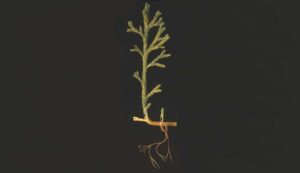
Led by UNM Earth and Planetary Sciences Professor Zachary Sharp, the team published its findings in the Proceedings of the National Academy of Sciences (PNAS). The study, titled “Extreme triple oxygen isotope fractionation in Equisetum,” examines horsetails, which are hollow-stemmed plants that have existed on the planet for more than 400 million years. The researchers discovered that as water moves through these plants, it experiences such intense natural filtration that its oxygen isotope signatures become similar to those seen in meteorites or other extraterrestrial materials.
“It’s a meter-high cylinder with a million holes in it, equally spaced. It’s an engineering marvel,” Sharp said. “You couldn’t create anything like this in a laboratory.”
Unusual Isotope Behavior Reveals a New Climate Tool
The team’s results help clarify long-standing puzzles involving oxygen isotope measurements in desert plants and introduce a valuable method for reconstructing climate in dry regions.
Oxygen isotopes function as tracers, allowing scientists to learn about water sources, plant transpiration, and atmospheric moisture. Heavier isotopes are rare, which makes it challenging to predict how their ratios shift under real environmental conditions.
To investigate this process, Sharp’s group collected smooth horsetails (Equisetum laevigatum) along the Rio Grande in New Mexico. They tracked how oxygen isotope values changed from the lower sections of the plants to the upper portions. The highest samples produced extreme readings that previously appeared to fall outside any known Earth-based range.
Meteorite-Like Signatures Draw Global Attention
Sharp presented the work at the Goldschmidt Geochemistry Conference in Prague this past July.
“If I found this sample, I would say this is from a meteorite,” Sharp said during the conference. “But in fact, these values do go down to these crazy low levels.”
The newly collected data allowed the researchers to update their models, helping explain unusual isotope results found in other desert species. Sharp believes these refined models could also help scientists better understand ancient climate behavior.
Fossil Records Preserve Humidity From the Age of Dinosaurs
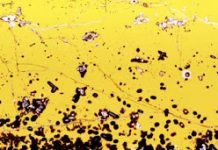
Fossil horsetails, which once grew up to 30 meters tall, contain tiny silica particles called phytoliths. These structures may retain isotope signatures for millions of years. According to Sharp, the phytoliths work as a “paleo-hygrometer,” or a way to measure ancient humidity.
“We can now begin to reconstruct the humidity and climate conditions of environments going back to when dinosaurs roamed the Earth,” he said.
This research expands UNM’s contributions to the geosciences and highlights horsetails, some of the planet’s oldest surviving plants, as unexpected yet powerful record keepers of Earth’s climate history.
Reference:
Zachary Sharp, Jordan Wostbrock, Anthony Gargano, Vincent Hare, Jessica Johnson, Thure Cerling, Payal Banerjee, Catherine Peshek, Cloe Knutson, Lauren Hartzell, Erick Cano, Elena Stiles, Kelley R. Bassett, Kira Holland, Michael H. Dowd, Jarunetr (Nadia) Sae-Lim, Teresa Dominguez, Dalton Bryant, Eduardo Di Marcantonio, Jensen Wainwright, Maxwell Horsford, Paul Botté, Catherine Gagnon, Paula J. Rudall, James Ehleringer. Extreme triple oxygen isotope fractionation in Equisetum. Proceedings of the National Academy of Sciences, 2025; 122 (44) DOI: 10.1073/pnas.2507455122
Note: The above post is reprinted from materials provided by University of New Mexico.