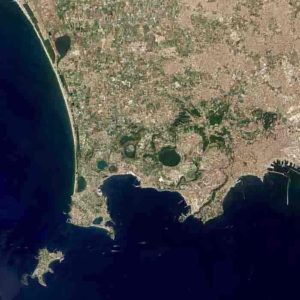
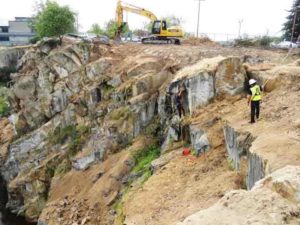
The Campi Flegrei caldera cluster. Credit: NASA Earth
The caldera-forming eruption of Campi Flegrei (Italy) 40,000 years ago is the largest known eruption in Europe during the last 200,000 years, but little is known about other large eruptions at the volcano prior to a more recent caldera-forming event 15,000 years ago. A new Geology article by Paul Albert and colleagues discusses a 29,000-year-old eruption, here verified as coming from Campi Flegrei, that spread a volcanic ash layer more than 150,000 square kilometers of the Mediterranean.
Knowledge of large explosive eruptions is mostly established from geological investigations of the exposed deposits found around the source volcano, with the deposits of large eruptions forming thick sequences. However, since the late 1970s, a widespread volcanic ash layer, dated at about 29,000 years ago, was commonly identified in marine and lake sediment cores from across the Mediterranean, documenting the occurrence of a large-magnitude eruption. Despite this widespread distribution and relatively young age, no clear evidence of such an event was identified at any of the main active volcanoes in the region.
In this study, the team’s detailed chemical analysis (volcanic glass) of an eruption deposit found five kilometers northeast of Campi Flegrei caldera in Naples, Italy, are entirely consistent with the distinctive composition of this ash layer. This, combined with new dating of the near-source eruption deposit, verifies that Campi Flegrei was responsible for this widespread ash layer.
Constraints on the size of the eruption were determined by the team using a computational ash dispersal model which integrated the thicknesses of the near-source eruption deposits, named here the Masseria del Monte Tuff, with those of the related ash fall across the Mediterranean.
The results indicate that this eruption at Campi Flegrei caldera was similar in scale to the younger of two known large-magnitude, caldera-forming eruptions at the volcano, the Neapolitan Yellow Tuff (about 15,000 years ago). The Masseria del Monte Tuff eruption was smaller than the older caldera-forming eruption, the enormous Campanian Ignimbrite (about 40,000 years old), which dispersed ash as far as Russia (more than 2,500 km from the volcano).
The 29,000 year old Masseria del Monte Tuff eruption positioned between known caldera-forming events significantly reduces the recurrence interval of large magnitude events in the eruptive history of Campi Flegrei caldera.
In contrast to other large magnitude events at Campi Flegrei, the lack of thick, traceable, deposits for this eruption appear to be the result of the eruption dynamics and their destruction and burial by more recent activities. This research highlights the benefits of investigating explosive eruption records preserved as ash fall in sedimentary records when attempting to accurately reconstruct the tempo and magnitude of past activity at highly productive volcanoes such as Campi Flegrei.
Reference:
P.G. Albert, B. Giaccio, R. Isaia, A. Costa, E.M. Niespolo, S. Nomade, A. Pereira, P.R. Renne, A. Hinchliffe, D.F. Mark, R.J. Brown, V.C. Smith. Evidence for a large-magnitude eruption from Campi Flegrei caldera (Italy) at 29 ka. Geology, 2019; DOI: 10.1130/G45805.1
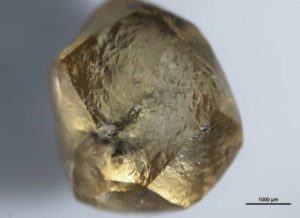
A raw diamond from Sierra Leone with sulfur-containing mineral inclusions. Credit: Courtesy of the Gemological Institute of America.
The longevity of Earth’s continents in the face of destructive tectonic activity is an essential geologic backdrop for the emergence of life on our planet. This stability depends on the underlying mantle attached to the landmasses. New research by a group of geoscientists from Carnegie, the Gemological Institute of America, and the University of Alberta demonstrates that diamonds can be used to reveal how a buoyant section of mantle beneath some of the continents became thick enough to provide long-term stability.
“We’ve found a way to use traces of sulfur from ancient volcanoes that made its way into the mantle and eventually into diamonds to provide evidence for one particular process of continent building,” explained Karen Smit of the Gemological Institute of America, lead author on the group’s paper, which appears this week in Science. “Our technique shows that the geologic activity that formed the West African continent was due to plate tectonic movement of ocean crust sinking into the mantle.”
Diamonds may be beloved by jewelry collectors, but they are truly a geologist’s best friend. Because they originate deep inside the Earth, tiny mineral grains trapped inside of a diamond, often considered undesirable in the gem trade, can reveal details about the conditions under which it formed.
“In this way, diamonds act as mineralogical emissaries from the Earth’s depths,” explained Carnegie co-author Steve Shirey.
About 150 to 200 kilometers, 93 to 124 miles, beneath the surface, geologic formations called mantle keels act as stabilizers for the continental crust. The material that comprises them must thicken, stabilize, and cool under the continent to form a strong, buoyant, keel that is fundamental for preserving the surface landmass against the relentless destructive forces of Earth’s tectonic activity. But how this is accomplished has been a matter of debate in the scientific community.
“Solving this mystery is key to understanding how the continents came to exist in their current incarnations and how they survive on an active planet,” Shirey explained. “Since this is the only tectonically active, rocky planet that we know, understanding the geology of how our continents formed is a crucial part of discerning what makes Earth habitable.”
Some scientists think mantle keels form by a process called subduction, by which oceanic plates sink from the Earth’s surface into its depths when one tectonic plate slides beneath another. Others think keels are created by a vertical process in which plumes of hot magma rise from much deeper in the Earth.
A geochemical tool that can detect whether the source of a mantle keel’s makeup originated from surface plates or from upwelling of deeper mantle material was needed to help resolve this debate. Luckily, mantle keels have the ideal conditions for diamond formation. This means scientists can reveal a mantle keel’s origin by studying inclusions from diamonds that formed in it.
The research group’s analysis of sulfur-rich minerals, called sulfides, in diamonds mined in Sierra Leone indicate that the region experienced two subduction events during its history.
They were able to make this determination because the chemistry of the sulfide mineral grains is only seen in samples from Earth’s surface more than 2.5 billion years ago — before oxygen became so abundant in our planet’s atmosphere. This means that the sulfur in these mineral inclusions must have once existed on the Earth’s surface and was then drawn down into the mantle by subduction.
The team’s comparison to diamonds from Botswana showed similar evidence of keel-creation through subduction. But comparison to diamonds mined from northern Canada does not show the same sulfur chemistry, meaning that the mantle keel in this region originated in some way that did not incorporate surface material.
The group’s findings suggest that thickening and stabilization of the mantle keel beneath the West African continent happened when this section of mantle was squeezed by collision with the sinking ocean floor material. This method of keel thickening and continent stabilization is not responsible for forming the keel under a portion of northern Canada. The sulfide minerals inside Canadian diamonds do not tell the researchers how this keel formed, only how it didn’t.
“Our work shows that sulfide inclusions in diamonds are a powerful tool to investigate continent construction processes,” Smit concluded.
This work was supported by the GIA, the University of Alberta, the NSF, and Carnegie. It is a contribution to the Deep Carbon Observatory.
Reference:
Karen V. Smit, Steven B. Shirey, Erik H. Hauri, Richard A. Stern. Sulfur isotopes in diamonds reveal differences in continent construction. Science, 2019 DOI: 10.1126/science.aaw9548
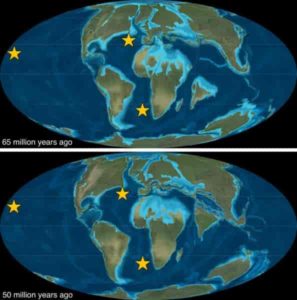
Neither the continents nor the oceans have always looked the way they do now. These ‘paleomaps’ show how the continents and oceans appeared before (top) and during (bottom) ‘the collision that changed the world,’ when the landmass that is now the Indian subcontinent rammed northward into Asia, closing the Tethys Sea and building the Himalayas. Global ocean levels were higher then, creating salty shallow seas (pale blue) that covered much of North Africa and parts of each of the continents. A team of Princeton researchers, using samples gathered at the three starred locations, created an unprecedented record of ocean nitrogen and oxygen levels from 70 million years ago through 30 million years ago that shows a major shift in ocean chemistry after the India-Asia collision. Another shift came 35 million years ago, when Antarctica began accumulating ice and global sea levels fell. Credit: Images created by Emma Kast, Princeton University, using paleogeographic reconstructions from Deep Time Maps, with their permission
When the landmass that is now the Indian subcontinent slammed into Asia about 50 million years ago, the collision changed the configuration of the continents, the landscape, global climate and more. Now a team of Princeton University scientists has identified one more effect: the oxygen in the world’s oceans increased, altering the conditions for life.
“These results are different from anything people have previously seen,” said Emma Kast, a graduate student in geosciences and the lead author on a paper coming out in Science on April 26. “The magnitude of the reconstructed change took us by surprise.”
Kast used microscopic seashells to create a record of ocean nitrogen over a period from 70 million years ago — shortly before the extinction of the dinosaurs — until 30 million years ago. This record is an enormous contribution to the field of global climate studies, said John Higgins, an associate professor of geosciences at Princeton and a co-author on the paper.
“In our field, there are records that you look at as fundamental, that need to be explained by any sort of hypothesis that wants to make biogeochemical connections,” Higgins said. “Those are few and far between, in part because it’s very hard to create records that go far back in time. Fifty-million-year-old rocks don’t willingly give up their secrets. I would certainly consider Emma’s record to be one of those fundamental records. From now on, people who want to engage with how the Earth has changed over the last 70 million years will have to engage with Emma’s data.”
In addition to being the most abundant gas in the atmosphere, nitrogen is key to all life on Earth. “I study nitrogen so that I can study the global environment,” said Daniel Sigman, Princeton’s Dusenbury Professor of Geological and Geophysical Sciences and the senior author on the paper. Sigman initiated this project with Higgins and then-Princeton postdoctoral researcher Daniel Stolper, who is now an assistant professor of Earth and planetary science at the University of California-Berkeley.
Every organism on Earth requires “fixed” nitrogen — sometimes called “biologically available nitrogen.” Nitrogen makes up 78% of our planet’s atmosphere, but few organisms can “fix” it by converting the gas into a biologically useful form. In the oceans, cyanobacteria in surface waters fix nitrogen for all other ocean life. As the cyanobacteria and other creatures die and sink downward, they decompose.
Nitrogen has two stable isotopes, 15N and 14N. In oxygen-poor waters, decomposition uses up “fixed” nitrogen. This occurs with a slight preference for the lighter nitrogen isotope, 14N, so the ocean’s 15N-to-14N ratio reflects its oxygen levels.
That ratio is incorporated into tiny sea creatures called foraminifera during their lives, and then preserved in their shells when they die. By analyzing their fossils — collected by the Ocean Drilling Program from the North Atlantic, North Pacific, and South Atlantic — Kast and her colleagues were able to reconstruct the 15N-to-14N ratio of the ancient ocean, and therefore identify past changes in oxygen levels.
Oxygen controls the distribution of marine organisms, with oxygen-poor waters being bad for most ocean life. Many past climate warming events caused decreases in ocean oxygen that limited the habitats of sea creatures, from microscopic plankton to the fish and whales that feed on them. Scientists trying to predict the impact of current and future global warming have warned that low levels of ocean oxygen could decimate marine ecosystems, including important fish populations.
When the researchers assembled their unprecedented geologic record of ocean nitrogen, they found that in the 10 million years after dinosaurs went extinct, the 15N-to-14N ratio was high, suggesting that ocean oxygen levels were low. They first thought that the warm climate of the time was responsible, as oxygen is less soluble in warmer water. But the timing told another story: the change to higher ocean oxygen occurred around 55 million years ago, during a time of continuously warm climate.
“Contrary to our first expectations, global climate was not the primary cause of this change in ocean oxygen and nitrogen cycling,” Kast said. The more likely culprit? Plate tectonics. The collision of India with Asia — dubbed “the collision that changed the world” by legendary geoscientist Wally Broecker, a founder of modern climate research — closed off an ancient sea called the Tethys, disturbing the continental shelves and their connections with the open ocean.
“Over millions of years, tectonic changes have the potential to have massive effects on ocean circulation,” said Sigman. But that doesn’t mean climate change can be discounted, he added. “On timescales of years to millenia, climate has the upper hand.”
Reference:
Emma R. Kast, Daniel A. Stolper, Alexandra Auderset, John A. Higgins, Haojia Ren, Xingchen T. Wang, Alfredo Martínez-García, Gerald H. Haug, Daniel M. Sigman. Nitrogen isotope evidence for expanded ocean suboxia in the early Cenozoic. Science, 2019; 364 (6438): 386 DOI: 10.1126/science.aau5784
In the past decade scientists have been experimenting with metamaterials, artificial materials designed with periodic internal structures to give them properties not found in natural materials. Depending on their internal geometry and composition, researchers have found that they can control waves propagating through some of these materials, filtering sound or deflecting light so that an object appears “cloaked” or invisible, for instance.
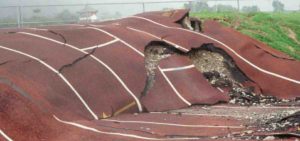
Could this same principle be applied to controlling seismic waves? At the SSA 2019 Annual Meeting, seismologists from around the world will discuss how metamaterial theory might be applied to everything from developing deflective barriers to manipulating the layout of buildings within a city as a way to minimize the impact of damaging surface seismic waves.
Lav Joshi, a Ph.D. student and J. P. Narayan, a professor at the Indian Institute of Technology in Roorkee, India are exploring whether the metamaterial concept can be scaled up to the size of a city. They were inspired by earlier studies where researchers looked at how groups of trees could be used as a natural metamaterial to mitigate the damaging potential of Rayleigh waves, that “roll” across the ground spreading out from the epicentral zone of an earthquake.
“Borrowing ideas from these studies, we started working on the concept of existing structures as metamaterials or metastructures, combining our present knowledge of site-city interaction effects and seismic wave propagation,” said Joshi.
Joshi and colleagues conducted 3-D simulations of how Rayleigh waves pass through the structures of varying heights and widths within a city. They found that the structures act as “resonators” that pluck energy from the Rayleigh waves.
To maximize this effect on a city-wide basis, Joshi said, “the possible arrangement for a city would be that the height of a building should decrease radially inward, as the fundamental longitudinal mode of vibration of high-rise buildings can coincide with the flexural mode of vibration of shorter buildings, causing a significant reduction in their damage.”
Other factors, including features of the surrounding landscape like mountains and valleys, will interact with the pattern of buildings as well, affecting the extent of the damage, he added.
In another presentation at the meeting, Maria Todorovska of Tianjin University in China will present her work on how a periodic arrangement of large-scale barriers such as excavated holes and hills could act as a seismic metamaterial. Her modeling results show that periodic “valleys” appear to reduce more ground motion than deeper and narrower “canyons” or hills.
With more research, the idea of patterning the urban landscape as a seismic metamaterial might aid city planners and earthquake engineers as they build in areas where shallow damaging earthquakes are expected, the scientists say.
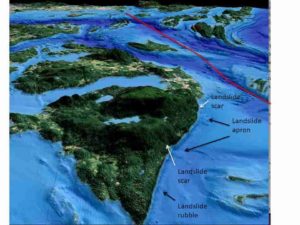
Image showing landslide failures around Orcas Island. The red line marks the newly discovered Skipjack fault zone. Credit: H. Gary Greene
The central Salish Sea of the Pacific Northwest is bounded by two active fault zones that could trigger rockfalls and slumps of sediment that might lead to tsunamis, according to a presentation at the 2019 SSA Annual Meeting.
These tsunamis might be directed toward the islands of San Juan Archipelago, Vancouver Island and low coastal areas of the United States including Bellingham, Washington.
Extensive seismic mapping of the seafloor by Canadian and U.S. scientists has revealed details of the extent and surrounding features of the Devils Mountain Fault Zone running south of the Archipelago, as well as the newly mapped Skipjack Island Fault Zone at its northern edge, said H. Gary Greene of Moss Landing Marine Laboratories. Both of the faults extend more than 55 kilometers (~34 miles) offshore, but might have the potential to rupture over 125 kilometers (~78 miles) if connected to onshore faults.
The faults are similar to the east-west trending faults under the cities of Seattle and Tacoma, lying in the brittle upper plate of the Cascadia Subduction Zone. Deformation of sediments along the Devils Mountain and Skipjack faults indicates that they were active at least 10,000 years ago, Greene said. Although there have not been any large recorded earthquakes along these faults, he said the similar Seattle and Tacoma fault zones have produced magnitude 6 to 7 earthquakes in the past.
The new seafloor mapping holds a few troubling signs for what might happen if an earthquake of that magnitude does occur along the Skipjack Island fault, in particular. For instance, Greene and his colleagues have identified an underwater rubble field from a past landslide along the steep northeastern face of Orcas Island near the Skipjack fault. A Skipjack earthquake could shake loose the massive rubble blocks here, he said, “and generate an impact tsunami from this material.”
The researchers also saw evidence of previous ground failure — slumps and slides of sediment — along the southern edge of the Canadian Fraser River Delta, which lies just north of the Skipjack Island fault zone. If an earthquake led to a massive slide of river delta sediments, the resulting tsunami might affect both the islands of the San Juan Archipelago and the Washington state coast.
Greene also noted that the sediments lining Bellingham Bay have “just a tremendous amount of pockmarks, which indicate that methane is seeping out of the seafloor and has in the past.” The gas might further destabilize sediment in the region.
Together, the faults and seafloor features suggest that seismologists should keep a close eye on the potential local tsunami risks in the central Salish Sea. “We have the two faults here, we know that they have moved fairly recently, and that they are in the upper plate of the Cascadia Subduction Zone, an unstable area that we know can fail,” Greene said.
Although Greene, Vaughn Barrie of the Geological Survey of Canada, and other colleagues have identified some of the potential causes of tsunami between the Devils Mountain and Skipjack Fault Zones, the next step would be to model in detail how the tsunami might occur. “Modeling could help us establish the volume of the material that would fail, and that would give us a better idea of the potential magnitude of the tsunami,” he said.
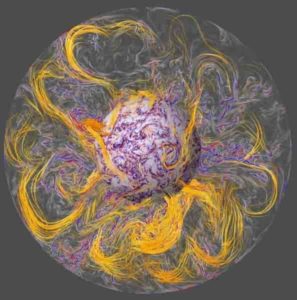
Visualization of the interior of the Earth’s core, as represented by a computer simulation model (view of the equatorial plane and a spherical surface near the inner core, seen from the North Pole). Magnetic field lines (in orange) are stretched by turbulent convection (in blue and red). Hydromagnetic waves are emitted from the inner core, and spread along the magnetic field lines up to the core’s boundary, where they are focused and give rise to geomagnetic jerks. Credit: Aubert et al./IPGP/CNRS Photo library
Initially described in 1978, geomagnetic jerks are unpredictable events that abruptly accelerate the evolution of the Earth’s magnetic field, and skew predictions of its behaviour on a multi-year scale. Our magnetic field affects numerous human activities, ranging from establishing the direction in smartphones to the flight of low-altitude satellites. It is therefore essential to accurately predict its evolution. Still, geomagnetic jerks have presented a problem for geophysicists for over forty years.
The Earth’s magnetic field is produced by the circulation of matter within its metallic core, via the energy released when this core cools. Researchers know of two types of movements that cause two types of variations in the magnetic field: those resulting from slow convection movement, which can be measured on the scale of a century, and those resulting from “rapid” hydromagnetic waves, which can be detected on the scale of a few years. They suspected that the latter played a role in the jerks, but the interaction of these waves with slow convection, along with their mechanism of propagation and amplification, had yet to be revealed.
To solve this mystery, Julien Aubert from l’Institut de physique du globe de Paris (CNRS/IPGP/IGN/Université de Paris) developed, with a colleague from the Technical University of Denmark (DTU), a computer simulation very close to the physical conditions of our core. The simulation required the equivalent of 4 million hours of calculation, and was carried out thanks to the supercomputers of GENCI.
Researchers were subsequently able to reproduce the succession of events leading to geomagnetic jerks, which arise in the simulation from hydromagnetic waves emitted in the inner core. These waves are focused and amplified as they approach the core’s surface, causing magnetic disturbances comparable in all ways to the jerks observed.
The digital reproduction and comprehension of these jerks paves the way for better predictions of the Earth’s magnetic field. Identifying the cause of magnetic field variations could also help geophysicists study the physical properties of the Earth’s core and inner mantle.
This research project was financed by the Fondation Simone et Cino Del Duca of Institut de France, which supports fundamental research in the Earth Sciences through one of its scientific grants.
Reference:
Julien Aubert & Christopher C. Finlay. Geomagnetic jerks and rapid hydromagnetic waves focusing at Earth’s core surface. Nature Geoscience, 2019 DOI: 10.1038/s41561-019-0355-1
Note: The above post is reprinted from materials provided by CNRS.
Life reconstruction of Callichimaera perplexa: The strangest crab that has ever lived. Credit: Oksana Vernygora, University of Alberta
The crab family just got a bunch of new cousins—including a 95-million-year-old chimera species that will force scientists to rethink the definition of a crab.
An international team of researchers led by Yale paleontologist Javier Luque announced the discovery of hundreds of exceptionally well-preserved specimens from Colombia and the United States that date back to the mid-Cretaceous period of 90-95 million years ago. The cache includes hundreds of tiny comma shrimp fossils, several true shrimp, and an entirely new branch of the evolutionary tree for crabs.
The most intriguing discovery, according to the researchers, is Callichimaera perplexa, the earliest example of a swimming arthropod with paddle-like legs since the extinction of sea scorpions more than 250 million years ago. The name derives from a chimera, a mythological creature that has body features from more than one animal. Callichimaera’s full name translates into “perplexing beautiful chimera.”
Luque noted that Callichimaera’s “unusual and cute” appearance, including its small size—about the size of a quarter—large compound eyes with no sockets, bent claws, leg-like mouth parts, exposed tail, and long body are features typical of pelagic crab larvae. This suggests that several of the larval traits seen in this “perplexing chimera” might have been retained and amplified in miniaturized adults via changes in the timing and rates of development. This is a process called “heterochrony,” which may lead to the evolution of novel body plans.
“Callichimaera perplexa is so unique and strange that it can be considered the platypus of the crab world,” said Luque. “It hints at how novel forms evolve and become so disparate through time. Usually we think of crabs as big animals with broad carapaces, strong claws, small eyes in long eyestalks, and a small tail tucked under the body. Well, Callichimaera defies all of these ‘crabby’ features and forces a re-think of our definition of what makes a crab a crab.”
A study about the discovery appears in the April 24 online edition of the journal Science Advances.
“It is very exciting that today we keep finding completely new branches in the tree of life from a distant past, especially from regions like the tropics, which despite being hotspots of diversity today, are places we know the least about in terms of their past diversity,” Luque said.
Reference:
J. Luque el al., “Exceptional preservation of mid-Cretaceous marine arthropods and the evolution of novel forms via heterochrony,” Science Advances (2019). DOI: 10.1126/sciadv.aav3875
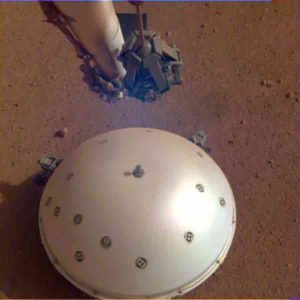
This image of InSight’s seismometer was taken on the 110th Martian day, or sol, of the mission. The seismometer is called Seismic Experiment for Interior Structure, or SEIS. Credit: NASA/JPL-Caltech
NASA’s Mars InSight lander has measured and recorded for the first time ever a likely “marsquake.”
The faint seismic signal, detected by the lander’s Seismic Experiment for Interior Structure (SEIS) instrument, was recorded on April 6, the lander’s 128th Martian day, or sol. This is the first recorded trembling that appears to have come from inside the planet, as opposed to being caused by forces above the surface, such as wind. Scientists still are examining the data to determine the exact cause of the signal.
“InSight’s first readings carry on the science that began with NASA’s Apollo missions,” said InSight Principal Investigator Bruce Banerdt of NASA’s Jet Propulsion Laboratory (JPL) in Pasadena, California. “We’ve been collecting background noise up until now, but this first event officially kicks off a new field: Martian seismology!”
The new seismic event was too small to provide solid data on the Martian interior, which is one of InSight’s main objectives. The Martian surface is extremely quiet, allowing SEIS, InSight’s specially designed seismometer, to pick up faint rumbles. In contrast, Earth’s surface is quivering constantly from seismic noise created by oceans and weather. An event of this size in Southern California would be lost among dozens of tiny crackles that occur every day.
“The Martian Sol 128 event is exciting because its size and longer duration fit the profile of moonquakes detected on the lunar surface during the Apollo missions,” said Lori Glaze, Planetary Science Division director at NASA Headquarters.
NASA’s Apollo astronauts installed five seismometers that measured thousands of quakes while operating on the Moon between 1969 and 1977, revealing seismic activity on the Moon. Different materials can change the speed of seismic waves or reflect them, allowing scientists to use these waves to learn about the interior of the Moon and model its formation. NASA currently is planning to return astronauts to the Moon by 2024, laying the foundation that will eventually enable human exploration of Mars.
InSight’s seismometer, which the lander placed on the planet’s surface on Dec. 19, 2018, will enable scientists to gather similar data about Mars. By studying the deep interior of Mars, they hope to learn how other rocky worlds, including Earth and the Moon, formed.
Three other seismic signals occurred on March 14 (Sol 105), April 10 (Sol 132) and April 11 (Sol 133). Detected by SEIS’ more sensitive Very Broad Band sensors, these signals were even smaller than the Sol 128 event and more ambiguous in origin. The team will continue to study these events to try to determine their cause.
Regardless of its cause, the Sol 128 signal is an exciting milestone for the team.
“We’ve been waiting months for a signal like this,” said Philippe Lognonné, SEIS team lead at the Institut de Physique du Globe de Paris (IPGP) in France. “It’s so exciting to finally have proof that Mars is still seismically active. We’re looking forward to sharing detailed results once we’ve had a chance to analyze them.”
Most people are familiar with quakes on Earth, which occur on faults created by the motion of tectonic plates. Mars and the Moon do not have tectonic plates, but they still experience quakes — in their cases, caused by a continual process of cooling and contraction that creates stress. This stress builds over time, until it is strong enough to break the crust, causing a quake.
Detecting these tiny quakes required a huge feat of engineering. On Earth, high-quality seismometers often are sealed in underground vaults to isolate them from changes in temperature and weather. InSight’s instrument has several ingenious insulating barriers, including a cover built by JPL called the Wind and Thermal Shield, to protect it from the planet’s extreme temperature changes and high winds.
SEIS has surpassed the team’s expectations in terms of its sensitivity. The instrument was provided for InSight by the French space agency, Centre National d’Études Spatiales (CNES), while these first seismic events were identified by InSight’s Marsquake Service team, led by the Swiss Federal Institute of Technology.
“We are delighted about this first achievement and are eager to make many similar measurements with SEIS in the years to come,” said Charles Yana, SEIS mission operations manager at CNES.
JPL manages InSight for NASA’s Science Mission Directorate. InSight is part of NASA’s Discovery Program, managed by the agency’s Marshall Space Flight Center in Huntsville, Alabama. Lockheed Martin Space in Denver built the InSight spacecraft, including its cruise stage and lander, and supports spacecraft operations for the mission.
A number of European partners, including CNES and the German Aerospace Center (DLR), support the InSight mission. CNES provided the SEIS instrument to NASA, with the principal investigator at IPGP. Significant contributions for SEIS came from IPGP; the Max Planck Institute for Solar System Research in Germany; the Swiss Federal Institute of Technology (ETH Zurich) in Switzerland; Imperial College London and Oxford University in the United Kingdom; and JPL. DLR provided the Heat Flow and Physical Properties Package (HP3) instrument, with significant contributions from the Space Research Center of the Polish Academy of Sciences and Astronika in Poland. Spain’s Centro de Astrobiología supplied the temperature and wind sensors.
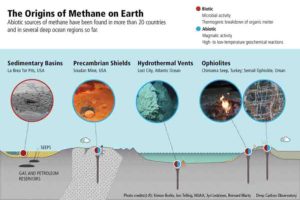
Abiotic sources of methane have been found in more than 20 countries and in several deep ocean regions so far. Credit: Deep Carbon Observatory
Experts say scientific understanding of deep hydrocarbons has been transformed, with new insights gained into the sources of energy that could have catalyzed and nurtured Earth’s earliest forms of life.
During the past hundred years scientists worked out in detail how hydrocarbons—fossil fuels” drawn from reservoirs in Earth’s crust to heat and power homes, vehicles, and industry—have a biotic origin, derived from the buried plants, animals, and algae of eons past.
But for some hydrocarbons, especially methane—the colorless, odorless main ingredient in natural gas—nature has many recipes, some of which are “abiotic—derived not from the decay of prehistoric life, but created inorganically by geological and chemical processes deep within the Earth.
Abiotic hydrocarbons have been a major focus of the Deep Energy community of the Deep Carbon Observatory program—a 10-year exploration of Earth’s innermost secrets, concluding in October.
DCO experts believe an abiotic origin of methane explains most of the unusual occurrences of the gas, including the flames of Chimaera in southwest Turkey.
Chimaera does not sit atop conventional deposits of oil and gas produced from the decayed organic residue of earlier epochs. And yet, dozens of small fires have burned at this mountaintop site for millennia.
Ancient explanations for the flames included the breath of a monster—part lion, part goat, part snake. The less colorful scientific reason: highly flammable abiotic methane and hydrogen rising to Earth’s surface from deep below.
Chimaera is among the most photogenic and famed of now hundreds of sites where abiotic sources of methane have been found in more than 20 countries and in several deep ocean regions so far.
DCO collaborator Giuseppe Etiope of the Istituto Nazionale di Geofisica e Vulcanologia in Rome has documented the Chimaera site and several other environments at which unusual occurrences of methane have been found, including:
Ancient Precambrian shields—rock at the core of the continents formed as much as 3 billion years ago
On the ocean floor (e.g., high-temperature vents on and near mid-ocean ridges and belching mud volcanoes)
On continents (seeps and hyper-alkaline springs and aquifers).
While diverse rock types are present in all these environments, he notes, many discoveries have focused on places with specific, suitable types of “ultramafic” rocks such as peridotite (a coarse-grained igneous rock) included in massifs and ophiolites (ensembles of rocks formed from the submarine eruption of oceanic crustal and upper mantle material).
Earth’s abiotic methane is now thought mainly to derive chemically from the hydrogen created by the hydration of ultramafic rocks undergoing “serpentinization”—a reaction that occurs when water meets the mineral olivine.
Hydrogen also nourishes biological sources of methane. DCO researchers have documented a vast microbial ecosystem—a deep biosphere fed by hydrogen. Many of the deep microbes, called methanogens, metabolize hydrogen to produce methane.
The deep biosphere has therefore posed a chicken and egg scenario: which came first, abiotic methane or microbes? If abiotic methane came first, as seems obvious, did it give rise to Earth’s first microbes? And if microbes came first, how and why did they inhabit places almost devoid of sustenance?
A decadal goal: sort out the origins of methane on Earth
When the Deep Carbon Observatory project began in 2009, DCO’s Deep Energy community—now made up of more than 230 researchers from 35 nations, set the decadal goal of sorting out the origins of methane on Earth.
Some hypothesized that unusual methane reservoirs—i.e., those that could not be biotic in origin—must form through chemical reactions occurring in the surrounding rocks.
Others suggested that microbes contributed to methane production in some reservoirs, metabolizing hydrogen to create methane in an entirely different process.
Others hypothesized that methane might originate deeper in Earth, in the upper mantle, and diffuse up toward the surface. (At Moscow’s Gubkin University, researcher Vladimir Kutcherov is leading experiments to test the production of methane in lab-simulated high-pressure conditions of Earth’s upper mantle).
Early in its mandate the DCO made the decision to invest in new analytical instrumentation to overcome some of the limitations to deciphering the origin of methane.
With strategic investment in instrumentation and numerous field samples, DCO partners set out to pioneer new investigative tools to distinguish Earth’s biotic from abiotic methane.
In 2014, three new instruments came online with the potential to change the face of deep carbon science, and they have not disappointed, says Edward Young, of the University of California, Los Angeles (UCLA), co-leader of DCO’s Deep Energy Community with Isabelle Daniel of the Claude Bernard University Lyon 1 in Lyon, France.
Using complementary techniques of mass spectrometry and absorption spectroscopy, scientists at UCLA, the California Institute of Technology (Caltech), Pasadena CA, and the Massachusetts Institute of Technology (MIT), Cambridge MA, are analyzing natural methane samples to better understand how abiotic methane may be produced.
“A molecule of methane (CH4) appears remarkably simple, made up of only five atoms,” says Dr. Young. “Rare isotopes of both hydrogen and carbon are occasionally incorporated into methane molecules, however, and the frequency of these ‘heavy’ isotopes reveals the secret of how they formed and at what temperatures.”
Of particular diagnostic value are methane molecules that contain more than one “heavy” isotope (“clumped isotopes”). These molecules are extremely rare and can only be distinguished by instruments with extremely high mass resolution, sensitivity, and power.
DCO collaborators used samples of gases collected from Chimaera, the deep mines of Canada, the Oman ophiolite, hydrothermal vents on the ocean floor, and additional sites, and were surprised by what they found.
Though interpreting the data is challenging, it appears microbes may be doing more than originally thought.
How much abiotic methane?
“We see curious biological fingerprints in samples that otherwise appear to have an abiotic signature,” says Dr. Daniel. “It seems microbes know how to use these abiotic compounds as fuel.”
“We have clear and growing evidence of abiotic methane on Earth. What is not clear is how much there is. These investigations have found incredible complexity in the way methane is produced, and these complexities connect inorganic and organic chemistry on Earth in fascinating ways.”
Adds Dr. Young: “We went into this project thinking we knew how abiotic methane formed. What we’re learning is that it is much more complicated, and the biggest key is hydrogen. With greater understanding of how rocks make the hydrogen from which methane derives, and how fast this reaction happens, we’ll be a lot closer to knowing how much methane there is on Earth.”
Jesse Ausubel of The Rockefeller University in New York notes that the popular definition of “fossil fuel” doesn’t cover abiotic methane.
“Thousands of samples from many settings tested with super-sensitive instruments are producing a global picture of the abundances and fluxes of deep energy. Much of the very deep hydrocarbons is not conventional fossil fuel, as popularly defined.”
The behaviors of biotic and abiotic methane, it should be noted, in terms of energy output and emissions when burned, are indistinguishable.
Key findings to date:
Thanks to new instruments, scientists have identified new isotope signatures in methane to help determine its provenance—an impossibility 10 years ago
The serpentinization reaction is better understood and is one of several ways Earth’s rocks produce molecular hydrogen—a key source of geologic energy for the deep biosphere
That hydrogen reacts with carbon dioxide to produce methane was long known. How this happens in Earth’s crust, however, is highly complex, and many other organic molecules are created as byproducts in the process. These molecules can be used by microbes as a food source. They also represent intriguing clues as to the origins of life on Earth, as these organic molecules may be precursors for the building blocks of life (e.g., amino acids)
With similar conditions and reactions likely on other planets and moons (e.g., the subsurface of Mars or on the ocean floor of Enceladus), it strengthens the potential identification of where life may exist elsewhere in the universe
Studies of serpentinizing systems have found other abiotic hydrocarbons in addition to methane.
Future implications:
These investigations into how abiotic methane forms on Earth are not the end of the story, but rather the beginning.
The last 10 years have seen transformational changes in our understanding of the origins of methane on Earth and its pivotal role in sustaining the deep biosphere, providing a glimpse into the geological processes that could have set the stage for life.
With these new discoveries, we are poised to answer numerous big questions, such as:
How much abiotic methane is being produced in Earth?
How much methane do the microbes of Earth’s deep biosphere produce?
How much do the microbes consume?
What are movements and fates of abiotic methane?and
Where is abiotic methane stored and for how long?
The success of the project’s research has not only changed perceptions of energy generation in deep Earth, but also about how life may have found a foothold on our planet.
And if abiotic energy does occur on Earth, how likely is it that similar reactions and life have occurred elsewhere in the cosmos?
This Deep Energy research released today is a result of the Deep Carbon Observatory program, which will issue its final report in October 2019 after a decade of work by a global community of more than 1000 scientists to better understand the quantities, movements, forms, and origins of carbon inside Earth.
Reference:
The contribution of the Precambrian continental lithosphere to global H2 production
Sherwood Lollar, B., Onstott, T.C., Lacrampe-Couloume, G., and Ballentine, C.J. (2014). Nature 516 (7531): 379-382.
Formation temperatures of thermogenic and biogenic methane
Stolper DA, Lawson M, Davis CL, Ferreira AA, Santos Neto EV, Ellis GS, Lewan MD, Martini AM, Tang Y, Schoell M, Sessions AL, Eiler JM (2014). Science 344:1500-1503
Measurement of a doubly-substituted methane isotopologue, 13CH3D, by tunable infrared laser direct absorption spectroscopy
Ono S, Wang DT, Gruen DS, Sherwood Lollar B, Zahniser M, McManus BJ, Nelson DD (2014), Analytical Chemistry, 86:6487-6494
Panorama, a new gas source, electron impact, double-focusing, multi-collector mass spectrometer for the measurement of isotopologues in geochemistry
Young ED, Freedman P, Rumble D, Schauble E (2014), 7th International Symposium on Isotopomers (ISI2014), Tokyo, Japan
The relative abundances of resolved 12CH2D2 and 13CH3D and mechanisms controlling isotopic bond ordering in abiotic and biotic methane gases
Young E.D., Kohl I.E., Sherwood Lollar B., Etiope G., Rumble III D., Li S., Haghnegahdar
Natural gas seepage, the Earth’s Hydrocarbon Degassing
G. Etiope. (2015), Springer, Switzerland
Widespread abiotic methane in chromitites
Etiope G., Ifandi E., Nazzari M., Procesi M., Tsikouras B., Ventura G., Steele A., Tardini R., Szatmari P. (2018). Scientific Reports, 8, 8728, DOI: 10.1038/s41598-018-27082-0.
Massive production of abiotic methane during subduction evidenced in metamorphosed ophicarbonates from the Italian Alps
Vitale Brovarone A, Martinez I, Elmaleh A, Compagnoni R, Chaduteau C, Ferraris C, Esteve I (2017). Nature Communications 8:14134 DOI: 10.1038/ncomms14134
Abiotic formation of condensed carbonaceous matter in the hydrating oceanic crust
Abiotic synthesis of amino acids in the recesses of the oceanic lithosphere
Ménez B, Pisapia C, Andreani M, Jamme F, Vanbellingen QP, Brunelle A, Richard L, Dumas P, Réfrégiers M. (2018). Nature DOI: 10.1038/s41586-018-0684-z
Abiotic methane on Earth
Etiope G, Sherwood Lollar B (2013). Reviews of Geophysics DOI: 10.1002/rog.20011
Formation of abiotic hydrocarbon from reduction of carbonate in subduction zones: Constraints from petrological observation and experimental simulation
Tao R, Zhang L, Tian M, Zhu J, Liu X, Liu J, Höfer HE, Stagno V, Fei Y (2018) Geochimica et Cosmochimica Acta 239:390 DOI: 10.1016/j.gca.2018.08.008
Immiscible hydrocarbon fluids in the deep carbon cycle
Huang, F., Daniel I., Cardon H., Montagnac G., Sverjensky D. (2017) Nature Communications 8:15798 DOI: 10.1038/ncomms1579
Methane-derived hydrocarbons produced under upper-mantle conditions
A. Kolesnikov, V.G. Kutcherov, A.F. Goncharov (2009) Nature Geoscience 2: 566-570
Synthesis of Complex Hydrocarbon Systems at Temperatures and Pressures Corresponding to the Earth’s Upper Mantle Conditions
V.G. Kutcherov, A. Kolesnikov, T.I. Dyugheva, L.F. Kulikova, N.N. Nikolaev, O.A. Sazanova, V.V. Braghkin (2010). Doklady Physical Chemistry 433:132-135
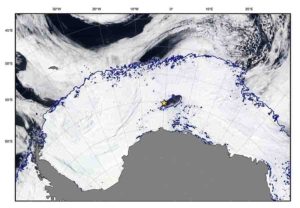
Maud Rise Polynya of September 2017 (the ice-free area near the yellow star) seen from space. Credit: SCAR ATLAS
A study led by NYU Abu Dhabi (NYUAD) Research Scientist Diana Francis has unraveled the four decade long mystery surrounding the occurrence of a mid-sea Polynya – a body of unfrozen ocean that appeared within a thick body of ice during Antarctica’s winter almost two years ago.
The Maud-Rise Polynya was spotted in mid September 2017 in the center of an ice pack in Antarctica’s Lazarev Sea, causing researchers to question how this phenomenon occurred during Antarctica’s coldest, winter months when ice is at its thickest. Due to its difficult access location, NYUAD scientists used a combination of satellite observations and reanalysis data to discover that cyclones (as intense as category 11 in the Beaufort Scale) and the strong winds that they carry over the ice pack cause ice to shift in opposite directions, which leads to the opening of the Polynya.
At the time of the discovery, the Maud-Rise Polynya was approximately 9,500 square kilometers large (equivalent to the landmass of the state of Connecticut), and grew by over 740 percent to 800,000 square kilometers within a month. Eventually, the Polynya merged with the open ocean once the ice started to retreat at the beginning of the austral summer months. Prior to 2017, this phenomenon has only been known to have occurred in the 1970s when satellite observations started to become more commonly used, and has baffled scientists ever since.
“Once opened, the Polynya works like a window through the sea-ice, transferring huge amounts of energy during winter between the ocean and the atmosphere.” said Francis. “Because of their large size, mid-sea Polynyas are capable of impacting the climate regionally and globally as they modify the oceanic circulation. It is important for us to identify the triggers for their occurrence to improve their representation in the models and their effects on climate.
“Given the link between Polynya and cyclones we demonstrated in this study, it is speculated that Polynya events may become more frequent under a warmer climate because these areas will be more exposed to more intense cyclones. Previous studies have shown that under warmer climate, polar cyclone activity will intensify and extratropical cyclones track will move toward Antarctica which could decrease the sea-ice extent and make Polynya areas, closer to the cyclones formation zone,” she added.
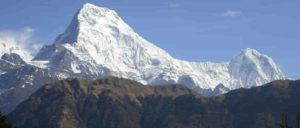
Mountains Annapurna South and Hiunchuli from near Ghandruk in the Himalaya of central Nepal. Credit: David Whipp
Researchers from the University of Helsinki and the University of Tübingen have come up with a new way of analysing sand in mountain rivers to determine the activity of landslides upstream, which has important implications for understanding natural hazards in mountainous regions.
Landslides occur in hilly and mountainous landscapes, often triggered by extreme rainfall events or ground shaking resulting from earthquakes. For example, a magnitude 7.8 earthquake in Nepal in April 2015 and its aftershocks are estimated to have triggered more than 25,000 landslides. For people living in these regions landslides are a major natural hazard, thus knowledge of the history of landslide activity in these areas is critical to understanding and mitigating their risk.
Measuring the pace of landslide erosion with a handful of sand
The 2015 Nepal earthquake and the landslides it triggered were dramatic examples of natural hazards associated with a single event, but knowledge of the longer-term behaviour of landslide activity in a region is much more difficult to measure. The authors developed a new technique that enables them to understand how often landslides occur in a region and how long the sediment produced from landslides remains within a river system before being transported downstream.
“Our approach is based quite simply on taking a handful of sand from a river and measuring the chemistry of the sediments” says Todd Ehlers, co-author of the study and professor in the Department of Geociences at the University of Tübingen, Germany. “When combined with computer models we can determine how much landslide activity exists upstream of the location where the sediment was collected, and how long landslide produced sediment was in the river before being flushed out.”
Previous studies have been limited in their ability to determine how often landslides occur and how significant these events are at eroding topography compared to other processes such as river or glacier erosion. “What is surprising in this study is that we figured out a way to address both limitations that previous studies have struggled with”, Ehlers explains.
The results of the study have implications for understanding how active and important landslides are in a region, and also how long these catastrophic events swamp the rivers with sediment.
Heavy monsoon rainfall wipes the landscape clean
“Sediment in these steep landscapes is transported downstream surprisingly quickly” says David Whipp, study lead author and associate professor in the Institute of Seismology at the University of Helsinki. He continues “while sediment in many river systems may be stored for tens of thousands of years, our results suggest most of the sediment in the steep Himalayan mountains remains in the river system for no more than ten years.”
This surprising finding speaks to the immense power of water flowing in Himalayan mountain rivers during the annual monsoon season, which helps transport massive volumes of sediment downstream.
Reference:
“Quantifying landslide frequency and sediment residence time in the Nepal Himalaya” Science Advances (2019). DOI: 10.1126/sciadv.aav3482
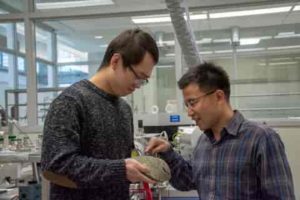
PhD student Kan Li (left) and Long Li (right) examine a basaltic pillow lava sample from the top part of igneous oceanic crust. Photo credit: Igor Jakab
Eclogitic Diamonds
Eclogitic diamonds formed in Earth’s mantle originate from oceanic crust, rather than marine sediments as commonly thought, according to a new study from University of Alberta geologists.
Diamonds are found in two types of rocks from Earth’s mantle: peridotite and eclogite. Peridotite is the most common type of mantle rock. Eclogite forms from igneous oceanic crust that together with a thin veneer of overlying marine sediment has been brought deep into the mantle through a process known as subduction. Even though, many researchers thought eclogitic diamonds formed with carbon from marine sediment, a large carbon reservoir. The new study turns this theory on its head.
“The key indices for diamond source tracing are the ratios of stable isotopes, which are atoms that have the same proton number but different neutron number, of carbon and nitrogen in diamond,” explained Long Li, associate professor in the Department of Earth and Atmospheric Sciences and principal investigator of the study. “These isotopic ratios act as source fingerprints. Marine sediment was invoked as the source of eclogitic diamonds mainly because their highly variable carbon isotopic ratios match the signature of organic matter in sediment. But the sediment source has difficulty in explaining the highly variable nitrogen isotopic signature of eclogitic diamonds.”
The study investigated 80 drill samples of igneous oceanic crust from around the world, supplied by the International Ocean Discovery Program. The researchers, led by PhD student Kan Li, conducted extensive analyses to examine the carbon budgets and isotopic signatures of the major subducting oceanic slabs.
“We verified that the oceanic crust is a large reservoir for carbon, mostly in form of carbonate. What really surprised us is that the bulk carbonate in subducting igneous oceanic crusts in part shows a similar isotopic signature to organic matter in sediment,” said Kan Li. “It then makes much more sense for igneous oceanic crust, which also contains isotopically highly variable nitrogen, to serve as the source of eclogitic diamonds in Earth’s mantle.”
“This study addresses a long-standing puzzle in diamond genesis and the deep carbon cycle,” said Long Li. “The deep carbon cycle, a process that circulates carbon from Earth’s surface to the deep interior and back again, has strong impact on mantle chemistry and surface environment. Our study shows that oceanic crust plays a much larger role in this than previously thought.”
“This research changes the way that we think recycled carbon gets into diamonds and changes what we think about how carbon in general is recycled into the Earth. It makes us re-evaluate how diamonds are formed and what the dominant source of carbon is in both the shallow and very deepest parts of Earth’s mantle,” added Graham Pearson, professor,Henry Marshall Tory Chair, and Canada Excellence Research Chair Laureate.
Reference:
Kan Li, Long Li, D. Graham Pearson, Thomas Stachel. Diamond isotope compositions indicate altered igneous oceanic crust dominates deep carbon recycling. Earth and Planetary Science Letters, 2019; 516: 190 DOI: 10.1016/j.epsl.2019.03.041
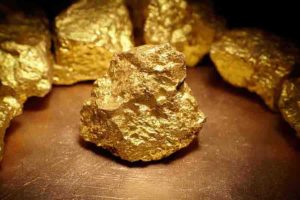
Precious Metal “Gold Nugget”. Credit: Getty Images.
Precious Metal
A precious metal is a rare metal chemical element of high economic value that occurs naturally. Chemically, the precious metals tend to be less reactive than most elements. Usually they are ductile and they have a high luster. Precious metals have historically been important as currency, but are now considered primarily as investment and industrial commodities. There is an ISO 4217 currency code for gold, silver, platinum and palladium.
The most known precious metals are the gold and silver coinage metals. Although both have industrial uses, in art, jewelry, and coinage, they are better known for their uses. Other valuable metals include metals from the platinum group: ruthenium, rhodium, palladium, osmium, iridium, and platinum, the most widely traded of which is platinum.
The 15 most Precious Metal in the world
Rhodium
Rhodium is a chemical element with Rh symbol and 45 symbol. It is a transition metal that is rare, silver-white, hard, corrosion-resistant and chemically inert. It’s a noble metal and a platinum group member. It has only one isotope that occurs naturally, ¹⁰³Rh.
Naturally occurring rhodium is usually found in minerals such as bowieite and rhodplumsite as free metal, alloyed with similar metals, and rarely as a chemical compound. It is one of the most rare and valuable valuable metals.
Platinum
Platinum is a chemical element with Pt symbol and 78 symbol. It’s a ductile, dense, maleable, highly unreactive, precious, silver-white transition metal. Its name comes from the Spanish platinum term, which means “little silver.”
Platinum is a member of the elements platinum group and group 10 of the elements periodic table. It has six isotopes that occur naturally. It is one of Earth’s rarer elements with an average abundance of about 5 μg / kg.
Gold
Gold is a chemical element with the symbol Au (from Latin: aurum) and the atomic number 79, making it one of the naturally occurring higher atomic number elements. It is a bright, slightly reddish yellow, dense, soft, malevolent, and ductile metal in its purest form. Chemically, gold is a metal of transition and an element of group 11.
Palladium
Palladium is a chemical element with an atomic number 46 and a Pd symbol. It is a rare and lustrous silvery-white metal that William Hyde Wollaston discovered in 1803. He named it after the asteroid Pallas, named after the Greek goddess Athena’s epithet, which she had acquired when she slew Pallas. Palladium, platinum, rhodium, ruthenium, iridium and osmium form a group of elements called PGMs. Their chemical properties are similar, but palladium has the lowest melting point and is the least dense of them.
Iridium
Iridium is a chemical element with Ir symbol and 77 symbol. Iridium is the second-densest metal (after osmium) with a density of 22.56 g / cm3 as defined by experimental X-ray crystallography, a very hard, brittle, silvery-white transition metal of the platinum group.
Osmium
Osmium is a chemical element with Os symbol and 76 atomic number. In the platinum group, it is a hard, brittle, bluish-white transition metal found in alloys, mostly in platinum ores, as a trace element. Osmium is the most dense natural element with an experimentally measured density of 22,59 g / cm3 (usingx-ray crystallography).
Manufacturers use their alloys to make fountain pen nib tipping, electrical contacts, and other applications that require extreme durability and hardness with platinum, iridium, and other platinum-group metals. The abundance of the element in the crust of the Earth is among the rarest.
Rhenium
Rhenium is a chemical element with an atomic number 75 and a symbol Re. In group 7 of the periodic table, it is a silvery-gray, heavy, third-row transition metal. Rhenium is one of the rarest elements in the Earth’s crust with an estimated average concentration of 1 part per billion (ppb).
Rhenium has the third highest melting point of any element at 5903 K and the second highest boiling point. Rhenium is chemically similar to manganese and technetium and is mainly obtained as a by-product of molybdenum and copper ores extraction and refinement. Rhenium has a wide range of oxidation states in its compounds ranging from −1 to + 7.
Ruthenium
Ruthenium is a chemical element with Ru symbol and 44 symbol. It is a rare transition metal that belongs to the periodic table’s platinum group. Like the platinum group’s other metals, ruthenium is inert to most other chemicals.
Most ruthenium produced is used in electrical contacts and thick film resistors that are wear-resistant. In platinum alloys and as a catalyst for chemistry there is a minor application for ruthenium. A new application of ruthenium for extreme ultraviolet photomasks is like a capping layer.
Ruthenium is generally found in ores in the Ural Mountains and North and South America with the other platinum group metals. Also found in pentlandite extracted from Sudbury, Ontario and pyroxenite deposits in South Africa are small but commercially important quantities.
Germanium
Germanium is a chemical element with an atomic number 32 and a symbol Ge. It is in the carbon group a lustrous, hard-brittle, grayish-white metalloid, chemically similar to silicon and tin in its group neighbors. Pure germanium is a semiconductor with a silicon-like appearance. Like silicone, germanium naturally reacts with oxygen in nature and forms complexes.
Beryllium
Beryllium is a chemical element symbolizing Be and atomic number 4. It is a relatively rare element in the universe that usually occurs as a spalling product of larger atomic nuclei colliding with cosmic rays. Beryllium is depleted within the cores of stars as it is fused and creates larger elements. It is a divalent element that naturally occurs only in combination with other mineral elements. Significant gemstones containing beryllium are beryl (aquamarine, emerald) and chrysoberyl. It is a steel-gray, strong, lightweight and fragile alkaline earth metal as a free element.
Silver
Silver is a chemical element with the symbol Ag and the atomic number 47. A soft, white, lustrous transition metal, it displays the highest electrical conductivity, thermal conductivity and reflectivity of any metal. In the crust of the Earth, the metal is found in the pure, free elemental form (“native silver”), as an alloy of gold and other metals, and in minerals such as argentite and chlorargyrite. Most silver is manufactured as a by-product of refining copper, gold, lead and zinc.
Indium
Indium is a chemical component with In symbol and 49 atomic number. Indium is the softest metal not regarded as an alkali metal. It’s a silver-white metal that looks like Tin(Sn). It is a post-transition metal that constitutes 0.21 parts of the Earth’s crust per million.
The melting point of Indium is higher than sodium and gallium, but lower than lithium and tin. Indium is chemically similar to gallium and thallium and, in terms of its properties, is largely intermediate between the two.
Indium was discovered through spectroscopic methods by Ferdinand Reich and Hieronymous Theodor Richter in 1863. They named it in their spectrum for the indigo blue line. The following year, Indium was isolated.
Gallium
Gallium is a chemical element with the symbol Ga and the atomic number 31. Gallium is slightly blue in its solid state ; however, it becomes silvery white in its liquid state. Gallium is soft enough to be cut with shears, however ; if too much force is applied, Gallium may break conchoidally.
It is in the periodic table in group 13 and thus has similarities with the group’s other metals, aluminum, indium, and thallium. Gallium does not occur in nature as a free element, but in trace amounts in zinc ores and bauxite as gallium(III) compounds.
Elemental gallium is a liquid at temperatures above 29.76 ° C (85.57 ° F) (above room temperature, but below normal body temperature of 37 ° C (99 ° F), so the metal melts in the hands of a person).
Tellurium
Tellurium is a chemical element with a symbol Te and an atomic number 52. It is a brittle, mildly toxic, rare, silver-white metalloid. Tellurium is chemically associated with selenium and sulfur, all three of which are chalcogens. It is sometimes found as elemental crystals in a native form.
Tellurium is much more common in the Universe as a whole than on Earth. Its extreme rarity in the Earth’s crust, comparable to that of platinum, is due in part to the formation of a volatile hydride that caused tellurium to be lost as a gas during Earth’s hot nebular formation, and partly to tellurium’s low affinity for oxygen that causes it to bind preferentially to other chalcophiles in dense minerals that sink into the core.
Bismuth
Bismuth is a chemical element with symbol Bi and atomic number 83. It is a pentavalent post-transition metal with chemical properties similar to its lighter arsenic and antimony homologues and one of the pnictogens. Elemental bismuth can occur naturally, although important commercial ores are formed by its sulfide and oxide.
The free element is as dense as lead as 86 percent. When freshly produced, it is a brittle metal with a silvery white color, but oxidation on the surface can give it a pink tinge. Bismuth is the most naturally diamagnetic element, having among metals one of the lowest thermal conductivity values.
Mercury
Mercury is a chemical element with Hg and 80 symbols. It is commonly referred to as quicksilver and used to be called hydrargyrum. A heavy, silvery d-block element, mercury is the only metallic element that is liquid under standard temperature and pressure conditions ; the only other element that is liquid under these conditions is the bromine of halogen, although metals such as caesium, gallium and rubidium melt just above room temperature.
Mercury occurs mostly as cinnabar (mercuric sulfide) in deposits worldwide. By grinding natural cinnabar or synthetic mercuric sulfide, the red pigment vermilion is obtained.
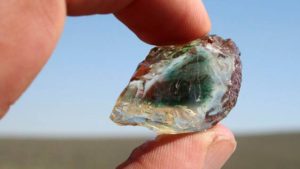
This rough sunstone measures approximately 5 cm (2 inches) in length. Note how the green core follows the contours of the rough. The green core is characteristic of material from this mine. Photo by Duncan Pay.
Sunstone
Sunstone is a plagioclase feldspar that shows a spangled appearance when viewed from certain directions. It was found in different locations in Southern Norway, Sweden and the United States.
The glitter effect is caused by mineral Hematite inclusions, or sometimes Goethite or Pyrite (and in one rare instance, Copper). Aventurescence is the term used to describe the glittery effect on Sunstone.
How is Sunstone formed?
Sunstone is formed in molten lava and with the help of a volcano is discharged to the surface. The lava is or is broken away. Then fine sunstone crystals are released.
Where to find Sunstone?
Sunstone was not popular until recently. Localities of Sunstone. Aventurescent feldspar was found in Australia, Canada, China, Congo, India, Mexico, Norway, Russia, Sri Lanka, Tanzania, the U.S. (Oregon, New York, Virginia, Pennsylvania) and other places. Oregon is home to the most famous sunstone deposits in the United States.
The variant “orthoclase sunstone” was found near Crown Point and several other locations in New York, as well as in Delaware County, Pennsylvania’s Glen Riddle and Amelia Courthouse, Amelia County, Virginia. Sunstone is also found at Sunstone Knoll in Millard County, Utah, in Pleistocene basalt flows.
What is an Oregon Sunstone?
Sunstones are found in fine gem quality in Oregon alone. This gemstone is never, as other gems are, heated, irradiated, or colored, but left completely natural.
Some Oregon sunstones due to millions of microscopic copper platelets, known as schiller, exhibit a glow from within. Stone colors range from clear, champagne, yellow, pink light, salmon, orange, and red to blue-green. Intense red and blue-green are the rare colors. Sometimes as many as three colors appear in one stone when viewed from different angles. Sunstone is 6.5-7.2 on the Moh’s scale of hardness, which means it can be polished, faced, and carved into jewelry.
Sunstone is mined in Lake and Harney counties from shallow pits, where it was formed millions of years ago in lava flows. Native Americans valued sunstone nuggets, trading and using them in ceremonies of Medicine Wheel throughout Western America. In burial sites and sacred bundles, sunstone was found.
Is Sunstone a natural stone?
Yes, these inclusions give the stone an aventurine-like appearance, so sunstone is also known as “aventurine-feldspar.” Copper is responsible for the optical effect called shiller and color in Oregon Sunstone.
How much is Sunstone worth?
The value of Oregon Sunstone. Pale yellow to colorless, non-phenomenal Oregon sunstones, be they native cut or calibrated stones, can go to $ 20 per carat for a custom cut for a few dollars per carat. Pinks and tans, with and without a schiller, are usually up to $ 50 per carat depending on the effect.
Detailed photos of the beetle’s morphology through its amber encasement. Credit: Courtesy of the Parker laboratory / eLife
Almost 100 million years ago, a tiny and misfortunate beetle died after wandering into a sticky glob of resin leaking from a tree in a region near present-day Southeast Asia. Fossilized in amber, this beetle eventually made its way to the desk of entomologist Joe Parker, assistant professor of biology and biological engineering at Caltech. Parker and his colleagues have now determined that the perfectly preserved beetle fossil is the oldest-known example of an animal in a behaviorally symbiotic relationship.
A paper describing the work appears on April 16 in the journal eLife.
Symbiotic relationships between two species have arisen repeatedly during animal evolution. These relationships range from mutually beneficial associations, like humans and their pet dogs, to the parasitic, like a tapeworm and its host.
Some of the most complex examples of behavioral symbiosis occur between ants and other types of small insects called myrmecophiles — meaning “ant lovers.” Thanks to ants’ abilities to form complex social colonies, they are able to repel predators and amass food resources, making ant nests a highly desirable habitat. Myrmecophiles display elaborate social behaviors and chemical adaptations to deceive ants and live among them, reaping the benefits of a safe environment and plentiful food.
Ants’ social behaviors first appear in the fossil record 99 million years ago, during the Cretaceous period of the Mesozoic era, and are believed to have evolved not long before, in the Early Cretaceous. Now, the discovery of a Cretaceous myrmecophile fossil implies that the freeloading insects were already taking advantage of ants’ earliest societies. The finding means that myrmecophiles have been a constant presence among ant colonies from their earliest origins and that this socially parasitic lifestyle can persist over vast expanses of evolutionary time.
“This beetle-ant relationship is the most ancient behavioral symbiosis now known in the animal kingdom,” says Parker. “This fossil shows us that symbiosis can be a very successful long-term survival strategy for animal lineages.”
The fossilized beetle, named Promyrmister kistneri, belongs to a subfamily of “clown” beetles (Haeteriinae), all modern species of which are myrmecophiles. These modern beetles are so specialized for life among ants that they will die without their ant hosts and have evolved extreme adaptations for infiltrating colonies. The beetles are physically well protected by a thick tank-like body plan and robust appendages, and they can mimic their host ants’ nest pheromones, allowing them to disguise themselves in the colony. They also secrete compounds that are thought to be pacifying or attractive to ants, helping the beetles gain the acceptance of their aggressive hosts. The fossilized Promyrmister is a similarly sturdy insect, with thick legs, a shielded head, and glandular orifices that the researchers theorize exuded chemicals to appease its primitive ant hosts.
Depending on another species so heavily for survival has its risks; indeed, an extinction of the host species would be catastrophic for the symbiont. The similarities between the fossilized beetle and its modern relatives suggest that the particular adaptations of myrmecophile clown beetles first evolved inside colonies of early “stem group” ants, which are long extinct. Due to Promyrmister’s remarkable similarity to modern clown beetles, Parker and his collaborators infer that the beetles must have “host switched” to colonies of modern ants to avoid undergoing extinction themselves. This adaptability of symbiotic organisms to move between partner species during evolution may be essential for the long-term stability of these intricate interspecies relationships.
Reference:
Yu-Lingzi Zhou, Adam Ślipiński, Dong Ren, Joseph Parker. A Mesozoic clown beetle myrmecophile (Coleoptera: Histeridae). eLife, 2019; 8 DOI: 10.7554/eLife.44985
Simbakubwa kutokaafrika, a gigantic carnivore known from most of its jaw, portions of its skull, and parts of its skeleton, was a hyaenodont that was larger than a polar bear. Credit: Illustration by Mauricio Anton
Paleontologists at Ohio University have discovered a new species of meat-eating mammal larger than any big cat stalking the world today. Larger than a polar bear, with a skull as large as that of a rhinoceros and enormous piercing canine teeth, this massive carnivore would have been an intimidating part of the eastern African ecosystems occupied by early apes and monkeys.
In a new study published in the Journal of Vertebrate Paleontology, the researchers name Simbakubwa kutokaafrika, a gigantic carnivore known from most of its jaw, portions of its skull, and parts of its skeleton. The 22-million-year-old fossils were unearthed in Kenya decades ago as researchers canvassed the region searching for evidence of ancient apes. Specimens were placed in a drawer at the National Museums of Kenya and not given a great deal of attention until Ohio University researchers Dr. Nancy Stevens and Dr. Matthew Borths rediscovered them, recognizing their significance.
“Opening a museum drawer, we saw a row of gigantic meat-eating teeth, clearly belonging to a species new to science,” says study lead author Borths. Borths was a National Science Foundation Postdoctoral Research Fellow with Stevens in the Department of Biomedical Sciences at Ohio University when the research was conducted, and is now Curator of the Division of Fossil Primates at the Duke Lemur Center at Duke University.
Simbakubwa is Swahili for “big lion” because the animal was likely at the top of the food chain in Africa, as lions are in modern African ecosystems. Yet Simbakubwa was not closely related to big cats or any other mammalian carnivore alive today. Instead, the creature belonged to an extinct group of mammals called hyaenodonts.
Hyaenodonts were the first mammalian carnivores in Africa. For about 45 million years after the extinction of the non-avian dinosaurs, hyaenodonts were the apex predators in Africa. Then, after millions of years of near-isolation, tectonic movements of the Earth’s plates connected Africa with the northern continents, allowing floral and faunal exchange between landmasses. Around the time of Simbakubwa, the relatives of cats, hyenas, and dogs began to arrive in Africa from Eurasia.
As the relatives of cats and dogs were going south, the relatives of Simbakubwa were going north. “It’s a fascinating time in biological history,” Borths says. “Lineages that had never encountered each other begin to appear together in the fossil record.”
The species name, kutokaafrika, is Swahili for “coming from Africa” because Simbakubwa is the oldest of the gigantic hyaenodonts, suggesting this lineage of giant carnivores likely originated on the African continent and moved northward to flourish for millions of years.
Ultimately, hyaenodonts worldwide went extinct. Global ecosystems were changing between 18 and 15 million years ago as grasslands replaced forests and new mammalian lineages diversified. “We don’t know exactly what drove hyaenodonts to extinction, but ecosystems were changing quickly as the global climate became drier. The gigantic relatives of Simbakubwa were among the last hyaenodonts on the planet,” remarks Borths.
“This is a pivotal fossil, demonstrating the significance of museum collections for understanding evolutionary history,” notes Stevens, Professor in the Heritage College of Osteopathic Medicine at Ohio University and co-author of the study. “Simbakubwa is a window into a bygone era. As ecosystems shifted, a key predator disappeared, heralding Cenozoic faunal transitions that eventually led to the evolution of the modern African fauna.”
This study was funded by grants from the National Science Foundation (EAR/IF-0933619; BCS-1127164; BCS-1313679; EAR-1349825; BCS-1638796; DBI-1612062), The Leakey Foundation, National Geographic Society (CRE), Ohio University Research Council, Ohio University Heritage College of Osteopathic Medicine, SICB and The Explorers Club.
This discovery underscores both the importance of supporting innovative uses of fossil collections, as well as the importance of supporting the research and professional development of talented young postdoctoral scientists like Dr. Borths,” said Daniel Marenda, a program director at the National Science Foundation, which funded this research. “This work has the potential to help us understand how species adapt — or fail to adapt in this case — to a rapidly changing global climate.”
Reference:
Matthew R. Borths, Nancy J. Stevens. Simbakubwa kutokaafrika, gen. et sp. nov. (Hyainailourinae, Hyaenodonta, ‘Creodonta,’ Mammalia), a gigantic carnivore from the earliest Miocene of Kenya. Journal of Vertebrate Paleontology, 2019; e1570222 DOI: 10.1080/02724634.2019.1570222
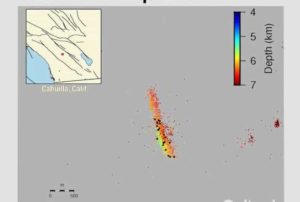
Seismic activity associated with the Cahuilla earthquake swarm in Southern California’s Anza Valley. Filling out the earthquake catalogue using template matching shows the swarm in greater detail. The color of each seismic event records its depth, and so the rainbow-like appearance of the swarm indicates the shallow-to-deep slant of the fault, not previously visible from earlier data.
Pouring through 10 years’ worth of Southern California seismic data with the scientific equivalent of a fine-tooth comb, Caltech seismologists have identified nearly two million previously unidentified tiny earthquakes that occurred between 2008 and 2017.
Their efforts, published online by the journal Science on April 18, expand the earthquake catalog for that region and period of time by a factor of 10—growing it from about 180,000 recorded earthquakes to more than 1.81 million. The new data reveal that there are about 495 earthquakes daily across Southern California occurring at an average of roughly three minutes apart. Previous earthquake cataloging had suggested that approximately 30 minutes would elapse between seismic events.
This 10-fold increase in the number of recorded earthquakes represents the cataloging of tiny temblors, between negative magnitude 2.0 (-2.0) and 1.7, made possible by the broad application of a labor-intensive identification technique that is typically only employed on small scales. These quakes are so small that they can be difficult to spot amid the background noise that appears in seismic data, such as shaking from automobile traffic or building construction.
“It’s not that we didn’t know these small earthquakes were occurring. The problem is that they can be very difficult to spot amid all of the noise,” says Zachary Ross, lead author of the study and postdoctoral scholar in geophysics, who will join the Caltech faculty in June as an assistant professor of geophysics. Ross collaborated with Egill Hauksson, research professor of geophysics at Caltech, as well as Daniel Trugman of Los Alamos National Laboratory and Peter Shearer of Scripps Institution of Oceanography at UC San Diego.
To overcome the low signal-to-noise ratio, the team turned to a technique known as “template matching,” in which slightly larger and more easily identifiable earthquakes are used as templates to illustrate what an earthquake’s signal at a given location should, in general, look like. When a likely candidate with the matching waveform was identified, the researchers then scanned records from nearby seismometers to see whether the earthquake’s signal had been recorded elsewhere and could be independently verified.
Template matching works best in regions with closely spaced seismometers, since events generally only cross-correlate well with other earthquakes within a radius of about 1 to 2 miles, according to the researchers. In addition, because the process is computationally intensive, it has been limited to much smaller data sets in the past. For the present work, the researchers relied on an array of 200 powerful graphics processing units (GPUs) that worked for weeks on end to scan the catalog, detect new earthquakes, and verify their findings.
However, the findings were worth the effort, Hauksson says. “Seismicity along one fault affects faults and quakes around it, and this newly fleshed-out picture of seismicity in Southern California will give us new insights into how that works,” he says. The expanded earthquake catalog reveals previously undetected foreshocks that precede major earthquakes as well as the evolution of swarms of earthquakes. The richer data set will allow scientists to gain a clearer picture of how seismic events affect and move through the region, Ross says.
“The advance Zach Ross and colleagues has made fundamentally changes the way we detect earthquakes within a dense seismic network like the one Caltech operates with the USGS. Zach has opened a new window allowing us to see millions of previously unseen earthquakes and this changes our ability to characterize what happens before and after large earthquakes,” said Michael Gurnis, Director of the Seismological Laboratory and John E. and Hazel S. Smits Professor of Geophysics
The paper is titled “Searching for Hidden Earthquakes in Southern California.” The research was funded by the National Science Foundation and the United States Geological Survey.
Natural-colour satellite image of the Tibetan Plateau. Credit: NASA
The tectonic deformation and growth pattern of the western Kunlun, which is the northwestern margin of the Tibetan Plateau, are not currently well understood. The surface rupture caused by an earthquake can provide a unique opportunity to investigate the impact of coseismic faulting on landscape evolution, to refine regional deformation models, and to understand future seismic risk.
In a new article for Geosphere, authors Chuanyong Wu and colleagues report the surface deformation caused by the 2015 6.5 magnitude Pishan earthquake based on their field investigations. They utilized geologic data, seismic reflection profiles, and earthquake relocation results to study the seismogenic structure of the Pishan earthquake and the deformation characteristics of the Pishan blind thrust fold. They suggest that the Pishan earthquake is a folding event that occurred in the upper crust.
An important aim of this study, the authors note, is to achieve a better understanding of this folding earthquake, the tectonic deformation pattern, and the large seismic risk in the western Kunlun range, Northwest Tibetan Plateau.
Reference:
Chuanyong Wu et al. The 2015 Ms 6.5 Pishan earthquake, Northwest Tibetan Plateau: A folding event in the western Kunlun piedmont, Geosphere (2019). DOI: 10.1130/GES02063.1
Skeletal reconstructions of Gobihadros mongoliensis. Credit: Tsogtbaatar et al, 2019.
The complete skeletal remains of a new species of Mongolian dinosaur fill in a gap in the evolution of hadrosaurs, according to a study released April 17, 2019 in the open-access journal PLOS ONE by Khishigjav Tsogtbataaar of the Mongolian Academy of Science, David Evans of the Royal Ontario Museum, and colleagues.
Dinosaurs of the family Hadrosauridae were widespread and ecologically important large herbivores during the Late Cretaceous Period, but little is known about their early evolution. In recent years, many new species closely related to Hadrosauridae have been filling in this picture, but few complete remains are known from the early part of the Late Cretaceous, which is when the group originated.
In this study, Tsongbataar and colleagues describe a new species closely related to Hadrosauridae, Gobihadros mongoliensis. The species is represented by numerous specimens, including one virtually complete skeleton measuring almost three meters long. The new dinosaur was discovered in the Bayshin Tsav region of the Gobi Desert in Mongolia from rocks dating to the early part of the Late Cretaceous. Anatomical analysis reveals that this species doesn’t quite fit into the family Hadrosauridae, but is a very close cousin, making it the first such dinosaur known from complete remains from the Late Cretaceous of central Asia.
Comparing Gobihadros to Asian species within Hadrosauridae, the researchers conclude that Gobihadros did not directly give rise to later Asian hadrosaurs. Instead, those Asian hadrosaurs appear to have migrated over from North America during the Late Cretaceous. Gobihadros and its close Asian relatives seem to disappear as these new hadrosaurs enter Asia, suggesting that the invaders might have ultimately outcompeted species like Gobihadros. However, the authors caution that more fossil data is still needed to properly resolve the ages and locations of these dinosaurs during this important transition period.
The authors add: “The article describes, for the first time, extraordinary well-preserved fossil material of hadrosauroid dinosaur as a new genus and species from the early Late Cretaceous in Mongolia. We hope that it will be very useful material for further study of the evolution of hadrosauroids, iguanodintians and ornithopods as well. However, the relationships of other taxa are well-resolved, and in combination with biostratigraphic data, suggest that hadrosaurids from the Maastricthian of Asia migrated from North America across Beringia in the Campanian, and replaced non-hadrosaurids such as Gobihadros.”
Reference:
Tsogtbaatar K, Weishampel DB, Evans DC, Watabe M (2019) A new hadrosauroid (Dinosauria: Ornithopoda) from the Late Cretaceous Baynshire Formation of the Gobi Desert (Mongolia). PLoS ONE 14(4): e0208480. doi.org/10.1371/journal.pone.0208480
Engineering Geology is the application of geology to engineering studies to ensure that the geological factors related to the location, design, construction, operation and maintenance of engineering works are recognized and taken into account.
Engineering Geology provide geological and geotechnical recommendations, analysis and design related to human development and different types of structures. The engineering geologist’s realm is essentially about earth-structure interactions or investigating how earth or earth processes impact human-made structures and human activities.
Geological engineering studies can be performed during the planning phases, environmental impact analysis, civil or structural engineering design, value engineering and construction phases of public and private works projects, and post – construction and forensic phases of projects. Geological hazard assessments, geotechnical, material properties, stability of landslides and slopes, erosion, flooding, dewatering, and seismic investigations, etc.
Geological engineering studies are conducted by a geologist or engineering geologist who is educated, trained and has experience in recognizing and interpreting natural processes ; Understanding how these processes affect human – made structures (and vice versa) and knowledge of ways to mitigate hazards caused by adverse natural or human – made conditions. The engineering geologist’s main objective is to protect life and property from damage caused by different geological conditions.
The practice of engineering geology is also very closely linked to the practice of geological engineering and geotechnical engineering. If there is a difference in the content of the disciplines, it is mainly the training or experience of the practitioner.
One of the most important roles as an engineering geologist is the study of landforms and earth processes to identify potential geological and associated human-made hazards that may have a significant impact on civil structures and human development. The background in geology provides the engineering geologist with an understanding of how the earth works, which is crucial to mitigating the risks associated with the environment. Many engineering geologists have also graduated with specialized training in soil mechanics, rock mechanics, geotechnics, drainage, hydrology and civil engineering. Such two elements of engineering geologist training provide them with a specific ability to understand and minimize hazards associated with earth-structure interactions.
What is The Importance of Engineering Geology?
The construction of large civil engineering projects requires knowledge of the geology of the area concerned. The geology of an area dictates the location and nature of each of the following structures: Dams, Building foundations, roads and railways. Describe the causes of failure of the slope and possible preventive measures. Discuss a geologist’s role in a large civil engineering project’s feasibility study and site selection stages.
Engineering Geology helps to ensure a stable and cost-effective model for construction projects. Gathering geological information for a project site is important in the planning, design, and construction phase of an engineering project. Carrying out a detailed geological survey of the area before starting the project would reduce the overall cost of the project. Common fundamental problems in reservoirs, bridges and other buildings are usually directly related to the geology of the region in which they were constructed.
Some civil engineering works require some digging of soils and rocks, and they include the charging of the Earth by building on it. In some cases, excavated rocks may be used as building material, and in others, rocks may form a major part of the finished product, such as a highway or a site f or a dam. The feasibility, planning and design, construction and costing of the project and the safety of the project that depend critically on the geological conditions under which the construction will take place. This is particularly the case in the expanded’ greenfield’ sites, where the area affected by the project stretches for kilometers over relatively undeveloped land. Sources include the design of the Channel Tunnel and the building of motorways. In the section of the M9 motorway connecting Edinburgh and Stirling, which crosses abandoned oil shale sites, the realignment of the route, on the advice of government geologists, has led to significant savings. For small ventures or those requiring the reconstruction of a limited site, the demands on the geological expertise of the contractor or the need for geological advice will be less, but will never be negligible. In such situations, the site inspection by boring and analyzing samples may be an adequate preliminary to the building.
What Type Of Work Do Geological Engineers Do?
Many of these specialists consult for engineering or environmental firms. Many are employed by departments of the highways, environmental agencies, forest services, and hydro operations.
Construction industries depend on geological engineers to ensure the stability of rock and soil foundations for tunnels, bridges, and highrises. Foundations must withstand earthquakes, landslides, and all other terrestrial phenomena, including permafrost, swamps, and bogs.
Geological engineers are finding better ways for landfill construction and management. They find safer ways to dispose and manage sewage from toxic chemicals and garbage. They plan and design tunnels for excavations.
Groundwater is another specialty of geological engineering. Industries and farms need reliable sources of water, requiring dams or drilling wells at times. These engineers regulate the supply of water to hydroelectric dams ; they design dikes and work to prevent shoreline erosion.
What is Geological Engineer Salary?
Geological, mining and science engineering have a median salary of $84,300 and the top 10% earn $136,800.