back to top
Facebook Instagram Linkedin TikTok X Youtube
  • Contribute
  • Advertising
  • FAQs
Search

Logo

27.8 C
New York
Saturday, August 15, 2026
Facebook
Instagram
Linkedin
TikTok
X
Youtube

Logo

  • Home
  • List of Minerals
  • Geologic Time Scale
  • Geology Tools
  • Geology Adventure Tours
  • Plate Tectonics Map
    • Plate Boundary Map
  • Top Posts
  • Geology Jobs
  • GEO Courses
  • Geology Field Camps
  • Geology Field Camps in United States
  • Worldwide Geological Surveys
More
    An artistic representation of the potentially habitable planet Kepler 422-b (left), compared with Earth (right). Credit: Ph03nix1986 / Wikimedia Commons

    Earth-like biospheres on other planets may be rare

    June 26, 2021
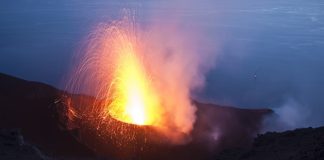
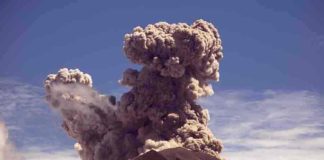
    One of the strombolian explosions that have occurred at Stromboli about every 10 minutes for at least 2000 years. © UNIGE, Luca Caricchi

    Analysing volcanoes to predict their awakening

    June 26, 2021
    A new study led by A&S professor Tao Wen used a novel method of machine learning to explore the environmental impact of oil and gas drilling.

    Environmental impact of hydrofracking vs. conventional gas/oil drilling: Research shows the...

    June 26, 2021
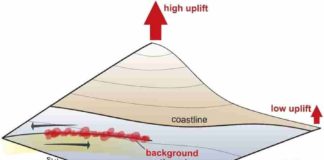
    In the time between mega-earthquakes, smaller earthquakes continuously occur between oceanic and continental plates (background earthquakes). Where a lot of energy is released through these earthquakes, we observe coastal mountains that rise faster. In contrast, slow-uplifting coastal areas coincide with fewer background earthquakes. Credit: University of Tübingen

    Continuous activity of small earthquakes makes mountains grow

    June 26, 2021
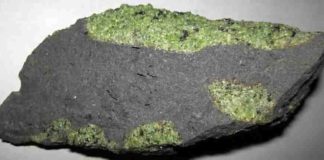
    Chunks of exotic green rocks from the mantle erupted from the San Carlos Volcanic Field, Arizona. Credit: James St John

    Rock crystals from the deep give microscopic clues to earthquake ground...

    June 26, 2021
    Agung, a volcano in Bali, had an explosive eruption in 2018. Credit: O.L. Andersen

    New knowledge of Earth’s mantle helps to explain Indonesia’s explosive volcanoes

    June 26, 2021
    Zircons studied by the research team, photographed using cathodoluminescence, a technique that allowed the team to visualize the interiors of the crystals using a specialized scanning electron microscope. Dark circles on the zircons are the cavities left by the laser that was used to analyze the age and chemistry of the zircons.Scientists led by Michael Ackerson, a research geologist at the Smithsonian's National Museum of Natural History, provide new evidence that modern plate tectonics, a defining feature of Earth and its unique ability to support life, emerged roughly 3.6 billion years ago. The study, published May 14 in the journal Geochemical Perspective Letters, uses zircons, the oldest minerals ever found on Earth, to peer back into the planet's ancient past.The team tested more than 3,500 zircons, each just a couple of human hairs wide, by blasting them with a laser and then measuring their chemical composition with a mass spectrometer. These tests revealed the age and underlying chemistry of each zircon. Of the thousands tested, about 200 were fit for study due to the ravages of the billions of years these minerals endured since their creation. Credit: Michael Ackerson, Smithsonian.

    Earth’s oldest minerals date onset of plate tectonics to 3.6 billion...

    May 22, 2021
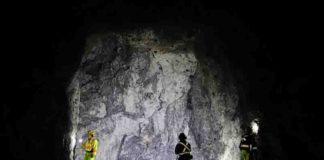
    McGill Colloidal Au research team study a mineralized (gold-bearing) vein underground at the Brucejack mine. Credit: Duncan McLeish

    Clues from soured milk reveal how gold veins form

    May 22, 2021
    The quantitative model used in the study explains the enigmatic melt degrees and layered structures observed in most cratons on Earth.

    Where on Earth is all the water?

    May 22, 2021
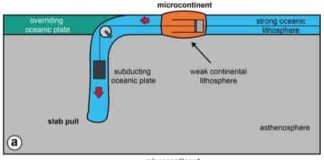
    Elements of a newly discovered process in plate tectonics include a mass (rock slab weight), a pulley (trench), a dashpot (microcontinent), and a string (oceanic plate) that connects these elements to each other. In the initial state, the microcontinent drifts towards the subduction zone (Figure a). The microcontinent then extends during its journey to the subduction trench owing to the tensional force applied by the pull of the rock slab pull across the subduction zone (Figure b). Finally, the microcontinent accretes to the overriding plate and resists subduction due to its low density, causing the down-going slab to break off (Figure c). Credit: Erkan Gün/University of Toronto

    Discovery of new geologic process calls for changes to plate tectonic...

    May 22, 2021
    1...646566...686Page 65 of 686

    Related Articles

    All
    • All
    • Featured
    • All time popular

    New symmetrodont mammal found from the Early Cretaceous of China

    June 21, 2016

    1.5 Million Years of Climate History Revealed After Scientists Solve Mystery of the Deep

    August 16, 2012

    Rust under pressure could explain deep Earth anomalies

    June 9, 2016

    Epoch-defining study pinpoints when humans came to dominate planet Earth

    March 12, 2015

    Fossils reveal ‘beer-bellied’ dinosaur

    October 25, 2014

    Newly described fossils could help reveal why some dinos got so big

    October 17, 2018

    Facebook Instagram Linkedin TikTok X Youtube
    • Privacy Policy
    • Advertising
    • Contribute
    • FAQs
    © 2011-2026. All Rights Reserved.