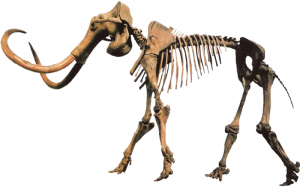
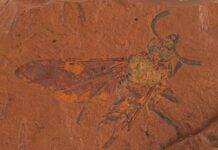
A partial skull and two tusks of a prehistoric Columbian mammoth have been found in northwest Oklahoma.
Oklahoma Archeological Survey archaeologist Lee Bement said Monday that a Woods County employee found the remains last week near Alva, about 150 miles northwest of Oklahoma City.
Bement says the elephant-like animal with long, curved tusks was common in the Plains region during the Pleistocene era before becoming extinct about 11,000 years ago. He says the remains of two or three mammoths are found each year in Oklahoma.
Bement says archaeologists are interested because the earliest humans in Oklahoma existed at the same time and could have hunted mammoths.
The remains were sent to Oklahoma State University for analysis by a doctoral student in geology. The remains will be returned to the landowner.
Note: The above post is reprinted from materials provided by The Associated Press.
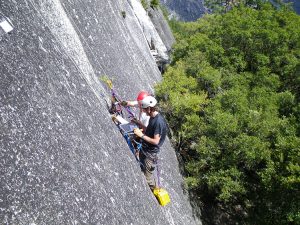
Yosemite National Park geologist Greg Stock and USGS civil engineer Brian Collins download data from instruments measuring how much granitic exfoliation sheets move from daily temperature variations as a precursor to rock fall. Credit: Valerie Zimmer, National Park Service.
After more than three years of monitoring the towering granite cliffs of Yosemite National Park, scientists have new insights into a potentially important mechanism that can trigger rockfalls in the park. Although many conditions can trigger rockfalls, some rockfalls are more likely to happen in the hottest part of the day, during the hottest part of the year.
Rockfalls in Yosemite are common and part of the natural process of erosion, but they also pose hazards to park visitors. Improved understanding of this thermal triggering mechanism may assist the National Park Service in managing rockfall hazards in the park.
To explain this phenomenon, U.S. Geological Survey and NPS geologists placed sensitive deformation and temperature gauges in a crack behind a large, partially detached slab of granite clinging to a Yosemite Valley cliff. The scientists found that daily heating and cooling of the rock surface caused the crack to open and close by nearly half an inch. The resulting stress can cause such cracks to grow, destabilizing the rock slabs to the point where they fall, in a process called exfoliation.
According to Brian Collins, USGS geotechnical engineer and coauthor of the study, “Our research provides clear evidence that thermal effects can move large slabs of rock and that these movements, over time, can lead to rock falls.”
“Summertime rockfalls have been something of a mystery,” said Greg Stock, Yosemite park geologist and coauthor of the study. “With this work we now have a plausible explanation for why they happen.”
Reference:
Brian D. Collins & Greg M. Stock, Rockfall triggering by cyclic thermal stressing of exfoliation fractures. DOI:10.1038/ngeo2686
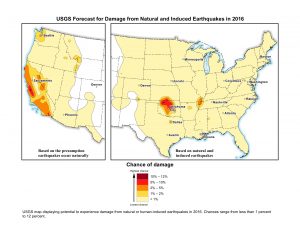
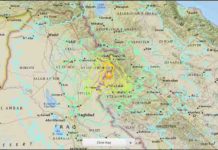
This image provided by the U.S. Geological Survey (USGS) shows the USGS forecast for damage from natural and induced earthquakes in the U.S. in 2016. Federal scientists say the chance of damaging earthquakes hitting east of the Rockies has increased significantly, much of it man-made as byproduct of drilling for energy. Oklahoma now has the nation’s highest with a 1 in 8 chance of damaging ground shaking in 2016, passing California. Credit: U.S. Geological Survey via AP
The ground east of the Rockies is far more likely to shake this year with damaging though not deadly earthquakes, federal seismologists report in a new risk map for 2016. Much of that is a man-made byproduct of drilling for energy.
Parts of Oklahoma now match northern California for the nation’s most shake prone. One north-central Oklahoma region has a 1 in 8 chance of a damaging quake in 2016, with other parts closer to 1 in 20.
Overall, 7 million people live in areas where the risk has dramatically jumped for earthquakes caused by disposal of wastewater, a byproduct of drilling for oil and gas. That is mostly concentrated in Oklahoma, Texas, New Mexico, Kansas, Colorado and Arkansas.
Natural earthquake risk also increased around the New Madrid fault in Missouri, Tennessee, Kentucky, Arkansas and Illinois.
In a first-of-its-kind effort, the U.S. Geological Survey on Monday released a map for risks of damaging quakes in the current year. Past efforts looked at 50-year risks and didn’t include man-made quakes. The new risks are mostly based on increases in quakes felt last year.
These are not massive quakes that kill hundreds or thousands of people and leave devastation in their wake. Instead, these smaller quakes happen more frequently, said Mark Petersen, chief of the National Seismic Hazard Mapping Project. They damage but don’t topple buildings.
“There’s no question that there’s a lot of shaking going on in Oklahoma, Kansas and Texas,” Petersen said in an interview after a press conference Monday. “These are much higher ground motions” than the last time he created the longer-term map, in 2014.
For example, on that map the risk was low in Dallas; now, after a tenfold increase in risk, Petersen said it compares to places in California. The Dallas-Fort Worth area risk is between 2 to 5 percent this year, he said.
“Oklahoma and Texas have the largest population exposed to induced quakes,” Petersen said.
North-central Oklahoma was said to have a 12 percent risk, and it has already been hit: A 5.1 magnitude quake caused some damage around Fairview in February.
Seismologist Rowena Lohman of Cornell University, who wasn’t part of the map team, said the increase around Oklahoma is easily noticeable and scientists are trying to determine whether these man-made smaller quakes lead to larger events.
Induced quakes are to blame for much of the problem. They result when wastewater is injected deep underground, said USGS seismologist Justin Rubinstein, the deputy chief of the mapping program. That injection is a byproduct of energy drilling, including hydraulic fracturing, a relatively new and controversial process to drill for oil and gas. But he said the fracking process itself mostly doesn’t cause quakes strong enough to be damaging, while injecting fracking waste does.
Rubinstein said there is a scientific consensus “that wastewater disposal does cause earthquakes.”
Arkansas, Kansas and Ohio saw dramatic reductions in man-made quakes when those states tighten restrictions on wastewater injections, Rubinstein said.
In Oklahoma, “the longer we go, the more we pump down there, the more likelihood we have that we’re going to have larger quakes,” Petersen said.
Oklahoma Gov. Mary Fallin said the research justifies action taken by Oklahoma earlier this year to cut back on injections.
“Recent declines in produced wastewater disposal in Oklahoma are not reflected in the USGS map,” Fallin said. “This gives us even a stronger base in going forward and gives state regulators further justification for what they are doing.”
Rubinstein said it’s too early to see any results from Oklahoma’s new efforts.
The increase in the natural quakes in the New Madrid area remains a mystery, Petersen said, but “it’s higher than it’s been in several years.”
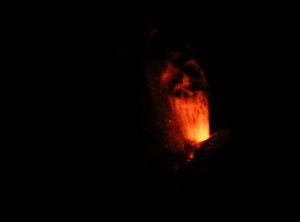
Pavlof volcano in eruption, 3 am, March 28, 2016. Photo courtesy Royce Snapp, taken from Cold Bay, with a 500 mm lens. Cold Bay is 36 miles southwest of Pavlof. Credit: Snapp, Royce/ Alaska Volcano Observatory
The U.S. Geological Survey reports that a volcano on Alaska’s Aleutian Islands erupted Sunday afternoon and sent ash 20,000 feet into the air.
The agency says the Pavlof Volcano, which is about 600 miles southwest of Anchorage, erupted at 4:18 p.m. local time. The agency says the eruption also led to tremors on the ground.
The USGS has raised the volcano alert level to “Warning” and the aviation warning to “Red.”
The agency says the volcano, which is about 4.4 miles in diameter, has had 40 known eruptions and “is one of the most consistently active volcanoes in the Aleutian arc.”
The USGS says that during a previous eruption in 2013, ash plumes rose 27,000 feet. Other eruptions have generated ash plumes as high as 49,000 feet.
The community closest to the volcano is Cold Bay, which is about 37 miles southwest of it.
Note: The above post is reprinted from materials provided by The Associated Press.
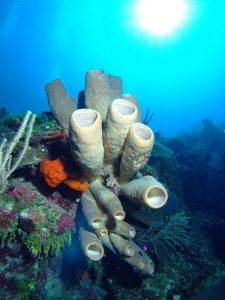
Scientists recommend a new focus on coral reef research that combines the power of traditional laboratory experiments with field-based experiments to best inform adaptation and environmental policy. Credit: Ken Anthony
An international research team calls for a targeted research strategy to better understand the impact multiple stressors will have on coral reef in the future due to global climate change. The scientists published their new approach to coral reef research in the journal Frontiers in Marine Science.
The researchers conducted a literature review to evaluate recent research on the ecological health impacts of corals when exposed to more than one stressor, such as increased ocean temperature and increased ocean acidification.
More than just bleaching and a loss of calcium shells, changes in temperature and ocean acidification – driven by increased CO2 in the atmosphere – can cause corals to grow more slowly and can inhibit reproduction, according to the researchers. The researchers suggest that when stresses occur simultaneously, they have dangerous effects on corals that are not anticipated by studies that only evaluate a single stressor to corals.
“The evidence is stacking up that the interaction of multiple stressors and ecological complexity may mean that negative effects on coral reefs will happen sooner, and be more severe than previously thought,” said Chris Langdon, a professor of marine biology and ecology and co-author of the study. “In order to answer the challenge to produce more accurate predictions, coral reef scientists will need to scale-up their studies to better encompass the complexity of natural systems.”
The researchers call for a new focus on coral reef research that combines traditional laboratory experiments with more realistic field-based experiments that attempt to mimic the types of changes in multiple stressors that are expected to impact corals in the future.
“Because the species that make up coral reefs differ from region to region, we need a global strategy for choosing where to locate these larger, field-based experiments, called mesocosm studies, to better inform adaptation and environmental policy that are regionally appropriate,” the researchers said.
Reference:
Linwood H. Pendleton, Ove Hoegh-Guldberg, Chris Langdon and Adrien Comte. Multiple Stressors and Ecological Complexity Require a New Approach to Coral Reef Research. DOI: 10.3389/fmars.2016.00036
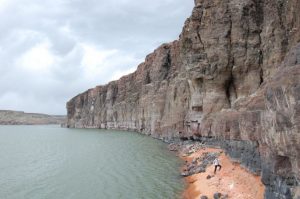
The entire cliff would have been deposited very quickly from a fast-moving current of hot gas and ash (a pyroclastic density current), and the extreme temperatures (900-1000°C) caused the ash to weld to the ground and effectively enameled the area in dense volcanic glass. Note how the ancient top soil has been baked to orange terracotta in response to the intense heat. Credit: Photo taken by Marc Reichow, University of Leicester
A number of giant super-eruptions between 8 and 12 million years ago that could be larger than the colossal eruptions known to have taken place at Yellowstone have been identified in the United States through research led by the University of Leicester.
The international research team suggests that while the number of volcanic eruptions thought to have originated from the central Snake River Plain in Idaho, USA is less than previously believed, the 12 recorded giant eruptions were likely ‘significantly larger’ than research has previously suggested.
Dr Tom Knott, Professor Mike Branney and Dr Marc Reichow, from the University of Leicester’s Department of Geology’s Volcanology Group, conducted the research with a team of international collaborators from the University of California, Santa Cruz, USA, the University of Copenhagen, Denmark and Idaho State University, USA.
Using a multi-technique approach, including whole-rock and mineral chemistries, palaeomagnetic data, and radio-isotopic dates, the team has been able to ‘fingerprint’ individual eruption deposits and correlate these over vast regions (e.g., 1000’s km2).
In establishing widespread correlations, the team drastically reduced the number of eruptions previously thought to have originated from the central Snake River Plain by more than half.
The researchers have reported that one of the super-eruptions from the Yellowstone hotspot-track, defined as the Castleford Crossing eruption, occurred about 8.1 million years ago and estimate the eruption volume to have exceeded 1,900 km3. The single volcanic sheet covers an area over 14,000 km2 in southern Idaho, and is more than 1.3 km thick in the caldera of the super-volcano.
This is just one of 12 giant eruptions reported from the area by the Leicester team, who show that intense hotspot magmatism caused major crustal subsidence, forming the 100 km-wide Snake River Basin. The team also demonstrates that these eruptions were in fact significantly larger than previously thought and may rival those better known at Yellowstone.
Dr Knott said: “While it is well-know that Yellowstone has erupted catastrophically in recent times perhaps less widely appreciated is that these were just the latest in a protracted history of numerous catastrophic super-eruptions that have burned a track along the Snake River eastwards from Oregon to Yellowstone from 16 Ma to present.
“The size and magnitude of this newly defined eruption is as large, if not larger, than better known eruptions at Yellowstone, and it is just the first in an emerging record of newly discovered super-eruptions during a period of intense magmatic activity between 8 and 12 million years ago.”
Reference:
Thomas R. Knott, Michael J. Branney, Marc K. Reichow, David R. Finn, Robert S. Coe, Michael Storey, Dan Barfod, Michael McCurry. Mid-Miocene record of large-scale Snake River−type explosive volcanism and associated subsidence on the Yellowstone hotspot track: The Cassia Formation of Idaho, USA. Geological Society of America Bulletin, 2016; B31324.1 DOI: 10.1130/B31324.1
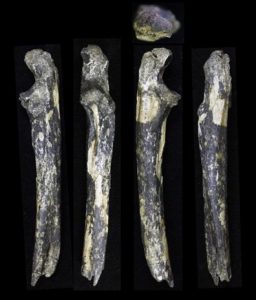
An adult left ulna of Australopithecus afarensis. Several fossilized teeth have also been found in the Kantis site. Credit: Image courtesy of Kyoto University
New fossils from Kenya suggest that an early hominid species — Australopithecus afarensis — lived far eastward beyond the Great Rift Valley and much farther than previously thought. An international team of paleontologists led by Emma Mbua of Mount Kenya University and Masato Nakatsukasa of Kyoto University report findings of fossilized teeth and forearm bone from an adult male and two infant A. afarensis from an exposure eroded by the Kantis River in Ongata-Rongai, a settlement in the outskirts of Nairobi.
“So far, all other A. afarensis fossils had been identified from the center of the Rift Valley,” explains Nakatsukasa. “A previous Australopithecus bahrelghazali discovery in Chad confirmed that our hominid ancestor’s distribution covered central Africa, but this was the first time an Australopithecus fossil has been found east of the Rift Valley. This has important implications for what we understand about our ancestor’s distribution range, namely that Australopithecus could have covered a much greater area by this age.”
A. afarensis is believed to have lived 3,700,000-3,000,000 years ago, as characterized by fossils like “Lucy” from Ethiopia.
Stable isotope analysis revealed that the Kantis region was humid, but had a plain-like environment with fewer trees compared to other sites in the Great Rift Valley where A. afaransis fossils had previously appeared. “The hominid must have discovered suitable habitats in the Kenyan highlands. It seems that A. afaransis was good at adapting to varying environments,” notes Nakatsukasa.
The team’s survey also turned up masses of mammal fossils, including a few that probably belong to new species of bovids or baboons.
The authors write that the Kantis site was first noted in a 1991 geological survey. At that time, a farmer said that he and his family had come across fossilized bones from Kantis in the 1970s, although they did not recognize their importance. Following airing of Kenyan television programs on paleontological research, locals gradually started to appreciate the fossils. Since then, Kantis and other sites have been identified thanks to fossil notifications from the local population.
The team welcomes this achievement not only for its academic implications, but also for the benefits to the local community. “Kantis is in the vicinity of Nairobi, a major city,” said Nakatsukasa. “We hope that the discovery of the new site and the fossils will aid in increasing tourism, and in improving educational awareness of the local community.”
Reference:
Emma Mbua, Soichiro Kusaka, Yutaka Kunimatsu, Denis Geraads, Yoshihiro Sawada, Francis H. Brown, Tetsuya Sakai, Jean-Renaud Boisserie, Mototaka Saneyoshi, Christine Omuombo, Samuel Muteti, Takafumi Hirata, Akira Hayashida, Hideki Iwano, Tohru Danhara, René Bobe, Brian Jicha, Masato Nakatsukasa. Kantis: A new Australopithecus site on the shoulders of the Rift Valley near Nairobi, Kenya. Journal of Human Evolution, 2016; 94: 28 DOI: 10.1016/j.jhevol.2016.01.006
A palaeontologist from The University of Manchester has taken part in a project to rebuild and redisplay the skeleton of a 200 million-year-old sea creature, 61 years after its bones were discovered in a field in Warwickshire. The Ichthyosaurus is the largest example ever found in the UK, and it is now available for the public to view for the first time.
Ichthyosaurs evolved from a group of land reptiles that returned to the sea, just as modern dolphins and whales evolved from mammalian land ancestors – in fact, they look a lot like dolphins. They belong to a different group of reptiles from dinosaurs, but they did live in the sea at the same time as dinosaurs were living on the land.
Dean Lomax from The University of Manchester worked with palaeontologist Nigel Larkin and Luanne Meehitiya at Birmingham Museums to create accurate 3D replicas of the Ichthyosaurus’ missing bones, by using CT scans of the existing fossilised remains.
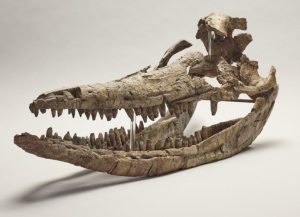
Its skull, which is 80cm long and 33cm wide, was cleaned before being completely taken apart and reconstructed to be more anatomically correct, as our knowledge of ichthyosaurs has increased since it was first put together. Once the skull had been reassembled, the project team found the rest of the skeleton in storage, and began to piece the whole creature together. Replicas were made of any missing bones to complete the jigsaw.
“This is a very important specimen. Not only is this the largest recorded Ichthyosaurus in the UK, but possibly in the world. It also comes from a location previously unrecorded for ichthyosaurs, so this adds to our understanding of the geographical distribution of ichthyosaurs during the Early Jurassic, a time when the UK was a series of islands,” says Dean Lomax of the School of Earth, Atmospheric and Environmental Sciences.
As well as the skeleton, the experts have created a life-sized model of the ichthyosaur to show how it looked when alive, as well as an interactive digital version telling the story of the project. These are now on display at Birmingham Museum.
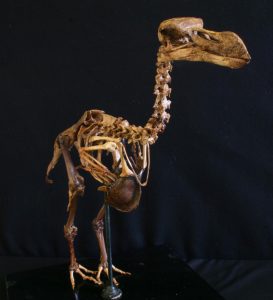
Claessens Durban dodo. Credit: courtesy of L. Claessens – Durban Natural Science Museum 5.Claessens Port Louis Dodo
The dodo represents one of the best-known examples of extinction caused by humans, yet we know surprisingly little about this flightless pigeon from a scientific perspective. Now, for the first time since its extinction, a 3-D atlas of the skeletal anatomy of the dodo has been created, based upon two exceptional dodo skeletons that have remained unstudied for over a century.
This atlas, published as the fifteenth Memoir of the Society of Vertebrate Paleontology, represents the culmination of nearly five years of work and thousands of man-hours of digital investigation on the only two associated, near-complete skeletons of the dodo in existence. Published 150 years after Sir Richard Owen’s first scientific description of dodo anatomy, based on incomplete, composite skeletons, the new atlas is the first to show accurate relative proportions and to describe several previously unknown bones of the dodo skeleton, including knee caps, ankle and wrist bones. The atlas opens new pathways for the investigation of the paleobiology and evolution of what may arguably be one of the most famous, yet surprisingly poorly known animals that went extinct in recent human history.
The dodo skeletons described in this Memoir were discovered more than a century ago by an amateur naturalist, Etienne Thirioux, who was a barber by trade. Sadly, Thirioux’s exceptional discoveries never received the attention they deserved, and have never been described scientifically before. The Thirioux skeleton housed in the Mauritius Institute represents the only known complete dodo skeleton, and the only one comprising the bones of a single individual. The second Thirioux specimen, now housed in the Durban Natural Science Museum, is nearly complete but may have been assembled from the remains of more than one bird. In contrast, all other known dodo skeletons are incomplete and typically made up from the bones of many different individuals. Our anatomical atlas of the Thirioux skeletons, produced using modern techniques such as 3D laser surface scanning, opens a new window into the ecology of this iconic extinct bird.
Background information
The dodo (Raphus cucullatus), an extinct, giant flightless pigeon once endemic to the island of Mauritius, may arguably be the most widely known animal species to have gone extinct in human history. However, despite its prominence in popular culture, surprisingly little is known of the anatomy and biology of this animal. The dodo was extinct by 1693, less than one hundred years after the discovery and colonization of Mauritius by the Dutch. There is not a single complete specimen that exists from 17th century collections, only a few fragments remain; a single desiccated head, a skull, a beak, and a foot. There are also a few genuine but often contradictory contemporary written accounts and drawings. It was not until the discovery of a mid-Holocene fossil concentration-Lagerstätte on Mauritius in 1865, the Mare aux Songes (MAS), that scientists, most notably Sir Richard Owen, were able to reconstruct the dodo’s skeletal anatomy by constructing composite, partially incomplete skeletons. Surprisingly, only few additions to our knowledge of dodo anatomy, paleoecology and extinction have been made since Owen’s 1866 seminal publication, a vast library of semi-popular works on the dodo notwithstanding.
The fossil discoveries made by barber and amateur naturalist Etienne Thirioux between 1899 and 1910 include some of the best dodo remains existing today, including the only complete skeleton known from a single bird (housed in the Natural History Museum in Port Louis, Mauritius), and another largely complete skeleton (housed in the Durban Natural Science Museum in South Africa). Sadly, Thirioux’s discoveries never received the attention they deserved. Our anatomical atlas of the Thirioux skeletons, produced using modern techniques such as 3D laser surface scanning, opens a new window into the life of this famous extinct bird.
Society of Vertebrate Paleontology Memoir number fifteen is the first complete, comprehensive treatise on dodo skeletal anatomy ever produced and only the third monograph on dodo skeletal anatomy; the last one dating from 150 years ago. It represents years of collaborative efforts from a large team of international scientists, with a substantial contribution from undergraduate student researchers in the 3-D laser surface scanning 3-D of the Thirioux skeletons.
Video
Reference:
ANATOMY OF THE DODO (RAPHUS CUCULLATUS L., 1758): AN OSTEOLOGICAL STUDY OF THE THIRIOUX SPECIMENS. Leon P. A. M. Claessens, Hanneke J. M. Meijer, Julian P. Hume, and Kenneth F. Rijsdijk (Editors) Society of Vertebrate Paleontology Memoir 15, Journal of Vertebrate Paleontology Vol. 35, Supplement to No. 6. www.tandfonline.com/toc/ujvp20/35/sup1
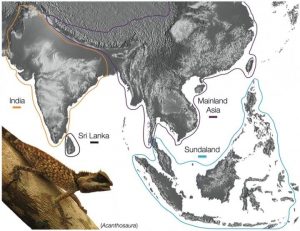
This is a map showing the distribution of Draconinae and the four biogeographic area (differently-colored borders) used in ancestral range reconstructions. Credit: KU News Service | University of Kansas
For about 60 million years during the Eocene epoch, the Indian subcontinent was a huge island. Having broken off from the ancient continent of Gondwanaland, the Indian Tectonic Plate drifted toward Eurasia.
During that gradual voyage, the subcontinent saw a blossoming of exceptional wildlife, and when the trove of unique biodiversity finally made contact with bigger Eurasia, the exchange of animals and plants between these areas laid the foundations for countless modern species.
“Today, mainland Asia and India have all this unique biodiversity — but did the mainland Asian biodiversity come from India, or did the Indian biodiversity come from other regions of Asia?” asked Jesse Grismer, doctoral candidate with the Biodiversity Institute at the University of Kansas.
Grismer claims the answer depends on the organism in question.
“If you picked Asian freshwater crabs, you’d see they started in India and made their way to Asia, but if you picked dragon lizards you’d get the opposite answer,” he said. “The opposing distribution patterns created a lot of conflict for a while. You’d see papers saying, ‘Everything came from India,’ and others saying, ‘No, everything came from Indochina and Southeast Asia.’ But they were looking at opposite ends of the same pattern, just with different animals.”
Now, Grismer has authored research appearing in the journal BMC Evolutionary Biology showing that before the final collision of Eurasia and the Indian subcontinent, land bridges between the landmasses may have served as “freeways” of biodiversity exchange that flowed in both directions.
“Our paper shows that as India was approaching Eurasia, it was connecting by ephemeral land bridges,” Grismer said. “It was these land bridges that allowed for dispersal and exchange of all these species. There were two areas of suitable habitat separated by unsuitable oceans. But once that new area was exposed, species were allowed to disperse into mainland Asia or India, respectively, areas that these species had not been able to previously exploit.”
To arrive at their conclusion, Grismer and his co-authors performed a phylogenomic analysis of Indian Dragon Lizards, revealing multiple origins in Southeast Asia. The researchers included Alana Alexander, Phillip Wagner, Scott L. Travers, Matt D. Buehler, Luke J. Welton and Rafe M. Brown from KU and James A. Schulte II from Clarkson University. Grismer also credits his KU lab mates Chan Kin Onn, Robin Abraham and Carl Hutter with help on the research via “a lot of fruitful discussion.”
Importantly, the team showed that two land bridges connected the Indian subcontinent to Eurasia at two different times during the early to middle Eocene, some 35 to 40 million years ago.
“This hypothesis is based on evolutionary relationships between the species used in this study,” he said. Grismer added that his team blended new genomic data with previous studies and combined that analysis with new geologic studies about Eocene geology.
The KU researcher said Indian Dragon Lizards, or the Draconinae subfamily of the lizard family Agamidae, are an ideal species to study in order to piece together a picture of the exchange of biodiversity that took place due to the land bridges.
“Dragon lizards added new light because of the previous work that has been done on them, plus our new samples,” Grismer said. “They’re quite diverse as a group, distributed equally, and so they’re great study system for testing a new hypotheses.”
He added that conservation of certain species of Dragon Lizards and keeping them out of the international pet trade would help make possible more opportunities for understanding the history of this unique group of family of lizards.
“We were only able to do this because we had all these species to work with, and a future study with more data and new species could find a new result to this question ” he said. “Animals in general tell us a lot about our world and how we fit into it. I think protecting them is just as important as anything else we do.”
Reference:
Jesse L. Grismer, James A. Schulte, Alana Alexander, Philipp Wagner, Scott L. Travers, Matt D. Buehler, Luke J. Welton, Rafe M. Brown. The Eurasian invasion: phylogenomic data reveal multiple Southeast Asian origins for Indian Dragon Lizards. BMC Evolutionary Biology, 2016; 16 (1) DOI: 10.1186/s12862-016-0611-6
Isorophus cincinnatiensis of Hamilton County, Ohio, is one of hundreds of species identified in the app. The specimen is a type of echinoderm (a cousin of a starfish) that was relatively common in the Late Ordovician seas in the Cincinnati area. Credit: Alycia Stigall
Fossil hunters now have a mobile app to help them identify specimens in the field.
The Digital Atlas of Ancient Life is a free iOS app for iPhone and iPad that allows users to search for photos and information about fossils from three geological periods. It’s a completely packaged app that can be downloaded to a device and doesn’t require cell service for use—which can be handy in rural and remote locations, says Ohio University geologist Alycia Stigall.
Stigall and a team of Ohio University students contributed to the National Science Foundation-funded project by digitizing data on 30,000 specimens found in Ohio, Kentucky, and Indiana from the Ordovician Period, 443-453 million years ago. Colleagues at San Jose State University and University of Kansas, which produced the app, provided data from the Pennsylvanian Period (300-323 million years ago) and the Neogene Period (23-2 million years ago). The app features data on about 800 species.
Many fossil specimens collected and described by scientists are housed in natural history museums or in laboratory drawers and are not accessible to the public, Stigall notes. But new software tools and apps now make it possible to digitize that information and put it in the hands of teachers, students, and backyard fossil enthusiasts, as well as the scientific community, she says.
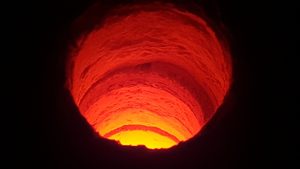
The University of Alaska Fairbanks Petrology Lab’s furnace glows. This is where researchers turn rock back into magma. Credit: Diana Campbell
The best way to figure out how something is made is to take it apart and put it back together again.
That is what Jessica Larsen and her students do at the Geophysical Institute’s Petrology Lab in order to understand active volcanoes in Alaska.
Larsen takes a tiny sliver of volcanic rock, crushes it into rock flour and adds water and other ingredients.
She then puts the tiny sample into a super-heat-resistant cooking device and heats it until it becomes magma again.
Once the experiment cools, a tiny rock is reborn.
“What we find out by recreating magma are the temperatures and pressure at which the lava was created,” said Larsen, head of the Petrology Lab. “By doing this we can ‘image’ the inside of a volcano.”
It’s almost like putting a puzzle back together. The temperature and pressure, as well as the rock’s mineral content, tell Larsen how deep the rock came from inside a volcano.
It’s a good alternative method of understanding volcanoes. Taking a real look inside one isn’t practical.
Magma re-creation, along with other research, helps researchers to understand eruptions and possibly ways to better predict them.
At the University of Alaska Fairbanks, where the GI’s Petrology Lab is located, scientists look at a volcano’s surface using GPS. This allows them to see the surface bulge as lava forms in the magma chamber and moves up the main vents. Other researchers use seismometers to note the movement of a volcano’s internal grumblings. Adding what the recreated magma reveals gives a more detailed understanding of volcanoes.
“This is the peak of cutting edge,” Larsen said. “And we can do all this type of research here at UAF.”
Making magma is difficult work, however. The sample is tiny and assembling the experiment has to be exact, Larsen said.
“You have to be very good with your hands to get the sample to fit inside the capsule,” she said. “And then put it inside the furnace.”
It’s important work for Alaska, which is home to 52 active volcanoes. Even the viscosity of the magma is important to know, as two of Larsen’s students are discovering.
What they find out could help save lives and money. Volcanoes spew ash clouds that scour the insides of airplane engines, causing serious enough damage to bring a jetliner down, Larsen said. Also, many Alaskans live near active volcanoes and would need to know when to take shelter or prepare for poor air quality.
“We might expect eruptions to be similar to what happened in the past,” Larsen said. “But volcanoes are unpredictable and surprise us, even the ones we know well. So we have to be objective and watch for changes.”
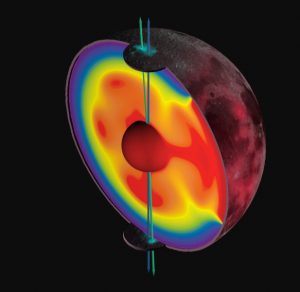
A 3D cross section of the moon’s INFO HERE and resulting lunar polar wander. Credit: James Keane, U of Arizona
A new study published today in Nature reports discovery of a rare event — that Earth’s moon slowly moved from its original axis roughly 3 billion years ago. Ancient lunar ice indicates the moon’s axis slowly shifted by 125 miles, or 6 degrees, over 1 billion years. Earth’s moon now a member of solar system’s exclusive ‘true polar wander’ club, which includes just a handful of other planetary bodies.
Planetary scientist Matt Siegler at Southern Methodist University, Dallas, and colleagues made the discovery while examining NASA data known to indicate lunar polar hydrogen. The hydrogen, detected by orbital instruments, is presumed to be in the form of ice hidden from the sun in craters surrounding the moon’s north and south poles. Exposure to direct sunlight causes ice to boil off into space, so this ice — perhaps billions of years old — is a very sensitive marker of the moon’s past orientation.
An odd offset of the ice from the moon’s current north and south poles was a tell-tale indicator to Siegler and prompted him to assemble a team of experts to take a closer look at the data from NASA’s Lunar Prospector and Lunar Reconnaissance Orbiter missions. Statistical analysis and modeling revealed the ice is offset at each pole by the same distance, but in exactly opposite directions.
This precise opposition indicates the moon’s axis — the imaginary pole that runs north to south through it’s middle, and around which the moon rotates — shifted at least six degrees, likely over the course of 1 billion years, said Siegler.
“This was such a surprising discovery. We tend to think that objects in the sky have always been the way we view them, but in this case the face that is so familiar to us — the Man on the Moon — changed,” said Siegler, who also is a scientist at the Planetary Science Institute, Tucson, Ariz.
“Billions of years ago, heating within the Moon’s interior caused the face we see to shift upward as the pole physically changed positions,” he said. “It would be as if Earth’s axis relocated from Antarctica to Australia. As the pole moved, the Man on the Moon turned his nose up at the Earth.”
The discovery is reported today in an article in the scientific journal Nature, “Lunar true polar wander inferred from polar hydrogen.” Siegler’s primary co-authors are astrophysicist Richard S. Miller, a professor at the University of Alabama Huntsville, and planetary dynamicist James T. Keane, a graduate student at the University of Arizona.
Very few planetary bodies known to permanently shift their axis
Planetary bodies settle into their axis based on their mass: A planet’s heavier spots lean it toward its equator, lighter spots toward the pole. On the rare occasion mass shifts and causes a planet to relocate on its axis, scientists refer to the phenomenon as “true polar wander.”
Discovery of lunar polar wander gains the moon entry into an extremely exclusive club. The only other planetary bodies theorized to have permanently shifted location of their axis are Earth, Mars, Saturn’s moon Enceladus and Jupiter’s moon Europa.
What sets the moon apart is its polar ice, which appears to effectively “paint out” the path along which its poles moved.
Moon’s axis likely started relocating about 3 billion years ago
On Earth, polar wander is believed to have happened due to movement of the continental plates. Polar wander on Mars resulted from a heavy volcanic region. The moon’s change in mass was internal — the shift of a large, single mantle “plume.” Ancient volcanic activity some 3.5 billion years ago melted a portion of the moon’s mantle, causing it to bubble up toward its surface, like goo drifting upward in a lava lamp.
“The moon has a single region of the crust, a large basaltic plain called Procellarum, where radioactive elements ended up as the moon was forming,” Siegler said. “This radioactive crust acted like an oven broiler heating the mantle below.”
Some of the material melted, forming the dark patches we see at night, which are ancient lava, he said.
“This giant blob of hot mantle was lighter than cold mantle elsewhere,” Siegler said. “This change in mass caused Procellarum — and the whole moon — to move.”
The moon likely relocated its axis starting about 3 billion years ago or more, slowly moving over the course of a billion years, Siegler said, etching a path in its ice.
Over time, the axis shifted 125 miles or 200 kilometers — about half the distance from Dallas to Houston, or equal the distance from Washington D.C. to Philadelphia.
Neutrons can indicate the presence of water or ice
Polar wander explains why the moon appears to have lost much of its ice.
Siegler compares true polar wander to holding a glass filled with water. Most planets are like a steady hand holding a glass, their axis doesn’t shift and the water stays put. A planet whose mass is changing is like a wobbly hand, causing its axis to shift and the water to spill out. Similarly, as Earth’s moon changed its axis, much of its ice ceased to be hidden from the sun and was lost.
Co-author Richard Miller mapped the moon’s remaining ice by using data from NASA’s Lunar Prospector mission, which orbited the moon from 1998 to 1999. The presence of ice is inferred by measuring the energy of neutrons emitted from the lunar surface. Instruments on NASA’s satellite, including a neutron spectrometer, measured neutrons liberated from the moon by a rain of stellar particles scientists call cosmic rays. Low energy neutrons indicate the presence of hydrogen, the dominant molecule in water and ice.
“The maps show four key features,” said Siegler and his colleagues. “First, the largest quantity of hydrogen is offset from the current rotation axis of the moon by roughly 5.5 degrees. Second, the hydrogen enhancements are of similar magnitude at both poles. Third, the asymmetric enhancements do not correlate with expectations from the current thermal or permanently shadowed environment. And lastly, and most significantly, the spatial distributions of polar hydrogen appear to be nearly antipodal.”
Lunar ice is ancient time capsule; may hold answers to deep mysteries
Siegler’s discovery opens the door to further discoveries around an even deeper question — the mystery of why there is water on the moon and on Earth. Scientific theory surrounding the formation of the solar system postulates water could not have formed much closer to the sun than Jupiter, Siegel said.
“We don’t know where the Earth’s water came from. It appears to have come from the outer solar system well after the Earth and moon formed,” he said. “Ice on other bodies, like the moon or Mercury, might give us a clue to its origin.”
The fact lunar ice correlates so well with true polar wander implies that it predates this motion, Siegler said, making the ice very ancient.
“The ice may be a time capsule from the same source that supplied the original water to Earth,” he said. “This is a record we don’t have on Earth. Earth has reworked itself so many times, there’s nothing that old left here. Ancient ice from the moon could provide answers to this deep mystery.”
Other co-authors on the scientific paper include Matthieu Laneuville, David A. Paige, Isamu Matsuyama, David J. Lawrence, Arlin Crotts and Michael J. Poston.
Reference:
M. A. Siegler, R. S. Miller, J. T. Keane, M. Laneuville, D. A. Paige, I. Matsuyama, D. J. Lawrence, A. Crotts, M. J. Poston. Lunar true polar wander inferred from polar hydrogen. Nature, 2016; 531 (7595): 480 DOI: 10.1038/nature17166
The Hawaiian Islands have long been thought to support just one endemic land mammal in the archipelago’s brief geologic history, the Hawaiian hoary bat. But new fossil evidence indicates that a second, very different species of bat lived alongside the hoary bat for thousands of years before going extinct shortly after humans arrived on the islands. The research, published in the journal American Museum Novitates, describes the mysterious bat, named Synemporion keana, whose remains were first discovered in a lava tube more than 30 years ago.
“The Hawaiian Islands are a long way from anywhere, and as a result, they have a very unique fauna–its native animals apparently got there originally by flying or swimming,” said Nancy Simmons, a co-author on the paper and curator-in-charge of the American Museum of Natural History’s Department of Mammalogy. “Besides the animals that humans have introduced to the islands, like rats and pigs, the only mammals that we’ve known to be native to Hawaii are a monk seal, which is primarily aquatic, and the hoary bat. So finding that there actually was a different bat–a second native land mammal for the islands–living there for such a long period of time was quite a surprise.”
Co-author Francis Howarth, an entomologist at the Bishop Museum in Honolulu, was investigating lava tubes in Maui in 1981 when he discovered skeletal remains of the bat. He took the fossils to his colleague Alan Ziegler, a mammalogist at the Bishop Museum, and later they and colleagues found remains on four other islands: Hawaii, Kauai, Molokai, and Oahu.
“The initial specimens included skeletons embedded in crystals on the lava tube wall and thus were likely very old,” Howarth said. “Ziegler eagerly guided me through the bat collection at the Bishop Museum to identify the bat and show me features to look for in order to find additional material for study.”
Ziegler immediately recognized that the small bat was very different from anything else he had seen and started the long process of investigating where it sits in the tree of life. When he died in 2003, the project was put on hold until Simmons was brought in to continue the work.
Smaller than the hoary bat, Synemporion keana first appeared in the fossil record on the islands around 320,000 years ago and survived until at least 1,100 years ago–possibly much later. The two species of bats coexisted for several thousand years. Synemporion keana, which is a kind of vesper, or evening bat, had an array of features that so far have thwarted efforts to identify its closest relatives. Simmons and Howarth hope that future work with ancient DNA extracted from the fossils might help them solve the mystery.
“This extinct bat really is something new, not just a slight variation on a theme of a known genus,” Simmons said. “The new bat contains a mosaic of features from taxa seen on many different continents. At some point, their ancestors flew to Hawaii, but we can’t tell if they came from North America, Asia, or the Pacific Islands–they really could have come from anywhere based on what we know now.”
The authors think that the extinction of Synemporion keana may have been a direct or indirect result of human colonization of the islands and the invasive non-native species that accompanied human explorers and settlers.
“It seems possible that the reduction of native forests and associated insects after human colonization of the islands contributed not just to the extinction of plants, birds, and invertebrates, but also to the extinction of this endemic bat,” Howarth said.
Reference:
Ziegler, Alan C.; Howarth, Francis G., 1940-; Simmons, Nancy B. , A second endemic land mammal for the Hawaiian Islands : a new genus and species of fossil bat (Chiroptera, Vespertilionidae). (American Museum novitates, no. 3854). http://hdl.handle.net/2246/6641
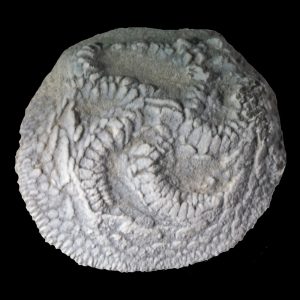
Chinggiskhaania bifurcata is the scientific name of one of the new kinds of multicellular algae recently found preserved as ancient fossils. Credit: Image courtesy of University of Wisconsin-Milwaukee
Honing in on when life on Earth evolved from single-celled to multicellular organisms is no easy task. Organisms that old lacked many distinguishing characteristics of modern life forms, making their fossils exceptionally rare.
But University of Wisconsin-Milwaukee paleontologist Stephen Dornbos and his research partners have discovered new clues in the quest. The team found fossils of two species of previously unknown ancient multicellular marine algae, what we now know as seaweed — and they’re among the oldest examples of multicellular life on Earth.
Their age is estimated to be more than 555 million years old, placing the fossils in the last part of Precambrian times, called the Ediacaran Period. They provide a crucial view of Earth’s earliest evolution of multicellular life, which scientists now think started millions of years earlier than previously thought.
The team’s work is detailed in a paper in the open-access online journal Scientific Reports, published March 17.
“This discovery helps tell us more about life in a period that is relatively undocumented,” said Dornbos, UWM associate professor of geosciences and first author on the paper. “It can help us correlate the changes in life forms with what we know about the Earth’s ancient environments. It is a major evolutionary step toward life as we know it today.”
Scientists think that an explosion of animal diversity and complexity began near the start of the Cambrian Period, about 541 million years ago. But Dornbos said this fossil find is the latest example of multicellular life forms appearing in the preceding Ediacaran Period.
Certain kinds of sedimentary rocks, called Burgess Shale-type (BST) deposits, have the right characteristics to preserve soft-bodied organisms as thin carbon films. During the Cambrian Period, BST deposits are more common, and they preserve fossils of increasingly complex animals. But only a handful of Ediacaran BST deposits are known globally.
Team members were searching for Ediacaran fossils in western Mongolia limestone when they uncovered a new BST deposit. That’s where they found the seaweed fossils.
Dornbos’ collaborators on the fieldwork, funded by the Japan Society for the Promotion of Science and NASA’s Wisconsin Space Grant Consortium, were Tatsuo Oji and Akihiro Kanayama of the Nagoya University Museum in Japan, and Sersmaa Gonchigdorj of the Mongolian University of Science and Technology in Ulaanbaatar.
BST fossils from the Ediacaran usually fall into two categories: multicellular algae, like seaweed, and fossils that are extremely difficult to classify, often the remains of extinct types of organisms. Consequently, Dornbos said, determining exactly what is preserved in Ediacaran fossil deposits can be hotly contested.
“If you find a fossil from this time frame, you really need strong support for your interpretation of what it was,” he said. “And the farther back you go in geologic time, the more contested the fossil interpretations are.”
Reference:
Stephen Q. Dornbos, Tatsuo Oji, Akihiro Kanayama, Sersmaa Gonchigdorj. A new Burgess Shale-type deposit from the Ediacaran of western Mongolia. Scientific Reports, 2016; 6: 23438 DOI: 10.1038/srep23438
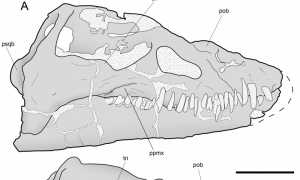
Schematic skulls of elasmosaurids now considered in the subfamily Styxosaurinae. (A) Styxosaurus browni (AMNH 5835, holotype). (B) Styxosaurus snowii (KUVP 1301). (C) Terminonatator pointeixensis (RSM P2414.1, holotype). Anatomical abbreviations: pob, preorbital bulk; ppmx, posterior process of the maxillar; psqb, posterior squamosal bulk; tri, temporal ridge. Scale bar equals 10 cm. Credit: Otero (2016)
I think at this point it’s no secret that I really really really like aquatic animals, especially of the extinct variety (in case you don’t believe me, see here and here and here and here and here and here! Whew!!). So I just couldn’t resist featuring another study on aquatic organisms that came out this week in the Open Access journal PeerJ. The study, by Rodrigo Otero, focuses on one of the more unusual groups of marine reptiles, elasmosaurids.
These critters were first made famous by the discovery of Elasmosaurus platyurus by E.D. Cope in 1868, and his subsequent blunder by placing the skull on the tip of the very short tail rather than on the extremely long neck in his reconstruction. The mistake was pointed out later on, not by O.C. Marsh as was often claimed, but by Joseph Leidy, in 1870.
Other older reconstructions of elasmosaurids often depict the animal with its head and neck completely out of the water, but more recent studies suggest that the weight of the neck would have prevented elasmosaurids from lifting no more than their head out of the water (Everhart, 2005). Nor would their necks have been all twisty and snake-like, as depicted in Charles Knight’s drawings of these creatures.
What was the biological advantage of such a ridiculously long neck? Well, if you were a large, hungry marine reptile in the Cretaceous Western Interior Seaway, wouldn’t it be to your advantage to be able to sneak up on schools of fishes without them seeing your large body approaching? The head and elongate neck were the metaphorical emissaries of a very large and hungry army hoping for a sneaky attack and satisfying meal.
But an extremely elongate neck, while often synonymous with elasmosaurid plesiosaurians, is not exclusive to them. Other groups, such as the cryptoclidid plesiosaurians for example, can possess just as many cervical vertebrae as elasmosaurids, and so using the elongate neck as a feature to distinguish elasmosaurids alone is problematic. However, other cranial and postcranial features have successfully kept elasmosaurids united as a monophyletic group. Phylogenetic relationships within Elasmosauridae, however, have been studied and debated by several researchers over decades. One family, the Aristonectinae, is recovered by Otero et al (2012) as a monophyletic group within Elasmosauridae.
Otero’s new study in PeerJ examined two specimens in great osteological detail. These two specimens, collected by Cope in 1876 and Barnum Brown in 1904, have been partly considered in other studies, but Otero’s effort presents the most comprehensive and rigorous examination of these two specimens. The variation observed as well as the results of his phylogenetic analysis caused Otero to propose a few taxonomic changes. First of all, Otero recovered a new subfamily Styxosaurinae, and contains these two specimens. One (AMNH 1495), is considered Styxosaurus sp., whereas the other specimen (AMNH 5835), originally designated as Hydralmosaurus serpentinus, is now considered Styxosaurus browni, a genus that had been previously sunk.
Whew! Okay. Taxonomic details aside, this paper also presents an interesting trend regarding the elongation of necks in elasmosaurids. Not only is the number of neck vertebrae important, but the shape and length of each vertebral centrum can play into the overall neck length. Something like a Thalssamedon elasmosaurid can have ~56–62 cervical vertebrae, and it’s neck will be as long as Elasmosaurus platyurus, which has 72 cervical vertebrae, and it’s all due to the variation in the length of individual vertebrae or acquisition of dorsal vertebrae into the neck.
Otero (2016) notes discrete neck elongation events occurred in the “Mid” Cretaceous, Santonian–Maastrichtian, and Campanian, either through addition of more cervical vertebrae, or by shifting pectoral and dorsal vertebrae into the neck region (or by posterior shift of the pectoral fins, however you want to interpret it). Otero (2016) also notes one shortening event in the history of elasmosaurids, and this occurred in the Aristonectinae during the Maastrichtian.
Otero (2016) provides evidence for morphological changes over time for elasmosaurids, both in elongation of necks, as well as shortening of necks, both no doubt providing their own evolutionary advantage for each respective group of elasmosaurid plesiosaurians. In addition, this study investigates biogeographical implications related to these respective groups. The paper is thorough and meticulous in its treatment of these amazing aquatic animals.
You make one mistake, and you never live it down. Cope’s Elasmosaurus reconstruction blunder. Credit: Wikipedia.
Reference:
Rodrigo A. Otero. Taxonomic reassessment of as : new insights on the elasmosaurid neck evolution throughout the Cretaceous , PeerJ (2016). DOI: 10.7717/peerj.1777
Rodrigo A. Otero et al. A postcranial skeleton of an elasmosaurid plesiosaur from the Maastrichtian of central Chile, with comments on the affinities of Late Cretaceous plesiosauroids from the Weddellian Biogeographic Province, Cretaceous Research (2012). DOI: 10.1016/j.cretres.2012.03.010
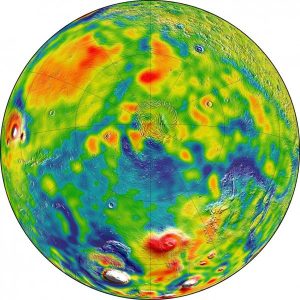
This is a map of Martian gravity looking down on the North Pole (center). White and red are areas of higher gravity; blue indicates areas of lower gravity. Credit: MIT/UMBC-CRESST/GSFC
A new map of Mars’ gravity made with three NASA spacecraft is the most detailed to date, providing a revealing glimpse into the hidden interior of the Red Planet.
“Gravity maps allow us to see inside a planet, just as a doctor uses an X-ray to see inside a patient,” said Antonio Genova of the Massachusetts Institute of Technology (MIT), Cambridge, Massachusetts. “The new gravity map will be helpful for future Mars exploration, because better knowledge of the planet’s gravity anomalies helps mission controllers insert spacecraft more precisely into orbit about Mars. Furthermore, the improved resolution of our gravity map will help us understand the still-mysterious formation of specific regions of the planet.” Genova, who is affiliated with MIT but is located at NASA’s Goddard Space Flight Center in Greenbelt, Maryland, is the lead author of a paper on this research published online March 5 in the journal Icarus.
The improved resolution of the new gravity map suggests a new explanation for how some features formed across the boundary that divides the relatively smooth northern lowlands from heavily cratered southern highlands. Also, the team confirmed that Mars has a liquid outer core of molten rock by analyzing tides in the Martian crust and mantle caused by the gravitational pull of the sun and the two moons of Mars. Finally, by observing how Mars’ gravity changed over 11 years — the period of an entire cycle of solar activity — the team inferred the massive amount of carbon dioxide that freezes out of the atmosphere onto a Martian polar ice cap when it experiences winter. They also observed how that mass moves between the south pole and the north pole with the change of season in each hemisphere.
The map was derived using Doppler and range tracking data collected by NASA’s Deep Space Network from three NASA spacecraft in orbit around Mars: Mars Global Surveyor (MGS), Mars Odyssey (ODY), and the Mars Reconnaissance Orbiter (MRO). Like all planets, Mars is lumpy, which causes the gravitational pull felt by spacecraft in orbit around it to change. For example, the pull will be a bit stronger over a mountain, and slightly weaker over a canyon.
Slight differences in Mars’ gravity changed the trajectory of the NASA spacecraft orbiting the planet, which altered the signal being sent from the spacecraft to the Deep Space Network. These small fluctuations in the orbital data were used to build a map of the Martian gravity field.
The gravity field was recovered using about 16 years of data that were continuously collected in orbit around Mars. However, orbital changes from uneven gravity are tiny, and other forces that can perturb the motion of the spacecraft had to be carefully accounted for, such as the force of sunlight on the spacecraft’s solar panels and drag from the Red Planet’s thin upper atmosphere. It took two years of analysis and computer modeling to remove the motion not caused by gravity.
“With this new map, we’ve been able to see gravity anomalies as small as about 100 kilometers (about 62 miles) across, and we’ve determined the crustal thickness of Mars with a resolution of around 120 kilometers (almost 75 miles),” said Genova. “The better resolution of the new map helps interpret how the crust of the planet changed over Mars’ history in many regions.”
For example, an area of lower gravity between Acidalia Planitia and Tempe Terra was interpreted before as a system of buried channels that delivered water and sediments from Mars’ southern highlands into the northern lowlands billions of years ago when the Martian climate was wetter than it is today. The new map reveals that this low gravity anomaly is definitely larger and follows the boundary between the highlands and the lowlands. This system of gravity troughs is unlikely to be only due to buried channels because in places the region is elevated above the surrounding plains. The new gravity map shows that some of these features run perpendicular to the local topography slope, against what would have been the natural downhill flow of water.
An alternative explanation is that this anomaly may be a consequence of a flexure or bending of the lithosphere — the strong, outermost layer of the planet — due to the formation of the Tharsis region. Tharsis is a volcanic plateau on Mars thousands of miles across with the largest volcanoes in the solar system. As the Tharsis volcanoes grew, the surrounding lithosphere buckled under their immense weight.
The new gravity field also allowed the team to confirm indications from previous gravity solutions that Mars has a liquid outer core of molten rock. The new gravity solution improved the measurement of the Martian tides, which will be used by geophysicists to improve the model of Mars’ interior.
Changes in Martian gravity over time have been previously measured using the MGS and ODY missions to monitor the polar ice caps. For the first time, the team used MRO data to continue monitoring their mass. The team has determined that when one hemisphere experiences winter, approximately 3 trillion to 4 trillion tons of carbon dioxide freezes out of the atmosphere onto the northern and southern polar caps, respectively. This is about 12 to 16 percent of the mass of the entire Martian atmosphere. NASA’s Viking missions first observed this massive seasonal precipitation of carbon dioxide. The new observation confirms numerical predictions from the Mars Global Reference Atmospheric Model — 2010.
The research was funded by grants from NASA’s Mars Reconnaissance Orbiter mission and NASA’s Mars Data Analysis Program.
Reference:
Antonio Genova, Sander Goossens, Frank G. Lemoine, Erwan Mazarico, Gregory A. Neumann, David E. Smith, Maria T. Zuber. Seasonal and static gravity field of Mars from MGS, Mars Odyssey and MRO radio science. Icarus, 2016; 272: 228 DOI: 10.1016/j.icarus.2016.02.050
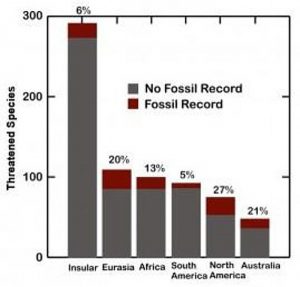
This image shows the number of threatened species and their representation in the fossil record by continent and ‘insular’ (islands). Credit: Roy E. Plotnick
Scientists struggle to compare the magnitude of Earth’s ongoing sixth mass-extinction event with the five great die-offs of prehistory. A new study by three paleontologists shows that the species now perishing may vanish without a permanent trace — and earlier extinctions may be underestimated as well.
“Comparing the current biodiversity crisis, often called the ‘sixth extinction,’ with those of the geological past requires equivalent data,” says Roy Plotnick, professor of earth and environmental sciences at the University of Illinois at Chicago.
He and two colleagues compared the “Red List” of endangered species with several ecological databases of living species and three paleontological databases of catalogued fossils. They ran a statistical analysis to indicate which threatened species were most likely to disappear with no mark of their existence.
The researchers were shocked to find that more than 85 percent of the mammal species at high risk of extinction lack a fossil record. Those at highest risk have about half the probability of being incorporated into the fossil record compared to those at lower risk.
Animals least likely to be found as fossils are “the small, cute and fuzzy ones, like rodents and bats,” Plotnick said. “Body size is an obvious factor — bigger things tend to leave a fossil record, as do things with larger geographical ranges.”
Viewed from the perspective of the fossil record alone, the magnitude of the current mammal die-off thus appears markedly reduced. The picture may be even more distorted for other land-dwelling vertebrates: only 3 percent of today’s threatened bird species and 1.6 percent of threatened reptile species have a known fossil record.
Comparing the scale of the current extinction episode, which is based primarily on terrestrial vertebrates, to earlier extinctions that are mostly calculated from the fossil record of hard-shelled marine invertebrates, is particularly problematic, Plotnick said, although ancient extinctions may also be underestimated by contemporary paleontologists.
Nevertheless, fossils will provide the only reliable record of life on Earth for posterity.
“There are species going extinct today that have never been described,” Plotnick said. “Others are going extinct that are known only because someone wrote it down.” All such species would thus be unknown in the far future, he said, if the written historical record is lost — as it might well be.
The fossil record, Plotnick points out, is much more durable than any human record.
“As humanity has evolved, our methods of recording information have become ever more ephemeral,” he said. “Clay tablets last longer than books. And who today can read an 8-inch floppy?” he shrugged. “If we put everything on electronic media, will those records exist in a million years? The fossils will.”
Other authors on the study, published earlier this month in Ecology Letters, are Felisa A. Smith of the University of New Mexico and S. Kathleen Lyons of the National Museum of Natural History in Washington, D.C.
Reference:
Roy E. Plotnick, Felisa A. Smith, S. Kathleen Lyons. The fossil record of the sixth extinction. Ecology Letters, 2016; DOI: 10.1111/ele.12589
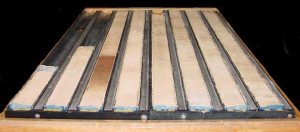
Red clay band in deep-sea sediment cores marks the onset of the PETM. Credit: J.Zachos
The earliest instrumental records of Earth’s climate, as measured by thermometers and other tools, start in the 1850s. To look further back in time, scientists investigate air bubbles trapped in ice cores, which expands the window to less than a million years. But to study Earth’s history over tens to hundreds of millions of years, researchers examine the chemical and biological signatures of deep sea sediment archives.
New research published today in Nature Geoscience by Richard Zeebe, professor at the University of Hawai’i — Mānoa School of Ocean and Earth Science and Technology (SOEST), and colleagues looks at changes of Earth’s temperature and atmospheric carbon dioxide (CO2) since the end of the age of the dinosaurs. Their findings suggest humans are releasing carbon about 10 times faster than during any event in the past 66 million years.
The research team developed a new approach and was able to determine the duration of the onset of an important past climate event, the Paleocene-Eocene Thermal Maximum, PETM for short, 56 million years ago.
“As far as we know, the PETM has the largest carbon release during the past 66 million years,” said Zeebe.
Zeebe and co-authors Andy Ridgwell (University of Bristol/ University of California) and James Zachos (University of California) combined analyses of chemical properties of PETM sediment cores with numerical simulations of Earth’s climate and carbon cycle. Their new method allows them to extract rates of change from a sediment record without the need for an actual sediment age model. Applied to the PETM, they calculated how fast the carbon was released, how fast Earth’s surface warmed, and constrained the time scale of the onset, which was at least 4,000 years.
The rate of carbon release during the PETM was determined to be much smaller than the current input of carbon to the atmosphere from human activities. Carbon release rates from human sources reached a record high in 2014 of about 37 billion metric tons of CO2. The researchers estimated the maximum sustained carbon release rate during the PETM had to be less than 4 billion metric tons of CO2 per year — about one-tenth the current rate.
“Because our carbon release rate is unprecedented over such a long time period in Earth’s history, it also means that we have effectively entered a ‘no-analogue’ state. This represents a big challenge for projecting future climate changes because we have no good comparison from the past,” said Zeebe.
Whereas large climate transitions in the past may have been relatively smooth, there is no guarantee for the future. The climate system is non-linear, which means its response to a forcing (such as our CO2 emissions) is a complex process involving a whole suite of components.
“If you kick a system very fast, it usually responds differently than if you nudge it slowly but steadily,” said Zeebe. “Also, it is rather likely that future disruptions of ecosystems will exceed the relatively limited extinctions observed at the PETM,” Zeebe added.
“In studying one of the most dramatic episodes of global change since the end of the age of the dinosaurs, these scientists show that we are currently in uncharted territory in the rate carbon is being released into the atmosphere and oceans,” says Candace Major, program director in the National Science Foundation (NSF)’s Division of Ocean Sciences, which funded the research.
Scientists like Zeebe also study the PETM to better understand long-term changes in Earth’s future climate. Most of the current climate debate concentrates only on this century but the PETM suggests that the consequences of our massive fossil fuel burning will have a much, much longer tail.
“Everyone is focused on what happens by 2100. But that’s only two generations from today. It’s like: If the world ends in 2100 we’re probably OK!” said Zeebe. “But it’s very clear that over a longer timescale there will be much bigger changes.”
Zeebe and his colleagues continue their work on the PETM to study other aspects of the event — for example, determining how severe ocean acidification was during the PETM and what impact it had on calcifying organisms in the ocean. This may provide insight about what to expect in the future as Earth’s climate continues to warm and oceans keep acidifying.
Funding for this research was provided by the U.S. National Science Foundation and the European Union.
Reference:
Richard E. Zeebe, Andy Ridgwell, James C. Zachos. Anthropogenic carbon release rate unprecedented during the past 66 million years. Nature Geoscience, 2016; DOI: 10.1038/ngeo2681
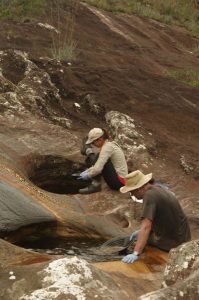
Panning for platinum grains in Brazil: Frank Reith, University of Adelaide, and Barbara Etschmann, Monash University. Credit: University of Adelaide
Australian scientists have uncovered the important role of specialist bacteria in the formation and movement of platinum and related metals in surface environments.
Published in the journal Nature Geoscience, the research has important implications for the future exploration of platinum group metals.
“These platinum group elements are strategically important metals, but finding new deposits is becoming increasingly difficult due to our limited understanding of the processes that affect the way they are cycled through surface environments,” says project leader Dr Frank Reith, Senior Lecturer in the University of Adelaide’s School of Biological Sciences and Visiting Researcher at CSIRO Land and Water.
“This research reveals the key role of bacteria in these processes. This improved bio geochemical understanding is not only important from a scientific perspective but we hope will also lead to new and better ways of exploring for these metals.”
Platinum group metals, especially platinum and palladium, are highly prized ‘noble’ metals used in a wide range of industrial processes. Ensuring adequate supplies is challenging and enhanced exploration is considered a global priority.
This project is a collaboration with Monash University (Professor Joël Brugger and Dr Barbara Etschmann) and Mineral Resources Tasmania (Ralph Bottrill). Other partners include the University of Queensland, University of Western Australia, RMIT and the Federal Institute for Geosciences and Natural Resources, Germany.
“Traditionally it was thought that these platinum group metals only formed under high pressure and temperature systems deep underground, and that when they were brought to the surface through weathering and uplift, they just sat there and nothing further happened to them,” says Dr Reith.
“We’ve shown that that is far from the case. We’ve linked specialised bacterial communities, found in biofilms on the grains of platinum group minerals at three separate locations around the world, with the dispersion and re-concentration of these elements in surface environments.
“We’ve shown that nuggets of platinum and related metals can be reformed at the surface through bacterial processes.”
The study has investigated platinum group elements from Brazil, Colombia and the Australian state of Tasmania.
Monash University Professor Joël Brugger says: “We needed to find fresh grains of platinum group minerals and extract them from soils and sediments in a manner that preserves fragile biofilms and tell-tale DNA. These grains are incredibly rare, and the chase took us all over the world, from Tasmania to Brazil.”
The researchers found live bacterial biofilms on mineral grains from all three sites using scanning electron microscopy. They had been suggested previously but never before shown to exist. They also showed that the mineral grains found at the Brazil site were bio-organic in origin, further supporting the role of the bacteria in the secondary formation of platinum grains.
“We’ve shown the biofilms occur across a range of platinum-group-metal grains and in different locations,” says Dr Reith. “And we’ve shown, that at the Brazil site at least, the entire process of formation of platinum and palladium was mediated by microbes.”
The work builds on more than 10 years of research in gold, which has uncovered the role of micro-organisms in driving Earth’s gold cycle.
Reference:
Frank Reith, Carla M. Zammit, Sahar S. Shar, Barbara Etschmann, Ralph Bottrill, Gordon Southam, Christine Ta, Matthew Kilburn, Thomas Oberthür, Andrew S. Ball, Joël Brugger. Biological role in the transformation of platinum-group mineral grains. Nature Geoscience, 2016; DOI: 10.1038/ngeo2679