
Home Blog Page 103

Shakedown in Oklahoma: To cut the number of bigger earthquakes, inject less saltwater

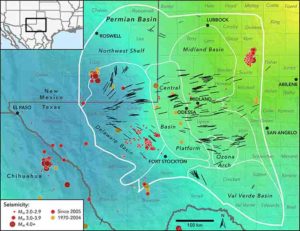
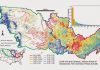
Annual geographic centroid locations for the years 2011-2016 (the underlying fault map is by Marsh and Holland, 2016), including volume-weighted well centroids, the 1σ radius of gyration, and M3+ earthquake centroids.
Figure 2 from Pollyea et al., Annual geographic centroid locations for the years 2011-2016 (the underlying fault map is by Marsh and Holland, 2016), including volume-weighted well centroids, the 1σ radius of gyration, and M3+ earthquake centroids.
Credit: Pollyea et al. and Geology

Boulder, Colo., USA: In Oklahoma, reducing the amount of saltwater (highly brackish water produced during oil and gas recovery) pumped into the ground seems to be decreasing the number of small fluid-triggered earthquakes. But a new study shows why it wasn’t enough to ease bigger earthquakes. The study, led by Ryan M. Pollyea of Virginia Tech in Blacksburg, Virginia, was published online ahead of print in Geology this week.

Starting around 2009, saltwater disposal (SWD) volume began increasing dramatically as unconventional oil and gas production increased rapidly throughout Oklahoma. As a result, the number of magnitude 3-plus earthquakes rattling the state has jumped from about one per year before 2011 to more than 900 in 2015. “Fluids are basically lubricating existing faults,” Pollyea explains. Oklahoma is now the most seismically active state in the lower 48 United States.

Previous studies linked Oklahoma SWD wells and seismic activity in time. Instead, Pollyea and colleagues studied that correlation in space, analyzing earthquake epicenters and SWD well locations. The team focused on the Arbuckle Group, a porous geologic formation in north-central Oklahoma used extensively for saltwater disposal. The earthquakes originate in the basement rock directly below the Arbuckle, at a depth of 4 to 8 kilometers.

The correlation was clear: “When we plotted the average annual well locations and earthquake epicenters, they moved together in space,” says Pollyea. The researchers also found that SWD volume and earthquake occurrence are spatially correlated up to 125 km. That’s the distance within which there seems to be a connection between injection volume, fluid movement, and earthquake occurrence.

By separating data by year from 2011 through 2016, Pollyea and colleagues also found that the spatial correlation for smaller earthquakes weakened in 2016, when new regulations reduced pumping volumes. Yet the spatial correlation for M3.0+ earthquakes persists unabated. In fact, two particularly alarming earthquakes shook the region in September 2016 and November 2016. The first, M5.8, was the largest ever recorded in Oklahoma. The second, M5.0, rocked the area surrounding the nation’s largest oil storage facility, containing millions of barrels of oil.

Pollyea’s theory for why reduced fluid pressure has only affected small faults: “It’s like the traffic on the freeway is still moving, but the smaller arterials are cut off.” He emphasizes that so far, they can’t predict single earthquakes or even blame specific wells for specific shaking. But to reduce large fluid-triggered earthquakes, Pollyea concludes, “It appears that the way to do it is to inject less water.”

Reference:
Geospatial analysis of Oklahoma (USA) earthquakes (2011-2016): Quantifying the limits of regional-scale earthquake mitigation measures Authors: Ryan M. Pollyea (Virginia Tech; [email protected]); Neda Mohammadi; John E. Taylor; Martin C. Chapman; DOI: 10.1130/G39945.1

Note: The above post is reprinted from materials provided by Geological Society of America.

Researchers show high-performance breathing in bones

This is part of a neck vertebra of the dwarf sauropod Europasaurus with deep cavities (asterisk) that presumably housed air sacs.
Credit: (c) Modified from Lambertz et al. (2018) Biol. Lett. doi:10.1098/rsbl.2017.0514

“The respiratory organs of vertebrates exhibit a tremendous degree of diversity, but the lung-air sac system of birds is truly unique among extant species,” says Dr. Markus Lambertz from the Institute for Zoology at the University of Bonn in Germany. Air sacs are bellows-like protrusions of the lung, and their volume changes cause the air flow in the separate gas exchanger. This functional separation is crucial for the exceptional efficiency of this respiratory system, but air sacs can do more: they can invade bones, a process called “pneumatization.”

Pneumatized bones are very light, because they are filled with air instead of the more heavy marrow, which was not only important for active flight, but also for the evolution of gigantism in sauropod dinosaurs. Through the presence of the resulting pneumatic cavities, it has long been known that air sac-like structures predate the origin of birds, since they were found both in the gigantic sauropods as well as in carnivorous dinosaurs. However, when and potentially how many times air sacs did evolve was inaccessible until now.

Pneumosteum: a hitherto unknown type of bony tissue as a diagnostic tool

Filippo Bertozzo was pretty surprised when he analyzed the bone structure in the course of his master’s thesis at the Steinmann-Institute for Geology, Mineralogy and Paleontology of the University of Bonn: “Bones that are in contact with air sacs exhibit a unique structure composed of very fine and densely packed fibers. After it turned out that this was true both in modern birds and extinct dinosaurs, we proposed to name this special kind of bony tissue “pneumosteum.” ”

Especially astonishing was the fact that pneumosteum was not only restricted to pneumatized bones, but was also found on the surface of conspicuous cavities present in cervical vertebrae of sauropod dinosaurs. Dr. Lambertz adds: “Such cavities had already previously been hypothesized as potential locations of air sacs, but only our microscopic analysis now provides convincing arguments for this.”

Other soft tissues, such as muscles, can leave traces in bone as well. “There are several types of fibers within bone tissue, but the pneumosteum is markedly different from them,” explains Prof. Dr. Martin Sander from the Steinmann-Institute in Bonn. This characteristic individuality of the pneumosteum thus makes it an excellent diagnostic tool for recognizing bones that were in contact with air sacs.

Access to the past and potential for future research

Given that pneumosteum was only discovered in the dinosaurian lineage now provides the opportunity to trace the evolutionary origin of air sacs. Especially the fact that pneumosteum is not restricted to pneumatized bones but was also found on bone surfaces opens up access to studying species that might have exhibited air sacs as part of their respiratory system, but lack obviously pneumatized bones.

Fossilization of air sacs is nearly impossible because their delicate structure is composed of only a few layers of cells. Professor Sander thus is convinced that the discovery of pneumosteum will lead to a greatly improved understanding of the evolution of the dinosaurian respiratory system. Dr. Lambertz concludes with: “This project once again highlights the importance of the interdisciplinary collaboration between zoologists and paleontologists for elucidating evolutionary history.”

Reference:
Markus Lambertz, Filippo Bertozzo, P. Martin Sander. Bone histological correlates for air sacs and their implications for understanding the origin of the dinosaurian respiratory system. Biology Letters, 2018; 14 (1): 20170514 DOI: 10.1098/rsbl.2017.0514

Note: The above post is reprinted from materials provided by University of Bonn.

Which came first: Complex life or high atmospheric oxygen?

pillow basalts from undersea volcanic eruptions,
By measuring the oxidation of iron in pillow basalts from undersea volcanic eruptions, UC Berkeley scientists have more precisely dated the oxygenation of the deep ocean, inferring from that when oxygen levels in the atmosphere rose to current high levels. Credit: National Science Foundation

We and all other animals wouldn’t be here today if our planet didn’t have a lot of oxygen in its atmosphere and oceans. But how crucial were high oxygen levels to the transition from simple, single-celled life forms to the complexity we see today?

A study by University of California, Berkeley geochemists presents new evidence that high levels of oxygen were not critical to the origin of animals.

The researchers found that the transition to a world with an oxygenated deep ocean occurred between 540 and 420 million years ago. They attribute this to an increase in atmospheric O2 to levels comparable to the 21 percent oxygen in the atmosphere today.

This inferred rise comes hundreds of millions of years after the origination of animals, which occurred between 700 and 800 million years ago.

“The oxygenation of the deep ocean and our interpretation of this as the result of a rise in atmospheric O2 was a pretty late event in the context of Earth history,” said Daniel Stolper, an assistant professor of earth and planetary science at UC Berkeley. “This is significant because it provides new evidence that the origination of early animals, which required O2 for their metabolisms, may have gone on in a world with an atmosphere that had relatively low oxygen levels compared to today.”

He and postdoctoral fellow Brenhin Keller will report their findings in a paper posted online Jan. 3 in advance of publication in the journal Nature. Keller is also affiliated with the Berkeley Geochronology Center.

Oxygen has played a key role in the history of Earth, not only because of its importance for organisms that breathe oxygen, but because of its tendency to react, often violently, with other compounds to, for example, make iron rust, plants burn and natural gas explode.

Tracking the concentration of oxygen in the ocean and atmosphere over Earth’s 4.5-billion-year history, however, isn’t easy. For the first 2 billion years, most scientists believe very little oxygen was present in the atmosphere or ocean. But about 2.5-2.3 billion years ago, atmospheric oxygen levels first increased. The geologic effects of this are evident: rocks on land exposed to the atmosphere suddenly began turning red as the iron in them reacted with oxygen to form iron oxides similar to how iron metal rusts.

Earth scientists have calculated that around this time, atmospheric oxygen levels first exceeded about a hundred thousandth of today’s level (0.001 percent), but remained too low to oxygenate the deep ocean, which stayed largely anoxic.

By 400 million years ago, fossil charcoal deposits first appear, an indication that atmospheric O2 levels were high enough to support wildfires, which require about 50 to 70 percent of modern oxygen levels, and oxygenate the deep ocean. How atmospheric oxygen levels varied between 2,500 and 400 million years ago is less certain and remains a subject of debate.

“Filling in the history of atmospheric oxygen levels from about 2.5 billion to 400 million years ago has been of great interest given O2’s central role in numerous geochemical and biological processes. For example, one explanation for why animals show up when they do is because that is about when oxygen levels first approached the high atmospheric concentrations seen today,” Stolper said. “This explanation requires that the two are causally linked such that the change to near-modern atmospheric O2 levels was an environmental driver for the evolution of our oxygen-requiring predecessors.”

In contrast, some researchers think the two events are largely unrelated. Critical to helping to resolve this debate is pinpointing when atmospheric oxygen levels rose to near modern levels. But past estimates of when this oxygenation occurred range from 800 to 400 million years ago, straddling the period during which animals originated.

When did oxygen levels change for a second time?

Stolper and Keller hoped to pinpoint a key milestone in Earth’s history: when oxygen levels became high enough – about 10 to 50 percent of today’s level – to oxygenate the deep ocean. Their approach is based on looking at the oxidation state of iron in igneous rocks formed undersea (referred to as “submarine”) volcanic eruptions, which produce “pillows” and massive flows of basalt as the molten rock extrudes from ocean ridges. Critically, after eruption, seawater circulates through the rocks. Today, these circulating fluids contain oxygen and oxidize the iron in basalts. But in a world with deep-oceans devoid of O2, they expected little change in the oxidation state of iron in the basalts after eruption.

“Our idea was to study the history of the oxidation state of iron in these basalts and see if we could pinpoint when the iron began to show signs of oxidation and thus when the deep ocean first started to contain appreciable amounts of dissolved O2,” Stolper said.

To do this, they compiled more than 1,000 published measurements of the oxidation state of iron from ancient submarine basalts. They found that the basaltic iron only becomes significantly oxidized relative to magmatic values between about 540 and 420 million years ago, hundreds of millions of years after the origination of animals. They attribute this change to the rise in atmospheric O2 levels to near modern levels. This finding is consistent with some but not all histories of atmospheric and oceanic O2 concentrations.

“This work indicates that an increase in atmospheric O2 to levels sufficient to oxygenate the deep ocean and create a world similar to that seen today was not necessary for the emergence of animals,” Stolper said. “Additionally, the submarine basalt record provides a new, quantitative window into the geochemical state of the deep ocean hundreds of millions to billions of years ago.”

Reference:
A record of deep-ocean dissolved O2 from the oxidation state of iron in submarine basalts, Nature (2018). DOI:10.1038/nature25009

Note: The above post is reprinted from materials provided by University of California – Berkeley.

An adaptation 150 million years in the making

Snapping Shrimp
Snapping Shrimp. Credit: Richard Palmer, University of Alberta

Just how do snapping shrimp snap? This was the question plaguing scientists who set out to uncover the mysterious mechanisms producing big biology in tiny crustaceans.

“All we’ve known until now is the endpoint of these super snapping claws,” said Rich Palmer, biological science professor at the University of Alberta and senior author on a new study on snapping shrimp claws. “What we now know is that a series of small changes in form led to these big functional changes, which essentially allow these shrimp the ability to break water, or snap.”

Through the course of two years of research investigating 114 species from 19 different shrimp families–exploration that took the scientists from the far reaches of Panama to advanced imaging facilities in Germany–the researchers discovered that this ability to break water or snap was preceded by evolution and adaptation millions of years in the making. The shrimp use the snapping for multiple reasons including communication, killing prey, territorial defense, and defending against predators.

“We realized that this spectacular ability to break water by making cavitation bubbles had to have been preceded by maybe millions of years of shrimp just shooting water. Somehow as they continue to shoot water, they got faster and faster, and they eventually broke the cavitation threshold to produce these snaps. It’s pretty extreme biology,” said Palmer.

Palmer explained that a bubble produced from the shrimp’s claw is actually a vacuum where surrounding water pressure collapses the sides of the bubble to produce a snap, something that can only happen when the water is shot so fast from the claw that it leaves before adjacent water can come in behind it. What he and his co-authors uncovered was that such extreme movements depend on both an energy-storage mechanism as well as a latching mechanism to release the stored energy quickly. Sort of similar to a bow and arrow.

“If you take an arrow and try to throw it, it doesn’t go very fast. But if you take the same amount of energy and pull back and then release, the arrow goes very quickly. Throwing just uses muscle contraction whereas storing energy and cocking releases the same amount of energy, but much more quickly.”

Palmer explained that the sum of multiple small changes in claw form–each of which is an innovation–adds up to a force so strong it breaks water by taking advantage of underwater physics, since liquids are not compressible. The end result–this remarkable ability to snap–is what is referred to as a key innovation.

“Key innovations are adaptations that permit a dramatic radiation or diversification of species, setting the stage for radiation into a wholly new kind of adaptive zone that wasn’t there before.”

Reference:
Parallel Saltational Evolution of Ultrafast Movements in Snapping Shrimp Claws. DOI: 10.1016/j.cub.2017.11.044

Note: The above post is reprinted from materials provided by University of Alberta.

A 508 million year old sea predator with a ‘jackknife’ head

Fossil specimen of Habelia optata from the Royal Ontario Museum.
Fossil specimen of Habelia optata from the Royal Ontario Museum. This specimen spectacularly shows some of the very large jaws under the head shield. Note also the long dorsal spines on the thorax.
Credit: Photo by Jean-Bernard Caron. Copyright: Royal Ontario Museum

Paleontologists at the University of Toronto (U of T) and the Royal Ontario Museum (ROM) in Toronto have entirely revisited a tiny yet exceptionally fierce ancient sea creature called Habelia optata that has confounded scientists since it was first discovered more than a century ago.

The research by lead author Cédric Aria, recent graduate of the PhD program in the department of ecology & evolutionary biology in the Faculty of Arts & Science at U of T, and co-author Jean-Bernard Caron, senior curator of invertebrate palaeontology at the ROM and an associate professor in the departments of ecology & evolutionary biology and Earth sciences at U of T, is published today in BMC Evolutionary Biology.

Approximately 2 cm in length with a tail as long as the rest of its body, the long-extinct Habelia optata belongs to the group of invertebrate animals called arthropods, which also includes such familiar creatures as spiders, insects, lobsters and crabs. It lived during the middle Cambrian period approximately 508 million years ago and comes from the renowned Burgess Shale fossil deposit in British Columbia. Habelia optata was part of the “Cambrian explosion,” a period of rapid evolutionary change when most major animal groups first emerged in the fossil record.

Like all arthropods, Habelia optata features a segmented body with external skeleton and jointed limbs. What remained unclear for decades, however, was the main sub-group of arthropods to which Habelia belonged. Early studies had mentioned mandibulates — a hyperdiverse lineage whose members possess antennae and a pair of specialized appendages known as mandibles, usually used to grasp, squeeze and crush their food. But Habelia was later left as one of the typically unresolved arthropods of the Burgess Shale.

The new analysis by the U of T-ROM researchers suggests that Habelia optata was instead a close relative of the ancestor of all chelicerates, the other sub-group of arthropods living today, named for the presence of appendages called chelicerae in front of the mouth and used to cut food. This is mostly due to the overall anatomy of the head in Habelia, and the presence of two small chelicerae-like appendages revealed in these fossils.

“Habelia now shows in great detail the body architecture from which chelicerates emerged, which allows us to solve some long-standing questions,” said Aria, who is now a post-doctoral researcher at the Nanjing Institute of Geology and Palaeontology, in China. “We can now explain why, for instance, horseshoe crabs have a reduced pair of limbs — the chilaria — at the back of their heads. Those are relics of fully-formed appendages, as chelicerates seem to originally have had heads with no less than seven pairs of limbs.”

Aria and Caron analyzed 41 specimens in total, the majority of which are new specimens acquired by ROM-led fieldwork parties to the Burgess Shale.

The research illustrates that the well-armoured body of Habelia optata, covered in a multitude of different spines, was divided into head, thorax and post-thorax, all bearing different types of appendages. The thorax displays five pairs of walking legs, while the post-thorax houses rounded appendages likely used in respiration.

“Scorpions and the now-extinct sea scorpions are also chelicerates with bodies divided into three distinct regions,” Aria explained. “We think that these regions broadly correspond to those of Habelia. But a major difference is that scorpions and sea scorpions, like all chelicerates, literally ‘walk on their heads,’ while Habelia still had walking appendages in its thorax.”

The researchers argue that this difference in anatomy allowed Habelia to evolve an especially complex head that makes this fossil species even more peculiar compared to known chelicerates. The head of Habelia contained a series of five appendages made of a large plate with teeth for mastication, a leg-like branch with stiff bristle-like spines for grasping, and an elongate, slender branch modified as a sensory or tactile appendage.

“This complex apparatus of appendages and jaws made Habelia an exceptionally fierce predator for its size,” said Aria. “It was likely both very mobile and efficient in tearing apart its preys.”

The surprising outcome of this study, despite the evolutionary relationship of Habelia with chelicerates, is that these unusual characteristics led instead the researchers to compare the head of Habelia with that of mandibulates from a functional perspective. Thus, the peculiar sensory branches may have been used in a similar fashion as mandibulates use antennae. Also, the overlapping plate-like appendages in the middle series of five are shown to open and close parallel to the underside of the head — much as they do in mandibulates, especially those that feed on animals with hardened carapaces.

Lastly, a seventh pair of appendages at the back of the head seems to have fulfilled a function similar to that of “maxillipeds” — appendages in mandibulates that assist with the other head limbs in the processing of food. This broad correspondence in function rather than in evolutionary origin is called “convergence.”

“From an evolutionary point of view, Habelia is close to the point of divergence between chelicerates and mandibulates,” Aria said. “But its similarities with mandibulates are secondary modifications of features that were in part already chelicerate in nature. This suggests that chelicerates originated from species with a high structural variability.”

The researchers conclude from the outstanding head structure, as well as from well-developed walking legs, that Habelia optata and its relatives were active predators of the Cambrian sea floors, hunting for small shelly sea creatures, such as small trilobites — arthropods with hard, mineralized exoskeletons that were already very diverse and abundant during Cambrian times.

“This builds onto the importance of carapaces and shells for evolutionary change during the Cambrian explosion, and expands our understanding of ecosystems at this time, showing another level of predator-prey relationship and its determining impact on the rise of arthropods as we know them today,” said Caron, who was Aria’s PhD supervisor when the bulk of this research was completed.

“The appearance and spread of animals with shells are considered to be one of the defining characteristics of the Cambrian explosion, and Habelia contributes to illustrate how important this ecological factor was for the early diversification of chelicerates and arthropods in general.”

Reference:
Cédric Aria, Jean-Bernard Caron. Mandibulate convergence in an armoured Cambrian stem chelicerate. BMC Evolutionary Biology, 2017; 17 (1) DOI: 10.1186/s12862-017-1088-7

Note: The above post is reprinted from materials provided by University of Toronto.

Modeling the effects of wastewater injection

Wastewater injected in an underground reservoir layer crossed by a fault triggers an earthquake
Wastewater injected in an underground reservoir layer crossed by a fault triggers an earthquake. The earthquake rupture grows larger than the zone pressurized by water injection. Credit: Galis et al., and Thomas Willard/Caltech Graphic Resources

In work that offers insight into the magnitude of the hazards posed by earthquake faults in general, seismologists have developed a model to determine the size of an earthquake that could be triggered by the underground injection of fluids produced as a by-product of hydraulic fracturing.

Hydraulic fracturing, or “fracking,” is a petroleum-extraction procedure in which millions of gallons of water (as well as sand and chemicals) are injected deep into underground shale beds to crack the rock and release natural gas and oil. According to the United States Geological Survey, fracking itself does not typically trigger earthquakes. Instead, the increased risk for seismicity is more strongly linked with the subsequent injection of the wastewater from fracking and other oil-extraction processes into massive disposal wells that are thousands of feet underground.

Previous attempts to model the relationship between injection of wastewater and the triggering of earthquakes suggested that the maximum magnitude of the seismic activity induced in this way would be proportional to the volume of the fluids injected. However, this interpretation fails to account for the fact that earthquakes can grow beyond the area impacted by fluid pressure, says Jean Paul Ampuero, professor of seismology at Caltech and co-author of a new study on the topic that appears in the journal Science Advances on December 20.

Combining theory and computer simulations of dynamic earthquake ruptures, Ampuero and his colleagues developed a model that explains how the size of injection-induced earthquakes depends on not only the volume of fluid being injected but also the energy stored on nearby faults. The result is a model that quantifies the distance that an earthquake can propagate beyond an injection site—which in turn predicts the maximum magnitude of an induced seismic event.

“Earthquakes induced by human activities involving underground injection of fluids or gas are a growing concern, a hazard that needs to be controlled in order to develop a safer and cleaner energy future,” Ampuero says.

This induced seismicity has been the subject of significant research in recent years and is also attracting researchers who, like Ampuero, are primarily interested in unraveling the physics of natural earthquakes. “This may be the closest researchers will ever get to a large-scale controlled earthquake experiment,” Ampuero says. For the new work, Ampuero teamed up with Martin Galis, postdoctoral researcher at King Abdullah University of Science and Technology (KAUST) in Saudi Arabia.

It is important to note that the new model only predicts the maximum possible magnitude of an earthquake rather than what the earthquake magnitude will actually be, the researchers say. It defines upper limits based on the amount of pent-up energy in the earth’s crust prior to fluid injection.

The new model offers insight into natural earthquakes, creating a framework for understanding what causes earthquakes to stop shaking. Earthquakes can be triggered by the pressure and disturbance caused by fluid injection, but they may grow beyond the zone immediately impacted by the wastewater injection by tapping into tectonic energy that is already stored nearby. As is the case for induced seismicity, natural earthquakes can start in small areas of the earth’s crust where that energy is concentrated. How large they grow is determined by the amount of energy in surrounding regions.

The paper is titled “Induced seismicity provides insight into why earthquake ruptures stop.” Ampuero and Galis’s co-authors include Paul Martin Mai of KAUST and Frédéric Cappa of the Université Côte d’Azur in Nice and Institut Universitaire de France in Paris. Funding came from the National Science Foundation, KAUST, and the Agence Nationale de la Recherché in France.

This is the second study this month from Ampuero that offers new insight into earthquake science. On December 1, Ampuero and colleagues from Centre national de la recherché scientifique in Paris found that it is possible to observe disturbances in the earth’s gravitational field almost instantly after an earthquake, raising the potential for the use of these disturbances as part of an early-warning system. (These disturbances travel at the speed of light, while the fastest seismic waves of an earthquake propagate at several kilometers per second, which means that monitoring the disturbances could potentially improve existing early-warning systems by seconds or even minutes.)

Ampuero and his colleagues found that seismometers in China and South Korea picked up perturbations in the earth’s gravitational field during the 9.1 Tohoku earthquake in Japan in 2011 via signals that appeared as tiny accelerations on seismometers more than a minute before the ground beneath the seismometers started to shake.

Reference:
M. Galis el al., “Induced seismicity provides insight into why earthquake ruptures stop,” Science Advances (2017). DOI: 10.1126/sciadv.aap7528

Note: The above post is reprinted from materials provided by California Institute of Technology.

Origins of photosynthesis in plants dated to 1.25 billion years ago

The Angmaat Formation above Tremblay Sound on the Baffin Island coast
The Angmaat Formation above Tremblay Sound on the Baffin Island coast. Bangiomorpha pubescens fossils occur in this roughly 500-meter thick rock formation.
Credit: Timothy Gibson

The world’s oldest algae fossils are a billion years old, according to a new analysis by earth scientists at McGill University. Based on this finding, the researchers also estimate that the basis for photosynthesis in today’s plants was set in place 1.25 billion years ago.

The study, published in the journal Geology, could resolve a long-standing mystery over the age of the fossilized algae, Bangiomorpha pubescens, which were first discovered in rocks in Arctic Canada in 1990. The microscopic organism is believed to be the oldest known direct ancestor of modern plants and animals, but its age was only poorly dated, with estimates placing it somewhere between 720 million and 1.2 billion years.

The new findings also add to recent evidence that an interval of Earth’s history often referred to as the Boring Billion may not have been so boring, after all. From 1.8 to 0.8 billion years ago, archaea, bacteria and a handful of complex organisms that have since gone extinct milled about the planet’s oceans, with little biological or environmental change to show for it. Or so it seemed. In fact, that era may have set the stage for the proliferation of more complex life forms that culminated 541 million years ago with the so-called Cambrian Explosion.

“Evidence is beginning to build to suggest that Earth’s biosphere and its environment in the latter portion of the ‘Boring Billion’ may actually have been more dynamic than previously thought,” says McGill PhD student Timothy Gibson, lead author of the new study.

Pinpointing the fossils’ age

To pinpoint the fossils’ age, the researchers pitched camp in a rugged area of remote Baffin Island, where Bangiomorpha pubescens fossils have been found There,despite the occasional August blizzard and tent-collapsing winds, they collected samples of black shale from rock layers that sandwiched the rock unit containing fossils of the alga. Using the Rhenium-Osmium (or Re-Os) dating technique, applied increasingly to sedimentary rocks in recent years, they determined that the rocks are 1.047 billion years old.

“That’s 150 million years younger than commonly held estimates, and confirms that this fossil is spectacular,” says Galen Halverson, senior author of the study and an associate professor in McGill’s Department of Earth and Planetary Sciences. “This will enable scientists to make more precise assessments of the early evolution of eukaryotes,” the celled organisms that include plants and animals.

Because Bangiomorpha pubescens is nearly identical to modern red algae, scientists have previously determined that the ancient alga, like green plants, used sunlight to synthesize nutrients from carbon dioxide and water. Scientists have also established that the chloroplast, the structure in plant cells that is the site of photosynthesis, was created when a eukaryote long ago engulfed a simple bacterium that was photosynthetic. The eukaryote then managed to pass that DNA along to its descendants, including the plants and trees that produce most of the world’s biomass today.

Origins of the chloroplast

Once the researchers had gauged the fossils’ age at 1.047 billion years, they plugged that figure into a “molecular clock,” a computer model used to calculate evolutionary events based on rates of genetic mutations. Their conclusion: the chloroplast must have been incorporated into eukaryotes roughly 1.25 billion years ago.

“We expect and hope that other scientists will plug this age for Bangiomorpha pubescens into their own molecular clocks to calculate the timing of important evolutionary events and test our results,” Gibson says. “If other scientists envision a better way to calculate when the chloroplast emerged, the scientific community will eventually decide which estimate seems more reasonable and find new ways to test it.”

Reference:
Timothy M. Gibson, Patrick M. Shih, Vivien M. Cumming, Woodward W. Fischer, Peter W. Crockford, Malcolm S.W. Hodgskiss, Sarah Wörndle, Robert A. Creaser, Robert H. Rainbird, Thomas M. Skulski, Galen P. Halverson. Precise age of Bangiomorpha pubescens dates the origin of eukaryotic photosynthesis. Geology, 2017; DOI: 10.1130/G39829.1

Note: The above post is reprinted from materials provided by McGill University.

New ancient dolphin species Urkudelphis chawpipacha discovered in Ecuador

Skull, Urkudelphis chawpipacha MO-1 (holotype) in right lateral view.
Skull, Urkudelphis chawpipacha MO-1 (holotype) in right lateral view. Credit: Tanaka et al (2017)

A new dolphin species likely from the Oligocene was discovered and described in Ecuador, according to a study published December 20, 2017 in the open-access journal PLOS ONE by Yoshihiro Tanaka from the Osaka Museum of Natural History, Japan, and colleagues.

Many marine fossils described in previous research have been from long-recognized temperate regions such as South Carolina, off the coast of Oregon, Hokkaido and New Zealand. Few equatorial and polar fossils are currently known.

While in the tropical region of Santa Elena Province, Ecuador, the authors of this study found a small dolphin skull, which they identified as representing a new species, Urkudelphis chawpipacha, based on facial features. The dolphin skull had a bone crest front and center on its face, above the eye sockets. This species stands apart from other Oligocene dolphins with its shorter and wider frontal bones located near the top of the head and the parallel-sided posterior part of its jaw. The authors also conducted a phylogenetic analysis which revealed that the new species may be the ancestor of the nearly-extinct Platanistoidea, or river dolphin, and may have lived during the Oligocene era.

The fossil is one of the few fossil dolphins from the equator, and is a reminder that Oligocene cetaceans may have ranged widely in tropical waters.

Reference:
A new tropical Oligocene dolphin from Montañita/Olón, Santa Elena, Ecuador. DOI: 10.1371/journal.pone.0188380

Note: The above post is reprinted from materials provided by PLOS.

Heat from below Pacific Ocean fuels Yellowstone, study finds

Yellowstone National Park

Recent stories in the national media are magnifying fears of a catastrophic eruption of the Yellowstone volcanic area, but scientists remain uncertain about the likelihood of such an event. To better understand the region’s subsurface geology, University of Illinois geologists have rewound and played back a portion of its geologic history, finding that Yellowstone volcanism is more far more complex and dynamic than previously thought.

“The heat needed to drive volcanism usually occurs in areas where tectonic plates meet and one slab of crust slides, or subducts, under another. However, Yellowstone and other volcanic areas of the inland western U.S. are far away from the active plate boundaries along the west coast,” said geology professor Lijun Liu who led the new research. “In these inland cases, a deep-seated heat source known as a mantle plume is suspected of driving crustal melting and surface volcanism.”

In the new study, reported in the journal Nature Geosciences, Liu and graduate students Quan Zhou and Jiashun Hu used a technique called seismic tomography to peer deep into the subsurface of the western U.S. and piece together the geologic history behind the volcanism. Using supercomputers, the team ran different tectonic scenarios to observe a range of possible geologic histories for the western U.S. over the past 20 million years. The effort yielded little support for the traditional mantle plume hypothesis.

“Our goal is to develop a model that matches up with what we see both below ground and on the surface today,” Zhou said. “We call it a hybrid geodynamic model because most of the earlier models either start with an initial condition and move forward, or start with the current conditions and move backward. Our model does both, which gives us more control over the relevant mantle processes.”

One of the many variables the team entered into their model was heat. Hot subsurface material — like that in a mantle plume — should rise vertically toward the surface, but that was not what the researchers saw in their models.

“It appears that the mantle plume under the western U.S. is sinking deeper into Earth through time, which seems counterintuitive,” Liu said. “This suggests that something closer to the surface — an oceanic slab originating from the western tectonic boundary — is interfering with the rise of the plume.”

The mantle plume hypothesis has been controversial for many years and the new findings add to the evidence for a revised tectonic scenario, the researchers said.

“A robust result from these models is that the heat source behind the extensive inland volcanism actually originated from the shallow oceanic mantle to the west of the Pacific Northwest coast,” Liu said. “This directly challenges the traditional view that most of the heat came from the plume below Yellowstone.”

“Eventually, we hope to consider the chemical data from the volcanic rocks in our model,” Zhou said. “That will help us further constrain the source of the magma because rocks from deep mantle plumes and near-surface tectonic plates could have different chemistries.”

As for likelihood of a violent demise of Yellowstone occurring anytime soon, the researchers say it is still too early to know.

“Of course, our model can’t predict specific future super-eruptions. However, looking back through 20 million years of history, we do not see anything that makes the present-day Yellowstone region particularly special — at least not enough to make us suspect that it may do something different from the past when many catastrophic eruptions have occurred,” Liu said. “More importantly, this work will give us a better understanding of some of the mysterious processes deep within Earth, which will help us better understand the consequences of plate tectonics, including the mechanism of earthquakes and volcanoes.”

Reference:
Quan Zhou, Lijun Liu, Jiashun Hu. Western US volcanism due to intruding oceanic mantle driven by ancient Farallon slabs. Nature Geoscience, 2017; DOI: 10.1038/s41561-017-0035-y

Note: The above post is reprinted from materials provided by University of Illinois at Urbana-Champaign. Original written by Lois Yoksoulian.

A hidden diversity of half-billion-year-old microscopic animal fossils

Credit: Uppsala universitet

A team of researchers from Uppsala University have uncovered a hidden diversity of microscopic animal fossils from over half a billion years ago lurking in rocks from the northern tip of Greenland.

The Cambrian explosion of animal diversity beginning ~541 million years ago is a defining episode in the history of life. This was a time when the seas first teemed with animal life, and the first recognisably modern ecosystems began to take shape.

Current accounts of this explosion in animal diversity rely heavily on records from fossilised shells and other hard parts, since these structures are the most likely to survive as fossils.

However, since most marine animals are soft-bodied this represents only a small fraction of the total diversity.

Rare sites of exceptional fossilisation, like the world-famous Burgess Shale, have revolutionised palaeontologists understanding of soft-bodied Cambrian life. Because of the special conditions of fossilisation at these localities, organisms that did not produce hard mineralized shells or skeletons are also preserved. Such sites offer a rare glimpse into the true diversity of these ancient seas, which were filled with a dazzling array of soft and squishy predatory worms and arthropods (the group containing modern crustaceans and insects).

One of the oldest of these truly exceptional fossil bonanzas is the Sirius Passet site in the far north of Greenland. Unfortunately, during their long history, the rocks at Sirius Passet have been heated up and baked to high temperatures as the northern margin of Greenland smashed into various tectonic plates and buried these rocks deep beneath the surface.

All this heating has boiled away the delicate organic remains that once formed the fossils of soft bodied animals at Sirius Passet, leaving only faint impressions of their remains.

Not far to the south of Sirius Passet, the rocks have escaped the worst effects of this heating. A team of palaeontologists from Uppsala (Ben Slater, Sebastian Willman, Graham Budd and John Peel) used a low-manipulation acid extraction procedure to dissolve some of these less intensively cooked mudrocks. To their astonishment, this simple preparation technique revealed a wealth of previously unknown microscopic animal fossils preserved in spectacular detail.

Most of the fossils were less than a millimetre long and had to be studied under the microscope. Fossils at the nearby Sirius Passet site typically preserve much larger animals, so the new finds fill an important gap in our knowledge of the small-scale animals that probably made up the majority of these ecosystems. Among the discoveries were the tiny spines and teeth of priapulid worms – small hook shaped structures that allowed these worms to efficiently burrow through the sediments and capture prey. Other finds included the tough outer cuticles and defensive spines of various arthropods, and perhaps most surprisingly, microscopic fragments of the oldest known pterobranch hemichordates – an obscure group of tube-dwelling filter feeders that are distant relatives of the vertebrates. This group became very diverse after the Cambrian Period and are among some of the most commonly found fossils in rocks from younger deposits, but were entirely unknown from the early Cambrian. This new source of fossils will also help palaeontologists to better understand the famously difficult to interpret fossils at the nearby Sirius Passet site, where the flattened animal fossils are usually complete, but missing crucial microscopic details.

“The sheer abundance of these miniature animal fossils means that we have only begun to scratch the surface of this overlooked resource, but it is already clear that this discovery will help to reshape our view of the non-shelly animals that crawled and swam among the early Cambrian seas more than half a billion years ago,” says Sebastian Willman, researcher at the Department of Earth Sciences, Uppsala University.

Reference:
Ben J. Slater et al. Widespread preservation of small carbonaceous fossils (SCFs) in the early Cambrian of North Greenland, Geology (2017). DOI: 10.1130/G39788.1

Note: The above post is reprinted from materials provided by Uppsala University.

Oldest fossils ever found show life on Earth began before 3.5 billion years ago

An example of one of the microfossils discovered in a sample of rock recovered from the Apex Chert, a rock formation in western Australia that is among the oldest and best-preserved rock deposits in the world.
An example of one of the microfossils discovered in a sample of rock recovered from the Apex Chert, a rock formation in western Australia that is among the oldest and best-preserved rock deposits in the world. The fossils were first described in 1993 but a 2017 study published by UCLA and UW-Madison scientists used sophisticated chemical analysis to confirm the microscopic structures found in the rock are indeed biological, rendering them — at 3.5 billion years — the oldest fossils yet found. Credit: J. William Schopf, UCLA

Researchers at UCLA and the University of Wisconsin-Madison have confirmed that microscopic fossils discovered in a nearly 3.5 billion-year-old piece of rock in Western Australia are the oldest fossils ever found and indeed the earliest direct evidence of life on Earth.

The study, published today in the Proceedings of the National Academy of Sciences, was led by J. William Schopf, professor of paleobiology at UCLA, and John W. Valley, professor of geoscience at the University of Wisconsin-Madison. The research relied on new technology and scientific expertise developed by researchers in the UW-Madison WiscSIMS Laboratory.

The study describes 11 microbial specimens from five separate taxa, linking their morphologies to chemical signatures that are characteristic of life. Some represent now-extinct bacteria and microbes from a domain of life called Archaea, while others are similar to microbial species still found today. The findings also suggest how each may have survived on an oxygen-free planet.

The microfossils—so called because they are not evident to the naked eye—were first described in the journal Science in 1993 by Schopf and his team, which identified them based largely on the fossils’ unique, cylindrical and filamentous shapes. Schopf, director of UCLA’s Center for the Study of Evolution and the Origin of Life, published further supporting evidence of their biological identities in 2002.

He collected the rock in which the fossils were found in 1982 from the Apex chert deposit of Western Australia, one of the few places on the planet where geological evidence of early Earth has been preserved, largely because it has not been subjected to geological processes that would have altered it, like burial and extreme heating due to plate-tectonic activity.

But Schopf’s earlier interpretations have been disputed. Critics argued they are just odd minerals that only look like biological specimens. However, Valley says, the new findings put these doubts to rest; the microfossils are indeed biological.

“I think it’s settled,” he says.

Using a secondary ion mass spectrometer (SIMS) at UW-Madison called IMS 1280—one of just a handful of such instruments in the world—Valley and his team, including department geoscientists Kouki Kitajima and Michael Spicuzza, were able to separate the carbon composing each fossil into its constituent isotopes and measure their ratios.

Isotopes are different versions of the same chemical element that vary in their masses. Different organic substances—whether in rock, microbe or animal—contain characteristic ratios of their stable carbon isotopes.

Using SIMS, Valley’s team was able to tease apart the carbon-12 from the carbon-13 within each fossil and measure the ratio of the two compared to a known carbon isotope standard and a fossil-less section of the rock in which they were found.

“The differences in carbon isotope ratios correlate with their shapes,” Valley says. “If they’re not biological there is no reason for such a correlation. Their C-13-to-C-12 ratios are characteristic of biology and metabolic function.”

Based on this information, the researchers were also able to assign identities and likely physiological behaviors to the fossils locked inside the rock, Valley says. The results show that “these are a primitive, but diverse group of organisms,” says Schopf.

The team identified a complex group of microbes: phototrophic bacteria that would have relied on the sun to produce energy, Archaea that produced methane, and gammaproteobacteria that consumed methane, a gas believed to be an important constituent of Earth’s early atmosphere before oxygen was present.

It took Valley’s team nearly 10 years to develop the processes to accurately analyze the microfossils—fossils this old and rare have never been subjected to SIMS analysis before. The study builds on earlier achievements at WiscSIMS to modify the SIMS instrument, to develop protocols for sample preparation and analysis, and to calibrate necessary standards to match as closely as possible the hydrocarbon content to the samples of interest.

In preparation for SIMS analysis, the team needed to painstakingly grind the original sample down as slowly as possible to expose the delicate fossils themselves—all suspended at different levels within the rock and encased in a hard layer of quartz—without actually destroying them. Spicuzza describes making countless trips up and down the stairs in the department as geoscience technician Brian Hess ground and polished each microfossil in the sample, one micrometer at a time.

Each microfossil is about 10 micrometers wide; eight of them could fit along the width of a human hair.

Valley and Schopf are part of the Wisconsin Astrobiology Research Consortium, funded by the NASA Astrobiology Institute, which exists to study and understand the origins, the future and the nature of life on Earth and throughout the universe.

Studies such as this one, Schopf says, indicate life could be common throughout the universe. But importantly, here on Earth, because several different types of microbes were shown to be already present by 3.5 billion years ago, it tells us that “life had to have begun substantially earlier—nobody knows how much earlier—and confirms it is not difficult for primitive life to form and to evolve into more advanced microorganisms,” says Schopf.

Earlier studies by Valley and his team, dating to 2001, have shown that liquid water oceans existed on Earth as early as 4.3 billion years ago, more than 800 million years before the fossils of the present study would have been alive, and just 250 million years after the Earth formed.

“We have no direct evidence that life existed 4.3 billion years ago but there is no reason why it couldn’t have,” says Valley. “This is something we all would like to find out.”

UW-Madison has a legacy of pushing back the accepted dates of early life on Earth. In 1953, the late Stanley Tyler, a geologist at the university who passed away in 1963 at the age of 57, was the first person to discover microfossils in Precambrian rocks. This pushed the origins of life back more than a billion years, from 540 million to 1.8 billion years ago.

“People are really interested in when life on Earth first emerged,” Valley says. “This study was 10 times more time-consuming and more difficult than I first imagined, but it came to fruition because of many dedicated people who have been excited about this since day one … I think a lot more microfossil analyses will be made on samples of Earth and possibly from other planetary bodies.”

Reference:
J. William Schopf el al., “SIMS analyses of the oldest known assemblage of microfossils document their taxon-correlated carbon isotope compositions,” PNAS (2017). DOI: 10.1073/pnas.1718063115

Note: The above post is reprinted from materials provided by University of Wisconsin-Madison.

Ancient fossil microorganisms indicate that life in the universe is common

This is a 3.465 billion year-old fossil microorganism from Western Australia.
Credit: J. William Schopf/UCLA Center for the Study of Evolution and the Origin of Life

A new analysis of the oldest known fossil microorganisms provides strong evidence to support an increasingly widespread understanding that life in the universe is common.

The microorganisms, from Western Australia, are 3.465 billion years old. Scientists from UCLA and the University of Wisconsin-Madison report today in the journal Proceedings of the National Academy of Sciences that two of the species they studied appear to have performed a primitive form of photosynthesis, another apparently produced methane gas, and two others appear to have consumed methane and used it to build their cell walls.

The evidence that a diverse group of organisms had already evolved extremely early in the Earth’s history — combined with scientists’ knowledge of the vast number of stars in the universe and the growing understanding that planets orbit so many of them — strengthens the case for life existing elsewhere in the universe because it would be extremely unlikely that life formed quickly on Earth but did not arise anywhere else.

“By 3.465 billion years ago, life was already diverse on Earth; that’s clear — primitive photosynthesizers, methane producers, methane users,” said J. William Schopf, a professor of paleobiology in the UCLA College, and the study’s lead author. “These are the first data that show the very diverse organisms at that time in Earth’s history, and our previous research has shown that there were sulfur users 3.4 billion years ago as well.

“This tells us life had to have begun substantially earlier and it confirms that it was not difficult for primitive life to form and to evolve into more advanced microorganisms.”

Schopf said scientists still do not know how much earlier life might have begun.

“But, if the conditions are right, it looks like life in the universe should be widespread,” he said.

The study is the most detailed ever conducted on microorganisms preserved in such ancient fossils. Researchers led by Schopf first described the fossils in the journal Science in 1993, and then substantiated their biological origin in the journal Nature in 2002. But the new study is the first to establish what kind of biological microbial organisms they are, and how advanced or primitive they are.

For the new research, Schopf and his colleagues analyzed the microorganisms with cutting-edge technology called secondary ion mass spectroscopy, or SIMS, which reveals the ratio of carbon-12 to carbon-13 isotopes — information scientists can use to determine how the microorganisms lived. (Photosynthetic bacteria have different carbon signatures from methane producers and consumers, for example.) In 2000, Schopf became the first scientist to use SIMS to analyze microscopic fossils preserved in rocks; he said the technology will likely be used to study samples brought back from Mars for signs of life.

The Wisconsin researchers, led by geoscience professor John Valley, used a secondary ion mass spectrometer — one of just a few in the world — to separate the carbon from each fossil into its constituent isotopes and determine their ratios.

“The differences in carbon isotope ratios correlate with their shapes,” Valley said. “Their C-13-to-C-12 ratios are characteristic of biology and metabolic function.”

The fossils were formed at a time when there was very little oxygen in the atmosphere, Schopf said. He thinks that advanced photosynthesis had not yet evolved, and that oxygen first appeared on Earth approximately half a billion years later before its concentration in our atmosphere increased rapidly starting about 2 billion years ago.

Oxygen would have been poisonous to these microorganisms, and would have killed them, he said.

Primitive photosynthesizers are fairly rare on Earth today because they exist only in places where there is light but no oxygen — normally there is abundant oxygen anywhere there is light. And the existence of the rocks the scientists analyzed is also rather remarkable: The average lifetime of a rock exposed on the surface of the Earth is about 200 million years, Schopf said, adding that when he began his career, there was no fossil evidence of life dating back farther than 500 million years ago.

“The rocks we studied are about as far back as rocks go.”

While the study strongly suggests the presence of primitive life forms throughout the universe, Schopf said the presence of more advanced life is very possible but less certain.

One of the paper’s co-authors is Anatoliy Kudryavtsev, a senior scientist at UCLA’s Center for the Study of Evolution and the Origin of Life, of which Schopf is director. The research was funded by the NASA Astrobiology Institute.

In May 2017, a paper in PNAS by Schopf, UCLA graduate student Amanda Garcia and colleagues in Japan showed the Earth’s near-surface ocean temperature has dramatically decreased over the past 3.5 billion years. The work was based on their analysis of a type of ancient enzyme present in virtually all organisms.

In, 2015 Schopf was part of an international team of scientists that described in PNAS their discovery of the greatest absence of evolution ever reported — a type of deep-sea microorganism that appears not to have evolved over more than 2 billion years.

Reference:
J. William Schopf, Kouki Kitajima, Michael J. Spicuzza, Anatoliy B. Kudryavtsev, John W. Valley. SIMS analyses of the oldest known assemblage of microfossils document their taxon-correlated carbon isotope compositions. Proceedings of the National Academy of Sciences, 2017; 201718063 DOI: 10.1073/pnas.1718063115

Note: The above post is reprinted from materials provided by University of California – Los Angeles.

Computing the way to the center of the Earth

Using JSC's JUQUEEN supercomputer, University of Cologne researchers were able to simulate the structure of silicon dioxide at a variety of different pressures. The image shows how the the shape and structure of the atoms change as pressure increases.
Using JSC’s JUQUEEN supercomputer, University of Cologne researchers were able to simulate the structure of silicon dioxide at a variety of different pressures. The image shows how the the shape and structure of the atoms change as pressure increases.
Credit: Prescher, C., Prakapenka, V.B., Stefanski, J., Jahn, S., Skinner, L.B., Wang, Y.

In order to more fully comprehend the complexities of Earth’s interior, humanity has to dig deep — literally. To date, scientists have been able to bore a little over 12 kilometres deep, or about half the average depth of the Earth’s crust.

Why would researchers need to peer into deeper depths? Both to better understand how the earth formed and how the interior might have an effect on our life on the surface of the Earth today, such as by the magnitude and reversals of the Earth’s magnetic field.

However, experiments investigating materials at conditions deep in the Earth are challenging, meaning that to continue gaining insights into these phenomena, experimentalists must turn to modeling and simulation to support and complement their efforts.

To that end, researchers at the University of Cologne’s Institute for Geology and Mineralogy have turned to computing resources at the Jülich Supercomputing Centre (JSC) to help better comprehend how materials behave in the extreme conditions below the surface of the Earth.

The team, led by University of Cologne’s Prof. Dr. Sandro Jahn and Dr. Clemens Prescher, has been using JSC’s JUQUEEN supercomputer to simulate the structure of melts by studying silicate glasses as a model system for melts under ultra-high pressures. The team recently published its initial findings in the Proceedings of the National Academy of Sciences.

“Understanding properties of silicate melts and glasses at ultra-high pressure is crucial to understand how the Earth has formed in its infancy, where impacts of large asteroids led to a completely molten Earth,” said Prescher. “In fact, all of the internal layered structure we know today was formed in such events.”

It’s a glass

When most people think of the word glass, they think of windows or bottles. Glass, however, is a term describing a wide range of non-crystal solids. Atoms in a solid can organize themselves in a variety of ways, and materials considered glasses have some of the more “chaotic” atomic structures possible in solids.

A glass can also be seen as a frozen melt. Thus by understanding the properties of glasses at ultra-high pressures, researchers can gain insights into the melts’ properties in the deep Earth’s interior, providing a clearer view into the physical processes which made the Earth and might be still occurring today.

Using a variety of geophysics measurements and laboratory experiments, researchers are capable of gaining some degree of insight into material properties under certain pressure conditions without actually being able to make direct observations.

Enter supercomputing. As computing power has gotten stronger, geophysics researchers are able to complement and expand their studies of these inner-Earth processes through the use of numerical models.

In the case of the University of Cologne researchers, they wanted to get a more detailed insight into the structure of the silicate glass than their experimental efforts were able to provide. The team utilized ab initio calculations of atoms’ electronic structures and put these calculations in motion using molecular dynamics simulations. Ab initio calculations mean that researchers start with no assumptions in their mathematical models, making a simulation more computationally expensive but also more accurate.

Due to having many calculations for each atom’s structure and computationally demanding molecular dynamics calculations, the team keeps its simulations relatively small in scale — the team’s largest runs typically have between 200-250 atoms in the simulation. This size allows the team to run simulations under a variety of different pressure and temperature combinations, ultimately allowing it to calculate a small but representative sample of material interactions under a variety of conditions.

To test its model and lay the foundation for modeling increasingly complex material interactions, the team decided to simulate silicon dioxide (SiO2), a common, well-studied material, most well-known as the compound that forms quartz.

Among silicate materials, SiO2 is a good candidate on which to base computational models — researchers already understand how its atomic structure patterns and material properties change under a variety of pressure conditions.

The team chose to focus on a relatively simple, well-known material in order to expand the range of pressure it could simulate and attempt to validate the model with experimental data. Using JUQUEEN, the team was able to extend its investigation well beyond the experimentally achieved 172 Gigapascals, corresponding to 1.72 million times the Earth’s atmospheric pressure, or roughly the amount of pressure the Eiffel Tower would apply by pressing down on the tip of a person’s finger.

The researchers also found that at high pressures, oxygen atoms are much more compressible than silicon atoms. The varying size ratio between the two leads to hugely different glass structures of SiO2 at low and at high pressures.

Digging Deeper

By validating its model, the team feels confident that it can move on to more complex materials and interactions. Specifically, the team hopes to expand its investigations deeper into the realm of melts. Think of lava as a melt — molten rock erupts from below the earth’s surface, rapidly cools when it reaches the surface, and may form obsidian, a glassy rock.

In order to do more advanced simulations of melts, the team would like to be able to expand its simulations to account for a wider range of chemical processes as well as expand the number of atoms in a typical run.

As JSC and the other two Gauss Centre for Supercomputing (GCS) facilities — the High-Performance Computing Center Stuttgart and the Leibniz Supercomputing Centre in Garching — install next-generation supercomputers, the team is confident that they will be able to gain even greater insight into the wide range of complex material interactions happening many kilometres below the surface.

“A faster machine will enable us to simulate more complex melts and glasses, which is crucial to go from model systems, such as SiO2 glass in this study, to the real-world compositions we expect in the Earth’s interior,” Prescher said.

Prescher also noted that JSC support staff helped the team work more efficiently by assisting with implementing the team’s code.

This type of support represents GCS’ plans for the future. With the promise and opportunity connected to next-generation computing architectures, GCS centre leadership realizes that closer collaboration with users and application co-design will be a key component for ensuring researchers can efficiently solve bigger, more complex scientific problems.

Whether studying deep in space among the stars or deep below the surface of the Earth, the collaboration between supercomputing centres and researchers will play an increasingly important role in solving the world’s toughest scientific challenges.

This research used Gauss Centre for Supercomputing resources based at the Jülich Supercomputing Centre.

Reference:
Clemens Prescher, Vitali B. Prakapenka, Johannes Stefanski, Sandro Jahn, Lawrie B. Skinner, Yanbin Wang. Beyond sixfold coordinated Si in SiO2glass at ultrahigh pressures. Proceedings of the National Academy of Sciences, 2017; 114 (38): 10041 DOI: 10.1073/pnas.1708882114

Note: The above post is reprinted from materials provided by Gauss Centre for Supercomputing.

Primitive fossil bear with a sweet tooth identified from Canada’s High Arctic

Digital reconstruction of the Canadian Arctic fossil bear
Digital reconstruction of the Canadian Arctic fossil bear, Protarctos abstrusus.
Credit: Xiaoming Wang

Researchers from the Canadian Museum of Nature and the Natural History Museum of Los Angeles County have identified remains of a 3.5-million-year-old bear from a fossil-rich site in Canada’s High Arctic. Their study shows not only that the animal is a close relative of the ancestor of modern bears — tracing its ancestry to extinct bears of similar age from East Asia — but that it also had a sweet tooth, as determined by cavities in the teeth.

The scientists identify the bear as Protarctos abstrusus, which was previously only known from a tooth found in Idaho. Showing its transitional nature, the animal was slightly smaller than a modern black bear, with a flatter head and a combination of primitive and advanced dental characters. The results are published today in the journal Scientific Reports.

“This is evidence of the most northerly record for primitive bears, and provides an idea of what the ancestor of modern bears may have looked like,” says Dr. Xiaoming Wang, lead author of the study and Head of Vertebrate Paleontology at the Natural History Museum of Los Angeles County (NHMLA). “Just as interesting is the presence of dental caries, showing that oral infections have a long evolutionary history in the animals, which can tell us about their sugary diet, presumably from berries. This is the first and earliest documented occurrence of high-calorie diet in basal bears, likely related to fat storage in preparation for the harsh Arctic winters.”

The research team, which included co-author Dr. Natalia Rybczynski, a Research Associate and paleontologist with the Canadian Museum of Nature, were able to study recovered bones from the skull, jaws and teeth, as well as parts of the skeleton from two individuals.

The bones were discovered over a 20-year period by Canadian Museum of Nature scientists, including Dr. Rybczynski, at a fossil locality on Ellesmere Island known as the Beaver Pond site. The peat deposits include fossilized plants indicative of a boreal-type wetland forest, and have yielded other fossils, including fish, beaver, small carnivores, deerlets, and a three-toed horse.

The findings show that the Ellesmere Protarctos lived in a northern boreal-type forest habitat, where there would have been 24-hour darkness in winter, as well as about six months of ice and snow.

“It is a significant find, in part because all other ancient fossil ursine bears, and even some modern bear species like the sloth bear and sun bear, are associated with lower-latitude, milder habitats,” says co-author Dr. Rybczynski. “So, the Ellesmere bear is important because it suggests that the capacity to exploit the harshest, most northern forests on the planet is not an innovation of modern grizzlies and black bears, but may have characterized the ursine lineage from its beginning.”

Dr. Wang analyzed characteristics of fossil bear remains from around the world to identify the Ellesmere remains as Protarctos and to establish its evolutionary lineage in relation to other bears. Modern bears are wide-ranging, found from equatorial to polar regions. Their ancestors, mainly found in Eurasia, date to about 5 million years ago.

Fossil records of ursine bears (all living bears plus their ancestors, except the giant panda, which is an early offshoot) are poor and their early evolution controversial. The new fossil represents one of the early immigrations from Asia to North America but it is probably not a direct ancestor to the modern American black bear.

Of further significance is that the teeth of both Protarctos individuals show signs of well-developed dental cavities, which were identified following CT scans by Stuart White, a retired professor with the UCLA School of Dentistry. The cavities underline that these ancient bears consumed large amounts of sugary foods such as berries. Indeed, berry plants are found preserved in the same Ellesmere deposits as the bear remains.

“We know that modern bears consume sugary fruits in the fall to promote fat accumulation that allows for winter survival via hibernation. The dental cavities in Protarctos suggest that consumption of sugar-rich foods like berries, in preparation for winter hibernation, developed early in the evolution of bears as a survival strategy,” explains Rybczynski.

Reference:
Xiaoming Wang, Natalia Rybczynski, C. Richard Harington, Stuart C. White, Richard H. Tedford. A basal ursine bear (Protarctos abstrusus) from the Pliocene High Arctic reveals Eurasian affinities and a diet rich in fermentable sugars. Scientific Reports, 2017; 7 (1) DOI: 10.1038/s41598-017-17657-8

Note: The above post is reprinted from materials provided by Natural History Museum of Los Angeles County.

60 Million Year Old Meteorite Strike in Scotland

Thin section view of meteoritic ejecta deposit si
Thin section view of meteoritic ejecta deposit site 1. Note fractured quartz and pervasive fabric. Field of view 4 mm XPolars. Credit: Simon Drake.

Geologists exploring volcanic rocks on Scotland’s Isle of Skye found something out-of-this-world instead: ejecta from a previously unknown, 60 million-year-old meteorite impact. The discovery, the first meteorite impact described within the British Paleogene Igneous Province (BPIP), opens questions about the impact and its possible connection to Paleogene volcanic activity across the North Atlantic.

Lead author Simon Drake, an associate lecturer in geology at Birkbeck University of London, zeroed in on a meter-thick layer at the base of a 60.0 million-year-old lava flow. “We thought it was an ignimbrite (a volcanic flow deposit),” says Drake. But when he and colleagues analyzed the rock using an electron microprobe, they discovered that it contained rare minerals straight from outer space: vanadium-rich and niobium-rich osbornite.

These mineral forms have never been reported on Earth. They have, however, been collected by NASA’s Stardust Comet Sample Return Mission as space dust in the wake of the Wild 2 comet. What’s more, the osbornite is unmelted, suggesting that it was an original piece of the meteorite. The team also identified reidite, an extremely high pressure form of zircon which is only ever associated in nature with impacts, along with native iron and other exotic mineralogy linked to impacts such as barringerite.

A second site, seven kilometers away, proved to be a two-meter-thick ejecta layer with the same strange mineralogy. The researchers pin the impact to sometime between 60 million and 61.4 million years ago (Ma), constrained by a 60 Ma radiometric age for the overlying lava flow, and 61.4 Ma for a basalt clast embedded within the ejecta layer. The team published their discovery in Geology this week.

The discovery opens many questions. Is the same ejecta layer found elsewhere in the BPIP? Where exactly did the meteorite hit? Could the impact have triggered the outpouring of lava that began at the same time, or be related to volcanism in the larger North Atlantic Igneous Province? So far, Drake has collected samples from another site on Skye that also yield strange mineralogy, including another mineral strikingly similar to one found in comet dust.

Drake says he was surprised that the ejecta layer had not been identified before. After all, the Isle of Skye is famously well-trampled by geologists. The second site had not been sampled in years. As for the first site, Drake suspects the steep, rough, and very boggy terrain probably discouraged previous workers from sampling the layer. “We were sinking in up to our thighs. I distinctly recall saying to (co-author) Andy Beard, ‘this had better be worth it.'” Now, says Drake, “It was worth it.”

Reference:
Simon M. Drake, Andrew D. Beard, Adrian P. Jones, David J. Brown, A. Dominic Fortes, Ian L. Millar, Andrew Carter, Jergus Baca, Hilary Downes. Discovery of a meteoritic ejecta layer containing unmelted impactor fragments at the base of Paleocene lavas, Isle of Skye, Scotland. Geology, 2017; DOI: 10.1130/G39452.1

Note: The above post is reprinted from materials provided by Geological Society of America.

Residual strain despite mega earthquake

The Nazca plate moves eastwards with a rate of 6.6 cm per year.
The Nazca plate moves eastwards with a rate of 6.6 cm per year. Off the Chilean coast it collides with the South American plate and is submerged beneath it. In this process, strains build up between the plates – until they break and the earth trembles. Credit: Image reproduced from the GEBCO world map 2014.

On 22 May 1960, an earthquake shook the southern Chilean continental margin on a length of about 1,000 kilometers. Estimates suggest that around 1,600 people died as a direct result of the quake and the following tsunami, leaving around two million people homeless. With a strength of 9.5 on the moment magnitude scale, the Valdivia earthquake from 1960 still ranks number one on the list of strongest earthquakes ever measured.

More than half a century later, on 25 December 2016, the earth was trembling around the southern Chilean island of Chiloé. With a strength of 7,5 Mw this event can be described as rather moderate by Chilean standards. But the fact that it broke the same section of the Chilean subduction zone as the 1960 earthquake is quite interesting for scientists. As researchers from the GEOMAR Helmholtz Centre for Ocean Research Kiel and the Universidad de Chile have now published in the journal Geophysical Journal International, part of the energy of the 2016 quake apparently dates back to before 1960. “So, the 1960 quake, despite its immense strength, must have left some strain in the underground, ” says Dr. Dietrich Lange, geophysicist at GEOMAR and lead author of the study.

To understand why Chile is being hit so frequently by heavy earthquakes, one has to look at the seabed off the coast. It belongs to the so-called Nazca plate, a tectonic plate, which moves eastwards with a rate of 6.6 cm per year. Off the Chilean coast it collides with the South American plate and is submerged beneath it. In this process, strains build up between the plates — until they break and the earth trembles.

During such an earthquake, the strain is released within minutes. During the 1960 earthquake for example, the plates shifted by more than 30 meters against each other. As a result, landmasses were lifted up or down several meters with a fundamental change of Chilean landscapes and coastline. “The scale of the slip also gives information about the accumulated energy between the two plates,” explains Dr. Lange.

From the time interval (56 years), the known speed of the Nazca plate, and further knowledge of the subduction zone, the German-Chilean team has calculated the accumulated energy and thus the theoretical slip of the 2016 earthquake to about 3.4 meters. But the analysis of seismic data and GPS surveys showed a slip of more than 4.5 m. “The strain must have had accumulated for more than 56 years. It is older than the last earthquake in the same region,” says Dr. Lange.

Similar results have recently been obtained in another subduction zones. Along with them, the new study suggests that for risk assessment in earthquake-prone areas, not just a single seismic cycle from one earthquake to the next should be considered. “The energy can be greater than that resulting from the usual calculations, which can, for example, have an impact on recommendations for earthquake-proof construction,” says Dr. Lange.

Reference:
Dietrich Lange, Javier Ruiz, Sebastián Carrasco, Paula Manríquez. The Chiloé Mw 7.6 earthquake of 25 December 2016 in Southern Chile and its relation to the Mw 9.5 1960 Valdivia earthquake. Geophysical Journal International, 2017; DOI: 10.1093/gji/ggx514

Note: The above post is reprinted from materials provided by Helmholtz Centre for Ocean Research Kiel (GEOMAR).

Geologists report new discoveries about Kansas, Oklahoma earthquakes

The number of earthquakes striking south-central Kansas has skyrocketed
The number of earthquakes striking south-central Kansas has skyrocketed. This map shows the 2,522 earthquakes that occurred from May 2015 to July 2017 in all of Sumner County, small segments of Sedgwick County to the north and a portion of Harper County to the west. During this period, Sumner County alone experienced about 2,400 earthquakes, ranging from 0.4 to 3.6 magnitude. A 3.0 magnitude earthquake is usually felt by humans. Red circles indicate earthquakes. Triangles indicate sensors the geologists used to study the earthquakes. Citation: K.A. Nolte, G.P. Tsoflias, T.S. Bidgoli, W.L. Watney, Shear-wave anisotropy reveals pore fluid pressure-induced seismicity in the U.S. midcontinent. Credit: Sci. Adv. 3, e1700443 (2017).

As concern rises about earthquakes induced by human activity like oil exploration, geologists at the University of Kansas report a new understanding about recent earthquakes in Kansas and Oklahoma. This breakthrough may one day lead to a method for predicting where induced earthquakes might occur and may help the energy industry and regulators decide where they can safely place wells.

In a paper published online today in Science Advances, K. Alex Nolte, doctoral student in the Department of Geology; George Tsoflias, associate professor of the department; Tandis Bidgoli, assistant scientist at the Kansas Geological Survey, and Lynn Watney, senior scientific fellow at KGS, report they were able to use an array of sensors in the Wellington oil field in south-central Kansas to detect signals of local earthquakes that point to an increase in fluid pressure in particular areas of the subsurface. The ability to directly detect earthquake-causing pressure may enable geologists to develop methods of predicting which areas of the subsurface might be prone to induced earthquakes.

“It’s very promising, but we haven’t solved anything yet,” Nolte said. “There are still a lot of hurdles to cross.”

The published paper provides new insights, but it is also unusual because its lead author, Nolte, is still a student. Few scientists, let alone students, ever publish in one of the prestigious journals like Science Advances that are produced by the American Association for the Advancement of Science. The publication is Nolte’s first, and it deals with a problem affecting his hometown of Wichita.

The study was prompted by a startling increase in earthquakes in what had previously been the seismically quiet midcontinent. In the more than three decades between 1977 and 2012, only 15 earthquakes with a magnitude of 3.0 or greater were recorded in the entire state of Kansas. A magnitude 3.0 earthquake is typically felt by humans. Since 2012 more than 100 earthquakes of 3.0 or greater have been recorded in only two counties in the state, Sumner and Harper. These include the largest earthquake ever monitored in Kansas in November 2014, a magnitude 4.9 event near the Sumner County town of Milan. The frequency of earthquakes has continued to increase. Between May 2015 and July 2017 the KU array of sensors detected more than 2,400 earthquakes in Sumner County alone, ranging in magnitude from 0.4 to 3.6.

A number of researchers have already linked the increasing occurrence of earthquakes in the area with human activity, specifically an oil boom that has produced ever increasing amounts of wastewater. Every oil well produces wastewater. This is true of conventional wells and of wells that employ hydraulic fracturing (known popularly as fracking). The oil boom led to more oil wells being drilled in the area, which led to a sharp increase in the volume of wastewater. Researchers now believe the increased injection of wastewater into the salty aquifer in the subsurface, the Arbuckle, caused the increase in earthquakes.

Because conditions in the subsurface vary and a perfect storm of problems must be present for a wastewater injection well to induce an earthquake, only a relatively small fraction of injection wells cause tremors. This makes it difficult for regulators and the energy industry to determine where they can place wells.

Like sponges made of rock, aquifers store fluid in their pores. Injected wastewater increases the pressure of fluid in the aquifer’s pores and in fractures (cracks) in the rock. An earthquake is triggered when the fluid pushing against the rock affects an existing fault that is already close to slipping. If researchers can detect regions of elevated fluid pressure in the aquifer’s pores, they might be able to predict where induced earthquakes would likely occur.

The geologists tracked the increase in pore pressure by noticing a difference in the way seismic waves from recent earthquakes, presumably injection-induced, act compared with the way waves from older, naturally occurring earthquakes act. The group studied what geologists call shear-waves, or S-waves, looking closely at their anisotropy, a phenomenon where waves split in two with one component of the wave traveling along the fractures in the rock and the second component traveling perpendicular or nearly perpendicular to the orientation of the fracture.

In the naturally occurring earthquakes that do not involve high pressure, the wave component traveling along the fractures moves faster than the wave component moving perpendicularly to the fractures. In the induced earthquakes in Kansas, the geologists found the opposite.

“Such changes, or ‘flips’, in fast S-wave orientation had been previously documented in natural earthquakes and volcanic settings where there exist zones critically stressed by pore fluid pressure,” Tsoflias said. “Our observation of S-wave flips in recent southern Kansas earthquakes provides for the first time evidence of increasing pore pressure in the region from seismological data.”

Reference:
K.A. Nolte, G.P. Tsoflias, T.S. Bidgoli, W.L. Watney, Shear-wave anisotropy reveals pore fluid pressure-induced seismicity in the U.S. midcontinent. Sci. Adv. 3, e1700443 (2017). DOI: 10.1126/sciadv.1700443

Note: The above post is reprinted from materials provided by University of Kansas.

Ancient penguin was as big as a (human) Pittsburgh Penguin

ancient giant penguin Kumimanu biceae
This illustration provided by Gerald Mayr shows the size of an ancient giant penguin Kumimanu biceae. On Tuesday, Dec. 12, 2017, researchers announced their find of fossils from approximately 60-55 million years ago, discovered in New Zealand, that put the creature at about 5 feet, 10 inches (1.77 meters) long when swimming, and 223 pounds (101 kilograms). (Gerald Mayr/Senckenberg Research Institute via AP)

Fossils from New Zealand have revealed a giant penguin that was as big as a grown man, roughly the size of the captain of the Pittsburgh Penguins.

The creature was slightly shorter in length and about 20 pounds (9 kilograms) heavier than the official stats for hockey star Sidney Crosby. It measured nearly 5 feet, 10 inches (1.77 meters) long when swimming and weighed in at 223 pounds (101 kilograms).

If the penguin and the Penguin faced off on the ice, however, things would look different. When standing, the ancient bird was maybe only 5-foot-3 (1.6 meters).

The newly found bird is about 7 inches (18 centimeters) longer than any other ancient penguin that has left a substantial portion of a skeleton, said Gerald Mayr of the Senckenberg Research Institute and Natural History Museum in Frankfurt, Germany. A potentially bigger rival is known only from a fragment of leg bone, making a size estimate difficult.

The biggest penguin today, the emperor in Antarctica, stands less than 4 feet (1.2 meters) tall.

Mayr and others describe the giant creature in a paper released Tuesday by the journal Nature Communications. They named it Kumimanu biceae, which refers to Maori words for a large mythological monster and a bird, and the mother of one of the study’s authors. The fossils are 56 million to 60 million years old.

That’s nearly as old as the very earliest known penguin fossils, which were much smaller, said Daniel Ksepka, curator at the Bruce Museum of Greenwich, Connecticut. He has studied New Zealand fossil penguins but didn’t participate in the new study.

The new discovery shows penguins “got big very rapidly” after the mass extinction of 66 million years ago that’s best known for killing off the dinosaurs, he wrote in an email.

That event played a big role in penguin history. Beforehand, a non-flying seabird would be threatened by big marine reptile predators, which also would compete with the birds for food. But once the extinction wiped out those reptiles, the ability to fly was not so crucial, opening the door for penguins to appear.

Birds often evolve toward larger sizes after they lose the ability to fly, Mayr said. In fact, the new paper concludes that big size appeared more than once within the penguin family tree.

What happened to the giants?

Mayr said researchers believe they died out when large marine mammals like toothed whales and seals showed up and provided competition for safe breeding places and food. The newcomers may also have hunted the big penguins, he said.

Reference:
Gerald Mayr et al. A Paleocene penguin from New Zealand substantiates multiple origins of gigantism in fossil Sphenisciformes, Nature Communications (2017). DOI: 10.1038/s41467-017-01959-6

Note: The above post is reprinted from materials provided by The Associated Press.

The oldest plesiosaur was a strong swimmer

skeleton of Rhaeticosaurus
Paleontologists Tanja Wintrich and Martin Sander from the University of Bonn inspect the skeleton of Rhaeticosaurus in the laboratory of the LWL-Museum für Naturkunde in Münster (Germany).
Credit: Yasuhisa Nakajima

Plesiosaurs were especially effective swimmer. These long extinct “paddle saurians” propelled themselves through the World’s oceans by employing “underwater flight” — similar to sea turtles and penguins. Paleontologist from the University of Bonn, Germany, now describe the oldest plesiosaur in the journal Science Advances, together with colleagues from Japan and France. The find comes from the youngest part of the Triassic period and is about 201 million years old.

Instead of laboriously pushing the water out of the way with their paddles, plesiosaurs were gliding elegantly along with limbs modified to underwater wings. Their small head was placed on a long, streamlined neck. The stout body contained strong muscles keeping those wings in motion. Compared to the other marine reptiles, the tail was short because it was only used for steering. This evolutionary design was very successful, but curiously it did not evolve again after the extinction of the plesiosaurs” says paleontologist Prof. Martin Sander from the Steinmann Institute of Geology, Mineralogy, and Paleontology of the University of Bonn.

The long extinct paddle saurians easily could have held their own against today’s water animals. Whereas sea turtles mainly use their strong forelimbs for propulsion, the plesiosaurs moved all four limbs together, resulting in powerful thrust. These ancient animals did not have a shell like turtles, however. Plesiosaurs fed on fish. Numerous fossils document a global distribution of the group during the Jurassic and Cretaceous periods.

A private collector discovered the fossil in a clay pit

The private collector Michael Mertens discovered a truly exceptional specimen during quarrying operations in a clay pit in Westphalia, Germany, in 2013. The subsequent evaluation by the LWL-Museum für Naturkunde in Münster, Germany, revealed that the find represents a marine reptile from the Triassic, the period that predates the Jurassic. This news reached Prof. Sander of the University of Bonn while on sabbatical in Los Angeles. “I could not believe that there was a plesiosaur from the Triassic, given that these animals had been studied by paleontologist for nearly 300 years, and never was there one older than Jurassic” said Sander. He also notes that only through the timely and efficient cooperation between the private collector, the natural heritage protection agency, the Münster museum, and the scientists, the unique find could be described and published. The detailed research by Ph.D. student Tanja Wintrich of the Steinmann Institute of the University of Bonn revealed that the find indeed represent the oldest plesiosaur at an age of about 201 million years, which makes it the only plesiosaur skeleton from the Triassic period.

The reconstructed length of the skeleton is 237 cm (7′ 7″) (part of the neck was lost to quarrying). “We are looking at a relatively small plesiosaur” says Wintrich. The scientists bestowed the name Rhaeticosaurus mertensi on the unique fossil. The first part of the name refers to its geologic age (Rhaetian) and the second part honors the discoverer. Together with scientists from Osaka Natural History Museum, the University of Osaka, the University of Tokyo and the Paris Natural History Museum, the team from Bonn studied a bone sample. First, they “looked” into the interior of the bone using computed tomography, and then they cut thin sections for microscopic study from especially promising parts of the bone.

Scientists study the growth marks in the bones

Based on the growth marks in the bones, the researchers recognized that Rhaeticosaurus was a fast growing youngster. They compared the thin sections with those from young plesiosaurs from the Jurassic and Cretacous. “Plesiosaurs apparently grew extremely fast before reaching sexual maturity” Sander sums up the results. The paleontologists interprets this as a clear indication that plesiosaurs were warmblooded. Since plesiosaurs spread quickly all over the world, “they must have been able to regulate their body temperature to be able to invade cooler parts of the ocean” says the paleontologist. Because of their warmbloodedness and their efficient locomotion, plesiosaurs were extremely successful and widespread — until they disappeared from the face of the earth. Sander says “at the end of the Cretaceous, a meteorite impact together with volcanic eruptions lead to an ecosystem collapse, of which plesiosaurs were prominent victims.”

Reference:
Tanja Wintrich, Shoji Hayashi, Alexandra Houssaye, Yasuhisa Nakajima, P. Martin Sander. A Triassic plesiosaurian skeleton and bone histology inform on evolution of a unique body plan. Science Advances, 2017 DOI: 10.1126/sciadv.1701144

Note: The above post is reprinted from materials provided by University of Bonn.

Chemical tipping point of magma determines explosive potential of volcanoes

bubbly magma in laboratory
This is bubbly magma in laboratory used as starting material for the viscosity experiments. Credit: Danilo Di Genova

Volcanic eruptions are the most spectacular expression of the processes acting in the interior of any active planet. Effusive eruptions consist of a gentle and steady flow of lava on the surface, while explosive eruptions are violent phenomena that can eject hot materials up to several kilometres into the atmosphere.

The transition between these eruptions represents one of the most dangerous natural hazards.

Understanding the mechanisms governing such transition has inspired countless studies in Earth Sciences over the last decades.

In a new study led by Dr Danilo Di Genova, from the University of Bristol’s School of Earth Sciences, an international team of scientists provide evidence, for the first time, that a subtle tipping point of the chemistry of magmas clearly separates effusive from explosive eruptions worldwide.

Moreover, they demonstrate that variabilities at the nanoscale of magmas can dramatically increase the explosive potential of volcanoes.

Dr Di Genova said: “The new experimental data, thermodynamic modelling and analysis of compositional data from the global volcanic record we presented in our study provide combined evidence for a sudden discontinuity in the flow behaviour of rhyolitic magmas that guides whether a volcano erupts effusively or explosively.

“The identified flow-discontinuity can be crossed by small compositional changes in rhyolitic magmas and can be induced by crystallisation, assimilation, magma replenishment or mixing.

“Composition-induced flow behaviour variations may also originate from changes in magmas intrinsic parameters such as temperature, pressure or oxygen fugacity.”

These can result in revitalization of a previously “locked” magma chamber via chemical fluidification or may hinder efficient degassing and lead to increased explosive potential via chemical “stiffening” of a magma.

Furthermore, the study showed how the sudden precipitation of iron-bearing nanocrystals, which have been recently found in volcanic rocks, can increase the explosive potential of a magma via both depletion of iron in the melt structure and providing nucleation points for gas bubbles which drive explosive eruption.

Reference:
D. Di Genova, S. Kolzenburg, S. Wiesmaier, E. Dallanave, D. R. Neuville, K. U. Hess, D. B. Dingwell. A compositional tipping point governing the mobilization and eruption style of rhyolitic magma. Nature, 2017; 552 (7684): 235 DOI: 10.1038/nature24488

Note: The above post is reprinted from materials provided by University of Bristol.

Related Articles