back to top
Facebook Instagram Linkedin TikTok X Youtube
  • Contribute
  • Advertising
  • FAQs
Search

Logo

27.8 C
New York
Wednesday, November 11, 2026
Facebook
Instagram
Linkedin
TikTok
X
Youtube

Logo

  • Home
  • List of Minerals
  • Geologic Time Scale
  • Geology Tools
  • Geology Adventure Tours
  • Plate Tectonics Map
    • Plate Boundary Map
  • Top Posts
  • Geology Jobs
  • GEO Courses
  • Geology Field Camps
  • Geology Field Camps in United States
  • Worldwide Geological Surveys
More
    What the ankylosaur Bissektipelta archibaldi might look like. Credit: the authors of the paper.

    Palaeontologists create most detailed virtual 3-D-model of endocranial cast and blood...

    June 6, 2020
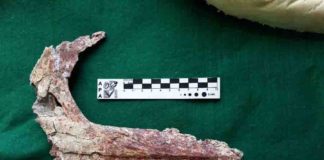
    The fossilized jaw of an Overoraptor chimentoi, a new species of dinosaur discovered in Argentine Patagonia

    Argentine paleontologists discover small carnivorous dinosaur

    June 6, 2020
    Ichthyosaur

    Nevada home to 246M-year-old fossil of pregnant ichthyosaur

    June 6, 2020
    El Niño events and high-latitude Eurasian warming are usually observed after large tropical eruptions. However, simulations of climate impacts by volcanos show large biases when compared with observations, calling for substantial improvements in climate models. The graph depicts the change in zonally averaged surface temperature in observations (the shaded part) and simulations (the line) after large tropical volcanic eruptions. The equation denotes the chemical reaction in the stratosphere. Credit: Advances in Atmospheric Sciences

    Philippine volcanic eruption could prompt El Nino warming next winter

    June 6, 2020
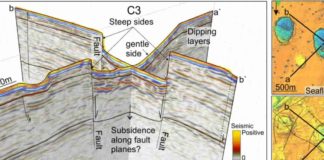
    The deep origin of craters and mounds was discovered using cutting edge 3D seismic technology which can penetrate deep into the ocean floor, and help scientists visualize the structures in the hard bedrock underneath. Illustration: M. Waage

    New study reveals cracks beneath giant, methane gushing craters

    June 6, 2020
    UT Austin scientists found that the fossil millipede Kampecaris obanensis was 425 million years old. Credit: British Geological Survey

    World’s oldest bug is fossil millipede from Scotland

    May 28, 2020
    This artist’s impression shows a view of the surface of the planet Proxima b orbiting the red dwarf star Proxima Centauri, the closest star to the Solar System. The double star Alpha Centauri AB also appears in the image to the upper-right of Proxima itself. Proxima b is a little more massive than the Earth and orbits in the habitable zone around Proxima Centauri, where the temperature is suitable for liquid water to exist on its surface. (Illustration by ESO/M. Kornmesser)

    Study finds a (much) earlier birth date for tectonic plates

    May 28, 2020
    URI graduate student Reilly Hayes (left) and undergraduate Amanda Bednarick examine an outcrop for fossils at Petrified Forest National Park as part of their research. Credit: Amanda Bednarick

    Asteroid, climate change not responsible for mass extinction 215 million years...

    May 28, 2020
    Credit: Pohang University of Science & Technology (POSTECH)

    Volcanic eruptions reduce global rainfall

    May 28, 2020
    The attached image shows Wightia declivirostris flying over an oxbow lake in the valley of the ancient Wessex River that flowed from Devon to the Isle of Wight. Credit: Megan Jacobs

    Chinese pterodactyl wings its way to the United Kingdom

    May 28, 2020
    1...959697...688Page 96 of 688

    MOST POPULAR

    Underwater Volcano Eruption

    September 10, 2014

    Ancient ‘hyperthermals’ a guide to anticipated climate changes

    September 15, 2011
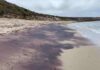
    Garnet washed up as pink sand on a beach in Dhilba Guuranda-Innes National Park. Photo credit: University of Adelaide.

    A mountainous mystery uncovered in Australia’s pink sands

    July 16, 2024

    Researchers identify oldest textile dyed indigo, reflecting scientific knowledge from 6,200...

    September 15, 2016
    Load more

    MORE ARTICLES

    Fossil arthropod went on the hunt for its prey

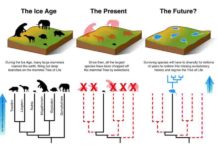
    An illustration of how the smaller mammals will have to evolve and diversify over the next 3-5 million years to make up for the loss of the large mammals.

    Mammals cannot evolve fast enough to escape current extinction crisis

    “Living Fossil” Genome Decoded

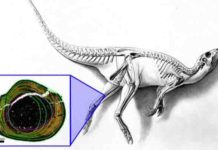
    The fossil bone tissue reveals new information about how the Australian “hypsilophodontid” dinosaurs lived

    Shedding light on Australia’s polar dinosaurs

    Facebook Instagram Linkedin TikTok X Youtube
    • Privacy Policy
    • Advertising
    • Contribute
    • FAQs
    © 2011-2026. All Rights Reserved.