
Home Blog Page 6

Scientists just found a massive earthquake threat hiding beneath Yukon

Advanced satellite and lidar mapping has uncovered signs that the Tintina fault in Canada's Yukon may be primed for a powerful earthquake. (Image credit: Pierre Longnus via Getty Images)
Advanced satellite and lidar mapping has uncovered signs that the Tintina fault in Canada’s Yukon may be primed for a powerful earthquake. (Image credit: Pierre Longnus via Getty Images)

New research led by the University of Victoria (UVic) has illuminated a significant and previously unrecognized source of seismic hazard for the Yukon Territory of northwestern Canada.

The Tintina fault is a major geologic fault approximately 1,000 km long that trends northwestward across the entire territory. It has slipped laterally a total of 450 km in its lifetime but was previously believed to have been inactive for at least 40 million years. However, using new high-resolution topographic data collected from satellites, airplanes and drones, researchers have identified a 130-km-long segment of the fault near Dawson City where there is evidence of numerous large earthquakes in the much more recent geologic past (the Quaternary Period, 2.6 million years to present), indicating possible future earthquakes.

“Over the past couple of decades there have been a few small earthquakes of magnitude 3 to 4 detected along the Tintina fault, but nothing to suggest it is capable of large ruptures,” says Theron Finley, recent UVic PhD graduate and lead author of the recent article in Geophysical Research Letters. “The expanding availability of high-resolution data prompted us to re-examine the fault, looking for evidence of prehistoric earthquakes in the landscape.”

Currently, the understanding of earthquake rates and seismic hazard in much of Canada is based on a catalogue of earthquakes from oral Indigenous accounts, written historical records and modern seismic monitoring networks. Collectively, these records only cover the last couple hundred years. However, for many active faults, thousands of years can elapse between large ruptures.

When earthquakes are large and/or shallow, they often rupture the Earth’s surface and produce a linear feature in the landscape known as a fault scarp. These features, which can persist in the landscape for thousands of years, are typically tens to hundreds of kilometers long, but only a few metres wide and tall. They are difficult to detect in heavily forested regions like Canada, and require extremely high-resolution topographic data to identify.

The team, consisting of researchers from UVic, the Geological Survey of Canada and University of Alberta, used high resolution topographic data from the ArcticDEM dataset from satellite images, as well as from light detection and ranging (lidar) surveys conducted with airplanes and drones. They identified a series of fault scarps passing within 20 km of Dawson City.

Crucially, they observed that glacial landforms 2.6 million years in age are laterally offset across the fault scarp by 1000 m. Others, 132,000 years old, are laterally offset by 75 m. These findings confirm that the fault has slipped in multiple earthquakes throughout the Quaternary period, likely slipping several meters in each event. What’s more, landforms known to be 12,000 years old are not offset by the fault, indicating no large ruptures have occurred since that time. The fault continues to accumulate strain at an average rate of 0.2 to 0.8 millimetres per year, and therefore poses a future earthquake threat.

“We determined that future earthquakes on the Tintina fault could exceed magnitude 7.5,” says Finley. “Based on the data, we think that the fault may be at a relatively late stage of a seismic cycle, having accrued a slip deficit, or build-up of strain, of six meters in the last 12,000 years. If this were to be released, it would cause a significant earthquake.”

An earthquake of magnitude 7.5 or greater would cause severe shaking in Dawson City and could pose a threat to nearby highways and mining infrastructure. Compounding the hazard from seismic shaking, the region is prone to landslides, which could be seismically triggered. The Moosehide landslide immediately north of Dawson City and the newly discovered Sunnydale landslide directly across the Yukon River both show ongoing signs of instability.

Canada’s National Seismic Hazard Model (NSHM) includes the potential for large earthquakes in central Yukon Territory, but the Tintina fault is not currently recognized as a discrete seismogenic fault source. The recent findings by this team will ultimately be integrated into the NSHM, which informs seismic building codes and other engineering standards that protect human lives and critical infrastructure. The findings will also be shared with local governments and emergency managers to improve earthquake readiness in their communities.

This research occurred on the territory of the Tr’ondëk Hwëch’in and Na-Cho Nyäk Dun First Nations

Reference:
Theron Finley, Edwin Nissen, John F. Cassidy, Guy Salomon, Lucinda J. Leonard, Duane Froese. Large Surface‐Rupturing Earthquakes and a >12 kyr, Open Interseismic Interval on the Tintina Fault, Yukon. Geophysical Research Letters, 2025; 52 (14) DOI: 10.1029/2025GL116050

Note: The above post is reprinted from materials provided by University of Victoria.

Dinosaurs could hold key to cancer discoveries

An image of fossilised erythrocyte-like structures

New techniques used to analyse soft tissue in dinosaur fossils may hold the key to new cancer discoveries, according to a new study published in the journal Biology.

Researchers from Anglia Ruskin University (ARU) and Imperial College London analysed dinosaur fossils using advanced paleoproteomic techniques, a method that holds promise for uncovering molecular data from ancient specimens.

The researchers discovered red blood cell-like structures in a fossil while studying a Telmatosaurus transsylvanicus, a duck-billed, plant eating “marsh lizard” that lived between 66-70 million years ago in the Hateg Basin in present-day Romania.

The new study used Scanning Electron Microscopy (SEM) techniques to identify low-density structures resembling erythrocytes, or red blood cells, in the fossilised bone.

The findings raise the possibility that soft tissue and cellular components are more commonly preserved in ancient remains than previously thought.

By identifying preserved proteins and biomarkers, scientists believe they can gain insights into the diseases that affected prehistoric creatures, including cancer, potentially influencing future treatments for humans.

The authors of the new study highlight the necessity of prioritising the collection and preservation of fossilised soft tissue, rather than just dinosaur skeletons, as future advancements in molecular techniques will enable deeper insights into disease evolution.

A separate study had previously identified evidence of cancer in Telmatosaurus transsylvanicus, indicating its deep evolutionary roots.

Senior author Justin Stebbing, Professor of Biomedical Sciences at Anglia Ruskin University, said: “Dinosaurs, as long-lived, large-bodied organisms, present a compelling case for investigating how species managed cancer susceptibility and resistance over millions of years.

“Proteins, particularly those found in calcified tissues like bone, are more stable than DNA and are less susceptible to degradation and contamination. This makes them ideal candidates for studying ancient diseases, including cancer, in paleontological specimens.

“Unlike skeletal structures alone, soft tissues contain proteins that provide molecular information that can reveal the underlying biological mechanisms of disease.

“Our research, using relatively underused methods, invites further exploration that could hold the key to future discoveries that could benefit humans. However, it is crucial that long-term fossil conservation efforts are co-ordinated to ensure that future researchers have access to specimens suitable for cutting-edge molecular investigations.”

Note: The above post is reprinted from materials provided by Anglia Ruskin University.

New velvet worm species a first for the arid Karoo

Photographic images of the dorsal aspect of selected live velvet worm species from the Western Cape province, South Africa (A–F). Peripatopsis balfouri s.s. from Bats Cave ravine, Cape Peninsula, Table Mountain range (A). P. palmeri sp. nov., from 22 Waterfalls, Porterville (B). P. barnardi sp. nov., from the Groot Swartberg Mountains, Little Karoo (C). P. landroskoppie sp. nov., from Landroskop (B) outside Grabouw (D). P. fernkloofi sp. nov., from Fernkloof Nature Reserve, Hermanus (E) and P. limietbergi sp. nov., from Mitchell's Pass (F). Scale bar = 10 mm.
Photographic images of the dorsal aspect of selected live velvet worm species from the Western Cape province, South Africa (A–F). Peripatopsis balfouri s.s. from Bats Cave ravine, Cape Peninsula, Table Mountain range (A). P. palmeri sp. nov., from 22 Waterfalls, Porterville (B). P. barnardi sp. nov., from the Groot Swartberg Mountains, Little Karoo (C). P. landroskoppie sp. nov., from Landroskop (B) outside Grabouw (D). P. fernkloofi sp. nov., from Fernkloof Nature Reserve, Hermanus (E) and P. limietbergi sp. nov., from Mitchell’s Pass (F). Scale bar = 10 mm.

In March 2022, Stellenbosch University (SU) student Rohan Barnard was out and about on a farm in the Swartberg Mountains between Calitzdorp and Oudtshoorn, flipping over rocks looking for ants, reptiles and other critters, when he stumbled upon the finding of a lifetime.

Buried deep in the moist sand below a pile of leaf litter at the periphery of a small river, he found a slate black velvet worm. Being familiar with how rare velvet worms are, he took a specimen and also posted an image of it to the biodiversity observation app, iNaturalist.

“I had a basic knowledge of the Cape velvet worms, having found one for the first time on Table Mountain in 2019. My older brother was under assignment from his zoology lecturer, Prof. Savel Daniels, to collect velvet worms. With my interest in ants, I gladly assisted him in this task,” Rohan, now a third year BSc student in Conservation Ecology and Entomology, explains.

Velvet worms’ lineage date back to over 500 million years ago, making it a living relic of the Cambrian period. With their soft bodies and non-jointed legs, these critters have changed little over millions of years, earning them the title of “living fossils.”

Little did Rohan know at the time that he had just found a new species of velvet worm, now aptly named Rohan’s velvet worm or, in scientific terms, Peripatopsis barnardi.

Even more remarkable is the fact that it represents the first ever species from the little Karoo, which indicates that the area was historically more forested than at present. In other words, with prehistorical climate changes, and aridification, the species became isolated and underwent speciation.

According to Prof. Daniels, an evolutionary biologist from SU’s Department of Botany and Zoology and one of South Africa’s foremost specialists on velvet worms, it is utterly remarkable that such a prehistorical lineage is still around today. After viewing this rare find on iNaturalist, he visited the same area in July 2022 and collected a paratype and another nine specimens for analysis.

The results of his analysis, and the announcement of seven new species of velvet worms, were published in the journal Ecology and Evolution recently. Daniels, the first author on the paper, says South Africa’s velvet worms are mainly found in prehistoric Afro temperate forest patches that persist in deep gorges in the Cape Fold Mountains

“The origin of these forest patches can be traced to the early Miocene, about 23 to 15 million years ago, when the region used to be temperate and sub-tropical. During the late Miocene, however, the region underwent significant climatic changes, with a decrease in rainfall due to the advent of the proto Benguela current along the West Coast, and two geotectonic uplifting events. These events resulted in a complex mosaic of habitat connectivity and isolation, what we know today as the Cape Fold Mountains, driving the speciation of habitat specialists such as velvet worms,” he explains.

Daniels used new mitochondrial and nuclear DNA sequencing techniques, combined with morphological analysis and scanning electron microscopy (SEM), to determine that P. barnardi diverged from its most recent common ancestor about 15.2 million years ago. Another novel finding from the Cederberg Mountains, P. cederbergiensis, can trace its lineage to 12.47 million years ago.

Daniels welcomes the efforts of citizen scientists to share their findings on biodiversity apps: “It is thanks to citizen science data that we were able to identify the new species. In the Cape Fold Mountains, we now know that every mountain peak has an endemic species. This suggests that in unsampled areas there are likely to be additional novel diversity, waiting to be found.”

Most importantly, though, it means that we must conserve these prehistoric forest fragments to limit extinction.

To Rohan, it still feels surreal to have such a fossil-like creature named after him: “It is incredible to realise that I’ve uncovered a living fossil. It is as if I have found a missing link that we did not even know about. It gives me hope that there is still so much left to discover. But it also makes me worried for the future, that we will lose animals and plants to extinction that we did not even know existed,” he warns.

The seven new species are P. fernkloofi, P. jonkershoeki, P. kogelbergi, P. landroskoppie, P. limietbergi and P. palmeri. Apart from P. barnardi, all the new species were named after their places of origin.

Why are velvet worms unique?

Like the indestructible water bears (Tardigrades), modern velvet worms are looked on as a separate line of evolution (and placed in a distinct phylum) that arose independently from some long forgotten marine ancestor — probably the Hallicogenia. Fossils show that velvet worms have not changed much since they diverged from their ancient relative about 540 million years ago. This means Onycophorans have been living on Earth ever since what is called the Cambrian period of prehistory. Today, modern velvet worms live on land and are found only in damp, moist habitats in areas that were originally part of the ancient supercontinent Gondwana.

Reference:
Savel R. Daniels, Aaron Barnes. Perched on the Plateau: Speciation in a Cape Fold Mountain Velvet Worm Clade, With the Description of Seven New Species (Onychophora: Peripatopsidae: Peripatopsis) From South Africa. Ecology and Evolution, 2025; 15 (4) DOI: 10.1002/ece3.71256

Note: The above post is reprinted from materials provided by Stellenbosch University. Original written by Wiida Fourie-Basson.

Watch the Earth split in real time: Stunning footage reveals a 2.5-meter fault slip in seconds

During the midday Friday prayer hours on March 28, 2025, a magnitude 7.7 earthquake struck central Myanmar along the Sagaing Fault. With an epicenter close to Mandalay, the country’s second-largest city, it was the most powerful earthquake to strike Myanmar in more than a century and the second deadliest in its modern history.

The cause was a strike-slip fault, in which two masses of earth “slip” past each other horizontally along a vertical fault plane. To an observer, it would look like the ground were split in two along a defined line, with both sides being wrenched past each other in opposite directions.

Previous seismological studies have inferred pulse-like rupture behavior and curved slip paths from the analysis of seismic data. However, because the recording instruments were at a considerable distance from the fault itself, these findings were indirect.

This time, however, a CCTV camera caught this slip in action, presenting a unique opportunity for a team researchers at Kyoto University to study the fault motion in real time. (See video link at bottom of article.)

The team applied a technique known as pixel cross-correlation to the CCTV footage to analyze the fault’s movement frame-by-frame. Their analysis reveals that the fault slipped sideways 2.5 meters in just 1.3 seconds, with a maximum speed of 3.2 meters per second. The total sideways movement recorded during this earthquake is typical of strike-slip ruptures, but the short duration of the fault slip is a major discovery.

“The brief duration of motion confirms a pulse-like rupture, characterized by a concentrated burst of slip propagating along the fault, much like a ripple traveling down a rug when flicked from one end,” says corresponding author Jesse Kearse.

The team’s analysis also proves that the slip path was subtly curved, a finding which aligns with previous geological observations from faults around the world. This may suggest that such slips are typically curved, as opposed to being completely linear.

The study demonstrates that video-based monitoring of faults is a powerful tool for seismology, enabling unprecedented insights into earthquake behavior. Capturing this level of detail is fundamental to improving our understanding of earthquake processes and enhancing our ability to anticipate the ground shaking expected in future large events.

“We did not anticipate that this video record would provide such a rich variety of detailed observations. Such kinematic data is critical for advancing our understanding of earthquake source physics,” says Kearse.

The next phase of their research will utilize physics-based models to investigate the factors that control fault behavior as revealed by this analysis.

Reference:
Jesse Kearse, Yoshihiro Kaneko. Curved Fault Slip Captured by CCTV Video During the 2025 Mw 7.7 Myanmar Earthquake. The Seismic Record, 2025; 5 (3): 281 DOI: 10.1785/0320250024

Note: The above post is reprinted from materials provided by Kyoto University.

AI uncovers 86,000 hidden earthquakes beneath Yellowstone’s surface

Hot Springs in Yellowstone National Park
Extremophiles, such as the thermophiles that give the microbial mats such vivid colors in the hot springs in Yellowstone National Park, are a hot topic of study amongst astrobiologists in the UK. IMAGE CREDIT: JIM PEACO/NATIONAL PARK SERVICE.

Yellowstone, a popular tourist destination and namesake of an equally popular TV show, was the first-ever national park in the United States. And bubbling beneath it – to this day – is one of Earth’s most seismically active networks of volcanic activity.

In a new study, published July 18 in the high impact journal Science Advances, Western engineering professor Bing Li and his collaborators at Universidad Industrial de Santander (Industrial University of Santander) in Colombia and the United States Geological Survey used machine learning to re-examine historical earthquake data from the Yellowstone caldera over a 15-year period. The team was able to retroactively detect and assign magnitudes to approximately 10 times more seismic events, or earthquakes, than previously recorded.

A caldera – like the one at Yellowstone Park spanning parts of Wyoming, Idaho and Montana – is a large depression or hollow formed when a volcano erupts and the magma chamber beneath it empties, leading to the collapse of the land above. This is different than a volcanic crater, which is formed by outward blasting.

The historical catalogue for the Yellowstone caldera now contains 86,276 earthquakes spanning the years 2008 to 2022, significantly improving previous understanding of volcanic and seismic systems through better data collection and systematic analyses.

A key finding in the study is that more than half of the earthquakes recorded in Yellowstone were part of earthquake swarms – groups of small, interconnected earthquakes that spread and shift within a relatively small area over a relatively short period of time. This is unlike an aftershock, which is a smaller earthquake that follows a larger mainshock in the same general area.

“While Yellowstone and other volcanoes each have unique features, the hope is that these insights can be applied elsewhere,” said Li, an expert in fluid-induced earthquakes and rock mechanics. “By understanding patterns of seismicity, like earthquake swarms, we can improve safety measures, better inform the public about potential risks, and even guide geothermal energy development away from danger in areas with promising heat flow.”

Molten-detecting machines

Prior to the application of machine learning, earthquakes were generally detected through manual inspection by trained experts. This process takes time, is cost-intensive and often detects fewer events than possible now with machine learning. Machine learning has sparked a data-mining gold rush in recent years as seismologists revisit the wealth of historical waveform data stored in datacenters across the world and learn more about current and previously unknown seismic regions around the world.

“If we had to do it old school with someone manually clicking through all this data looking for earthquakes, you couldn’t do it. It’s not scalable,” said Li.

The study also shows that earthquake swarms beneath the Yellowstone caldera have occurred along relatively immature, rougher fault structures, compared to more typical mature fault structures seen in regions such as southern California and even immediately outside the caldera.

The roughness was measured by characterizing earthquakes as fractals, which are geometric shapes that exhibit self-similarity, meaning they appear similar at different scales. First visualized by Benoit Mandelbrot in 1980, fractal patterns are seen in coastlines, snowflakes, broccoli, and even the branching of blood vessels. The fractal-based models, targeting roughness versus regularity, were able to characterize these earthquake swarms, which the researchers believe were caused by the mix of slowly moving underground water and sudden bursts of fluid.

“To a large extent, there is no systematic understanding of how one earthquake triggers another in a swarm. We can only indirectly measure space and time between events,” said Li. “But now, we have a far more robust catalogue of seismic activity under the Yellowstone caldera, and we can apply statistical methods that help us quantify and find new swarms that we haven’t seen before, study them, and see what we can learn from them.”

Reference:
Manuel A. Florez, Bing Q. Li, David R. Shelly, Mia V. Angulo, José D. Sanabria-Gómez. Long-term dynamics of earthquake swarms in the Yellowstone caldera. Science Advances, 2025; 11 (29) DOI: 10.1126/sciadv.adv6484

Note: The above post is reprinted from materials provided by University of Western Ontario.

Scientists Find the First Ice Core From the European Alps That Dates Back to the Last Ice Age

An ice sample on the melter during continuous ice core chemical analyses in the lab (credit: Sylvain Masclin).

Glaciers hold layers of history preserved in ice, offering unique insights into Earth’s past that can also help us interpret the future. Trapped amidst the frozen water are microscopic deposits of dust, pollen, and even pollutants that scientists can use to examine environmental changes through time. DRI’s Ice Core Lab has used this technique to highlight atmospheric lead pollution and economic turbulence in Ancient Rome. Now, their latest study found that a glacier in the French Alps dates back to the last Ice Age – the oldest known glacier ice in the region. Serving as a record that spans through the development of agriculture in Western Europe and the advent of industrialization, the glacier holds insights into an era of rapid change.

The new study, published in the June issue of PNAS Nexus, examines a 40-meter long ice core from Mont Blanc’s Dôme du Goûter. Using radiocarbon dating techniques, the research team found that the glacier provides an intact record of aerosols and climate dating back at least 12,000 years. Aerosols are small droplets and particles in the air such as desert dust, sea salts, sulfur from volcanic eruptions, soot from forest fires, as well as pollutants and other emissions from human activities. Glacier ice offers the most detailed record of past atmospheric aerosols, and this is the first ice core record from the European region that extends back to the last climatic transition. Aerosols play an important role in regional climate through their interactions with clouds and solar radiation, and the insights offered by the ice record can help inform accurate climate modeling for both the past and future.

“For the first time, we have a fairly complete Alpine record of atmospheric and precipitation chemistry going all the way back to the Mesolithic Period,” said Joe McConnell, Director of DRI’s Ice Core lab who co-authored the study. “And that’s a big deal, because you have two major climate states – glacial and interglacial – and to get a record of atmospheric precipitation chemistry across that huge climate change tells you the most extreme natural aerosol concentrations that you’d expect. On top of that, you have humans going from hunter-gatherers with a very low population through the development of agriculture, domestication of animals, mining, etc, and then a vast population increase and the clearing of land. All of that is happening around this ice core site. It spans the full range of natural and anthropogenic change, and it’s right in the center of Europe – where much of Western civilization evolved.”

The glacier’s location in the Alps is important because it serves as a more intact record of Europe’s local climate than those found in distant Arctic ice. Many aerosols play important roles in driving Earth’s climate, so scientists would like to know how sources and concentrations in the air have varied in the past.

“Ice cores collected from glaciers and ice sheets can provide such information, but since these droplets and particles stay in the air only for a few days to maybe a week, records developed from glaciers close to the sources often are the most informative,” said lead author, Michel Legrand.

The ice core analyzed in this study was first collected in 1999 by some of the study’s French authors. It was stored in a freezer in France for more than 20 years before McConnell and his team brought it to DRI’s Ice Core Lab in Reno, Nevada, where specialized equipment and methods known as continuous flow analysis allowed it to be melted down and the chemistry measured, layer by icy layer.

“Determining what year or period of time a layer in the ice represents can be challenging, so here we used a unique combination of radiometric methods to establish the chronology in the ice,” said coauthor Werner Aeschbach.

“We were relieved to find that even under the unusually warm climate of the 20th century, the cold temperatures at over 14,000 feet near Mont Blanc’s peak had preserved the glacier so that the ice record hadn’t yet been impacted by melting,” said co-author Nathan Chellman.

The historic age of the ice at the base of the core, around 40 meters deep into the glacier, surprised the researchers. Another core collected from a glacier located less than 100 meters away at Col du Dome was found to contain ice only about a century old, despite being much deeper. The scientists attribute this to the strong wind patterns found on Mont Blanc.

“It’s exciting to find the first ice core from the European Alps containing an intact record of climate that extends back through the current ten-thousand-year warm period and into the very different climate of the last ice age,” said coauthor Susanne Preunkert, who was a member of the field team that collected the ice core in 1999.

Insights into Europe’s Past Climate

The uniquely detailed ice record revealed a temperature difference of about 3 degrees Celsius between the last Ice Age and the current Holocene Epoch. Using pollen records embedded in the ice, reconstructions of summer temperatures during the last Ice Age were about 2 degrees Celsius cooler throughout western Europe, and about 3.5 degrees Celsius cooler in the Alps.

The phosphorous record also told researchers the story of vegetation changes in the region over the last 12,000 years. Phosphorous concentrations in the ice were low during the last Ice Age, increased dramatically during the early to mid-Holocene, and then decreased steadily into the late Holocene. This is consistent with the spread of forests under the warmer climate, and their decline following the proliferation of modern society and the land-clearing that resulted from agriculture and the spread of industry.

Insights into Europe’s Past Climate

The uniquely detailed ice record revealed a temperature difference of about 3 degrees Celsius between the last Ice Age and the current Holocene Epoch. Using pollen records embedded in the ice, reconstructions of summer temperatures during the last Ice Age were about 2 degrees Celsius cooler throughout western Europe, and about 3.5 degrees Celsius cooler in the Alps.

The phosphorous record also told researchers the story of vegetation changes in the region over the last 12,000 years. Phosphorous concentrations in the ice were low during the last Ice Age, increased dramatically during the early to mid-Holocene, and then decreased steadily into the late Holocene. This is consistent with the spread of forests under the warmer climate, and their decline following the proliferation of modern society and the land-clearing that resulted from agriculture and the spread of industry.

Uncovering More Stories Entombed in the Ice

This study is only the beginning of the Mont Blanc ice record’s story, as the researchers plan to continue analyzing it for indicators of human history. The first step in uncovering every ice core’s record is to use isotopes and radiocarbon dating to establish how old each layer of ice is. Now, with that information, the scientists can take an even deeper look at what it can tell us about past human civilizations and their impact on the environment.

“Now we can start to interpret all these other records that we have of lead and arsenic and other things like that, in terms of human history,” said McConnell.

The information can also be used to help interpret how changes in aerosols impact the climate and improve modeling to help us understand current and future climatic shifts.

“If you’re really going to go back and examine all possible climate states, past and future, you need a model that captures true climate variability,” McConnell said. “It’s a laudable goal, but to evaluate how good the models are, you’ve got to be able to compare them to observations, right? And that’s where the ice cores come in.”

Reference:
Michel Legrand, Joseph R McConnell, Susanne Preunkert, David Wachs, Nathan J Chellman, Kira Rehfeld, Gilles Bergametti, Sophia M Wensman, Werner Aeschbach, Markus K Oberthaler, Ronny Friedrich. Alpine ice core record of large changes in dust, sea-salt, and biogenic aerosol over Europe during deglaciation. PNAS Nexus, 2025; 4 (6) DOI: 10.1093/pnasnexus/pgaf186

Note: The above post is reprinted from materials provided by Desert Research Institute.

A giant pulse beneath Africa could split the continent — and form an ocean

The East African Rift System
The East African Rift System is currently the largest in the world. Yet, the global rift network 130 and 50 million years ago was more than 5 times longer. Credit: Brune, Nasa WorldWind

Research led by Earth scientists at the University of Southampton has uncovered evidence of rhythmic surges of molten mantle rock rising from deep within the Earth beneath Africa.

These pulses are gradually tearing the continent apart and forming a new ocean.

The findings, published in Nature Geoscience, reveal that the Afar region in Ethiopia is underlain by a plume of hot mantle that pulses upward like a beating heart.

The team’s discovery reveals how the upward flow of hot material from the deep mantle is strongly influenced by the tectonic plates — the massive solid slabs of Earth’s crust — that ride above it.

Over millions of years, as tectonic plates are pulled apart at rift zones like Afar, they stretch and thin — almost like soft plasticine — until they rupture. This rupturing marks the birth of a new ocean basin.

Lead author Dr Emma Watts, who conducted the research at the University of Southampton and is now based at Swansea University, said: “We found that the mantle beneath Afar is not uniform or stationary — it pulses, and these pulses carry distinct chemical signatures. These ascending pulses of partially molten mantle are channelled by the rifting plates above. That’s important for how we think about the interaction between Earth’s interior and its surface.”

The project involved experts from 10 institutions, including the University of Southampton, Swansea University, Lancaster University, the Universities of Florence and Pisa, GEOMAR in Germany, the Dublin Institute for Advanced Studies, Addis Ababa University, and the GFZ German Research Centre for Geosciences.

A window into Earth’s interior

The Afar region is a rare place on Earth where three tectonic rifts converge: the Main Ethiopian Rift, the Red Sea Rift, and the Gulf of Aden Rift.

Geologists have long suspected that a hot upwelling of mantle, sometimes referred to as a plume, lies beneath the region, helping to drive the extension of the crust and the birth of a future ocean basin. But until now, little was known about the structure of this upwelling, or how it behaves beneath rifting plates.

The team collected more than 130 volcanic rock samples from across the Afar region and the Main Ethiopian Rift.

They used these, plus existing data and advanced statistical modelling, to investigate the structure of the crust and mantle, as well as the melts that it contains.

Their results show that underneath the Afar region is a single, asymmetric plume, with distinct chemical bands that repeat across the rift system, like geological barcodes. These patterns vary in spacing depending on the tectonic conditions in each rift arm.

Tom Gernon, Professor of Earth Science at the University of Southampton and co-author of the study, said: “The chemical striping suggests the plume is pulsing, like a heartbeat. These pulses appear to behave differently depending on the thickness of the plate, and how fast it’s pulling apart. In faster-spreading rifts like the Red Sea, the pulses travel more efficiently and regularly like a pulse through a narrow artery.”

Links to volcanism and earthquakes

This new research shows that the mantle plume beneath the Afar region is not static, but dynamic and responsive to the tectonic plate above it.

Dr Derek Keir, Associate Professor in Earth Science at the University of Southampton and the University of Florence, and co-author of the study, said: “We have found that the evolution of deep mantle upwellings is intimately tied to the motion of the plates above. This has profound implications for how we interpret surface volcanism, earthquake activity, and the process of continental breakup.”

“The work shows that deep mantle upwellings can flow beneath the base of tectonic plates and help to focus volcanic activity to where the tectonic plate is thinnest. Follow on research includes understanding how and at what rate mantle flow occurs beneath plates,” added Keir.

Dr Watts added: “Working with researchers with different expertise across institutions, as we did for this project, is essential to unravelling the processes that happen under Earth’s surface and relate it to recent volcanism. Without using a variety of techniques, it is hard to see the full picture, like putting a puzzle together when you don’t have all the pieces.”

Reference:
Emma J. Watts, Rhiannon Rees, Philip Jonathan, Derek Keir, Rex N. Taylor, Melanie Siegburg, Emma L. Chambers, Carolina Pagli, Matthew J. Cooper, Agnes Michalik, J. Andrew Milton, Thea K. Hincks, Ermias F. Gebru, Atalay Ayele, Bekele Abebe, Thomas M. Gernon. Mantle upwelling at Afar triple junction shaped by overriding plate dynamics. Nature Geoscience, 2025; DOI: 10.1038/s41561-025-01717-0

Note: The above post is reprinted from materials provided by University of Southampton.

The first pandemic? Scientists find 214 ancient pathogens in prehistoric DNA

A research team led by Eske Willerslev, professor at the University of Copenhagen and the University of Cambridge, has recovered ancient DNA from 214 known human pathogens in prehistoric humans from Eurasia.

The study shows, among other things, that the earliest known evidence of zoonotic diseases — illnesses transmitted from animals to humans, like COVID in recent times — dates back to around 6,500 years ago, with such diseases becoming more widespread approximately 5,000 years ago. It is the largest study to date on the history of infectious diseases and has just been published in the scientific journal Nature.

The researchers analyzed DNA from over 1,300 prehistoric individuals, some up to 37,000 years old. The ancient bones and teeth have provided a unique insight into the development of diseases caused by bacteria, viruses, and parasites.

The results suggest that humans’ close cohabitation with domesticated animals — and large-scale migrations of pastoralist from the Pontic Steppe — played a decisive role in the spread of these diseases.

“We’ve long suspected that the transition to farming and animal husbandry opened the door to a new era of disease — now DNA shows us that it happened at least 6,500 years ago,” says Professor Eske Willerslev. “These infections didn’t just cause illness — they may have contributed to population collapse, migration, and genetic adaptation.”

World’s oldest trace of the plague

In the study, the researchers found 214 pathogens. A remarkable finding is the world’s oldest genetic trace of the plague bacterium Yersinia pestis, identified in a 5,500-year-old sample. The plague is estimated to have killed between one-quarter and one-half of Europe’s population during the Middle Ages.

Could have implications for future vaccines

The findings could be significant for the development of vaccines and for understanding how diseases arise and mutate over time.

“If we understand what happened in the past, it can help us prepare for the future, where many of the newly emerging infectious diseases are predicted to originate from animals,” says Associate Professor Martin Sikora, the study’s first author.

“Mutations that were successful in the past are likely to reappear. This knowledge is important for future vaccines, as it allows us to test whether current vaccines provide sufficient coverage or whether new ones need to be developed due to mutations,” adds Eske Willerslev.

Reference:
Martin Sikora, Elisabetta Canteri, Antonio Fernandez-Guerra, Nikolay Oskolkov, Rasmus Ågren, Lena Hansson, Evan K. Irving-Pease, Barbara Mühlemann, Sofie Holtsmark Nielsen, Gabriele Scorrano, Morten E. Allentoft, Frederik Valeur Seersholm, Hannes Schroeder, Charleen Gaunitz, Jesper Stenderup, Lasse Vinner, Terry C. Jones, Björn Nystedt, Karl-Göran Sjögren, Julian Parkhill, Lars Fugger, Fernando Racimo, Kristian Kristiansen, Astrid K. N. Iversen, Eske Willerslev. The spatiotemporal distribution of human pathogens in ancient Eurasia. Nature, 2025; DOI: 10.1038/s41586-025-09192-8

Note: The above post is reprinted from materials provided by University of Copenhagen – The Faculty of Health and Medical Sciences.

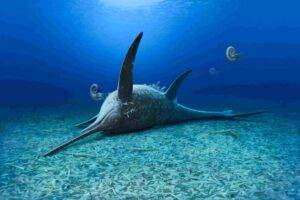
Palaeontologists discover 506-million-year-old predator

Life reconstruction of Mosura fentoni, art by Danielle Dufault © ROM

Palaeontologists at the Manitoba Museum and Royal Ontario Museum (ROM) have discovered a remarkable new 506-million-year-old predator from the Burgess Shale of Canada. The results are announced in a paper in the journal Royal Society Open Science.

Mosura fentoni was about the size of your index finger and had three eyes, spiny jointed claws, a circular mouth lined with teeth and a body with swimming flaps along its sides. These traits show it to be part of an extinct group known as the radiodonts, which also included the famous Anomalocaris canadensis, a meter-long predator that shared the waters with Mosura.

However, Mosura also possessed a feature not seen in any other radiodont: an abdomen-like body region made up of multiple segments at its back end.

“Mosura has 16 tightly packed segments lined with gills at the rear end of its body. This is a neat example of evolutionary convergence with modern groups, like horseshoe crabs, woodlice, and insects, which share a batch of segments bearing respiratory organs at the rear of the body,” says Joe Moysiuk, Curator of Palaeontology and Geology at the Manitoba Museum, who led the study.

The reason for this intriguing adaptation remains uncertain, but the researchers postulate it may be related to particular habitat preference or behavioural characteristics of Mosura that required more efficient respiration.

With its broad swimming flaps near its midsection and narrow abdomen, Mosura was nicknamed the “sea-moth” by field collectors based on its vague appearance to a moth. This inspired its scientific name, which references the fictional Japanese kaiju also known as Mothra. Only distantly related to real moths — as well as spiders, crabs, and millipedes — Mosura belongs on a much deeper branch in the evolutionary tree of these animals, collectively known as arthropods.

“Radiodonts were the first group of arthropods to branch out in the evolutionary tree, so they provide key insight into ancestral traits for the entire group. The new species emphasizes that these early arthropods were already surprisingly diverse and were adapting in a comparable way to their distant modern relatives.” says study co-author Jean-Bernard Caron, Richard M. Ivey Curator of Invertebrate Palaeontology at ROM.

Several fossils of Mosura additionally show details of internal anatomy, including elements of the nervous system, circulatory system, and digestive tract.

“Very few fossil sites in the world offer this level of insight into soft internal anatomy. We can see traces representing bundles of nerves in the eyes that would have been involved in image processing, just like in living arthropods. The details are astounding,” Caron adds.

Instead of having arteries and veins like we do, Mosura had an “open” circulatory system, with its heart pumping blood into large internal body cavities called lacunae. These lacunae are preserved as reflective patches that fill the body and extend into the swimming flaps in the fossils.

“The well-preserved lacunae of the circulatory system in Mosura help us to interpret similar, but less clear features that we’ve seen before in other fossils. Their identity has been controversial,” adds Moysiuk, who is also a Research Associate at ROM. “It turns out that preservation of these structures is widespread, confirming the ancient origin of this type of circulatory system.”

Of the 61 fossils of Mosura, all except one were collected by ROM between 1975 and 2022, mostly from the Raymond Quarry in Yoho National Park, British Columbia. Some also came from new areas around Marble Canyon in Kootenay National Park, 40 km to the southeast, which have revealed spectacular new Burgess Shale fossils, including other radiodonts: Stanleycaris, Cambroraster and Titanokorys. One previously unpublished specimen of Mosura was also studied that had been collected by Charles Walcott, the discoverer of the Burgess Shale.

“Museum collections, old and new, are a bottomless treasure trove of information about the past. If you think you’ve seen it all before, you just need to open up a museum drawer,” Moysiuk says.

The Burgess Shale fossil sites are located within Yoho and Kootenay National Parks and are managed by Parks Canada. Parks Canada is proud to work with leading scientific researchers to expand knowledge and understanding of this key period of Earth’s history and to share these sites with the world through award-winning guided hikes. The Burgess Shale was designated a UNESCO World Heritage Site in 1980 due to its outstanding universal value and is now part of the larger Canadian Rocky Mountain Parks World Heritage Site.

Many radiodont fossils can be seen on display in ROM’s Willner Madge Gallery, Dawn of Life, in Toronto, and a specimen of Mosura will be exhibited for the first time at the Manitoba Museum in Winnipeg later this year.

For 50 years, ROM has been at the forefront of Burgess Shale research, uncovering dozens of new fossil sites and species. Located in the Canadian Rocky Mountain Parks of British Columbia, the Burgess Shale fossils are exceptionally preserved and provide one of the best records of marine life during the Cambrian period anywhere.

Reference:
Joseph Moysiuk, Jean-Bernard Caron. Early evolvability in arthropod tagmosis exemplified by a new radiodont from the Burgess Shale. Royal Society Open Science, 2025; 12 (5) DOI: 10.1098/rsos.242122

Note: The above post is reprinted from materials provided by Royal Ontario Museum.

Fossil tracks revise march of early life on Earth

Professor Long compares the trackways with a modern Iguana foot.

The origin of reptiles on Earth has been shown to be up to 40 million years earlier than previously thought — thanks to evidence discovered at an Australian fossil site that represents a critical time period.

Flinders University Professor John Long and colleagues have identified fossilised tracks of an amniote with clawed feet — most probably a reptile — from the Carboniferous period, about 350 million years ago.

“Once we identified this, we realised this is the oldest evidence in the world of reptile-like animals walking around on land — and it pushes their evolution back by 35-to-40 million years older than the previous records in the Northern Hemisphere,” says Professor Long, Strategic Professor in Palaeontology at Flinders.

Published today in the journal Nature, this discovery indicates that such animals originated in the ancient southern supercontinent of Gondwana, of which Australia was a central part

The fossil tracks, discovered in the Mansfield district of northern Victoria in Australia, were made by an animal that Professor Long predicts would have looked like a small, stumpy, Goanna-like creature.

“The implications of this discovery for the early evolution of tetrapods are profound,” says Professor Long.

“All stem-tetrapod and stem-amniote lineages must have originated during the Devonian period — but tetrapod evolution proceeded much faster, and the Devonian tetrapod record is much less complete than we have believed.”

Fossil records of crown-group amniotes — the group that includes mammals, birds and reptiles — begin in the Late Carboniferous period (about 318 million years old), while previously the earliest body fossils of crown-group tetrapods were from about 334 million years ago, and the oldest trackways about 353 million years old.

This had suggested the modern tetrapod group originated in the early Carboniferous period, with the modern amniote group appearing in the early part of the Late Carboniferous period.

“We now present new trackway data from Australia that falsify this widely accepted timeline,” says Professor Long, who worked with Australian and international experts on the major Nature journal paper.

“My involvement with this amazing fossil find goes back some 45 years, when I did my PhD thesis on the fossils of the Mansfield district, but it was only recently after organizing palaeontology field trips to this area with Flinders University students that we got locals fired up to join in the hunt for fossils.

“Two of these locals — Craig Eury and John Eason (coauthors on the paper) — found this slab covered in trackways and, at first, we thought they were early amphibian trackways, but one in the middle has a hooked claw coming off the digits, like a reptile — an amniote, in fact.

“It was amazing how crystal clear the trackways are on the rock slab. It immediately excited us, and we sensed we were onto something big — even though we had no idea just how big it is.”

The Flinders palaeontology team working on this project included Dr Alice Clement, who scanned the fossil footprints to create digital models that were then analysed in detail, working closely with a team from Uppsala University led by Professor Per Erik Ahlberg, a member of the Royal Swedish Academy of Sciences.

“We study rocks and fossils of the Carboniferous and Devonian age with specific interest to observe the very important fish-tetrapod transition,” says Dr Clement.

“We’re trying to tease apart the details of how the bodies and lifestyles of these animals changed, as they moved from being fish that lived in water, to becoming tetrapods that moved about on land.”

Another coauthor Dr Aaron Camens, who studies animal trackways from around Australia, produced heatmaps that explain details of the fossil footprints much more clearly.

“A skeleton can tell us only so much about what an animal could do, but a trackway actually records its behaviour and tells us how this animal was moving,” says Dr Camens.

Because Professor Long had been studying ancient fish fossils of this area since 1980, he had a clear idea of the age of rock deposits in the Mansfield district — from the Carboniferous period, which started about 359 million years ago.

“The Mansfield area has produced many famous fossils, beginning with spectacular fossil fishes found 120 years ago, and ancient sharks. But the holy grail that we were always looking for was evidence of land animals, or tetrapods, like early amphibians. Many had searched for such trackways, but never found them — until this slab arrived in our laboratory to be studied.

“This new fossilised trackway that we examined came from the early Carboniferous period, and it was significant for us to accurately identify its age — so we did this by comparing the different fish faunas that appear in these rocks with the same species and similar forms that occur in well-dated rocks from around the world, and that gave us a time constraint of about 10 million years.”

La Trobe University’s Dr Jillian Garvey, who liaised with the Taungurung Land and Waters Council for the study, has researched in the Mansfield basin since the early 2000s.

“This discovery rewrites this part of evolutionary history,” Dr Garvey says. “It indicates there is so much that has happened in Australia and Gondwana that we are still yet to uncover.”

Reference:
John A. Long, Grzegorz Niedźwiedzki, Jillian Garvey, Alice M. Clement, Aaron B. Camens, Craig A. Eury, John Eason, Per E. Ahlberg. Earliest amniote tracks recalibrate the timeline of tetrapod evolution. Nature, 2025; DOI: 10.1038/s41586-025-08884-5

Note: The above post is reprinted from materials provided by Flinders University.

Australia’s oldest prehistoric tree frog hops 22 million years back in time

Artist’s reconstruction of the new species Litoria tylerantiqua (right) and previously described species Platyplectrum casca (left) from Murgon, south-eastern QueenslandCredit: Samantha Yabsley,
Artist’s reconstruction of the new species Litoria tylerantiqua (right) and previously described species Platyplectrum casca (left) from Murgon, south-eastern Queensland
Credit: Samantha Yabsley,

Newly discovered evidence of Australia’s earliest species of tree frog challenges what we know about when Australian and South American frogs parted ways on the evolutionary tree.

Previously, scientists believed Australian and South American tree frogs separated from each other about 33 million years ago.

But in a study published today in Journal of Vertebrate Palaeontology, palaeontologists from UNSW Sydney say the new species, Litoria tylerantiqua, is now at about 55 million years old, the earliest known member of the pelodryadid family of Australian tree frogs.

The study is based on fossils unearthed from Murgon on the traditional lands of the Waka Waka people of south-eastern Queensland. The new species, Litoria tylerantiqua, is named in honour of the late Michael Tyler, a renowned Australian herpetologist globally celebrated for his research on frogs and toads.

“It is only fitting to name Australia’s earliest tree frog in honour of a man who was a giant in Australian frog research and in particular the first to explore the fossil record for Australian frogs,” says study lead author Dr Roy Farman, an adjunct associate lecturer with UNSW School of Biological, Earth & and Environmental Sciences.

Evolutionary history of Australian tree frogs

Around 55 million years ago, Australia, Antarctica and South America were linked together as the last remnants of the southern supercontinent Gondwana. Global climates were warmer during this period, while a forested corridor linked South America and Australia.

Up until now, it was thought the earliest Australian tree frogs came from the Late Oligocene (about 26 million years ago) and the Early Miocene (23 million years ago). Fossils of the Late Oligocene were found at Kangaroo Well in the Northern Territory and Etadunna Formation at Lake Palankarinna, South Australia, while the Riversleigh World Heritage Area in Queensland revealed tree frogs from the Early Miocene.

But the new species extends the fossil record of pelodryadids by approximately 30 million years, to a time potentially close to the divergence of Australian tree frogs from the South American tree frogs.

Previous estimates based on molecular clock studies — a method scientists use to figure out when different species split from a common ancestor by looking at the rate of genetic changes over time — suggested that Australian and South American tree frogs separated from each other at about 33 million years ago.

“Our research indicates that that date is at least 22 million years too young,” Dr Farman says.

“While molecular studies are important for understanding the evolutionary relationships of different groups of animals, these studies should be calibrated using knowledge from the fossil record and in this case the fossil record provides a more accurate time for separation of the southern world’s tree frogs.”

Using new technology to study ancient frogs

To conduct this research, the authors used CT scans of spirit-preserved frogs from Australian museum collections to compare the three-dimensional shape of the fossil bones with those of living species. The technique — called three-dimensional geometric morphometrics — has only been used on fossil frogs once before. Using these new methods, they were able to unravel the relationships of these fossils to all other groups of frogs living and extinct.

“We had a real problem at the start of this study because the pelvic bones of most living frogs were invisible inside whole pickled frogs rather than available for study as skeletons,” Dr Farman says.

“Museums understandably want to ensure these often unique or rare pickled specimens remain intact for molecular studies because DNA can be obtained from their soft tissues. This meant that instead of skeletonising these specimens, we needed instead to make CT scans of them, enabling us to create 3D models of their otherwise invisible skeletons.

“Using these cutting-edge investigative methods, we were able to determine from the shape of the fossil ilia — one of three bones that make up each side of the pelvis — that this new Murgon species of frog is more closely related to the Australian tree frogs (pelodryadids) than the South American tree frogs (phyllomedusids).”

Seasoned survivors that outlasted the dinosaurs

Litoria tylerantiqua joins the only other Murgon frog, the ground-dwelling Platyplectrum casca (previously described as Lechriodus casca), as the oldest frogs known from Australia. Both have living relatives in Australia and New Guinea demonstrating remarkable resilience over time.

“Despite their delicate nature, frogs have been surprisingly successful at surviving several mass extinction events since their origins about 250 million years ago, including the mass extinction 66 million years ago that took out the non-flying dinosaurs,” Dr Farman says.

“Although global extinction events triggered by human activities — such as rapid climate change and the spread of chytrid fungus — may be among the worst challenges frogs have had to face, the fossil record could reveal how some frog groups overcame previous challenges, perhaps by adapting to new, less-threatening habitats. This could provide clues about how we might be able to help by translocating some threatened frogs into more future-secure habitats.”

Frogs such as the southern corroboree frog are threatened in their current habitats which have become more hostile due to climate change. The authors say that if the fossil record shows physically similar frogs living in very different habitats, today’s frogs may benefit by being reintroduced into similar environments.

Reference:
roy M. Farman, Michael Archer, Suzanne J. Hand. Early Eocene pelodryadid from the Tingamarra Local Fauna, Murgon, southeastern Queensland, Australia, and a new fossil calibration for molecular phylogenies of frogs. Journal of Vertebrate Paleontology, 2025; DOI: 10.1080/02724634.2025.2477815

Note: The above post is reprinted from materials provided by University of New South Wales.

Digital reconstruction reveals 80 steps of prehistoric life

An image from the reconstruction of the dinosaur's movements. Image: Dr A Romilio
An image from the reconstruction of the dinosaur’s movements. Image: Dr A Romilio

A dinosaur’s 40-second journey more than 120 million years ago has been brought back to life by a University of Queensland-led research team using advanced digital modelling techniques.

Dr Anthony Romilio from UQ’s Dinosaur Lab analysed and reconstructed the Phoenix Trackway, the longest documented set of footprints made by a predator walking on two legs in East Asia.

“For the first time this dinosaur’s movements have been reconstructed step by step, revealing how it walked, changed pace and responded to its environment,” Dr Romilio said.

“This sequence of 80 consecutive footprints extends for 70 metres in Sichuan Province, China and is a fleeting moment frozen in stone.

“Through digital animation, we can observe that moment as it unfolded, getting unprecedented insights into the animal’s behaviour and biomechanics.”

Using trackway measurements, the research team has revealed the dinosaur walked on two legs, stood 1.13 metres tall at the hip and weighed up to 292 kilograms.

“The footprints show this dinosaur moved at a steady 5.3 km/h which is equivalent to a brisk human walk and then briefly accelerated into a light trot before returning to its regular pace,” Dr Romilio said.

“This wasn’t just a dinosaur wandering aimlessly, it was moving with purpose in a nearly perfectly straight line.”

Local folklore once attributed the footprints to a mythical phoenix, but scientific analysis reveals it was an ancient predator, similar in size to the feathered Yutyrannus which lived in northeastern China in the early Cretaceous period.

“Trackways can reveal behavioural information and stories that fossilised bones alone cannot provide,” Dr Romilio said.

“But long trackways such as this have historically been understudied due to the logistical difficulties of measuring them in detail in the field.

“Our entirely digital approach allows us to capture, interpret and preserve all the measurements and calculations of fossil track sites on computer to provide a glimpse into the dynamic life of an ancient creature.”

The study was co-authored by Dr Lida Xing of China University of Geosciences, Beijing.

The research is published in Geosciences.

Reference:
Anthony Romilio, Lida Xing. A Digital Analysis of the ‘Phoenix Trackway’ at the Hanxi Cretaceous Dinosaur Tracksite, China. Geosciences, 2025; 15 (5): 165 DOI: 10.3390/geosciences15050165

Note: The above post is reprinted from materials provided by University of Queensland.

How solid rock flows 3,000 kilometers beneath us

The near surface of the inner core may be changing. (USC Graphic/Edward Sotelo)

Earthquakes, volcanic eruptions, shifting tectonic plates — these are all signs that our planet is alive. But what is revealed deep inside the Earth surprises laymen and scientists alike: Almost 3000 kilometers below the Earth’s surface, solid rock is flowing that is neither liquid, like lava, nor brittle like solid rock. This is shown by a new study by geoscientists led by Motohiko Murakami, Professor of Experimental Mineral Physics at ETH Zurich. The study has just been published in the journal Communications Earth & Environment.

Half a century of guesswork

For over 50 years, researchers have been puzzling over a strange zone deep inside the Earth — the so-called D” layer, around 2700 kilometers beneath our feet. Earthquake waves suddenly behave differently there: their speed jumps as if they were traveling through a different material. What exactly happens at that layer of the mantle has been unclear for a long time, until now.

In 2004, Murakami, who has been a professor at ETH Zurich since 2017, discovered that perovskite, the main mineral of the Earth’s lower mantle, transforms into a new mineral near the D” layer under extreme pressure and very high temperatures — so-called “post-perovskite.”

The researchers assumed that this change explained the strange acceleration of the seismic waves. But that was not the full story. In 2007, Murakami and colleagues found new evidence that the phase change of perovskite alone is not enough to accelerate earthquake waves.

Using a sophisticated computer model, they finally discovered something important: depending on the direction in which the post-perovskite crystals point, the hardness of the mineral changes. Only when all the crystals of the mineral point in the same direction in the model are the seismic waves accelerated — as can be observed in the D” layer at a depth of 2700 kilometers.

In an unusual laboratory experiment at ETH Zurich, Murakami has now proven that post-perovskite crystals align themselves in the identical direction under enormous pressure and extreme temperatures. To do this, the researchers measured the speed of seismic waves in their experiment and were also able to reproduce the jump that occurs at the D” layer in the laboratory. “We have finally found the last piece of the puzzle,” says Murakami.

Mantle flow aligns crystals

The big question is: what makes these crystals line up? The answer is that solid mantle rock that flows horizontally along the lower edge of the Earth’s mantle. Researchers have long suspected that this movement — a kind of convection like boiling water — must exist but have never been able to prove it directly.

A new chapter in Earth research begins

Murakami and his colleagues have now also demonstrated experimentally that mantle convection of solid rock is present at the boundary between the core and the Earth’s mantle, i.e. that solid — not liquid — rock flows slowly but steadily at this depth. “This discovery not only solves the mystery of the D” layer but also opens a window into the dynamics in the depths of the Earth,” Murakami explains.

It is not only a milestone, but also a turning point. The assumption that solid rock flows has been transformed from a theory into a certainty. “Our discovery shows that the Earth is not only active on the surface, but is also in motion deep inside,” says the ETH professor.

With this knowledge, researchers can now begin to map the currents in the Earth’s deepest interior and thus visualize the invisible motor that drives volcanoes, tectonic plates, and perhaps even the Earth’s magnetic field.

Reference:
Motohiko Murakami, Shin-ichiro Kobayashi, Naohisa Hirao, Tomofumi Kawadai. The texture of the post-perovskite phase controls the characteristics of the D” seismic discontinuity. Communications Earth & Environment, 2025; 6 (1) DOI: 10.1038/s43247-025-02383-1

Note: The above post is reprinted from materials provided by ETH Zurich.

Thousands of sensors reveal 3D structure of earthquake-triggered sound waves

Cross-section showing changes in electron density at different altitudes.Dashed lines show changes in vertical alignment. Credit: Fu et al., 2025
Cross-section showing changes in electron density at different altitudes.
Dashed lines show changes in vertical alignment. Credit: Fu et al., 2025

Earthquakes create ripple effects in Earth’s upper atmosphere that can disrupt satellite communications and navigation systems we rely on. Nagoya University scientists and their collaborators have used Japan’s extensive network of Global Navigation Satellite System (GNSS) receivers to create the first 3D images of atmospheric disturbances caused by the 2024 Noto Peninsula Earthquake. Their results show sound wave disturbance patterns in unique 3D detail and provide new insights into how earthquakes generate these waves. The results were published in the journal Earth, Planets and Space.

Mapping electron density in the ionosphere

With over 4,500 GNSS receivers spread across the country, Japan has one of the densest networks in the world. These receivers help with precise location tracking and can also detect changes in a region of the upper atmosphere called the ionosphere. A research team led by Dr. Weizheng Fu and Professor Yuichi Otsuka from Nagoya University’s Institute for Space-Earth Environmental Research (ISEE) has captured the detailed 3D structure of electron density changes in the ionosphere after the 7.5 magnitude Noto Peninsula Earthquake that occurred on January 1, 2024, in Ishikawa Prefecture, Japan.

When satellite signals travel through the ionosphere, they slow down because the radio waves interact with electrically charged particles. By measuring how much the signals slow down, scientists can calculate how many electrons are in the signals’ path and map the total electron content. Mapping these electrons allows them to effectively probe and monitor the state of the ionosphere.

About 10 minutes after the earthquake, the sound waves it generated traveled upward through the atmosphere and reached the ionosphere (60-1000 km above Earth). This created ripple disturbances similar to throwing a stone in a pond.

To build a 3D model of wave patterns, the researchers used a technique called “tomography” — similar to how CT scans create 3D images of the human body. They collected data on electron numbers from thousands of receivers tracking signals from satellites at different angles. By tracking their 3D models at different times after the earthquake, they created a time series of how electron density changed.

Sound waves generated from entire fault lines, not single points

South of the epicenter, the researchers observed a tilted sound wave pattern that gradually became more vertical over time. When an earthquake creates sound waves that travel upward through the atmosphere, the upper parts of the waves move faster than the lower parts. This makes the wave front lean or tilt as it moves. Over time, the tilted pattern gradually straightens into a more vertical alignment.

The researchers produced the first detailed 3D visualization of how the tilt angle changes over time during a seismic event. They tracked how the tilted wave patterns gradually straightened in unprecedented detail. Previous models assumed all sound waves came from a single point at the earthquake’s center. While this matched some of their observations, it could not explain the complex, uneven wave patterns they saw in their 3D images.

To understand this, they included data from multiple wave sources along the fault line in their model, assuming that some parts of the fault generated waves about 30 seconds after the initial rupture. The results better matched their real-world observations and showed that earthquakes do not create atmospheric waves from just one spot, but rather from multiple points along the entire fault as different sections rupture over time. This explains why the atmospheric disturbances observed, such as tilted waves, were more complex than previous simpler models had predicted.

“By including multiple distributed sources and time delays, our improved modeling provides a more accurate representation of how these waves propagate through the upper atmosphere,” Professor Otsuka highlighted.

“Disturbances in the ionosphere can interfere with satellite communications and location accuracy. If we understand these patterns better, we could improve our ability to protect sensitive technologies during and after earthquakes and enhance early warning systems for similar natural events,” Dr. Weizheng Fu, the lead author added.

Moving forward, the researchers are working on applying their model to other natural events such as volcanic eruptions, tsunamis, and severe weather events.

Reference:
Weizheng Fu, Yuichi Otsuka, Nicholas Ssessanga, Atsuki Shinbori, Takuya Sori, Michi Nishioka, Septi Perwitasari. Unveiling the vertical ionospheric responses following the 2024 Noto Peninsula Earthquake with an ultra-dense GNSS network. Earth, Planets and Space, 2025; 77 (1) DOI: 10.1186/s40623-025-02211-y

Note: The above post is reprinted from materials provided by Nagoya University.

Rock record illuminates oxygen history

Sedimentary rock cores from South Africa

Several key moments in Earth’s history help us humans answer the question, “How did we get here?” These moments also shed light on the question, “Where are we going”? — offering scientists deeper insight into how organisms adapt to physical and chemical changes in their environment. Among them is an extended evolutionary occurrence over 2 billion years ago, known as the Great Oxidation Event (GOE). This marked the first time that oxygen produced by photosynthesis — essential for the survival of humans and many other life forms — began to accumulate in significant amounts in the atmosphere.

If you traveled back in time to before the GOE (more than ~2.4 billion years ago), you would encounter a largely anoxic (oxygen-free) environment. The organisms that thrived then were anaerobic, meaning they didn’t require oxygen and relied on processes like fermentation to generate energy. Some of these organisms still exist today in extreme environments such as acidic hot springs and hydrothermal vents.

The GOE triggered one of the most profound chemical transformations in Earth’s surface history. It marked the transition from a planet effectively devoid of atmospheric oxygen — and inhospitable to complex life — to one with an oxygenated atmosphere that supports the biosphere we know today.

Scientists have long been interested in pinpointing the timing and causes of major shifts in atmospheric oxygen because they are fundamental to understanding how complex life, including humans, came to be. While our understanding of this critical period is still taking shape, a team of researchers from Syracuse University and MIT is digging deep — literally — into ancient rock cores from beneath South Africa to unearth clues about the timing of the GOE. Their work provides new insight into the pace of biological evolution in response to rising oxygen levels — and the long, complex journey toward the emergence of eukaryotes (organisms whose cells contain a nucleus enclosed within a membrane).

The study, published in the journal Proceedings of the National Academy of Sciences, was led by Benjamin Uveges ’18 Ph.D., who completed the project as a postdoctoral associate at MIT and collaborated with Syracuse University Earth sciences professor Christopher Junium on the chemical analyses.

Answers Embedded in Rock

To step back in time, the research team analyzed sedimentary rock cores collected from several sites across South Africa. These locations were carefully selected because their rocks, dating back 2.2 to 2.5 billion years, fall within the ideal age range for preserving evidence of the GOE. By analyzing stable isotopic ratios embedded in these rocks, the team uncovered evidence of oceanic processes that required the presence of nitrate — an indicator of more oxygen-rich conditions.

To analyze the ancient sediment, Uveges worked with Junium, an associate professor of Earth and environmental sciences at Syracuse University. Junium specializes in studying how past environments evolved to better understand future global change. His state-of-the-art instruments were essential for obtaining accurate readings of trace nitrogen levels.

“The rocks that we analyzed for this study had very low nitrogen concentrations in them, too low to measure with the traditional instrumentation used for this work,” says Uveges. “Chris has built one of only a handful of instruments in the world that can measure nitrogen isotope ratios in samples with 100 to 1,000 times less nitrogen in them than the typical minimum.”

In Junium’s lab, the team analyzed nitrogen isotope ratios from South African rock samples using an instrument called an Isotope Ratio Mass Spectrometer (IRMS). The samples were first crushed into powder, chemically treated to extract specific components, then converted into gas. This gas was ionized (turned into charged particles) and accelerated through a magnetic field, which separated the isotopes based on their mass. The IRMS then measured the ratio of ¹⁵N to ¹⁴N, which can reveal how nitrogen was processed in the past.

So how does this process reveal past oxygen levels? Microbes (short for microorganisms) influence the chemical makeup of sediments before they become rock, leaving behind isotopic signatures of how nitrogen was being processed and used. Tracking changes in ¹⁵N to ¹⁴N over time helps scientists understand how Earth’s environment, particularly oxygen levels, evolved.

Rewriting the Oxygen Timeline

According to Uveges, the most surprising finding is a shift in the timing of the ocean’s aerobic nitrogen cycle. Evidence suggests that nitrogen cycling became sensitive to dissolved oxygen roughly 100 million years earlier than previously thought — indicating a significant delay between oxygen buildup in the ocean and its accumulation in the atmosphere.

Junium notes that these results mark a critical tipping point in the nitrogen cycle, when organisms had to update their biochemical machinery to process nitrogen in a more oxidized form that was harder for them to absorb and use.

“All of this fits with the emerging idea that the GOE was a protracted ordeal where organisms had to find the balance between taking advantage of the energy gains of oxygenic photosynthesis, and the gradual adaptations to dealing with its byproduct, oxygen,” says Junium.

As oxygen produced through photosynthesis began to accumulate in the atmosphere, this rise in oxygen led to the extinction of many anaerobic organisms and set the stage for the evolution of aerobic respiration — a process that uses oxygen to break down glucose and provides the energy needed for functions like muscle movement, brain activity and cellular maintenance in humans and other animals.

“For the first 2 plus billion years of Earth’s history there was exceedingly little free oxygen in the oceans or atmosphere,” says Uveges. “In contrast, today oxygen makes up one fifth of our atmosphere and essentially all complex multicellular life as we know it relies on it for respiration. So, in a way, studying the rise of oxygen and its chemical, geological and biological impacts is really studying how the planet and life co-evolved to arrive at the current situation.”

Their findings reshape our understanding of when Earth’s surface environments became oxygen-rich after the evolution of oxygen-producing photosynthesis. The research also identifies a key biogeochemical milestone that can help scientists model how different forms of life evolved before and after the GOE.

“I hope our findings will inspire more research into this fascinating time period,” says Uveges. “By applying new geochemical techniques to the rock cores we studied, we can build an even more detailed picture of the GOE and its impact on life on Earth.”

This work was funded by grants including: An NSF CAREER award (Syracuse University — Christopher Junium) and a Simons Foundation Origins of Life Collaboration award (MIT — Benjamin Uveges, Gareth Izon and Roger Summons).

Reference:
Benjamin T. Uveges, Gareth Izon, Christopher K. Junium, Shuhei Ono, Roger E. Summons. Aerobic nitrogen cycle 100 My before permanent atmospheric oxygenation. Proceedings of the National Academy of Sciences, 2025; 122 (20) DOI: 10.1073/pnas.2423481122

Note: The above post is reprinted from materials provided by Syracuse University. Original written by Dan Bernardi.

Tapping into the World’s largest gold reserves

Gold
Gold

Earth’s largest gold reserves are not kept inside Fort Knox, the United States Bullion Depository. In fact, they are hidden much deeper in the ground than one would expect. More than 99.999% of Earth’s stores of gold and other precious metals lie buried under 3,000 km of solid rock, locked away within the Earth’s metallic core and far beyond the reaches of humankind. Now, researchers from the University of Göttingen have found traces of the precious metal Ruthenium (Ru) in volcanic rocks on the islands of Hawaii that must ultimately have come from the Earth’s core. The findings were published in Nature.

Compared to the Earth’s rocky mantle, the metallic core contains a slightly higher abundance of a particular Ru isotope: 100Ru. This is because part of the Ru, which was locked in the Earth’s core together with gold and other precious metals when it formed 4.5 billion years ago, came from a different source than the scarce amount of Ru that is contained in the mantle today. These differences in 100Ru are so tiny that it was impossible to detect them in the past. Now, new procedures developed by researchers at the University of Göttingen made it possible to resolve them. The unusually high 100Ru signal they found in lavas on the Earth’s surface can only mean that these rocks ultimately originated from the core-mantle boundary.

Dr Nils Messling, at Göttingen University’s Department of Geochemistry, explains: “When the first results came in, we realised that we had literally struck gold! Our data confirmed that material from the core, including gold and other precious metals, is leaking into the Earth’s mantle above.”

Professor Matthias Willbold, at the same department, adds: “Our findings not only show that the Earth’s core is not as isolated as previously assumed. We can now also prove that huge volumes of super-heated mantle material — several hundreds of quadrillion metric tonnes of rock — originate at the core-mantle boundary and rise to the Earth’s surface to form ocean islands like Hawaii.”

This means that at least some of the precarious supplies of gold and other precious metals that we rely on for their value and importance in so many sectors such as renewable energy, may have come from the Earth’s core. Messling concludes: “Whether these processes that we observe today have also been operating in the past remains to be proven. Our findings open up an entirely new perspective on the evolution of the inner dynamics of our home planet.”

Reference:
Nils Messling, Matthias Willbold, Leander Kallas, Tim Elliott, J. Godfrey Fitton, Thomas Müller, Dennis Geist. Ru and W isotope systematics in ocean island basalts reveals core leakage. Nature, 2025; DOI: 10.1038/s41586-025-09003-0

Note: The above post is reprinted from materials provided by University of Göttingen.

Tiny gas bubbles reveal secrets of Hawaiian volcanoes

Tiny gas bubbles
Tiny gas bubbles

Using advanced technology that analyzes tiny gas bubbles trapped in crystal, a team of scientists led by Cornell University has precisely mapped how magma storage evolves as Hawaiian volcanoes age.

Geologists have long proposed that, as the Hawaiian Islands slowly drift northwest with the Pacific Plate, they move away from a deep, heat-rich plume rising from near Earth’s core. Young volcanoes like Kilauea — positioned directly above the hotspot on Hawaii’s main island — receive a steady flow of magma. Far less is known about older volcanoes like Haleakala — located northwest on the island of Maui — where magma flow has significantly diminished.

The new research finds that as volcanoes move off the hotspot, their magma flow not only shrinks, but shifts deeper underground, reshaping assumptions about how Hawaii’s volcanic “pluming system” has evolved.

“This challenges the old idea that eruptions are fueled by magma stored in the Earth’s crust and suggests a new possibility,” said lead author Esteban Gazel, “that magma is stored and matures in the Earth’s mantle, and eruptions are fueled from this deep mantle reservoir.”

By analyzing fluid inclusions — tiny gas bubbles trapped inside crystals formed in magma — the researchers calculated the pressure, and therefore the depth, at which the inclusions were trapped before an explosive eruption ejects them to the surface.

“The technology allows us to measure pressure from depths with an uncertainty as small as just hundreds of meters, which is very, very precise for depths that are tens of kilometers below the surface,” Gazel said. “Before this, measuring magma storage was much more difficult, with uncertainties that could span kilometers.”

To achieve such level of precision, researchers optimized a custom gas chamber that fits under a laser-based Raman spectrometer.

“Our contribution to significantly increase accuracy was to get the thermocouple inside the chamber and precisely control and measure temperature and pressure,” Gazel said. By analyzing carbon dioxide behavior, researchers can determine its density and calculate the original depth of magma storage, he added.

The method was applied to samples from three Hawaiian volcanoes representing different evolutionary stages:

  • Kilauea, an active “shield” volcano, showed magma storage at shallow depths of 1-2 kilometers, consistent with previous findings;
  • Haleakala, in the post-shield stage, revealed dual storage zones: one shallow at approximately 2 kilometers and one deep at 20-27 kilometers in the Earth’s mantle; and
  • Diamond Head, a rejuvenation-stage volcanic vent on the island of O’ahu, showed magma stored around 22-30 kilometers deep, all within the Earth’s mantle.

“Knowing these depths precisely matters, because to understand the drivers of eruptions, one of the most important constraints is where magma is stored,” Gazel said. “That is fundamental for physical models that will explain eruptive processes and is required for volcanic risk assessment.”

Reference:
Esteban Gazel, Kyle Dayton, Wenwei Liang, Junlin Hua, Kendra J. Lynn, Julia E. Hammer. Crustal to mantle melt storage during the evolution of Hawaiian volcanoes. Science Advances, 2025; 11 (20) DOI: 10.1126/sciadv.adu9332

Note: The above post is reprinted from materials provided by Cornell University. Original written by Syl Kacapyr, courtesy of the Cornell Chronicle.

The ripple effect of small earthquakes near major faults

Illustration of the Cascadia subduction zone, a region where the patterns examined in this study play out. (Credit: Carie Frantz, Wikimedia Commons)

When we think of earthquakes, we imagine sudden, violent shaking. But deep beneath the Earth’s surface, some faults move in near silence. These slow, shuffling slips and their accompanying hum — called tremors — don’t shake buildings or make headlines. But scientists believe they can serve as useful analogs of how major earthquakes begin and behave.

A new study by geophysicists at UC Santa Cruz explains how some of these tremor events can yield insights into how stress builds up on the dangerous faults above where major earthquakes occur. The study, to be published on May 14 in the journal Science Advances, was led by Gaspard Farge, a postdoctoral researcher in the university’s Seismo Lab, and Earth and planetary sciences professor Emily Brodsky, the lab’s principal investigator.

When faults where tectonic plates meet slip fast past each other, earthquakes result. Tremors are produced when this happens slowly, usually tens of miles underground — often in subduction zones, where one plate dives beneath another. Tremors don’t pose immediate danger, but they also shouldn’t be ignored because they often happen in the vicinity of where the world’s biggest earthquakes eventually occur, say the study’s authors.

“We find that the faults that produce tremor are more sensitive and connected to their surroundings than previously thought,” said Farge, who researches what processes shape minute seismic activity. “Even small, frequent earthquakes can affect how a major fault behaves.”

Chaotic effect of small quakes

Farge and Brodsky discovered that small earthquakes, even those tens of kilometers away from the main fault, can disturb a tremor’s natural rhythm. As a patch of the fault begins to slip, it usually nudges its neighbors along for the ride — leading to large, synchronized tremor episodes. But when small quakes send seismic waves rippling through the area, they can throw off that coordination.

These outside disturbances can either speed up or delay tremor activity, depending on timing and location. And because small earthquakes happen far more often than large ones, they may constantly jostle the system out of synchrony.

Over time, this could explain why some segments of a fault show highly regular tremor patterns — slipping in coordinated episodes — while others remain chaotic. The segments aren’t just shaped by the rocks underground, a marble here, granite there; they also adapt to the constant perturbation from nearby seismic activity.

The dynamic Northwest

This pattern is evident in the Cascadia subduction zone, which extends from Northern California, through Oregon and Washington, to British Columbia. The zone produces extensive tremor activity and very large earthquakes on a 400-year basis. Across Oregon, the subduction is almost silent — and without perturbation from earthquakes — the plate slips like a clock, every year and a half in a section hundreds of kilometers long, tremor producing events.

In Northern California, however, the activity of small earthquakes near Cape Mendocino disturbs the regularity of the fault, and the tremor is produced in small, disorganized episodes.

Scientists have known that the shape and makeup of a fault zone — the rock types, temperature, water content, and even the slope of the sinking plate — all help define how and where a tremor happens. These are called structural factors, and they affect how sticky the fault is and how easily it slips.

But this new study introduces a twist: dynamic factors, like the stress waves from small earthquakes nearby, may also shape when and where tremor happens — and whether it occurs in a smooth, predictable way or in a scattered, messy fashion.

“These findings go beyond tremors. By showing how small earthquakes can affect the timing and behavior of slow fault movements, this discovery opens up new ways to understand the buildup to large, damaging earthquakes,” said Brodsky, a leading earthquake physicist. “If we can track how a tremor responds to these small stress nudges, it may be possible to read the stress landscape of a fault — offering clues about where and when it might rupture in a big way.”

Quake magnitude isn’t everything

This study shifts our understanding of a common assumption: that only large forces shape the behavior of major earthquake faults. In fact, tiny, nearby quakes — usually considered too small to matter — may play an outsized role in defining where and how the Earth’s plates slip past one another. That means that by listening to the Earth’s quietest rumbles, we may be able to learn how to better anticipate its loudest ones.

“Ultimately,” Brodsky said, “this study proposes a way to measure the elusive dynamic factors that influence how fault slips — the stress landscape that informs how stress is built up on these dangerous faults.”

“The fact that we can measure and understand the effects of earthquakes’ perturbation on slow fault ruptures gives us hope that we could use the same logic to understand where earthquakes should be expected to be regular, and where not,” Farge concludes.

Reference:
Gaspard Farge, Emily E. Brodsky. The big impact of small quakes on tectonic tremor synchronization. Science Advances, 2025; 11 (20) DOI: 10.1126/sciadv.adu7173

Note: The above post is reprinted from materials provided by University of California – Santa Cruz. Original written by Mike Peña.

Rare earth element extraction bolstered by new research

An illustration of the nano channels Texas Engineers developed for rare earth element extraction

A more efficient and environmentally friendly approach to extracting rare earth elements that power everything from electric vehicle batteries to smartphones could increase domestic supply and decrease reliance on costly imports.

This new method, developed by researchers at The University of Texas at Austin, allows for separating and extracting these in-demand elements where it’s not possible today, opening up new avenues for gathering rare earth elements amid global trade tensions.

“Rare earth elements are the backbone of advanced technologies, but their extraction and purification are energy intensive and extremely difficult to implement at the scales required,” said Manish Kumar, professor in the Cockrell School of Engineering’s Fariborz Maseeh Department of Civil, Architectural and Environmental Engineering and the McKetta Department of Chemical Engineering. “Our work aims to change that, inspired by the natural world.”​

The research was recently published in ACS Nano. The researchers developed artificial membrane channels — tiny pores embedded in membranes — that mimic the selective transport mechanisms of transport proteins found in biological systems.​ These channels are the roadways used by different ions to travel between cells.

Each channel is different, letting only ions with certain characteristics through while keeping others out. That selectivity is critical to many biological processes, including how our brains think.

The researchers’ artificial channels use a modified version of a structure called pillararene to enhance their ability to bind and block specific common ions while transporting specific rare earth ions. The result is a system that can selectively transport middle rare earth elements, such as europium (Eu³⁺) and terbium (Tb³⁺), while excluding other ions like potassium, sodium, and calcium.​

“Nature has perfected the art of selective transport through biological membranes,” said Venkat Ganesan, professor in the McKetta Department of Chemical Engineering and one of the research leaders.​ “These artificial channels are like tiny gatekeepers, allowing only the desired ions to pass through.”

Rare earth elements are split into several classes (light, middle and heavy), each with different properties that make them ideal for specific applications. Middle elements are used in lighting and displays, including TVs, and as magnets in green energy technologies, such as wind turbines and electric vehicle batteries.

The U.S. Department of Energy and the European Commission have identified several middle elements, including europium and terbium, as critical materials at risk of supply disruption.​ With demand for these elements expected to grow by over 2,600% by 2035, finding sustainable ways to extract and recycle them is more urgent than ever.

In experiments, the artificial channels showed a 40-fold preference for europium over lanthanum (a light rare earth element) and a 30-fold preference for europium over ytterbium (a heavy rare earth element).​ These selectivity levels are significantly higher than those achieved by traditional solvent-based methods that require dozens of stages to achieve similar results.​

Using advanced computer simulations, they discovered that the channels’ selectivity is driven by unique water-mediated interactions between the rare earth ions and the channel.​ These interactions allow the channels to differentiate between ions based on their hydration dynamics — how water molecules surround and interact with ions.​

Kumar and his team have been working on this research for more than five years. He is an expert in membrane-based separations, applying that knowledge to clean water generation as well.

The researchers envision their technology being integrated into scalable membrane systems for industrial use.​ The goal is to make it easier to conduct ion separations in the U.S., using clean energy.

They’re working on a platform for these channels that allows users to select a variety of ions to gather. This could include other critical minerals like lithium, cobalt, gallium, and nickel.

This is a first step towards translating nature’s sophisticated molecular recognition and transport strategies into robust industrial processes, thus bringing high selectivity to settings where current methods fall short,” said Harekrushna Behera, a research associate in Kumar’s lab who worked on the project.

The team includes researchers from the Fariborz Maseeh Department of Civil, Architectural and Environmental Engineering, McKetta Department of Chemical Engineering, and the College of Natural Sciences’ Department of Chemistry. They are: Tyler J. Duncan, Laxmicharan Samineni, Hyeonji Oh, Ankit Jogdand, Arnav Karnik, Raman Dhiman, Aida Fica, Tzu-Yun Hsieh.

Reference:
Harekrushna Behera, Tyler J. Duncan, Laxmicharan Samineni, Hyeonji Oh, Ankit Jogdand, Arnav Karnik, Raman Dhiman, Aida Fica, Tzu-Yun Hsieh, Venkat Ganesan, Manish Kumar. Lanthanide-Selective Artificial Channels. ACS Nano, 2025; 19 (14): 13927 DOI: 10.1021/acsnano.4c17675

Note: The above post is reprinted from materials provided by University of Texas at Austin.

Eruption loading: New approaches to earthquake monitoring at Ontake volcano, Japan

Aerial view of Ontake Volcano, Honshū Island, Japan. Image Credit: Dr. Koshun Yamaoka

A new study, led by Professor Mike Kendall from the Department of Earth Sciences, has investigated the use of a new monitoring technique for early warning of a volcanic eruption. The research team compared the earthquake signals during two eruptions of Ontake Volcano in Japan, one of which was a small eruption and the other of which was explosive. From this, they were able to identify that shear-wave splitting parameters showed differences depending on the size of the eruption.

Predicting Volcanic Eruptions

For communities living in the shadow of a volcano, early warning systems are a life line — but mistrust in these warnings can have deadly consequences. To avoid false alarms, it is vital that scientists seek more reliable ways to monitor volcanoes.

A new study by researchers from the University of Oxford has investigated a seismic signal known as shear-wave splitting for providing scientists and communities with an essential early warning of a dangerous eruption. Large movements of magma and rock inside a volcano causes seismic waves to be released, but these signals can be challenging to untangle. The goal of this research was to seek a useable parameter which could not only predict if an eruption was set to occur — but also if the eruption was going to be particularly damaging.

Shear-Wave Splitting

Shear-wave splitting is a phenomenon where seismic shear-waves waves travel at different speeds depending on their polarisation. Cracks and fractures inside the rock can slow down seismic waves, but have a larger delaying effect on seismic waves that travel across the cracks and fractures. If the cracks are aligned in one direction, then the amount of shear-wave splitting increases.

Magma and fluids moving beneath a volcano exert stresses on the surrounding rocks, causing cracks to open in certain orientations and close in others. Examining changes to shear-wave splitting through time can be really useful for scientists, as it tells them where these cracks are opening and closing. But the research team wanted to take this a step further — and test whether the larger stress changes during an explosive eruption also caused a more significant change to the amount of shear-wave splitting.

“Seismic anisotropy — or the effect of rock composition and internal fractures on the speed of shear-waves oscillating at right angles to each other — is a well-documented phenomenon,” said Professor Mike Kendall (Department of Earth Sciences, University of Oxford). “When we reflected on how anisotropy increases as the pressure inside a volcano builds, we were excited to explore if we could detect these changes, and if this could be a distinctive signal which could be applied to early warning systems.”

Observations at Ontake Volcano

The research team put this theory to the test by examining seismic signals during two eruptions of Ontake Volcano, on Honshū Island in Japan. The 2007 eruption was small and had much less of an impact on the surrounding community, whereas the 2014 eruption was larger, more explosive, and sadly more deadly.

They were excited to discover that during the smaller eruption, the amount of shear-wave splitting remained constant throughout, but during the larger eruption the amount of splitting doubled just before Ontake exploded. The team believe that the larger stress change during the 2014 eruption increased the observed shear-wave splitting, indicating a useful relationship between the amount of splitting and the size of the eruption.

Co-author Professor Toshiko Terakawa (Nagoya University) noted: “The focal mechanisms of volcano-tectonic earthquakes changed drastically before and after the 2014 eruption. Integrating data from shear-wave splitting and earthquake focal mechanisms could provide deeper insights into conditions required for an eruption to occur.”

Co-author Professor Martha Savage (Victoria University of Wellington) added: “The records around two eruptions on Ontake volcano in Japan have been able to show that the method can not only show changes before eruptions, but that they can potentially help to predict the size of an eruption. This work was an example of how cooperation among people from around the globe can address important societal problems.”

A Valuable Early Warning System

Because the change in shear-wave splitting occurred before the eruption of Ontake began, scientists monitoring the volcano will be able to use this parameter as both a vital early-warning system and an indicator of how damaging the eruption could be. This offers a new way to protect local communities from the devastating impacts of a volcanic eruption.

“We expect to see these effects at other volcanoes across the globe, not just at Ontake Volcano,” said co-author Dr Tom Kettlety (Department of Earth Sciences, University of Oxford). “As changes in volcanic stress occur prior to an eruption, we anticipate that we would see changes in shear-wave splitting. This could be a valuable tool for early warning of volcanic eruptions, especially for local communities.”

This work is part of a vibrant research programme in volcanology and geothermal energy at Oxford. Recently published work based on the ‘zombie’ volcano Uturuncu has shown unique insights into the architecture of volcanoes, which complement the type of hazard monitoring conducted at Ontake volcano.

Reference:
Michael Kendall, Toshiko Terakawa, Martha Savage, Tom Kettlety, Daniel Minifie, Haruhisa Nakamichi, Andreas Wuestefeld. Changes in seismic anisotropy at Ontake volcano: a tale of two eruptions. Seismica, 2025; 4 (1) DOI: 10.26443/seismica.v4i1.1101

Note: The above post is reprinted from materials provided by University of Oxford.

Related Articles