back to top
Facebook Instagram Linkedin TikTok X Youtube
  • Contribute
  • Advertising
  • FAQs
Search
Logo
27.8 C
New York
Friday, March 6, 2026
Facebook
Instagram
Linkedin
TikTok
X
Youtube
Logo
  • Home
  • List of Minerals
  • Geologic Time Scale
  • Geology Tools
  • Geology Adventure Tours
  • Plate Tectonics Map
    • Plate Boundary Map
  • Top Posts
  • Geology Jobs
  • GEO Courses
  • Geology Field Camps
  • Geology Field Camps in United States
  • Worldwide Geological Surveys
More
    Home Uncategorized Formation of Hydrocarbon Trap
    • Uncategorized

    Formation of Hydrocarbon Trap

    Copyright © US Geological Survey

    August 12, 2014
    Share
    Facebook
    X
    Linkedin
    Pinterest
    WhatsApp
    Telegram
    ReddIt
    Flip
    Tumblr
    VK
    Email

      RELATED ARTICLESMORE FROM AUTHOR

      An illustration of ancient sea cows Alex Boersma

      New fossils in Qatar reveal a tiny sea cow hidden for 21 million years

      A complete petrified skeleton of an ancestor of modern porpoises dating back more than 10 million years is unveiled at the Geological, Mining, and Metallurgical Institute (INGEMMET) in Lima on September 17, 2025.

      12-million-year-old porpoise fossil found in Peru

      Different views of the material studied. Credit: Review of Palaeobotany and Palynology (2025). DOI: 10.1016/j.revpalbo.2025.105401

      A 296-million-year-old fossil unearthed in Brazil sheds light on ancient plant mystery

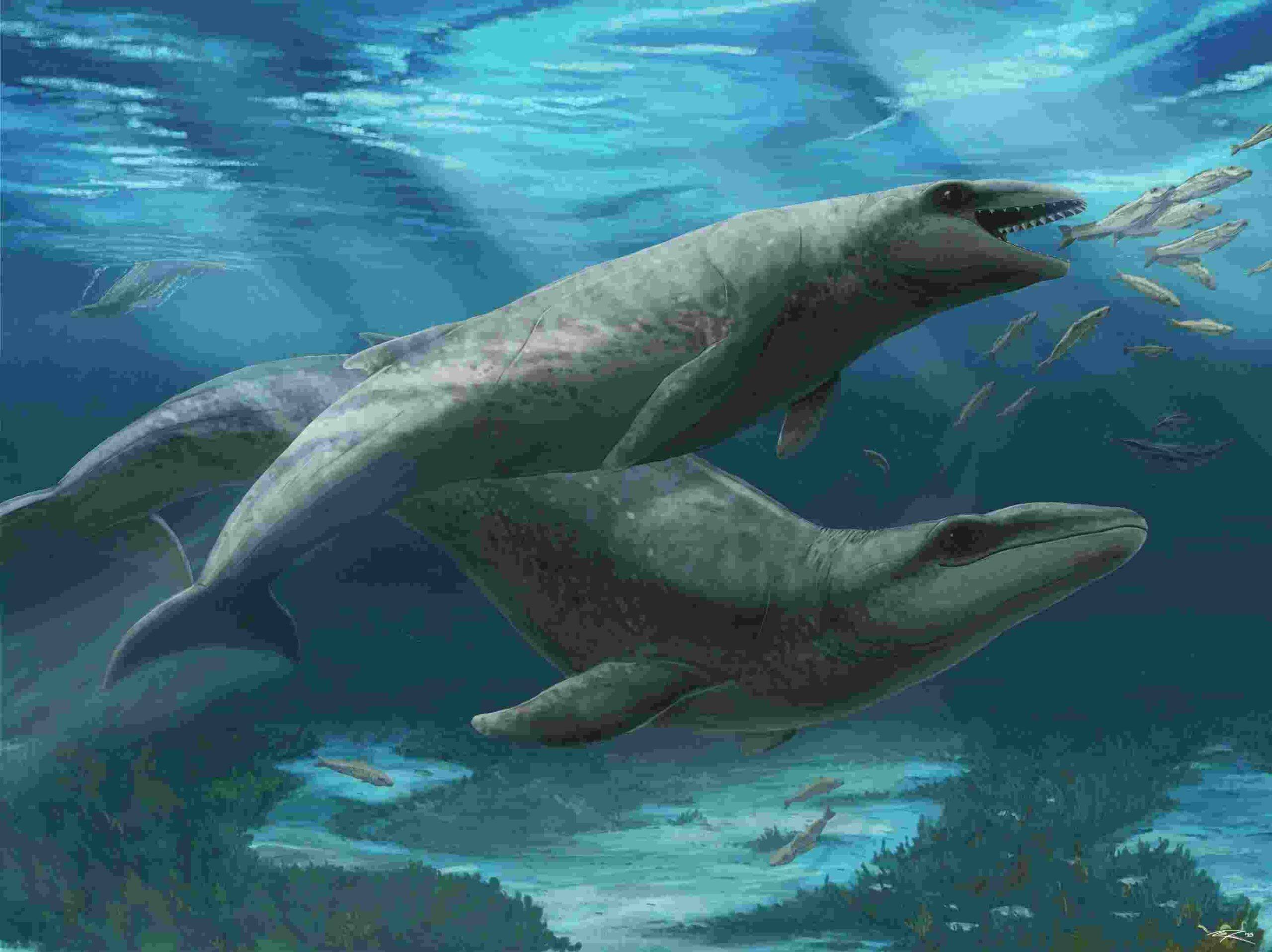
      Janjucetus dullardi calf and mother. Artwork by Ruairidh Duncan. Credit: Ruairidh Duncan / Museums Victoria

      Shark-like ancient whale with slicing teeth discovered on Victoria’s Surf Coast

      Artist’s impression of Navaornis. Credit: Júlia D’Oliveira

      Bird brain from the age of dinosaurs reveals roots of avian intelligence

      Two perfectly articulated skeletons of the sheep-size dinosaur Psittacosaurus, found in China’s Yixian Formation. New research suggests they died in burrow collapses, not via volcanism, as previously thought. (Jun Liu, Institute of Paleontology and Paleoanthropology, Chinese Academy of Sciences)

      Did the world’s best-preserved dinosaurs really die in ‘Pompeii-type’ events?

      Reddish-brown bands of Tava sandstone cut through other rocks. (Credit: Liam Courtney-Davies)

      Was ‘Snowball Earth’ a global event? Study delivers best proof yet

      The research findings hint at vast rivers of glacial water rushing like a reverse tsunami from the land into the sea, then pooling on top of extra salty, extra dense ocean water. Photo courtesy of AdobeStock.

      When Earth was slushy

      The origins of the massive January 2022 Hunga Tonga-Hunga Ha’apai volcanic eruption may have been detected in a seismic wave recorded 750 kilometers from the volcano, according to new research in Geophysical Research Letters. Credit: NASA

      New trigger proposed for record-smashing 2022 Tonga eruption

      Herrerasaurus ischigualastensis is an early saurischian dinosaur. It shared a bipedal, running anatomy common to large carnivorous dinosaurs that would evolve in the future, but this dinosaur lived at a time when dinosaurs were small-bodied and rare. Credit: Kristina Curry Rogers (illustration by Jordan Harris, CC-BY 4.0 (creativecommons.org/licenses/by/4.0/)

      Early dinosaurs grew up fast, but they weren’t the only ones

      A cut slice of altered mantle rock. (Photo by: Solvin Zankl)

      Researchers studying ocean transform faults, describe a previously unknown part of the geological carbon cycle

      Ancient plate tectonics in the Archean period differs from modern plate tectonics in the Phanerozoic period because of the higher mantle temperatures inside the early Earth, the thicker basaltic crust, and the non-depletion of melt-mobile incompatible trace elements in the mantle. Credit: Science China Press

      Plate tectonics in the Archean: Observation versus interpretation

      Mesozoic mural depicting different ocean species that have evolved through time. [Credit: Smithsonian Institution]

      Scientists discover 36-million-year geological cycle that drives biodiversity

      Researchers doing fieldwork in KwaZulu-Natal, South Africa. Credit: Stuart Gilfillan

      Rare gas find solves African landscape puzzle

      A view from the “Kimberley” formation on Mars taken by NASA’s Curiosity rover.

      Ice-squeezed aquifers might create marsquakes

      • TAGS
      • Video
      Facebook
      X
      Linkedin
      Pinterest
      WhatsApp
      Telegram
      ReddIt
      Flip
      Tumblr
      VK
      Email
        Previous articleWilson Cycle
        Next articleFoam favorable for oil extraction
        Geology Page

        Related Articles

        All
        • All
        • Featured
        • All time popular

        Extinct giant turtle had horned shell of up to three meters

        February 15, 2020

        Amazing Agate Photos

        September 10, 2016

        Scientists develop a new method for predicting volcanic eruptions

        October 29, 2015

        Scientists propose solution to ‘Gaia puzzle’

        July 3, 2018

        Changes in tectonic activity may have shaped composition of Panama Canal rocks

        May 12, 2017

        Rare cricket family sheds light on extinct Jurassic species’ acoustics

        March 17, 2017
        Facebook Instagram Linkedin TikTok X Youtube
        • Privacy Policy
        • Advertising
        • Contribute
        • FAQs
        © 2011-2025. All Rights Reserved.