
Introduction — Why Carbonatites Matter in the Critical Minerals Era
Carbonatite complexes occupy a unique and strategically important position in global geology. Although volumetrically rare, carbonatites are the primary global source of niobium (Nb)—a critical metal essential for high-strength low-alloy steels, aerospace components, energy infrastructure, and advanced technologies. As demand for critical minerals intensifies, understanding the petrological evolution of niobium-bearing carbonatites has become central to both academic research and mineral exploration strategies.
From a geological perspective, carbonatites are extraordinary because they represent carbonate-dominated magmas derived from the mantle, challenging long-standing models of silicate-dominated magmatism. Their evolution involves complex interactions between mantle source heterogeneity, partial melting, fractional crystallization, immiscibility, and hydrothermal processes, all of which play a role in concentrating niobium into economically viable deposits.
What Are Carbonatites? A Petrological Definition
Carbonatites are igneous rocks composed of more than 50% carbonate minerals by volume, primarily calcite, dolomite, or ankerite. Unlike sedimentary carbonates, carbonatites are unequivocally magmatic in origin, as demonstrated by their textures, mineral assemblages, isotope compositions, and spatial association with alkaline silicate rocks.
Mineralogical Composition of Carbonatites
Typical carbonatites contain:
- Carbonate minerals (calcite, dolomite, ferroan carbonates)
- Accessory phases such as apatite, magnetite, barite, fluorite
- Nb-bearing minerals, most notably pyrochlore-group minerals
- Enrichment in incompatible elements (Nb, REE, Sr, Ba, Th, U)
This unusual chemistry reflects their derivation from low-degree partial melts of a metasomatized mantle source.
Global Distribution and Tectonic Setting of Carbonatite Complexes
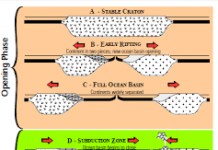
Carbonatites are spatially associated with intraplate tectonic environments, commonly occurring within:
- Continental rift zones
- Cratonic margins
- Stable continental interiors affected by mantle upwelling
They are frequently linked to alkaline igneous complexes, forming ring structures, cone sheets, and multi-phase intrusive centers.
Mantle Plumes and Lithospheric Control
Geophysical and geochemical evidence indicates that many carbonatite complexes originate from mantle plume-related thermal anomalies, combined with lithospheric thinning or reactivation of deep-seated structures. This tectonic configuration facilitates:
- Low-degree partial melting
- Ascent of volatile-rich melts
- Long-lived magmatic systems capable of extreme elemental fractionation
Carbonatite Petrogenesis — From Mantle to Crust
Understanding carbonatite petrogenesis is fundamental to explaining niobium enrichment.
Mantle Source Characteristics
Isotopic data (Sr–Nd–Pb–C–O) consistently indicate derivation from a heterogeneous, metasomatized subcontinental lithospheric mantle. This mantle source has been enriched by:
- Carbonate-rich melts
- Alkali- and volatile-bearing fluids
- Recycled subducted materials
These processes introduce niobium and other incompatible elements into mantle domains capable of generating carbonatitic melts.
Partial Melting and Melt Generation
Carbonatite magmas are produced by:
- Extremely low degrees of partial melting (<1%)
- Melting of carbonated peridotite or eclogite
- Stabilization of carbonate melts at lower temperatures than silicate melts
Such low-degree melts are inherently enriched in Nb, REE, and volatiles, setting the stage for mineralization.
Evolution of Carbonatite Magmas in the Crust
Once generated, carbonatite magmas undergo complex evolutionary pathways.
Magma Ascent and Emplacement
Carbonatite magmas ascend rapidly due to:
- Low viscosity
- High volatile content
- Buoyancy relative to surrounding rocks
They commonly intrude as:
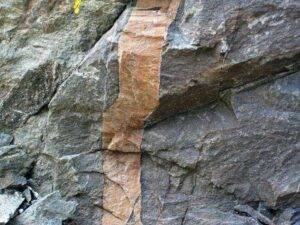
- Dykes
- Cone sheets
- Plug-like bodies
- Zoned intrusive complexes
Fractional Crystallization
As carbonatite magmas cool, early crystallization of carbonate and oxide minerals leads to progressive enrichment of incompatible elements, including niobium, in the residual melt. This process is critical in achieving ore-grade concentrations.
Immiscibility and the Silicate–Carbonatite Link
One of the most important processes in carbonatite evolution is liquid immiscibility.
Silicate–Carbonate Melt Separation
Experimental and natural studies demonstrate that alkaline silicate magmas can unmix into:
- A silicate-rich melt
- A carbonate-rich (carbonatitic) melt
This immiscibility process:
- Concentrates Nb into the carbonatitic melt
- Explains the intimate spatial association of carbonatites with nepheline syenites, ijolites, and phonolites
Niobium Min`2eralization in Carbonatite Complexes
Why Niobium Concentrates in Carbonatites
Niobium is a high-field-strength element (HFSE) with limited compatibility in major silicate minerals. In carbonatite systems:
- Nb remains in the melt during early crystallization
- Volatile-rich conditions suppress Nb incorporation into early phases
- Late-stage melts become extremely Nb-rich
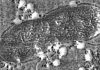
Pyrochlore-Group Minerals
The dominant niobium ore mineral in carbonatites is pyrochlore, typically occurring as:
- Magmatic crystals
- Hydrothermally altered phases
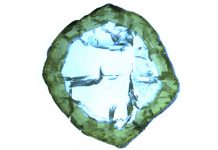
- Zoned grains recording magmatic evolution
Pyrochlore chemistry reflects:
- Redox conditions
- Magma composition
- Degree of hydrothermal overprinting
Hydrothermal Processes and Ore Upgrading
Role of Late-Stage Fluids
Post-magmatic hydrothermal fluids play a crucial role by:
- Redistributing niobium
- Altering primary pyrochlore
- Enhancing ore grade through dissolution–reprecipitation processes
Fluids rich in F, CO₂, and alkalis are particularly effective in mobilizing HFSEs.
Structural Controls on Mineralization
Faults, fractures, and breccia zones provide:
- Pathways for fluid flow
- Sites for mineral precipitation
- Controls on ore geometry and continuity
Carbonatites and Critical Mineral Exploration
Exploration Indicators for Niobium Carbonatites
Successful exploration relies on recognizing:
- Association with alkaline complexes
- Geophysical anomalies (magnetic, gravity)
- Geochemical halos enriched in Nb, REE, P, Sr, Ba
- Presence of pyrochlore and apatite-rich zones
Economic Significance
Major niobium deposits hosted by carbonatites supply the majority of global Nb demand, making these systems strategic assets in critical mineral supply chains.
Geological and Economic Implications
Carbonatite-hosted niobium deposits demonstrate how:
- Mantle processes directly influence resource distribution
- Rare magmatic systems can dominate global supply
- Understanding petrology is essential for sustainable exploration
As the global transition toward low-carbon and high-performance technologies accelerates, niobium carbonatites will remain at the forefront of critical mineral geology.
References
- Woolley, A. R., & Kjarsgaard, B. A. (2008). Carbonatite occurrences of the world. Geological Survey of Canada.
- Mitchell, R. H. (2005). Carbonatites and Carbonatites and Carbonatite Petrogenesis. Mineralogical Association of Canada.
- Bell, K., & Tilton, G. R. (2001). Nd, Pb and Sr isotopic compositions of carbonatites. Journal of Petrology, 42, 959–988.
- Chakhmouradian, A. R., & Zaitsev, A. N. (2012). Rare earth mineralization in carbonatites. Elements, 8, 333–338.
- Kjarsgaard, B. A., & Hamilton, D. L. (1989). Carbonatite–nephelinite liquid immiscibility. Journal of Petrology, 30, 939–974.
- Mariano, A. N. (1989). Economic geology of rare earth minerals. Reviews in Mineralogy, 21, 309–348.