
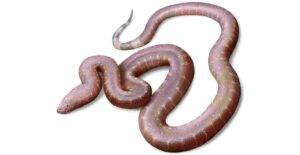
An extinct snake has slithered its way out of obscurity over four decades after its discovery. The newly described species of reptile, Paradoxophidion richardoweni, is offering new clues in the search for the origin of “advanced” snakes.
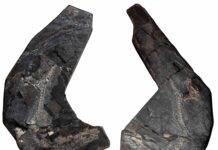
In 1981, the backbones of an ancient snake were uncovered at Hordle Cliff on England’s south coast. They’ve now been revealed as the remnants of a previously unknown species.
Research published in the journal Comptes Rendus Palevol has identified that the vertebrae belong to a new species named Paradoxophidion richardoweni. This animal would have lived around 37 million years ago, when England was home to a much wider range of snakes than it is now.
While little is known about this animal’s life, it could shed light on the early evolution of the biggest group of modern snakes. This is because Paradoxophidion represents an early-branching member of the caenophidians, the group containing the vast majority of living snakes.
The new species is so early in the evolution of the caenophidians that it has a peculiar mix of characteristics now found in different snakes throughout this group. This mosaic of features is summed up in its genus name, with Paradoxophidion meaning “paradox snake” in Greek.
Its species name, meanwhile, honors Richard Owen. Not only did he name the first fossil snakes found at Hordle Cliff, but this scientist was also instrumental in establishing what’s now the Natural History Museum where the fossils are cared for, giving the name multiple layers of meaning.
Lead author Dr. Georgios Georgalis, from the Institute of Systematics and Evolution of Animals of the Polish Academy of Sciences in Krakow, says that being able to describe a new species from our collections was “a dream come true.”
“It was my childhood dream to be able to visit the Natural History Museum, let alone do research there,” reveals Georgalis. “So, when I saw these very weird vertebrae in the collection and knew that they were something new, it was a fantastic feeling.”
“It’s especially exciting to have described an early diverging caenophidian snake, as there’s not that much evidence about how they emerged. Paradoxophidion brings us closer to understanding how this happened.”
What’s been discovered at Hordle Cliff?
Hordle Cliff, near Christchurch on England’s south coast, provides a window into a period of Earth’s history known as the Eocene that lasted from around 56 to 34 million years ago.
Dr. Marc Jones, our curator of fossil reptiles and amphibians who co-authored the research, says that this epoch saw dramatic climatic changes around the world.
“Around 37 million years ago, England was much warmer than it is now,” Jones explains. “Though the sun was very slightly dimmer, levels of atmospheric carbon dioxide were much higher.”
“England was also slightly closer to the equator, meaning that it received more heat from the sun year round.”
Fossils were first uncovered at Hordle Cliff around 200 years ago. In the early 1800s Barbara Rawdon-Hastings, the fossil-hunting Marchioness of Hastings, collected the skulls of crocodile relatives from the site, one of which Richard Owen would later name after her.
Since then, a variety of fossil turtles, lizards and mammals have also been uncovered at Hordle Cliff. There are also abundant snake fossils, including some particularly important species.
“The fossil snakes found at Hordle Cliff were some of the first to be recognized when Richard Owen studied them in the mid-nineteenth century,” says Georgalis. “They include Paleryx, the first named constrictor snake in the fossil record.”
“Smaller snakes from this site, however, haven’t been as well investigated. Paradoxophidion’s vertebrae are just a few millimeters long, so historically they’ve not had a lot of attention.”
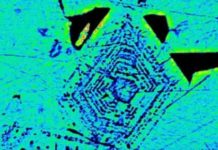
To get a better look at these fossils, Jones and Georgalis took CT scans of the bones. In total, they identified 31 vertebrae from different parts of the spine of Paradoxophidion.
“We used these CT scans to make three-dimensional models of the fossils,” Jones adds. “These provide a digital record of the specimen, which we’ve shared online so that they can be studied by anyone, not just people who can come to the museum and use our microscopes.”
The scans show that the fossils are all slightly different shapes and sizes, as the snake’s spine bones gradually taper from head to tail. However, they share some features that show they all belong to one species.
Georgalis estimates that Paradoxophidion would have been less than a meter long, but other details about this animal’s life are hard to say. The lack of a skull makes it difficult to know what it ate, while the vertebrae don’t have any sign of being adapted for a specialized lifestyle, such as burrowing.
A living link to the past?
Though the vertebrae don’t give much away about Paradoxophidion’s lifestyle, they are strikingly similar to a group of snakes known as the Acrochordids. These reptiles are known as elephant trunk snakes due to their unusually baggy skin.
Today, only a few species of these snakes can be found living in southeast Asia and northern Australia. But they’re among the earliest branches of the caenophidian family tree, with a fossil record extending back over 20 million years.
“As Paradoxophidion is really similar to the acrochordids, it’s possible that this snake could be the oldest known member of this family,” muses Georgalis. “If it was, then it could mean that it was an aquatic species, as all Acrochordids are aquatic.”
“On the other hand, it might belong to a completely different group of caenophidians. There’s just not enough evidence at the moment to prove how this snake might have lived, or which family it belongs to.”
Finding out more about Paradoxophidion and the early evolution of the caenophidians means that more fossils will need to be studied. Georgalis hopes to continue his work in our fossil reptile collections in the near future, where he believes more new species might be waiting.
“I’m planning to study a variety of snake fossils in the collection, including those originally studied by Richard Owen” Georgalis adds. “These include the remains of the giant aquatic snake Palaeophis, which were first found in England in the nineteenth century.”
“There are also several bones with differing morphology that haven’t been investigated before that I’m interested in looking at. These might represent new taxa and offer additional clues about snake evolution.”
Reference:
Georgios L. Georgalis et al, A new peculiar early diverging caenophidian snake (Serpentes) from the late Eocene of Hordle Cliff, England, Comptes Rendus Palevol (2025). DOI: 10.5852/cr-palevol2025v24a25
Note: The above post is reprinted from materials provided by Natural History Museum.