back to top
Facebook Instagram Linkedin TikTok X Youtube
  • Contribute
  • Advertising
  • FAQs
Search

Logo

27.8 C
New York
Thursday, September 3, 2026
Facebook
Instagram
Linkedin
TikTok
X
Youtube

Logo

  • Home
  • List of Minerals
  • Geologic Time Scale
  • Geology Tools
  • Geology Adventure Tours
  • Plate Tectonics Map
    • Plate Boundary Map
  • Top Posts
  • Geology Jobs
  • GEO Courses
  • Geology Field Camps
  • Geology Field Camps in United States
  • Worldwide Geological Surveys
More
    A fossilized mantle of a vampyropod, a relative to the vampire squid. The ink sacis the raised structure in the center, and muscles have a striated appearance. Credit: Rowan Martindale/The University of Texas at Austin Jackson School of Geosciences.

    Exceptional fossils may need a breath of air to form

    November 7, 2019
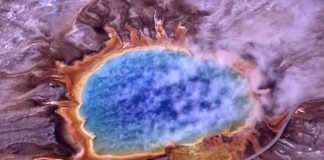
    Hot Springs in Yellowstone National Park

    How sulfur helped make Earth habitable before the rise of oxygen

    November 7, 2019

    Earthquake impact can be affected by seasonal factors, historical study shows

    November 7, 2019

    Studying the snowmelt episodes of a Pyrenean river with a seismometer

    November 7, 2019
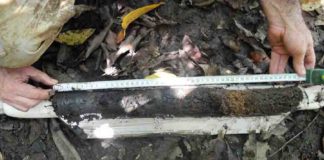
    Peaty sedimentary archive from a palm swamp collected with a Russian corer. (Image:Encarni Montoya)

    A new study shows the evolution and changes of the vegetation...

    November 7, 2019
    Ore Minerals

    Ore Minerals : What are Ore Minerals?

    November 4, 2019
    Opalized Ammonite

    Research offers insight into how oldest fossils formed

    November 2, 2019
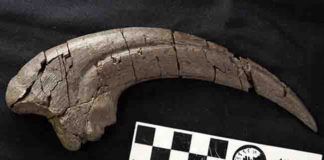
    Fossilised 20 centimetre long hand claw of theropod discovered at Eric the West site on Victoria’s Otway Coast. Credit: Stephen Poropat/Museums Victoria

    Huge-clawed predatory dinosaur discovery in Victoria

    November 2, 2019
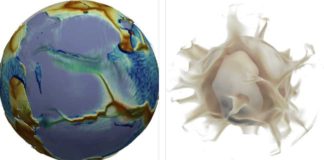
    Images of the numerical solution at the moment when a supercontinent (left, in purplish grey) begins to break up. In the image on the left, the modelled fictional planet looks much like the Earth: its surface and mantle move spontaneously, at speeds close to those observed on Earth. The distribution of the plates (some of which are large, while many are small) is also similar, as is the topography: red hues represent shallow regions of the ocean (ridges), while blue indicates the deep seafloor. The deepest blue areas correspond to subduction trenches (where a plate is sinking into the mantle). The continents are shown in translucent white (and therefore appear purplish grey).The image on the right shows warm currents (plumes) rising from the bottom of the mantle. Credit: Nicolas Coltice

    What makes the Earth’s surface move?

    November 2, 2019
    As part of MISTI-India, Megan Guenther, a junior in EAPS, records field notes about the landscape of the Kohistan-Ladakh region of the Himalayas in northern India. Credit: Craig Martin

    Collision course: A geological mystery in the Himalayas

    November 2, 2019
    1...115116117...686Page 116 of 686

    Related Articles

    All
    • All
    • Featured
    • All time popular

    Surprisingly vibrant color of 12-million-year-old snail shells

    February 12, 2024

    Origins of ‘Welsh dragons’ finally exposed by experts

    July 21, 2024

    Shedding light on Australia’s polar dinosaurs

    January 25, 2018

    Wisconsin geologists go miles deep in quest to predict earthquakes

    August 13, 2014

    Newly-discovered dinosaur had “T. rex arms” that evolved independently

    July 14, 2016

    Unique skin impressions of the last dinosaurs from what is now Europe

    October 14, 2016

    Facebook Instagram Linkedin TikTok X Youtube
    • Privacy Policy
    • Advertising
    • Contribute
    • FAQs
    © 2011-2026. All Rights Reserved.