
A pair of exceptionally rare Cretaceous bird bones found at separate sites near Richmond, Queensland, reveal a previously unknown species—the second formally named Cretaceous bird from Australia. Cretaceous bird fossils are extremely scarce in Australia, with fewer than a dozen isolated bones reported, making these finds especially significant. The research is published in the Journal of Vertebrate Paleontology.
Discovery in the ‘fish mash layer’
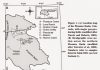
Kevin Petersen, a former curator of Kronosaurus Korner, discovered the first bone while fossil hunting in the public collecting areas near Richmond. While excavating the “fish mash layer”—a fossil-rich stratum packed with fish remains and scattered teeth from marine predators like plesiosaurs and ichthyosaurs—Petersen noticed a long, light-brown bone unlike any I’d seen before. He set it aside for later identification.
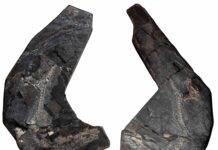
A week later, after rain, Petersen found a second unfamiliar bone on a rock slab. He photographed both specimens and sent the images to Dr. Matt White (University of New England). “I recognized them immediately as bird bones,” White said. “These specimens are especially significant because so few have been found in Australia, and none were directly comparable until now.”
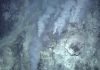
White identified one element as a tarsometatarsus (the fused foot bones of birds) and the other as a tibiotarsus. Both were well preserved but partly encased in concretion, so the team opted not to fully excavate them. The specimens were scanned at the Australian Nuclear Science and Technology Organisation (ANSTO) by Dr. Joseph Bevitt. White converted the scan data into 3D meshes to visualize the bones within the rock.
This nondestructive imaging allowed direct comparison between the new tibiotarsus and Nanantius eos—the only other formally named Cretaceous bird from Australia, described in 1986. The scans revealed clear anatomical differences.
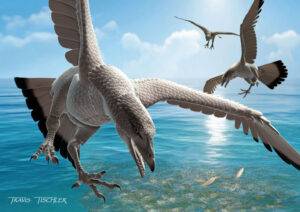
The new taxon has been named Tenuicruris piscanexum: Tenuicruris (“slender leg”) refers to the gracile limb morphology, and piscanexum links the species to the fish-rich layer in which it was found. Phylogenetic assessment places both specimens within Enantiornithes, the dominant and diverse clade of Mesozoic birds worldwide.
Although represented by isolated bones, Tenuicruris is scientifically important: It increases the number of comparable Cretaceous bird specimens from Australia and provides fresh data on avian diversity and paleoecology in the Toolebuc Formation (about 105 million years old). That formation already yields a rich marine assemblage including pliosaurs, plesiosaurs, turtles, sharks, chimaeroids, bony fish and pterosaurs. These bird remains add a new dimension to reconstructions of the inland sea ecosystem.
A brief history of Cretaceous bird fossils in Australia
Despite more than 11,000 living bird species, skeletal fossils of Cretaceous birds in Australia are extremely rare. The oldest avian remains come from Early Cretaceous deposits in Victoria (about 128 million to 120 million years old). Other trace fossils—isolated feathers and footprints of various sizes—hint at past diversity, but articulated bones are scarce.
Some opalized bird material has been recovered from Lightning Ridge (Griman Creek Formation, about 110 million to 97 million years old). Until now, only one Cretaceous bird had been formally named from Australia: Nanantius eos, described from an isolated tibiotarsus from the Toolebuc Formation (around 105 million years old). A few additional Nanantius tibiotarsi have been reported, one even preserved with ichthyosaur gut contents, but overall the skeletal record remains very limited.
Why this matters
Even isolated bones can be scientifically valuable when so few comparative specimens exist. Tenuicruris increases the number of comparable named Cretaceous bird taxa from Australia from one to two, improving our ability to assess avian diversity and ecology in the region. The find also adds birds to the growing faunal list from the Toolebuc Formation, alongside ichthyosaurs, pliosaurs, plesiosaurs, turtles, sharks, chimaeroids, bony fish and pterosaurs—evidence of a rich inland-sea ecosystem.
On a recent visit during Queensland’s Dinosaur Week, Dr. Dean Lomax (University of Bristol) examined the specimens: “Although the newly discovered remains represent isolated bones, they are exceptionally rare—the second named Cretaceous bird from Australia. This find provides exciting new information about the ancient environment and diversity of animals around what is now Richmond.”
Public fossil-hunting sites and paleontology
The Richmond fossil-hunting areas continue to be extraordinarily productive. Many important specimens in Kronosaurus Korner’s collections were found by amateurs and visitors. As people become better able to recognize small, fragile bones such as those of pterosaurs and birds, we can expect more discoveries that broaden our picture of Cretaceous ecosystems in Australia.
Reference:
Matt A. White et al, Tenuicruris piscanexum, a new addition to Australia’s rare Cretaceous bird fossils, Journal of Vertebrate Paleontology (2026). DOI: 10.1080/02724634.2026.2703151
Note: The above post is reprinted from materials provided by University of New England.