back to top
Facebook Instagram Linkedin TikTok X Youtube
  • Contribute
  • Advertising
  • FAQs
Search

Logo

27.8 C
New York
Wednesday, November 11, 2026
Facebook
Instagram
Linkedin
TikTok
X
Youtube

Logo

  • Home
  • List of Minerals
  • Geologic Time Scale
  • Geology Tools
  • Geology Adventure Tours
  • Plate Tectonics Map
    • Plate Boundary Map
  • Top Posts
  • Geology Jobs
  • GEO Courses
  • Geology Field Camps
  • Geology Field Camps in United States
  • Worldwide Geological Surveys
More
    Calcium carbonate samples from a sediment core drilled from the mid-Pacific Mountains. Credit: Northwestern University

    Volcanic eruptions directly triggered ocean acidification during Early Cretaceous

    January 12, 2021
    Pululagua in Ecuador

    Scientists develop new approach to understanding massive volcanic eruptions

    January 10, 2021
    Photo: © Christian S. Marien

    Slow start of plate tectonics despite a hot early Earth

    January 10, 2021
    The scientists examined more than 3,500 fossils to identify survivor pairs - plants that grew in both the Cretaceous and Paleogene periods. The two fossils on the left are from the Cretaceous, and the two on the right are from the Paleogene. Credit: Elena Stiles

    Leaf fossils show severe end-Cretaceous plant extinction in southern Argentina

    January 10, 2021
    Researcher overlooking one of the two field sites for the study, the Frenchman Valley in Chambery Coulee Saskatchewan in July 2017. Credit: McGill University

    When dinosaurs disappeared, forests thrived

    January 10, 2021
    2D Life reconstruction Atuchin. Credit: © Andrey Atuchin

    The ‘crazy beast’ that lived among the dinosaurs

    January 10, 2021
    Ubirajara jubatus is named after a Tupi Indian name for 'lord of the spear', in reference to the creature's stiffened, elongate integumentary structures, and jubatus from the Latin meaning 'maned' or 'crested'. Image must be credited Credit: Artwork © Bob Nicholls / Paleocreations.com 2020

    New dinosaur showed descendants how to dress to impress

    December 17, 2020
    The head and body of the Messel python are almost completely preserved. Credit: Hessian State Museum Darmstadt

    World’s earliest python identified from 47 million-year-old fossil remains

    December 17, 2020
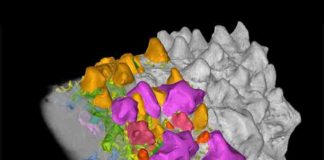
    Part of a jawbone of the 422-million-year-old fossil bony fish Lophosteus, visualized with a high-resolution X-ray technique. On the right, the surface of the jawbone is shown in gray. In the middle, exposed teeth are highlighted in gold and dermal odontodes in shades of purple, pink and red. On the left, the bone itself is made transparent, revealing internal blood vessels and pulp cavities, shown in blue and green, as well as the embedded teeth and dermal odontodes. Credit: Chen et al. (CC BY 4.0)

    Primitive fish fossils reveal developmental origins of teeth

    December 17, 2020
    Braincase and endocast of Thecodontosaurus antiquus. From CT scans of the braincase fossil, 3-D models of the braincase and the endocast were generated and studied. Credit: Created by Antonio Ballell with BioRender, Thecodontosaurus silhouette from PhyloPic.org.

    Research reveals unexpected insights into early dinosaur’s brain, eating habits and...

    December 17, 2020
    1...747576...688Page 75 of 688

    MOST POPULAR

    Observing the Birkeland currents

    October 8, 2014
    Yowah Nut Opal

    Yowah Nut Opal

    July 9, 2024
    Earth is bombarded at random-GeologyPage

    More than one asteroid could have spelled doom for the dinosaurs

    August 26, 2022

    Kaikoura quake may prompt rethink of earthquake hazard models internationally

    March 24, 2017
    Load more

    MORE ARTICLES

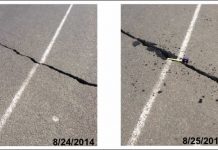
    Lessons from Parkfield help predict continued fault movements after earthquakes

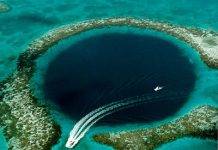
    Sinkhole : What are sinkholes? What causes them?

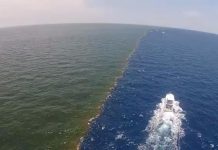
    Incredible View for Mississippi River and Gulf of Mexico

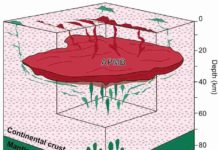
    This model shows how iron- and magnesium-rich magma (green) is formed at great depth and can move along the outer edges of the large Altiplano-Puna magma body (APMB)(red) to gradually force its way up to the surface during a volcanic eruption. Eruptions with such lava are uncommon and provide a unique insight into the processes that take place deep inside the Earth under the Andes. Credit: Osvaldo Gonzalez Maurel

    New study takes the pulse of a sleeping supervolcano

    Facebook Instagram Linkedin TikTok X Youtube
    • Privacy Policy
    • Advertising
    • Contribute
    • FAQs
    © 2011-2026. All Rights Reserved.