back to top
Facebook Instagram Linkedin TikTok X Youtube
  • Contribute
  • Advertising
  • FAQs
Search

Logo

27.8 C
New York
Wednesday, November 11, 2026
Facebook
Instagram
Linkedin
TikTok
X
Youtube

Logo

  • Home
  • List of Minerals
  • Geologic Time Scale
  • Geology Tools
  • Geology Adventure Tours
  • Plate Tectonics Map
    • Plate Boundary Map
  • Top Posts
  • Geology Jobs
  • GEO Courses
  • Geology Field Camps
  • Geology Field Camps in United States
  • Worldwide Geological Surveys
More
    Volcano magma chamber. Credit: Cardiff University

    When volcanoes go metal

    March 19, 2021
    Adzebills, also close relatives of cave-rails, were large, flightless birds with big beaks that could have been used to prey on small animals or strip vegetation. Illustration courtesy of Nobu Tamura, CC BY 3.0

    Extinct Caribbean bird’s closest relatives hail from Africa, South Pacific

    March 19, 2021
    Glaciers such as the Yakutat in Southeast Alaska, shown here, have been melting since the end of the Little Ice Age, influencing earthquakes in the region. Credit: Sam Herreid

    Melting glaciers contribute to Alaska earthquakes

    March 19, 2021
    Isua in Greenland Credit: Hanika Rizo

    Traces of Earth’s early magma ocean identified in Greenland rocks

    March 19, 2021
    Despite ESA’s GOCE mission ending over seven years ago, scientists continue to use this remarkable satellite’s gravity data to delve deep and unearth secrets about our planet. Recent research shows how scientists have combined GOCE data with measurements taken at the surface to generate a new model of Earth’s crust and upper mantle. This is the first time such a model has been created this way – and it is shedding new light on the processes of plate tectonics. The new model produced in ESA’s 3D Earth study shows for the first time how dissimilar the sub-lithospheric mantle is beneath different oceans, and provides insight as to how the morphology and spreading rates of mid-oceanic ridges may be connected with the deep chemical and thermal structure. Credit: ESA/Planetary Visions)

    Gravity mission still unearthing hidden secrets

    March 19, 2021
    In this image, the warped amount of the surface is due to the opening of the Central American gateway that allowed hot material to flow through. (a) Before 8.5 million years ago, hot material was upwelling under the Galapagos from deep inside the Earth, but was blocked out of the Caribbean because of a curtain of subducting plate. (b) A gateway opened at 8.5 million years ago allowing the hot material to flow through. (c) Today, the hot material reaches midway between Central America and the Lesser Antilles, tilting up the bottom of the Caribbean sea by about 300 m (1,000 ft). Credit: University of Houston

    Geologists discover powerful ‘river of rocks’ below Caribbean

    March 19, 2021
    Arenal, a major tourist attraction in Costa Rica, is one of the most active volcanos in Central America. Credit: Ernesto Tejedor

    Volcanic eruptions had large and persistent impacts on global hydroclimate over...

    March 19, 2021
    Fungi sample, hypha and sphere in a drill core sample from 540 m depth in the Siljan impact structure, scanning electron microscope image (width ~70 µm). Credit Henrik Drake.

    Europe’s largest meteorite crater – home to deep ancient fungi

    March 13, 2021
    Skeletons of four tyrannosaurid specimens tested in the study. Clockwise from above left: adult Tyrannosaurus rex “Sue” (FMNH PR 2081) (Field Museum of Natural History, Chicago, IL; photo by the Field Museum), juvenile Tyrannosaurus rex “Jane” (BMRP 2002.4.1) (Burpee Museum of Natural History; photo by A. Rowe), adult Tarbosaurus bataar (Dinosaurium exhibition, Prague, Czech Republic; photo by R. Holiš) and Raptorex kriegsteini skeletal reconstruction (LH PV18) (Long Hao Institute of Geology and Paleontology, Hohhot, Inner Mongolia, China; photo by P. Sereno). Credit: Listed in caption. Final image by Andre Rowe

    Younger Tyrannosaurus Rex bites were less ferocious than their adult counterparts

    March 9, 2021
    These fossil ammonites have lost their outer coating of shell, revealing the iridescent nacre beneath. Now extinct, ammonites were a group of marine mollusks that first appeared about 409 million years ago, persisting until the extinction event that wiped out the dinosaurs about 66 million years ago. Credit: Florida Museum photo by Jeff Gage

    Rise of marine predators reshaped ocean life as dramatically as mass...

    March 9, 2021
    1...707172...688Page 71 of 688

    MOST POPULAR

    Filling in gaps in the history of earth’s magnetic field

    December 9, 2015

    500 million-year-old fossils show how extinct organisms attacked their prey

    February 18, 2016
    Other plants found in the Rhynie Chert have a range of different vascular systems. Asteroxylon, for example, already has xylem and phloem. © The Trustees of the Natural History Museum, London

    A 400-million-year-old plant creates water so weird it looks alien

    December 20, 2025

    Giant prehistoric bird fossils found in Antarctica

    May 19, 2016
    Load more

    MORE ARTICLES

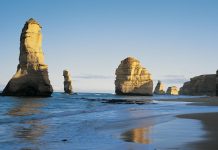
    The Drowned Apostles was Discovered

    Fossils reveal ancient shrublands in fiery landscape

    Paleontologists discover evidence of new types of dinosaurs in Idaho including...

    Tropical ants in Europe

    Facebook Instagram Linkedin TikTok X Youtube
    • Privacy Policy
    • Advertising
    • Contribute
    • FAQs
    © 2011-2026. All Rights Reserved.