back to top
Facebook Instagram Linkedin TikTok X Youtube
  • Contribute
  • Advertising
  • FAQs
Search

Logo

27.8 C
New York
Wednesday, November 11, 2026
Facebook
Instagram
Linkedin
TikTok
X
Youtube

Logo

  • Home
  • List of Minerals
  • Geologic Time Scale
  • Geology Tools
  • Geology Adventure Tours
  • Plate Tectonics Map
    • Plate Boundary Map
  • Top Posts
  • Geology Jobs
  • GEO Courses
  • Geology Field Camps
  • Geology Field Camps in United States
  • Worldwide Geological Surveys
More
    An enhanced image of Bicellum showing an outer wall of sausage-shaped cells enclosing an inner cell mass. Credit: Boston College

    Microfossil found in Scottish Highlands could be a new insight into...

    May 7, 2021
    Researchers also want to encourage the locals to develop practical evacuation plans to help them feel less pessimistic about their survival odds. Credit: Katsushika Hokusai

    Previously unrecognized tsunami hazard identified in coastal cities

    May 7, 2021
    A close-up image of bladed barite crystals in the Mapepe Formation in the Barberton Greenstone Belt of South Africa. Credit: Desiree Roerdink

    New research uncovers continental crust emerged 500 million years earlier than...

    May 7, 2021
    Seismogram

    Earthquake, tsunami hazards from subduction zones might be higher than current...

    May 7, 2021
    Fracking

    Local impacts from fracking the Eagle Ford

    May 7, 2021
    "Hollywood" specimen, same species as Teratophoneus, discovered approximately two miles north of the "Rainbows and Unicorns Quarry" on Grand Staircase-Escalante National Monument. Credit: U.S. Bureau of Land Management

    Fearsome tyrannosaurs were social animals, study shows

    April 24, 2021
    Illustration showing how the three new species of fossil cloud rats might have looked. Credit: © Velizar Simeonovski, Field Museum.

    Fossils of ‘giant cloud rats’ discovered in Philippine caves

    April 24, 2021
    Rafinesquina, seen in this close-up shot, was an ancient genus of brachiopod belonging to order Strophomenida. This order survived two mass extinction events, but the second represented a ‘death sentence’ from which they were unable to recover diversity, persisting for another hundred million years as a ‘dead clade walking’ before their eventual extinction. IMAGE: Provided by Benjamin Barnes

    New insights into mass extinctions

    April 24, 2021
    Bathymetric chart of a part of the Red Sea. Source GEOMAR.

    Red Sea is no longer a baby ocean

    April 24, 2021
    Experimental setup for 3D seismic model.

    3D printed models provide clearer understanding of ground motion

    April 24, 2021
    1...686970...688Page 69 of 688

    MOST POPULAR

    Researchers in the Antarctic discover new facets of space weather

    May 21, 2016
    The Wedderburn meteorite. (Museums Victoria/CC BY 4.0)

    Scientists Confirm The Discovery of a Mineral Never Before Seen in...

    September 5, 2019
    Aquilarhinus palimentus, or ‘shovel-chinned eagle nose’. Illustration by ICRA Art

    Strange new species of duck-billed dinosaur identified

    July 16, 2019
    Meltwater stream inside the crater on the Roi Baudouin ice shelf. Credit: Stef Lhermitte

    Mysterious ‘crater’ on Antarctica indication of vulnerable ice sheet

    December 12, 2016
    Load more

    MORE ARTICLES

    India , Asia

    When India Slammed Into Asia

    How to Make Borax Crystals

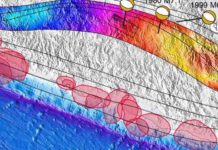
    Map shows earthquake epicenters (surrounded in light red) offshore where the Cocos and North American tectonic plates meet. The newer fault zone is inland, the black lines mark the changing trajectories of abyssal hills atop the descending Cocos Plate. Blue-shaded areas in this zone are where subduction angles remain steep. The pink area, below Mexico City, is a transition zone where another earthquake could occur. The 2017, 1999 and 1980 quake epicenters are in a red-shaded zone to the southeast that is considered to be at most risk for quakes.

    Mexico’s 2017 earthquake emerged from a growing risk zone

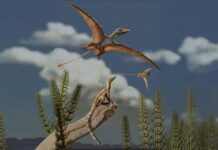
    Reconstruction of a Late Triassic landscape (approximately 215 million years ago). A lagerpetid, a close relative of pterosaurs, is perched on a rock, observing pterosaurs flying overhead. Credit: Matheus Fernandes, edited

    Fossil brain scans show pterosaurs evolved flight in a flash

    Facebook Instagram Linkedin TikTok X Youtube
    • Privacy Policy
    • Advertising
    • Contribute
    • FAQs
    © 2011-2026. All Rights Reserved.