back to top
Facebook Instagram Linkedin TikTok X Youtube
  • Contribute
  • Advertising
  • FAQs
Search

Logo

27.8 C
New York
Wednesday, November 11, 2026
Facebook
Instagram
Linkedin
TikTok
X
Youtube

Logo

  • Home
  • List of Minerals
  • Geologic Time Scale
  • Geology Tools
  • Geology Adventure Tours
  • Plate Tectonics Map
    • Plate Boundary Map
  • Top Posts
  • Geology Jobs
  • GEO Courses
  • Geology Field Camps
  • Geology Field Camps in United States
  • Worldwide Geological Surveys
More
    The eruption and volcanic material sedimentation processes of giant caldera eruptions are not well understood, making it also difficult to estimate their size. Kobe University researchers used seismic reflection surveys to visualize the sedimentary structure and analyzed collected sediment samples, enabling them to obtain important information on the distribution, volume, and transport mechanisms of the ejecta. © SHIMIZU Satoshi (CC BY)

    Biggest Holocene volcano eruption found by seabed survey

    March 16, 2024
    Photo caption: Waves received in the wind tunnel of Ben Gurion University of the Negev with glass balls with a diameter of 90 microns. Two scales of waves can be seen in the image.

    New theory explains sand ripples on Mars and on Earth

    March 16, 2024
    Aaron Bufe investigates the weathering of rocks. | © C. Trepmann

    Rock weathering and climate: Low-relief mountain ranges are largest carbon sinks

    March 16, 2024
    Satellite image of gully landscapes on Mars, taken by HiRISE (High Resolution Imaging Experiment), a camera on board the Mars Reconnaissance Orbiter (photo no.: ESP_039114_1115). The white CO2 ice is visible on the sides of the gullies.

    Surprising insights about debris flows on Mars

    March 16, 2024
    Grand Prismatic Spring in Yellowstone National Park, seen here from an aerial photo, provides a modern-day glimpse into the types of environments where sulfites may have accumulated and possibly played a role in kick-starting the earliest life on Earth.

    Sulfur and the origin of life

    March 16, 2024
    Scientists analyzed mercury levels from core samples from the Mochras Farm (Llanbedr) borehole in Wales to estimate how much and how rapidly carbon was released during ancient volcano events in Earth's history Credit: Stephen Hesselbo. All Rights Reserved.

    Mercury rising: Study sheds new light on ancient volcanoes’ environmental impact

    March 16, 2024
    Left: The flight feathers of Temminck's Lark. Right: The wing of a fossil bird, Confuciusornis. Photos by Yosef Kiat.

    Which Dinosaurs Could Fly?

    February 24, 2024
    mollusc from the Cabrières Biota. Credit: Farid Saleh - UNIL

    New fossil site of worldwide importance uncovered in southern France

    February 24, 2024
    Tridentinosaurus antiquus was discovered in the Italian alps in 1931 and was thought to be an important specimen for understanding early reptile evolution – but has now been found to be, in part a forgery. Its body outline, appearing dark against the surrounding rock, was initially interpreted as preserved soft tissues but is now known to be paint.

    Mystery solved: The oldest fossil reptile from the alps is an...

    February 24, 2024
    Maps showing the evolution of the Gibraltar subduction zone from 30 million years ago to 50 million years into the future. From Duarte et al., 2024.

    Early-stage subduction invasion

    February 23, 2024
    1...313233...688Page 32 of 688

    MOST POPULAR

    Larger: A back-scattered electron image of a microscopic crystal of priscillagrewite-(Y) enclosed in fluorapatite. Inset: An optical image of the same crystal. Credit: American Mineralogist / Irina Galuskina et al.

    Priscillagrewite : New mineral named in honor of renowned Nebraska geologist

    September 18, 2020
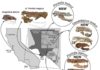
    Map & Skulls. Credit: Journal of Vertebrate Paleontology

    Paleontologists uncover three new species of extinct walruses in Orange County

    November 20, 2020

    New fossil skulls reveal insights about penguin brain evolution

    August 28, 2015
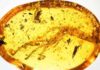
    100 million-year-old amber piece with lizard leg and mycomycete (arrow).

    100 million years in amber: Researchers discover oldest fossilized slime mold

    January 8, 2020
    Load more

    MORE ARTICLES

    New species of terrestrial crab found climbing on trees in Hong...

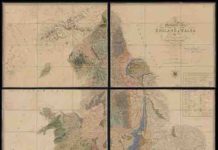
    A Geological Map of England and Wales’, 1819, George Bellas Greenough (1778-1855)

    Going underground: Cambridge digs into the history of geology with landmark...

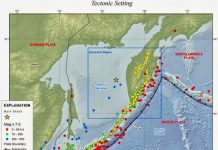
    Seismologists Puzzle Over Largest Deep Earthquake Ever Recorded

    Earth may be 140 years away from reaching carbon levels not...

    Facebook Instagram Linkedin TikTok X Youtube
    • Privacy Policy
    • Advertising
    • Contribute
    • FAQs
    © 2011-2026. All Rights Reserved.