back to top
Facebook Instagram Linkedin TikTok X Youtube
  • Contribute
  • Advertising
  • FAQs
Search

Logo

27.8 C
New York
Thursday, November 12, 2026
Facebook
Instagram
Linkedin
TikTok
X
Youtube

Logo

  • Home
  • List of Minerals
  • Geologic Time Scale
  • Geology Tools
  • Geology Adventure Tours
  • Plate Tectonics Map
    • Plate Boundary Map
  • Top Posts
  • Geology Jobs
  • GEO Courses
  • Geology Field Camps
  • Geology Field Camps in United States
  • Worldwide Geological Surveys
More
    Lava fountains at Kilauea in Hawaii created a spatter cone, which was estimated to be 180 feet tall in this June 2018 photo. Credit: U.S. Geological Survey

    The ‘universal break-up criterion’ of hot, flowing lava?

    August 31, 2019
    The scans revealed many microscopic food remains including foraminifera (small amoeboid protists with external shells), small shells of marine invertebrates and possible remains of polychaete worms. Credit: Qvarnström mfl.

    Filter-feeding pterosaurs were the flamingos of the Late Jurassic

    August 31, 2019

    Ancient Tsunamis: Deducing the scale of tsunamis from the ’roundness’ of...

    August 25, 2019
    Steep crater wall of Ngozi volcano in the Poroto Ridge Forest Reserve, Tanzania. Credit: Egbert Jolie/GFZ

    Detecting hydrothermal vents in volcanic lakes

    August 25, 2019
    Picture taken at one of the sites inspected in the Coastal Range of the Atacama Desert. On this picture Professor Azua-Bustos and González-Silva are donning sterile suites and using sterile collecting materials in order to avoid the contamination of the sites studied. Credit: Margarita Azua

    Atacama Desert microbes may hold clues to life on Mars

    August 25, 2019
    A picture of Mt. Aso, including locations of eastern and western clusters. Credit: Aso Geopark Promotion Council

    Underground links between quakes and eruptions of Japan’s biggest active volcano

    August 25, 2019
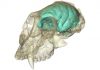
    An exceptional fossil skull of Chilecebus carrascoensis, a 20-million-year-old primate from the Andes mountains of Chile. Credit: © AMNH/N. Wong and M. Ellison

    20-million-year-old skull suggests complex brain evolution in monkeys, apes

    August 25, 2019
    A Desmoceras fossil. A cephalopod that thrived in the early Cretaceous, 146 to 100 million years ago. Note the fossilized biomineral nacre or mother of pearl. Credit: Pupa Gilbert

    Making biominerals: Nature’s recipe is old, evolved more than once

    August 25, 2019
    Fig. 1. 10 million-year-old fossil frog from Libros, Spain and X-ray map showing elevated levels of copper and zinc in the internal organs. Fossil photograph copyright the Natural History Museum, London. X-ray fluorescence map. Credit: Valentina Rossi

    Scientists discover new way to reconstruct what extinct animals looked like

    August 25, 2019
    Obsidian Rock

    Obsidian : What is obsidian? Why obsidian is black?

    August 17, 2019
    1...125126127...688Page 126 of 688

    MOST POPULAR

    Old World monkey had tiny, complex brain

    July 4, 2015
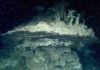
    This hydrothermal chimney was one of several discovered by MBARI scientists in the southern Pescadero Basin.

    Researchers help map and scout for hydrothermal vents in Gulf of...

    November 4, 2018

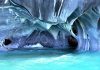
    Marble Caves

    June 1, 2016

    New insights into the ancestors of all complex life

    May 27, 2017
    Load more

    MORE ARTICLES

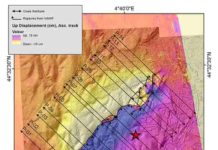
    Surface displacement mapped using InSAR satellite imaging data. Along the fault, the ground was either raised (southeast) or collapsed (northwest). The star designates the epicentre. Credit: Jean-François RITZ et al

    The Le Teil earthquake provides new insights on seismic risk in...

    Fish eye sheds light on color vision

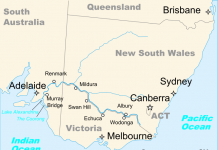
    Murray River

    How to Identify Minerals?

    Facebook Instagram Linkedin TikTok X Youtube
    • Privacy Policy
    • Advertising
    • Contribute
    • FAQs
    © 2011-2026. All Rights Reserved.