back to top
Facebook Instagram Linkedin TikTok X Youtube
  • Contribute
  • Advertising
  • FAQs
Search

Logo

27.8 C
New York
Wednesday, September 2, 2026
Facebook
Instagram
Linkedin
TikTok
X
Youtube

Logo

  • Home
  • List of Minerals
  • Geologic Time Scale
  • Geology Tools
  • Geology Adventure Tours
  • Plate Tectonics Map
    • Plate Boundary Map
  • Top Posts
  • Geology Jobs
  • GEO Courses
  • Geology Field Camps
  • Geology Field Camps in United States
  • Worldwide Geological Surveys
More
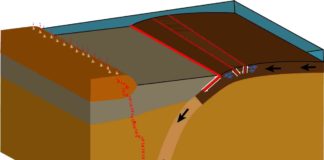
    Japan's risk of giant tsunamis may have grown when the angle of a down-going slab of ocean crust declined. Top: ocean crust (right) slides under continental crust at a steep angle, causing faulting (red lines) in seafloor sediments piled up behind. Bottom: as the angle shallows, stress is transferred to sediments piled onto the continental crust, and faults develop there. Blue dots indicate resulting earthquakes. At left in both images, the change in angle also shifts the region where magma fueling volcanoes is generated, pushing eruptions further inland. Credit: Adapted from Oryan and Buck, Nature Geoscience 2020

    Shifts in deep geologic structure may have magnified great 2011 Japan...

    March 17, 2020
    Burmese amber with Oculudentavis skull nearly perfectly preserved inside. Credit: Lida Xing

    Hummingbird : Smallest Known Dinosaur Found in Amber

    March 11, 2020
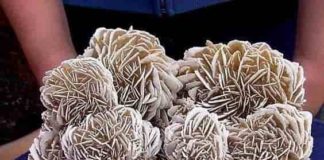
    Huge Desert Rose Selenite Crystal cluster

    Desert Rose : What is Desert Rose? How Do Desert Roses...

    March 11, 2020
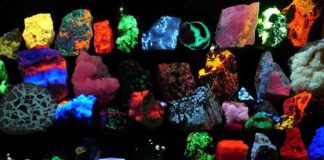
    Collection of various fluorescent minerals under ultraviolet UV-A, UV-B and UV-C light. Chemicals in the rocks absorb the ultraviolet light and emit visible light of various colors, a process called fluorescence. Credit: Hannes Grobe/AWI

    Fluorescence : Why Minerals Fluoresce?

    March 10, 2020
    Meganeura

    Meganeura : The largest insect ever existed was a giant dragonfly

    March 10, 2020
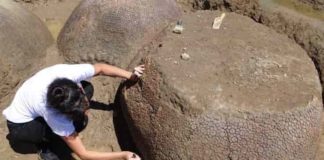
    Ancient Armadillo

    Ancient Armadillo The Size Of A Car Discovered By Farmer In...

    March 10, 2020
    Aneuretopsychidae from Late Cretaceous Burmese amber. Credit: NIGPAS

    Amber specimens reveal origin of long mouthpart of scorpionflies

    March 8, 2020
    Bastnaesite (the reddish parts) in Carbonatite. Bastnaesite is an important ore for rare earth elements, one of the mineral commodities identified as most at-risk of supply disruption by the USGS in a new methodology. Credit: Scott Horvath, USGS

    Where is the greatest risk to our mineral resource supplies?

    March 8, 2020
    The rising Earth from the perspective of the moon.

    What other planets can teach us about Earth

    March 8, 2020
    Fossilised threads - some as long as four metres - connecting organisms known as rangeomorphs, which dominated Earth's oceans half a billion years ago. Credit: Alex Liu

    Half billion-year-old ‘social network’ observed in early animals

    March 8, 2020
    1...103104105...686Page 104 of 686

    Related Articles

    All
    • All
    • Featured
    • All time popular

    French teen finds 560,000 year-old tooth

    July 28, 2015

    Scientists develop new method for studying early life in ancient rocks

    July 6, 2019

    Death Valley study helps determine evolution of western US landscapes

    December 9, 2015

    World’s longest continental volcano chain in Australia

    September 14, 2015

    Earth’s largest extinction event likely took plants first

    February 2, 2019

    Ancient raindrops reveal a wave of mountains sent south by sinking Farallon plate

    September 15, 2011

    Facebook Instagram Linkedin TikTok X Youtube
    • Privacy Policy
    • Advertising
    • Contribute
    • FAQs
    © 2011-2026. All Rights Reserved.